


2855 Results
Form:
books
books
Holdings:
Description:
66 unnumbered pages : chiefly color illustrations ; 28 cm
Description:
66 unnumbered pages : chiefly color illustrations ; 28 cm
Author:
Subject:
Publication:
Lugano : Artphilein Editions, [2014], ©2014
Lugano : Artphilein Editions, [2014], ©2014
Title:
Niamey Iférouane ((petites histoires incertaines)) / Adriana Beretta.
Actions:
Holdings:
Description:
66 unnumbered pages : chiefly color illustrations ; 28 cm
Niamey Iférouane ((petites histoires incertaines)) / Adriana Beretta.
Actions:
Holdings:
Description:
66 unnumbered pages : chiefly color illustrations ; 28 cm
Form:
books
books
Publication:
Lugano : Artphilein Editions, [2014], ©2014
Lugano : Artphilein Editions, [2014], ©2014
Author:
Subject:
Form:
books
books
Title:
Archives & utopia / edited by Stefan Aue ; with contributions by Daniela Agostinho [and six others].
Archives & utopia / edited by Stefan Aue ; with contributions by Daniela Agostinho [and six others].
Actions:
Holdings:
Description:
104 pages : illustrations (chiefly color) ; 23 cm.
Description:
104 pages : illustrations (chiefly color) ; 23 cm.
Author:
Subject:
Publication:
Leipzig : Spector Books, [2022], [New York] : Distribution, USA, Canada, Central and South America, Africa, Artbook/D.A.P.
Leipzig : Spector Books, [2022], [New York] : Distribution, USA, Canada, Central and South America, Africa, Artbook/D.A.P.
Title:
Archives & utopia / edited by Stefan Aue ; with contributions by Daniela Agostinho [and six others].
Actions:
Holdings:
Description:
104 pages : illustrations (chiefly color) ; 23 cm.
Archives & utopia / edited by Stefan Aue ; with contributions by Daniela Agostinho [and six others].
Actions:
Holdings:
Description:
104 pages : illustrations (chiefly color) ; 23 cm.
Form:
books
books
Publication:
Leipzig : Spector Books, [2022], [New York] : Distribution, USA, Canada, Central and South America, Africa, Artbook/D.A.P.
Leipzig : Spector Books, [2022], [New York] : Distribution, USA, Canada, Central and South America, Africa, Artbook/D.A.P.
Author:
Subject:
Form:
books
books
Actions:
Holdings:
Description:
83 pages : illustrations (chiefly color) ; 25 cm
Description:
83 pages : illustrations (chiefly color) ; 25 cm
Author:
Subject:
Publication:
New York : Little Bookroom : Distributed by Publishers Group West, [2002]
New York : Little Bookroom : Distributed by Publishers Group West, [2002]
Title:
The Piero della Francesca trail / John Pope-Hennessy.
Actions:
Holdings:
Description:
83 pages : illustrations (chiefly color) ; 25 cm
The Piero della Francesca trail / John Pope-Hennessy.
Actions:
Holdings:
Description:
83 pages : illustrations (chiefly color) ; 25 cm
Form:
books
books
Publication:
New York : Little Bookroom : Distributed by Publishers Group West, [2002]
New York : Little Bookroom : Distributed by Publishers Group West, [2002]
Author:
Subject:
Form:
books
books
Actions:
Holdings:
Description:
431 pages : illustrations (some color), plans ; 24 cm
Description:
431 pages : illustrations (some color), plans ; 24 cm
Author:
Subject:
Publication:
New York : Actar Publishers, 2016., ©2015
New York : Actar Publishers, 2016., ©2015
Title:
Total Latin American architecture : libretto of modern reflections and contemporary works / author: Ana de Brea ; editor: Ricardo Devesa.
Actions:
Holdings:
Description:
431 pages : illustrations (some color), plans ; 24 cm
Total Latin American architecture : libretto of modern reflections and contemporary works / author: Ana de Brea ; editor: Ricardo Devesa.
Actions:
Holdings:
Description:
431 pages : illustrations (some color), plans ; 24 cm
Form:
books
books
Publication:
New York : Actar Publishers, 2016., ©2015
New York : Actar Publishers, 2016., ©2015
Author:
Subject:
Form:
books
books
Actions:
Holdings:
Description:
xxiii, 313 pages : illustrations, maps ; 24 cm
Description:
xxiii, 313 pages : illustrations, maps ; 24 cm
Author:
Subject:
Publication:
Chicago : University of Chicago Press, ©1996.
Chicago : University of Chicago Press, ©1996.
Title:
Planning as persuasive storytelling : the rhetorical construction of Chicago's electric future / James A. Throgmorton.
Actions:
Holdings:
Description:
xxiii, 313 pages : illustrations, maps ; 24 cm
Planning as persuasive storytelling : the rhetorical construction of Chicago's electric future / James A. Throgmorton.
Actions:
Holdings:
Description:
xxiii, 313 pages : illustrations, maps ; 24 cm
Form:
books
books
Publication:
Chicago : University of Chicago Press, ©1996.
Chicago : University of Chicago Press, ©1996.
Author:
Subject:
Form:
books
books
Actions:
Price:
$19.50
(available to order)
Summary:
Few man-made things seem as stable, as immutable, as a building. Yet the life of any structure is neither fixed nor timeless. Buildings are forced to adapt to each succeeding age. The Parthenon, that epitome of a ruined temple, was for centuries a working church and then a mosque; the cathedral of Notre Dame was “restored” to a design that none of its original makers(...)
$19.50
(available to order)
Summary:
Few man-made things seem as stable, as immutable, as a building. Yet the life of any structure is neither fixed nor timeless. Buildings are forced to adapt to each succeeding age. The Parthenon, that epitome of a ruined temple, was for centuries a working church and then a mosque; the cathedral of Notre Dame was “restored” to a design that none of its original makers(...)
Title:
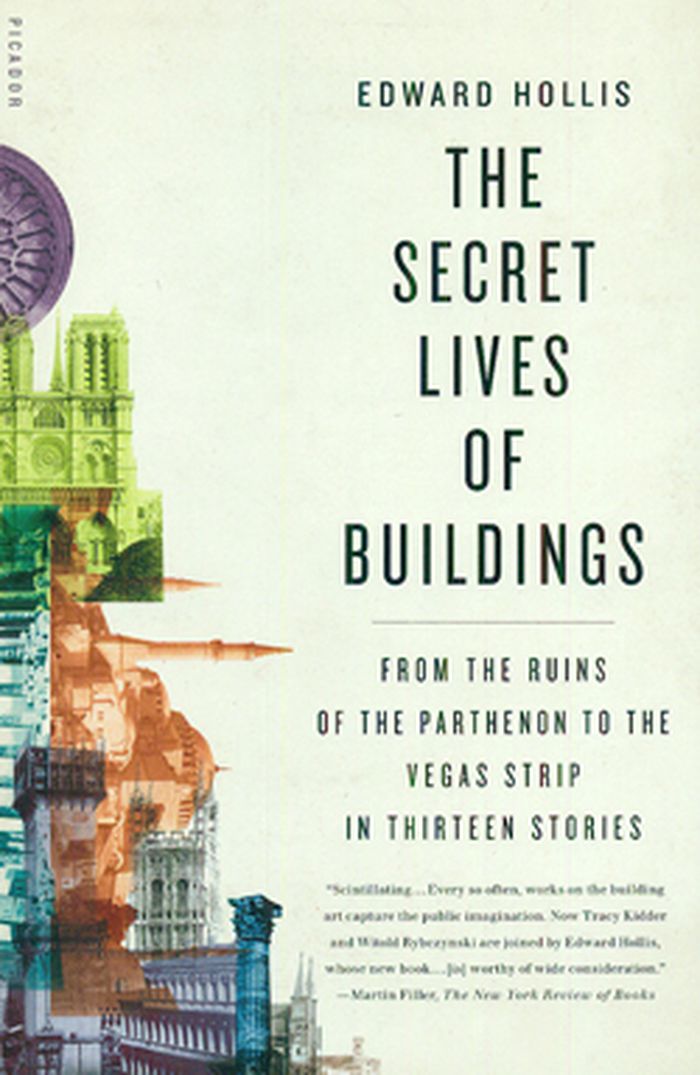
The secret lives of buildings : from the ruins of the Parthenon to the Vegas strip in thirteen stories
Actions:
Price:
$19.50
(available to order)
Summary:
Few man-made things seem as stable, as immutable, as a building. Yet the life of any structure is neither fixed nor timeless. Buildings are forced to adapt to each succeeding age. The Parthenon, that epitome of a ruined temple, was for centuries a working church and then a mosque; the cathedral of Notre Dame was “restored” to a design that none of its original makers would have recognized; remains of the Berlin Wall, once gleefully smashed, have become precious relics. Here Edward Hollis recounts the most enthralling of these metamorphoses and shows how buildings have come to embody the history of Western culture.
The secret lives of buildings : from the ruins of the Parthenon to the Vegas strip in thirteen stories
Actions:
Price:
$19.50
(available to order)
Summary:
Few man-made things seem as stable, as immutable, as a building. Yet the life of any structure is neither fixed nor timeless. Buildings are forced to adapt to each succeeding age. The Parthenon, that epitome of a ruined temple, was for centuries a working church and then a mosque; the cathedral of Notre Dame was “restored” to a design that none of its original makers would have recognized; remains of the Berlin Wall, once gleefully smashed, have become precious relics. Here Edward Hollis recounts the most enthralling of these metamorphoses and shows how buildings have come to embody the history of Western culture.
Form:
books
books
Publication:
November 2010
November 2010
Subject:
Architectural Theory
Architectural Theory
Form:
books
books
Form:
books
books
Publication:
Saraba 2009
Saraba 2009
Subject:
Form:
books
books
Actions:
Holdings:
Description:
155 pages : color illustrations ; 31 cm
Description:
155 pages : color illustrations ; 31 cm
Author:
Subject:
Publication:
Göttingen : Steidl ; [Paris] : Fondation Carmignac Gestion, 2010.
Göttingen : Steidl ; [Paris] : Fondation Carmignac Gestion, 2010.
Title:
The book of destruction : Gaza : one year after the 2009 war / Kai Wiedenhöfer.
Actions:
Holdings:
Description:
155 pages : color illustrations ; 31 cm
The book of destruction : Gaza : one year after the 2009 war / Kai Wiedenhöfer.
Actions:
Holdings:
Description:
155 pages : color illustrations ; 31 cm
Form:
books
books
Publication:
Göttingen : Steidl ; [Paris] : Fondation Carmignac Gestion, 2010.
Göttingen : Steidl ; [Paris] : Fondation Carmignac Gestion, 2010.
Author:
Subject:
Form:
books
books
Price:
$28.50
(available to order)
Summary:
"Downtown America" was once the vibrant urban center romanticized in the Petula Clark song-a place where the lights were brighter, where people went to spend their money and forget their worries. But in the second half of the twentieth century, "downtown" became a shadow of its former self, succumbing to economic competition and commercial decline. And the death of Main(...)
$28.50
(available to order)
Summary:
"Downtown America" was once the vibrant urban center romanticized in the Petula Clark song-a place where the lights were brighter, where people went to spend their money and forget their worries. But in the second half of the twentieth century, "downtown" became a shadow of its former self, succumbing to economic competition and commercial decline. And the death of Main(...)
Title:
Downtown America : a history of the place and the people who made it
Actions:
Price:
$28.50
(available to order)
Summary:
"Downtown America" was once the vibrant urban center romanticized in the Petula Clark song-a place where the lights were brighter, where people went to spend their money and forget their worries. But in the second half of the twentieth century, "downtown" became a shadow of its former self, succumbing to economic competition and commercial decline. And the death of Main Streets across the country came to be seen as sadly inexorable, like the passing of an aged loved one. "Downtown America" cuts beneath the archetypal story of downtown's rise and fall and offers a new story of urban development in the United States. Moving beyond conventional narratives, Alison Isenberg shows that downtown's trajectory was not dictated by inevitable free market forces or natural life-and-death cycles. Instead, it was the product of human actors-the contested creation of retailers, developers, government leaders, architects, and planners, as well as political activists, consumers, civic clubs, real estate appraisers, even postcard artists. Throughout the twentieth century, conflicts over downtown's mundane conditions-what it should look like and who should walk its streets-pointed to fundamental disagreements over American values. Isenberg reveals how the innovative efforts of these participants infused Main Street with its resonant symbolism, while still accounting for pervasive uncertainty and fears of decline. Readers of this work will find anything but a story of inevitability. Even some of the downtown's darkest moments-the Great Depression's collapse in land values, the rioting and looting of the 1960s, or abandonment and vacancy during the 1970s-illuminate how core cultural values have animated and intertwined with economic investment to reinvent the physical form and social experiences of urban commerce. "Downtown America"-its empty stores, revitalized marketplaces, and romanticized past-will never look quite the same again.
Downtown America : a history of the place and the people who made it
Actions:
Price:
$28.50
(available to order)
Summary:
"Downtown America" was once the vibrant urban center romanticized in the Petula Clark song-a place where the lights were brighter, where people went to spend their money and forget their worries. But in the second half of the twentieth century, "downtown" became a shadow of its former self, succumbing to economic competition and commercial decline. And the death of Main Streets across the country came to be seen as sadly inexorable, like the passing of an aged loved one. "Downtown America" cuts beneath the archetypal story of downtown's rise and fall and offers a new story of urban development in the United States. Moving beyond conventional narratives, Alison Isenberg shows that downtown's trajectory was not dictated by inevitable free market forces or natural life-and-death cycles. Instead, it was the product of human actors-the contested creation of retailers, developers, government leaders, architects, and planners, as well as political activists, consumers, civic clubs, real estate appraisers, even postcard artists. Throughout the twentieth century, conflicts over downtown's mundane conditions-what it should look like and who should walk its streets-pointed to fundamental disagreements over American values. Isenberg reveals how the innovative efforts of these participants infused Main Street with its resonant symbolism, while still accounting for pervasive uncertainty and fears of decline. Readers of this work will find anything but a story of inevitability. Even some of the downtown's darkest moments-the Great Depression's collapse in land values, the rioting and looting of the 1960s, or abandonment and vacancy during the 1970s-illuminate how core cultural values have animated and intertwined with economic investment to reinvent the physical form and social experiences of urban commerce. "Downtown America"-its empty stores, revitalized marketplaces, and romanticized past-will never look quite the same again.
Form:
books
books
Publication:
January 1900, Chicago, London
January 1900, Chicago, London
Subject:
Urban Theory
Urban Theory
Form:
books
books
Actions:
Price:
$37.95
(available to order)
Summary:
The idea of fashion under socialism conjures up images of babushka headscarves and black market blue jeans. And yet, as Djurdja Bartlett shows in this groundbreaking book, the socialist East had an intimate relationship with fashion. Official antagonism—which cast fashion as frivolous and antirevolutionary—eventually gave way to grudging acceptance and creeping(...)
$37.95
(available to order)
Summary:
The idea of fashion under socialism conjures up images of babushka headscarves and black market blue jeans. And yet, as Djurdja Bartlett shows in this groundbreaking book, the socialist East had an intimate relationship with fashion. Official antagonism—which cast fashion as frivolous and antirevolutionary—eventually gave way to grudging acceptance and creeping(...)
Title:
Fashion East : the spectre that haunted socialism
Actions:
Price:
$37.95
(available to order)
Summary:
The idea of fashion under socialism conjures up images of babushka headscarves and black market blue jeans. And yet, as Djurdja Bartlett shows in this groundbreaking book, the socialist East had an intimate relationship with fashion. Official antagonism—which cast fashion as frivolous and antirevolutionary—eventually gave way to grudging acceptance and creeping consumerism. Bartlett outlines three phases in socialist fashion, and illustrates them with abundant images from magazines of the period: postrevolutionary utopian dress, official state-sanctioned socialist fashion, and samizdat-style everyday fashion. Utopian dress, ranging from the geometric abstraction of the constructivists under Bolshevism in the Soviet Union to the no-frills desexualized uniform of a factory worker in Czechoslovakia, reflected the revolutionary urge for a clean break with the past. The highly centralized socialist fashion system, part of Stalinist industrialization, offered official prototypes of high fashion that were never available in stores—mythical images of smart and luxurious dresses that symbolized the economic progress that socialist regimes dreamed of. Everyday fashion, starting in the 1950s, was an unofficial, do-it-yourself enterprise: Western fashions obtained through semiclandestine channels or sewn at home. The state tolerated the demand for Western fashion, promising the burgeoning middle class consumer goods in exchange for political loyalty. Bartlett traces the progress of socialist fashion in the Soviet Union, Czechoslovakia, Hungary, East Germany, Poland, and Yugoslavia, drawing on state-sponsored socialist women’s magazines, etiquette books, socialist manuals on dress, private archives, and her own interviews with designers, fashion editors, and other key figures. Fashion, she suggests, with all its ephemerality and dynamism, was in perpetual conflict with the socialist regimes’ fear of change and need for control. It was, to echo the famous first sentence from the Communist Manifesto, the spectre that haunted socialism until the end.
Fashion East : the spectre that haunted socialism
Actions:
Price:
$37.95
(available to order)
Summary:
The idea of fashion under socialism conjures up images of babushka headscarves and black market blue jeans. And yet, as Djurdja Bartlett shows in this groundbreaking book, the socialist East had an intimate relationship with fashion. Official antagonism—which cast fashion as frivolous and antirevolutionary—eventually gave way to grudging acceptance and creeping consumerism. Bartlett outlines three phases in socialist fashion, and illustrates them with abundant images from magazines of the period: postrevolutionary utopian dress, official state-sanctioned socialist fashion, and samizdat-style everyday fashion. Utopian dress, ranging from the geometric abstraction of the constructivists under Bolshevism in the Soviet Union to the no-frills desexualized uniform of a factory worker in Czechoslovakia, reflected the revolutionary urge for a clean break with the past. The highly centralized socialist fashion system, part of Stalinist industrialization, offered official prototypes of high fashion that were never available in stores—mythical images of smart and luxurious dresses that symbolized the economic progress that socialist regimes dreamed of. Everyday fashion, starting in the 1950s, was an unofficial, do-it-yourself enterprise: Western fashions obtained through semiclandestine channels or sewn at home. The state tolerated the demand for Western fashion, promising the burgeoning middle class consumer goods in exchange for political loyalty. Bartlett traces the progress of socialist fashion in the Soviet Union, Czechoslovakia, Hungary, East Germany, Poland, and Yugoslavia, drawing on state-sponsored socialist women’s magazines, etiquette books, socialist manuals on dress, private archives, and her own interviews with designers, fashion editors, and other key figures. Fashion, she suggests, with all its ephemerality and dynamism, was in perpetual conflict with the socialist regimes’ fear of change and need for control. It was, to echo the famous first sentence from the Communist Manifesto, the spectre that haunted socialism until the end.
Form:
books
books
Publication:
October 2010
October 2010
Subject:
Fashion Design
Fashion Design


