


2298 Results
Form:
books
books
Price:
$33.95
(available to order)
Summary:
Big Tech firms dominate the global economy. But what value do they actually produce? In this brilliant survey of global tech economy, Nick Dyer-Witheford and Alessandra Mularoni argue that the role of firms like Amazon and Google, Palantir and Uber, is in the automation of circulation. By applying digital technologies to processes of market exchange—everything from(...)
$33.95
(available to order)
Summary:
Big Tech firms dominate the global economy. But what value do they actually produce? In this brilliant survey of global tech economy, Nick Dyer-Witheford and Alessandra Mularoni argue that the role of firms like Amazon and Google, Palantir and Uber, is in the automation of circulation. By applying digital technologies to processes of market exchange—everything from(...)
Title:
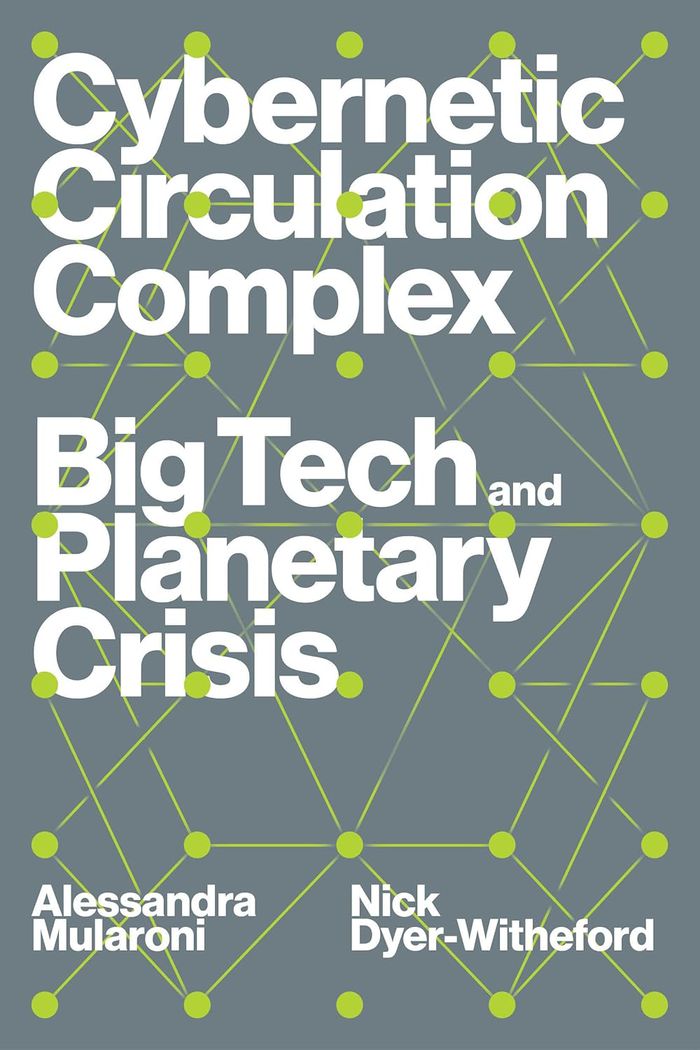
Cybernetic circulation complex: Big tech and planetary crisis
Actions:
Price:
$33.95
(available to order)
Summary:
Big Tech firms dominate the global economy. But what value do they actually produce? In this brilliant survey of global tech economy, Nick Dyer-Witheford and Alessandra Mularoni argue that the role of firms like Amazon and Google, Palantir and Uber, is in the automation of circulation. By applying digital technologies to processes of market exchange—everything from advertising and shopping, to logistics and financial services—Big Tech aims to subject these activities to the level of control and predictability that capital has secured in industrial production. But there is a way out of the multiple crises that Big Tech has helped precipitate. If we are to break their grip on the global economy then it’ll take more than just antitrust legislation or reducing individual time online. By understanding the central role Big Tech plays in contemporary capitalism, Dyer-Witheford and Mularoni argue that what is required instead is a new, ambitious and comprehensive program of democratic collective planning that can move us beyond capitalism. ''Cybernetic Circulation Complex'' offers not only a compelling analysis of the power of Big Tech and their role in our current global crises, but a roadmap for a new form of life: biocommunism, a digital degrowth that can help us steer between the double boundaries of ecological sustainability and equitable social development.
Cybernetic circulation complex: Big tech and planetary crisis
Actions:
Price:
$33.95
(available to order)
Summary:
Big Tech firms dominate the global economy. But what value do they actually produce? In this brilliant survey of global tech economy, Nick Dyer-Witheford and Alessandra Mularoni argue that the role of firms like Amazon and Google, Palantir and Uber, is in the automation of circulation. By applying digital technologies to processes of market exchange—everything from advertising and shopping, to logistics and financial services—Big Tech aims to subject these activities to the level of control and predictability that capital has secured in industrial production. But there is a way out of the multiple crises that Big Tech has helped precipitate. If we are to break their grip on the global economy then it’ll take more than just antitrust legislation or reducing individual time online. By understanding the central role Big Tech plays in contemporary capitalism, Dyer-Witheford and Mularoni argue that what is required instead is a new, ambitious and comprehensive program of democratic collective planning that can move us beyond capitalism. ''Cybernetic Circulation Complex'' offers not only a compelling analysis of the power of Big Tech and their role in our current global crises, but a roadmap for a new form of life: biocommunism, a digital degrowth that can help us steer between the double boundaries of ecological sustainability and equitable social development.
Form:
books
books
Publication:
February 2025
February 2025
Subject:
Social
Social
Form:
books
books
Actions:
Price:
$41.95
(available to order)
Summary:
Although a few among us are intrepid architectural tourists, visiting buildings and landscapes our cameras at the ready, most of us experience architecture through the windshield of a moving vehicle, the architectural experience reduced to a blurry and momentary drive-by. And the rest of our architectural "tourism" is through the images of cameras, movies, and television(...)
$41.95
(available to order)
Summary:
Although a few among us are intrepid architectural tourists, visiting buildings and landscapes our cameras at the ready, most of us experience architecture through the windshield of a moving vehicle, the architectural experience reduced to a blurry and momentary drive-by. And the rest of our architectural "tourism" is through the images of cameras, movies, and television(...)
Subject:
Architecture and Film, Set Design
Architecture and Film, Set Design
Publication:
May 2004, New York
May 2004, New York
Title:
Zoomscape : architecture and motion in media
Actions:
Price:
$41.95
(available to order)
Summary:
Although a few among us are intrepid architectural tourists, visiting buildings and landscapes our cameras at the ready, most of us experience architecture through the windshield of a moving vehicle, the architectural experience reduced to a blurry and momentary drive-by. And the rest of our architectural "tourism" is through the images of cameras, movies, and television programs—that is, through the lens of another's eye. Architectural historian Mitchell Schwarzer calls this new mediated architectural experience the "zoomscape." In this thought-provoking book, he argues that the perception of architecture has been fundamentally altered by the technologies of transportation and the camera - we now look at buildings, neighborhoods, cities, and even entire continents as we ride in trains, cars, and planes, and/or as we view photographs, movies, and television. "Zoomscape" shows how we now perceive buildings and places at high speeds, across great distances, through edited and multiple reproductions. Nowadays, our views of the architectural landscape are modulated by the accelerator pedal and the remote control, by studio production techniques and airplane flight paths. Using examples from high art and popular culture - from the novels of Don DeLillo to the opening credits of "The Sopranos" - Mitchell Schwarzer shows that the zoomscape has brought about unprecedented and often marvelous new ways of perceiving the built environment.
Zoomscape : architecture and motion in media
Actions:
Price:
$41.95
(available to order)
Summary:
Although a few among us are intrepid architectural tourists, visiting buildings and landscapes our cameras at the ready, most of us experience architecture through the windshield of a moving vehicle, the architectural experience reduced to a blurry and momentary drive-by. And the rest of our architectural "tourism" is through the images of cameras, movies, and television programs—that is, through the lens of another's eye. Architectural historian Mitchell Schwarzer calls this new mediated architectural experience the "zoomscape." In this thought-provoking book, he argues that the perception of architecture has been fundamentally altered by the technologies of transportation and the camera - we now look at buildings, neighborhoods, cities, and even entire continents as we ride in trains, cars, and planes, and/or as we view photographs, movies, and television. "Zoomscape" shows how we now perceive buildings and places at high speeds, across great distances, through edited and multiple reproductions. Nowadays, our views of the architectural landscape are modulated by the accelerator pedal and the remote control, by studio production techniques and airplane flight paths. Using examples from high art and popular culture - from the novels of Don DeLillo to the opening credits of "The Sopranos" - Mitchell Schwarzer shows that the zoomscape has brought about unprecedented and often marvelous new ways of perceiving the built environment.
Form:
books
books
Publication:
May 2004, New York
May 2004, New York
Subject:
Architecture and Film, Set Design
Architecture and Film, Set Design
Form:
books
books

Actions:
Price:
$37.95
(available to order)
Summary:
While the publisher has billed this book as "the first "to document the changing nature of zoos in Europe and North America and to access the factors contributing to these changes," it has been preceded by several other similar works: Jake Page's Zoo: The Modern Ark, Vicki Croke's The Modern Ark: A Story of Zoos Past, Present and Future, and the four-volume Encyclopedia(...)
$37.95
(available to order)
Summary:
While the publisher has billed this book as "the first "to document the changing nature of zoos in Europe and North America and to access the factors contributing to these changes," it has been preceded by several other similar works: Jake Page's Zoo: The Modern Ark, Vicki Croke's The Modern Ark: A Story of Zoos Past, Present and Future, and the four-volume Encyclopedia(...)
Title:
Zoo : A history of zoological gardens in the West
Actions:
Price:
$37.95
(available to order)
Summary:
While the publisher has billed this book as "the first "to document the changing nature of zoos in Europe and North America and to access the factors contributing to these changes," it has been preceded by several other similar works: Jake Page's Zoo: The Modern Ark, Vicki Croke's The Modern Ark: A Story of Zoos Past, Present and Future, and the four-volume Encyclopedia of the World's Zoos. So, why would anyone be interested in this new volume? The answer lies in the scope and depth of scholarly research and presentation and in the 400 illustrations (150 of which are in color) that aren't likely to be found elsewhere. While other books look at the architecture of zoos and the care of animals in captivity, the authors, who are French professors of history and art history, respectively, take a social history focus, examining how people view wild animals and how that has changed over time. Their book has five main sections, with the first three forming the core of the text "The Passion for Collecting (1500s to 1700s)," "The Need for Control (1800s)," and "The Yearning for Nature (1900s)." The final two sections "Zoos Through the Ages," and "Artists and the Zoo" consist entirely of illustrations. One can read the text or spend hours simply enjoying the images.
Zoo : A history of zoological gardens in the West
Actions:
Price:
$37.95
(available to order)
Summary:
While the publisher has billed this book as "the first "to document the changing nature of zoos in Europe and North America and to access the factors contributing to these changes," it has been preceded by several other similar works: Jake Page's Zoo: The Modern Ark, Vicki Croke's The Modern Ark: A Story of Zoos Past, Present and Future, and the four-volume Encyclopedia of the World's Zoos. So, why would anyone be interested in this new volume? The answer lies in the scope and depth of scholarly research and presentation and in the 400 illustrations (150 of which are in color) that aren't likely to be found elsewhere. While other books look at the architecture of zoos and the care of animals in captivity, the authors, who are French professors of history and art history, respectively, take a social history focus, examining how people view wild animals and how that has changed over time. Their book has five main sections, with the first three forming the core of the text "The Passion for Collecting (1500s to 1700s)," "The Need for Control (1800s)," and "The Yearning for Nature (1900s)." The final two sections "Zoos Through the Ages," and "Artists and the Zoo" consist entirely of illustrations. One can read the text or spend hours simply enjoying the images.
Form:
books
books
Publication:
May 2004, London
May 2004, London
Subject:
Gardens
Gardens
Form:
books
books
Price:
$51.95
(available to order)
Summary:
"The Organizational Complex" is a historical and theoretical analysis of corporate architecture in the United States after the Second World War. Its title refers to the aesthetic and technological extension of the military-industrial complex, in which architecture, computers, and corporations formed a network of objects, images, and discourses that realigned social(...)
$51.95
(available to order)
Summary:
"The Organizational Complex" is a historical and theoretical analysis of corporate architecture in the United States after the Second World War. Its title refers to the aesthetic and technological extension of the military-industrial complex, in which architecture, computers, and corporations formed a network of objects, images, and discourses that realigned social(...)
Subject:
Architectural Theory
Architectural Theory
Publication:
July 2003, Cambridge, Massachusetts
July 2003, Cambridge, Massachusetts
Title:
The organizational complex : architecture, media, and corporate space
Actions:
Price:
$51.95
(available to order)
Summary:
"The Organizational Complex" is a historical and theoretical analysis of corporate architecture in the United States after the Second World War. Its title refers to the aesthetic and technological extension of the military-industrial complex, in which architecture, computers, and corporations formed a network of objects, images, and discourses that realigned social relations and transformed the postwar landscape. In-depth case studies of architect Eero Saarinen's work for General Motors, IBM, and Bell Laboratories and analyses of office buildings designed by Skidmore, Owings & Merrill trace the emergence of a systems-based model of organization in architecture, in which the modular curtain wall acts as both an organizational device and a carrier of the corporate image. Such an image--of the corporation as a flexible, integrated system--is seen to correspond with a "humanization" of corporate life, as corporations decentralize both spatially and administratively. Parallel analyses follow the assimilation of cybernetics into aesthetics in the writings of artist and visual theorist Gyorgy Kepes, as art merges with techno-science in the service of a dynamic new "pattern-seeing." Image and system thus converge in the organizational complex, while top-down power dissolves into networked, pattern-based control. Architecture, as one among many media technologies, supplies the patterns--images of organic integration designed to regulate new and unstable human-machine assemblages.
The organizational complex : architecture, media, and corporate space
Actions:
Price:
$51.95
(available to order)
Summary:
"The Organizational Complex" is a historical and theoretical analysis of corporate architecture in the United States after the Second World War. Its title refers to the aesthetic and technological extension of the military-industrial complex, in which architecture, computers, and corporations formed a network of objects, images, and discourses that realigned social relations and transformed the postwar landscape. In-depth case studies of architect Eero Saarinen's work for General Motors, IBM, and Bell Laboratories and analyses of office buildings designed by Skidmore, Owings & Merrill trace the emergence of a systems-based model of organization in architecture, in which the modular curtain wall acts as both an organizational device and a carrier of the corporate image. Such an image--of the corporation as a flexible, integrated system--is seen to correspond with a "humanization" of corporate life, as corporations decentralize both spatially and administratively. Parallel analyses follow the assimilation of cybernetics into aesthetics in the writings of artist and visual theorist Gyorgy Kepes, as art merges with techno-science in the service of a dynamic new "pattern-seeing." Image and system thus converge in the organizational complex, while top-down power dissolves into networked, pattern-based control. Architecture, as one among many media technologies, supplies the patterns--images of organic integration designed to regulate new and unstable human-machine assemblages.
Form:
books
books
Publication:
July 2003, Cambridge, Massachusetts
July 2003, Cambridge, Massachusetts
Subject:
Architectural Theory
Architectural Theory
Form:
books
books
Price:
$32.95
(available to order)
Summary:
"Peeking through the Keyhole" is about transformations in the way we live and the places we call home. Until the past few decades, transitions in the style of homes and types of households were slow and gradual. With today's instant communication, the way we observe other people, other cultures, and other times has altered, and been altered by, the homes we live in.(...)
$32.95
(available to order)
Summary:
"Peeking through the Keyhole" is about transformations in the way we live and the places we call home. Until the past few decades, transitions in the style of homes and types of households were slow and gradual. With today's instant communication, the way we observe other people, other cultures, and other times has altered, and been altered by, the homes we live in.(...)
Subject:
Architectural Theory
Architectural Theory
Publication:
January 2002, Montréal
January 2002, Montréal
Title:
Peeking through the keyhole : the evolution of North American homes
Actions:
Price:
$32.95
(available to order)
Summary:
"Peeking through the Keyhole" is about transformations in the way we live and the places we call home. Until the past few decades, transitions in the style of homes and types of households were slow and gradual. With today's instant communication, the way we observe other people, other cultures, and other times has altered, and been altered by, the homes we live in. Avi Friedman and David Krawitz guide the reader through the trends and changes that have influenced residential design and construction over the last fifty years. From kitchens to home offices to entire neighbourhoods, they unravel the effect of technology and consumerism on the way we perceive and use domestic space, arguing that the home is no longer a product of pure design but a response to factors and forces beyond the control of designers, builders, and users. Each chapter approaches the theme of home from a different vantage point: the first three chapters focus on food and kitchens, communication, construction and renovation; the middle chapters deal with childhood and aging; and the final chapters examine our ideas of home in the context of the broader community and as an object of commerce. The authors demonstrate how much life has changed in the years following the Second World War, showing how transformations in society, the economy, and lifestyles are reflected in our homes.
Peeking through the keyhole : the evolution of North American homes
Actions:
Price:
$32.95
(available to order)
Summary:
"Peeking through the Keyhole" is about transformations in the way we live and the places we call home. Until the past few decades, transitions in the style of homes and types of households were slow and gradual. With today's instant communication, the way we observe other people, other cultures, and other times has altered, and been altered by, the homes we live in. Avi Friedman and David Krawitz guide the reader through the trends and changes that have influenced residential design and construction over the last fifty years. From kitchens to home offices to entire neighbourhoods, they unravel the effect of technology and consumerism on the way we perceive and use domestic space, arguing that the home is no longer a product of pure design but a response to factors and forces beyond the control of designers, builders, and users. Each chapter approaches the theme of home from a different vantage point: the first three chapters focus on food and kitchens, communication, construction and renovation; the middle chapters deal with childhood and aging; and the final chapters examine our ideas of home in the context of the broader community and as an object of commerce. The authors demonstrate how much life has changed in the years following the Second World War, showing how transformations in society, the economy, and lifestyles are reflected in our homes.
Form:
books
books
Publication:
January 2002, Montréal
January 2002, Montréal
Subject:
Architectural Theory
Architectural Theory
Form:
books
books
Actions:
Price:
$52.50
(available to order)
Summary:
Conceptual art was one of the most influential art movements of the second half of the twentieth century. In this book Alexander Alberro traces its origins to the mid-1960s, when its principles were first articulated by the artists Dan Graham, Joseph Kosuth, Sol LeWitt, Lawrence Weiner, and others. One of Alberro's central arguments is that the conceptual art movement(...)
$52.50
(available to order)
Summary:
Conceptual art was one of the most influential art movements of the second half of the twentieth century. In this book Alexander Alberro traces its origins to the mid-1960s, when its principles were first articulated by the artists Dan Graham, Joseph Kosuth, Sol LeWitt, Lawrence Weiner, and others. One of Alberro's central arguments is that the conceptual art movement(...)
Subject:
Contemporary Art Monographs
Contemporary Art Monographs
Publication:
January 2003, Cambridge, Mass.
January 2003, Cambridge, Mass.
Title:
Conceptual art and the politics of publicity
Actions:
Price:
$52.50
(available to order)
Summary:
Conceptual art was one of the most influential art movements of the second half of the twentieth century. In this book Alexander Alberro traces its origins to the mid-1960s, when its principles were first articulated by the artists Dan Graham, Joseph Kosuth, Sol LeWitt, Lawrence Weiner, and others. One of Alberro's central arguments is that the conceptual art movement was founded not just by the artists but also by the dealer Seth Siegelaub. Siegelaub promoted the artists, curated groundbreaking shows, organized symposia and publications, and in many ways set the stage for another kind of entrepreneur: the freelance curator. Alberro examines both Siegelaub's role in launching the careers of artists who were making "something from nothing" and his tactful business practices, particularly in marketing and advertising. Alberro draws on close readings of artworks produced by key conceptual artists in the mid- to late 1960s. He places the movement in the social context of the rebellion against existing cultural institutions, as well as the increased commercialization and globalization of the art world. The book ends with a discussion of one of Siegelaub's most material and least ephemeral contributions, the Artist's Reserved Rights Transfer and Sale Agreement, which he wrote between 1969 and 1971. Designed to limit the inordinate control of collectors, galleries, and museums by increasing the artist's rights, the Agreement unwittingly codified the overlap between capitalism and the arts.
Conceptual art and the politics of publicity
Actions:
Price:
$52.50
(available to order)
Summary:
Conceptual art was one of the most influential art movements of the second half of the twentieth century. In this book Alexander Alberro traces its origins to the mid-1960s, when its principles were first articulated by the artists Dan Graham, Joseph Kosuth, Sol LeWitt, Lawrence Weiner, and others. One of Alberro's central arguments is that the conceptual art movement was founded not just by the artists but also by the dealer Seth Siegelaub. Siegelaub promoted the artists, curated groundbreaking shows, organized symposia and publications, and in many ways set the stage for another kind of entrepreneur: the freelance curator. Alberro examines both Siegelaub's role in launching the careers of artists who were making "something from nothing" and his tactful business practices, particularly in marketing and advertising. Alberro draws on close readings of artworks produced by key conceptual artists in the mid- to late 1960s. He places the movement in the social context of the rebellion against existing cultural institutions, as well as the increased commercialization and globalization of the art world. The book ends with a discussion of one of Siegelaub's most material and least ephemeral contributions, the Artist's Reserved Rights Transfer and Sale Agreement, which he wrote between 1969 and 1971. Designed to limit the inordinate control of collectors, galleries, and museums by increasing the artist's rights, the Agreement unwittingly codified the overlap between capitalism and the arts.
Form:
books
books
Publication:
January 2003, Cambridge, Mass.
January 2003, Cambridge, Mass.
Subject:
Contemporary Art Monographs
Contemporary Art Monographs
Form:
books
books

Actions:
Price:
$85.00
(available to order)
Summary:
How can housing better meet people’s diverse and changing needs? Moving away from the focus on capsule architecture that dominates so many studies of Japan’s Metabolist architects, ''Digesting Metabolism'' investigates the impact on Japanese housing of Le Corbusier’s idea of 'artificial land,' perhaps architecture’s most famous concept that the fewest number of people(...)
$85.00
(available to order)
Summary:
How can housing better meet people’s diverse and changing needs? Moving away from the focus on capsule architecture that dominates so many studies of Japan’s Metabolist architects, ''Digesting Metabolism'' investigates the impact on Japanese housing of Le Corbusier’s idea of 'artificial land,' perhaps architecture’s most famous concept that the fewest number of people(...)
Title:
Digesting Metabolism: Artificial land in Japan 1954-2202
Actions:
Price:
$85.00
(available to order)
Summary:
How can housing better meet people’s diverse and changing needs? Moving away from the focus on capsule architecture that dominates so many studies of Japan’s Metabolist architects, ''Digesting Metabolism'' investigates the impact on Japanese housing of Le Corbusier’s idea of 'artificial land,' perhaps architecture’s most famous concept that the fewest number of people have heard of. Long buried by the term 'megastructure' that it inspired, artificial land joins the individual and collective, envisioning housing as stacked platforms of plots for building freestanding homes of all variety. This book explores in detail 11 Japanese projects that translate this dream of durability combined with flexibility into built reality, illuminating its appeal for a nation whose existing land—from both earthquakes and cost—is highly unstable. First introduced to Japan in 1954 by Le Corbusier’s protégé, Takamasa Yosizaka, artificial land is essential to the Metabolists who debuted in Tokyo in 1960, with it sparking their desire to add ''a time factor into city planning.'' Yet artificial land has had a hold on Japan’s metabolic imagination well beyond the ‘60s, promising domestic satisfaction and environmental resilience from the postwar period to today’s government policies. ''Digesting Metabolism'' uncovers this unique Japanese history and its possible future, finding examples of infrastructure, adaptation and dweller control that challenge commodified models of housing around the world.
Digesting Metabolism: Artificial land in Japan 1954-2202
Actions:
Price:
$85.00
(available to order)
Summary:
How can housing better meet people’s diverse and changing needs? Moving away from the focus on capsule architecture that dominates so many studies of Japan’s Metabolist architects, ''Digesting Metabolism'' investigates the impact on Japanese housing of Le Corbusier’s idea of 'artificial land,' perhaps architecture’s most famous concept that the fewest number of people have heard of. Long buried by the term 'megastructure' that it inspired, artificial land joins the individual and collective, envisioning housing as stacked platforms of plots for building freestanding homes of all variety. This book explores in detail 11 Japanese projects that translate this dream of durability combined with flexibility into built reality, illuminating its appeal for a nation whose existing land—from both earthquakes and cost—is highly unstable. First introduced to Japan in 1954 by Le Corbusier’s protégé, Takamasa Yosizaka, artificial land is essential to the Metabolists who debuted in Tokyo in 1960, with it sparking their desire to add ''a time factor into city planning.'' Yet artificial land has had a hold on Japan’s metabolic imagination well beyond the ‘60s, promising domestic satisfaction and environmental resilience from the postwar period to today’s government policies. ''Digesting Metabolism'' uncovers this unique Japanese history and its possible future, finding examples of infrastructure, adaptation and dweller control that challenge commodified models of housing around the world.
Form:
books
books
Publication:
November 2022
November 2022
Subject:
Modernism
Modernism
Form:
books
books
Actions:
Price:
$37.99
(available in store)
Summary:
Digital tools have launched architecture into a dizzying new era, one in which wood, stone, metal, glass, and other traditional materials are augmented by pixels and code. In this ambitious exploration, an eminent thinker examines what, exactly, the building blocks of architecture have meant over the centuries and how technology may-or may not-be changing how we think(...)
$37.99
(available in store)
Summary:
Digital tools have launched architecture into a dizzying new era, one in which wood, stone, metal, glass, and other traditional materials are augmented by pixels and code. In this ambitious exploration, an eminent thinker examines what, exactly, the building blocks of architecture have meant over the centuries and how technology may-or may not-be changing how we think(...)
Title:
The materiality of architecture
Actions:
Price:
$37.99
(available in store)
Summary:
Digital tools have launched architecture into a dizzying new era, one in which wood, stone, metal, glass, and other traditional materials are augmented by pixels and code. In this ambitious exploration, an eminent thinker examines what, exactly, the building blocks of architecture have meant over the centuries and how technology may-or may not-be changing how we think about them. Antoine Picon argues that materiality is not only about matter and that the silence and inscrutability-the otherness-of raw materials work against humanity's need to live in a meaningful world. He describes how people define who they are, in part, through their specific physical experience of architectural materials and spaces. Indeed, Picon asserts, the entire paradox of the architectural discipline consists in its desire to render matter expressive to human beings. Through a retrospective review of canonical moments in Western European architecture, Picon offers an original perspective on the ways materiality has varied throughout centuries, demonstrating how experiences of the physical world have changed in relation to the evolution of human subjectivity. Ultimately, Picon concludes that computer-based design methods are not an abrupt departure from previous architectural traditions but rather a new way for architects to control material resources. The result reinforces the fundamentally humanistic nature of architectural endeavor with an increasing sense of design freedom and a release from material constraint in the digital era.
The materiality of architecture
Actions:
Price:
$37.99
(available in store)
Summary:
Digital tools have launched architecture into a dizzying new era, one in which wood, stone, metal, glass, and other traditional materials are augmented by pixels and code. In this ambitious exploration, an eminent thinker examines what, exactly, the building blocks of architecture have meant over the centuries and how technology may-or may not-be changing how we think about them. Antoine Picon argues that materiality is not only about matter and that the silence and inscrutability-the otherness-of raw materials work against humanity's need to live in a meaningful world. He describes how people define who they are, in part, through their specific physical experience of architectural materials and spaces. Indeed, Picon asserts, the entire paradox of the architectural discipline consists in its desire to render matter expressive to human beings. Through a retrospective review of canonical moments in Western European architecture, Picon offers an original perspective on the ways materiality has varied throughout centuries, demonstrating how experiences of the physical world have changed in relation to the evolution of human subjectivity. Ultimately, Picon concludes that computer-based design methods are not an abrupt departure from previous architectural traditions but rather a new way for architects to control material resources. The result reinforces the fundamentally humanistic nature of architectural endeavor with an increasing sense of design freedom and a release from material constraint in the digital era.
Form:
books
books
Publication:
January 2021
January 2021
Subject:
Architectural Theory
Architectural Theory
Form:
books
books

Actions:
Price:
$35.95
(available to order)
Summary:
Drawing on fifteen years of field research in Las Vegas, anthropologist Natasha Dow Schüll shows how the mechanical rhythm of electronic gambling pulls players into a trancelike state they call the "machine zone," in which daily worries, social demands, and even bodily awareness fade away. Once in the zone, gambling addicts play not to win but simply to keep playing, for(...)
$35.95
(available to order)
Summary:
Drawing on fifteen years of field research in Las Vegas, anthropologist Natasha Dow Schüll shows how the mechanical rhythm of electronic gambling pulls players into a trancelike state they call the "machine zone," in which daily worries, social demands, and even bodily awareness fade away. Once in the zone, gambling addicts play not to win but simply to keep playing, for(...)
Title:
Addiction by design: machine gambling in Las Vegas
Actions:
Price:
$35.95
(available to order)
Summary:
Drawing on fifteen years of field research in Las Vegas, anthropologist Natasha Dow Schüll shows how the mechanical rhythm of electronic gambling pulls players into a trancelike state they call the "machine zone," in which daily worries, social demands, and even bodily awareness fade away. Once in the zone, gambling addicts play not to win but simply to keep playing, for as long as possible?even at the cost of physical and economic exhaustion. In continuous machine play, gamblers seek to lose themselves while the gambling industry seeks profit. Schüll describes the strategic calculations behind game algorithms and machine ergonomics, casino architecture and "ambience management," player tracking and cash access systems?all designed to meet the market's desire for maximum "time on device." Her account moves from casino floors into gamblers' everyday lives, from gambling industry conventions and Gamblers Anonymous meetings to regulatory debates over whether addiction to gambling machines stems from the consumer, the product, or the interplay between the two. ''Addiction by design'' is a compelling inquiry into the intensifying traffic between people and machines of chance, offering clues to some of the broader anxieties and predicaments of contemporary life. At stake in Schüll's account of the intensifying traffic between people and machines of chance is a blurring of the line between design and experience, profit and loss, control and compulsion.
Addiction by design: machine gambling in Las Vegas
Actions:
Price:
$35.95
(available to order)
Summary:
Drawing on fifteen years of field research in Las Vegas, anthropologist Natasha Dow Schüll shows how the mechanical rhythm of electronic gambling pulls players into a trancelike state they call the "machine zone," in which daily worries, social demands, and even bodily awareness fade away. Once in the zone, gambling addicts play not to win but simply to keep playing, for as long as possible?even at the cost of physical and economic exhaustion. In continuous machine play, gamblers seek to lose themselves while the gambling industry seeks profit. Schüll describes the strategic calculations behind game algorithms and machine ergonomics, casino architecture and "ambience management," player tracking and cash access systems?all designed to meet the market's desire for maximum "time on device." Her account moves from casino floors into gamblers' everyday lives, from gambling industry conventions and Gamblers Anonymous meetings to regulatory debates over whether addiction to gambling machines stems from the consumer, the product, or the interplay between the two. ''Addiction by design'' is a compelling inquiry into the intensifying traffic between people and machines of chance, offering clues to some of the broader anxieties and predicaments of contemporary life. At stake in Schüll's account of the intensifying traffic between people and machines of chance is a blurring of the line between design and experience, profit and loss, control and compulsion.
Form:
books
books
Publication:
May 2014
May 2014
Subject:
Design Theory
Design Theory
Form:
books
books
Price:
$38.95
(available to order)
Summary:
Throughout the twentieth century, architects in Italy have attempted to define the role of architecture under diverse political systems, from the monarchy of the first seventy years since Italian unification, to the 21 years of Fascist control, to the post-Second World War parliamentary republic. At the same time, Italy holds some of the most prized architecture and art(...)
$38.95
(available to order)
Summary:
Throughout the twentieth century, architects in Italy have attempted to define the role of architecture under diverse political systems, from the monarchy of the first seventy years since Italian unification, to the 21 years of Fascist control, to the post-Second World War parliamentary republic. At the same time, Italy holds some of the most prized architecture and art(...)
Title:
Italy
Actions:
Price:
$38.95
(available to order)
Summary:
Throughout the twentieth century, architects in Italy have attempted to define the role of architecture under diverse political systems, from the monarchy of the first seventy years since Italian unification, to the 21 years of Fascist control, to the post-Second World War parliamentary republic. At the same time, Italy holds some of the most prized architecture and art in the world, from antiquity to the baroque, packed into its dense historic city centres, which planners and politicians have negotiated as they struggled to cope with massive migration from the countryside to the city. Diane Ghirardo addresses these and other issues by considering modern architectural production in Italy from the late nineteenth century to the present day within a clear presentation of the larger historical, social and political contexts. From the post-unification efforts to identify a distinctly Italian architectural language to the transformation of the urban environment in Italian cities undergoing industrialization in the late nineteenth and early twentieth centuries, Diane Ghirardo challenges received interpretations of modern architecture, as well as focusing on the subject of illegal building and responses to current ecological challenges. With up-to-date examples, both from the work of widely published architects in the largest cities and from throughout the peninsula, including small towns and rural areas, Italy provides a comprehensive view of the country’s modern built environment.
Italy
Actions:
Price:
$38.95
(available to order)
Summary:
Throughout the twentieth century, architects in Italy have attempted to define the role of architecture under diverse political systems, from the monarchy of the first seventy years since Italian unification, to the 21 years of Fascist control, to the post-Second World War parliamentary republic. At the same time, Italy holds some of the most prized architecture and art in the world, from antiquity to the baroque, packed into its dense historic city centres, which planners and politicians have negotiated as they struggled to cope with massive migration from the countryside to the city. Diane Ghirardo addresses these and other issues by considering modern architectural production in Italy from the late nineteenth century to the present day within a clear presentation of the larger historical, social and political contexts. From the post-unification efforts to identify a distinctly Italian architectural language to the transformation of the urban environment in Italian cities undergoing industrialization in the late nineteenth and early twentieth centuries, Diane Ghirardo challenges received interpretations of modern architecture, as well as focusing on the subject of illegal building and responses to current ecological challenges. With up-to-date examples, both from the work of widely published architects in the largest cities and from throughout the peninsula, including small towns and rural areas, Italy provides a comprehensive view of the country’s modern built environment.
Form:
books
books
Publication:
November 2011
November 2011
Subject:
Architecture since 1900, Europe
Architecture since 1900, Europe


