


2314 Results
Form:
books
books
Actions:
Price:
$64.95
(available to order)
Summary:
Ecological Urbanism: The Nature of the City asks the questions that are important inside and outside the built environment professions: what are climate change, urbanisation and ecology doing to the theory and practice of urban design? How does Ecological Urbanism figure in this change? What is Ecological Urbanism? In answer, this book is neither definitive – impossible(...)
$64.95
(available to order)
Summary:
Ecological Urbanism: The Nature of the City asks the questions that are important inside and outside the built environment professions: what are climate change, urbanisation and ecology doing to the theory and practice of urban design? How does Ecological Urbanism figure in this change? What is Ecological Urbanism? In answer, this book is neither definitive – impossible(...)
Title:
Ecological urbanism: the nature of the city
Actions:
Price:
$64.95
(available to order)
Summary:
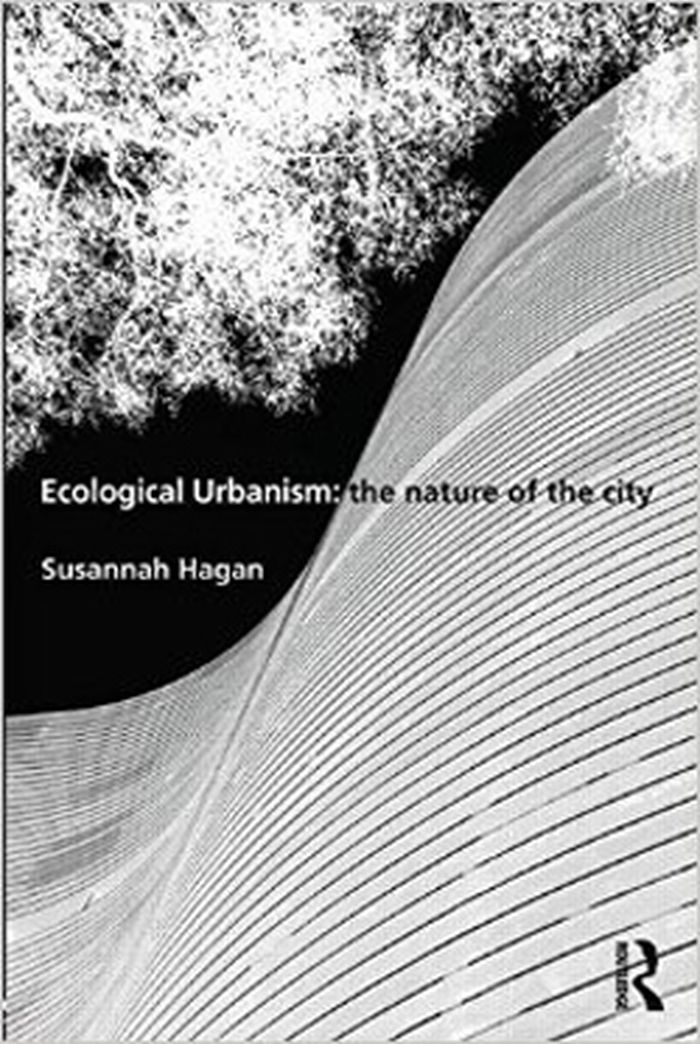
Ecological Urbanism: The Nature of the City asks the questions that are important inside and outside the built environment professions: what are climate change, urbanisation and ecology doing to the theory and practice of urban design? How does Ecological Urbanism figure in this change? What is Ecological Urbanism? In answer, this book is neither definitive – impossible when a subject is still in motion – nor encyclopaedic – equally impossible when so much has been written on almost every aspect of these essays. Instead, it seeks to rebalance the ecological narrative and its embryonic modes of practice with the narratives of urbanism and its older, deeply embedded modes of practice. It examines the implications for cities and the designers of cities now we are required to again address their metabolic as well as social and formal dimensions, and it explores the extent to which environmental engineering and natural systems design can and should become drivers for the remaking of cities in the 21st century. Above all, it argues that sooner rather than later, urbanism needs to become environmentally literate, and environmental design needs to become culturally literate.
Ecological urbanism: the nature of the city
Actions:
Price:
$64.95
(available to order)
Summary:
Ecological Urbanism: The Nature of the City asks the questions that are important inside and outside the built environment professions: what are climate change, urbanisation and ecology doing to the theory and practice of urban design? How does Ecological Urbanism figure in this change? What is Ecological Urbanism? In answer, this book is neither definitive – impossible when a subject is still in motion – nor encyclopaedic – equally impossible when so much has been written on almost every aspect of these essays. Instead, it seeks to rebalance the ecological narrative and its embryonic modes of practice with the narratives of urbanism and its older, deeply embedded modes of practice. It examines the implications for cities and the designers of cities now we are required to again address their metabolic as well as social and formal dimensions, and it explores the extent to which environmental engineering and natural systems design can and should become drivers for the remaking of cities in the 21st century. Above all, it argues that sooner rather than later, urbanism needs to become environmentally literate, and environmental design needs to become culturally literate.
Form:
books
books
Publication:
November 2014
November 2014
Subject:
Urban Landscapes
Urban Landscapes
Form:
books
books
Actions:
Price:
$6.99
(available to order)
Summary:
"Design for life: the architecture of Sim Van der Ryn" surveys the work and principles of Sim Van der Ryn, a world leader in the field of sustainable architecture. Sharing his years of experience as a teacher and using his building designs as examples, the author shows us that buildings are not objects but organisms, and cities are not machines but complex ecosystems.(...)
$6.99
(available to order)
Summary:
"Design for life: the architecture of Sim Van der Ryn" surveys the work and principles of Sim Van der Ryn, a world leader in the field of sustainable architecture. Sharing his years of experience as a teacher and using his building designs as examples, the author shows us that buildings are not objects but organisms, and cities are not machines but complex ecosystems.(...)
Publication:
May 2005, Salt Lake City
May 2005, Salt Lake City
Title:
Design for life : the architecture of Sim Van der Ryn
Actions:
Price:
$6.99
(available to order)
Summary:
"Design for life: the architecture of Sim Van der Ryn" surveys the work and principles of Sim Van der Ryn, a world leader in the field of sustainable architecture. Sharing his years of experience as a teacher and using his building designs as examples, the author shows us that buildings are not objects but organisms, and cities are not machines but complex ecosystems. "Design for life" illustrates how Van der Ryn came to see the shifting patterns in nature and how these patterns profoundly affect how people live and work in the structures we build. Van der Ryn explores how architecture has created physical and mental barriers that separate people from the natural world, and how to recover the soul of architecture and reconnect with our natural surroundings. Appointed California State Architect by then-Governor Jerry Brown, Van der Ryn introduced the nation's first energy-efficient government building projects. His vision heralded a Golden Age of ecologically sensitive design and resulted in the adoption of strict energy standards and disability access standards for all state buildings and parks. Van der Ryn has helped inspire architects to see the myriad ways they can apply physical and social ecology to architecture and environmental design.
Design for life : the architecture of Sim Van der Ryn
Actions:
Price:
$6.99
(available to order)
Summary:
"Design for life: the architecture of Sim Van der Ryn" surveys the work and principles of Sim Van der Ryn, a world leader in the field of sustainable architecture. Sharing his years of experience as a teacher and using his building designs as examples, the author shows us that buildings are not objects but organisms, and cities are not machines but complex ecosystems. "Design for life" illustrates how Van der Ryn came to see the shifting patterns in nature and how these patterns profoundly affect how people live and work in the structures we build. Van der Ryn explores how architecture has created physical and mental barriers that separate people from the natural world, and how to recover the soul of architecture and reconnect with our natural surroundings. Appointed California State Architect by then-Governor Jerry Brown, Van der Ryn introduced the nation's first energy-efficient government building projects. His vision heralded a Golden Age of ecologically sensitive design and resulted in the adoption of strict energy standards and disability access standards for all state buildings and parks. Van der Ryn has helped inspire architects to see the myriad ways they can apply physical and social ecology to architecture and environmental design.
Form:
books
books
Publication:
May 2005, Salt Lake City
May 2005, Salt Lake City
Form:
books
books
Title:
Whole earth field guide
Whole earth field guide
Actions:
Price:
$46.95
(available to order)
Summary:
The Whole Earth Catalog was a cultural touchstone of the 1960s and 1970s. Between 1968 and 1971, almost two million copies of its various editions were sold, and not just to commune-dwellers and hippies. Millions of mainstream readers turned to the Whole Earth Catalog for practical advice and intellectual stimulation, finding everything from a review of Buckminster Fuller(...)
$46.95
(available to order)
Summary:
The Whole Earth Catalog was a cultural touchstone of the 1960s and 1970s. Between 1968 and 1971, almost two million copies of its various editions were sold, and not just to commune-dwellers and hippies. Millions of mainstream readers turned to the Whole Earth Catalog for practical advice and intellectual stimulation, finding everything from a review of Buckminster Fuller(...)
Publication:
October 2016
October 2016
Title:
Whole earth field guide
Actions:
Price:
$46.95
(available to order)
Summary:
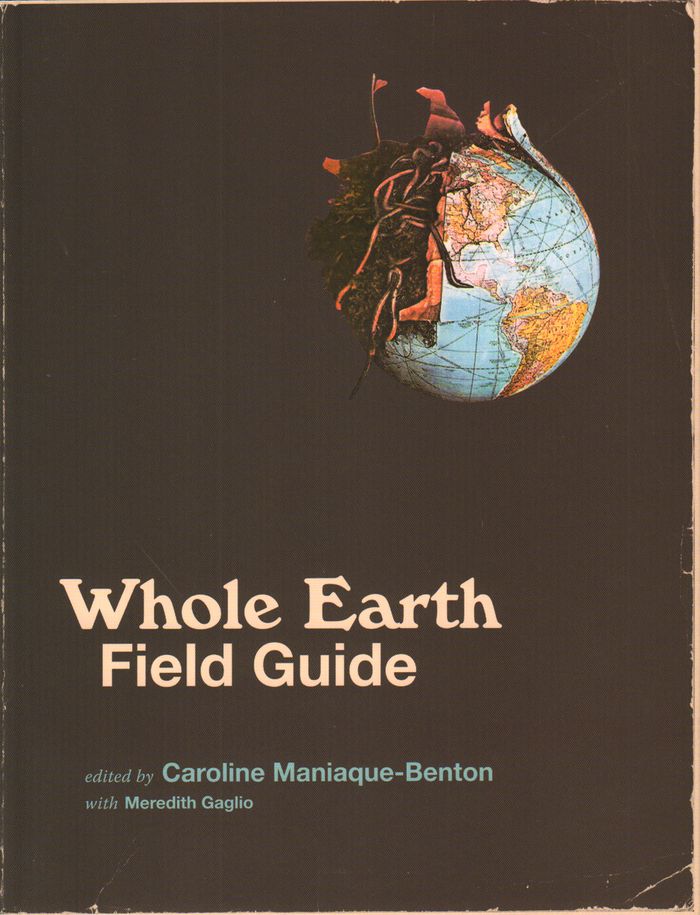
The Whole Earth Catalog was a cultural touchstone of the 1960s and 1970s. Between 1968 and 1971, almost two million copies of its various editions were sold, and not just to commune-dwellers and hippies. Millions of mainstream readers turned to the Whole Earth Catalog for practical advice and intellectual stimulation, finding everything from a review of Buckminster Fuller to recommendations for juicers. This book offers selections from eighty texts from the nearly 1,000 items of "suggested reading" in the Last Whole Earth Catalog. Illustrated and meticulously documented, this fascinating selection of texts cited as 'suggested reading' in the Whole Earth Catalog gives us a fresh, new look at this bible of a generation. Wonderful juxtapositions abound: Buckminster Fuller and Wendell Berry; Timothy Leary and Lao-Tzu; Thoreau and Marshall McLuhan; the Boston Women's Health Collective and Norbert Wiener; Nicholas Negroponte and Kakuzo Okakura; and Margaret Mead and James Baldwin (their A Rap on Race). At once libertarian and communitarian, practical and mystical, scientific and hands-on, Whole Earth Field Guide reveals the astonishing energy and spirit that motivated thousands of young people to challenge the status quo and to grapple, with remarkable prescience, with issues such as ecology and information technology that still confront us today.
Whole earth field guide
Actions:
Price:
$46.95
(available to order)
Summary:
The Whole Earth Catalog was a cultural touchstone of the 1960s and 1970s. Between 1968 and 1971, almost two million copies of its various editions were sold, and not just to commune-dwellers and hippies. Millions of mainstream readers turned to the Whole Earth Catalog for practical advice and intellectual stimulation, finding everything from a review of Buckminster Fuller to recommendations for juicers. This book offers selections from eighty texts from the nearly 1,000 items of "suggested reading" in the Last Whole Earth Catalog. Illustrated and meticulously documented, this fascinating selection of texts cited as 'suggested reading' in the Whole Earth Catalog gives us a fresh, new look at this bible of a generation. Wonderful juxtapositions abound: Buckminster Fuller and Wendell Berry; Timothy Leary and Lao-Tzu; Thoreau and Marshall McLuhan; the Boston Women's Health Collective and Norbert Wiener; Nicholas Negroponte and Kakuzo Okakura; and Margaret Mead and James Baldwin (their A Rap on Race). At once libertarian and communitarian, practical and mystical, scientific and hands-on, Whole Earth Field Guide reveals the astonishing energy and spirit that motivated thousands of young people to challenge the status quo and to grapple, with remarkable prescience, with issues such as ecology and information technology that still confront us today.
Form:
books
books
Publication:
October 2016
October 2016
Form:
books
books
Actions:
Price:
$99.00
(available in store)
Summary:
In an age of social and environmental crises, we need to critically rethink the role of the built environment and how best to put it to work. ''Measures and Meanings of Spatial Capital'' presents a new theory of spatial capital, arguing that spatial form is essential for building resilience into highly complex urban systems. Lars Marcus argues that the built environment(...)
$99.00
(available in store)
Summary:
In an age of social and environmental crises, we need to critically rethink the role of the built environment and how best to put it to work. ''Measures and Meanings of Spatial Capital'' presents a new theory of spatial capital, arguing that spatial form is essential for building resilience into highly complex urban systems. Lars Marcus argues that the built environment(...)
Title:
Measures and meanings of spatial capital
Actions:
Price:
$99.00
(available in store)
Summary:
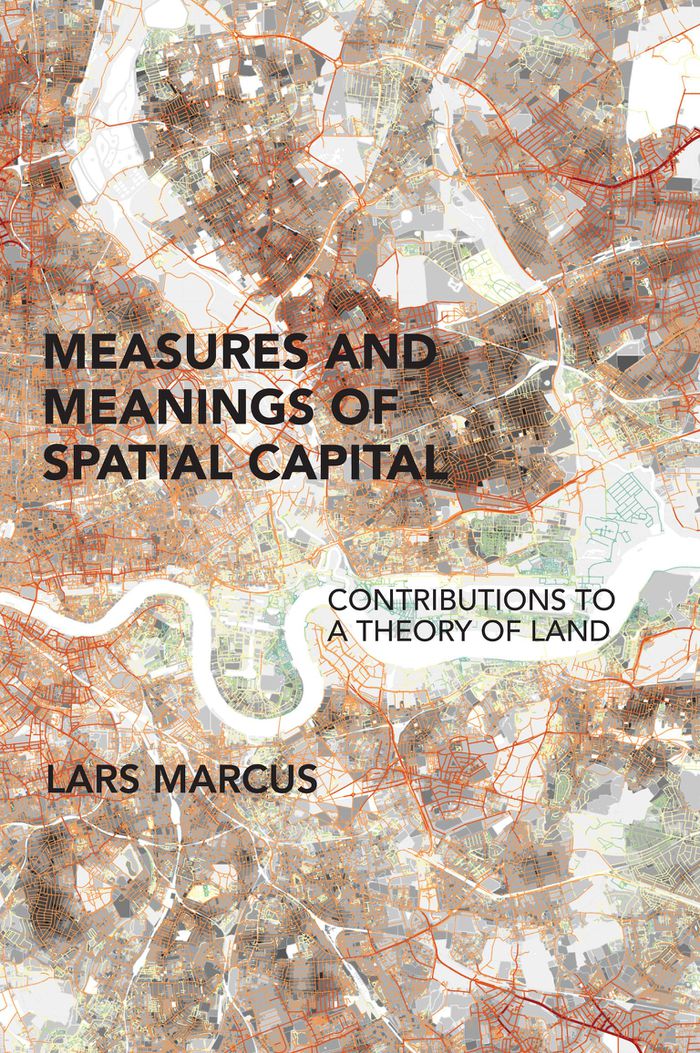
In an age of social and environmental crises, we need to critically rethink the role of the built environment and how best to put it to work. ''Measures and Meanings of Spatial Capital'' presents a new theory of spatial capital, arguing that spatial form is essential for building resilience into highly complex urban systems. Lars Marcus argues that the built environment constitutes a form of capital that enhances other forms of capital in cities (such as social, economic, and ecological capital), if designed with those goals in mind. This represents an important and necessary shift in how we approach urban space in the numerous studies of cities that are conducted in a range of disciplines today, such as urban sociology, urban economics, and urban ecology. In contemporary urban studies, land has oddly lost its position alongside labor and capital as one of the three fundamental production factors in economic theory, but as Marcus shows, misconceptions of land are at the root of social and environmental crises worldwide. By defining the challenges and modeling our use of spatial form to enhance/improve land, and then synthesizing data into a unified theory of spatial capital, Marcus provides a crucial reframing of how we can best plan and design our cities for the global challenges we are facing.
Measures and meanings of spatial capital
Actions:
Price:
$99.00
(available in store)
Summary:
In an age of social and environmental crises, we need to critically rethink the role of the built environment and how best to put it to work. ''Measures and Meanings of Spatial Capital'' presents a new theory of spatial capital, arguing that spatial form is essential for building resilience into highly complex urban systems. Lars Marcus argues that the built environment constitutes a form of capital that enhances other forms of capital in cities (such as social, economic, and ecological capital), if designed with those goals in mind. This represents an important and necessary shift in how we approach urban space in the numerous studies of cities that are conducted in a range of disciplines today, such as urban sociology, urban economics, and urban ecology. In contemporary urban studies, land has oddly lost its position alongside labor and capital as one of the three fundamental production factors in economic theory, but as Marcus shows, misconceptions of land are at the root of social and environmental crises worldwide. By defining the challenges and modeling our use of spatial form to enhance/improve land, and then synthesizing data into a unified theory of spatial capital, Marcus provides a crucial reframing of how we can best plan and design our cities for the global challenges we are facing.
Form:
books
books
Publication:
February 2025
February 2025
Subject:
Urban Theory
Urban Theory
Form:
books
books

Price:
$54.00
(available to order)
Summary:
The relationship between sound and space has become central to both creative practices in music and sound art and contemporary scholarship on sound. Entire subfields have emerged in connection to the spatial aspects of sound, from spatial audio and sound installation to acoustic ecology and soundscape studies. But how did our understanding of sound become spatial? In(...)
$54.00
(available to order)
Summary:
The relationship between sound and space has become central to both creative practices in music and sound art and contemporary scholarship on sound. Entire subfields have emerged in connection to the spatial aspects of sound, from spatial audio and sound installation to acoustic ecology and soundscape studies. But how did our understanding of sound become spatial? In(...)
Title:
Stereophonica: Sound and space in science, technology and the arts
Actions:
Price:
$54.00
(available to order)
Summary:
The relationship between sound and space has become central to both creative practices in music and sound art and contemporary scholarship on sound. Entire subfields have emerged in connection to the spatial aspects of sound, from spatial audio and sound installation to acoustic ecology and soundscape studies. But how did our understanding of sound become spatial? In ''Stereophonica,'' Gascia Ouzounian examines a series of historical episodes that transformed ideas of sound and space, from the advent of stereo technologies in the nineteenth century to visual representations of sonic environments today. Developing a uniquely interdisciplinary perspective, Ouzounian draws on both the history of science and technology and the history of music and sound art. She investigates the binaural apparatus that allowed nineteenth-century listeners to observe sound in three dimensions; examines the development of military technologies for sound location during World War I; revisits experiments in stereo sound at Bell Telephone Laboratories in the 1930s; and considers the creation of "optimized acoustical environments" for theaters and factories. She explores the development of multichannel "spatial music" in the 1950s and sound installation art in the 1960s; analyzes the mapping of soundscapes; and investigates contemporary approaches to sonic urbanism, sonic practices that reimagine urban environments through sound.
Stereophonica: Sound and space in science, technology and the arts
Actions:
Price:
$54.00
(available to order)
Summary:
The relationship between sound and space has become central to both creative practices in music and sound art and contemporary scholarship on sound. Entire subfields have emerged in connection to the spatial aspects of sound, from spatial audio and sound installation to acoustic ecology and soundscape studies. But how did our understanding of sound become spatial? In ''Stereophonica,'' Gascia Ouzounian examines a series of historical episodes that transformed ideas of sound and space, from the advent of stereo technologies in the nineteenth century to visual representations of sonic environments today. Developing a uniquely interdisciplinary perspective, Ouzounian draws on both the history of science and technology and the history of music and sound art. She investigates the binaural apparatus that allowed nineteenth-century listeners to observe sound in three dimensions; examines the development of military technologies for sound location during World War I; revisits experiments in stereo sound at Bell Telephone Laboratories in the 1930s; and considers the creation of "optimized acoustical environments" for theaters and factories. She explores the development of multichannel "spatial music" in the 1950s and sound installation art in the 1960s; analyzes the mapping of soundscapes; and investigates contemporary approaches to sonic urbanism, sonic practices that reimagine urban environments through sound.
Form:
books
books
Publication:
February 2021
February 2021
Subject:
Acoustics
Acoustics
Form:
books
books
Actions:
Price:
$39.95
(available to order)
Summary:
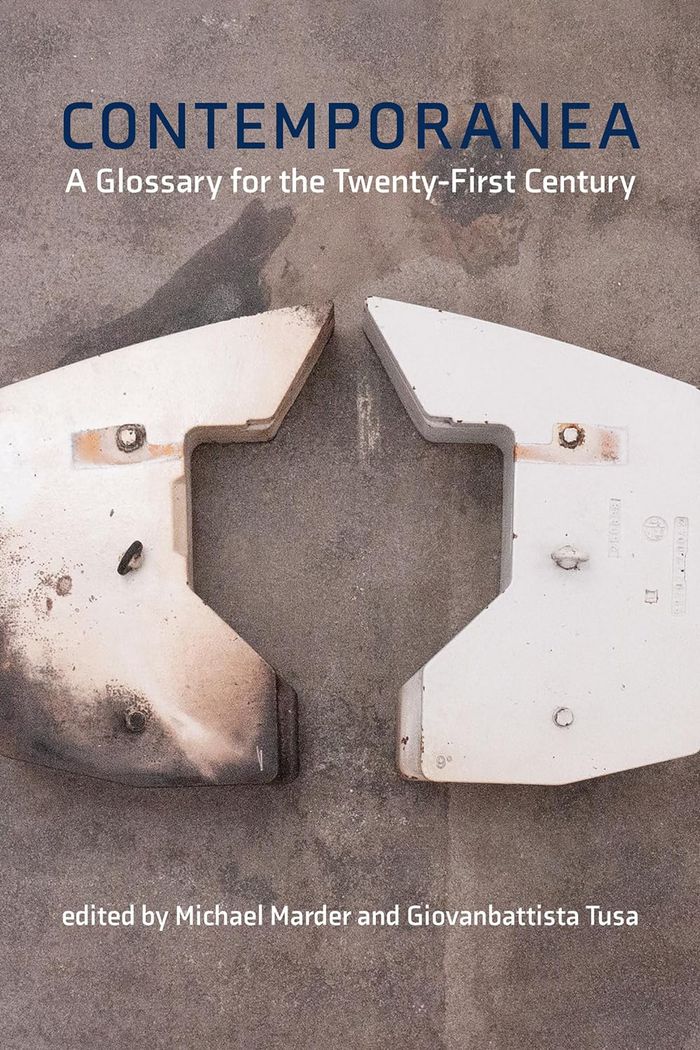
"Contemporanea" is a nascent lexicon for the twenty-first century edited by seasoned philosophers and authors Michael Marder and Giovanbattista Tusa. The collection showcases perspectives from a range of noteworthy thinkers in philosophy, ecology, and cultural studies, as well as artists, from across the globe, including Slavoj Zizek, Timothy Morton, Denise Ferreira Da(...)
$39.95
(available to order)
Summary:
"Contemporanea" is a nascent lexicon for the twenty-first century edited by seasoned philosophers and authors Michael Marder and Giovanbattista Tusa. The collection showcases perspectives from a range of noteworthy thinkers in philosophy, ecology, and cultural studies, as well as artists, from across the globe, including Slavoj Zizek, Timothy Morton, Denise Ferreira Da(...)
Title:
Contemporanea: a glossary for the twenty-first century
Actions:
Price:
$39.95
(available to order)
Summary:
"Contemporanea" is a nascent lexicon for the twenty-first century edited by seasoned philosophers and authors Michael Marder and Giovanbattista Tusa. The collection showcases perspectives from a range of noteworthy thinkers in philosophy, ecology, and cultural studies, as well as artists, from across the globe, including Slavoj Zizek, Timothy Morton, Denise Ferreira Da Silva, and Vandana Shiva, who each describe what they anticipate will be the concepts shaping the trajectory of this century—everything from the world state to the nuclear taboo, automation to Teslaism, plant sexuality to arachnomancy, and ecotrauma to resonances, to name a few. This century, as the editors explain, has to date grounded itself in the debris of the preceding century, whose revolutions and struggles failed to transform our time: post-colonialism, post-fascism, and post-liberalism have morphed into neocolonialism, neoliberalism, and neofascism, often combined in a previously unimaginable mix. And, just as the political developments at the beginning of the twenty-first century revived and reshuffled those of the preceding epoch, so too have philosophical trends sought to breathe fresh life into the stillborn -isms of the past—realism, vitalism, logicism, materialism, empiricism, criticism—adding the adjective "new" and sometimes "radical" before them. To articulate a different future, another language is needed. And, to develop another language, one needs to develop fresh concepts, including the concepts proposed in this collection.
Contemporanea: a glossary for the twenty-first century
Actions:
Price:
$39.95
(available to order)
Summary:
"Contemporanea" is a nascent lexicon for the twenty-first century edited by seasoned philosophers and authors Michael Marder and Giovanbattista Tusa. The collection showcases perspectives from a range of noteworthy thinkers in philosophy, ecology, and cultural studies, as well as artists, from across the globe, including Slavoj Zizek, Timothy Morton, Denise Ferreira Da Silva, and Vandana Shiva, who each describe what they anticipate will be the concepts shaping the trajectory of this century—everything from the world state to the nuclear taboo, automation to Teslaism, plant sexuality to arachnomancy, and ecotrauma to resonances, to name a few. This century, as the editors explain, has to date grounded itself in the debris of the preceding century, whose revolutions and struggles failed to transform our time: post-colonialism, post-fascism, and post-liberalism have morphed into neocolonialism, neoliberalism, and neofascism, often combined in a previously unimaginable mix. And, just as the political developments at the beginning of the twenty-first century revived and reshuffled those of the preceding epoch, so too have philosophical trends sought to breathe fresh life into the stillborn -isms of the past—realism, vitalism, logicism, materialism, empiricism, criticism—adding the adjective "new" and sometimes "radical" before them. To articulate a different future, another language is needed. And, to develop another language, one needs to develop fresh concepts, including the concepts proposed in this collection.
Form:
books
books
Publication:
March 2024
March 2024
Subject:
Critical Theory
Critical Theory
Form:
books
books
Actions:
Price:
$54.00
(available to order)
Summary:
The British-born artist and writer Leonora Carrington (1917–2011) is one of the vanguards in the history of women artists and the history of Surrealism. The interests of this visionary—feminism, ecology, the arcane and the mystical, the interconnectedness of everything—are now shared by many. Challenging the conventions of her time, Carrington abandoned family, society,(...)
$54.00
(available to order)
Summary:
The British-born artist and writer Leonora Carrington (1917–2011) is one of the vanguards in the history of women artists and the history of Surrealism. The interests of this visionary—feminism, ecology, the arcane and the mystical, the interconnectedness of everything—are now shared by many. Challenging the conventions of her time, Carrington abandoned family, society,(...)
Title:
Surreal spaces: The life and art of Leonora Carrington
Actions:
Price:
$54.00
(available to order)
Summary:
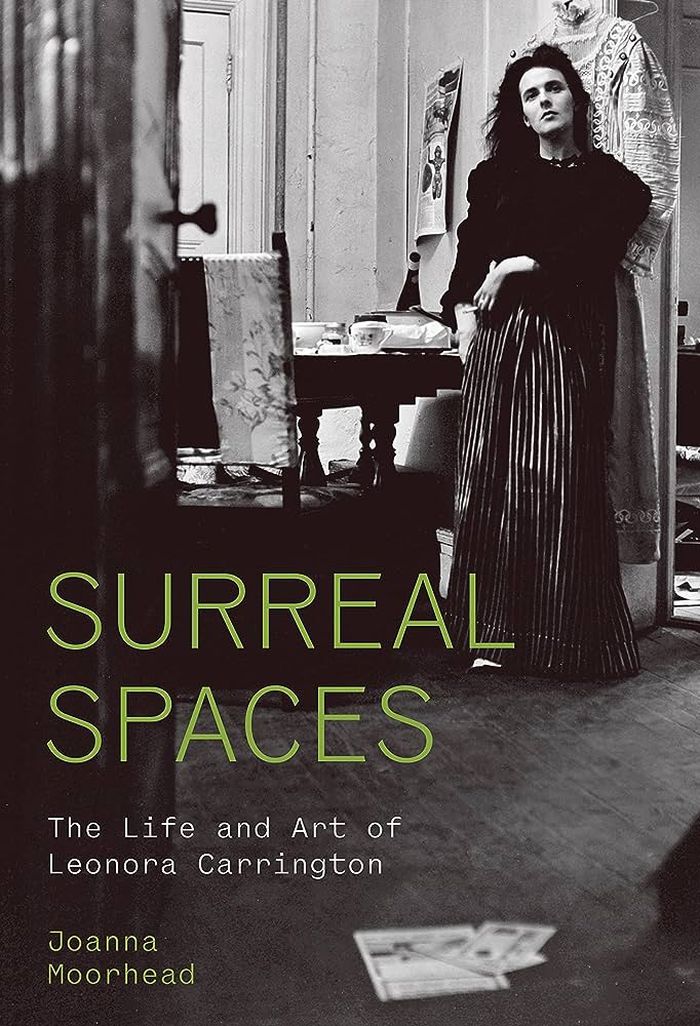
The British-born artist and writer Leonora Carrington (1917–2011) is one of the vanguards in the history of women artists and the history of Surrealism. The interests of this visionary—feminism, ecology, the arcane and the mystical, the interconnectedness of everything—are now shared by many. Challenging the conventions of her time, Carrington abandoned family, society, and England to embrace new experiences and forge a unique artistic style in Europe and the Americas. In this evocative illustrated biography, writer and journalist Joanna Moorhead traces her cousin’s footsteps, exploring the artist’s life, loves, friendships, and work. Leading readers on a personal journey across Britain, Ireland, France, Italy, Spain, Portugal, the United States, and Mexico, ''Surreal spaces'' describes the places and experiences that would become etched in Carrington’s memory and be echoed, sometimes decades later, in her art and writing—whether her grandmother’s kitchen with its giant stove; a remote Cornish hideaway where she holidayed with Max Ernst, Lee Miller, and Man Ray; the Left Bank of Paris; an asylum in Santander, Spain; New York, where she lived among other European exiles; or Mexico City, her final sanctuary. 'Houses are really bodies,' Carrington wrote in her novella ''The Hearing Trumpet''. 'We connect ourselves with walls, roofs and objects just as we hang on to our livers, skeletons, flesh and blood streams.'
Surreal spaces: The life and art of Leonora Carrington
Actions:
Price:
$54.00
(available to order)
Summary:
The British-born artist and writer Leonora Carrington (1917–2011) is one of the vanguards in the history of women artists and the history of Surrealism. The interests of this visionary—feminism, ecology, the arcane and the mystical, the interconnectedness of everything—are now shared by many. Challenging the conventions of her time, Carrington abandoned family, society, and England to embrace new experiences and forge a unique artistic style in Europe and the Americas. In this evocative illustrated biography, writer and journalist Joanna Moorhead traces her cousin’s footsteps, exploring the artist’s life, loves, friendships, and work. Leading readers on a personal journey across Britain, Ireland, France, Italy, Spain, Portugal, the United States, and Mexico, ''Surreal spaces'' describes the places and experiences that would become etched in Carrington’s memory and be echoed, sometimes decades later, in her art and writing—whether her grandmother’s kitchen with its giant stove; a remote Cornish hideaway where she holidayed with Max Ernst, Lee Miller, and Man Ray; the Left Bank of Paris; an asylum in Santander, Spain; New York, where she lived among other European exiles; or Mexico City, her final sanctuary. 'Houses are really bodies,' Carrington wrote in her novella ''The Hearing Trumpet''. 'We connect ourselves with walls, roofs and objects just as we hang on to our livers, skeletons, flesh and blood streams.'
Form:
books
books
Publication:
August 2023
August 2023
Subject:
Contemporary Art Monographs
Contemporary Art Monographs
Form:
books
books
Actions:
Price:
$37.95
(available to order)
Summary:
People are key elements of wild places. At the same time, human entanglements with wild ecologies involve extractivism, the growth of resource-based economies, and imperial-colonial expansion, activities that are wreaking havoc on our planet. Through an ethnographic exploration of Canada’s ten UNESCO Natural World Heritage sites, ''Inhabited'' reflects on the meanings(...)
$37.95
(available to order)
Summary:
People are key elements of wild places. At the same time, human entanglements with wild ecologies involve extractivism, the growth of resource-based economies, and imperial-colonial expansion, activities that are wreaking havoc on our planet. Through an ethnographic exploration of Canada’s ten UNESCO Natural World Heritage sites, ''Inhabited'' reflects on the meanings(...)
Subject:
Environment and environmental theory
Environment and environmental theory
Publication:
November 2021
November 2021
Title:
Inhabited: Wildness and the vitality of the land
Actions:
Price:
$37.95
(available to order)
Summary:
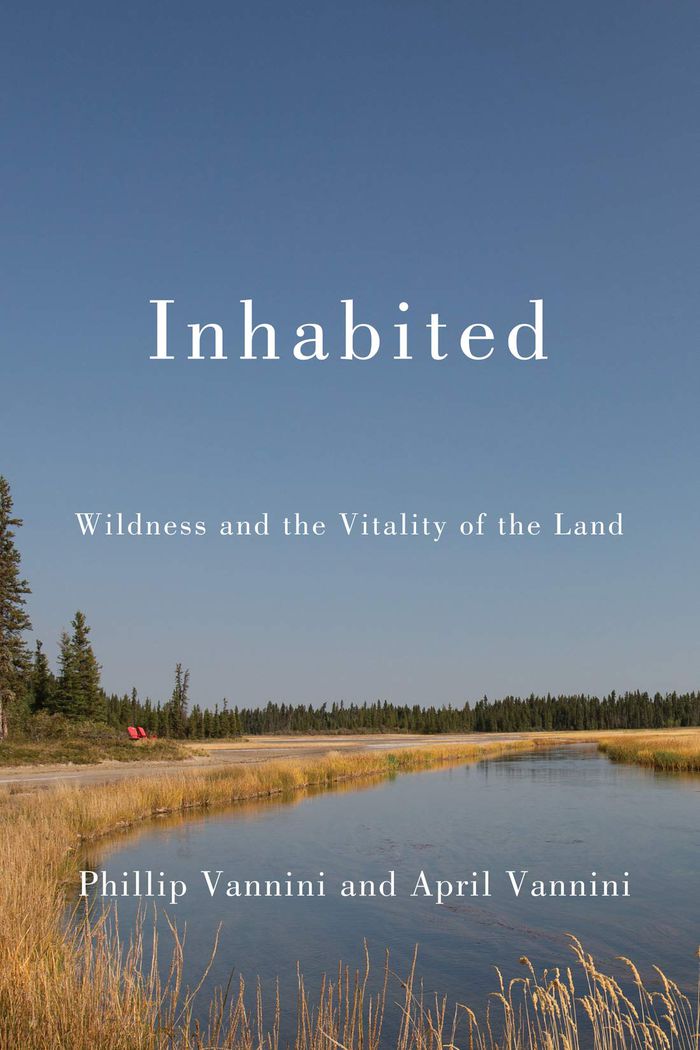
People are key elements of wild places. At the same time, human entanglements with wild ecologies involve extractivism, the growth of resource-based economies, and imperial-colonial expansion, activities that are wreaking havoc on our planet. Through an ethnographic exploration of Canada’s ten UNESCO Natural World Heritage sites, ''Inhabited'' reflects on the meanings of wildness, wilderness, and natural heritage. As we are introduced to local inhabitants and their perspectives, Phillip Vannini and April Vannini ask us to reflect on the colonial and dualist assumptions behind the received meaning of wild, challenging us to reimagine wildness as relational and rooted in vitality. Over the three years they spent in and around these sites, they learned from Indigenous and non-Indigenous peoples about their entanglements with each other and with non-human animals, rocks, plants, trees, sky, water, and spirits. The stories, actions, and experiences they encountered challenge conventional narratives of wild places as uninhabited by people and disconnected from culture and society. While it might be tempting to dismiss the idea of wildness as outdated in the Anthropocene era, ''Inhabited'' suggests that rethinking wildness offers a better – if messier – way forward. Part geography and anthropology, part environmental and cultural studies, and part politics and ecology, ''Inhabited'' balances a genuine love of nature’s vitality with a culturally responsible understanding of its interconnectedness with more-than-human ways of life.
Inhabited: Wildness and the vitality of the land
Actions:
Price:
$37.95
(available to order)
Summary:
People are key elements of wild places. At the same time, human entanglements with wild ecologies involve extractivism, the growth of resource-based economies, and imperial-colonial expansion, activities that are wreaking havoc on our planet. Through an ethnographic exploration of Canada’s ten UNESCO Natural World Heritage sites, ''Inhabited'' reflects on the meanings of wildness, wilderness, and natural heritage. As we are introduced to local inhabitants and their perspectives, Phillip Vannini and April Vannini ask us to reflect on the colonial and dualist assumptions behind the received meaning of wild, challenging us to reimagine wildness as relational and rooted in vitality. Over the three years they spent in and around these sites, they learned from Indigenous and non-Indigenous peoples about their entanglements with each other and with non-human animals, rocks, plants, trees, sky, water, and spirits. The stories, actions, and experiences they encountered challenge conventional narratives of wild places as uninhabited by people and disconnected from culture and society. While it might be tempting to dismiss the idea of wildness as outdated in the Anthropocene era, ''Inhabited'' suggests that rethinking wildness offers a better – if messier – way forward. Part geography and anthropology, part environmental and cultural studies, and part politics and ecology, ''Inhabited'' balances a genuine love of nature’s vitality with a culturally responsible understanding of its interconnectedness with more-than-human ways of life.
Form:
books
books
Publication:
November 2021
November 2021
Subject:
Environment and environmental theory
Environment and environmental theory
Form:
books
books
Actions:
Price:
$54.99
(available in store)
Summary:
There is almost nothing new left to say about the urgent need to reduce our devastating impact on the biosphere that supports us. In architectural terms, we have been told since the 1960s that mainstream architecture is not engaged enough with the environmental consequences of what it produces and how it produces it. The usual approach is to propose new ways of designing(...)
$54.99
(available in store)
Summary:
There is almost nothing new left to say about the urgent need to reduce our devastating impact on the biosphere that supports us. In architectural terms, we have been told since the 1960s that mainstream architecture is not engaged enough with the environmental consequences of what it produces and how it produces it. The usual approach is to propose new ways of designing(...)
Title:
Revolution? Architecture and the antropocene
Actions:
Price:
$54.99
(available in store)
Summary:
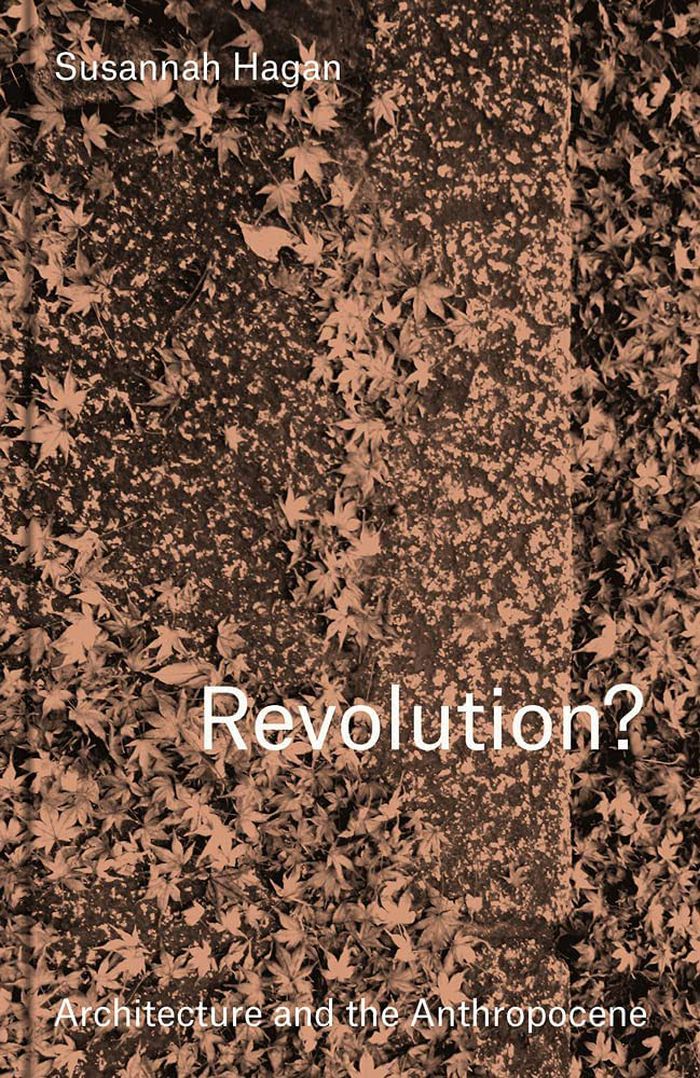
There is almost nothing new left to say about the urgent need to reduce our devastating impact on the biosphere that supports us. In architectural terms, we have been told since the 1960s that mainstream architecture is not engaged enough with the environmental consequences of what it produces and how it produces it. The usual approach is to propose new ways of designing and building to persuade the reader of the centrality of environmental concerns. But too many readers have remained resolutely unpersuaded over decades. In four sharp, interlocking essays, this book asks why the majority of the architectural profession and its clients still only pay lip service to the importance of the environmental. In each essay, therefore, are examples of innovative and determined people pursuing other ways of practicing architecture and other ways of training architects for this critical century, who are pulling the model of a nature-centric practice out of the margins and into the centre.
Revolution? Architecture and the antropocene
Actions:
Price:
$54.99
(available in store)
Summary:
There is almost nothing new left to say about the urgent need to reduce our devastating impact on the biosphere that supports us. In architectural terms, we have been told since the 1960s that mainstream architecture is not engaged enough with the environmental consequences of what it produces and how it produces it. The usual approach is to propose new ways of designing and building to persuade the reader of the centrality of environmental concerns. But too many readers have remained resolutely unpersuaded over decades. In four sharp, interlocking essays, this book asks why the majority of the architectural profession and its clients still only pay lip service to the importance of the environmental. In each essay, therefore, are examples of innovative and determined people pursuing other ways of practicing architecture and other ways of training architects for this critical century, who are pulling the model of a nature-centric practice out of the margins and into the centre.
Form:
books
books
Publication:
April 2022
April 2022
Subject:
Architecture ecologies
Architecture ecologies
Form:
books
books
Actions:
Price:
$65.00
(available in store)
Summary:
In the 1960s the French colonial regime detonated four atmospheric atomic bombs, thirteen underground nuclear bombs, and conducted other nuclear experiments in the Algerian Sahara. This secret, still-classified programme occurred during and after the Algerian War (1954–1962). Meticulously culled together from numerous sources by architectural historian Samia Henni, this(...)
$65.00
(available in store)
Summary:
In the 1960s the French colonial regime detonated four atmospheric atomic bombs, thirteen underground nuclear bombs, and conducted other nuclear experiments in the Algerian Sahara. This secret, still-classified programme occurred during and after the Algerian War (1954–1962). Meticulously culled together from numerous sources by architectural historian Samia Henni, this(...)
Title:
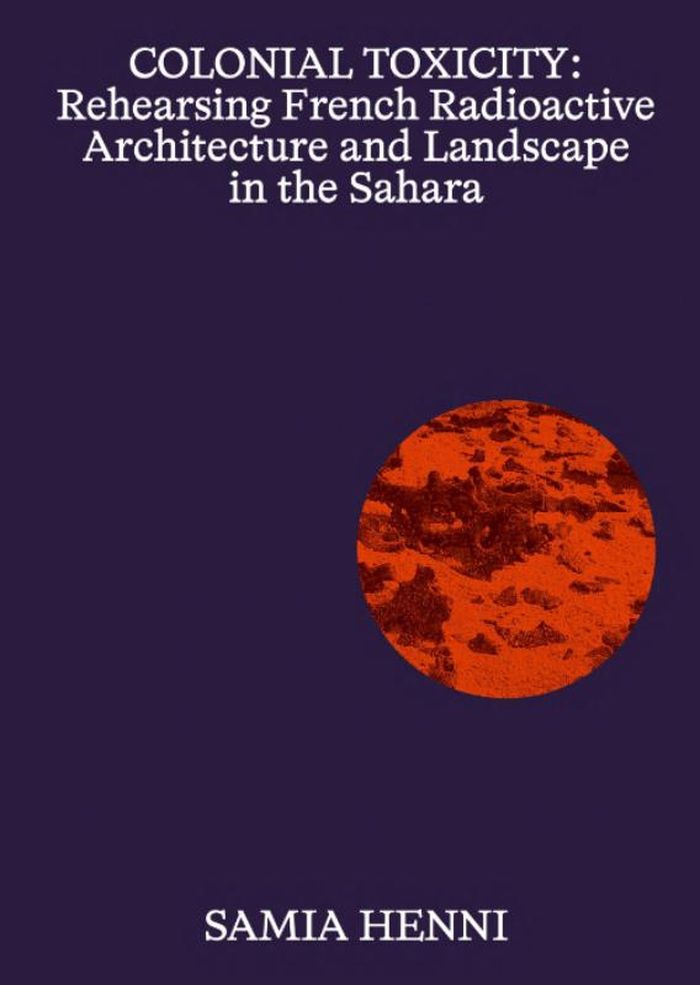
Colonial toxicity: Rehearsing French radioactive architecture and landscape in the Sahara
Actions:
Price:
$65.00
(available in store)
Summary:
In the 1960s the French colonial regime detonated four atmospheric atomic bombs, thirteen underground nuclear bombs, and conducted other nuclear experiments in the Algerian Sahara. This secret, still-classified programme occurred during and after the Algerian War (1954–1962). Meticulously culled together from numerous sources by architectural historian Samia Henni, this publication’s wealth of materials documenting the violent history of France’s activities in the Algerian desert offers a rich repository for all those concerned with histories of nuclear weapons and engaged at the intersections of spatial, social, and environmental justice, as well as anticolonial archival practices.
Colonial toxicity: Rehearsing French radioactive architecture and landscape in the Sahara
Actions:
Price:
$65.00
(available in store)
Summary:
In the 1960s the French colonial regime detonated four atmospheric atomic bombs, thirteen underground nuclear bombs, and conducted other nuclear experiments in the Algerian Sahara. This secret, still-classified programme occurred during and after the Algerian War (1954–1962). Meticulously culled together from numerous sources by architectural historian Samia Henni, this publication’s wealth of materials documenting the violent history of France’s activities in the Algerian desert offers a rich repository for all those concerned with histories of nuclear weapons and engaged at the intersections of spatial, social, and environmental justice, as well as anticolonial archival practices.
Form:
books
books
Publication:
December 2023
December 2023
Subject:
Architecture ecologies
Architecture ecologies


