


2285 Results
Form:
books
books
Title:
The city and the city
The city and the city
Actions:
Price:
$30.00
(available to order)
Summary:
Author China Miéville delivers an existential thriller set in a city unlike any other – real or imagined. When a murdered woman is found in the city of Beszel, somewhere at the edge of Europe, it looks to be a routine case for Inspector Tyador Borlú of the Extreme Crime Squad. But as he investigates, the evidence points to conspiracies far stranger and more deadly than(...)
$30.00
(available to order)
Summary:
Author China Miéville delivers an existential thriller set in a city unlike any other – real or imagined. When a murdered woman is found in the city of Beszel, somewhere at the edge of Europe, it looks to be a routine case for Inspector Tyador Borlú of the Extreme Crime Squad. But as he investigates, the evidence points to conspiracies far stranger and more deadly than(...)
Title:
The city and the city
Actions:
Price:
$30.00
(available to order)
Summary:
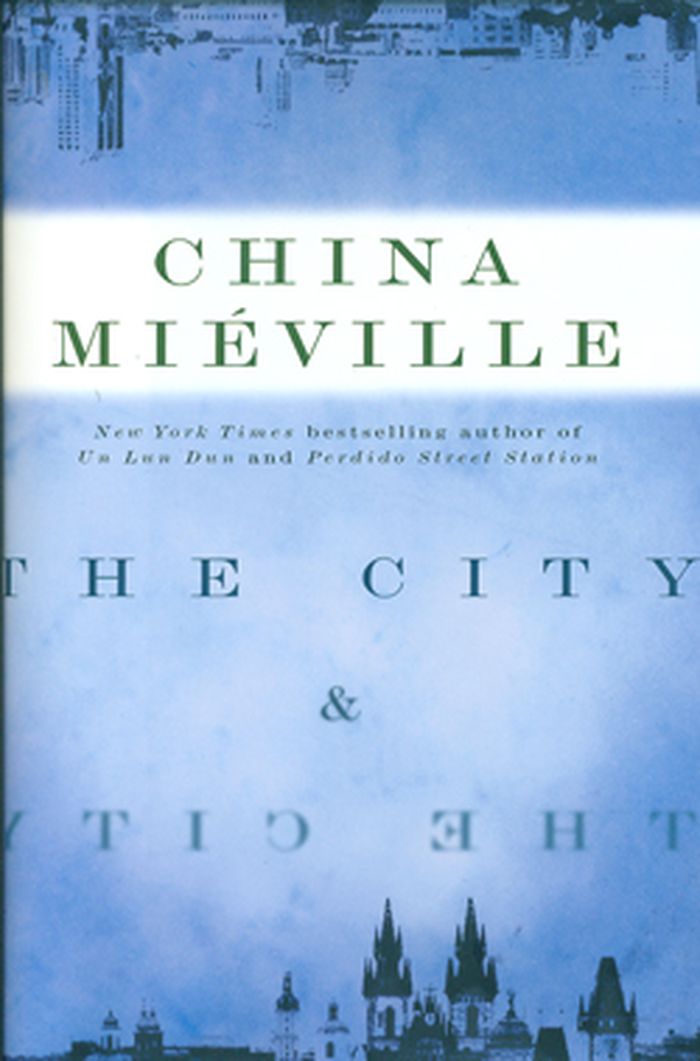
Author China Miéville delivers an existential thriller set in a city unlike any other – real or imagined. When a murdered woman is found in the city of Beszel, somewhere at the edge of Europe, it looks to be a routine case for Inspector Tyador Borlú of the Extreme Crime Squad. But as he investigates, the evidence points to conspiracies far stranger and more deadly than anything he could have imagined. Borlú must travel from the decaying Beszel to the only metropolis on Earth as strange as his own. This is a border crossing like no other, a journey as psychic as it is physical, a shift in perception, a seeing of the unseen. His destination is Beszel’s equal, rival, and intimate neighbor, the rich and vibrant city of Ul Qoma. With Ul Qoman detective Qussim Dhatt, and struggling with his own transition, Borlú is enmeshed in a sordid underworld of rabid nationalists intent on destroying their neighboring city, and unificationists who dream of dissolving the two into one. As the detectives uncover the dead woman’s secrets, they begin to suspect a truth that could cost them and those they care about more than their lives. What stands against them are murderous powers in Beszel and in Ul Qoma: and, most terrifying of all, that which lies between these two cities. Casting shades of Kafka and Philip K. Dick, Raymond Chandler and 1984, "The City & the City" is a murder mystery taken to dazzling metaphysical and artistic heights.
The city and the city
Actions:
Price:
$30.00
(available to order)
Summary:
Author China Miéville delivers an existential thriller set in a city unlike any other – real or imagined. When a murdered woman is found in the city of Beszel, somewhere at the edge of Europe, it looks to be a routine case for Inspector Tyador Borlú of the Extreme Crime Squad. But as he investigates, the evidence points to conspiracies far stranger and more deadly than anything he could have imagined. Borlú must travel from the decaying Beszel to the only metropolis on Earth as strange as his own. This is a border crossing like no other, a journey as psychic as it is physical, a shift in perception, a seeing of the unseen. His destination is Beszel’s equal, rival, and intimate neighbor, the rich and vibrant city of Ul Qoma. With Ul Qoman detective Qussim Dhatt, and struggling with his own transition, Borlú is enmeshed in a sordid underworld of rabid nationalists intent on destroying their neighboring city, and unificationists who dream of dissolving the two into one. As the detectives uncover the dead woman’s secrets, they begin to suspect a truth that could cost them and those they care about more than their lives. What stands against them are murderous powers in Beszel and in Ul Qoma: and, most terrifying of all, that which lies between these two cities. Casting shades of Kafka and Philip K. Dick, Raymond Chandler and 1984, "The City & the City" is a murder mystery taken to dazzling metaphysical and artistic heights.
Form:
books
books
Publication:
May 2009
May 2009
Subject:
Situationism
Situationism
Form:
journals and magazines
journals and magazines
Title:
Teaching geography.
Teaching geography.
Actions:
Description:
1 online resource (volumes) : illustrations
Author:
Subject:
Publication:
Essex [England] : Published for the Geographical Association by Longman Group Ltd, ©1975-
Essex [England] : Published for the Geographical Association by Longman Group Ltd, ©1975-
Form:
journals and magazines
journals and magazines
Publication:
Essex [England] : Published for the Geographical Association by Longman Group Ltd, ©1975-
Essex [England] : Published for the Geographical Association by Longman Group Ltd, ©1975-
Author:
Subject:
Form:
journals and magazines
journals and magazines
Actions:
Description:
1 online resource
Author:
Subject:
Publication:
[London] : Royal Society of Medicine Press, [London] : Sage
[London] : Royal Society of Medicine Press, [London] : Sage
Form:
journals and magazines
journals and magazines
Publication:
[London] : Royal Society of Medicine Press, [London] : Sage
[London] : Royal Society of Medicine Press, [London] : Sage
Author:
Subject:
Form:
books
books
Title:
Design by numbers
Design by numbers
Actions:
Price:
$44.95
(available in store)
Summary:
Most art and technology projects pair artists with engineers or scientists: the artist has the conception, and the technical person provides the know-how. John Maeda is an artist and a computer scientist, and he views the computer not as a substitute for brush and paint but as an artistic medium in its own right. Design By Numbers is a reader-friendly tutorial on both the(...)
$44.95
(available in store)
Summary:
Most art and technology projects pair artists with engineers or scientists: the artist has the conception, and the technical person provides the know-how. John Maeda is an artist and a computer scientist, and he views the computer not as a substitute for brush and paint but as an artistic medium in its own right. Design By Numbers is a reader-friendly tutorial on both the(...)
Subject:
Graphic Designers, Monographs
Graphic Designers, Monographs
Publication:
October 2001, Cambridge, Mass.
October 2001, Cambridge, Mass.
Title:
Design by numbers
Actions:
Price:
$44.95
(available in store)
Summary:
Most art and technology projects pair artists with engineers or scientists: the artist has the conception, and the technical person provides the know-how. John Maeda is an artist and a computer scientist, and he views the computer not as a substitute for brush and paint but as an artistic medium in its own right. Design By Numbers is a reader-friendly tutorial on both the philosophy and nuts-and-bolts techniques of programming for artists. Practicing what he preaches, Maeda composed Design By Numbers using a computational process he developed specifically for the book. He introduces a programming language and development environment, available on the Web, which can be freely downloaded or run directly within any JAVA-enabled Web browser. Appropriately, the new language is called DBN (for "design by numbers"). Designed for "visual" people--artists, designers, anyone who likes to pick up a pencil and doodle--DBN has very few commands and consists of elements resembling those of many other languages, such as LISP, LOGO, C/JAVA, and BASIC. Throughout the book Maeda emphasizes the importance--and delights--of understanding the motivation behind computer programming, as well as the many wonders that emerge from well-written programs. Sympathetic to the "mathematically challenged," he places minimal emphasis on mathematics in the first half of the book. Because computation is inherently mathematical, the books second half uses intermediate mathematical concepts that generally do not go beyond high-school algebra. The reader who masters the skills so clearly set out by Maeda will be ready to exploit the true character of digital media design.
Design by numbers
Actions:
Price:
$44.95
(available in store)
Summary:
Most art and technology projects pair artists with engineers or scientists: the artist has the conception, and the technical person provides the know-how. John Maeda is an artist and a computer scientist, and he views the computer not as a substitute for brush and paint but as an artistic medium in its own right. Design By Numbers is a reader-friendly tutorial on both the philosophy and nuts-and-bolts techniques of programming for artists. Practicing what he preaches, Maeda composed Design By Numbers using a computational process he developed specifically for the book. He introduces a programming language and development environment, available on the Web, which can be freely downloaded or run directly within any JAVA-enabled Web browser. Appropriately, the new language is called DBN (for "design by numbers"). Designed for "visual" people--artists, designers, anyone who likes to pick up a pencil and doodle--DBN has very few commands and consists of elements resembling those of many other languages, such as LISP, LOGO, C/JAVA, and BASIC. Throughout the book Maeda emphasizes the importance--and delights--of understanding the motivation behind computer programming, as well as the many wonders that emerge from well-written programs. Sympathetic to the "mathematically challenged," he places minimal emphasis on mathematics in the first half of the book. Because computation is inherently mathematical, the books second half uses intermediate mathematical concepts that generally do not go beyond high-school algebra. The reader who masters the skills so clearly set out by Maeda will be ready to exploit the true character of digital media design.
Form:
books
books
Publication:
October 2001, Cambridge, Mass.
October 2001, Cambridge, Mass.
Subject:
Graphic Designers, Monographs
Graphic Designers, Monographs
Form:
journals and magazines
journals and magazines
Title:
Quaderns 238 : hyperurban
Quaderns 238 : hyperurban
Actions:
Price:
$39.95
(available to order)
Summary:
The previous issue of "Quaderns" dealt with urban dysfunction or, rather, with the dysfunctionality of the suburban model and of the elements attendant on this dysfunctionality: the increase in mobility based on private transport, the appearance of shopping and leisure centres linked to road networks, the development of a mortgage system geared towards the purchase of(...)
$39.95
(available to order)
Summary:
The previous issue of "Quaderns" dealt with urban dysfunction or, rather, with the dysfunctionality of the suburban model and of the elements attendant on this dysfunctionality: the increase in mobility based on private transport, the appearance of shopping and leisure centres linked to road networks, the development of a mortgage system geared towards the purchase of(...)
Subject:
Magazines
Magazines
Publication:
January 1900, Barcelona
January 1900, Barcelona
Title:
Quaderns 238 : hyperurban
Actions:
Price:
$39.95
(available to order)
Summary:
The previous issue of "Quaderns" dealt with urban dysfunction or, rather, with the dysfunctionality of the suburban model and of the elements attendant on this dysfunctionality: the increase in mobility based on private transport, the appearance of shopping and leisure centres linked to road networks, the development of a mortgage system geared towards the purchase of the family home, and the social and environmental consequences of the extension across the territory of low-density urban sprawl. This issue sets out to address the opposite pole of dysfunctionality. On the basis of the paradox established by the images of scenes one and two, it aims to draw out an itinerary that takes in various places where the urban phenomenon approaches a degree of paroxysm. It explores situations that are brought about in very specific contexts of the city and that respond to the idea of the hyperurban, of the urban taken to the extreme of its spatial and signic saturation: city-centre districts, busy markets, plots so tiny as to be almost non-existent, the marginal occupation of residual spaces in the centre which are too small to be of any interest to the speculators... In short, a whole series of situations with conditions of density, concentration and intensity of use that are well in excess of the levels usually found in the urban fabric. It is between the suburban unconscious and hyperurban over-reality that the most plausible forms of a possible city are likely to be found.
Quaderns 238 : hyperurban
Actions:
Price:
$39.95
(available to order)
Summary:
The previous issue of "Quaderns" dealt with urban dysfunction or, rather, with the dysfunctionality of the suburban model and of the elements attendant on this dysfunctionality: the increase in mobility based on private transport, the appearance of shopping and leisure centres linked to road networks, the development of a mortgage system geared towards the purchase of the family home, and the social and environmental consequences of the extension across the territory of low-density urban sprawl. This issue sets out to address the opposite pole of dysfunctionality. On the basis of the paradox established by the images of scenes one and two, it aims to draw out an itinerary that takes in various places where the urban phenomenon approaches a degree of paroxysm. It explores situations that are brought about in very specific contexts of the city and that respond to the idea of the hyperurban, of the urban taken to the extreme of its spatial and signic saturation: city-centre districts, busy markets, plots so tiny as to be almost non-existent, the marginal occupation of residual spaces in the centre which are too small to be of any interest to the speculators... In short, a whole series of situations with conditions of density, concentration and intensity of use that are well in excess of the levels usually found in the urban fabric. It is between the suburban unconscious and hyperurban over-reality that the most plausible forms of a possible city are likely to be found.
Form:
journals and magazines
journals and magazines
Publication:
January 1900, Barcelona
January 1900, Barcelona
Subject:
Magazines
Magazines
Form:
books
books
Title:
Massive change
Massive change
Actions:
Price:
$39.95
(available to order)
Summary:
"Massive Change" is a modern illustrated primer on the new inventions, technologies, and events that are affecting the human race worldwide. The book is a part of a broader research project by Bruce Mau Design intended to provoke debate and discussion about the future of design culture, broadly defined as the “familiar objects and techniques that are transforming our(...)
$39.95
(available to order)
Summary:
"Massive Change" is a modern illustrated primer on the new inventions, technologies, and events that are affecting the human race worldwide. The book is a part of a broader research project by Bruce Mau Design intended to provoke debate and discussion about the future of design culture, broadly defined as the “familiar objects and techniques that are transforming our(...)
Subject:
Graphic Designers, Monographs
Graphic Designers, Monographs
Publication:
November 2004, New York
November 2004, New York
Title:
Massive change
Actions:
Price:
$39.95
(available to order)
Summary:
"Massive Change" is a modern illustrated primer on the new inventions, technologies, and events that are affecting the human race worldwide. The book is a part of a broader research project by Bruce Mau Design intended to provoke debate and discussion about the future of design culture, broadly defined as the “familiar objects and techniques that are transforming our lives.” In essays, interviews, and provocative imagery aimed at a broad audience, "Massive Change" explores the changing force of design in the contemporary world, and in doing so expands the definition of design to include the built environment, transportation technologies, revolutionary materials, energy and information systems, and living organisms. The book is divided into 11 heavily illustrated sections covering major areas of change in contemporary society — such as urbanism and architecture, the military, health and living, and wealth and politics. Each section intersperses intriguing documentary images with a general introductory essay, extended captions, and interviews with leading thinkers, including engineers, designers, philosophers, scientists, architects, artists, and writers. Concluding the book is a graphic timeline of significant inventions and world events from 10,000 B.C. to the present. "Massive Change" is a well designed, intelligent, visually provocative exploration of the myriad subjects percolating through popular culture: those we read about in magazines and on Web sites but rarely understand in any meaningful way. It poses the question: “Now that the human race can do almost anything, what will we do next?” Accompanies the internationally touring exhibition produced by Bruce Mau and his Institute without Borders.
Massive change
Actions:
Price:
$39.95
(available to order)
Summary:
"Massive Change" is a modern illustrated primer on the new inventions, technologies, and events that are affecting the human race worldwide. The book is a part of a broader research project by Bruce Mau Design intended to provoke debate and discussion about the future of design culture, broadly defined as the “familiar objects and techniques that are transforming our lives.” In essays, interviews, and provocative imagery aimed at a broad audience, "Massive Change" explores the changing force of design in the contemporary world, and in doing so expands the definition of design to include the built environment, transportation technologies, revolutionary materials, energy and information systems, and living organisms. The book is divided into 11 heavily illustrated sections covering major areas of change in contemporary society — such as urbanism and architecture, the military, health and living, and wealth and politics. Each section intersperses intriguing documentary images with a general introductory essay, extended captions, and interviews with leading thinkers, including engineers, designers, philosophers, scientists, architects, artists, and writers. Concluding the book is a graphic timeline of significant inventions and world events from 10,000 B.C. to the present. "Massive Change" is a well designed, intelligent, visually provocative exploration of the myriad subjects percolating through popular culture: those we read about in magazines and on Web sites but rarely understand in any meaningful way. It poses the question: “Now that the human race can do almost anything, what will we do next?” Accompanies the internationally touring exhibition produced by Bruce Mau and his Institute without Borders.
Form:
books
books
Publication:
November 2004, New York
November 2004, New York
Subject:
Graphic Designers, Monographs
Graphic Designers, Monographs
Form:
books
books
Actions:
Price:
$54.00
(available to order)
Summary:
We tend to think of architecture as a practice in permanence, but what if we looked instead for an architecture of transience? In "Things that move," Tim Anstey does just that: rather than assuming that architecture is, at a certain level, stationary, he considers how architecture moves subjects (referring to its emotive potential in the experience it creates); how it(...)
$54.00
(available to order)
Summary:
We tend to think of architecture as a practice in permanence, but what if we looked instead for an architecture of transience? In "Things that move," Tim Anstey does just that: rather than assuming that architecture is, at a certain level, stationary, he considers how architecture moves subjects (referring to its emotive potential in the experience it creates); how it(...)
Title:
Things that move: A hinterland in architectural history
Actions:
Price:
$54.00
(available to order)
Summary:
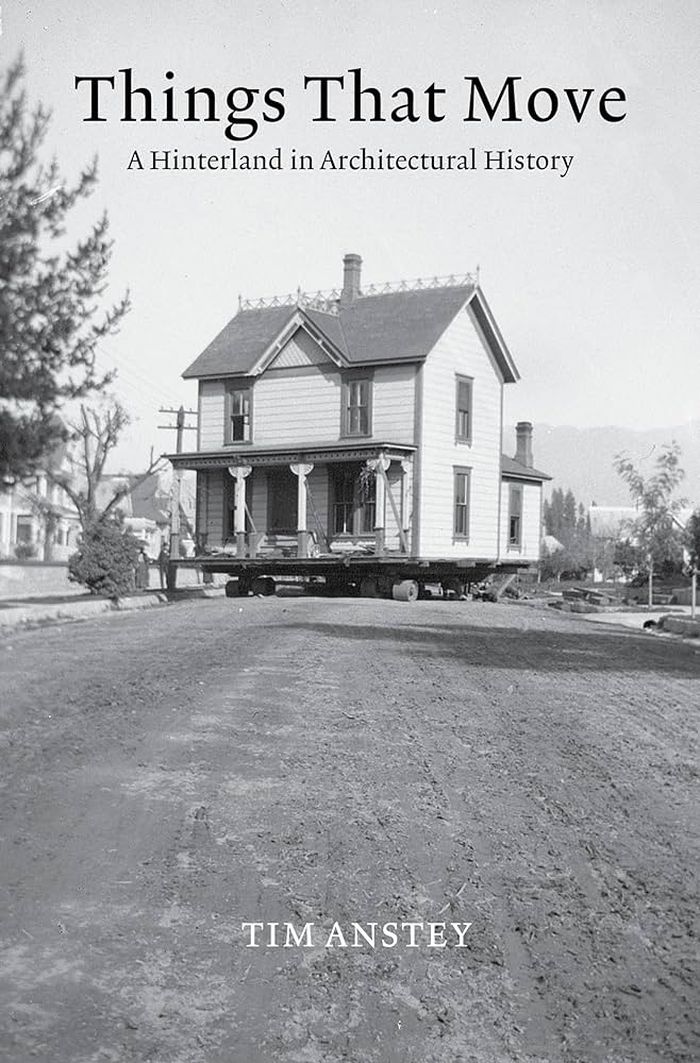
We tend to think of architecture as a practice in permanence, but what if we looked instead for an architecture of transience? In "Things that move," Tim Anstey does just that: rather than assuming that architecture is, at a certain level, stationary, he considers how architecture moves subjects (referring to its emotive potential in the experience it creates); how it moves objects (referring to how it choreographs bodies in motion); and how it is itself moved (referring to the mixture of materials, laws, affordances, and images that introduce movement into any architectural condition). The first of the book's three sections, "Cargoes," highlights the mobile peripheries of architectural history through the eighteenth and nineteenth centuries. It asks what kinds of knowledge can be included in a discussion of architecture, noting the connections between discourses of the lithe and the technical, on the one hand, and those associated with the production of monumental, static compositions on the other. The second section, “Dispatches,” reinterprets early architectural theory by examining the Renaissance ideal of decorum, the nature of the architectural work, and the ways in which architects are constituted as authors. The last part of the book, “Vehicles,” considers building in terms of literal and metaphorical movement, using two cases from the twentieth century that investigate the relationship between architecture and cultural memory. Using a broadly forensic approach to connect details in otherwise disparate cases, "Things that move" is a breathtakingly capacious architectural account that will change the way readers understand buildings, their becoming, and their significance.
Things that move: A hinterland in architectural history
Actions:
Price:
$54.00
(available to order)
Summary:
We tend to think of architecture as a practice in permanence, but what if we looked instead for an architecture of transience? In "Things that move," Tim Anstey does just that: rather than assuming that architecture is, at a certain level, stationary, he considers how architecture moves subjects (referring to its emotive potential in the experience it creates); how it moves objects (referring to how it choreographs bodies in motion); and how it is itself moved (referring to the mixture of materials, laws, affordances, and images that introduce movement into any architectural condition). The first of the book's three sections, "Cargoes," highlights the mobile peripheries of architectural history through the eighteenth and nineteenth centuries. It asks what kinds of knowledge can be included in a discussion of architecture, noting the connections between discourses of the lithe and the technical, on the one hand, and those associated with the production of monumental, static compositions on the other. The second section, “Dispatches,” reinterprets early architectural theory by examining the Renaissance ideal of decorum, the nature of the architectural work, and the ways in which architects are constituted as authors. The last part of the book, “Vehicles,” considers building in terms of literal and metaphorical movement, using two cases from the twentieth century that investigate the relationship between architecture and cultural memory. Using a broadly forensic approach to connect details in otherwise disparate cases, "Things that move" is a breathtakingly capacious architectural account that will change the way readers understand buildings, their becoming, and their significance.
Form:
books
books
Publication:
April 2024
April 2024
Subject:
Architectural Theory
Architectural Theory
Form:
books
books
Actions:
Price:
$63.95
(available to order)
Summary:
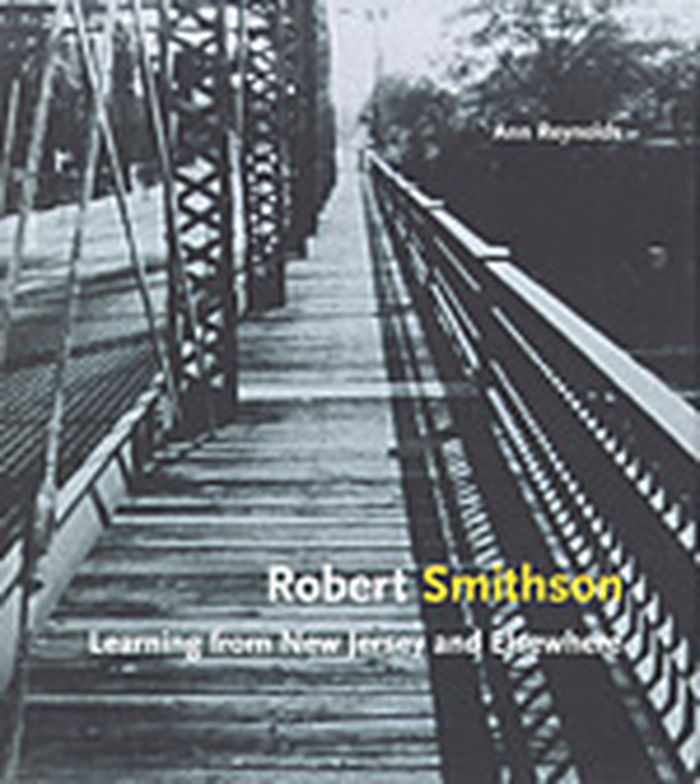
Robert Smithson (1938–1973) produced his best-known work during the 1960s and early 1970s, a period in which the boundaries of the art world and the objectives of art-making were questioned perhaps more consistently and thoroughly than any time before or since. In "Robert Smithson", Ann Reynolds elucidates the complexity of Smithson’s work and thought by placing them in(...)
$63.95
(available to order)
Summary:
Robert Smithson (1938–1973) produced his best-known work during the 1960s and early 1970s, a period in which the boundaries of the art world and the objectives of art-making were questioned perhaps more consistently and thoroughly than any time before or since. In "Robert Smithson", Ann Reynolds elucidates the complexity of Smithson’s work and thought by placing them in(...)
Publication:
November 2002, Cambridge, Mass.
November 2002, Cambridge, Mass.
Title:
Robert Smithson : learning from New Jersey and elsewhere
Actions:
Price:
$63.95
(available to order)
Summary:
Robert Smithson (1938–1973) produced his best-known work during the 1960s and early 1970s, a period in which the boundaries of the art world and the objectives of art-making were questioned perhaps more consistently and thoroughly than any time before or since. In "Robert Smithson", Ann Reynolds elucidates the complexity of Smithson’s work and thought by placing them in their historical context, a context greatly enhanced by the vast archival materials that Smithson’s widow, Nancy Holt, donated to the Archives of American Art in 1987. The archive provides Reynolds with the remnants of Smithson’s working life--magazines, postcards from other artists, notebooks, and perhaps most important, his library--from which she reconstructs the physical and conceptual world that Smithson inhabited. Reynolds explores the relation of Smithson’s art-making, thinking about art-making, writing, and interaction with other artists to the articulated ideology and discreet assumptions that determined the parameters of artistic practice of the time. A central focus of Reynolds’s analysis is Smithson’s fascination with the blind spots at the center of established ways of seeing and thinking about culture. For Smithson, New Jersey was such a blind spot, and he returned there again and again, alone and with fellow artists, to make art that, through its location alone, undermined assumptions about what and, more important, where, art should be. For those who guarded the integrity of the established art world, New Jersey was "elsewhere"; but for Smithson, "elsewheres" were the defining, if often forgotten, locations on the map of contemporary culture.
Robert Smithson : learning from New Jersey and elsewhere
Actions:
Price:
$63.95
(available to order)
Summary:
Robert Smithson (1938–1973) produced his best-known work during the 1960s and early 1970s, a period in which the boundaries of the art world and the objectives of art-making were questioned perhaps more consistently and thoroughly than any time before or since. In "Robert Smithson", Ann Reynolds elucidates the complexity of Smithson’s work and thought by placing them in their historical context, a context greatly enhanced by the vast archival materials that Smithson’s widow, Nancy Holt, donated to the Archives of American Art in 1987. The archive provides Reynolds with the remnants of Smithson’s working life--magazines, postcards from other artists, notebooks, and perhaps most important, his library--from which she reconstructs the physical and conceptual world that Smithson inhabited. Reynolds explores the relation of Smithson’s art-making, thinking about art-making, writing, and interaction with other artists to the articulated ideology and discreet assumptions that determined the parameters of artistic practice of the time. A central focus of Reynolds’s analysis is Smithson’s fascination with the blind spots at the center of established ways of seeing and thinking about culture. For Smithson, New Jersey was such a blind spot, and he returned there again and again, alone and with fellow artists, to make art that, through its location alone, undermined assumptions about what and, more important, where, art should be. For those who guarded the integrity of the established art world, New Jersey was "elsewhere"; but for Smithson, "elsewheres" were the defining, if often forgotten, locations on the map of contemporary culture.
Form:
books
books
Publication:
November 2002, Cambridge, Mass.
November 2002, Cambridge, Mass.
Form:
books
books
Title:
Billboard : art on the road
Billboard : art on the road
Actions:
Price:
$30.00
(available to order)
Summary:
This book accompanies the exhibition of artists' billboards that opens the Massachusetts Museum of Contemporary Art's (MASS MoCA's) inaugural season. The exhibition comprises a twenty-work retrospective of billboards designed by artists over the past three(...)
$30.00
(available to order)
Summary:
This book accompanies the exhibition of artists' billboards that opens the Massachusetts Museum of Contemporary Art's (MASS MoCA's) inaugural season. The exhibition comprises a twenty-work retrospective of billboards designed by artists over the past three(...)
Subject:
Graphic Design and Typography
Graphic Design and Typography
Publication:
July 1999, North Adams
July 1999, North Adams
Title:
Billboard : art on the road
Actions:
Price:
$30.00
(available to order)
Summary:
This book accompanies the exhibition of artists' billboards that opens the Massachusetts Museum of Contemporary Art's (MASS MoCA's) inaugural season. The exhibition comprises a twenty-work retrospective of billboards designed by artists over the past three decades as well as five newly commissioned ones. The retrospective includes works by, among others, John Baldessari, Geneviève Cadieux, Felix Gonzalez-Torres, Gran Fury, Group Material, the Guerrilla Girls, Jenny Holzer, Joseph Kosuth, and Barbara Kruger. The new works, made in cooperation with the communities where they will be installed, are by Julie Ault and Martin Beck, Lothar Baumgarten, Sue Coe, Leon Golub, and Gary Simmons. In addition to the descriptions and colour images of the historic and new billboards, the book contains almost three hundred short entries, offering the first broad survey of the medium. More than half of these entries include a small colour image. The book also contains three essays. In "Disturbances in the Field of Mammon: Toward a History of Artists' Billboards," Harriet Senie finds precursors for contemporary billboards in European art posters (Toulouse-Lautrec), modern political posters (Rodchenko), and war billboards ("Uncle Sam Wants You"). She looks at the subject matter of contemporary artists' billboards--racism, feminism, environmental issues, war and peace, consumerism, and AIDS--and at artists' strategies and site choices. Public artist Peggy Diggs discusses the process through which billboards are made and the problems encountered by billboard artists, and curator Laura Heon writes about works in the exhibition, in particular the (often conceptual) billboards that do not "sell" any political message.
Billboard : art on the road
Actions:
Price:
$30.00
(available to order)
Summary:
This book accompanies the exhibition of artists' billboards that opens the Massachusetts Museum of Contemporary Art's (MASS MoCA's) inaugural season. The exhibition comprises a twenty-work retrospective of billboards designed by artists over the past three decades as well as five newly commissioned ones. The retrospective includes works by, among others, John Baldessari, Geneviève Cadieux, Felix Gonzalez-Torres, Gran Fury, Group Material, the Guerrilla Girls, Jenny Holzer, Joseph Kosuth, and Barbara Kruger. The new works, made in cooperation with the communities where they will be installed, are by Julie Ault and Martin Beck, Lothar Baumgarten, Sue Coe, Leon Golub, and Gary Simmons. In addition to the descriptions and colour images of the historic and new billboards, the book contains almost three hundred short entries, offering the first broad survey of the medium. More than half of these entries include a small colour image. The book also contains three essays. In "Disturbances in the Field of Mammon: Toward a History of Artists' Billboards," Harriet Senie finds precursors for contemporary billboards in European art posters (Toulouse-Lautrec), modern political posters (Rodchenko), and war billboards ("Uncle Sam Wants You"). She looks at the subject matter of contemporary artists' billboards--racism, feminism, environmental issues, war and peace, consumerism, and AIDS--and at artists' strategies and site choices. Public artist Peggy Diggs discusses the process through which billboards are made and the problems encountered by billboard artists, and curator Laura Heon writes about works in the exhibition, in particular the (often conceptual) billboards that do not "sell" any political message.
Form:
books
books
Publication:
July 1999, North Adams
July 1999, North Adams
Subject:
Graphic Design and Typography
Graphic Design and Typography
Form:
books
books
Title:
The language of ornament
The language of ornament
Actions:
Price:
$22.99
(available to order)
Summary:
Ornament, the art of decorative patterning, includes some of the most spectacular creations of human imagination and skill. Although the fashion for unadorned form pushed ornament to the(...)
$22.99
(available to order)
Summary:
Ornament, the art of decorative patterning, includes some of the most spectacular creations of human imagination and skill. Although the fashion for unadorned form pushed ornament to the(...)
Title:
The language of ornament
Actions:
Price:
$22.99
(available to order)
Summary:
Ornament, the art of decorative patterning, includes some of the most spectacular creations of human imagination and skill. Although the fashion for unadorned form pushed ornament to the margins of Western taste in the twentieth century, an ornamental revival is now under way. This book introduces the global panorama of ornament and will be of value to crafts people, collectors, and students of art history. Trilling's approach is both visual and historical. With over 200 illustrations, he presents the dazzling variety of ornament so that the reader can appreciate both its inherent form and the role it has played in everything from the monumental architecture of Mycenaean Greece to the inlaid vessels of Zhou Dynasty China, from the bronze mirrors of Early Celtic Britain to the carved and woven ornament of the Indians of Alaska and British Columbia. The characteristics of individual styles are balanced against their evolution and interaction from the Paleolithic Age to the present day. Special attention is paid to patterns that migrate across large stretches of space and time, showing how ornament becomes a record of cultural interaction through trade, conquest, and the spread of religions. Finally, Trilling explores the fate of ornament since the beginning of modernism in the early twentieth century. Modernism actually nurtured a vibrant and original ornamental style of its own, one so different from traditional ornament that its true nature went virtually unrecognized. Ornament in the postmodern era is open to any number of possible innovations, combining the modernist legacy with forms and principles from the world of traditional ornament.
The language of ornament
Actions:
Price:
$22.99
(available to order)
Summary:
Ornament, the art of decorative patterning, includes some of the most spectacular creations of human imagination and skill. Although the fashion for unadorned form pushed ornament to the margins of Western taste in the twentieth century, an ornamental revival is now under way. This book introduces the global panorama of ornament and will be of value to crafts people, collectors, and students of art history. Trilling's approach is both visual and historical. With over 200 illustrations, he presents the dazzling variety of ornament so that the reader can appreciate both its inherent form and the role it has played in everything from the monumental architecture of Mycenaean Greece to the inlaid vessels of Zhou Dynasty China, from the bronze mirrors of Early Celtic Britain to the carved and woven ornament of the Indians of Alaska and British Columbia. The characteristics of individual styles are balanced against their evolution and interaction from the Paleolithic Age to the present day. Special attention is paid to patterns that migrate across large stretches of space and time, showing how ornament becomes a record of cultural interaction through trade, conquest, and the spread of religions. Finally, Trilling explores the fate of ornament since the beginning of modernism in the early twentieth century. Modernism actually nurtured a vibrant and original ornamental style of its own, one so different from traditional ornament that its true nature went virtually unrecognized. Ornament in the postmodern era is open to any number of possible innovations, combining the modernist legacy with forms and principles from the world of traditional ornament.
Form:
books
books
Publication:
June 2001, London
June 2001, London
Subject:
Ornementation
Ornementation


