


2285 Results
Form:
books
books
Actions:
Price:
$94.00
(available to order)
Summary:
On the occasion of the exhibition "Archilab 2006" dedicated to the Japenese architecture and entitled "Nested in the city", Hyx publish the catalog of the exhibition in french and english version. They present all the projects of thirty invited architects and a set of critical texts which put in perspective the stakes and the subjects of the exhibition. More than any(...)
$94.00
(available to order)
Summary:
On the occasion of the exhibition "Archilab 2006" dedicated to the Japenese architecture and entitled "Nested in the city", Hyx publish the catalog of the exhibition in french and english version. They present all the projects of thirty invited architects and a set of critical texts which put in perspective the stakes and the subjects of the exhibition. More than any(...)
Publication:
October 2006, Orléans
October 2006, Orléans
Title:
Archilab Japan, Orléans 2006 : nested in the city
Actions:
Price:
$94.00
(available to order)
Summary:
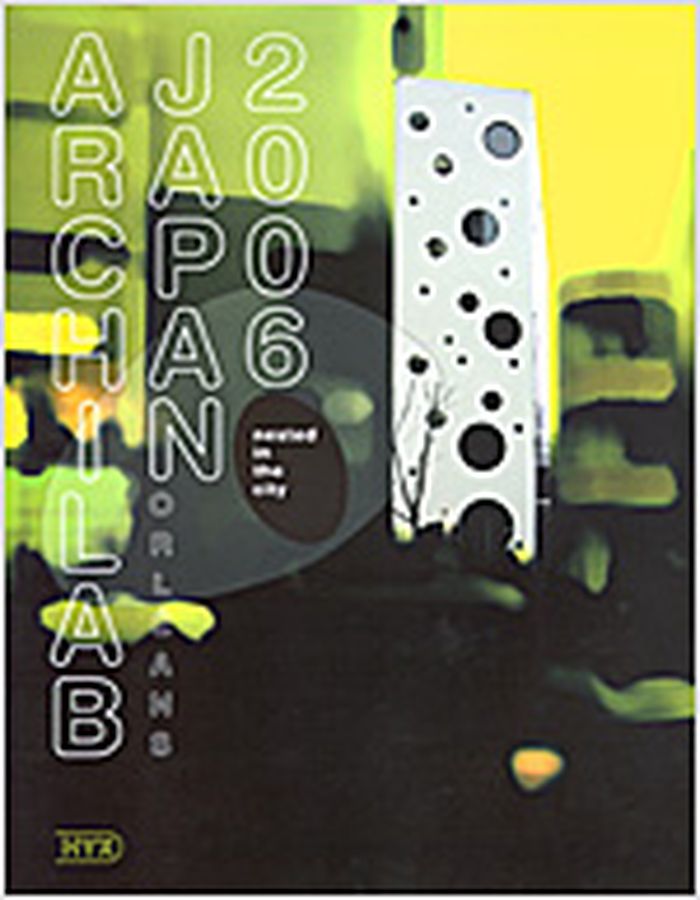
On the occasion of the exhibition "Archilab 2006" dedicated to the Japenese architecture and entitled "Nested in the city", Hyx publish the catalog of the exhibition in french and english version. They present all the projects of thirty invited architects and a set of critical texts which put in perspective the stakes and the subjects of the exhibition. More than any other country, Japan was interested at home, the space domesticates being perceived as a space privileging the thought. Hundred of projects presented in the catalog are built for the greater part. Selected by both curators (Akira Suzuki and Mariko Terada), they offer us a panorama of this architects' new generation which began in the 1990s. The most famous in France are doubtless Shigeru Ban presented to Archilab in 1999 and which was the first one to make approve tubes cardboard as support of his houses and also Kasujo Sejima who saw confiding with Ryue Nishizawa the construction of the Museum of the Louvre to Lens. Symbolic Bow Wow workshop is the Leader of this new generation. After the economic crisis of the end of the 90s, the construction of public establishments of average dimension and the competitions of architecture rarefied. The house thus becomes the space of creation privileged for these architects. That's why, in Tokyo, Jun Aoki, Kazuyo Sejima, Ryue Nishizawa, Takaharu and Yui Tezuka, Mitsuhiko Sato, Taira Nishizawa, Masao Koizumi, Yasuhiro Yamashita, Mikio Tai, Yuki Ishiguro, conceive small houses which embody the way of life of their inhabitants and maybe our future today.
Archilab Japan, Orléans 2006 : nested in the city
Actions:
Price:
$94.00
(available to order)
Summary:
On the occasion of the exhibition "Archilab 2006" dedicated to the Japenese architecture and entitled "Nested in the city", Hyx publish the catalog of the exhibition in french and english version. They present all the projects of thirty invited architects and a set of critical texts which put in perspective the stakes and the subjects of the exhibition. More than any other country, Japan was interested at home, the space domesticates being perceived as a space privileging the thought. Hundred of projects presented in the catalog are built for the greater part. Selected by both curators (Akira Suzuki and Mariko Terada), they offer us a panorama of this architects' new generation which began in the 1990s. The most famous in France are doubtless Shigeru Ban presented to Archilab in 1999 and which was the first one to make approve tubes cardboard as support of his houses and also Kasujo Sejima who saw confiding with Ryue Nishizawa the construction of the Museum of the Louvre to Lens. Symbolic Bow Wow workshop is the Leader of this new generation. After the economic crisis of the end of the 90s, the construction of public establishments of average dimension and the competitions of architecture rarefied. The house thus becomes the space of creation privileged for these architects. That's why, in Tokyo, Jun Aoki, Kazuyo Sejima, Ryue Nishizawa, Takaharu and Yui Tezuka, Mitsuhiko Sato, Taira Nishizawa, Masao Koizumi, Yasuhiro Yamashita, Mikio Tai, Yuki Ishiguro, conceive small houses which embody the way of life of their inhabitants and maybe our future today.
Form:
books
books
Publication:
October 2006, Orléans
October 2006, Orléans
Form:
books
books
Actions:
Price:
$42.00
(available to order)
Summary:
Born in Estonia 1901 and brought to America in 1906, the architect Louis Kahn grew up in poverty in Philadelphia. By the time of his mysterious death in 1974, he was widely recognized as one of the greatest architects of his era. Yet this enormous reputation was based on only a handful of masterpieces, all built during the last fifteen years of his life. Wendy Lesser’s(...)
$42.00
(available to order)
Summary:
Born in Estonia 1901 and brought to America in 1906, the architect Louis Kahn grew up in poverty in Philadelphia. By the time of his mysterious death in 1974, he was widely recognized as one of the greatest architects of his era. Yet this enormous reputation was based on only a handful of masterpieces, all built during the last fifteen years of his life. Wendy Lesser’s(...)
Title:
You say to brick: the life of Louis Kahn
Actions:
Price:
$42.00
(available to order)
Summary:
Born in Estonia 1901 and brought to America in 1906, the architect Louis Kahn grew up in poverty in Philadelphia. By the time of his mysterious death in 1974, he was widely recognized as one of the greatest architects of his era. Yet this enormous reputation was based on only a handful of masterpieces, all built during the last fifteen years of his life. Wendy Lesser’s You Say to Brick: The Life of Louis Kahn is a major exploration of the architect’s life and work. Kahn, perhaps more than any other twentieth-century American architect, was a “public” architect. Rather than focusing on corporate commissions, he devoted himself to designing research facilities, government centers, museums, libraries, and other structures that would serve the public good. But this warm, captivating person, beloved by students and admired by colleagues, was also a secretive man hiding under a series of masks. Kahn himself, however, is not the only complex subject that comes vividly to life in these pages. His signature achievements—like the Salk Institute in La Jolla, the National Assembly Building of Bangladesh, and the Indian Institute of Management in Ahmedabad—can at first seem as enigmatic and beguiling as the man who designed them. In attempts to describe these structures, we are often forced to speak in contradictions and paradoxes: structures that seem at once unmistakably modern and ancient; enormous built spaces that offer a sense of intimate containment; designs in which light itself seems tangible, a raw material as tactile as travertine or Kahn’s beloved concrete.
You say to brick: the life of Louis Kahn
Actions:
Price:
$42.00
(available to order)
Summary:
Born in Estonia 1901 and brought to America in 1906, the architect Louis Kahn grew up in poverty in Philadelphia. By the time of his mysterious death in 1974, he was widely recognized as one of the greatest architects of his era. Yet this enormous reputation was based on only a handful of masterpieces, all built during the last fifteen years of his life. Wendy Lesser’s You Say to Brick: The Life of Louis Kahn is a major exploration of the architect’s life and work. Kahn, perhaps more than any other twentieth-century American architect, was a “public” architect. Rather than focusing on corporate commissions, he devoted himself to designing research facilities, government centers, museums, libraries, and other structures that would serve the public good. But this warm, captivating person, beloved by students and admired by colleagues, was also a secretive man hiding under a series of masks. Kahn himself, however, is not the only complex subject that comes vividly to life in these pages. His signature achievements—like the Salk Institute in La Jolla, the National Assembly Building of Bangladesh, and the Indian Institute of Management in Ahmedabad—can at first seem as enigmatic and beguiling as the man who designed them. In attempts to describe these structures, we are often forced to speak in contradictions and paradoxes: structures that seem at once unmistakably modern and ancient; enormous built spaces that offer a sense of intimate containment; designs in which light itself seems tangible, a raw material as tactile as travertine or Kahn’s beloved concrete.
Form:
books
books
Publication:
March 2017
March 2017
Subject:
Architecture Monographs
Architecture Monographs
Form:
books
books
Title:
In the swarm
In the swarm
Actions:
Price:
$18.95
(available to order)
Summary:
Digital communication and social media have taken over our lives. In this contrarian reflection on digitized life, Byung-Chul Han counters the cheerleaders for Twitter revolutions and Facebook activism by arguing that digital communication is in fact responsible for the disintegration of community and public space and is slowly eroding any possibility for real political(...)
$18.95
(available to order)
Summary:
Digital communication and social media have taken over our lives. In this contrarian reflection on digitized life, Byung-Chul Han counters the cheerleaders for Twitter revolutions and Facebook activism by arguing that digital communication is in fact responsible for the disintegration of community and public space and is slowly eroding any possibility for real political(...)
Title:
In the swarm
Actions:
Price:
$18.95
(available to order)
Summary:
Digital communication and social media have taken over our lives. In this contrarian reflection on digitized life, Byung-Chul Han counters the cheerleaders for Twitter revolutions and Facebook activism by arguing that digital communication is in fact responsible for the disintegration of community and public space and is slowly eroding any possibility for real political action and meaningful political discourse. In the predigital, analog era, by the time an angry letter to the editor had been composed, mailed, and received, the immediate agitation had passed. Today, digital communication enables instantaneous, impulsive reaction, meant to express and stir up outrage on the spot. “The shitstorm,” writes Han, ”represents an authentic phenomenon of digital communication.” Meanwhile, the public, the senders and receivers of these communications have become a digital swarm—not a mass, or a crowd, or Negri and Hardt’s antiquated notion of a “multitude,” but a set of isolated individuals incapable of forming a “we,” incapable of calling dominant power relations into question, incapable of formulating a future because of an obsession with the present. The digital swarm is a fragmented entity that can focus on individual persons only in order to make them an object of scandal. Han, one of the most widely read philosophers in Europe today, describes a society in which information has overrun thought, in which the same algorithms are employed by Facebook, the stock market, and the intelligence services. Democracy is under threat because digital communication has made freedom and control indistinguishable. Big Brother has been succeeded by Big Data.
In the swarm
Actions:
Price:
$18.95
(available to order)
Summary:
Digital communication and social media have taken over our lives. In this contrarian reflection on digitized life, Byung-Chul Han counters the cheerleaders for Twitter revolutions and Facebook activism by arguing that digital communication is in fact responsible for the disintegration of community and public space and is slowly eroding any possibility for real political action and meaningful political discourse. In the predigital, analog era, by the time an angry letter to the editor had been composed, mailed, and received, the immediate agitation had passed. Today, digital communication enables instantaneous, impulsive reaction, meant to express and stir up outrage on the spot. “The shitstorm,” writes Han, ”represents an authentic phenomenon of digital communication.” Meanwhile, the public, the senders and receivers of these communications have become a digital swarm—not a mass, or a crowd, or Negri and Hardt’s antiquated notion of a “multitude,” but a set of isolated individuals incapable of forming a “we,” incapable of calling dominant power relations into question, incapable of formulating a future because of an obsession with the present. The digital swarm is a fragmented entity that can focus on individual persons only in order to make them an object of scandal. Han, one of the most widely read philosophers in Europe today, describes a society in which information has overrun thought, in which the same algorithms are employed by Facebook, the stock market, and the intelligence services. Democracy is under threat because digital communication has made freedom and control indistinguishable. Big Brother has been succeeded by Big Data.
Form:
books
books
Publication:
April 2017
April 2017
Subject:
Archive, library and the digital
Archive, library and the digital
Form:
books
books
Price:
$45.95
(available to order)
Summary:
Even when an architectural drawing does not show any human figures, we can imagine many different characters just off the page: architects, artists, onlookers, clients, builders, developers, philanthropists—working, observing, admiring, arguing. In ''Stories from architecture,'' Philippa Lewis captures some of these personalities through reminiscences, anecdotes,(...)
$45.95
(available to order)
Summary:
Even when an architectural drawing does not show any human figures, we can imagine many different characters just off the page: architects, artists, onlookers, clients, builders, developers, philanthropists—working, observing, admiring, arguing. In ''Stories from architecture,'' Philippa Lewis captures some of these personalities through reminiscences, anecdotes,(...)
Title:
Stories from architecture: Behind the lines at Drawing Matter
Actions:
Price:
$45.95
(available to order)
Summary:
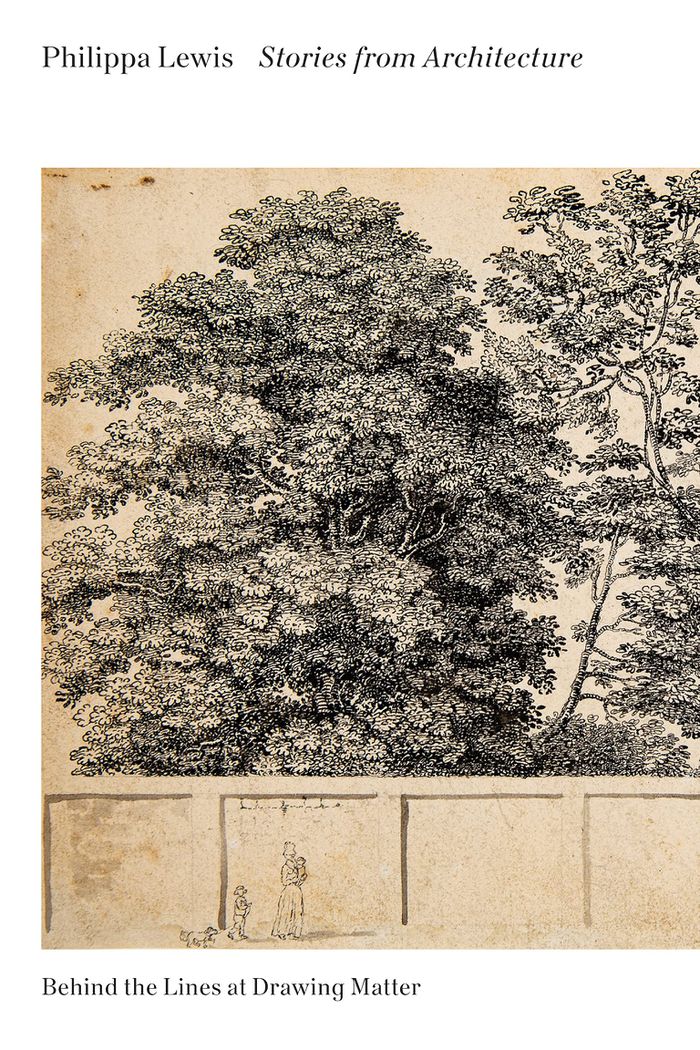
Even when an architectural drawing does not show any human figures, we can imagine many different characters just off the page: architects, artists, onlookers, clients, builders, developers, philanthropists—working, observing, admiring, arguing. In ''Stories from architecture,'' Philippa Lewis captures some of these personalities through reminiscences, anecdotes, conversations, letters, and monologues that collectively offer the imagined histories of twenty-five architectural drawings. Some of these untold stories are factual, like Frank Lloyd Wright’s correspondence with a Wisconsin librarian regarding her $5,000 dream home, or letters written by the English architect John Nash to his irascible aristocratic client. Others recount a fictional, if credible, scenario by placing these drawings—and with them their characters—into their immediate social context. For instance, the dilemmas facing a Regency couple who are considering a move to a suburban villa; a request from the office of Richard Neutra for an assistant to measure Josef von Sternberg’s Rolls-Royce so that the director’s beloved vehicle might fit into the garage being designed by his architect; a teenager dreaming of a life away from parental supervision by gazing at a gadget-filled bachelor pad in Playboy magazine; even a policeman recording the ground plans of the house of a murder scene. The drawings, reproduced in color, are all sourced from the Drawing Matter collection in Somerset, UK, and are fascinating objects in themselves; but Lewis shifts our attention beyond the image to other possible histories that linger, invisible, beyond the page, and in the process animates not just a series of archival documents but the writing of architectural history.
Stories from architecture: Behind the lines at Drawing Matter
Actions:
Price:
$45.95
(available to order)
Summary:
Even when an architectural drawing does not show any human figures, we can imagine many different characters just off the page: architects, artists, onlookers, clients, builders, developers, philanthropists—working, observing, admiring, arguing. In ''Stories from architecture,'' Philippa Lewis captures some of these personalities through reminiscences, anecdotes, conversations, letters, and monologues that collectively offer the imagined histories of twenty-five architectural drawings. Some of these untold stories are factual, like Frank Lloyd Wright’s correspondence with a Wisconsin librarian regarding her $5,000 dream home, or letters written by the English architect John Nash to his irascible aristocratic client. Others recount a fictional, if credible, scenario by placing these drawings—and with them their characters—into their immediate social context. For instance, the dilemmas facing a Regency couple who are considering a move to a suburban villa; a request from the office of Richard Neutra for an assistant to measure Josef von Sternberg’s Rolls-Royce so that the director’s beloved vehicle might fit into the garage being designed by his architect; a teenager dreaming of a life away from parental supervision by gazing at a gadget-filled bachelor pad in Playboy magazine; even a policeman recording the ground plans of the house of a murder scene. The drawings, reproduced in color, are all sourced from the Drawing Matter collection in Somerset, UK, and are fascinating objects in themselves; but Lewis shifts our attention beyond the image to other possible histories that linger, invisible, beyond the page, and in the process animates not just a series of archival documents but the writing of architectural history.
Form:
books
books
Publication:
October 2021
October 2021
Subject:
Architectural Theory
Architectural Theory
Form:
books
books
Price:
$73.95
(available to order)
Summary:
Cities have contributed for centuries to the promotion of some of humanity’s greatest ideas, we must now urgently include them as among the principal players in the environmental debate and at the forefront of any policy tackling and countering – possibly reversing - climate change. Nevertheless, even today one of the most significant technologies capable of absorbing CO2(...)
$73.95
(available to order)
Summary:
Cities have contributed for centuries to the promotion of some of humanity’s greatest ideas, we must now urgently include them as among the principal players in the environmental debate and at the forefront of any policy tackling and countering – possibly reversing - climate change. Nevertheless, even today one of the most significant technologies capable of absorbing CO2(...)
Subject:
Architecture Monographs
Architecture Monographs
Publication:
April 2022
April 2022
Title:
Green obsession: trees towards cities, humans towards forests
Actions:
Price:
$73.95
(available to order)
Summary:
Cities have contributed for centuries to the promotion of some of humanity’s greatest ideas, we must now urgently include them as among the principal players in the environmental debate and at the forefront of any policy tackling and countering – possibly reversing - climate change. Nevertheless, even today one of the most significant technologies capable of absorbing CO2 and restoring our environment is photosynthesis. Planting trees, in addition to protecting existing natural areas and biodiversity, together with de-carbonization, renewable energies, digitalization, smart mobility and the circular economy could be the set of strategies necessary to tackle climate change. Today the effects of the Anthropocene age are ever more visible, changing our environment and affecting every species that lives within it. ''Green obsession'' offers a path to be taken, a hard but still necessary paradigm shift – even for architecture and urbanism – that aims to give a voice to this much needed ecological transition. This book aims to unveil the processes and the complexity involved in the search for a new kind of urbanism, while raising questions and opening old wounds related to the relationship between the human species and Nature and finally putting these fragments together to create a portrait of our era. We need to conceive cities as new green catalysts. Now more than ever, it is essential to act together as separate individuals and professionals, joining the cause as members of the global community with a shared environmental strategy. We all have to open the era of a new alliance between Nature and City.
Green obsession: trees towards cities, humans towards forests
Actions:
Price:
$73.95
(available to order)
Summary:
Cities have contributed for centuries to the promotion of some of humanity’s greatest ideas, we must now urgently include them as among the principal players in the environmental debate and at the forefront of any policy tackling and countering – possibly reversing - climate change. Nevertheless, even today one of the most significant technologies capable of absorbing CO2 and restoring our environment is photosynthesis. Planting trees, in addition to protecting existing natural areas and biodiversity, together with de-carbonization, renewable energies, digitalization, smart mobility and the circular economy could be the set of strategies necessary to tackle climate change. Today the effects of the Anthropocene age are ever more visible, changing our environment and affecting every species that lives within it. ''Green obsession'' offers a path to be taken, a hard but still necessary paradigm shift – even for architecture and urbanism – that aims to give a voice to this much needed ecological transition. This book aims to unveil the processes and the complexity involved in the search for a new kind of urbanism, while raising questions and opening old wounds related to the relationship between the human species and Nature and finally putting these fragments together to create a portrait of our era. We need to conceive cities as new green catalysts. Now more than ever, it is essential to act together as separate individuals and professionals, joining the cause as members of the global community with a shared environmental strategy. We all have to open the era of a new alliance between Nature and City.
Form:
books
books
Publication:
April 2022
April 2022
Subject:
Architecture Monographs
Architecture Monographs
Form:
books
books
Title:
The ecstasy of communication
The ecstasy of communication
Actions:
Price:
$16.95
(available to order)
Summary:
First published in France in 1987, The Ecstasy of Communication was Baudrillard’s summarization of his work for a postdoctoral degree at the Sorbonne : a dense, poetically crystalline essay that boiled down two decades of radical, provocative theory into an aphoristically eloquent swan song to twentieth-century alienation. Baudrillard’s quixotic effort to be recognized by(...)
$16.95
(available to order)
Summary:
First published in France in 1987, The Ecstasy of Communication was Baudrillard’s summarization of his work for a postdoctoral degree at the Sorbonne : a dense, poetically crystalline essay that boiled down two decades of radical, provocative theory into an aphoristically eloquent swan song to twentieth-century alienation. Baudrillard’s quixotic effort to be recognized by(...)
Title:
The ecstasy of communication
Actions:
Price:
$16.95
(available to order)
Summary:
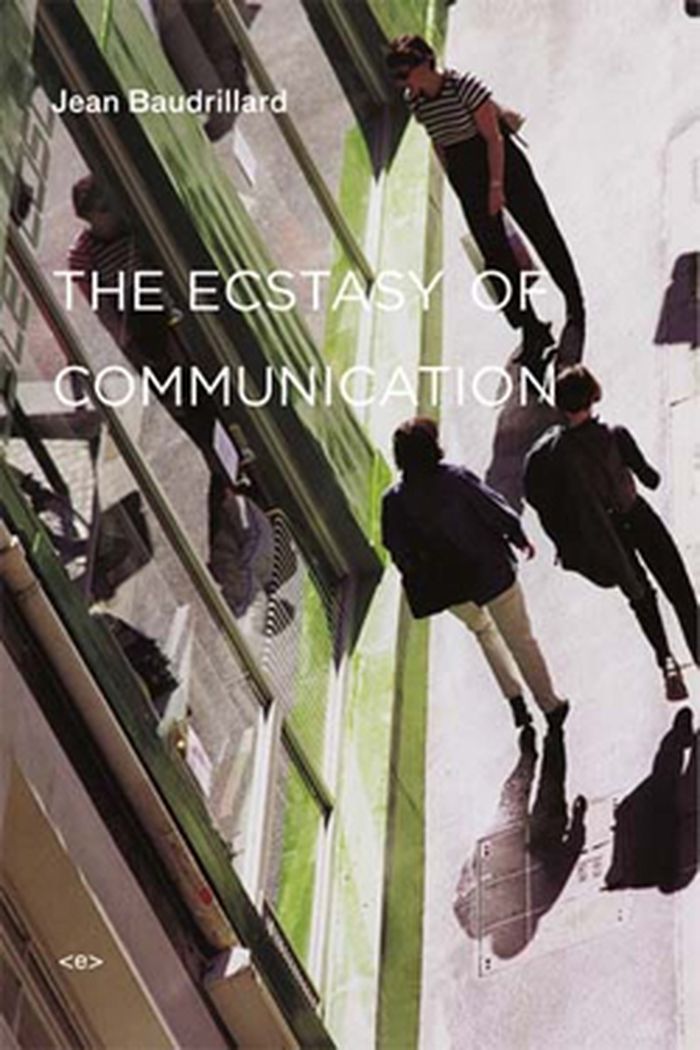
First published in France in 1987, The Ecstasy of Communication was Baudrillard’s summarization of his work for a postdoctoral degree at the Sorbonne : a dense, poetically crystalline essay that boiled down two decades of radical, provocative theory into an aphoristically eloquent swan song to twentieth-century alienation. Baudrillard’s quixotic effort to be recognized by the French intellectual establishment may have been doomed to failure, but this text immediately became a pinnacle to his work, a mid-career assessment that looked both forward and back. By carefully distilling the most radical elements of his previous books, Baudrillard constructed the skeleton key to all of the work that was to come in the second half of his career, and set the scene for what he termed the “obscene”: a world in which alienation has been succeeded by ceaseless communication and information. The Ecstasy of Communication is a decisive, compact description of what it means to be “wired” in our braver-than-brave new world, where sexuality has been superseded by pornography, knowledge by information, hysteria by schizophrenia, subject by object, and violence by terror. The Ecstasy of Communication is an anti-manifesto that confronted and dispensed with such influences as Marshall McLuhan, Guy Debord, and Georges Bataille. It is an essential crib-book, lexicon, and companion piece to any and all of Baudrillard’s books. Twenty-five years after its original publication, it remains not only a prescient portrait of our contemporary condition, but also a dark mirror into which we have not yet dared to look.
The ecstasy of communication
Actions:
Price:
$16.95
(available to order)
Summary:
First published in France in 1987, The Ecstasy of Communication was Baudrillard’s summarization of his work for a postdoctoral degree at the Sorbonne : a dense, poetically crystalline essay that boiled down two decades of radical, provocative theory into an aphoristically eloquent swan song to twentieth-century alienation. Baudrillard’s quixotic effort to be recognized by the French intellectual establishment may have been doomed to failure, but this text immediately became a pinnacle to his work, a mid-career assessment that looked both forward and back. By carefully distilling the most radical elements of his previous books, Baudrillard constructed the skeleton key to all of the work that was to come in the second half of his career, and set the scene for what he termed the “obscene”: a world in which alienation has been succeeded by ceaseless communication and information. The Ecstasy of Communication is a decisive, compact description of what it means to be “wired” in our braver-than-brave new world, where sexuality has been superseded by pornography, knowledge by information, hysteria by schizophrenia, subject by object, and violence by terror. The Ecstasy of Communication is an anti-manifesto that confronted and dispensed with such influences as Marshall McLuhan, Guy Debord, and Georges Bataille. It is an essential crib-book, lexicon, and companion piece to any and all of Baudrillard’s books. Twenty-five years after its original publication, it remains not only a prescient portrait of our contemporary condition, but also a dark mirror into which we have not yet dared to look.
Form:
books
books
Publication:
November 2012
November 2012
Subject:
Critical Theory
Critical Theory
Form:
journals and magazines
journals and magazines
Actions:
Price:
$38.00
(available to order)
Summary:
At a moment when the word “design” has come to refer to everything and thus nothing, this issue examines the hidden mechanics and visible output of design practice in order to track the shifting role of designers in society and to gauge the capacity of designers to effect change in a world of mounting crises. The issue’s title, ''Instruments of Service'', carries a(...)
$38.00
(available to order)
Summary:
At a moment when the word “design” has come to refer to everything and thus nothing, this issue examines the hidden mechanics and visible output of design practice in order to track the shifting role of designers in society and to gauge the capacity of designers to effect change in a world of mounting crises. The issue’s title, ''Instruments of Service'', carries a(...)
Title:
Harvard Design Magazine no. 52 : Instruments of service
Actions:
Price:
$38.00
(available to order)
Summary:
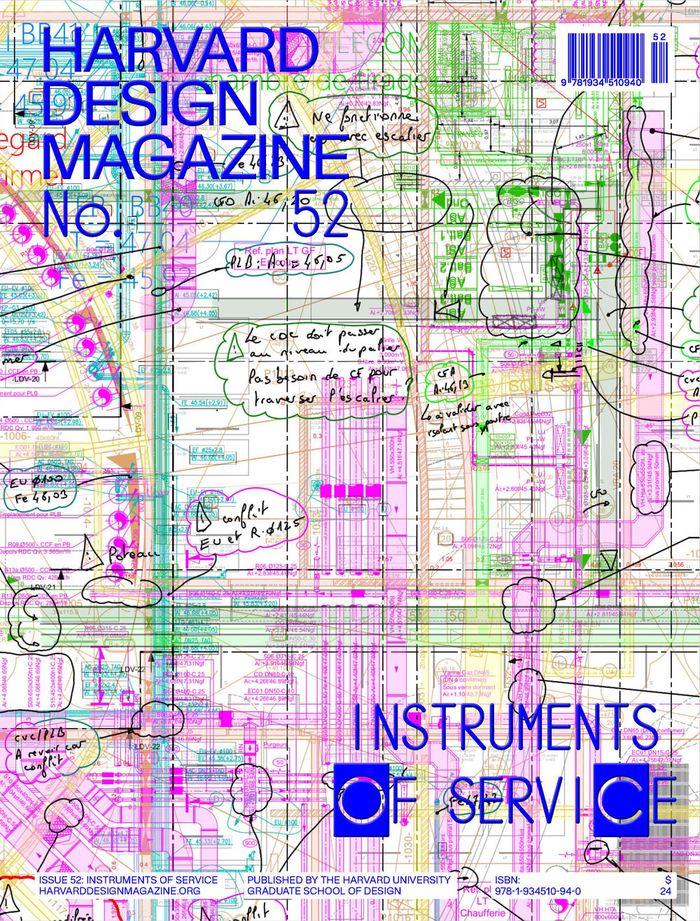
At a moment when the word “design” has come to refer to everything and thus nothing, this issue examines the hidden mechanics and visible output of design practice in order to track the shifting role of designers in society and to gauge the capacity of designers to effect change in a world of mounting crises. The issue’s title, ''Instruments of Service'', carries a double meaning. As defined in standard American Institute of Architects contracts, “Instruments of Service are representations, in any medium of expression now known or later developed, of the tangible and intangible creative work performed by the Architect and the Architect’s consultants under their respective professional services agreements. Instruments of Service may include, without limitation, studies, surveys, models, sketches, drawings, specifications, and other similar materials.” Instruments of service are the instruction manuals that architects—and other designers—make so that others can make something. They define the architect’s relationships with labor, construction, clients, and society. And these relationships—along with the agency of architectural practice—are changing as a growing number of external pressures force instruments of service to change. Architects and designers can also be seen as instruments of service to society, responsible to a continually shifting set of values. At a fundamental level, the designer’s job is to imagine and articulate a better future. In a time of crisis and competing value systems—market returns, cultural relevance, environmental response, social equity, automation—the role of the designer in society is ever more important and increasingly accountable to divergent interests that call into question the raison d’être of design practice itself.
Harvard Design Magazine no. 52 : Instruments of service
Actions:
Price:
$38.00
(available to order)
Summary:
At a moment when the word “design” has come to refer to everything and thus nothing, this issue examines the hidden mechanics and visible output of design practice in order to track the shifting role of designers in society and to gauge the capacity of designers to effect change in a world of mounting crises. The issue’s title, ''Instruments of Service'', carries a double meaning. As defined in standard American Institute of Architects contracts, “Instruments of Service are representations, in any medium of expression now known or later developed, of the tangible and intangible creative work performed by the Architect and the Architect’s consultants under their respective professional services agreements. Instruments of Service may include, without limitation, studies, surveys, models, sketches, drawings, specifications, and other similar materials.” Instruments of service are the instruction manuals that architects—and other designers—make so that others can make something. They define the architect’s relationships with labor, construction, clients, and society. And these relationships—along with the agency of architectural practice—are changing as a growing number of external pressures force instruments of service to change. Architects and designers can also be seen as instruments of service to society, responsible to a continually shifting set of values. At a fundamental level, the designer’s job is to imagine and articulate a better future. In a time of crisis and competing value systems—market returns, cultural relevance, environmental response, social equity, automation—the role of the designer in society is ever more important and increasingly accountable to divergent interests that call into question the raison d’être of design practice itself.
Form:
journals and magazines
journals and magazines
Publication:
February 2025
February 2025
Subject:
Magazines
Magazines
Form:
books
books
Actions:
Price:
$62.50
(available to order)
Summary:
The narrative of the artist's life and work is one of the oldest models in the Western literature of the visual arts. In "Art as existence", Gabriele Guercio investigates the metamorphosis of the artist's monograph, tracing its formal and conceptual trajectories from Vasari's sixteenth-century "Lives of the painters, sculptors, and architects" (which provided the model(...)
$62.50
(available to order)
Summary:
The narrative of the artist's life and work is one of the oldest models in the Western literature of the visual arts. In "Art as existence", Gabriele Guercio investigates the metamorphosis of the artist's monograph, tracing its formal and conceptual trajectories from Vasari's sixteenth-century "Lives of the painters, sculptors, and architects" (which provided the model(...)
Title:
Art as existence : the artist's monograph and its project
Actions:
Price:
$62.50
(available to order)
Summary:
The narrative of the artist's life and work is one of the oldest models in the Western literature of the visual arts. In "Art as existence", Gabriele Guercio investigates the metamorphosis of the artist's monograph, tracing its formal and conceptual trajectories from Vasari's sixteenth-century "Lives of the painters, sculptors, and architects" (which provided the model and source for the genre) through its apogee in the nineteenth century and decline in the twentieth. He looks at the legacy of the life-and-work model and considers its prospects in an intellectual universe of deconstructionism, psychoanalysis, feminism, and postcolonialism. Since Vasari, the monograph has been notable for its fluidity and variety; it can be scrupulous and exact, probing and revelatory, poetic and imaginative, or any combination of these. In the nineteenth century, the monograph combined art-historical, biographical, and critical methods, and even added elements of fiction. Guercio explores some significant books that illustrate key phases in the model's evolution, including works by Gustav Friedrich Waagen, A. C. Quatremère de Quincy, Johann David Passavant, Bernard Berenson, and others. The hidden project of the artist's monograph, Guercio claims, comes from a utopian impulse; by commuting biography into art and art into biography, the life-and-work model equates art and existence, construing otherwise distinct works of an artist as chapters of a life story. Guercio calls for a contemporary reconsideration of the life-and-work model, arguing that the ultimate legacy of the artist's monograph does not lie in its established modes of writing but in its greater project and in the intimate portrait that we gain of the nature of creativity.
Art as existence : the artist's monograph and its project
Actions:
Price:
$62.50
(available to order)
Summary:
The narrative of the artist's life and work is one of the oldest models in the Western literature of the visual arts. In "Art as existence", Gabriele Guercio investigates the metamorphosis of the artist's monograph, tracing its formal and conceptual trajectories from Vasari's sixteenth-century "Lives of the painters, sculptors, and architects" (which provided the model and source for the genre) through its apogee in the nineteenth century and decline in the twentieth. He looks at the legacy of the life-and-work model and considers its prospects in an intellectual universe of deconstructionism, psychoanalysis, feminism, and postcolonialism. Since Vasari, the monograph has been notable for its fluidity and variety; it can be scrupulous and exact, probing and revelatory, poetic and imaginative, or any combination of these. In the nineteenth century, the monograph combined art-historical, biographical, and critical methods, and even added elements of fiction. Guercio explores some significant books that illustrate key phases in the model's evolution, including works by Gustav Friedrich Waagen, A. C. Quatremère de Quincy, Johann David Passavant, Bernard Berenson, and others. The hidden project of the artist's monograph, Guercio claims, comes from a utopian impulse; by commuting biography into art and art into biography, the life-and-work model equates art and existence, construing otherwise distinct works of an artist as chapters of a life story. Guercio calls for a contemporary reconsideration of the life-and-work model, arguing that the ultimate legacy of the artist's monograph does not lie in its established modes of writing but in its greater project and in the intimate portrait that we gain of the nature of creativity.
Form:
books
books
Publication:
January 1900, Cambridge, London
January 1900, Cambridge, London
Subject:
Art Theory
Art Theory
Form:
books
books
Actions:
Price:
$32.50
(available to order)
Summary:
Who are you? And how can you prove it? How were individuals described and identified by people who had never seen them before, in the centuries before photography and fingerprinting, in a world without centralized administrations, where names and addresses were constantly changing? In "Who are you?", Valentin Groebner traces the early modern European history of(...)
$32.50
(available to order)
Summary:
Who are you? And how can you prove it? How were individuals described and identified by people who had never seen them before, in the centuries before photography and fingerprinting, in a world without centralized administrations, where names and addresses were constantly changing? In "Who are you?", Valentin Groebner traces the early modern European history of(...)
Title:
Who are you? : identification, deception, and surveillance in early modern Europe
Actions:
Price:
$32.50
(available to order)
Summary:
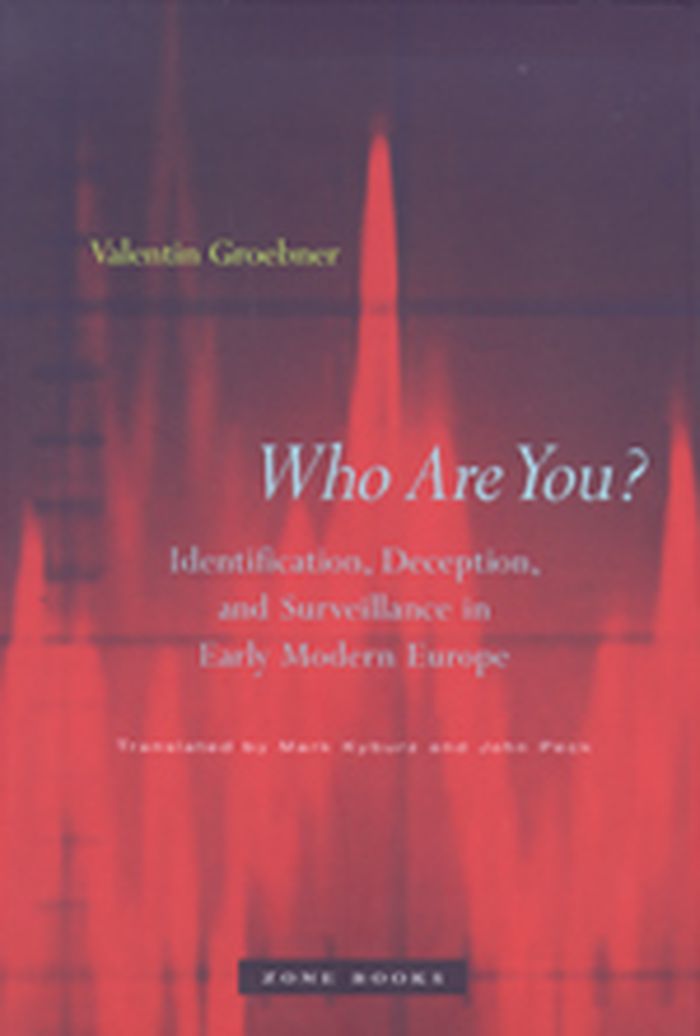
Who are you? And how can you prove it? How were individuals described and identified by people who had never seen them before, in the centuries before photography and fingerprinting, in a world without centralized administrations, where names and addresses were constantly changing? In "Who are you?", Valentin Groebner traces the early modern European history of identification practices and identity papers. The documents, seals, stamps, and signatures were — and are — powerful tools that created the double of a person in writ and bore the indelible signs of bureaucratic authenticity. Ultimately, as Groebner lucidly explains, they revealed as much about their makers’ illustory fantasies as they did about their bearers’ actual identity. The bureaucratic desire to register and control the population created, from the sixteenth century onward, an intricate administrative system for tracking individual identities. Most important, the proof of one’s identity was intimately linked and determined by the identification papers the authorities demanded and endlessly supplied. At the same time, these papers and practices gave birth to two uncanny doppelgängers of administrative identity procedures : the spy who craftily forged official documents and passports, and the impostor who dissimulated and mimed any individual he so disired. Through careful research and powerful narrative, Groebner recounts the complicated and bizarre stories of the many ways in which identities were stolen, created, and doubled. Groebner argues that identity papers cannot be interpreted literally as pure and simple documents. They are themselves pieces of history, histories of individuals and individuality, papers that both document and transform their owner’s identity — from Renaissance vagrants and gypsies to the illegal immigrants of today who remain "sans papiers", without papers.
Who are you? : identification, deception, and surveillance in early modern Europe
Actions:
Price:
$32.50
(available to order)
Summary:
Who are you? And how can you prove it? How were individuals described and identified by people who had never seen them before, in the centuries before photography and fingerprinting, in a world without centralized administrations, where names and addresses were constantly changing? In "Who are you?", Valentin Groebner traces the early modern European history of identification practices and identity papers. The documents, seals, stamps, and signatures were — and are — powerful tools that created the double of a person in writ and bore the indelible signs of bureaucratic authenticity. Ultimately, as Groebner lucidly explains, they revealed as much about their makers’ illustory fantasies as they did about their bearers’ actual identity. The bureaucratic desire to register and control the population created, from the sixteenth century onward, an intricate administrative system for tracking individual identities. Most important, the proof of one’s identity was intimately linked and determined by the identification papers the authorities demanded and endlessly supplied. At the same time, these papers and practices gave birth to two uncanny doppelgängers of administrative identity procedures : the spy who craftily forged official documents and passports, and the impostor who dissimulated and mimed any individual he so disired. Through careful research and powerful narrative, Groebner recounts the complicated and bizarre stories of the many ways in which identities were stolen, created, and doubled. Groebner argues that identity papers cannot be interpreted literally as pure and simple documents. They are themselves pieces of history, histories of individuals and individuality, papers that both document and transform their owner’s identity — from Renaissance vagrants and gypsies to the illegal immigrants of today who remain "sans papiers", without papers.
Form:
books
books
Publication:
March 2007, New York
March 2007, New York
Subject:
Architectural Theory
Architectural Theory
Form:
books
books
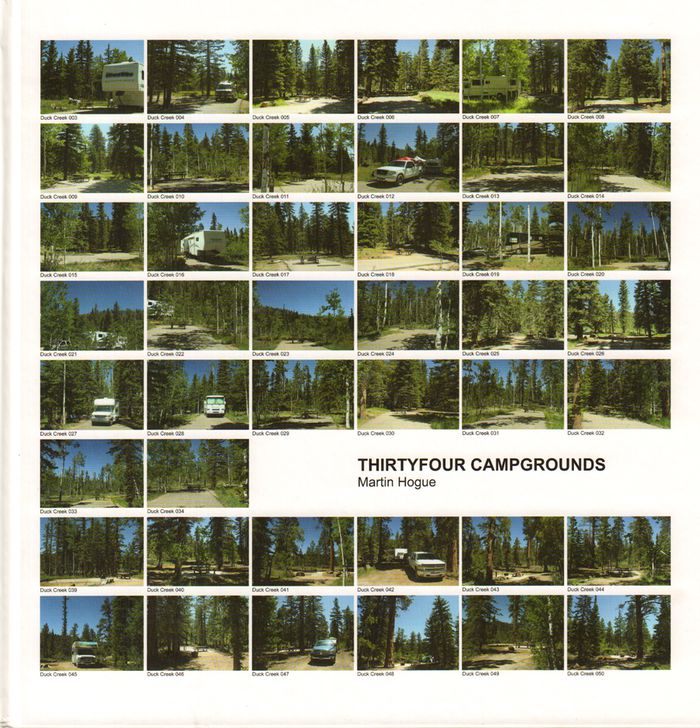
Title:
Thirtyfour campgrounds
Thirtyfour campgrounds
Actions:
Price:
$51.00
(available to order)
Summary:
Camping can make us feel a powerful connection to nature and our rugged backwoods forebears. Campers once confronted the elemental facts of life, but now, the millions of Americans taking to the road on camping trips are more likely to drive to a campground, hook up service conduits, connect to WiFi, drop their awnings, and set out patio chairs. It is as if, Martin Hogue(...)
$51.00
(available to order)
Summary:
Camping can make us feel a powerful connection to nature and our rugged backwoods forebears. Campers once confronted the elemental facts of life, but now, the millions of Americans taking to the road on camping trips are more likely to drive to a campground, hook up service conduits, connect to WiFi, drop their awnings, and set out patio chairs. It is as if, Martin Hogue(...)
Title:
Thirtyfour campgrounds
Actions:
Price:
$51.00
(available to order)
Summary:
Camping can make us feel a powerful connection to nature and our rugged backwoods forebears. Campers once confronted the elemental facts of life, but now, the millions of Americans taking to the road on camping trips are more likely to drive to a campground, hook up service conduits, connect to WiFi, drop their awnings, and set out patio chairs. It is as if, Martin Hogue observes, each campsite functions as a stage upon which campers perform a series of ritualized activities (pitching the tent, building a fire, cooking over flames). In Thirtyfour Campgrounds, Hogue investigates these sites, individually and in multiples, offering a photographic and typological survey of nearly 6,500 American campsites, mapping subtle differences within the apparently identical. The central part of the book consists of color photographs of individual campsites, downloaded from such online reservation websites as reserveamerica.com and recreation.gov, organized by zip code, and arranged in grids across the pages. Hogue nods to artist Ed Ruscha's Thirtyfour Parking Lots for his title and its attitude, and to the work of Bernd and Hilla Becher for the serial arrangement of images in grids. The campsite pictures seem at first endlessly repetitious; but then the repetition makes way for difference. Time reveals itself in fading light and passing clouds, the weather changes between photographs of neighboring sites, leaves turn color and fall, in an unexpected kind of time-lapse photography. This is a book that was made so seriously that it must (not) be taken too seriously. More scientific than any campground literature, Thirtyfour Campgrounds calls the very nature of scientific survey, research, and publication into question.
Thirtyfour campgrounds
Actions:
Price:
$51.00
(available to order)
Summary:
Camping can make us feel a powerful connection to nature and our rugged backwoods forebears. Campers once confronted the elemental facts of life, but now, the millions of Americans taking to the road on camping trips are more likely to drive to a campground, hook up service conduits, connect to WiFi, drop their awnings, and set out patio chairs. It is as if, Martin Hogue observes, each campsite functions as a stage upon which campers perform a series of ritualized activities (pitching the tent, building a fire, cooking over flames). In Thirtyfour Campgrounds, Hogue investigates these sites, individually and in multiples, offering a photographic and typological survey of nearly 6,500 American campsites, mapping subtle differences within the apparently identical. The central part of the book consists of color photographs of individual campsites, downloaded from such online reservation websites as reserveamerica.com and recreation.gov, organized by zip code, and arranged in grids across the pages. Hogue nods to artist Ed Ruscha's Thirtyfour Parking Lots for his title and its attitude, and to the work of Bernd and Hilla Becher for the serial arrangement of images in grids. The campsite pictures seem at first endlessly repetitious; but then the repetition makes way for difference. Time reveals itself in fading light and passing clouds, the weather changes between photographs of neighboring sites, leaves turn color and fall, in an unexpected kind of time-lapse photography. This is a book that was made so seriously that it must (not) be taken too seriously. More scientific than any campground literature, Thirtyfour Campgrounds calls the very nature of scientific survey, research, and publication into question.
Form:
books
books
Publication:
September 2016
September 2016
Subject:
Landscape Theory
Landscape Theory


