


2310 Results
Form:
books
books
Actions:
Price:
$69.95
(available to order)
Summary:
An artist, curator, critic, and teacher, Ian Carr-Harris has been a central figure in Toronto’s art scene since the 1970s. By collecting his impressive output of essays, critical experiments, and reviews into a single volume, Tracings documents the growth of conceptual art and postmodernism in Canadian art, as well as the expansion of mediums and spaces, while providing(...)
$69.95
(available to order)
Summary:
An artist, curator, critic, and teacher, Ian Carr-Harris has been a central figure in Toronto’s art scene since the 1970s. By collecting his impressive output of essays, critical experiments, and reviews into a single volume, Tracings documents the growth of conceptual art and postmodernism in Canadian art, as well as the expansion of mediums and spaces, while providing(...)
Title:
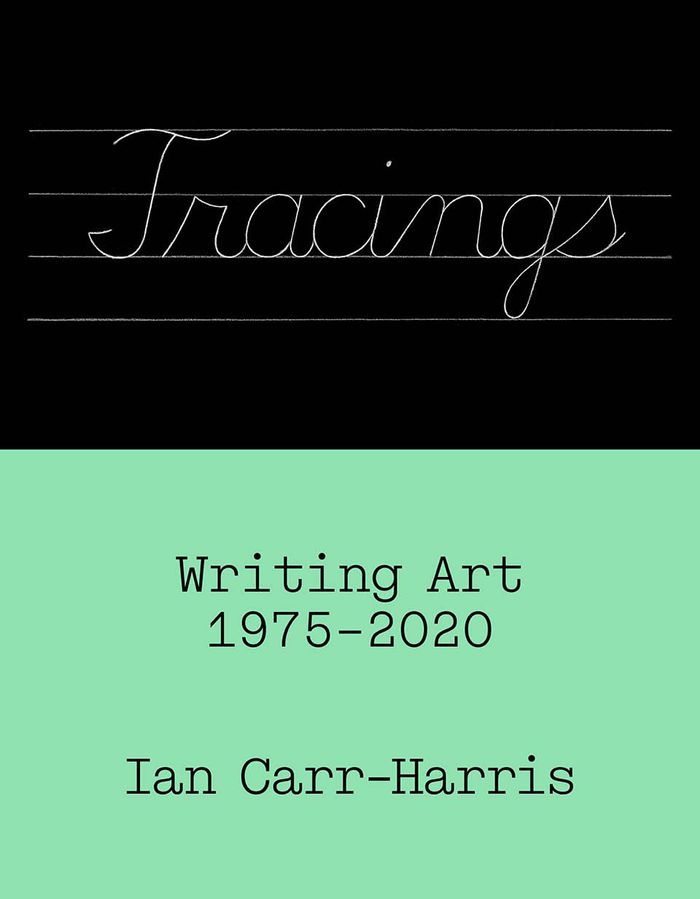
Tracings: Writing art, 1975-2020
Actions:
Price:
$69.95
(available to order)
Summary:
An artist, curator, critic, and teacher, Ian Carr-Harris has been a central figure in Toronto’s art scene since the 1970s. By collecting his impressive output of essays, critical experiments, and reviews into a single volume, Tracings documents the growth of conceptual art and postmodernism in Canadian art, as well as the expansion of mediums and spaces, while providing insights into methods of representation and the role of criticism in contemporary art. In clear and intelligent prose, Carr-Harris offers detailed studies of individual artists and exhibitions as well as theoretically informed reflections on broader cultural concerns. Whether writing about the complexities involved in the construction and transmission of knowledge, meaning, and historical narrative; discussing the material matters of government cultural funding, patronage, and artist-run centres; or describing his own process and artworks, these pieces reveal a literary love of language and a nuanced and investigative mind at work. Throughout his writing, he considers themes of identity, cultural nationalism, postcolonialism, institutionalism, the act of viewing, and relations of power. An introduction by Dan Adler situates Carr-Harris’s work within the context of his contemporaries, collaborators, and cultural environment, pointing out the mutually reinforcing qualities and relationships between his art and his writing. Covering decades of critical thought and engagement, "Tracings" confirms why Ian Carr-Harris has indelibly written himself into Canadian art.
Tracings: Writing art, 1975-2020
Actions:
Price:
$69.95
(available to order)
Summary:
An artist, curator, critic, and teacher, Ian Carr-Harris has been a central figure in Toronto’s art scene since the 1970s. By collecting his impressive output of essays, critical experiments, and reviews into a single volume, Tracings documents the growth of conceptual art and postmodernism in Canadian art, as well as the expansion of mediums and spaces, while providing insights into methods of representation and the role of criticism in contemporary art. In clear and intelligent prose, Carr-Harris offers detailed studies of individual artists and exhibitions as well as theoretically informed reflections on broader cultural concerns. Whether writing about the complexities involved in the construction and transmission of knowledge, meaning, and historical narrative; discussing the material matters of government cultural funding, patronage, and artist-run centres; or describing his own process and artworks, these pieces reveal a literary love of language and a nuanced and investigative mind at work. Throughout his writing, he considers themes of identity, cultural nationalism, postcolonialism, institutionalism, the act of viewing, and relations of power. An introduction by Dan Adler situates Carr-Harris’s work within the context of his contemporaries, collaborators, and cultural environment, pointing out the mutually reinforcing qualities and relationships between his art and his writing. Covering decades of critical thought and engagement, "Tracings" confirms why Ian Carr-Harris has indelibly written himself into Canadian art.
Form:
books
books
Publication:
November 2024
November 2024
Subject:
Art Theory
Art Theory
Form:
books
books
Actions:
Price:
$79.00
(available to order)
Summary:
The art of producing color in movies is a fascinating process with a long history. Many people don’t realize that, as early as the 1890s, much of silent cinema was in color. They also may not know that women were the main workforce behind the techniques that first produced these effects, a tradition that continued as the practice evolved. Breakthroughs in color technology(...)
$79.00
(available to order)
Summary:
The art of producing color in movies is a fascinating process with a long history. Many people don’t realize that, as early as the 1890s, much of silent cinema was in color. They also may not know that women were the main workforce behind the techniques that first produced these effects, a tradition that continued as the practice evolved. Breakthroughs in color technology(...)
Subject:
Architecture and Film, Set Design
Architecture and Film, Set Design
Publication:
October 2024
October 2024
Title:
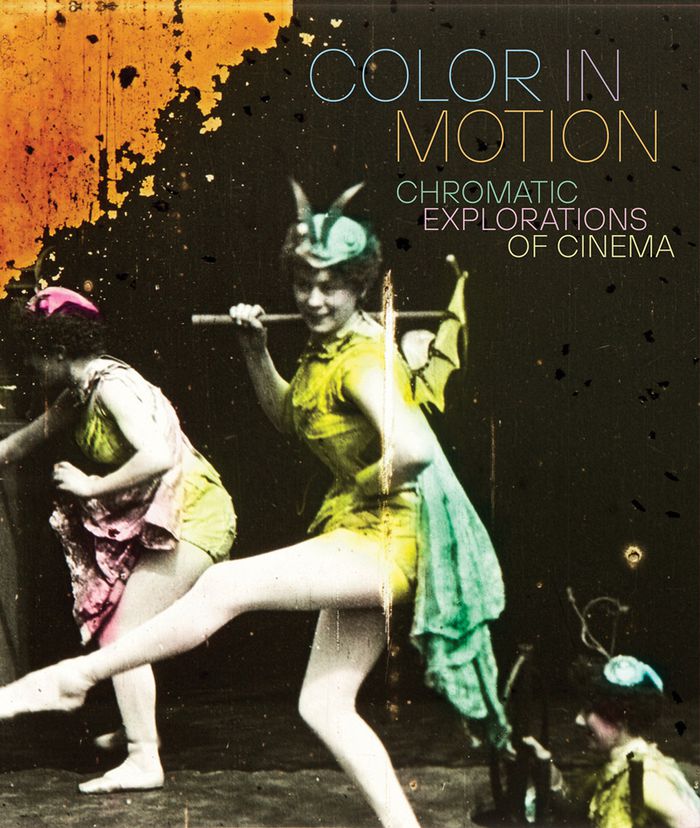
Color in motion: Chromatic explorations of cinema
Actions:
Price:
$79.00
(available to order)
Summary:
The art of producing color in movies is a fascinating process with a long history. Many people don’t realize that, as early as the 1890s, much of silent cinema was in color. They also may not know that women were the main workforce behind the techniques that first produced these effects, a tradition that continued as the practice evolved. Breakthroughs in color technology have created ongoing opportunities for filmmakers to experiment with new forms of narrative and emotional storytelling. Spectacular, psychological and sensory, color has become an integral part of the cinematic experience. From the earliest hand-painted films to Technicolor and today’s digital cinema, Color in Motion takes readers on a journey through the evolution and significance of color in film. Presenting insightful analysis, engaging case studies and inspiring conversations with scholars and experts in the field, with topics ranging from animation to the intersections of color and race in cinema, it traces the historical development of color technologies and their impact onscreen. Incorporating vivid images of color films throughout history—Serpentine Dance, The Cabinet of Dr. Caligari, Fantasia, The Red Shoes, Vertigo, West Side Story, 2001: A Space Odyssey, Moonlight and more, as well as new multispectral scans of rare silent-era film prints—this essential volume celebrates color’s enduring influence on the medium of film.
Color in motion: Chromatic explorations of cinema
Actions:
Price:
$79.00
(available to order)
Summary:
The art of producing color in movies is a fascinating process with a long history. Many people don’t realize that, as early as the 1890s, much of silent cinema was in color. They also may not know that women were the main workforce behind the techniques that first produced these effects, a tradition that continued as the practice evolved. Breakthroughs in color technology have created ongoing opportunities for filmmakers to experiment with new forms of narrative and emotional storytelling. Spectacular, psychological and sensory, color has become an integral part of the cinematic experience. From the earliest hand-painted films to Technicolor and today’s digital cinema, Color in Motion takes readers on a journey through the evolution and significance of color in film. Presenting insightful analysis, engaging case studies and inspiring conversations with scholars and experts in the field, with topics ranging from animation to the intersections of color and race in cinema, it traces the historical development of color technologies and their impact onscreen. Incorporating vivid images of color films throughout history—Serpentine Dance, The Cabinet of Dr. Caligari, Fantasia, The Red Shoes, Vertigo, West Side Story, 2001: A Space Odyssey, Moonlight and more, as well as new multispectral scans of rare silent-era film prints—this essential volume celebrates color’s enduring influence on the medium of film.
Form:
books
books
Publication:
October 2024
October 2024
Subject:
Architecture and Film, Set Design
Architecture and Film, Set Design
Form:
books
books
Title:
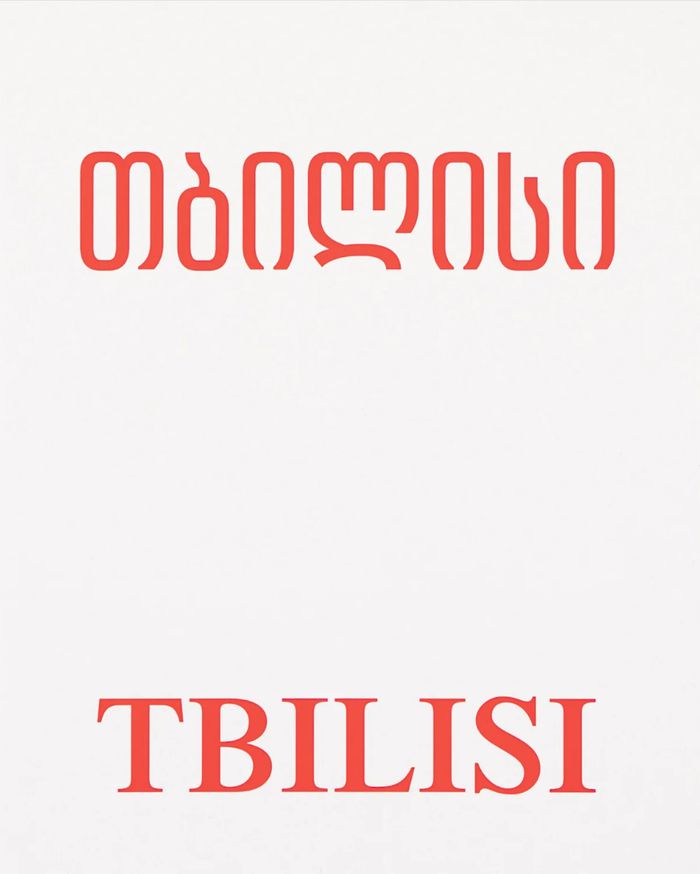
Anna Tsitsishvili: Tbilisi
Anna Tsitsishvili: Tbilisi
Actions:
Price:
$50.00
(available in store)
Summary:
Anna Tsitsishvili’s Tbilisi delivers us a contemporary outlook on Georgia’s vibrant capital at the crossroads between East and West. Her photobook attests that photography can play a role in putting the city back on the map by creating a new visual narrative that transcends the past to embrace authentic moments. Notably, the Soviet era has provided us with a glossy(...)
$50.00
(available in store)
Summary:
Anna Tsitsishvili’s Tbilisi delivers us a contemporary outlook on Georgia’s vibrant capital at the crossroads between East and West. Her photobook attests that photography can play a role in putting the city back on the map by creating a new visual narrative that transcends the past to embrace authentic moments. Notably, the Soviet era has provided us with a glossy(...)
Title:
Anna Tsitsishvili: Tbilisi
Actions:
Price:
$50.00
(available in store)
Summary:
Anna Tsitsishvili’s Tbilisi delivers us a contemporary outlook on Georgia’s vibrant capital at the crossroads between East and West. Her photobook attests that photography can play a role in putting the city back on the map by creating a new visual narrative that transcends the past to embrace authentic moments. Notably, the Soviet era has provided us with a glossy portrayal of the city under the empire, with the aim to convey some specific values through photography that is typical of regimes. However, after the collapse of the Soviet Union, a subtle melancholy has seeped into those photographs. This sentiment reflected the post-imperial events and the Russian occupation, which have left an indelible mark on the entire country, the city, and its inhabitants. A new generation of photographers though has emerged in the past years, with a vision that tries to respond to that sentiment by going beyond the façade and breaking ties with the past. In their images the city looks past the streets, the buildings and the cityscapes. They venture into courtyards, homes, into the private life of people and their sincere details. Anna Tsitsishvili does so too – with her photobook she captivates us primarily with her genuineness. From sumptuous old apartments to lived contemporary rooms, from daily commutes to encounters in the busy streets, a sense of everyday poetry permeates her all-color selection.
Anna Tsitsishvili: Tbilisi
Actions:
Price:
$50.00
(available in store)
Summary:
Anna Tsitsishvili’s Tbilisi delivers us a contemporary outlook on Georgia’s vibrant capital at the crossroads between East and West. Her photobook attests that photography can play a role in putting the city back on the map by creating a new visual narrative that transcends the past to embrace authentic moments. Notably, the Soviet era has provided us with a glossy portrayal of the city under the empire, with the aim to convey some specific values through photography that is typical of regimes. However, after the collapse of the Soviet Union, a subtle melancholy has seeped into those photographs. This sentiment reflected the post-imperial events and the Russian occupation, which have left an indelible mark on the entire country, the city, and its inhabitants. A new generation of photographers though has emerged in the past years, with a vision that tries to respond to that sentiment by going beyond the façade and breaking ties with the past. In their images the city looks past the streets, the buildings and the cityscapes. They venture into courtyards, homes, into the private life of people and their sincere details. Anna Tsitsishvili does so too – with her photobook she captivates us primarily with her genuineness. From sumptuous old apartments to lived contemporary rooms, from daily commutes to encounters in the busy streets, a sense of everyday poetry permeates her all-color selection.
Form:
books
books
Publication:
June 2024
June 2024
Subject:
Photography monographs
Photography monographs
Form:
books
books
Title:
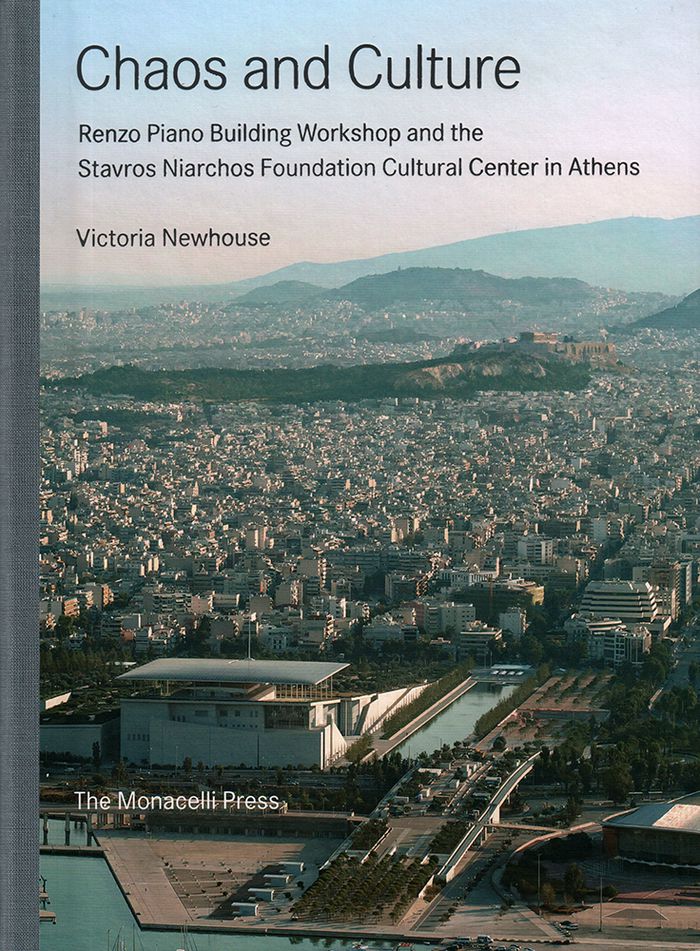
Chaos and culture: Renzo Piano Building Workshop and the Stavros Niarchos Foundation Cultural center
Chaos and culture: Renzo Piano Building Workshop and the Stavros Niarchos Foundation Cultural center
Actions:
Price:
$66.00
(available to order)
Summary:
In 2006 the Stavros Niarchos Foundation announced its gift of a new cultural center in Athens to house both Greek National Library and the Greek National Opera House within a forty-acre landscaped public park. Two years later, with designers and engineers in place and the project underway, the Greek economy collapsed. In "Chaos and culture", Victoria Newhouse weaves a(...)
$66.00
(available to order)
Summary:
In 2006 the Stavros Niarchos Foundation announced its gift of a new cultural center in Athens to house both Greek National Library and the Greek National Opera House within a forty-acre landscaped public park. Two years later, with designers and engineers in place and the project underway, the Greek economy collapsed. In "Chaos and culture", Victoria Newhouse weaves a(...)
Title:
Chaos and culture: Renzo Piano Building Workshop and the Stavros Niarchos Foundation Cultural center
Actions:
Price:
$66.00
(available to order)
Summary:
In 2006 the Stavros Niarchos Foundation announced its gift of a new cultural center in Athens to house both Greek National Library and the Greek National Opera House within a forty-acre landscaped public park. Two years later, with designers and engineers in place and the project underway, the Greek economy collapsed. In "Chaos and culture", Victoria Newhouse weaves a fascinating narrative of how a philanthropist and an extraordinary design team became convinced that architecture could serve as a beacon of hope amid Greece’s economic crisis and political upheaval. With meticulous methodology of primary research, interviews with designers, and historic context, Newhouse describes the decade-long process leading to the creation of the Stavros Niarchos Foundation Cultural Center (SNFCC), an $800 million dollar project that became the symbol of recovery and survival. The Stavros Niarchos Foundation Cultural Center (SNFCC) cannot but assume unusual cultural significance, standing as it does on a hill in view of the Parthenon (to the north) and Faliro Bay (to the south). Newhouse further situates the project within the modern history of Athens, beginning with Greece’s independence in 1832, and reaches back much earlier to describe two-thousand-year old cemeteries unearthed on the site. Aerial views by the photographer Iwan Baan are among the 200 photographs and drawings documenting the process and context of the SNFCC.
Chaos and culture: Renzo Piano Building Workshop and the Stavros Niarchos Foundation Cultural center
Actions:
Price:
$66.00
(available to order)
Summary:
In 2006 the Stavros Niarchos Foundation announced its gift of a new cultural center in Athens to house both Greek National Library and the Greek National Opera House within a forty-acre landscaped public park. Two years later, with designers and engineers in place and the project underway, the Greek economy collapsed. In "Chaos and culture", Victoria Newhouse weaves a fascinating narrative of how a philanthropist and an extraordinary design team became convinced that architecture could serve as a beacon of hope amid Greece’s economic crisis and political upheaval. With meticulous methodology of primary research, interviews with designers, and historic context, Newhouse describes the decade-long process leading to the creation of the Stavros Niarchos Foundation Cultural Center (SNFCC), an $800 million dollar project that became the symbol of recovery and survival. The Stavros Niarchos Foundation Cultural Center (SNFCC) cannot but assume unusual cultural significance, standing as it does on a hill in view of the Parthenon (to the north) and Faliro Bay (to the south). Newhouse further situates the project within the modern history of Athens, beginning with Greece’s independence in 1832, and reaches back much earlier to describe two-thousand-year old cemeteries unearthed on the site. Aerial views by the photographer Iwan Baan are among the 200 photographs and drawings documenting the process and context of the SNFCC.
Form:
books
books
Publication:
May 2017
May 2017
Subject:
Architecture Monographs
Architecture Monographs
Form:
books
books
Price:
$34.95
(available in store)
Summary:
National historic sites commemorate decisive moments in the making of Canada. But seen through an environmental lens, these sites become artifacts of a bigger story: the occupation and transformation of nature into nation. In an age of pressing discussions about environmental sustainability, there is a growing need to know more about the history of our relationship with(...)
$34.95
(available in store)
Summary:
National historic sites commemorate decisive moments in the making of Canada. But seen through an environmental lens, these sites become artifacts of a bigger story: the occupation and transformation of nature into nation. In an age of pressing discussions about environmental sustainability, there is a growing need to know more about the history of our relationship with(...)
Title:
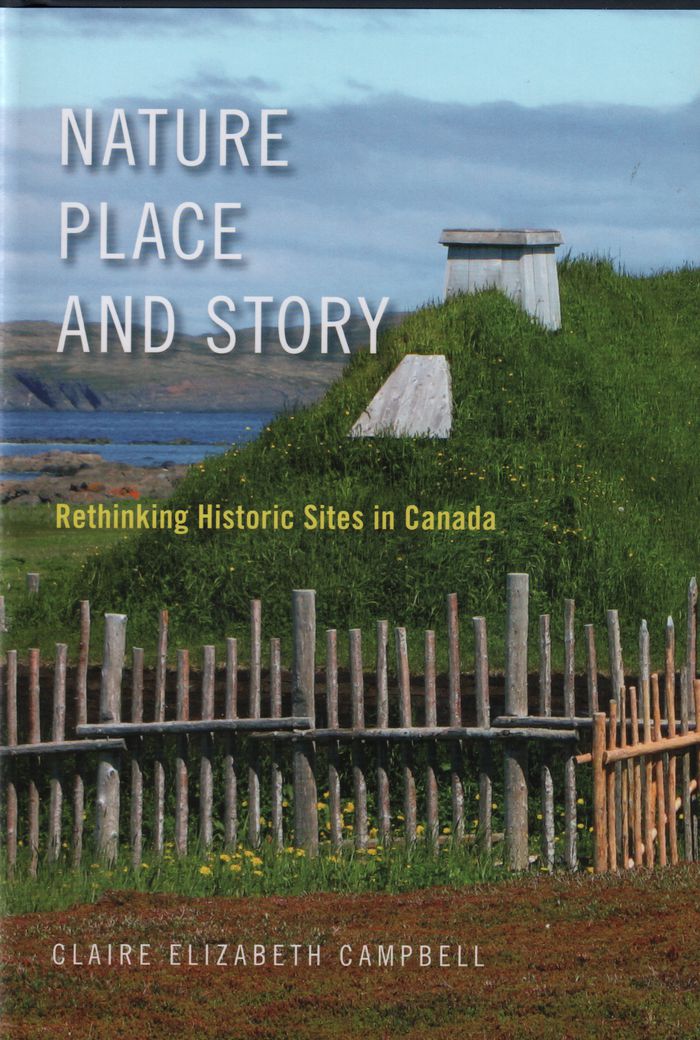
Nature, place, and story: rethinking historic sites in Canada
Actions:
Price:
$34.95
(available in store)
Summary:
National historic sites commemorate decisive moments in the making of Canada. But seen through an environmental lens, these sites become artifacts of a bigger story: the occupation and transformation of nature into nation. In an age of pressing discussions about environmental sustainability, there is a growing need to know more about the history of our relationship with the natural world and what lessons these places of public history, regional identity, and national narrative can teach us. "Nature, place, and story" provides new interpretations for five of Canada’s largest and most iconic historic sites (two of which are UNESCO World Heritage Sites): L’Anse aux Meadows, Newfoundland; Grand Pré, Nova Scotia; Fort William, Ontario; the Forks of the Red River, Manitoba; and the Bar U Ranch, Alberta. At each location, Claire Campbell rewrites public history as environmental history, revealing the country’s debt to the power and fragility of the natural world, and the relevance of the past to understanding climate change, agricultural sustainability, wilderness protection, urban reclamation, and fossil fuel extraction. From the medieval Atlantic to modern ranchlands, environmental history speaks directly to contemporary questions about the health of Canada’s habitat. Bringing together public and environmental history in an entirely new way, "Nature, place, and story" is a lively and ambitious call for a fresh perspective on natural heritage.
Nature, place, and story: rethinking historic sites in Canada
Actions:
Price:
$34.95
(available in store)
Summary:
National historic sites commemorate decisive moments in the making of Canada. But seen through an environmental lens, these sites become artifacts of a bigger story: the occupation and transformation of nature into nation. In an age of pressing discussions about environmental sustainability, there is a growing need to know more about the history of our relationship with the natural world and what lessons these places of public history, regional identity, and national narrative can teach us. "Nature, place, and story" provides new interpretations for five of Canada’s largest and most iconic historic sites (two of which are UNESCO World Heritage Sites): L’Anse aux Meadows, Newfoundland; Grand Pré, Nova Scotia; Fort William, Ontario; the Forks of the Red River, Manitoba; and the Bar U Ranch, Alberta. At each location, Claire Campbell rewrites public history as environmental history, revealing the country’s debt to the power and fragility of the natural world, and the relevance of the past to understanding climate change, agricultural sustainability, wilderness protection, urban reclamation, and fossil fuel extraction. From the medieval Atlantic to modern ranchlands, environmental history speaks directly to contemporary questions about the health of Canada’s habitat. Bringing together public and environmental history in an entirely new way, "Nature, place, and story" is a lively and ambitious call for a fresh perspective on natural heritage.
Form:
books
books
Publication:
August 2017
August 2017
Subject:
Architecture in Canada
Architecture in Canada
Form:
books
books
Title:
David Freund: gas stop
David Freund: gas stop
Actions:
Price:
$162.50
(available to order)
Summary:
In the twentieth century, any American driver or passenger would stop at gas stations at least weekly, and not just for gas. Gas stations were also oases offering food and drink, car repairs, directions, maps and, importantly, bathrooms. Yet, beyond their appreciation as roadside novelties, their offerings to American culture, landscape and history have been little(...)
$162.50
(available to order)
Summary:
In the twentieth century, any American driver or passenger would stop at gas stations at least weekly, and not just for gas. Gas stations were also oases offering food and drink, car repairs, directions, maps and, importantly, bathrooms. Yet, beyond their appreciation as roadside novelties, their offerings to American culture, landscape and history have been little(...)
Title:
David Freund: gas stop
Actions:
Price:
$162.50
(available to order)
Summary:
In the twentieth century, any American driver or passenger would stop at gas stations at least weekly, and not just for gas. Gas stations were also oases offering food and drink, car repairs, directions, maps and, importantly, bathrooms. Yet, beyond their appreciation as roadside novelties, their offerings to American culture, landscape and history have been little photographed. From 1978 to 1981, David Freund analyzed the culture, architecture and landscape of gas stations in more than forty states. The photographs show customers and workers in postures and actions peculiar to gassing up, or just hanging out. Architecture and signage, both corporate and vernacular, beckon passing drivers. Regional landscapes hold and surround gas stations, each with its own landscape of designed plantings or scrappy volunteers. Stations were also outposts for American networks other than petroleum, seen in telephone booths, mailboxes and powerlines. These and all that surrounds them spark recognition and recollection, accruing as elements of a nonlinear American narrative. While Freund’s primary concern is for his photographs to engage and surprise, he acknowledges nostalgia and uses it to imbue his subjects with a compelling sense of belonging. Of more than 200,000 gas stations in the United States at the time of this project, today they and their roles are mostly gone, existing now in memory and in this work. Four hardcover books housed in a slipcase
David Freund: gas stop
Actions:
Price:
$162.50
(available to order)
Summary:
In the twentieth century, any American driver or passenger would stop at gas stations at least weekly, and not just for gas. Gas stations were also oases offering food and drink, car repairs, directions, maps and, importantly, bathrooms. Yet, beyond their appreciation as roadside novelties, their offerings to American culture, landscape and history have been little photographed. From 1978 to 1981, David Freund analyzed the culture, architecture and landscape of gas stations in more than forty states. The photographs show customers and workers in postures and actions peculiar to gassing up, or just hanging out. Architecture and signage, both corporate and vernacular, beckon passing drivers. Regional landscapes hold and surround gas stations, each with its own landscape of designed plantings or scrappy volunteers. Stations were also outposts for American networks other than petroleum, seen in telephone booths, mailboxes and powerlines. These and all that surrounds them spark recognition and recollection, accruing as elements of a nonlinear American narrative. While Freund’s primary concern is for his photographs to engage and surprise, he acknowledges nostalgia and uses it to imbue his subjects with a compelling sense of belonging. Of more than 200,000 gas stations in the United States at the time of this project, today they and their roles are mostly gone, existing now in memory and in this work. Four hardcover books housed in a slipcase
Form:
books
books
Publication:
January 2017
January 2017
Subject:
Photography monographs
Photography monographs
Form:
books
books
Title:
Walking between slums and skycrapers: illusions of open space in Hong Kong, Tokyo, and Shanghai
Walking between slums and skycrapers: illusions of open space in Hong Kong, Tokyo, and Shanghai
Actions:
Price:
$24.95
(available to order)
Summary:
The book is concerned with the effects of globalization on living space focusing specifically on East Asian metropolises, such as Hong Kong, Tokyo, and Shanghai. Globalization has given rise to accessible catch-phrases such as the 'global village' and 'this is a small world.' In each part of the book the author juxtaposes a 'social' account of the city's urban space as it(...)
$24.95
(available to order)
Summary:
The book is concerned with the effects of globalization on living space focusing specifically on East Asian metropolises, such as Hong Kong, Tokyo, and Shanghai. Globalization has given rise to accessible catch-phrases such as the 'global village' and 'this is a small world.' In each part of the book the author juxtaposes a 'social' account of the city's urban space as it(...)
Publication:
April 2004, Hong Kong
April 2004, Hong Kong
Title:
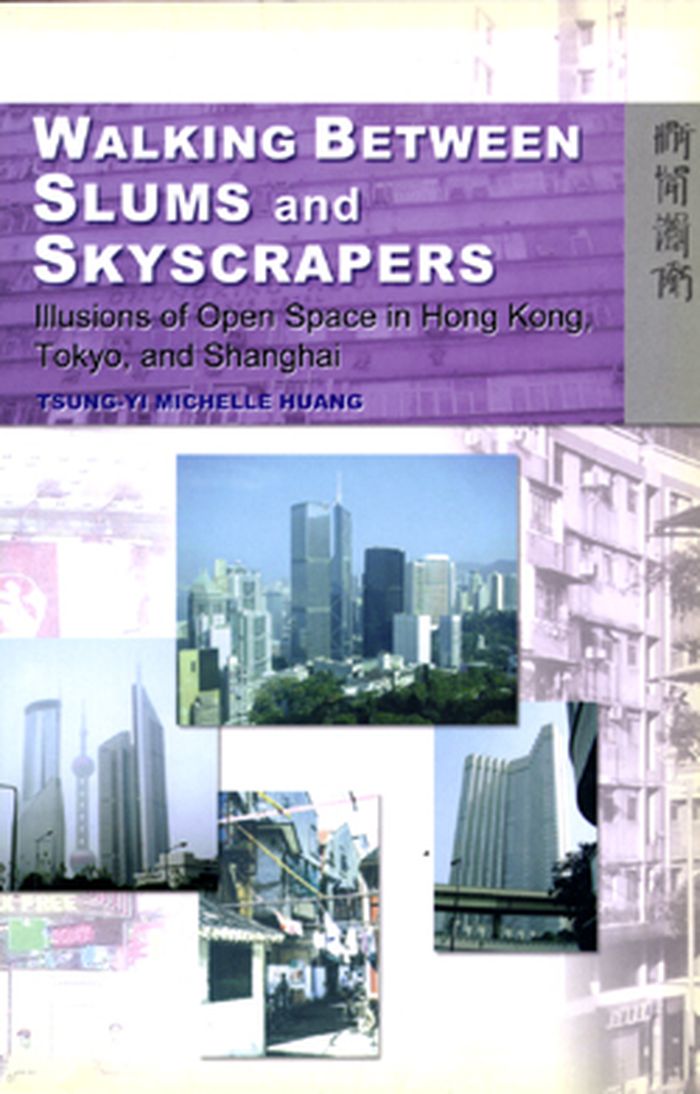
Walking between slums and skycrapers: illusions of open space in Hong Kong, Tokyo, and Shanghai
Actions:
Price:
$24.95
(available to order)
Summary:
The book is concerned with the effects of globalization on living space focusing specifically on East Asian metropolises, such as Hong Kong, Tokyo, and Shanghai. Globalization has given rise to accessible catch-phrases such as the 'global village' and 'this is a small world.' In each part of the book the author juxtaposes a 'social' account of the city's urban space as it has been reshaped by the process of globalization with a 'private' account of the urban landscape as experienced by its walkers. Rather than rest here, the author wishes to show that for many of the inhabitants of the new global city, the 'shrinking world' phenomenon is deeply literal: the 'lived' space of everyday life is shrinking to make room for rezoning, construction of new infrastructure, and space modification - all in the name of urban development. Tsung-yi Michelle Huang received her Ph.D. in Comparative Literature from State University of New York at Stony Brook. Her works on cinema, literature, cultural studies, global cities, and Hong Kong culture have been published in the Quarterly Review of Film and Video, Journal of Narrative Theory, among others. Recently she has been working in a project that defines and examines specific East Asian metropolises as both 'linked' cities and distinctive global centers, mapping the tension within these domains. She is currently an Assistant Professor of English Literature at National Taiwan Normal University.
Walking between slums and skycrapers: illusions of open space in Hong Kong, Tokyo, and Shanghai
Actions:
Price:
$24.95
(available to order)
Summary:
The book is concerned with the effects of globalization on living space focusing specifically on East Asian metropolises, such as Hong Kong, Tokyo, and Shanghai. Globalization has given rise to accessible catch-phrases such as the 'global village' and 'this is a small world.' In each part of the book the author juxtaposes a 'social' account of the city's urban space as it has been reshaped by the process of globalization with a 'private' account of the urban landscape as experienced by its walkers. Rather than rest here, the author wishes to show that for many of the inhabitants of the new global city, the 'shrinking world' phenomenon is deeply literal: the 'lived' space of everyday life is shrinking to make room for rezoning, construction of new infrastructure, and space modification - all in the name of urban development. Tsung-yi Michelle Huang received her Ph.D. in Comparative Literature from State University of New York at Stony Brook. Her works on cinema, literature, cultural studies, global cities, and Hong Kong culture have been published in the Quarterly Review of Film and Video, Journal of Narrative Theory, among others. Recently she has been working in a project that defines and examines specific East Asian metropolises as both 'linked' cities and distinctive global centers, mapping the tension within these domains. She is currently an Assistant Professor of English Literature at National Taiwan Normal University.
Form:
books
books
Publication:
April 2004, Hong Kong
April 2004, Hong Kong
Form:
books
books
Title:
The Dolder Grand
The Dolder Grand
Actions:
Price:
$199.99
(available to order)
Summary:
In 2009, the Dolder Grand celebrates its first birthday following a four-year remodelling by Foster+Partners. To mark the occasion, this publication outlines the history of an iconic institution, steeped in tradition, from its beginnings as a Kurhaus in 1899 to its present-day reincarnation. Photographers from the Zurich studio nave have documented the entire project(...)
$199.99
(available to order)
Summary:
In 2009, the Dolder Grand celebrates its first birthday following a four-year remodelling by Foster+Partners. To mark the occasion, this publication outlines the history of an iconic institution, steeped in tradition, from its beginnings as a Kurhaus in 1899 to its present-day reincarnation. Photographers from the Zurich studio nave have documented the entire project(...)
Title:
The Dolder Grand
Actions:
Price:
$199.99
(available to order)
Summary:
In 2009, the Dolder Grand celebrates its first birthday following a four-year remodelling by Foster+Partners. To mark the occasion, this publication outlines the history of an iconic institution, steeped in tradition, from its beginnings as a Kurhaus in 1899 to its present-day reincarnation. Photographers from the Zurich studio nave have documented the entire project throughout every stage of the refurbishment, charting the scope of the hotel’s metamorphosis. They portray the people who made it all possible and also allow them to speak for themselves. The resulting narrative in pictures and words is not simply a linear documentation, but a rich and complex tapestry in which text and image are interwoven with a lyricism that brings the architecture to life on the pages of the book. Journalist Judith Wyder complements the photographs with anecdotes that give a many-facetted insight into the operational logistics behind the scenes in the day-to-day running of the hotel. In addition, she details the painstaking restoration work, the history of the hotel itself and the names of some of its most famous guests. Dutch novelist Cees Nooteboom has contributed an essay in which he describes the hotel as a microcosm and a home away from home, musing on how guests tend to take possession of the hotels they stay in.
The Dolder Grand
Actions:
Price:
$199.99
(available to order)
Summary:
In 2009, the Dolder Grand celebrates its first birthday following a four-year remodelling by Foster+Partners. To mark the occasion, this publication outlines the history of an iconic institution, steeped in tradition, from its beginnings as a Kurhaus in 1899 to its present-day reincarnation. Photographers from the Zurich studio nave have documented the entire project throughout every stage of the refurbishment, charting the scope of the hotel’s metamorphosis. They portray the people who made it all possible and also allow them to speak for themselves. The resulting narrative in pictures and words is not simply a linear documentation, but a rich and complex tapestry in which text and image are interwoven with a lyricism that brings the architecture to life on the pages of the book. Journalist Judith Wyder complements the photographs with anecdotes that give a many-facetted insight into the operational logistics behind the scenes in the day-to-day running of the hotel. In addition, she details the painstaking restoration work, the history of the hotel itself and the names of some of its most famous guests. Dutch novelist Cees Nooteboom has contributed an essay in which he describes the hotel as a microcosm and a home away from home, musing on how guests tend to take possession of the hotels they stay in.
Form:
books
books
Publication:
July 2009
July 2009
Subject:
Architecture Monographs
Architecture Monographs
Form:
books
books
Price:
$29.50
(available to order)
Summary:
This exhibition catalogue explores 'the cult of the ruin', a phenomenon of 18th and early 19th century Europe. Mock ruins were built as 'follies' in landscape gardens, while artists imagined how London would appear as a ruined city after the collapse of the British Empire. In Rome, interiors were painted as trompe l'oeil(...)
$29.50
(available to order)
Summary:
This exhibition catalogue explores 'the cult of the ruin', a phenomenon of 18th and early 19th century Europe. Mock ruins were built as 'follies' in landscape gardens, while artists imagined how London would appear as a ruined city after the collapse of the British Empire. In Rome, interiors were painted as trompe l'oeil(...)
Subject:
Architecture Monographs
Architecture Monographs
Publication:
January 1999, London
January 1999, London
Title:
Visions of ruin : architectural fantasies & designs for garden follies
Actions:
Price:
$29.50
(available to order)
Summary:
This exhibition catalogue explores 'the cult of the ruin', a phenomenon of 18th and early 19th century Europe. Mock ruins were built as 'follies' in landscape gardens, while artists imagined how London would appear as a ruined city after the collapse of the British Empire. In Rome, interiors were painted as trompe l'oeil ruins, and in Paris the great chef Antoine Carême served blancmanges in the shape of Roman ruins. John Soane represents the climax of this fascination. In the garden of his Museum at No.13 Lincoln's Inn Fields is the 'Monk's Yard', a mock-ruin assembled from medieval fragments of the Palace of Westminster. At his country house, Pitzhanger Manor in Ealing, he pretended that a mock-classical ruin was a Roman temple he had discovered at the bottom of the garden. He commemorated the completion of his masterpiece, the Bank of England, by exhibiting a series of astonishing views of the structure as if a ruin. He even wrote a narrative, "Crude Hints Towards the History of My House", in which he imagined an archaeologist of future centuries inspecting the fragments of his home. The transcribed text is reprinted in this publication. Architects and artists include Robert Adam, William Chambers, Hubert Robert, Piranesi, Clerrisseau, Richard Wilson, J. M. W. Turner, Gustave Doré and John Martin.
Visions of ruin : architectural fantasies & designs for garden follies
Actions:
Price:
$29.50
(available to order)
Summary:
This exhibition catalogue explores 'the cult of the ruin', a phenomenon of 18th and early 19th century Europe. Mock ruins were built as 'follies' in landscape gardens, while artists imagined how London would appear as a ruined city after the collapse of the British Empire. In Rome, interiors were painted as trompe l'oeil ruins, and in Paris the great chef Antoine Carême served blancmanges in the shape of Roman ruins. John Soane represents the climax of this fascination. In the garden of his Museum at No.13 Lincoln's Inn Fields is the 'Monk's Yard', a mock-ruin assembled from medieval fragments of the Palace of Westminster. At his country house, Pitzhanger Manor in Ealing, he pretended that a mock-classical ruin was a Roman temple he had discovered at the bottom of the garden. He commemorated the completion of his masterpiece, the Bank of England, by exhibiting a series of astonishing views of the structure as if a ruin. He even wrote a narrative, "Crude Hints Towards the History of My House", in which he imagined an archaeologist of future centuries inspecting the fragments of his home. The transcribed text is reprinted in this publication. Architects and artists include Robert Adam, William Chambers, Hubert Robert, Piranesi, Clerrisseau, Richard Wilson, J. M. W. Turner, Gustave Doré and John Martin.
Form:
books
books
Publication:
January 1999, London
January 1999, London
Subject:
Architecture Monographs
Architecture Monographs
Form:
books
books
Actions:
Price:
$42.00
(available to order)
Summary:
Aline B. Louchheim (1914–1972) was an art critic on assignment for the New York Times in 1953 when she first met the Finnish-American architect Eero Saarinen. She would become his wife and the driving force behind his rise to critical prominence. ''When Eero met his match'' draws on the couple’s personal correspondence to reconstruct the early days of their thrilling(...)
$42.00
(available to order)
Summary:
Aline B. Louchheim (1914–1972) was an art critic on assignment for the New York Times in 1953 when she first met the Finnish-American architect Eero Saarinen. She would become his wife and the driving force behind his rise to critical prominence. ''When Eero met his match'' draws on the couple’s personal correspondence to reconstruct the early days of their thrilling(...)
Title:
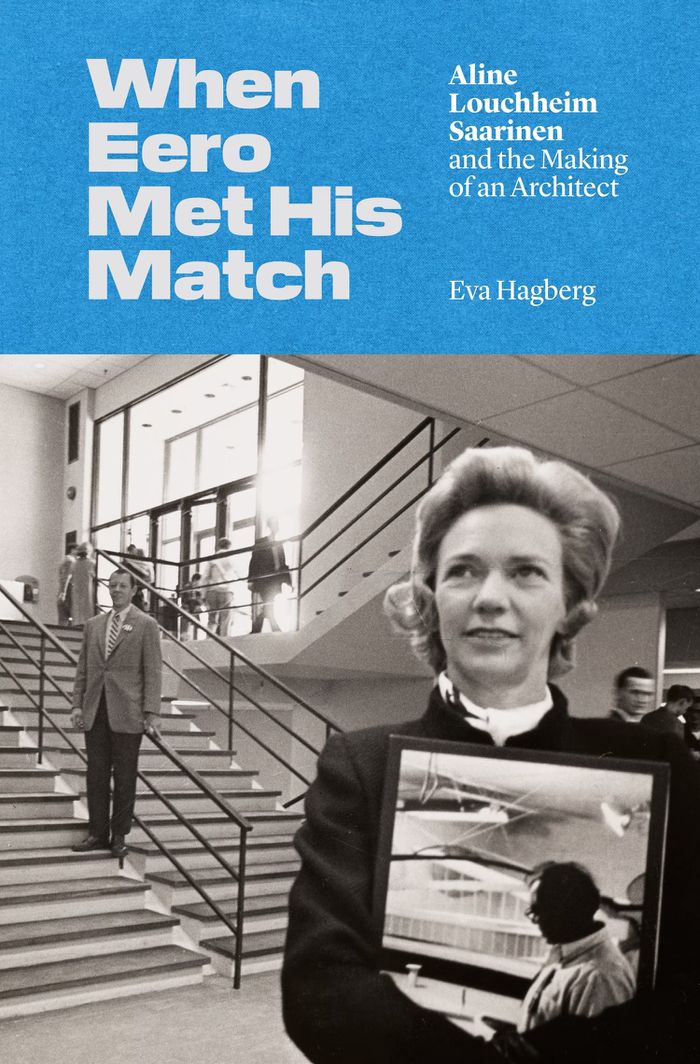
When Eero met his match: Aline Louchheim Saarinen and the making of an architect
Actions:
Price:
$42.00
(available to order)
Summary:
Aline B. Louchheim (1914–1972) was an art critic on assignment for the New York Times in 1953 when she first met the Finnish-American architect Eero Saarinen. She would become his wife and the driving force behind his rise to critical prominence. ''When Eero met his match'' draws on the couple’s personal correspondence to reconstruct the early days of their thrilling courtship and traces Louchheim’s gradual takeover of Saarinen’s public narrative in the 1950s, the decade when his career soared to unprecedented heights. Drawing on her own experiences as an architecture journalist on the receiving end of press pitches and then as a secret publicist for high-end architects, Eva Hagberg paints an unforgettable portrait of Louchheim while revealing the inner workings of a media world that has always relied on secrecy, friendship, and the exchange of favors. She describes how Louchheim codified the practices of architectural publicity that have become widely adopted today, and shows how, without Louchheim as his wife and publicist, Saarinen’s work would not have been nearly as well known. Providing a new understanding of postwar architectural history in the United States, ''When Eero met his match'' is both a poignant love story and a superb biographical study that challenges us to reconsider the relationship between fame and media representation, and the ways the narratives of others can become our own.
When Eero met his match: Aline Louchheim Saarinen and the making of an architect
Actions:
Price:
$42.00
(available to order)
Summary:
Aline B. Louchheim (1914–1972) was an art critic on assignment for the New York Times in 1953 when she first met the Finnish-American architect Eero Saarinen. She would become his wife and the driving force behind his rise to critical prominence. ''When Eero met his match'' draws on the couple’s personal correspondence to reconstruct the early days of their thrilling courtship and traces Louchheim’s gradual takeover of Saarinen’s public narrative in the 1950s, the decade when his career soared to unprecedented heights. Drawing on her own experiences as an architecture journalist on the receiving end of press pitches and then as a secret publicist for high-end architects, Eva Hagberg paints an unforgettable portrait of Louchheim while revealing the inner workings of a media world that has always relied on secrecy, friendship, and the exchange of favors. She describes how Louchheim codified the practices of architectural publicity that have become widely adopted today, and shows how, without Louchheim as his wife and publicist, Saarinen’s work would not have been nearly as well known. Providing a new understanding of postwar architectural history in the United States, ''When Eero met his match'' is both a poignant love story and a superb biographical study that challenges us to reconsider the relationship between fame and media representation, and the ways the narratives of others can become our own.
Form:
books
books
Publication:
September 2022
September 2022
Subject:
Architectural Theory
Architectural Theory


