


21400 Results
Form:
photographs
photographs
Actions:
Reference number:
AP149.S1.1972.PR03.010
Description:
Group consists of photographs for the Minimum Cost Housing Group's publication "Use it Again, Sam" including a photograph of hands holding two bottles of reused materials and a view of Middle East housing built from recycled doors, windows and other urban scrap.
AP149.S1.1972.PR03.010
Description:
Group consists of photographs for the Minimum Cost Housing Group's publication "Use it Again, Sam" including a photograph of hands holding two bottles of reused materials and a view of Middle East housing built from recycled doors, windows and other urban scrap.
People:
Date:
ca. 1975
ca. 1975
Title:
Centre Publication / Photographs
Actions:
AP149.S1.1972.PR03.010
Description:
Group consists of photographs for the Minimum Cost Housing Group's publication "Use it Again, Sam" including a photograph of hands holding two bottles of reused materials and a view of Middle East housing built from recycled doors, windows and other urban scrap.
Centre Publication / Photographs
Actions:
AP149.S1.1972.PR03.010
Description:
Group consists of photographs for the Minimum Cost Housing Group's publication "Use it Again, Sam" including a photograph of hands holding two bottles of reused materials and a view of Middle East housing built from recycled doors, windows and other urban scrap.
Form:
photographs
photographs
Date:
ca. 1975
ca. 1975
People:
Form:
textual records
textual records
Actions:
Reference number:
ARCH153654
Description:
essay by Robert L. Hartwig rejected for publication by editorial board of Oppositions magazine
ARCH153654
Description:
essay by Robert L. Hartwig rejected for publication by editorial board of Oppositions magazine
People:
Date:
1976
1976
Title:
Relativity and Simultaneity: The Smithsons, James Stirling and Le Corbusier
Actions:
ARCH153654
Description:
essay by Robert L. Hartwig rejected for publication by editorial board of Oppositions magazine
Relativity and Simultaneity: The Smithsons, James Stirling and Le Corbusier
Actions:
ARCH153654
Description:
essay by Robert L. Hartwig rejected for publication by editorial board of Oppositions magazine
Form:
textual records
textual records
Date:
1976
1976
People:
Level of archival description:
Project
Project
Reference number:
CD034.S1.1974.PR01
Description:
This project series contains four reproductions of drawings displayed in the exhibit to document the neighbourhood Quinta do Bacalhau-Monte Coxo, in Lisbon, Portugal. The exhibit text explained the following: The project architect Manuel Vicente was already working on a design for the intervention in the Quintas de Bacalhau and Monte Coxo when he was co-opted by SAAL. The proposed typology referred to another ambitious urban project of 615 housing units, Quinta das Fonsecas - Quinta da Calçada neighbourhood by the architect Raúl Hestnes Ferreira. The intention was to bring the city to the outlying shanty town areas. None of these projects was carried out in full, and they are now fragmented and besieged by the traffic system without having produced any of the essential community and socialising facilities. In Bacalhau-Monte Coxo the structure of the internal patios reveals the ways in which the public space and community was organised. The architecture assigned importance to the facades, although access to the community courtyards was also a central design concept. In a 1976 interview, the architect himself argued that the release of bourgeois guilt allowed for spatial beauty, adopting the slogan 'Facades First' in defence of architectural design. In a way, this proposal anticipated the post-modern, although in a form that did not deny architecture's social engagement. The design emphasizes a strong idea of architectural autonomy, unfortunately only a part of the project was actually built. (The SAAL Process, Housing in Portugal 1974–76) Manuel Vicente worked for SAAL/Lisbon and Central South with the following collaborators: Afonso José Baptista, Agostinho Xavier de Andrade, António Albano Leitão, Cristina Catela Martins Pereira, Eduardo Serrano de Sousa, Gentil Noras, José Manuel Diniz Cabral Caldeira, Manuel Augusto Lopes de Sousa, Nuno Matos Silva, Rita Cabral and the resident association Cooperativa de Habitação Económica Portugal Novo, that was founded on September 6th, 1974. The team built 384 dwellings. The operation began in September 1974, with a construction date in January 1977. This project series contains reproductions of design development drawings and a cadastral plan. The original drawings were produced in 1974 or after and were reproduced in 2015 for the exhibit.
CD034.S1.1974.PR01
Description:
This project series contains four reproductions of drawings displayed in the exhibit to document the neighbourhood Quinta do Bacalhau-Monte Coxo, in Lisbon, Portugal. The exhibit text explained the following: The project architect Manuel Vicente was already working on a design for the intervention in the Quintas de Bacalhau and Monte Coxo when he was co-opted by SAAL. The proposed typology referred to another ambitious urban project of 615 housing units, Quinta das Fonsecas - Quinta da Calçada neighbourhood by the architect Raúl Hestnes Ferreira. The intention was to bring the city to the outlying shanty town areas. None of these projects was carried out in full, and they are now fragmented and besieged by the traffic system without having produced any of the essential community and socialising facilities. In Bacalhau-Monte Coxo the structure of the internal patios reveals the ways in which the public space and community was organised. The architecture assigned importance to the facades, although access to the community courtyards was also a central design concept. In a 1976 interview, the architect himself argued that the release of bourgeois guilt allowed for spatial beauty, adopting the slogan 'Facades First' in defence of architectural design. In a way, this proposal anticipated the post-modern, although in a form that did not deny architecture's social engagement. The design emphasizes a strong idea of architectural autonomy, unfortunately only a part of the project was actually built. (The SAAL Process, Housing in Portugal 1974–76) Manuel Vicente worked for SAAL/Lisbon and Central South with the following collaborators: Afonso José Baptista, Agostinho Xavier de Andrade, António Albano Leitão, Cristina Catela Martins Pereira, Eduardo Serrano de Sousa, Gentil Noras, José Manuel Diniz Cabral Caldeira, Manuel Augusto Lopes de Sousa, Nuno Matos Silva, Rita Cabral and the resident association Cooperativa de Habitação Económica Portugal Novo, that was founded on September 6th, 1974. The team built 384 dwellings. The operation began in September 1974, with a construction date in January 1977. This project series contains reproductions of design development drawings and a cadastral plan. The original drawings were produced in 1974 or after and were reproduced in 2015 for the exhibit.
People:
Date:
circa 1974
circa 1974
Title:
Bairro Quinta do Bacalhau–Monte Coxo, Lisbon
Actions:
CD034.S1.1974.PR01
Description:
This project series contains four reproductions of drawings displayed in the exhibit to document the neighbourhood Quinta do Bacalhau-Monte Coxo, in Lisbon, Portugal. The exhibit text explained the following: The project architect Manuel Vicente was already working on a design for the intervention in the Quintas de Bacalhau and Monte Coxo when he was co-opted by SAAL. The proposed typology referred to another ambitious urban project of 615 housing units, Quinta das Fonsecas - Quinta da Calçada neighbourhood by the architect Raúl Hestnes Ferreira. The intention was to bring the city to the outlying shanty town areas. None of these projects was carried out in full, and they are now fragmented and besieged by the traffic system without having produced any of the essential community and socialising facilities. In Bacalhau-Monte Coxo the structure of the internal patios reveals the ways in which the public space and community was organised. The architecture assigned importance to the facades, although access to the community courtyards was also a central design concept. In a 1976 interview, the architect himself argued that the release of bourgeois guilt allowed for spatial beauty, adopting the slogan 'Facades First' in defence of architectural design. In a way, this proposal anticipated the post-modern, although in a form that did not deny architecture's social engagement. The design emphasizes a strong idea of architectural autonomy, unfortunately only a part of the project was actually built. (The SAAL Process, Housing in Portugal 1974–76) Manuel Vicente worked for SAAL/Lisbon and Central South with the following collaborators: Afonso José Baptista, Agostinho Xavier de Andrade, António Albano Leitão, Cristina Catela Martins Pereira, Eduardo Serrano de Sousa, Gentil Noras, José Manuel Diniz Cabral Caldeira, Manuel Augusto Lopes de Sousa, Nuno Matos Silva, Rita Cabral and the resident association Cooperativa de Habitação Económica Portugal Novo, that was founded on September 6th, 1974. The team built 384 dwellings. The operation began in September 1974, with a construction date in January 1977. This project series contains reproductions of design development drawings and a cadastral plan. The original drawings were produced in 1974 or after and were reproduced in 2015 for the exhibit.
Bairro Quinta do Bacalhau–Monte Coxo, Lisbon
Actions:
CD034.S1.1974.PR01
Description:
This project series contains four reproductions of drawings displayed in the exhibit to document the neighbourhood Quinta do Bacalhau-Monte Coxo, in Lisbon, Portugal. The exhibit text explained the following: The project architect Manuel Vicente was already working on a design for the intervention in the Quintas de Bacalhau and Monte Coxo when he was co-opted by SAAL. The proposed typology referred to another ambitious urban project of 615 housing units, Quinta das Fonsecas - Quinta da Calçada neighbourhood by the architect Raúl Hestnes Ferreira. The intention was to bring the city to the outlying shanty town areas. None of these projects was carried out in full, and they are now fragmented and besieged by the traffic system without having produced any of the essential community and socialising facilities. In Bacalhau-Monte Coxo the structure of the internal patios reveals the ways in which the public space and community was organised. The architecture assigned importance to the facades, although access to the community courtyards was also a central design concept. In a 1976 interview, the architect himself argued that the release of bourgeois guilt allowed for spatial beauty, adopting the slogan 'Facades First' in defence of architectural design. In a way, this proposal anticipated the post-modern, although in a form that did not deny architecture's social engagement. The design emphasizes a strong idea of architectural autonomy, unfortunately only a part of the project was actually built. (The SAAL Process, Housing in Portugal 1974–76) Manuel Vicente worked for SAAL/Lisbon and Central South with the following collaborators: Afonso José Baptista, Agostinho Xavier de Andrade, António Albano Leitão, Cristina Catela Martins Pereira, Eduardo Serrano de Sousa, Gentil Noras, José Manuel Diniz Cabral Caldeira, Manuel Augusto Lopes de Sousa, Nuno Matos Silva, Rita Cabral and the resident association Cooperativa de Habitação Económica Portugal Novo, that was founded on September 6th, 1974. The team built 384 dwellings. The operation began in September 1974, with a construction date in January 1977. This project series contains reproductions of design development drawings and a cadastral plan. The original drawings were produced in 1974 or after and were reproduced in 2015 for the exhibit.
Level of archival description:
Project
Project
Date:
circa 1974
circa 1974
People:
Level of archival description:
Project
Project
Reference number:
AP178.S1.1980.PR02
Description:
The project series documents Block 121, better known as Bonjour Tristesse. While the records were held in the office’s archives this project was assigned the number 2/80. This project was one of several projects Siza submitted to the International Architectural Exhibition Berlin competition (International Bauaustellung, IBA, circa 1979-1987), and was Siza’s first international built project. The IBA was an urban renewal strategy for West Berlin and received submissions from several international architects. The IBA divided West Berlin into two parts: IBA Neubau ('new building'), led by Josef Paul Kleihues and IBA Altbau ('old building') led by Hardt-Walherr Hämer. IBA Nuebau's focus was to build new buildings while IBA Altbau's was to renovate existing buildings. The project site for Block 121 was in the district of Kreuzberg, a district on the eastern side of then West Berlin. Due to low rents, there was an influx of immigrants and students to Kreuzberg in the late 1970s. Bonjour Tristesse would serve as a residential complex for a predominantly Turkish immigrant population. In 1980, Hämer invited Siza to submit an entry for this complex to be built on the east side of Kreuzberg beside the Schlesisches Tor train station. Hämer encouraged the participatory model which Siza had become known for from his work with the Servicio Ambulatorio de Apoio Local (SAAL) in Portugal. This project series is arranged in four subseries: AP178.S1.1980.PR02.SS1, Competition, Block 121 (identified as 2/80); AP178.S1.1980.PR02.SS2, Bonjour Tristesse (identified as 2/80 A); AP178.S1.1980.PR02.SS3, Kita [Kindergarten] (identified as 2/80 B); and AP178.S1.1980.PR02.SS4, Senior Club Anziani [Senior citizens’ clubhouse] (identified as 2/80 C). The office’s archivist assigned the number 2/80 to materials related to the competition phase of this project; letters (A, B, and C) were then assigned to each subsequent portion of the project following the competition. All documentation for this project series, including the project subseries, has been kept together to maintain the order of the office’s arrangement.
AP178.S1.1980.PR02
Description:
The project series documents Block 121, better known as Bonjour Tristesse. While the records were held in the office’s archives this project was assigned the number 2/80. This project was one of several projects Siza submitted to the International Architectural Exhibition Berlin competition (International Bauaustellung, IBA, circa 1979-1987), and was Siza’s first international built project. The IBA was an urban renewal strategy for West Berlin and received submissions from several international architects. The IBA divided West Berlin into two parts: IBA Neubau ('new building'), led by Josef Paul Kleihues and IBA Altbau ('old building') led by Hardt-Walherr Hämer. IBA Nuebau's focus was to build new buildings while IBA Altbau's was to renovate existing buildings. The project site for Block 121 was in the district of Kreuzberg, a district on the eastern side of then West Berlin. Due to low rents, there was an influx of immigrants and students to Kreuzberg in the late 1970s. Bonjour Tristesse would serve as a residential complex for a predominantly Turkish immigrant population. In 1980, Hämer invited Siza to submit an entry for this complex to be built on the east side of Kreuzberg beside the Schlesisches Tor train station. Hämer encouraged the participatory model which Siza had become known for from his work with the Servicio Ambulatorio de Apoio Local (SAAL) in Portugal. This project series is arranged in four subseries: AP178.S1.1980.PR02.SS1, Competition, Block 121 (identified as 2/80); AP178.S1.1980.PR02.SS2, Bonjour Tristesse (identified as 2/80 A); AP178.S1.1980.PR02.SS3, Kita [Kindergarten] (identified as 2/80 B); and AP178.S1.1980.PR02.SS4, Senior Club Anziani [Senior citizens’ clubhouse] (identified as 2/80 C). The office’s archivist assigned the number 2/80 to materials related to the competition phase of this project; letters (A, B, and C) were then assigned to each subsequent portion of the project following the competition. All documentation for this project series, including the project subseries, has been kept together to maintain the order of the office’s arrangement.
People:
Date:
circa 1980-1990
circa 1980-1990
Title:
Block 121, Schlesisches Tor [Block 121, Schlesisches Tor residential complex], Berlin, Germany (1980-1990)
Actions:
AP178.S1.1980.PR02
Description:
The project series documents Block 121, better known as Bonjour Tristesse. While the records were held in the office’s archives this project was assigned the number 2/80. This project was one of several projects Siza submitted to the International Architectural Exhibition Berlin competition (International Bauaustellung, IBA, circa 1979-1987), and was Siza’s first international built project. The IBA was an urban renewal strategy for West Berlin and received submissions from several international architects. The IBA divided West Berlin into two parts: IBA Neubau ('new building'), led by Josef Paul Kleihues and IBA Altbau ('old building') led by Hardt-Walherr Hämer. IBA Nuebau's focus was to build new buildings while IBA Altbau's was to renovate existing buildings. The project site for Block 121 was in the district of Kreuzberg, a district on the eastern side of then West Berlin. Due to low rents, there was an influx of immigrants and students to Kreuzberg in the late 1970s. Bonjour Tristesse would serve as a residential complex for a predominantly Turkish immigrant population. In 1980, Hämer invited Siza to submit an entry for this complex to be built on the east side of Kreuzberg beside the Schlesisches Tor train station. Hämer encouraged the participatory model which Siza had become known for from his work with the Servicio Ambulatorio de Apoio Local (SAAL) in Portugal. This project series is arranged in four subseries: AP178.S1.1980.PR02.SS1, Competition, Block 121 (identified as 2/80); AP178.S1.1980.PR02.SS2, Bonjour Tristesse (identified as 2/80 A); AP178.S1.1980.PR02.SS3, Kita [Kindergarten] (identified as 2/80 B); and AP178.S1.1980.PR02.SS4, Senior Club Anziani [Senior citizens’ clubhouse] (identified as 2/80 C). The office’s archivist assigned the number 2/80 to materials related to the competition phase of this project; letters (A, B, and C) were then assigned to each subsequent portion of the project following the competition. All documentation for this project series, including the project subseries, has been kept together to maintain the order of the office’s arrangement.
Block 121, Schlesisches Tor [Block 121, Schlesisches Tor residential complex], Berlin, Germany (1980-1990)
Actions:
AP178.S1.1980.PR02
Description:
The project series documents Block 121, better known as Bonjour Tristesse. While the records were held in the office’s archives this project was assigned the number 2/80. This project was one of several projects Siza submitted to the International Architectural Exhibition Berlin competition (International Bauaustellung, IBA, circa 1979-1987), and was Siza’s first international built project. The IBA was an urban renewal strategy for West Berlin and received submissions from several international architects. The IBA divided West Berlin into two parts: IBA Neubau ('new building'), led by Josef Paul Kleihues and IBA Altbau ('old building') led by Hardt-Walherr Hämer. IBA Nuebau's focus was to build new buildings while IBA Altbau's was to renovate existing buildings. The project site for Block 121 was in the district of Kreuzberg, a district on the eastern side of then West Berlin. Due to low rents, there was an influx of immigrants and students to Kreuzberg in the late 1970s. Bonjour Tristesse would serve as a residential complex for a predominantly Turkish immigrant population. In 1980, Hämer invited Siza to submit an entry for this complex to be built on the east side of Kreuzberg beside the Schlesisches Tor train station. Hämer encouraged the participatory model which Siza had become known for from his work with the Servicio Ambulatorio de Apoio Local (SAAL) in Portugal. This project series is arranged in four subseries: AP178.S1.1980.PR02.SS1, Competition, Block 121 (identified as 2/80); AP178.S1.1980.PR02.SS2, Bonjour Tristesse (identified as 2/80 A); AP178.S1.1980.PR02.SS3, Kita [Kindergarten] (identified as 2/80 B); and AP178.S1.1980.PR02.SS4, Senior Club Anziani [Senior citizens’ clubhouse] (identified as 2/80 C). The office’s archivist assigned the number 2/80 to materials related to the competition phase of this project; letters (A, B, and C) were then assigned to each subsequent portion of the project following the competition. All documentation for this project series, including the project subseries, has been kept together to maintain the order of the office’s arrangement.
Level of archival description:
Project
Project
Date:
circa 1980-1990
circa 1980-1990
People:
Form:
events
events
Title:
Learning from… China
Learning from… China
Actions:
Description:
In Urbanising Southern China: Poverty, Minorities, and Development, Gregory Guldin examines the social and environmental consequences of accelerated industrialisation in China, as agricultural villages become dense urban agglomerations at unprecedented rates. A specialist in Chinese urbanisation, ethnicity, and politics, Gregory Guldin is Professor of Anthropology at the(...)
In Urbanising Southern China: Poverty, Minorities, and Development, Gregory Guldin examines the social and environmental consequences of accelerated industrialisation in China, as agricultural villages become dense urban agglomerations at unprecedented rates. A specialist in Chinese urbanisation, ethnicity, and politics, Gregory Guldin is Professor of Anthropology at the(...)
Date:
3 May 2007
3 May 2007
Title:
Learning from… China
Actions:
Description:
In Urbanising Southern China: Poverty, Minorities, and Development, Gregory Guldin examines the social and environmental consequences of accelerated industrialisation in China, as agricultural villages become dense urban agglomerations at unprecedented rates. A specialist in Chinese urbanisation, ethnicity, and politics, Gregory Guldin is Professor of Anthropology at the(...)
Learning from… China
Actions:
Description:
In Urbanising Southern China: Poverty, Minorities, and Development, Gregory Guldin examines the social and environmental consequences of accelerated industrialisation in China, as agricultural villages become dense urban agglomerations at unprecedented rates. A specialist in Chinese urbanisation, ethnicity, and politics, Gregory Guldin is Professor of Anthropology at the(...)
Form:
events
events
Date:
3 May 2007
3 May 2007
Form:
events
events
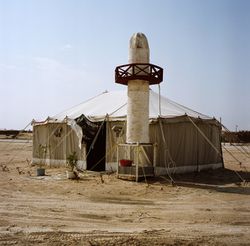
Title:
Learning from... Bahrain
Learning from... Bahrain
Actions:
Description:
Noura al Sayeh presents the third lecture in the Learning From… the Middle East series. The presentation will survey the photographic documentation of the Bahrain coast by photographer Camille Zakharia. The urban transformations in the last 30 years have redrawn the Bahraini landscape and triggered the development of a contemporary vernacular culture. The presentation(...)
Noura al Sayeh presents the third lecture in the Learning From… the Middle East series. The presentation will survey the photographic documentation of the Bahrain coast by photographer Camille Zakharia. The urban transformations in the last 30 years have redrawn the Bahraini landscape and triggered the development of a contemporary vernacular culture. The presentation(...)
Location:
Paul-Desmarais Theatre
Paul-Desmarais Theatre
Date:
6 October 2011 , 7pm
6 October 2011 , 7pm
Title:
Learning from... Bahrain
Actions:
Description:
Noura al Sayeh presents the third lecture in the Learning From… the Middle East series. The presentation will survey the photographic documentation of the Bahrain coast by photographer Camille Zakharia. The urban transformations in the last 30 years have redrawn the Bahraini landscape and triggered the development of a contemporary vernacular culture. The presentation(...)
Learning from... Bahrain
Actions:
Description:
Noura al Sayeh presents the third lecture in the Learning From… the Middle East series. The presentation will survey the photographic documentation of the Bahrain coast by photographer Camille Zakharia. The urban transformations in the last 30 years have redrawn the Bahraini landscape and triggered the development of a contemporary vernacular culture. The presentation(...)
Form:
events
events
Date:
6 October 2011
7pm
6 October 2011
7pm
Location:
Paul-Desmarais Theatre
Paul-Desmarais Theatre
Form:
photographs
photographs
Actions:
Reference number:
PH1987:0700
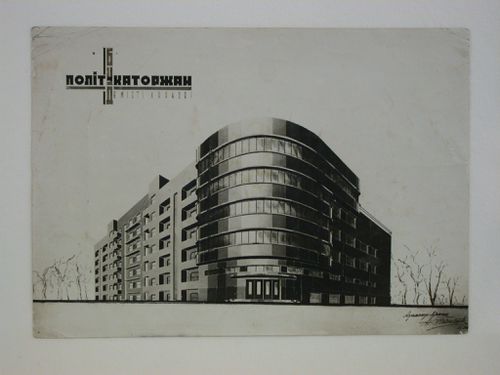
Description:
- There is a sketch in graphite on the verso of the photograph, apparently a block plan of the project. The sketch may be by N. Podgorny, then Chief of Urban Services in Kharkov, since he was involved in the U.S.S.R. Study Tour as one of the Soviet architects that had meetings and conferences with study tour members ('L'Architecture d'aujourd'hui', p. 74).
PH1987:0700
Description:
- There is a sketch in graphite on the verso of the photograph, apparently a block plan of the project. The sketch may be by N. Podgorny, then Chief of Urban Services in Kharkov, since he was involved in the U.S.S.R. Study Tour as one of the Soviet architects that had meetings and conferences with study tour members ('L'Architecture d'aujourd'hui', p. 74).
People:
Subject:
architecture
architecture
Date:
September 1932
September 1932
Title:
Photograph of a perspective drawing for the House of Political Prisoners of Tsarism, Kharkov, Soviet Union (now in Ukraine)
Actions:
PH1987:0700
Description:
- There is a sketch in graphite on the verso of the photograph, apparently a block plan of the project. The sketch may be by N. Podgorny, then Chief of Urban Services in Kharkov, since he was involved in the U.S.S.R. Study Tour as one of the Soviet architects that had meetings and conferences with study tour members ('L'Architecture d'aujourd'hui', p. 74).
Photograph of a perspective drawing for the House of Political Prisoners of Tsarism, Kharkov, Soviet Union (now in Ukraine)
Actions:
PH1987:0700
Description:
- There is a sketch in graphite on the verso of the photograph, apparently a block plan of the project. The sketch may be by N. Podgorny, then Chief of Urban Services in Kharkov, since he was involved in the U.S.S.R. Study Tour as one of the Soviet architects that had meetings and conferences with study tour members ('L'Architecture d'aujourd'hui', p. 74).
Form:
photographs
photographs
Date:
September 1932
September 1932
People:
Subject:
architecture
architecture
Form:
drawings
drawings
Reference number:
AP178.S2.1992.002
Description:
This sketchbook includes sketches and notes for the Urban plan of Schilderswijk-West in The Hague, the Ceramic Terrain housing and offices, and the Galician Centre of Contemporary Art. It also contains notes, portraits, self-portraits, and sketches of furniture and Lisbon, as well as notes from a trip to Belgium and for the Malagueira.
AP178.S2.1992.002
Description:
This sketchbook includes sketches and notes for the Urban plan of Schilderswijk-West in The Hague, the Ceramic Terrain housing and offices, and the Galician Centre of Contemporary Art. It also contains notes, portraits, self-portraits, and sketches of furniture and Lisbon, as well as notes from a trip to Belgium and for the Malagueira.
People:
Date:
February 1992
February 1992
Title:
Sketchbook 326: 2º Visita Santiago - Visita Barcelona - Condes
Actions:
AP178.S2.1992.002
Description:
This sketchbook includes sketches and notes for the Urban plan of Schilderswijk-West in The Hague, the Ceramic Terrain housing and offices, and the Galician Centre of Contemporary Art. It also contains notes, portraits, self-portraits, and sketches of furniture and Lisbon, as well as notes from a trip to Belgium and for the Malagueira.
Sketchbook 326: 2º Visita Santiago - Visita Barcelona - Condes
Actions:
AP178.S2.1992.002
Description:
This sketchbook includes sketches and notes for the Urban plan of Schilderswijk-West in The Hague, the Ceramic Terrain housing and offices, and the Galician Centre of Contemporary Art. It also contains notes, portraits, self-portraits, and sketches of furniture and Lisbon, as well as notes from a trip to Belgium and for the Malagueira.
Form:
drawings
drawings
Date:
February 1992
February 1992
People:
Form:
events
events
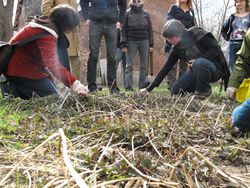
Title:
Foraging in Montréal
Foraging in Montréal
Actions:
Description:
Chicago-based artist and forager Nance Klehm leads a foraging and tea-making expedition. Foraging is the practice of collecting plants that grow wild in urban and rural areas. Participants identify and collect edible plants growing in Montreal and then make tea from the foraged ingredients. Inspired by the exhibition Actions: What You Can Do With the City (2008), the CCA(...)
Chicago-based artist and forager Nance Klehm leads a foraging and tea-making expedition. Foraging is the practice of collecting plants that grow wild in urban and rural areas. Participants identify and collect edible plants growing in Montreal and then make tea from the foraged ingredients. Inspired by the exhibition Actions: What You Can Do With the City (2008), the CCA(...)
Date:
18 April 2009
18 April 2009
Title:
Foraging in Montréal
Actions:
Description:
Chicago-based artist and forager Nance Klehm leads a foraging and tea-making expedition. Foraging is the practice of collecting plants that grow wild in urban and rural areas. Participants identify and collect edible plants growing in Montreal and then make tea from the foraged ingredients. Inspired by the exhibition Actions: What You Can Do With the City (2008), the CCA(...)
Foraging in Montréal
Actions:
Description:
Chicago-based artist and forager Nance Klehm leads a foraging and tea-making expedition. Foraging is the practice of collecting plants that grow wild in urban and rural areas. Participants identify and collect edible plants growing in Montreal and then make tea from the foraged ingredients. Inspired by the exhibition Actions: What You Can Do With the City (2008), the CCA(...)
Form:
events
events
Date:
18 April 2009
18 April 2009
Form:
events
events
Actions:
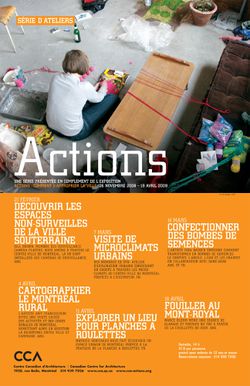
Description:
Bill Brown leads participants on a guided tour through Montréal’s underground city, pointing out the locations of surveillance cameras and discussing the role of surveillance in public space. Brown is a member of Surveillance Camera Players, a New York City-based group that maps surveillance cameras in urban spaces. In conjunction with the exhibition Actions: What You Can(...)
Bill Brown leads participants on a guided tour through Montréal’s underground city, pointing out the locations of surveillance cameras and discussing the role of surveillance in public space. Brown is a member of Surveillance Camera Players, a New York City-based group that maps surveillance cameras in urban spaces. In conjunction with the exhibition Actions: What You Can(...)
Location:
Complexe Desjardins
Complexe Desjardins
Date:
21 February 2009
21 February 2009
Title:
Discovering the Unmonitored Underground City
Actions:
Description:
Bill Brown leads participants on a guided tour through Montréal’s underground city, pointing out the locations of surveillance cameras and discussing the role of surveillance in public space. Brown is a member of Surveillance Camera Players, a New York City-based group that maps surveillance cameras in urban spaces. In conjunction with the exhibition Actions: What You Can(...)
Discovering the Unmonitored Underground City
Actions:
Description:
Bill Brown leads participants on a guided tour through Montréal’s underground city, pointing out the locations of surveillance cameras and discussing the role of surveillance in public space. Brown is a member of Surveillance Camera Players, a New York City-based group that maps surveillance cameras in urban spaces. In conjunction with the exhibition Actions: What You Can(...)
Form:
events
events
Date:
21 February 2009
21 February 2009
Location:
Complexe Desjardins
Complexe Desjardins


