


2989 Results
Form:
books
books
Actions:
Price:
$97.95
(available to order)
Summary:
This book offers a comprehensive account of the architecture of Florence, setting the city’s buildings within the political, economic, and cultural contexts in which they were made. The rapid expansion of its banking interests and its wool and textile industries brought Florence prosperity, and it became, under Medici power, the heart of the European Renaissance, and the(...)
$97.95
(available to order)
Summary:
This book offers a comprehensive account of the architecture of Florence, setting the city’s buildings within the political, economic, and cultural contexts in which they were made. The rapid expansion of its banking interests and its wool and textile industries brought Florence prosperity, and it became, under Medici power, the heart of the European Renaissance, and the(...)
Title:
Florence : the city and its architecture
Actions:
Price:
$97.95
(available to order)
Summary:
This book offers a comprehensive account of the architecture of Florence, setting the city’s buildings within the political, economic, and cultural contexts in which they were made. The rapid expansion of its banking interests and its wool and textile industries brought Florence prosperity, and it became, under Medici power, the heart of the European Renaissance, and the sponsor of pivotal architectural works. Stretching from the city’s foundation by Julius Caesar in 59 BC to modern times, the text takes a thematic approach. It begins with a historical overview, then moves on to look at buildings associated with the powers of Church and State, followed by the practicalities of building and the main architectural types, ending with modern developments. Buildings covered range from the Duomo, with Brunelleschi’s cupola, and the Palazzo Pitti, to neighbourhood churches and piazzas. Landmark modernist buildings include those by architect Pier Luigi Nervi. The visual wealth of the city is reflected in specially commissioned photography, while original plans and paintings by Florentine masters emphasize the historical context. In addition to a glossary of Italian terms and biographical notes on major figures, the book includes a foldout map with a key to the buildings discussed.
Florence : the city and its architecture
Actions:
Price:
$97.95
(available to order)
Summary:
This book offers a comprehensive account of the architecture of Florence, setting the city’s buildings within the political, economic, and cultural contexts in which they were made. The rapid expansion of its banking interests and its wool and textile industries brought Florence prosperity, and it became, under Medici power, the heart of the European Renaissance, and the sponsor of pivotal architectural works. Stretching from the city’s foundation by Julius Caesar in 59 BC to modern times, the text takes a thematic approach. It begins with a historical overview, then moves on to look at buildings associated with the powers of Church and State, followed by the practicalities of building and the main architectural types, ending with modern developments. Buildings covered range from the Duomo, with Brunelleschi’s cupola, and the Palazzo Pitti, to neighbourhood churches and piazzas. Landmark modernist buildings include those by architect Pier Luigi Nervi. The visual wealth of the city is reflected in specially commissioned photography, while original plans and paintings by Florentine masters emphasize the historical context. In addition to a glossary of Italian terms and biographical notes on major figures, the book includes a foldout map with a key to the buildings discussed.
Form:
books
books
Publication:
April 2002, London / New York
April 2002, London / New York
Subject:
History until 1900
History until 1900
Form:
books
books
Actions:
Price:
$60.00
(available to order)
Summary:
Critical theories such as those of the Frankfurt School of the twenties and thirties gave rise to a complex and sophisticated critique of modernity and modernism. The history and theory of twentieth-century architecture, which developed rather independently of (...)
$60.00
(available to order)
Summary:
Critical theories such as those of the Frankfurt School of the twenties and thirties gave rise to a complex and sophisticated critique of modernity and modernism. The history and theory of twentieth-century architecture, which developed rather independently of (...)
Title:
Architecture and modernity : a critique
Actions:
Price:
$60.00
(available to order)
Summary:
Critical theories such as those of the Frankfurt School of the twenties and thirties gave rise to a complex and sophisticated critique of modernity and modernism. The history and theory of twentieth-century architecture, which developed rather independently of this rich tradition, appear naive and unbalanced in comparison. In this exploration of the relationship between modernity, dwelling, and architecture, Hilde Heynen attempts to bridge this gap between the discourse of the modern movement and cultural theories of modernity. On one hand, she discusses architecture from the perspective of critical theory, and on the other she modifies positions within critical theory by linking them with architecture. She assesses architecture as a cultural field that structures daily life and that embodies major contradictions inherent in modernity, arguing that architecture nonetheless has a certain capacity to adopt a critical stance vis-à-vis modernity. The book provides architectural students with an introduction to the discourse of critical theory. The subchapters on Walter Benjamin, Ernst Bloch, Theodor Adorno, and the Venice School (Tafuri, Dal Co, Cacciari) can be studied independently.
Architecture and modernity : a critique
Actions:
Price:
$60.00
(available to order)
Summary:
Critical theories such as those of the Frankfurt School of the twenties and thirties gave rise to a complex and sophisticated critique of modernity and modernism. The history and theory of twentieth-century architecture, which developed rather independently of this rich tradition, appear naive and unbalanced in comparison. In this exploration of the relationship between modernity, dwelling, and architecture, Hilde Heynen attempts to bridge this gap between the discourse of the modern movement and cultural theories of modernity. On one hand, she discusses architecture from the perspective of critical theory, and on the other she modifies positions within critical theory by linking them with architecture. She assesses architecture as a cultural field that structures daily life and that embodies major contradictions inherent in modernity, arguing that architecture nonetheless has a certain capacity to adopt a critical stance vis-à-vis modernity. The book provides architectural students with an introduction to the discourse of critical theory. The subchapters on Walter Benjamin, Ernst Bloch, Theodor Adorno, and the Venice School (Tafuri, Dal Co, Cacciari) can be studied independently.
Form:
books
books
Publication:
November 1998, Cambridge, Mass.
November 1998, Cambridge, Mass.
Subject:
Architectural Theory
Architectural Theory
Form:
books
books
Actions:
Price:
$35.50
(available to order)
Summary:
Critical theories such as those of the Frankfurt School of the twenties and thirties gave rise to a complex and sophisticated critique of modernity and modernism. The history and theory of twentieth-century architecture, which developed rather independently of (...)
$35.50
(available to order)
Summary:
Critical theories such as those of the Frankfurt School of the twenties and thirties gave rise to a complex and sophisticated critique of modernity and modernism. The history and theory of twentieth-century architecture, which developed rather independently of (...)
Title:
Architecture and modernity : a critique
Actions:
Price:
$35.50
(available to order)
Summary:
Critical theories such as those of the Frankfurt School of the twenties and thirties gave rise to a complex and sophisticated critique of modernity and modernism. The history and theory of twentieth-century architecture, which developed rather independently of this rich tradition, appear naive and unbalanced in comparison. In this exploration of the relationship between modernity, dwelling, and architecture, Hilde Heynen attempts to bridge this gap between the discourse of the modern movement and cultural theories of modernity. On one hand, she discusses architecture from the perspective of critical theory, and on the other she modifies positions within critical theory by linking them with architecture. She assesses architecture as a cultural field that structures daily life and that embodies major contradictions inherent in modernity, arguing that architecture nonetheless has a certain capacity to adopt a critical stance vis-à-vis modernity. The book provides architectural students with an introduction to the discourse of critical theory. The subchapters on Walter Benjamin, Ernst Bloch, Theodor Adorno, and the Venice School (Tafuri, Dal Co, Cacciari) can be studied independently.
Architecture and modernity : a critique
Actions:
Price:
$35.50
(available to order)
Summary:
Critical theories such as those of the Frankfurt School of the twenties and thirties gave rise to a complex and sophisticated critique of modernity and modernism. The history and theory of twentieth-century architecture, which developed rather independently of this rich tradition, appear naive and unbalanced in comparison. In this exploration of the relationship between modernity, dwelling, and architecture, Hilde Heynen attempts to bridge this gap between the discourse of the modern movement and cultural theories of modernity. On one hand, she discusses architecture from the perspective of critical theory, and on the other she modifies positions within critical theory by linking them with architecture. She assesses architecture as a cultural field that structures daily life and that embodies major contradictions inherent in modernity, arguing that architecture nonetheless has a certain capacity to adopt a critical stance vis-à-vis modernity. The book provides architectural students with an introduction to the discourse of critical theory. The subchapters on Walter Benjamin, Ernst Bloch, Theodor Adorno, and the Venice School (Tafuri, Dal Co, Cacciari) can be studied independently.
Form:
books
books
Publication:
April 2000, Cambridge, Mass.
April 2000, Cambridge, Mass.
Subject:
Architectural Theory
Architectural Theory
Form:
books
books
Price:
$26.99
(available to order)
Summary:
"Space, the city and social theory" offers a critical account of key approaches to cities and urban space within social theory and analysis. It explores the relation of the social and the spatial in the context of critical urban themes: community and anonymity; social difference and spatial divisions; politics and public space; gentrification and urban renewal; gender and(...)
$26.99
(available to order)
Summary:
"Space, the city and social theory" offers a critical account of key approaches to cities and urban space within social theory and analysis. It explores the relation of the social and the spatial in the context of critical urban themes: community and anonymity; social difference and spatial divisions; politics and public space; gentrification and urban renewal; gender and(...)
Title:
Space, the city and social theory : social relations and urban forms
Actions:
Price:
$26.99
(available to order)
Summary:
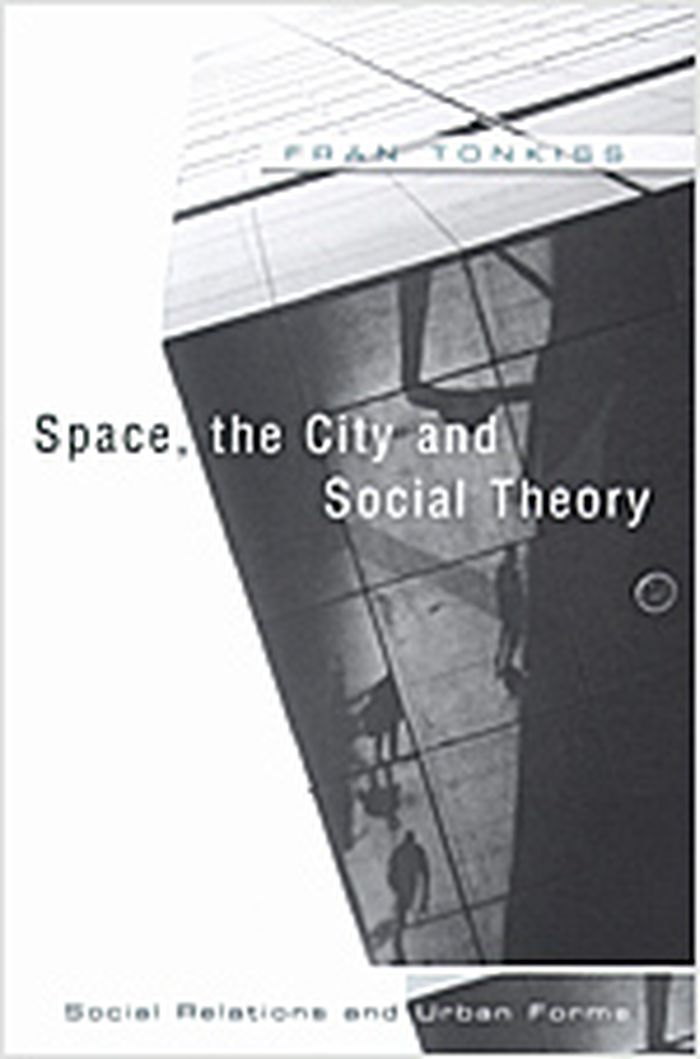
"Space, the city and social theory" offers a critical account of key approaches to cities and urban space within social theory and analysis. It explores the relation of the social and the spatial in the context of critical urban themes: community and anonymity; social difference and spatial divisions; politics and public space; gentrification and urban renewal; gender and sexuality; subjectivity and space; experience and everyday practice in the city. The text adopts an international and interdisciplinary approach, drawing on a range of debates on cities and urban life. It brings together classic perspectives in urban sociology and social theory with the analysis of contemporary urban problems and issues. Rather than viewing the urban simply as a backdrop for more general social processes, the discussion looks at how social and spatial relations shape different versions of the city: as a place of social interaction and of solitude; as a site of difference and segregation; as a space of politics and power; as a landscape of economic and cultural distinction; as a realm of everyday experience and freedom. Similarly, it examines how core social categories - such as class, culture, gender, sexuality and community - are shaped and reproduced in urban contexts.
Space, the city and social theory : social relations and urban forms
Actions:
Price:
$26.99
(available to order)
Summary:
"Space, the city and social theory" offers a critical account of key approaches to cities and urban space within social theory and analysis. It explores the relation of the social and the spatial in the context of critical urban themes: community and anonymity; social difference and spatial divisions; politics and public space; gentrification and urban renewal; gender and sexuality; subjectivity and space; experience and everyday practice in the city. The text adopts an international and interdisciplinary approach, drawing on a range of debates on cities and urban life. It brings together classic perspectives in urban sociology and social theory with the analysis of contemporary urban problems and issues. Rather than viewing the urban simply as a backdrop for more general social processes, the discussion looks at how social and spatial relations shape different versions of the city: as a place of social interaction and of solitude; as a site of difference and segregation; as a space of politics and power; as a landscape of economic and cultural distinction; as a realm of everyday experience and freedom. Similarly, it examines how core social categories - such as class, culture, gender, sexuality and community - are shaped and reproduced in urban contexts.
Form:
books
books
Publication:
November 2005, Cambridge
November 2005, Cambridge
Subject:
Urban Theory
Urban Theory
Form:
books
books
Actions:
Price:
$46.95
(available to order)
Summary:
Ryuji Fujimura questions Japan’s modernist post-war architectural paradigms in his work, repositioning architecture within its urban, economic and social forces. His design background has roots in both social and building engineering, and has come to define his own practice based on the notion of “architecture as critical engineering-ism”. The projects featured in this(...)
$46.95
(available to order)
Summary:
Ryuji Fujimura questions Japan’s modernist post-war architectural paradigms in his work, repositioning architecture within its urban, economic and social forces. His design background has roots in both social and building engineering, and has come to define his own practice based on the notion of “architecture as critical engineering-ism”. The projects featured in this(...)
Title:
Ryuji Fujimura prototyping: many models and remarks
Actions:
Price:
$46.95
(available to order)
Summary:
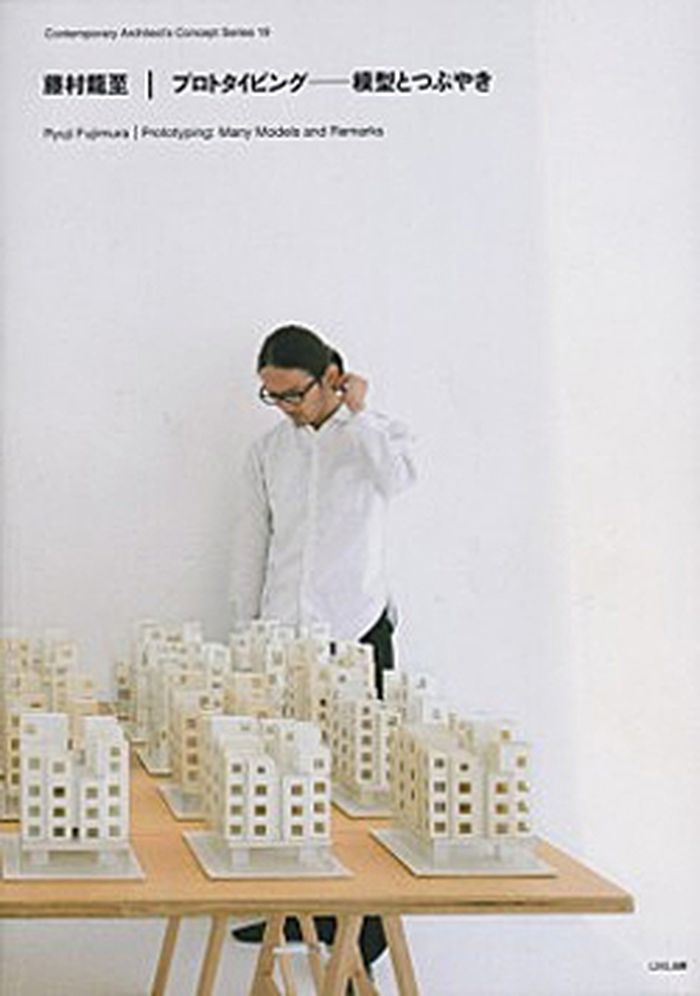
Ryuji Fujimura questions Japan’s modernist post-war architectural paradigms in his work, repositioning architecture within its urban, economic and social forces. His design background has roots in both social and building engineering, and has come to define his own practice based on the notion of “architecture as critical engineering-ism”. The projects featured in this volume are carefully tailored to their contexts, clients and environmental conditions. In his design process, Fujimura studies a series of prototype models, each improving upon the last, until satisfaction with the form is reached. Here he describes and illustrates this narrative process of embryonic development.
Ryuji Fujimura prototyping: many models and remarks
Actions:
Price:
$46.95
(available to order)
Summary:
Ryuji Fujimura questions Japan’s modernist post-war architectural paradigms in his work, repositioning architecture within its urban, economic and social forces. His design background has roots in both social and building engineering, and has come to define his own practice based on the notion of “architecture as critical engineering-ism”. The projects featured in this volume are carefully tailored to their contexts, clients and environmental conditions. In his design process, Fujimura studies a series of prototype models, each improving upon the last, until satisfaction with the form is reached. Here he describes and illustrates this narrative process of embryonic development.
Form:
books
books
Publication:
January 2015
January 2015
Subject:
Architecture Monographs
Architecture Monographs
Form:
books
books
Actions:
Price:
$28.95
(available to order)
Summary:
How do we think?” N. Katherine Hayles poses this question at the beginning of this bracing exploration of the idea that we think through, with, and alongside media. As the age of print passes and new technologies appear every day, this proposition has become far more complicated, particularly for the traditionally print-based disciplines in the humanities and qualitative(...)
$28.95
(available to order)
Summary:
How do we think?” N. Katherine Hayles poses this question at the beginning of this bracing exploration of the idea that we think through, with, and alongside media. As the age of print passes and new technologies appear every day, this proposition has become far more complicated, particularly for the traditionally print-based disciplines in the humanities and qualitative(...)
Title:
How we think : digital media and contemporary technogenesis
Actions:
Price:
$28.95
(available to order)
Summary:
How do we think?” N. Katherine Hayles poses this question at the beginning of this bracing exploration of the idea that we think through, with, and alongside media. As the age of print passes and new technologies appear every day, this proposition has become far more complicated, particularly for the traditionally print-based disciplines in the humanities and qualitative social sciences. With a rift growing between digital scholarship and its print-based counterpart, Hayles argues for contemporary technogenesis — the belief that humans and technics are coevolving — and advocates for what she calls comparative media studies, a new approach to locating digital work within print traditions and vice versa.
How we think : digital media and contemporary technogenesis
Actions:
Price:
$28.95
(available to order)
Summary:
How do we think?” N. Katherine Hayles poses this question at the beginning of this bracing exploration of the idea that we think through, with, and alongside media. As the age of print passes and new technologies appear every day, this proposition has become far more complicated, particularly for the traditionally print-based disciplines in the humanities and qualitative social sciences. With a rift growing between digital scholarship and its print-based counterpart, Hayles argues for contemporary technogenesis — the belief that humans and technics are coevolving — and advocates for what she calls comparative media studies, a new approach to locating digital work within print traditions and vice versa.
Form:
books
books
Publication:
May 2012
May 2012
Subject:
Epistemology
Epistemology
Form:
books
books
Title:
The heavens on earth : observatories and astronomies in nineteeth-century science and culture
The heavens on earth : observatories and astronomies in nineteeth-century science and culture
Actions:
Price:
$41.50
(available to order)
Summary:
This book explores the place of the observatory in nineteenth-century science and culture. Astronomy was a core pursuit for observatories, but usually not the only one. It belonged to a larger group of "observatory sciences" that also included geodesy, meteorology, geomagnetism, and even parts of physics and statistics. These pursuits coexisted in the nineteenth-century(...)
$41.50
(available to order)
Summary:
This book explores the place of the observatory in nineteenth-century science and culture. Astronomy was a core pursuit for observatories, but usually not the only one. It belonged to a larger group of "observatory sciences" that also included geodesy, meteorology, geomagnetism, and even parts of physics and statistics. These pursuits coexisted in the nineteenth-century(...)
Subject:
Architectural Theory
Architectural Theory
Publication:
April 2010
April 2010
Title:
The heavens on earth : observatories and astronomies in nineteeth-century science and culture
Actions:
Price:
$41.50
(available to order)
Summary:
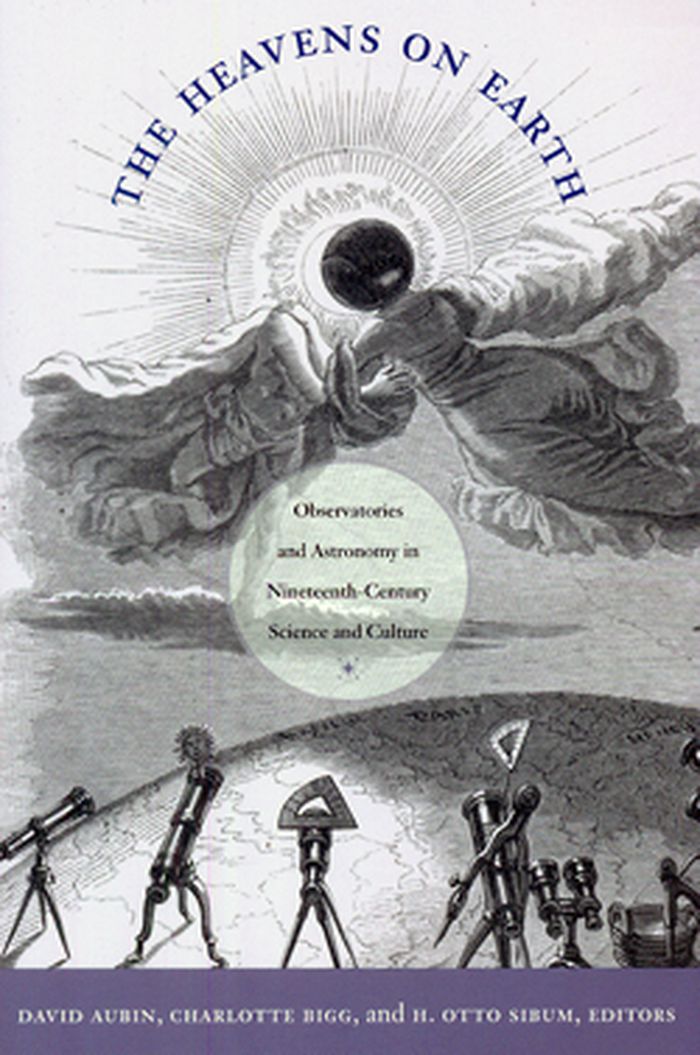
This book explores the place of the observatory in nineteenth-century science and culture. Astronomy was a core pursuit for observatories, but usually not the only one. It belonged to a larger group of "observatory sciences" that also included geodesy, meteorology, geomagnetism, and even parts of physics and statistics. These pursuits coexisted in the nineteenth-century observatory; this collection surveys them as a coherent whole. Broadening the focus beyond the solitary astronomer at his telescope, it illuminates the observatory’s importance to technological, military, political, and colonial undertakings, as well as in advancing and popularizing the mathematical, physical, and cosmological sciences. The contributors examine "observatory techniques" developed and used not only in connection with observatories but also by instrument makers in their workshops, navy officers on ships, civil engineers in the field, and many others. These techniques included the calibration and coordination of precision instruments for making observations and taking measurements; methods of data acquisition and tabulation; and the production of maps, drawings, and photographs, as well as numerical, textual, and visual representations of the heavens and the earth. They also encompassed the social management of personnel within observatories, the coordination of international scientific collaborations, and interactions with dignitaries and the public. The state observatory occupied a particularly privileged place in the life of the city. With their imposing architecture and ancient traditions, state observatories served representative purposes for their patrons, whether as symbols of a monarch’s enlightened power, a nation’s industrial and scientific excellence, or republican progressive values.
The heavens on earth : observatories and astronomies in nineteeth-century science and culture
Actions:
Price:
$41.50
(available to order)
Summary:
This book explores the place of the observatory in nineteenth-century science and culture. Astronomy was a core pursuit for observatories, but usually not the only one. It belonged to a larger group of "observatory sciences" that also included geodesy, meteorology, geomagnetism, and even parts of physics and statistics. These pursuits coexisted in the nineteenth-century observatory; this collection surveys them as a coherent whole. Broadening the focus beyond the solitary astronomer at his telescope, it illuminates the observatory’s importance to technological, military, political, and colonial undertakings, as well as in advancing and popularizing the mathematical, physical, and cosmological sciences. The contributors examine "observatory techniques" developed and used not only in connection with observatories but also by instrument makers in their workshops, navy officers on ships, civil engineers in the field, and many others. These techniques included the calibration and coordination of precision instruments for making observations and taking measurements; methods of data acquisition and tabulation; and the production of maps, drawings, and photographs, as well as numerical, textual, and visual representations of the heavens and the earth. They also encompassed the social management of personnel within observatories, the coordination of international scientific collaborations, and interactions with dignitaries and the public. The state observatory occupied a particularly privileged place in the life of the city. With their imposing architecture and ancient traditions, state observatories served representative purposes for their patrons, whether as symbols of a monarch’s enlightened power, a nation’s industrial and scientific excellence, or republican progressive values.
Form:
books
books
Publication:
April 2010
April 2010
Subject:
Architectural Theory
Architectural Theory
Form:
books
books
Actions:
Price:
$54.95
(available to order)
Summary:
In ''Of other spaces'' Foucault coined the term ''heterotopias'' to signify ''all the other real sites that can be found within the culture'' which ''are simultaneously represented, contested, and inverted.'' For Foucault, heterotopic spaces were first of all spaces of crisis, or transformative spaces, however these have given way to heterotopias of deviation and spaces(...)
$54.95
(available to order)
Summary:
In ''Of other spaces'' Foucault coined the term ''heterotopias'' to signify ''all the other real sites that can be found within the culture'' which ''are simultaneously represented, contested, and inverted.'' For Foucault, heterotopic spaces were first of all spaces of crisis, or transformative spaces, however these have given way to heterotopias of deviation and spaces(...)
Title:
Spaces of crisis and critique : heterotopias beyond Foucault
Actions:
Price:
$54.95
(available to order)
Summary:
In ''Of other spaces'' Foucault coined the term ''heterotopias'' to signify ''all the other real sites that can be found within the culture'' which ''are simultaneously represented, contested, and inverted.'' For Foucault, heterotopic spaces were first of all spaces of crisis, or transformative spaces, however these have given way to heterotopias of deviation and spaces of discipline, such as psychiatric hospitals or prisons. Foucault's essay provokes us to think through how spaces of crisis and critique function to open up disruptive, subversive or minoritarian fields within philosophical, political, cultural or aesthetic discourses. This book takes this interdisciplinary and international approach to the spatial, challenging existing borders, boundaries, and horizons; from Claire Colebrook's chapter unpacking the heterotopic spaces of America and Mexico that lie beyond reductive ideological spaces of light and darkness, to a Foucauldian reading of the Zapatista resistance. With essays on politics, philosophy, literature, post-colonial studies, and aesthetics from established and emerging academics, this book answers Foucault's call to give us a better understanding of our present cultural epoch.
Spaces of crisis and critique : heterotopias beyond Foucault
Actions:
Price:
$54.95
(available to order)
Summary:
In ''Of other spaces'' Foucault coined the term ''heterotopias'' to signify ''all the other real sites that can be found within the culture'' which ''are simultaneously represented, contested, and inverted.'' For Foucault, heterotopic spaces were first of all spaces of crisis, or transformative spaces, however these have given way to heterotopias of deviation and spaces of discipline, such as psychiatric hospitals or prisons. Foucault's essay provokes us to think through how spaces of crisis and critique function to open up disruptive, subversive or minoritarian fields within philosophical, political, cultural or aesthetic discourses. This book takes this interdisciplinary and international approach to the spatial, challenging existing borders, boundaries, and horizons; from Claire Colebrook's chapter unpacking the heterotopic spaces of America and Mexico that lie beyond reductive ideological spaces of light and darkness, to a Foucauldian reading of the Zapatista resistance. With essays on politics, philosophy, literature, post-colonial studies, and aesthetics from established and emerging academics, this book answers Foucault's call to give us a better understanding of our present cultural epoch.
Form:
books
books
Publication:
March 2020
March 2020
Subject:
Critical Theory
Critical Theory
Form:
books
books
Actions:
Price:
$54.95
(available to order)
Summary:
Robert Rauschenberg (b. 1925) began to investigate the boundaries between painting and sculpture in the 1950s, working with a variety of found objects in his Combine paintings and freestanding Combines. Later, in his "Cardboard" series (1971-72), he confined himself to the use of cardboard boxes, eliminating virtually all imagery, reducing the palette to a near(...)
$54.95
(available to order)
Summary:
Robert Rauschenberg (b. 1925) began to investigate the boundaries between painting and sculpture in the 1950s, working with a variety of found objects in his Combine paintings and freestanding Combines. Later, in his "Cardboard" series (1971-72), he confined himself to the use of cardboard boxes, eliminating virtually all imagery, reducing the palette to a near(...)
Subject:
Contemporary Art Monographs
Contemporary Art Monographs
Publication:
April 2007, New Haven / London
April 2007, New Haven / London
Title:
Robert Rauschenberg : cardboards and related peices
Actions:
Price:
$54.95
(available to order)
Summary:
Robert Rauschenberg (b. 1925) began to investigate the boundaries between painting and sculpture in the 1950s, working with a variety of found objects in his Combine paintings and freestanding Combines. Later, in his "Cardboard" series (1971-72), he confined himself to the use of cardboard boxes, eliminating virtually all imagery, reducing the palette to a near monochrome, and commenting in subtle ways on the materialism and disposability of modern life. This book is the first to focus exclusively on Rauschenberg's rarely seen Cardboards, along with related works from his "Made in Tampa Clay", "Cardbirds", "Egyptian", and "Venetian" series. Approximately eighty-eight Cardboards and related sculptural pieces, many from the artist's personal collection, are reproduced in the book. Full provenance and exhibition history is provided for each work, along with a complete bibliography. In addition, distinguished scholars Yve-Alain Bois and Josef Helfenstein offer insightful essays in which they discuss the Cardboards and situate these lesser-known but critical pieces within the context of Rauschenberg's long and creative career.
Robert Rauschenberg : cardboards and related peices
Actions:
Price:
$54.95
(available to order)
Summary:
Robert Rauschenberg (b. 1925) began to investigate the boundaries between painting and sculpture in the 1950s, working with a variety of found objects in his Combine paintings and freestanding Combines. Later, in his "Cardboard" series (1971-72), he confined himself to the use of cardboard boxes, eliminating virtually all imagery, reducing the palette to a near monochrome, and commenting in subtle ways on the materialism and disposability of modern life. This book is the first to focus exclusively on Rauschenberg's rarely seen Cardboards, along with related works from his "Made in Tampa Clay", "Cardbirds", "Egyptian", and "Venetian" series. Approximately eighty-eight Cardboards and related sculptural pieces, many from the artist's personal collection, are reproduced in the book. Full provenance and exhibition history is provided for each work, along with a complete bibliography. In addition, distinguished scholars Yve-Alain Bois and Josef Helfenstein offer insightful essays in which they discuss the Cardboards and situate these lesser-known but critical pieces within the context of Rauschenberg's long and creative career.
Form:
books
books
Publication:
April 2007, New Haven / London
April 2007, New Haven / London
Subject:
Contemporary Art Monographs
Contemporary Art Monographs
Form:
books
books
Actions:
Price:
$53.95
(available to order)
Summary:
Brutalist architecture is more popular now than ever. This beautifully photographed book looks at Britain’s finest brutalist buildings from the 1950s to the 1970s, featuring imposing and dramatic public buildings—like London’s National Theatre and Liverpool’s Metropolitan Cathedral—along with lesser-known buildings such as Arlington House on Margate’s seafront, as well as(...)
$53.95
(available to order)
Summary:
Brutalist architecture is more popular now than ever. This beautifully photographed book looks at Britain’s finest brutalist buildings from the 1950s to the 1970s, featuring imposing and dramatic public buildings—like London’s National Theatre and Liverpool’s Metropolitan Cathedral—along with lesser-known buildings such as Arlington House on Margate’s seafront, as well as(...)
Title:
Brutalist Britain: Buildings of the 1960s and 1970s
Actions:
Price:
$53.95
(available to order)
Summary:
Brutalist architecture is more popular now than ever. This beautifully photographed book looks at Britain’s finest brutalist buildings from the 1950s to the 1970s, featuring imposing and dramatic public buildings—like London’s National Theatre and Liverpool’s Metropolitan Cathedral—along with lesser-known buildings such as Arlington House on Margate’s seafront, as well as houses and flats, shops, markets, town centers, and more. This book provides a fascinating overview of a postwar urban landscape, while an introduction places British brutalism within the context of global events and contemporary world architecture.
Brutalist Britain: Buildings of the 1960s and 1970s
Actions:
Price:
$53.95
(available to order)
Summary:
Brutalist architecture is more popular now than ever. This beautifully photographed book looks at Britain’s finest brutalist buildings from the 1950s to the 1970s, featuring imposing and dramatic public buildings—like London’s National Theatre and Liverpool’s Metropolitan Cathedral—along with lesser-known buildings such as Arlington House on Margate’s seafront, as well as houses and flats, shops, markets, town centers, and more. This book provides a fascinating overview of a postwar urban landscape, while an introduction places British brutalism within the context of global events and contemporary world architecture.
Form:
books
books
Publication:
March 2023
March 2023
Subject:
Brutalism
Brutalism


