


2285 Results
Form:
books
books
Actions:
Price:
$7.99
(available to order)
Summary:
The rivalry between the brilliant seventeenth-century Italian architects Gianlorenzo Bernini and Francesco Borromini is the stuff of legend. Possessed of enormous talent and ambition, these two artists -- one trained as a sculptor, the other as a stonecutter -- met as contemporaries in the building yards of St. Peter's in Rome and ended their lives as bitter enemies. Over(...)
$7.99
(available to order)
Summary:
The rivalry between the brilliant seventeenth-century Italian architects Gianlorenzo Bernini and Francesco Borromini is the stuff of legend. Possessed of enormous talent and ambition, these two artists -- one trained as a sculptor, the other as a stonecutter -- met as contemporaries in the building yards of St. Peter's in Rome and ended their lives as bitter enemies. Over(...)
Title:
The genius in the design : Bernini, Borromini, and the rivalry that transformed Rome
Actions:
Price:
$7.99
(available to order)
Summary:
The rivalry between the brilliant seventeenth-century Italian architects Gianlorenzo Bernini and Francesco Borromini is the stuff of legend. Possessed of enormous talent and ambition, these two artists -- one trained as a sculptor, the other as a stonecutter -- met as contemporaries in the building yards of St. Peter's in Rome and ended their lives as bitter enemies. Over the course of their careers they became the most celebrated architects of their era, designing some of the most beautiful buildings in the world and transforming the city of Rome. “The Genius in the Design” is an extraordinary tale of how these two men plotted, schemed, and intrigued to get the better of each other. Full of dramatic tension and great insight into personalities, acclaimed writer Jake Morrissey's engrossing and impeccably researched account also shows that this legendary rivalry defined the Baroque style that immediately succeeded the Renaissance and created the spectacular Roman cityscape of today. Almost exactly the same age -- Bernini was born at the end of 1598, Borromini nine months later -- they were as alike and as different as any two men could be, each a potent combination of passion and enterprise, energy and imperfection. Bernini was a precocious talent who as a youth caught the attention of Pope Paul V and became Rome's most celebrated artist, whose patrons included the wealthiest families in Europe. The city's greatest sculptor -- the creator of such masterpieces as Apollo and Daphne and the Ecstasy of St. Teresa -- Bernini would also have been Rome's pre-eminent architect had it not been for Francesco Borromini, the one man whose talent and virtuosity rivalled his own. In contrast to Bernini's easy grace, Borromini was an introvert with a fiery temper who bristled when anyone interfered with his vision; his temperament alienated him from prospective patrons and precipitated his tragic end. Like Mozart and Salieri, these two masters were inextricably linked, their dazzling work prodding the other to greater achievement while taking merciless advantage of each other's missteps. “The Genius in the Design” is their story, a fascinating narrative of beauty and tragedy marked at turns by personal animosity and astonishing artistic achievement.
The genius in the design : Bernini, Borromini, and the rivalry that transformed Rome
Actions:
Price:
$7.99
(available to order)
Summary:
The rivalry between the brilliant seventeenth-century Italian architects Gianlorenzo Bernini and Francesco Borromini is the stuff of legend. Possessed of enormous talent and ambition, these two artists -- one trained as a sculptor, the other as a stonecutter -- met as contemporaries in the building yards of St. Peter's in Rome and ended their lives as bitter enemies. Over the course of their careers they became the most celebrated architects of their era, designing some of the most beautiful buildings in the world and transforming the city of Rome. “The Genius in the Design” is an extraordinary tale of how these two men plotted, schemed, and intrigued to get the better of each other. Full of dramatic tension and great insight into personalities, acclaimed writer Jake Morrissey's engrossing and impeccably researched account also shows that this legendary rivalry defined the Baroque style that immediately succeeded the Renaissance and created the spectacular Roman cityscape of today. Almost exactly the same age -- Bernini was born at the end of 1598, Borromini nine months later -- they were as alike and as different as any two men could be, each a potent combination of passion and enterprise, energy and imperfection. Bernini was a precocious talent who as a youth caught the attention of Pope Paul V and became Rome's most celebrated artist, whose patrons included the wealthiest families in Europe. The city's greatest sculptor -- the creator of such masterpieces as Apollo and Daphne and the Ecstasy of St. Teresa -- Bernini would also have been Rome's pre-eminent architect had it not been for Francesco Borromini, the one man whose talent and virtuosity rivalled his own. In contrast to Bernini's easy grace, Borromini was an introvert with a fiery temper who bristled when anyone interfered with his vision; his temperament alienated him from prospective patrons and precipitated his tragic end. Like Mozart and Salieri, these two masters were inextricably linked, their dazzling work prodding the other to greater achievement while taking merciless advantage of each other's missteps. “The Genius in the Design” is their story, a fascinating narrative of beauty and tragedy marked at turns by personal animosity and astonishing artistic achievement.
Form:
books
books
Publication:
March 2005, New York
March 2005, New York
Subject:
sale books
sale books
Form:
journals and magazines
journals and magazines
Actions:
Description:
1 online resource
Author:
Subject:
Publication:
[St. Lucia, Qld.] : [Australian Association for Environmental Education], [Cambridge] : Cambridge University Press
[St. Lucia, Qld.] : [Australian Association for Environmental Education], [Cambridge] : Cambridge University Press
Form:
journals and magazines
journals and magazines
Publication:
[St. Lucia, Qld.] : [Australian Association for Environmental Education], [Cambridge] : Cambridge University Press
[St. Lucia, Qld.] : [Australian Association for Environmental Education], [Cambridge] : Cambridge University Press
Author:
Subject:
Form:
journals and magazines
journals and magazines
Title:
Transformation.
Transformation.
Actions:
Description:
1 online resource (volumes)
Author:
Subject:
Publication:
[Exeter, England] : [Published on behalf of World Evangelical Fellowship Theological Commission, by the Paternoster Press], [London, U.K.] : SAGE Publications
[Exeter, England] : [Published on behalf of World Evangelical Fellowship Theological Commission, by the Paternoster Press], [London, U.K.] : SAGE Publications
Form:
journals and magazines
journals and magazines
Publication:
[Exeter, England] : [Published on behalf of World Evangelical Fellowship Theological Commission, by the Paternoster Press], [London, U.K.] : SAGE Publications
[Exeter, England] : [Published on behalf of World Evangelical Fellowship Theological Commission, by the Paternoster Press], [London, U.K.] : SAGE Publications
Author:
Subject:
Form:
books
books
Actions:
Price:
$85.95
(available in store)
Summary:
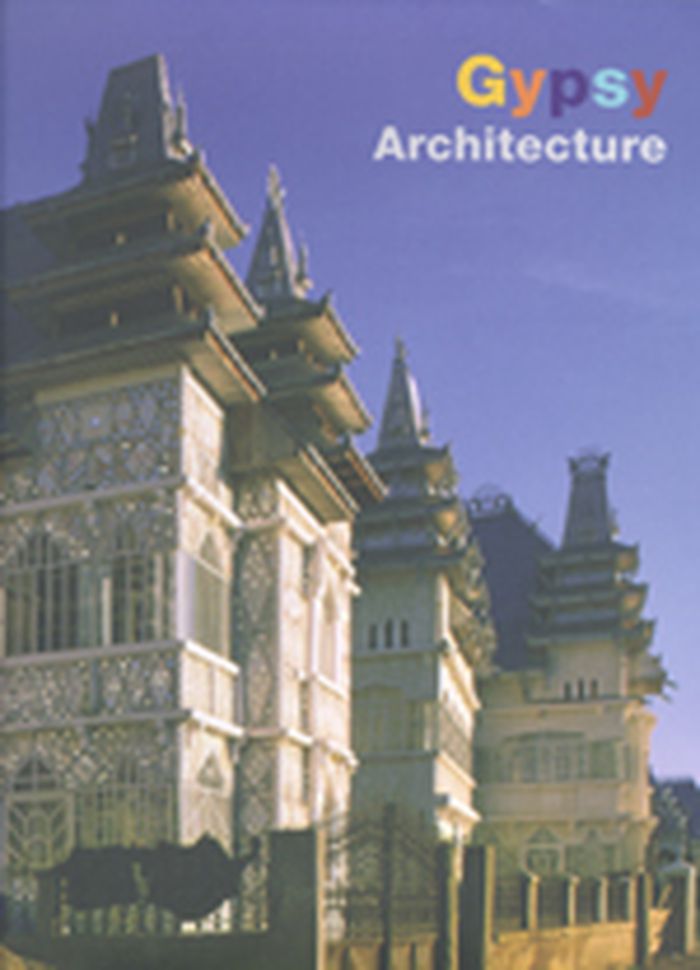
The fact that there is Gypsy architecture may surprise quite a few people, for Gypsies are regarded as nomads who roam through the world and settle now here, now there, never stay long in one place, and consider everything that normal citizens find important to be an unreasonable restriction of their freedom. Nevertheless, in southeastern Europe, there exists a(...)
$85.95
(available in store)
Summary:
The fact that there is Gypsy architecture may surprise quite a few people, for Gypsies are regarded as nomads who roam through the world and settle now here, now there, never stay long in one place, and consider everything that normal citizens find important to be an unreasonable restriction of their freedom. Nevertheless, in southeastern Europe, there exists a(...)
Subject:
Architecture since 1900, Europe
Architecture since 1900, Europe
Publication:
July 2007, Stuttgart, London
July 2007, Stuttgart, London
Title:
Gypsy architecture : house of the Roma in Eastern Europe
Actions:
Price:
$85.95
(available in store)
Summary:
The fact that there is Gypsy architecture may surprise quite a few people, for Gypsies are regarded as nomads who roam through the world and settle now here, now there, never stay long in one place, and consider everything that normal citizens find important to be an unreasonable restriction of their freedom. Nevertheless, in southeastern Europe, there exists a remarkable architecture created by Gypsies. It seems to have been created from a dream : unreal, abstruse, and colourful, it is a composition of all the architectural styles of this world. Uninfluenced by any deeper knowledge of architectural culture, each family head chose the style, size and finishings on the basis of his own personal tastes or memories of travels, houses and things seen in other countries. The result has been the creation of bizarre and fantastic jumbles of buildings that it is hard to classify in terms of western stylistic features. Very often the houses are the result of enormous jigsaw puzzles created from an assembly of images or photographs of various different buildings, and their execution precisely follows these crazy guidelines, perhaps because they are incomprehensible to those carrying out the project. Otherwise, how could one possibly explain Indian-style roofs crowning neoclassical buildings, mansard roofs on structures of improbable style, Frenchified Chinese pagodas, heterogeneous assemblies of diverse and contrasting elements. The structures, the villas gradually soften their bizarre and fantastic imagery the closer they are built to European countries. Undoubtedly, the cultural influence of neighbouring countries already immersed in the culture and lifestyle of Europe has helped to "contaminate" the owners and bring their dwellings, the expression of their wishes, more into line with the ruling culture. What, however, remains staggering is the quality of the execution of the complex decorations, of the architectural elements and buildings that are very often contrasting, of widely differing façades surmounted by steepling roofs of no practical use whose only function is to represent, through their lack of proportion and absolute needlessness, the financial and social power of the family. Besides pieces of sculpture that are undoubtedly ritual and symbolic and originating from Indian culture, suns with spiny rays, various forms of pinnacle, geometrical moons, zoomorphic decorations,the tops of the roofs bear metalwork inscriptions giving the date of building and the name of the family or that of the wife, symbolizing a desire for display and the proclamation of ownership.
Gypsy architecture : house of the Roma in Eastern Europe
Actions:
Price:
$85.95
(available in store)
Summary:
The fact that there is Gypsy architecture may surprise quite a few people, for Gypsies are regarded as nomads who roam through the world and settle now here, now there, never stay long in one place, and consider everything that normal citizens find important to be an unreasonable restriction of their freedom. Nevertheless, in southeastern Europe, there exists a remarkable architecture created by Gypsies. It seems to have been created from a dream : unreal, abstruse, and colourful, it is a composition of all the architectural styles of this world. Uninfluenced by any deeper knowledge of architectural culture, each family head chose the style, size and finishings on the basis of his own personal tastes or memories of travels, houses and things seen in other countries. The result has been the creation of bizarre and fantastic jumbles of buildings that it is hard to classify in terms of western stylistic features. Very often the houses are the result of enormous jigsaw puzzles created from an assembly of images or photographs of various different buildings, and their execution precisely follows these crazy guidelines, perhaps because they are incomprehensible to those carrying out the project. Otherwise, how could one possibly explain Indian-style roofs crowning neoclassical buildings, mansard roofs on structures of improbable style, Frenchified Chinese pagodas, heterogeneous assemblies of diverse and contrasting elements. The structures, the villas gradually soften their bizarre and fantastic imagery the closer they are built to European countries. Undoubtedly, the cultural influence of neighbouring countries already immersed in the culture and lifestyle of Europe has helped to "contaminate" the owners and bring their dwellings, the expression of their wishes, more into line with the ruling culture. What, however, remains staggering is the quality of the execution of the complex decorations, of the architectural elements and buildings that are very often contrasting, of widely differing façades surmounted by steepling roofs of no practical use whose only function is to represent, through their lack of proportion and absolute needlessness, the financial and social power of the family. Besides pieces of sculpture that are undoubtedly ritual and symbolic and originating from Indian culture, suns with spiny rays, various forms of pinnacle, geometrical moons, zoomorphic decorations,the tops of the roofs bear metalwork inscriptions giving the date of building and the name of the family or that of the wife, symbolizing a desire for display and the proclamation of ownership.
Form:
books
books
Publication:
July 2007, Stuttgart, London
July 2007, Stuttgart, London
Subject:
Architecture since 1900, Europe
Architecture since 1900, Europe
Form:
journals and magazines
journals and magazines
Title:
Sociological bulletin.
Sociological bulletin.
Actions:
Author:
Subject:
Publication:
[New Delhi] : Indian Sociological Society, [1952]-, New Delhi] : SAGE
[New Delhi] : Indian Sociological Society, [1952]-, New Delhi] : SAGE
Form:
journals and magazines
journals and magazines
Publication:
[New Delhi] : Indian Sociological Society, [1952]-, New Delhi] : SAGE
[New Delhi] : Indian Sociological Society, [1952]-, New Delhi] : SAGE
Author:
Subject:


