


21400 Results
Level of archival description:
Series
Series
Title:
Architectural projects
Architectural projects
Reference number:
AP018.S1
Description:
The Architectural Projects series, 1945-1986, is the largest series in the fonds and documents the projects worked on by Parkin’s two firms throughout his career. These projects include built work, urban planning, proposals, competitions and feasibility studies. The majority of the projects were based in Toronto and the surrounding area, but projects from across Canada and some international projects in the Caribbean, Middle East, and Northern Africa are also included. These individual projects were identified and separated based on distinct project numbers assigned by the creating offices. The general numbering rule at the offices was two digits to represent the year, followed by two or three digits to represent the consecutive project number for that year (YY###). For instance the 7th project taken on in the year 1980 would be assigned the project number 8007. This chronological ordering has been respected in the arrangement of this series. These projects are recorded primarily through textual records and drawings, but some photographs, paintings, artefacts and one book are also included in this series. The amount of drawings and textual materials for the projects vary greatly. Materials for projects before 1971, from the firm John B. Parkin Associates, are very sparse, sometimes with only a few files or drawings representing a project. Materials after 1971, from the firm Parkin Architects Planners, are much more complete and often contain drawings from initial sketches to finished construction work. Among these drawings are plans, elevations, sections, details, perspectives, and mechanical, electrical and structural drawings. Textual records for these projects typically include correspondence, meeting minutes, specifications, site reports, consultancy files and other construction documentation. The photographic materials in this series often show construction progress and completed work. Also present are presentation panels with mounted drawings, photographs and paintings for some projects. The artefacts typically consist of material samples for construction. The textual records for projects are almost always in English, but some drawings are in French or are bilingual for projects commissioned by the Government of Canada. Although John C. Parkin is the creator of this series, the partners at his firms and other employees played a significant role as creators of the contents. Especially in the material from Parkin Architects Planners, the names of his partners such as J.B. Mar, P.H. Warren, D.L. Wilson, and L. Payne are often marked as authors of the materials.
AP018.S1
Description:
The Architectural Projects series, 1945-1986, is the largest series in the fonds and documents the projects worked on by Parkin’s two firms throughout his career. These projects include built work, urban planning, proposals, competitions and feasibility studies. The majority of the projects were based in Toronto and the surrounding area, but projects from across Canada and some international projects in the Caribbean, Middle East, and Northern Africa are also included. These individual projects were identified and separated based on distinct project numbers assigned by the creating offices. The general numbering rule at the offices was two digits to represent the year, followed by two or three digits to represent the consecutive project number for that year (YY###). For instance the 7th project taken on in the year 1980 would be assigned the project number 8007. This chronological ordering has been respected in the arrangement of this series. These projects are recorded primarily through textual records and drawings, but some photographs, paintings, artefacts and one book are also included in this series. The amount of drawings and textual materials for the projects vary greatly. Materials for projects before 1971, from the firm John B. Parkin Associates, are very sparse, sometimes with only a few files or drawings representing a project. Materials after 1971, from the firm Parkin Architects Planners, are much more complete and often contain drawings from initial sketches to finished construction work. Among these drawings are plans, elevations, sections, details, perspectives, and mechanical, electrical and structural drawings. Textual records for these projects typically include correspondence, meeting minutes, specifications, site reports, consultancy files and other construction documentation. The photographic materials in this series often show construction progress and completed work. Also present are presentation panels with mounted drawings, photographs and paintings for some projects. The artefacts typically consist of material samples for construction. The textual records for projects are almost always in English, but some drawings are in French or are bilingual for projects commissioned by the Government of Canada. Although John C. Parkin is the creator of this series, the partners at his firms and other employees played a significant role as creators of the contents. Especially in the material from Parkin Architects Planners, the names of his partners such as J.B. Mar, P.H. Warren, D.L. Wilson, and L. Payne are often marked as authors of the materials.
People:
Date:
1945-1986
1945-1986
Title:
Architectural projects
Actions:
AP018.S1
Description:
The Architectural Projects series, 1945-1986, is the largest series in the fonds and documents the projects worked on by Parkin’s two firms throughout his career. These projects include built work, urban planning, proposals, competitions and feasibility studies. The majority of the projects were based in Toronto and the surrounding area, but projects from across Canada and some international projects in the Caribbean, Middle East, and Northern Africa are also included. These individual projects were identified and separated based on distinct project numbers assigned by the creating offices. The general numbering rule at the offices was two digits to represent the year, followed by two or three digits to represent the consecutive project number for that year (YY###). For instance the 7th project taken on in the year 1980 would be assigned the project number 8007. This chronological ordering has been respected in the arrangement of this series. These projects are recorded primarily through textual records and drawings, but some photographs, paintings, artefacts and one book are also included in this series. The amount of drawings and textual materials for the projects vary greatly. Materials for projects before 1971, from the firm John B. Parkin Associates, are very sparse, sometimes with only a few files or drawings representing a project. Materials after 1971, from the firm Parkin Architects Planners, are much more complete and often contain drawings from initial sketches to finished construction work. Among these drawings are plans, elevations, sections, details, perspectives, and mechanical, electrical and structural drawings. Textual records for these projects typically include correspondence, meeting minutes, specifications, site reports, consultancy files and other construction documentation. The photographic materials in this series often show construction progress and completed work. Also present are presentation panels with mounted drawings, photographs and paintings for some projects. The artefacts typically consist of material samples for construction. The textual records for projects are almost always in English, but some drawings are in French or are bilingual for projects commissioned by the Government of Canada. Although John C. Parkin is the creator of this series, the partners at his firms and other employees played a significant role as creators of the contents. Especially in the material from Parkin Architects Planners, the names of his partners such as J.B. Mar, P.H. Warren, D.L. Wilson, and L. Payne are often marked as authors of the materials.
Architectural projects
Actions:
AP018.S1
Description:
The Architectural Projects series, 1945-1986, is the largest series in the fonds and documents the projects worked on by Parkin’s two firms throughout his career. These projects include built work, urban planning, proposals, competitions and feasibility studies. The majority of the projects were based in Toronto and the surrounding area, but projects from across Canada and some international projects in the Caribbean, Middle East, and Northern Africa are also included. These individual projects were identified and separated based on distinct project numbers assigned by the creating offices. The general numbering rule at the offices was two digits to represent the year, followed by two or three digits to represent the consecutive project number for that year (YY###). For instance the 7th project taken on in the year 1980 would be assigned the project number 8007. This chronological ordering has been respected in the arrangement of this series. These projects are recorded primarily through textual records and drawings, but some photographs, paintings, artefacts and one book are also included in this series. The amount of drawings and textual materials for the projects vary greatly. Materials for projects before 1971, from the firm John B. Parkin Associates, are very sparse, sometimes with only a few files or drawings representing a project. Materials after 1971, from the firm Parkin Architects Planners, are much more complete and often contain drawings from initial sketches to finished construction work. Among these drawings are plans, elevations, sections, details, perspectives, and mechanical, electrical and structural drawings. Textual records for these projects typically include correspondence, meeting minutes, specifications, site reports, consultancy files and other construction documentation. The photographic materials in this series often show construction progress and completed work. Also present are presentation panels with mounted drawings, photographs and paintings for some projects. The artefacts typically consist of material samples for construction. The textual records for projects are almost always in English, but some drawings are in French or are bilingual for projects commissioned by the Government of Canada. Although John C. Parkin is the creator of this series, the partners at his firms and other employees played a significant role as creators of the contents. Especially in the material from Parkin Architects Planners, the names of his partners such as J.B. Mar, P.H. Warren, D.L. Wilson, and L. Payne are often marked as authors of the materials.
Level of archival description:
Series
Series
Date:
1945-1986
1945-1986
People:
Level of archival description:
Series
Series
Title:
OCEAN reference files
OCEAN reference files
Actions:
Reference number:
AP194.S2
Description:
Series consist of records associated with different projects devised by OCEAN and OCEAN North prior to 1999 and retained as reference material by Johan Bettum, who did not collaborate on every project. Records occasionally include some photographs, but for the most part are images from work done with CAD software. These include plans, diagrams, renderings and views (sections, perspectives) of buildings, landscapes, exhibition scenography, and exhibited items. The amount and type of materials varies largely between projects. Files were transferred to CCA on a CD and their timestamps suggests that materials were copied for reference purpose in the first few months of 1998. The CD cover bears the date of June 3rd 1999. Projects date from 1994 to 1998. Projects included in the reference files are: Barbican, London (OCEAN Helsinki): likely an exhibition design. Museum, Buenos Aires (OCEAN U.K., 1997): a building design for a competition. Finnish Embassy, Canberra (OCEAN Oslo & Helsinki, 1996): an international architectural competition entry. Helsinki Nightclub (OCEAN Helsinki): a building design. Jeil’s Hospital, Seoul (OCEAN U.K., 1996): a building design. Jyväskylä Music and Arts Center (OCEAN Oslo & Helsinki, 1997): an international architectural competition entry. See also Series 1 for more records on this project. Lasipalatsi Media Square (OCEAN U.K.): a landscape design. Synthetic Landscape I-II, Oslo (OCEAN Oslo, 1995-1996): a landscape design. See also Series 1 for more records on this research project. Surfscape, Helsinki (OCEAN Helsinki, 1997): sculpture for an exhibition. Töölö Football Stadium, Hels. (OCEAN Oslo & Helsinki, 1997): an international architectural competition entry. See also Series 1 for more records on this project. Urban Surfaces, Oslo (OCEAN, 1997-1998): photographs of an exhibition. Source: Ateljié Sotamaa. “Portfolio.” Accessed November 2017, http://portfolio.sotamaa.net/ OCEAN design Research Association, “Exhibitions.” Accessed November 2017, http://www.ocean-designresearch.net/index.php/exhibitions-mainmenu-120/list-of-exhibitions FRAC, “Catalog, OCEAN.” Accessed November 2017, http://www.archilab.org/public/2000/catalog/ocean/oceanen.htm OCEAN CN Consultancy Network, “Projects.” Accessed November 2017, http://ocean-cn.org/projects/
AP194.S2
Description:
Series consist of records associated with different projects devised by OCEAN and OCEAN North prior to 1999 and retained as reference material by Johan Bettum, who did not collaborate on every project. Records occasionally include some photographs, but for the most part are images from work done with CAD software. These include plans, diagrams, renderings and views (sections, perspectives) of buildings, landscapes, exhibition scenography, and exhibited items. The amount and type of materials varies largely between projects. Files were transferred to CCA on a CD and their timestamps suggests that materials were copied for reference purpose in the first few months of 1998. The CD cover bears the date of June 3rd 1999. Projects date from 1994 to 1998. Projects included in the reference files are: Barbican, London (OCEAN Helsinki): likely an exhibition design. Museum, Buenos Aires (OCEAN U.K., 1997): a building design for a competition. Finnish Embassy, Canberra (OCEAN Oslo & Helsinki, 1996): an international architectural competition entry. Helsinki Nightclub (OCEAN Helsinki): a building design. Jeil’s Hospital, Seoul (OCEAN U.K., 1996): a building design. Jyväskylä Music and Arts Center (OCEAN Oslo & Helsinki, 1997): an international architectural competition entry. See also Series 1 for more records on this project. Lasipalatsi Media Square (OCEAN U.K.): a landscape design. Synthetic Landscape I-II, Oslo (OCEAN Oslo, 1995-1996): a landscape design. See also Series 1 for more records on this research project. Surfscape, Helsinki (OCEAN Helsinki, 1997): sculpture for an exhibition. Töölö Football Stadium, Hels. (OCEAN Oslo & Helsinki, 1997): an international architectural competition entry. See also Series 1 for more records on this project. Urban Surfaces, Oslo (OCEAN, 1997-1998): photographs of an exhibition. Source: Ateljié Sotamaa. “Portfolio.” Accessed November 2017, http://portfolio.sotamaa.net/ OCEAN design Research Association, “Exhibitions.” Accessed November 2017, http://www.ocean-designresearch.net/index.php/exhibitions-mainmenu-120/list-of-exhibitions FRAC, “Catalog, OCEAN.” Accessed November 2017, http://www.archilab.org/public/2000/catalog/ocean/oceanen.htm OCEAN CN Consultancy Network, “Projects.” Accessed November 2017, http://ocean-cn.org/projects/
People:
Date:
1998
1998
Title:
OCEAN reference files
Actions:
AP194.S2
Description:
Series consist of records associated with different projects devised by OCEAN and OCEAN North prior to 1999 and retained as reference material by Johan Bettum, who did not collaborate on every project. Records occasionally include some photographs, but for the most part are images from work done with CAD software. These include plans, diagrams, renderings and views (sections, perspectives) of buildings, landscapes, exhibition scenography, and exhibited items. The amount and type of materials varies largely between projects. Files were transferred to CCA on a CD and their timestamps suggests that materials were copied for reference purpose in the first few months of 1998. The CD cover bears the date of June 3rd 1999. Projects date from 1994 to 1998. Projects included in the reference files are: Barbican, London (OCEAN Helsinki): likely an exhibition design. Museum, Buenos Aires (OCEAN U.K., 1997): a building design for a competition. Finnish Embassy, Canberra (OCEAN Oslo & Helsinki, 1996): an international architectural competition entry. Helsinki Nightclub (OCEAN Helsinki): a building design. Jeil’s Hospital, Seoul (OCEAN U.K., 1996): a building design. Jyväskylä Music and Arts Center (OCEAN Oslo & Helsinki, 1997): an international architectural competition entry. See also Series 1 for more records on this project. Lasipalatsi Media Square (OCEAN U.K.): a landscape design. Synthetic Landscape I-II, Oslo (OCEAN Oslo, 1995-1996): a landscape design. See also Series 1 for more records on this research project. Surfscape, Helsinki (OCEAN Helsinki, 1997): sculpture for an exhibition. Töölö Football Stadium, Hels. (OCEAN Oslo & Helsinki, 1997): an international architectural competition entry. See also Series 1 for more records on this project. Urban Surfaces, Oslo (OCEAN, 1997-1998): photographs of an exhibition. Source: Ateljié Sotamaa. “Portfolio.” Accessed November 2017, http://portfolio.sotamaa.net/ OCEAN design Research Association, “Exhibitions.” Accessed November 2017, http://www.ocean-designresearch.net/index.php/exhibitions-mainmenu-120/list-of-exhibitions FRAC, “Catalog, OCEAN.” Accessed November 2017, http://www.archilab.org/public/2000/catalog/ocean/oceanen.htm OCEAN CN Consultancy Network, “Projects.” Accessed November 2017, http://ocean-cn.org/projects/
OCEAN reference files
Actions:
AP194.S2
Description:
Series consist of records associated with different projects devised by OCEAN and OCEAN North prior to 1999 and retained as reference material by Johan Bettum, who did not collaborate on every project. Records occasionally include some photographs, but for the most part are images from work done with CAD software. These include plans, diagrams, renderings and views (sections, perspectives) of buildings, landscapes, exhibition scenography, and exhibited items. The amount and type of materials varies largely between projects. Files were transferred to CCA on a CD and their timestamps suggests that materials were copied for reference purpose in the first few months of 1998. The CD cover bears the date of June 3rd 1999. Projects date from 1994 to 1998. Projects included in the reference files are: Barbican, London (OCEAN Helsinki): likely an exhibition design. Museum, Buenos Aires (OCEAN U.K., 1997): a building design for a competition. Finnish Embassy, Canberra (OCEAN Oslo & Helsinki, 1996): an international architectural competition entry. Helsinki Nightclub (OCEAN Helsinki): a building design. Jeil’s Hospital, Seoul (OCEAN U.K., 1996): a building design. Jyväskylä Music and Arts Center (OCEAN Oslo & Helsinki, 1997): an international architectural competition entry. See also Series 1 for more records on this project. Lasipalatsi Media Square (OCEAN U.K.): a landscape design. Synthetic Landscape I-II, Oslo (OCEAN Oslo, 1995-1996): a landscape design. See also Series 1 for more records on this research project. Surfscape, Helsinki (OCEAN Helsinki, 1997): sculpture for an exhibition. Töölö Football Stadium, Hels. (OCEAN Oslo & Helsinki, 1997): an international architectural competition entry. See also Series 1 for more records on this project. Urban Surfaces, Oslo (OCEAN, 1997-1998): photographs of an exhibition. Source: Ateljié Sotamaa. “Portfolio.” Accessed November 2017, http://portfolio.sotamaa.net/ OCEAN design Research Association, “Exhibitions.” Accessed November 2017, http://www.ocean-designresearch.net/index.php/exhibitions-mainmenu-120/list-of-exhibitions FRAC, “Catalog, OCEAN.” Accessed November 2017, http://www.archilab.org/public/2000/catalog/ocean/oceanen.htm OCEAN CN Consultancy Network, “Projects.” Accessed November 2017, http://ocean-cn.org/projects/
Level of archival description:
Series
Series
Date:
1998
1998
People:
Form:
events
events
Title:
I for Interface
(Part II)
I for Interface
(Part II)
Actions:
Description:
The second in a series of two events, this is a participatory design workshop that gathers residents and people interested in how information technology can improve the urban experience of Montreal.
The second in a series of two events, this is a participatory design workshop that gathers residents and people interested in how information technology can improve the urban experience of Montreal.
Date:
8 December 2012, 2pm - 5pm
8 December 2012, 2pm - 5pm
Title:
I for Interface
(Part II)
Actions:
Description:
The second in a series of two events, this is a participatory design workshop that gathers residents and people interested in how information technology can improve the urban experience of Montreal.
I for Interface
(Part II)
Actions:
Description:
The second in a series of two events, this is a participatory design workshop that gathers residents and people interested in how information technology can improve the urban experience of Montreal.
Form:
events
events
Date:
8 December 2012
2pm - 5pm
8 December 2012
2pm - 5pm
Form:
textual records
textual records
Reference number:
AP206.S2.014
Description:
File was originally housed in a binder along with content arranged in AP206.S2.015, AP206.S2.016, AP206.S2.017 and AP206.S2.018. This file includes the following papers: "Campus Planning," 1971 “Reflections on Urban Planning," in Science Today, September 1971 "Struggle for an Image in Art" “Tagore Theatre,” 1968
AP206.S2.014
Description:
File was originally housed in a binder along with content arranged in AP206.S2.015, AP206.S2.016, AP206.S2.017 and AP206.S2.018. This file includes the following papers: "Campus Planning," 1971 “Reflections on Urban Planning," in Science Today, September 1971 "Struggle for an Image in Art" “Tagore Theatre,” 1968
People:
Date:
1968-1979
1968-1979
Title:
Published and unpublished papers (folder 1 of 5)
Actions:
AP206.S2.014
Description:
File was originally housed in a binder along with content arranged in AP206.S2.015, AP206.S2.016, AP206.S2.017 and AP206.S2.018. This file includes the following papers: "Campus Planning," 1971 “Reflections on Urban Planning," in Science Today, September 1971 "Struggle for an Image in Art" “Tagore Theatre,” 1968
Published and unpublished papers (folder 1 of 5)
Actions:
AP206.S2.014
Description:
File was originally housed in a binder along with content arranged in AP206.S2.015, AP206.S2.016, AP206.S2.017 and AP206.S2.018. This file includes the following papers: "Campus Planning," 1971 “Reflections on Urban Planning," in Science Today, September 1971 "Struggle for an Image in Art" “Tagore Theatre,” 1968
Form:
textual records
textual records
Date:
1968-1979
1968-1979
People:
Form:
textual records
textual records
Actions:
Reference number:
ARCH259998
Description:
Offer of Services and proposals - Master Plan and Urban Design for a New Town (State of Bahrain), Toronto Public Marina, Guaranty Trust Computer Centre (Totonto), Museum of Toronto (2 copies), Islamic University of Medina, Performing Arts Center (Fort Lauderdale), Harbour Square Park (Toronto).
ARCH259998
Description:
Offer of Services and proposals - Master Plan and Urban Design for a New Town (State of Bahrain), Toronto Public Marina, Guaranty Trust Computer Centre (Totonto), Museum of Toronto (2 copies), Islamic University of Medina, Performing Arts Center (Fort Lauderdale), Harbour Square Park (Toronto).
People:
Date:
1977, 1981, 1984-1986
1977, 1981, 1984-1986
Title:
Offer of Services and proposals for various projects
Actions:
ARCH259998
Description:
Offer of Services and proposals - Master Plan and Urban Design for a New Town (State of Bahrain), Toronto Public Marina, Guaranty Trust Computer Centre (Totonto), Museum of Toronto (2 copies), Islamic University of Medina, Performing Arts Center (Fort Lauderdale), Harbour Square Park (Toronto).
Offer of Services and proposals for various projects
Actions:
ARCH259998
Description:
Offer of Services and proposals - Master Plan and Urban Design for a New Town (State of Bahrain), Toronto Public Marina, Guaranty Trust Computer Centre (Totonto), Museum of Toronto (2 copies), Islamic University of Medina, Performing Arts Center (Fort Lauderdale), Harbour Square Park (Toronto).
Form:
textual records
textual records
Date:
1977, 1981, 1984-1986
1977, 1981, 1984-1986
People:
Form:
textual records
textual records
Actions:
Reference number:
AP149.S2.SS3.033
Description:
Reference material from the reference library of the Minimum Cost Housing Group. Predominantly includes photocopies of publication on housing in China, housing policies and urban renewal, and housing improvement and development in India. Group also includes two files of reference material on housing improvements for Native American communities.
AP149.S2.SS3.033
Description:
Reference material from the reference library of the Minimum Cost Housing Group. Predominantly includes photocopies of publication on housing in China, housing policies and urban renewal, and housing improvement and development in India. Group also includes two files of reference material on housing improvements for Native American communities.
People:
Date:
1970s-1990s
1970s-1990s
Title:
Reference material on housing in China and in India
Actions:
AP149.S2.SS3.033
Description:
Reference material from the reference library of the Minimum Cost Housing Group. Predominantly includes photocopies of publication on housing in China, housing policies and urban renewal, and housing improvement and development in India. Group also includes two files of reference material on housing improvements for Native American communities.
Reference material on housing in China and in India
Actions:
AP149.S2.SS3.033
Description:
Reference material from the reference library of the Minimum Cost Housing Group. Predominantly includes photocopies of publication on housing in China, housing policies and urban renewal, and housing improvement and development in India. Group also includes two files of reference material on housing improvements for Native American communities.
Form:
textual records
textual records
Date:
1970s-1990s
1970s-1990s
People:
Form:
textual records
textual records
Actions:
Reference number:
ARCH275852
Description:
Contains 3 spiral bound documents with preliminary Planning & Urban Design proposals, meeting minutes from the advisory committee on design, preliminary report, statement of program requirements, building typography, elevations, sections, mechanical analysis, notes, Gaboury report, program analysis, office planning and by-laws.
ARCH275852
Description:
Contains 3 spiral bound documents with preliminary Planning & Urban Design proposals, meeting minutes from the advisory committee on design, preliminary report, statement of program requirements, building typography, elevations, sections, mechanical analysis, notes, Gaboury report, program analysis, office planning and by-laws.
People:
Date:
1968-1969
1968-1969
Title:
Spiral bound documents with proposals, meeting minutes, preliminary reports, statement of program requirements, building typography, elevations, sections, mechanical analysis, and notes
Actions:
ARCH275852
Description:
Contains 3 spiral bound documents with preliminary Planning & Urban Design proposals, meeting minutes from the advisory committee on design, preliminary report, statement of program requirements, building typography, elevations, sections, mechanical analysis, notes, Gaboury report, program analysis, office planning and by-laws.
Spiral bound documents with proposals, meeting minutes, preliminary reports, statement of program requirements, building typography, elevations, sections, mechanical analysis, and notes
Actions:
ARCH275852
Description:
Contains 3 spiral bound documents with preliminary Planning & Urban Design proposals, meeting minutes from the advisory committee on design, preliminary report, statement of program requirements, building typography, elevations, sections, mechanical analysis, notes, Gaboury report, program analysis, office planning and by-laws.
Form:
textual records
textual records
Date:
1968-1969
1968-1969
People:
Form:
exhibitions
exhibitions
Actions:
Description:
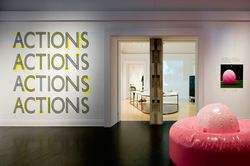
Seemingly common activities such as walking, playing, recycling, and gardening are pushed beyond their usual definition by the international architects, artists, and collectives featured in the exhibition. Their actions push against accepted norms of behaviour in cities, at times even challenging legal limitations. The individuals and groups employ a range of approaches(...)
Seemingly common activities such as walking, playing, recycling, and gardening are pushed beyond their usual definition by the international architects, artists, and collectives featured in the exhibition. Their actions push against accepted norms of behaviour in cities, at times even challenging legal limitations. The individuals and groups employ a range of approaches(...)
Location:
Main galleries
Main galleries
Date:
26 November 2008 to 19 April 2009
26 November 2008 to 19 April 2009
Title:
Actions: What You Can Do With the City
Actions:
Description:
Seemingly common activities such as walking, playing, recycling, and gardening are pushed beyond their usual definition by the international architects, artists, and collectives featured in the exhibition. Their actions push against accepted norms of behaviour in cities, at times even challenging legal limitations. The individuals and groups employ a range of approaches(...)
Actions: What You Can Do With the City
Actions:
Description:
Seemingly common activities such as walking, playing, recycling, and gardening are pushed beyond their usual definition by the international architects, artists, and collectives featured in the exhibition. Their actions push against accepted norms of behaviour in cities, at times even challenging legal limitations. The individuals and groups employ a range of approaches(...)
Form:
exhibitions
exhibitions
Date:
26 November 2008 to
19 April 2009
26 November 2008 to
19 April 2009
Location:
Main galleries
Main galleries
Level of archival description:
Sub-series
Sub-series
Title:
Opera Houses
Opera Houses
Reference number:
CI001.S2.D3
Description:
Charles Rohault de Fleury's sustained involvement with the design of opera houses began with his appointment in 1846 as official architect of the existing Salle Le Pelletier, home to the *Paris Opera, and continued until an open competition was called in 1860 (Charles Garnier won this competition). During this period Rohault de Fleury submitted numerous proposals to replace theprovisional Salle Le Pelletier with a structure more appropriate to the grandeur and importance of France's national opera company. The CCA collection contains four projects related to his work for the Paris opera: two early projects (1846 and 1847) and one later one (1859) for a newopera house, and a portfolio of lithographs and drawings related to alterations and repairs to Salle Le Pelletier (1850-1854). The collection also includes Charles' earliest theatre project, a comprehensive plan for an opera house and surrounding infrastructure for the Theatre Royal Italien opera company (1838-1840), and an album containing drawings and prints of antique and contemporary theatres (1839-1854?). Charles' first project was for the Theatre Royal Italien opera company whose previous home, the Salle Favart, had burned down on the night of January 14 1838. The CCA collection contains an album of presentation drawings for a new theatre located on rue de la Paix with boutiques in the adjacent 'passages' (DR1974:0002:019:001-023). A second album consists of site plans including proposed 'maisons à loyers' (apartment buildings) and documents relating to the cost estimates and rental income for the entire project (DR1974:0002:036:001-016). The architectural style and interior arrangement of the theatre is heavily indebted to Francois Debret's Salle Le Pelletier. Charles' originality lies more in his conception of the social and economic role of the theatre in relation and integration, to its surrounding urban fabric. An explanation of the entire Theatre Royal Italien project, and Charles' role as architect in it, is found in two proposal letters (located in the Avery Library, Columbia University, NY) written by the entrepreneur Eugene Lecomte to the Minister of the Interior, Comte Duchatel, on May 15 and October 31 1839 (1). Charles' album of drawings at the CCA for the theatre and some of the cost and rental estimates are probably presentation copies directly related to the first letter, and most likely submitted to the Minister of the Interior. Charles' project was never executed, and the Italian opera company eventualy found a permanent home in the existing Salle Ventadour (1841). However, the inclusive nature of the Théâtre Royal Italien proposal, with its stress on urban development and contextuality, continued to play a seminal role in his later Paris Opera projects. Upon replacing Francois Debret as architect of Salle Le Pelletier in 1846, Charles proposed nine possible locations (site plans) for a new opera house for the Paris Opera (*Academie Royale de Musique) and, in the following year (1847) prepared a portfolio of drawings for the actual structure with an accompanying seven-page manuscript describing the project. Although executed in successive years, the site plans and 1847 drawings are conceptually related. Both components were undertaken in response to offical interest in a public competition that was never implemented (2)(3). The CCA has two sets of the nine site plans proposed in 1846 (DR1974:0002:036:001-016), one containing transfer lithographed site plans with a written analysis and cost estimate for each of the proposed locations, and the other with only the site plans (similar sets are located in the 'Archives Nationales' in France). They indicate that Charles, (heavily influenced by his Théâtre Royal Italien project) preferred the Rue de la Paix location (siteplan #3) for the new opera house. Although site plan number six, Boulevard des Capucines, was not favoured at this date, it is highly prophetic as it was the location officially chosen in 1860 for the new opera house. Apparently unique to the CCA collection is the 1847 manuscript and portfolio of drawings for the proposed opera house (DR1974:0002:036:001-016). The manuscript is both an indepth review of the requirements for a national opera house and a guide to his portfolio of drawings. Charles' conception and design continued to be strongly influenced by Debret's Salle Lepelletier, as well as his own Théâtre Italien project, and various antique and contemporary opera houses and theatres. Many of the French and Italian sources mentioned in the manuscript are collected in an album (DR1974:0002:010:001-048) as references for his own designs (4). As official architect of Salle Le pelletier, Charles was also responsible for repairs, restorations, and alterations to the existing structure. The drawings and transfer lithographs in the CCA collection (DR1974:0002:036:001-016) are primarily dated 1854, and relate to documented repair and restoration projects undertaken during this period (5)(6). The CCA collection has the presentation drawings and lithographs for the later 1859 project (DR1974:0002:027:001-027) for the Paris opera (*Theatre Imperiale de l'opera) that were sent to Achille Fould, the Minister of State. This project is probably a counterpart to a similiar one that he submitted to the Prefect of the Seine, Baron Haussmann, in the same year (7). Site plans show the opera house on an irregular polygonal site facing Boulevard des Capucines. The placement of the 'maisons à loyers' on the rear of the site reflects Charles' continued emphasis on integrating his opera projects into the surrounding urban context. In 1859, it appeared that Charles was favoured to build the new opera house. But late in the following year, a public competition was called in which Charles Garnier emerged as the victor. Although Charles did not build the final structure, his numerous projects, as exemplified in the CCA collection, were of prime importance in determining the location, configuration, and plan of the Place de l'Opera (8). * The 'Paris Opera' was France's national opera, and thus its name changed numerous times throughout its history according to altering perceptions of its role in French culture and/or changes in political regimes. For reasons of clarity, the national opera will be referred to as the Paris Opera. The names indicated in brackets with a star refer to the proper name of the opera company at the date of the project. (1) Eugene Le Comte, "Projet de Salle rue de la Paix, pour le Théâtre Royal Italien: Lettres à Monsieur le Ministre de l'Intérieur, en date des 15 mai et 31octobre 1839" (Paris: P. Dupont, 1839). (2) Christopher Curtis Mead, "Charles Garnier's Paris Opera and the Renaissance of Classicism in Nineteenth century French Architecture", 3 vols. (PhD thesis; Philadelphia: University of Pennsylvania, 1986), p. 234 and p. 956, fn. 30. (3) Monika Steinhauser, "Die Architektur des Pariser Oper" (Munich: Prestel Verlag, 1969), p. 45, fns. 143 and 144. (4) Barry Bergdoll, "Charles Rohault de Fleury: Part Three: Theatres and the Opera house", 'CCA Research Report', n.d., p. 3. (5) Larousse XIXth Century, s.v. "Rohault de Fleury, Charles". (6) Mead, p. 238. (7) Oeuvres de C. Rohault de Fleury, architecte" (Paris: Librarie centrale d'architecture, 1884).. (8) Macmillan, s.v. "Rohault de Fleury Familly".
CI001.S2.D3
Description:
Charles Rohault de Fleury's sustained involvement with the design of opera houses began with his appointment in 1846 as official architect of the existing Salle Le Pelletier, home to the *Paris Opera, and continued until an open competition was called in 1860 (Charles Garnier won this competition). During this period Rohault de Fleury submitted numerous proposals to replace theprovisional Salle Le Pelletier with a structure more appropriate to the grandeur and importance of France's national opera company. The CCA collection contains four projects related to his work for the Paris opera: two early projects (1846 and 1847) and one later one (1859) for a newopera house, and a portfolio of lithographs and drawings related to alterations and repairs to Salle Le Pelletier (1850-1854). The collection also includes Charles' earliest theatre project, a comprehensive plan for an opera house and surrounding infrastructure for the Theatre Royal Italien opera company (1838-1840), and an album containing drawings and prints of antique and contemporary theatres (1839-1854?). Charles' first project was for the Theatre Royal Italien opera company whose previous home, the Salle Favart, had burned down on the night of January 14 1838. The CCA collection contains an album of presentation drawings for a new theatre located on rue de la Paix with boutiques in the adjacent 'passages' (DR1974:0002:019:001-023). A second album consists of site plans including proposed 'maisons à loyers' (apartment buildings) and documents relating to the cost estimates and rental income for the entire project (DR1974:0002:036:001-016). The architectural style and interior arrangement of the theatre is heavily indebted to Francois Debret's Salle Le Pelletier. Charles' originality lies more in his conception of the social and economic role of the theatre in relation and integration, to its surrounding urban fabric. An explanation of the entire Theatre Royal Italien project, and Charles' role as architect in it, is found in two proposal letters (located in the Avery Library, Columbia University, NY) written by the entrepreneur Eugene Lecomte to the Minister of the Interior, Comte Duchatel, on May 15 and October 31 1839 (1). Charles' album of drawings at the CCA for the theatre and some of the cost and rental estimates are probably presentation copies directly related to the first letter, and most likely submitted to the Minister of the Interior. Charles' project was never executed, and the Italian opera company eventualy found a permanent home in the existing Salle Ventadour (1841). However, the inclusive nature of the Théâtre Royal Italien proposal, with its stress on urban development and contextuality, continued to play a seminal role in his later Paris Opera projects. Upon replacing Francois Debret as architect of Salle Le Pelletier in 1846, Charles proposed nine possible locations (site plans) for a new opera house for the Paris Opera (*Academie Royale de Musique) and, in the following year (1847) prepared a portfolio of drawings for the actual structure with an accompanying seven-page manuscript describing the project. Although executed in successive years, the site plans and 1847 drawings are conceptually related. Both components were undertaken in response to offical interest in a public competition that was never implemented (2)(3). The CCA has two sets of the nine site plans proposed in 1846 (DR1974:0002:036:001-016), one containing transfer lithographed site plans with a written analysis and cost estimate for each of the proposed locations, and the other with only the site plans (similar sets are located in the 'Archives Nationales' in France). They indicate that Charles, (heavily influenced by his Théâtre Royal Italien project) preferred the Rue de la Paix location (siteplan #3) for the new opera house. Although site plan number six, Boulevard des Capucines, was not favoured at this date, it is highly prophetic as it was the location officially chosen in 1860 for the new opera house. Apparently unique to the CCA collection is the 1847 manuscript and portfolio of drawings for the proposed opera house (DR1974:0002:036:001-016). The manuscript is both an indepth review of the requirements for a national opera house and a guide to his portfolio of drawings. Charles' conception and design continued to be strongly influenced by Debret's Salle Lepelletier, as well as his own Théâtre Italien project, and various antique and contemporary opera houses and theatres. Many of the French and Italian sources mentioned in the manuscript are collected in an album (DR1974:0002:010:001-048) as references for his own designs (4). As official architect of Salle Le pelletier, Charles was also responsible for repairs, restorations, and alterations to the existing structure. The drawings and transfer lithographs in the CCA collection (DR1974:0002:036:001-016) are primarily dated 1854, and relate to documented repair and restoration projects undertaken during this period (5)(6). The CCA collection has the presentation drawings and lithographs for the later 1859 project (DR1974:0002:027:001-027) for the Paris opera (*Theatre Imperiale de l'opera) that were sent to Achille Fould, the Minister of State. This project is probably a counterpart to a similiar one that he submitted to the Prefect of the Seine, Baron Haussmann, in the same year (7). Site plans show the opera house on an irregular polygonal site facing Boulevard des Capucines. The placement of the 'maisons à loyers' on the rear of the site reflects Charles' continued emphasis on integrating his opera projects into the surrounding urban context. In 1859, it appeared that Charles was favoured to build the new opera house. But late in the following year, a public competition was called in which Charles Garnier emerged as the victor. Although Charles did not build the final structure, his numerous projects, as exemplified in the CCA collection, were of prime importance in determining the location, configuration, and plan of the Place de l'Opera (8). * The 'Paris Opera' was France's national opera, and thus its name changed numerous times throughout its history according to altering perceptions of its role in French culture and/or changes in political regimes. For reasons of clarity, the national opera will be referred to as the Paris Opera. The names indicated in brackets with a star refer to the proper name of the opera company at the date of the project. (1) Eugene Le Comte, "Projet de Salle rue de la Paix, pour le Théâtre Royal Italien: Lettres à Monsieur le Ministre de l'Intérieur, en date des 15 mai et 31octobre 1839" (Paris: P. Dupont, 1839). (2) Christopher Curtis Mead, "Charles Garnier's Paris Opera and the Renaissance of Classicism in Nineteenth century French Architecture", 3 vols. (PhD thesis; Philadelphia: University of Pennsylvania, 1986), p. 234 and p. 956, fn. 30. (3) Monika Steinhauser, "Die Architektur des Pariser Oper" (Munich: Prestel Verlag, 1969), p. 45, fns. 143 and 144. (4) Barry Bergdoll, "Charles Rohault de Fleury: Part Three: Theatres and the Opera house", 'CCA Research Report', n.d., p. 3. (5) Larousse XIXth Century, s.v. "Rohault de Fleury, Charles". (6) Mead, p. 238. (7) Oeuvres de C. Rohault de Fleury, architecte" (Paris: Librarie centrale d'architecture, 1884).. (8) Macmillan, s.v. "Rohault de Fleury Familly".
People:
Date:
1717-1868
1717-1868
Title:
Opera Houses
CI001.S2.D3
Description:
Charles Rohault de Fleury's sustained involvement with the design of opera houses began with his appointment in 1846 as official architect of the existing Salle Le Pelletier, home to the *Paris Opera, and continued until an open competition was called in 1860 (Charles Garnier won this competition). During this period Rohault de Fleury submitted numerous proposals to replace theprovisional Salle Le Pelletier with a structure more appropriate to the grandeur and importance of France's national opera company. The CCA collection contains four projects related to his work for the Paris opera: two early projects (1846 and 1847) and one later one (1859) for a newopera house, and a portfolio of lithographs and drawings related to alterations and repairs to Salle Le Pelletier (1850-1854). The collection also includes Charles' earliest theatre project, a comprehensive plan for an opera house and surrounding infrastructure for the Theatre Royal Italien opera company (1838-1840), and an album containing drawings and prints of antique and contemporary theatres (1839-1854?). Charles' first project was for the Theatre Royal Italien opera company whose previous home, the Salle Favart, had burned down on the night of January 14 1838. The CCA collection contains an album of presentation drawings for a new theatre located on rue de la Paix with boutiques in the adjacent 'passages' (DR1974:0002:019:001-023). A second album consists of site plans including proposed 'maisons à loyers' (apartment buildings) and documents relating to the cost estimates and rental income for the entire project (DR1974:0002:036:001-016). The architectural style and interior arrangement of the theatre is heavily indebted to Francois Debret's Salle Le Pelletier. Charles' originality lies more in his conception of the social and economic role of the theatre in relation and integration, to its surrounding urban fabric. An explanation of the entire Theatre Royal Italien project, and Charles' role as architect in it, is found in two proposal letters (located in the Avery Library, Columbia University, NY) written by the entrepreneur Eugene Lecomte to the Minister of the Interior, Comte Duchatel, on May 15 and October 31 1839 (1). Charles' album of drawings at the CCA for the theatre and some of the cost and rental estimates are probably presentation copies directly related to the first letter, and most likely submitted to the Minister of the Interior. Charles' project was never executed, and the Italian opera company eventualy found a permanent home in the existing Salle Ventadour (1841). However, the inclusive nature of the Théâtre Royal Italien proposal, with its stress on urban development and contextuality, continued to play a seminal role in his later Paris Opera projects. Upon replacing Francois Debret as architect of Salle Le Pelletier in 1846, Charles proposed nine possible locations (site plans) for a new opera house for the Paris Opera (*Academie Royale de Musique) and, in the following year (1847) prepared a portfolio of drawings for the actual structure with an accompanying seven-page manuscript describing the project. Although executed in successive years, the site plans and 1847 drawings are conceptually related. Both components were undertaken in response to offical interest in a public competition that was never implemented (2)(3). The CCA has two sets of the nine site plans proposed in 1846 (DR1974:0002:036:001-016), one containing transfer lithographed site plans with a written analysis and cost estimate for each of the proposed locations, and the other with only the site plans (similar sets are located in the 'Archives Nationales' in France). They indicate that Charles, (heavily influenced by his Théâtre Royal Italien project) preferred the Rue de la Paix location (siteplan #3) for the new opera house. Although site plan number six, Boulevard des Capucines, was not favoured at this date, it is highly prophetic as it was the location officially chosen in 1860 for the new opera house. Apparently unique to the CCA collection is the 1847 manuscript and portfolio of drawings for the proposed opera house (DR1974:0002:036:001-016). The manuscript is both an indepth review of the requirements for a national opera house and a guide to his portfolio of drawings. Charles' conception and design continued to be strongly influenced by Debret's Salle Lepelletier, as well as his own Théâtre Italien project, and various antique and contemporary opera houses and theatres. Many of the French and Italian sources mentioned in the manuscript are collected in an album (DR1974:0002:010:001-048) as references for his own designs (4). As official architect of Salle Le pelletier, Charles was also responsible for repairs, restorations, and alterations to the existing structure. The drawings and transfer lithographs in the CCA collection (DR1974:0002:036:001-016) are primarily dated 1854, and relate to documented repair and restoration projects undertaken during this period (5)(6). The CCA collection has the presentation drawings and lithographs for the later 1859 project (DR1974:0002:027:001-027) for the Paris opera (*Theatre Imperiale de l'opera) that were sent to Achille Fould, the Minister of State. This project is probably a counterpart to a similiar one that he submitted to the Prefect of the Seine, Baron Haussmann, in the same year (7). Site plans show the opera house on an irregular polygonal site facing Boulevard des Capucines. The placement of the 'maisons à loyers' on the rear of the site reflects Charles' continued emphasis on integrating his opera projects into the surrounding urban context. In 1859, it appeared that Charles was favoured to build the new opera house. But late in the following year, a public competition was called in which Charles Garnier emerged as the victor. Although Charles did not build the final structure, his numerous projects, as exemplified in the CCA collection, were of prime importance in determining the location, configuration, and plan of the Place de l'Opera (8). * The 'Paris Opera' was France's national opera, and thus its name changed numerous times throughout its history according to altering perceptions of its role in French culture and/or changes in political regimes. For reasons of clarity, the national opera will be referred to as the Paris Opera. The names indicated in brackets with a star refer to the proper name of the opera company at the date of the project. (1) Eugene Le Comte, "Projet de Salle rue de la Paix, pour le Théâtre Royal Italien: Lettres à Monsieur le Ministre de l'Intérieur, en date des 15 mai et 31octobre 1839" (Paris: P. Dupont, 1839). (2) Christopher Curtis Mead, "Charles Garnier's Paris Opera and the Renaissance of Classicism in Nineteenth century French Architecture", 3 vols. (PhD thesis; Philadelphia: University of Pennsylvania, 1986), p. 234 and p. 956, fn. 30. (3) Monika Steinhauser, "Die Architektur des Pariser Oper" (Munich: Prestel Verlag, 1969), p. 45, fns. 143 and 144. (4) Barry Bergdoll, "Charles Rohault de Fleury: Part Three: Theatres and the Opera house", 'CCA Research Report', n.d., p. 3. (5) Larousse XIXth Century, s.v. "Rohault de Fleury, Charles". (6) Mead, p. 238. (7) Oeuvres de C. Rohault de Fleury, architecte" (Paris: Librarie centrale d'architecture, 1884).. (8) Macmillan, s.v. "Rohault de Fleury Familly".
Opera Houses
CI001.S2.D3
Description:
Charles Rohault de Fleury's sustained involvement with the design of opera houses began with his appointment in 1846 as official architect of the existing Salle Le Pelletier, home to the *Paris Opera, and continued until an open competition was called in 1860 (Charles Garnier won this competition). During this period Rohault de Fleury submitted numerous proposals to replace theprovisional Salle Le Pelletier with a structure more appropriate to the grandeur and importance of France's national opera company. The CCA collection contains four projects related to his work for the Paris opera: two early projects (1846 and 1847) and one later one (1859) for a newopera house, and a portfolio of lithographs and drawings related to alterations and repairs to Salle Le Pelletier (1850-1854). The collection also includes Charles' earliest theatre project, a comprehensive plan for an opera house and surrounding infrastructure for the Theatre Royal Italien opera company (1838-1840), and an album containing drawings and prints of antique and contemporary theatres (1839-1854?). Charles' first project was for the Theatre Royal Italien opera company whose previous home, the Salle Favart, had burned down on the night of January 14 1838. The CCA collection contains an album of presentation drawings for a new theatre located on rue de la Paix with boutiques in the adjacent 'passages' (DR1974:0002:019:001-023). A second album consists of site plans including proposed 'maisons à loyers' (apartment buildings) and documents relating to the cost estimates and rental income for the entire project (DR1974:0002:036:001-016). The architectural style and interior arrangement of the theatre is heavily indebted to Francois Debret's Salle Le Pelletier. Charles' originality lies more in his conception of the social and economic role of the theatre in relation and integration, to its surrounding urban fabric. An explanation of the entire Theatre Royal Italien project, and Charles' role as architect in it, is found in two proposal letters (located in the Avery Library, Columbia University, NY) written by the entrepreneur Eugene Lecomte to the Minister of the Interior, Comte Duchatel, on May 15 and October 31 1839 (1). Charles' album of drawings at the CCA for the theatre and some of the cost and rental estimates are probably presentation copies directly related to the first letter, and most likely submitted to the Minister of the Interior. Charles' project was never executed, and the Italian opera company eventualy found a permanent home in the existing Salle Ventadour (1841). However, the inclusive nature of the Théâtre Royal Italien proposal, with its stress on urban development and contextuality, continued to play a seminal role in his later Paris Opera projects. Upon replacing Francois Debret as architect of Salle Le Pelletier in 1846, Charles proposed nine possible locations (site plans) for a new opera house for the Paris Opera (*Academie Royale de Musique) and, in the following year (1847) prepared a portfolio of drawings for the actual structure with an accompanying seven-page manuscript describing the project. Although executed in successive years, the site plans and 1847 drawings are conceptually related. Both components were undertaken in response to offical interest in a public competition that was never implemented (2)(3). The CCA has two sets of the nine site plans proposed in 1846 (DR1974:0002:036:001-016), one containing transfer lithographed site plans with a written analysis and cost estimate for each of the proposed locations, and the other with only the site plans (similar sets are located in the 'Archives Nationales' in France). They indicate that Charles, (heavily influenced by his Théâtre Royal Italien project) preferred the Rue de la Paix location (siteplan #3) for the new opera house. Although site plan number six, Boulevard des Capucines, was not favoured at this date, it is highly prophetic as it was the location officially chosen in 1860 for the new opera house. Apparently unique to the CCA collection is the 1847 manuscript and portfolio of drawings for the proposed opera house (DR1974:0002:036:001-016). The manuscript is both an indepth review of the requirements for a national opera house and a guide to his portfolio of drawings. Charles' conception and design continued to be strongly influenced by Debret's Salle Lepelletier, as well as his own Théâtre Italien project, and various antique and contemporary opera houses and theatres. Many of the French and Italian sources mentioned in the manuscript are collected in an album (DR1974:0002:010:001-048) as references for his own designs (4). As official architect of Salle Le pelletier, Charles was also responsible for repairs, restorations, and alterations to the existing structure. The drawings and transfer lithographs in the CCA collection (DR1974:0002:036:001-016) are primarily dated 1854, and relate to documented repair and restoration projects undertaken during this period (5)(6). The CCA collection has the presentation drawings and lithographs for the later 1859 project (DR1974:0002:027:001-027) for the Paris opera (*Theatre Imperiale de l'opera) that were sent to Achille Fould, the Minister of State. This project is probably a counterpart to a similiar one that he submitted to the Prefect of the Seine, Baron Haussmann, in the same year (7). Site plans show the opera house on an irregular polygonal site facing Boulevard des Capucines. The placement of the 'maisons à loyers' on the rear of the site reflects Charles' continued emphasis on integrating his opera projects into the surrounding urban context. In 1859, it appeared that Charles was favoured to build the new opera house. But late in the following year, a public competition was called in which Charles Garnier emerged as the victor. Although Charles did not build the final structure, his numerous projects, as exemplified in the CCA collection, were of prime importance in determining the location, configuration, and plan of the Place de l'Opera (8). * The 'Paris Opera' was France's national opera, and thus its name changed numerous times throughout its history according to altering perceptions of its role in French culture and/or changes in political regimes. For reasons of clarity, the national opera will be referred to as the Paris Opera. The names indicated in brackets with a star refer to the proper name of the opera company at the date of the project. (1) Eugene Le Comte, "Projet de Salle rue de la Paix, pour le Théâtre Royal Italien: Lettres à Monsieur le Ministre de l'Intérieur, en date des 15 mai et 31octobre 1839" (Paris: P. Dupont, 1839). (2) Christopher Curtis Mead, "Charles Garnier's Paris Opera and the Renaissance of Classicism in Nineteenth century French Architecture", 3 vols. (PhD thesis; Philadelphia: University of Pennsylvania, 1986), p. 234 and p. 956, fn. 30. (3) Monika Steinhauser, "Die Architektur des Pariser Oper" (Munich: Prestel Verlag, 1969), p. 45, fns. 143 and 144. (4) Barry Bergdoll, "Charles Rohault de Fleury: Part Three: Theatres and the Opera house", 'CCA Research Report', n.d., p. 3. (5) Larousse XIXth Century, s.v. "Rohault de Fleury, Charles". (6) Mead, p. 238. (7) Oeuvres de C. Rohault de Fleury, architecte" (Paris: Librarie centrale d'architecture, 1884).. (8) Macmillan, s.v. "Rohault de Fleury Familly".
Level of archival description:
File 3
File 3
Date:
1717-1868
1717-1868
People:
Form:
textual records
textual records
Reference number:
AP140.S2.SS4.D7.P5
Description:
8 mostly undated sets of lecture notes by James Stirling predominantly focusing on his career including his thesis and his major projects, as well as 20th century projects by other architects and urban redevelopment; notes are on cards or paper, including one set written on California hotel stationary
AP140.S2.SS4.D7.P5
Description:
8 mostly undated sets of lecture notes by James Stirling predominantly focusing on his career including his thesis and his major projects, as well as 20th century projects by other architects and urban redevelopment; notes are on cards or paper, including one set written on California hotel stationary
People:
Title:
Sets of lecture notes
Actions:
AP140.S2.SS4.D7.P5
Description:
8 mostly undated sets of lecture notes by James Stirling predominantly focusing on his career including his thesis and his major projects, as well as 20th century projects by other architects and urban redevelopment; notes are on cards or paper, including one set written on California hotel stationary
Sets of lecture notes
Actions:
AP140.S2.SS4.D7.P5
Description:
8 mostly undated sets of lecture notes by James Stirling predominantly focusing on his career including his thesis and his major projects, as well as 20th century projects by other architects and urban redevelopment; notes are on cards or paper, including one set written on California hotel stationary
Form:
textual records
textual records
People:


