


235 Results
Form:
books
books
Actions:
Price:
$22.50
(available to order)
Summary:
Written by a prominent 19th-century architect, this authentic 1876 guide to Victorian house styles depicts a wide array of magnificent homes of the period. Included are a six-room ornamental cottage for $1,500 and an ornate Gothic suburban residence, complete with parlor, sitting room, dressing rooms, six bedrooms, and two baths-at a cost of $33,000. This publication is(...)
$22.50
(available to order)
Summary:
Written by a prominent 19th-century architect, this authentic 1876 guide to Victorian house styles depicts a wide array of magnificent homes of the period. Included are a six-room ornamental cottage for $1,500 and an ornate Gothic suburban residence, complete with parlor, sitting room, dressing rooms, six bedrooms, and two baths-at a cost of $33,000. This publication is(...)
Subject:
History until 1900, North America
History until 1900, North America
Publication:
December 2005, Mineola, New York
December 2005, Mineola, New York
Title:
Authentic Victorian villas and cottages : over 100 designs with elevation and floor plans
Actions:
Price:
$22.50
(available to order)
Summary:
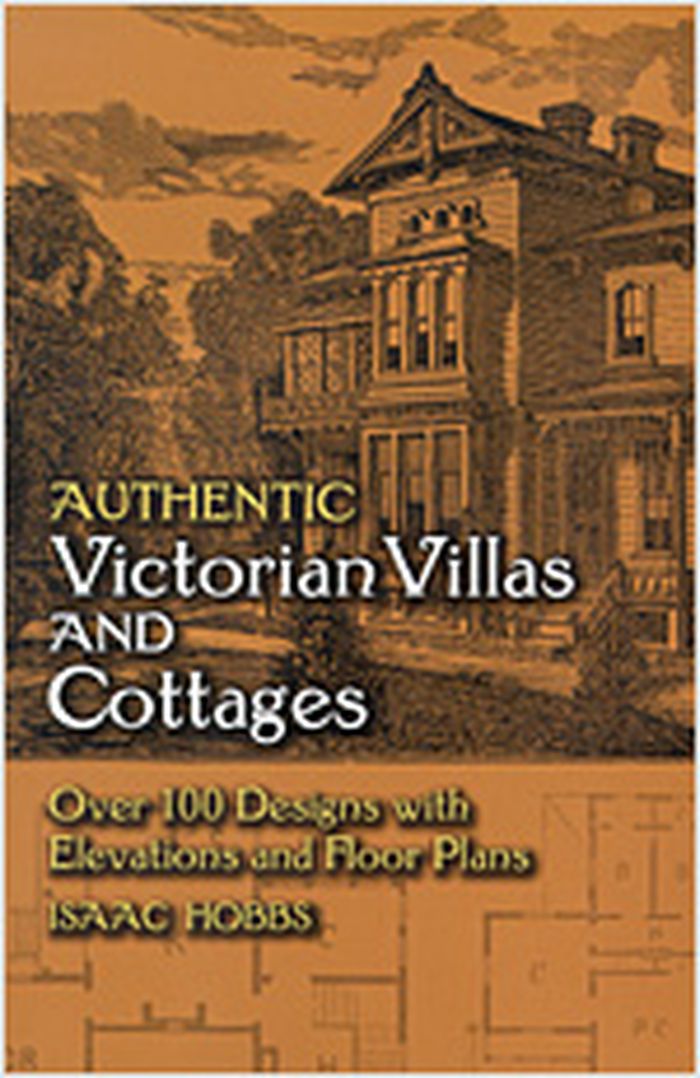
Written by a prominent 19th-century architect, this authentic 1876 guide to Victorian house styles depicts a wide array of magnificent homes of the period. Included are a six-room ornamental cottage for $1,500 and an ornate Gothic suburban residence, complete with parlor, sitting room, dressing rooms, six bedrooms, and two baths-at a cost of $33,000. This publication is for architects, preservationists, home restorers, and Victoriana enthusiasts. With 122 engravings.
Authentic Victorian villas and cottages : over 100 designs with elevation and floor plans
Actions:
Price:
$22.50
(available to order)
Summary:
Written by a prominent 19th-century architect, this authentic 1876 guide to Victorian house styles depicts a wide array of magnificent homes of the period. Included are a six-room ornamental cottage for $1,500 and an ornate Gothic suburban residence, complete with parlor, sitting room, dressing rooms, six bedrooms, and two baths-at a cost of $33,000. This publication is for architects, preservationists, home restorers, and Victoriana enthusiasts. With 122 engravings.
Form:
books
books
Publication:
December 2005, Mineola, New York
December 2005, Mineola, New York
Subject:
History until 1900, North America
History until 1900, North America
Form:
books
books
Title:
Houses of Missouri 1870-1940
Houses of Missouri 1870-1940
Actions:
Price:
$69.99
(available to order)
Summary:
With nearly 300 archival photographs, drawings, and original floor plans, Houses of Missouri, 1870–1940, offers an intimate tour behind the facades of 45 purely American houses. Among these are Greystone, the pastoral Gothic cottage of Major Emory Foster in Pevely; Oak Hall, the opulent mansion of the legendary Kansas City Star publisher William Rockhill Nelson; the(...)
$69.99
(available to order)
Summary:
With nearly 300 archival photographs, drawings, and original floor plans, Houses of Missouri, 1870–1940, offers an intimate tour behind the facades of 45 purely American houses. Among these are Greystone, the pastoral Gothic cottage of Major Emory Foster in Pevely; Oak Hall, the opulent mansion of the legendary Kansas City Star publisher William Rockhill Nelson; the(...)
Subject:
Architecture since 1900, Europe
Architecture since 1900, Europe
Publication:
October 2008, New York
October 2008, New York
Title:
Houses of Missouri 1870-1940
Actions:
Price:
$69.99
(available to order)
Summary:
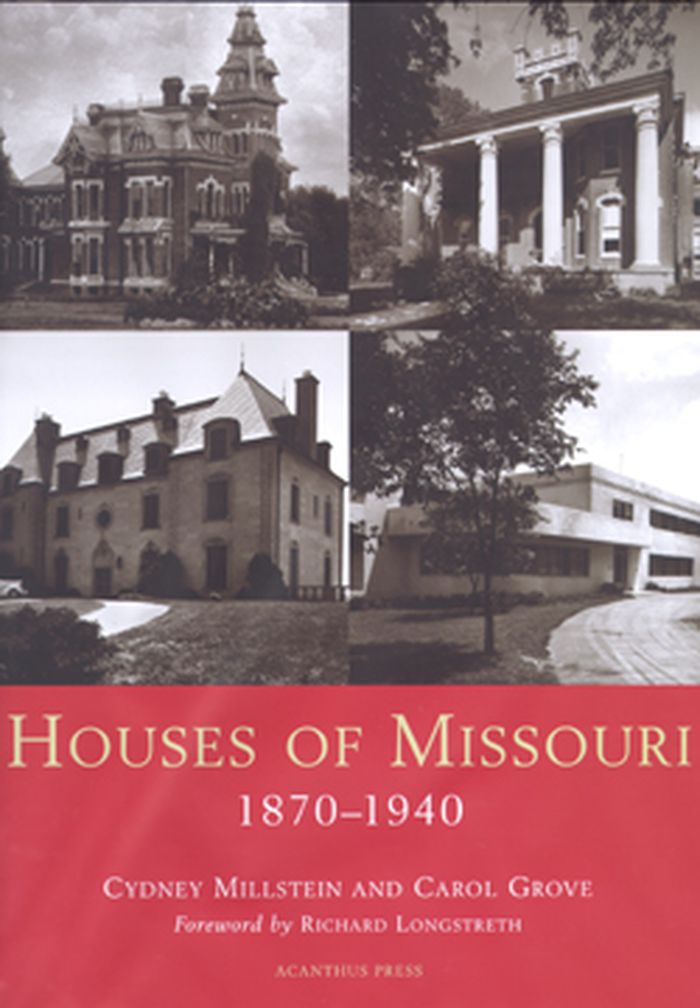
With nearly 300 archival photographs, drawings, and original floor plans, Houses of Missouri, 1870–1940, offers an intimate tour behind the facades of 45 purely American houses. Among these are Greystone, the pastoral Gothic cottage of Major Emory Foster in Pevely; Oak Hall, the opulent mansion of the legendary Kansas City Star publisher William Rockhill Nelson; the iconoclastic “machine in the prairie,” Samuel Marx-designed Ladue residence for department store magnate Morton May; and Chatol, the striking Art Moderne “farmhouse” in rural Boone county. The authors bring to life the fortunes, motivations, and aspirations of their wealthy and upstanding house owners who rigorously defined what was “suitable” and respectable living in America’s heartland.
Houses of Missouri 1870-1940
Actions:
Price:
$69.99
(available to order)
Summary:
With nearly 300 archival photographs, drawings, and original floor plans, Houses of Missouri, 1870–1940, offers an intimate tour behind the facades of 45 purely American houses. Among these are Greystone, the pastoral Gothic cottage of Major Emory Foster in Pevely; Oak Hall, the opulent mansion of the legendary Kansas City Star publisher William Rockhill Nelson; the iconoclastic “machine in the prairie,” Samuel Marx-designed Ladue residence for department store magnate Morton May; and Chatol, the striking Art Moderne “farmhouse” in rural Boone county. The authors bring to life the fortunes, motivations, and aspirations of their wealthy and upstanding house owners who rigorously defined what was “suitable” and respectable living in America’s heartland.
Form:
books
books
Publication:
October 2008, New York
October 2008, New York
Subject:
Architecture since 1900, Europe
Architecture since 1900, Europe
Form:
books
books
Title:
Movie theaters
Movie theaters
Actions:
Price:
$105.00
(available to order)
Summary:
They are in every American city and town—grandiose movie palaces, constructed during the heyday of the entertainment industry, that now stand abandoned, empty, decaying, or repurposed. Since 2005, the acclaimed photographic duo Marchand/Meffre have been traveling across the US to visit these early 20th-century relics. They have captured the architectural diversity of the(...)
$105.00
(available to order)
Summary:
They are in every American city and town—grandiose movie palaces, constructed during the heyday of the entertainment industry, that now stand abandoned, empty, decaying, or repurposed. Since 2005, the acclaimed photographic duo Marchand/Meffre have been traveling across the US to visit these early 20th-century relics. They have captured the architectural diversity of the(...)
Title:
Movie theaters
Actions:
Price:
$105.00
(available to order)
Summary:
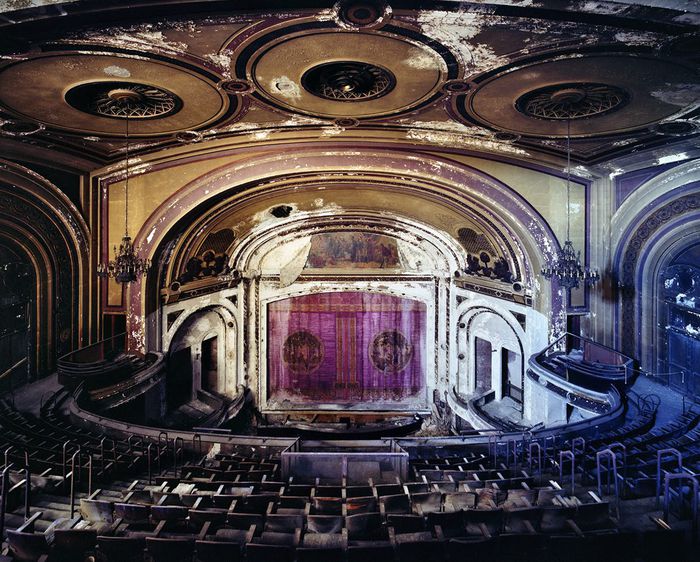
They are in every American city and town—grandiose movie palaces, constructed during the heyday of the entertainment industry, that now stand abandoned, empty, decaying, or repurposed. Since 2005, the acclaimed photographic duo Marchand/Meffre have been traveling across the US to visit these early 20th-century relics. They have captured the architectural diversity of the theaters’ exteriors, from neo renaissance to neo-Gothic, art nouveau to Bauhaus, and neo-Byzantine to Jugendstill. They have also stepped inside to capture the commonalities of a dying culture— crumbling plaster, rows of broken crushed-velvet seats, peeling paint, defunct equipment, and abandoned concession stands—as well as their transformation into bingo halls, warehouses, fitness centers, flea markets, parking lots, and grocery stores.
Movie theaters
Actions:
Price:
$105.00
(available to order)
Summary:
They are in every American city and town—grandiose movie palaces, constructed during the heyday of the entertainment industry, that now stand abandoned, empty, decaying, or repurposed. Since 2005, the acclaimed photographic duo Marchand/Meffre have been traveling across the US to visit these early 20th-century relics. They have captured the architectural diversity of the theaters’ exteriors, from neo renaissance to neo-Gothic, art nouveau to Bauhaus, and neo-Byzantine to Jugendstill. They have also stepped inside to capture the commonalities of a dying culture— crumbling plaster, rows of broken crushed-velvet seats, peeling paint, defunct equipment, and abandoned concession stands—as well as their transformation into bingo halls, warehouses, fitness centers, flea markets, parking lots, and grocery stores.
Form:
books
books
Publication:
January 2022
January 2022
Subject:
Photography monographs
Photography monographs
Form:
books
books
Price:
$37.00
(available to order)
Summary:
Elaborately conceived, grandly constructed insane asylums�ranging in appearance from classical temples to Gothic castles�were once a common sight looming on the outskirts of American towns and cities. Many of these buildings were razed long ago, and those that remain stand as grim reminders of an often cruel system. For much of the nineteenth century, however, these(...)
$37.00
(available to order)
Summary:
Elaborately conceived, grandly constructed insane asylums�ranging in appearance from classical temples to Gothic castles�were once a common sight looming on the outskirts of American towns and cities. Many of these buildings were razed long ago, and those that remain stand as grim reminders of an often cruel system. For much of the nineteenth century, however, these(...)
Subject:
Commercial interiors, Building types
Commercial interiors, Building types
Publication:
June 2007, Minnieapolis, London
June 2007, Minnieapolis, London
Title:
The architecture of madness : insane asylums in the united states
Actions:
Price:
$37.00
(available to order)
Summary:
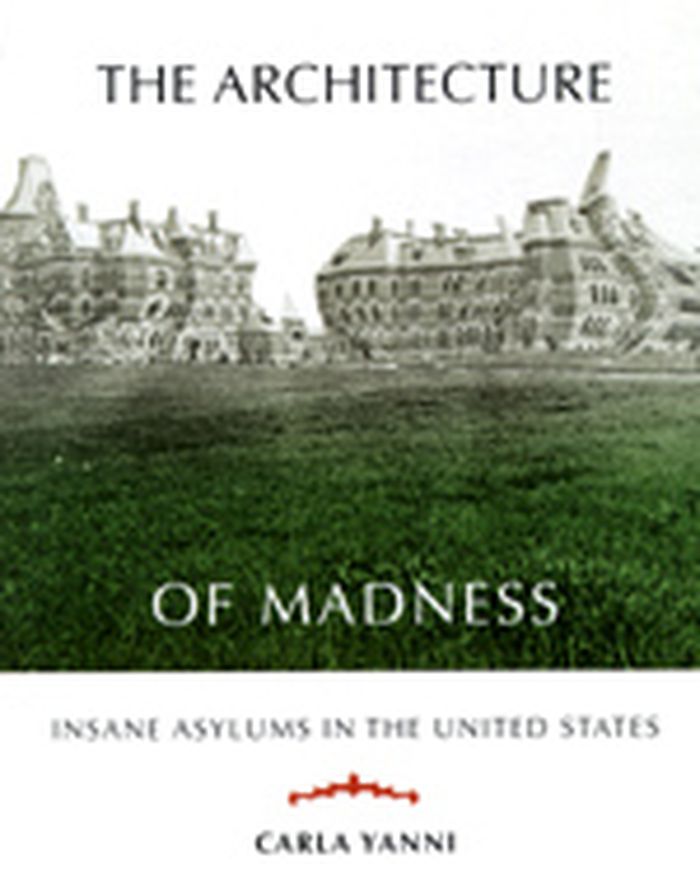
Elaborately conceived, grandly constructed insane asylums�ranging in appearance from classical temples to Gothic castles�were once a common sight looming on the outskirts of American towns and cities. Many of these buildings were razed long ago, and those that remain stand as grim reminders of an often cruel system. For much of the nineteenth century, however, these asylums epitomized the widely held belief among doctors and social reformers that insanity was a curable disease and that environment�architecture in particular�was the most effective means of treatment. In The Architecture of Madness, Carla Yanni tells a compelling story of therapeutic design, from America�s earliest purpose�built institutions for the insane to the asylum construction frenzy in the second half of the century. At the center of Yanni�s inquiry is Dr. Thomas Kirkbride, a Pennsylvania-born Quaker, who in the 1840s devised a novel way to house the mentally diseased that emphasized segregation by severity of illness, ease of treatment and surveillance, and ventilation. After the Civil War, American architects designed Kirkbride-plan hospitals across the country.
The architecture of madness : insane asylums in the united states
Actions:
Price:
$37.00
(available to order)
Summary:
Elaborately conceived, grandly constructed insane asylums�ranging in appearance from classical temples to Gothic castles�were once a common sight looming on the outskirts of American towns and cities. Many of these buildings were razed long ago, and those that remain stand as grim reminders of an often cruel system. For much of the nineteenth century, however, these asylums epitomized the widely held belief among doctors and social reformers that insanity was a curable disease and that environment�architecture in particular�was the most effective means of treatment. In The Architecture of Madness, Carla Yanni tells a compelling story of therapeutic design, from America�s earliest purpose�built institutions for the insane to the asylum construction frenzy in the second half of the century. At the center of Yanni�s inquiry is Dr. Thomas Kirkbride, a Pennsylvania-born Quaker, who in the 1840s devised a novel way to house the mentally diseased that emphasized segregation by severity of illness, ease of treatment and surveillance, and ventilation. After the Civil War, American architects designed Kirkbride-plan hospitals across the country.
Form:
books
books
Publication:
June 2007, Minnieapolis, London
June 2007, Minnieapolis, London
Subject:
Commercial interiors, Building types
Commercial interiors, Building types
Form:
books
books
Actions:
Price:
$74.00
(available to order)
Summary:
Once the world’s tallest skyscraper, the Woolworth Building is noted for its striking but incongruous synthesis of Beaux-Arts architecture, fanciful Gothic ornamentation, and audacious steel-framed engineering. Here, in the first history of this great urban landmark, Gail Fenske argues that its design serves as a compelling lens through which to view the distinctive urban(...)
$74.00
(available to order)
Summary:
Once the world’s tallest skyscraper, the Woolworth Building is noted for its striking but incongruous synthesis of Beaux-Arts architecture, fanciful Gothic ornamentation, and audacious steel-framed engineering. Here, in the first history of this great urban landmark, Gail Fenske argues that its design serves as a compelling lens through which to view the distinctive urban(...)
Title:
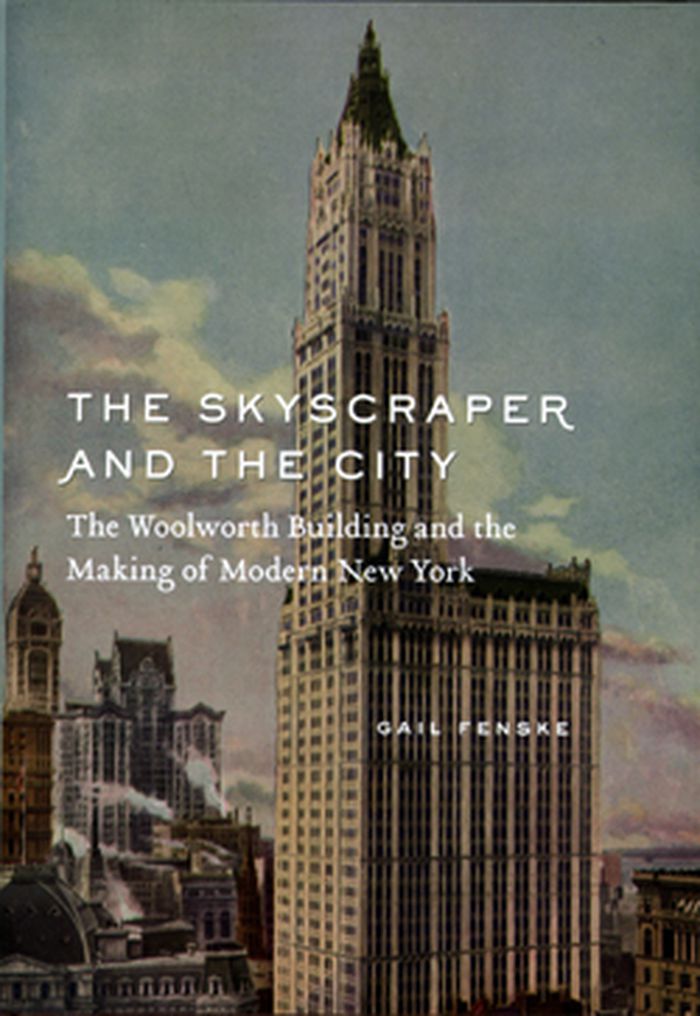
The skyscraper and the city: the woolworth building and the making of modern New York
Actions:
Price:
$74.00
(available to order)
Summary:
Once the world’s tallest skyscraper, the Woolworth Building is noted for its striking but incongruous synthesis of Beaux-Arts architecture, fanciful Gothic ornamentation, and audacious steel-framed engineering. Here, in the first history of this great urban landmark, Gail Fenske argues that its design serves as a compelling lens through which to view the distinctive urban culture of Progressive-era New York. Fenske shows here that the building’s multiplicity of meanings reflected the cultural contradictions that defined New York City’s modernity. For Frank Woolworth—founder of the famous five-and-dime store chain—the building served as a towering trademark, for advocates of the City Beautiful movement it suggested a majestic hotel de ville, for technological enthusiasts it represented the boldest of experiments in vertical construction, and for tenants it provided an evocative setting for high-style consumption. Tourists, meanwhile, experienced a spectacular sightseeing destination and avant-garde artists discovered a twentieth-century future. In emphasizing this faceted significance, Fenske illuminates the process of conceiving, financing, and constructing skyscrapers as well as the mass phenomena of consumerism, marketing, news media, and urban spectatorship that surround them. As the representative example of the skyscraper as a “cathedral of commerce,” the Woolworth Building remains a commanding presence in the skyline of lower Manhattan, and the generously illustrated Skyscraper and the City is a worthy testament to its importance in American culture.
The skyscraper and the city: the woolworth building and the making of modern New York
Actions:
Price:
$74.00
(available to order)
Summary:
Once the world’s tallest skyscraper, the Woolworth Building is noted for its striking but incongruous synthesis of Beaux-Arts architecture, fanciful Gothic ornamentation, and audacious steel-framed engineering. Here, in the first history of this great urban landmark, Gail Fenske argues that its design serves as a compelling lens through which to view the distinctive urban culture of Progressive-era New York. Fenske shows here that the building’s multiplicity of meanings reflected the cultural contradictions that defined New York City’s modernity. For Frank Woolworth—founder of the famous five-and-dime store chain—the building served as a towering trademark, for advocates of the City Beautiful movement it suggested a majestic hotel de ville, for technological enthusiasts it represented the boldest of experiments in vertical construction, and for tenants it provided an evocative setting for high-style consumption. Tourists, meanwhile, experienced a spectacular sightseeing destination and avant-garde artists discovered a twentieth-century future. In emphasizing this faceted significance, Fenske illuminates the process of conceiving, financing, and constructing skyscrapers as well as the mass phenomena of consumerism, marketing, news media, and urban spectatorship that surround them. As the representative example of the skyscraper as a “cathedral of commerce,” the Woolworth Building remains a commanding presence in the skyline of lower Manhattan, and the generously illustrated Skyscraper and the City is a worthy testament to its importance in American culture.
Form:
books
books
Publication:
May 2008, Chicago, London
May 2008, Chicago, London
Subject:
Gratte-ciels
Gratte-ciels


