


29168 Results
Form:
exhibitions
exhibitions
Description:
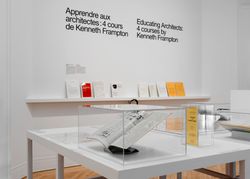
Amid education reform in American schools of architecture in the 1970s, Kenneth Frampton was integral in transforming the curriculum of Columbia University’s Graduate School of Architecture Planning. In particular, he designed and taught what became three core courses: the theory seminar “Comparative Critical Analysis,” the history lectures “Thresholds of Modern(...)
Amid education reform in American schools of architecture in the 1970s, Kenneth Frampton was integral in transforming the curriculum of Columbia University’s Graduate School of Architecture Planning. In particular, he designed and taught what became three core courses: the theory seminar “Comparative Critical Analysis,” the history lectures “Thresholds of Modern(...)
Date:
31 May 2017 to 24 September 2017
31 May 2017 to 24 September 2017
Title:
Educating Architects: Four Courses by Kenneth Frampton
Actions:
Description:
Amid education reform in American schools of architecture in the 1970s, Kenneth Frampton was integral in transforming the curriculum of Columbia University’s Graduate School of Architecture Planning. In particular, he designed and taught what became three core courses: the theory seminar “Comparative Critical Analysis,” the history lectures “Thresholds of Modern(...)
Educating Architects: Four Courses by Kenneth Frampton
Actions:
Description:
Amid education reform in American schools of architecture in the 1970s, Kenneth Frampton was integral in transforming the curriculum of Columbia University’s Graduate School of Architecture Planning. In particular, he designed and taught what became three core courses: the theory seminar “Comparative Critical Analysis,” the history lectures “Thresholds of Modern(...)
Form:
exhibitions
exhibitions
Date:
31 May 2017 to
24 September 2017
31 May 2017 to
24 September 2017
Form:
exhibitions
exhibitions
Actions:
Description:
The terms contemplation, solitude, exile, leisure, rest, retreat, reverse, and solitude—and their antonyms action, court, world, worldliness and society—constitute a recurring chain of ideas in seventeenth-century fictional and biographical literature. From Society to Solitude combines history, literature, and architecture, focusing on the theme of the retreat and its(...)
The terms contemplation, solitude, exile, leisure, rest, retreat, reverse, and solitude—and their antonyms action, court, world, worldliness and society—constitute a recurring chain of ideas in seventeenth-century fictional and biographical literature. From Society to Solitude combines history, literature, and architecture, focusing on the theme of the retreat and its(...)
Location:
Hall cases
Hall cases
Date:
12 October 1994 to 15 January 1995
12 October 1994 to 15 January 1995
Title:
From Society to Solitude: Public and Private Space in Seventeenth-Century France
Actions:
Description:
The terms contemplation, solitude, exile, leisure, rest, retreat, reverse, and solitude—and their antonyms action, court, world, worldliness and society—constitute a recurring chain of ideas in seventeenth-century fictional and biographical literature. From Society to Solitude combines history, literature, and architecture, focusing on the theme of the retreat and its(...)
From Society to Solitude: Public and Private Space in Seventeenth-Century France
Actions:
Description:
The terms contemplation, solitude, exile, leisure, rest, retreat, reverse, and solitude—and their antonyms action, court, world, worldliness and society—constitute a recurring chain of ideas in seventeenth-century fictional and biographical literature. From Society to Solitude combines history, literature, and architecture, focusing on the theme of the retreat and its(...)
Form:
exhibitions
exhibitions
Date:
12 October 1994 to
15 January 1995
12 October 1994 to
15 January 1995
Location:
Hall cases
Hall cases
Form:
events
events

Actions:
Description:
Mrinalini Rajagopalan traces the history of the Red Fort in Delhi from its destruction by the British in 1857 to their later efforts to preserve and protect the same structure. Click here for a listing of the rest of this summer’s seminars.
Mrinalini Rajagopalan traces the history of the Red Fort in Delhi from its destruction by the British in 1857 to their later efforts to preserve and protect the same structure. Click here for a listing of the rest of this summer’s seminars.
Location:
Shaughnessy House
Shaughnessy House
Date:
8 July 2010
8 July 2010
Title:
Visiting Scholar Seminar: Mrinalini Rajagopalan
Actions:
Description:
Mrinalini Rajagopalan traces the history of the Red Fort in Delhi from its destruction by the British in 1857 to their later efforts to preserve and protect the same structure. Click here for a listing of the rest of this summer’s seminars.
Visiting Scholar Seminar: Mrinalini Rajagopalan
Actions:
Description:
Mrinalini Rajagopalan traces the history of the Red Fort in Delhi from its destruction by the British in 1857 to their later efforts to preserve and protect the same structure. Click here for a listing of the rest of this summer’s seminars.
Form:
events
events
Date:
8 July 2010
8 July 2010
Location:
Shaughnessy House
Shaughnessy House
Form:
archives
Level of archival description:
Fonds
archives
Level of archival description:
Fonds
Title:
Ross & Macdonald fonds
Ross & Macdonald fonds
Reference number:
AP013
Synopsis:
The Ross & Macdonald fonds is comprised of documents concerning the work of six successive architectural firms: Ross & MacFarlane (1905-1912), Ross & Macdonald (1913-1944), Ross & Ross (1944-1946), Ross, Patterson, Townsend & Heughan (1946-1950), Ross, Patterson, Townsend & Fish (1950-1958), and Ross, Fish, Duschenes & Barrett (1958-1976). The greatest concentration of work was produced in Montreal where each of the firms maintained their head office, but there were also a large number of works executed in New Brunswick and Nova Scotia. The fonds contains 27 884 drawings (24 294 originals plus 3 590 reproductions), 236 photographs, and 18.6 metres of textual documents.
AP013
Synopsis:
The Ross & Macdonald fonds is comprised of documents concerning the work of six successive architectural firms: Ross & MacFarlane (1905-1912), Ross & Macdonald (1913-1944), Ross & Ross (1944-1946), Ross, Patterson, Townsend & Heughan (1946-1950), Ross, Patterson, Townsend & Fish (1950-1958), and Ross, Fish, Duschenes & Barrett (1958-1976). The greatest concentration of work was produced in Montreal where each of the firms maintained their head office, but there were also a large number of works executed in New Brunswick and Nova Scotia. The fonds contains 27 884 drawings (24 294 originals plus 3 590 reproductions), 236 photographs, and 18.6 metres of textual documents.
People:
Date:
1902-1982
1902-1982
Title:
Ross & Macdonald fonds
Actions:
AP013
Synopsis:
The Ross & Macdonald fonds is comprised of documents concerning the work of six successive architectural firms: Ross & MacFarlane (1905-1912), Ross & Macdonald (1913-1944), Ross & Ross (1944-1946), Ross, Patterson, Townsend & Heughan (1946-1950), Ross, Patterson, Townsend & Fish (1950-1958), and Ross, Fish, Duschenes & Barrett (1958-1976). The greatest concentration of work was produced in Montreal where each of the firms maintained their head office, but there were also a large number of works executed in New Brunswick and Nova Scotia. The fonds contains 27 884 drawings (24 294 originals plus 3 590 reproductions), 236 photographs, and 18.6 metres of textual documents.
Ross & Macdonald fonds
Actions:
AP013
Synopsis:
The Ross & Macdonald fonds is comprised of documents concerning the work of six successive architectural firms: Ross & MacFarlane (1905-1912), Ross & Macdonald (1913-1944), Ross & Ross (1944-1946), Ross, Patterson, Townsend & Heughan (1946-1950), Ross, Patterson, Townsend & Fish (1950-1958), and Ross, Fish, Duschenes & Barrett (1958-1976). The greatest concentration of work was produced in Montreal where each of the firms maintained their head office, but there were also a large number of works executed in New Brunswick and Nova Scotia. The fonds contains 27 884 drawings (24 294 originals plus 3 590 reproductions), 236 photographs, and 18.6 metres of textual documents.
Form:
archives
Level of archival description:
Fonds
archives
Level of archival description:
Fonds
Date:
1902-1982
1902-1982
People:
Form:
exhibitions
exhibitions
Title:
Mirrors / Miroirs
Mirrors / Miroirs
Actions:
Description:
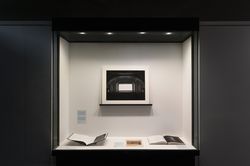
Mirrors/ Miroirs is conceived through an indirect dialogue with the exhibition Besides, History: Go Hasegawa, Kersten Geers, David Van Severen, a project rooted in the shared references and resonances between the work of two contemporary practices in the presence of history. If Besides, History is premised on impressions of one office’s work registered through(...)
Mirrors/ Miroirs is conceived through an indirect dialogue with the exhibition Besides, History: Go Hasegawa, Kersten Geers, David Van Severen, a project rooted in the shared references and resonances between the work of two contemporary practices in the presence of history. If Besides, History is premised on impressions of one office’s work registered through(...)
Location:
Hall cases
Hall cases
Date:
22 June 2017 to 14 January 2018
22 June 2017 to 14 January 2018
Title:
Mirrors / Miroirs
Actions:
Description:
Mirrors/ Miroirs is conceived through an indirect dialogue with the exhibition Besides, History: Go Hasegawa, Kersten Geers, David Van Severen, a project rooted in the shared references and resonances between the work of two contemporary practices in the presence of history. If Besides, History is premised on impressions of one office’s work registered through(...)
Mirrors / Miroirs
Actions:
Description:
Mirrors/ Miroirs is conceived through an indirect dialogue with the exhibition Besides, History: Go Hasegawa, Kersten Geers, David Van Severen, a project rooted in the shared references and resonances between the work of two contemporary practices in the presence of history. If Besides, History is premised on impressions of one office’s work registered through(...)
Form:
exhibitions
exhibitions
Date:
22 June 2017 to
14 January 2018
22 June 2017 to
14 January 2018
Location:
Hall cases
Hall cases
Form:
articles
articles
Issue:
Journeys and translation
Journeys and translation
Form:
events
events
Actions:
Description:
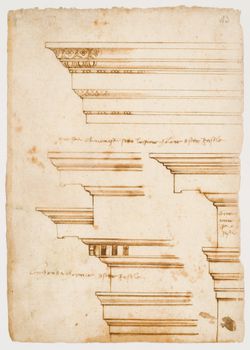
2016 Visiting Scholar Cara Rachele presents her research: This lecture investigates the explosion of detail drawings in the Renaissance. It connects the emergence of the detail in the sixteenth century as a canonical drawing type with the evocation of the material antique. The organic evolution of the detail drawing method can be seen in the sketchbooks of everyday(...)
2016 Visiting Scholar Cara Rachele presents her research: This lecture investigates the explosion of detail drawings in the Renaissance. It connects the emergence of the detail in the sixteenth century as a canonical drawing type with the evocation of the material antique. The organic evolution of the detail drawing method can be seen in the sketchbooks of everyday(...)
Date:
11 August 2016, 6pm
11 August 2016, 6pm
Title:
Visiting Scholar Seminar: Cara Rachele
Actions:
Description:
2016 Visiting Scholar Cara Rachele presents her research: This lecture investigates the explosion of detail drawings in the Renaissance. It connects the emergence of the detail in the sixteenth century as a canonical drawing type with the evocation of the material antique. The organic evolution of the detail drawing method can be seen in the sketchbooks of everyday(...)
Visiting Scholar Seminar: Cara Rachele
Actions:
Description:
2016 Visiting Scholar Cara Rachele presents her research: This lecture investigates the explosion of detail drawings in the Renaissance. It connects the emergence of the detail in the sixteenth century as a canonical drawing type with the evocation of the material antique. The organic evolution of the detail drawing method can be seen in the sketchbooks of everyday(...)
Form:
events
events
Date:
11 August 2016
6pm
11 August 2016
6pm
Form:
research
research
Title:
Visiting Scholars 1999–2000
Visiting Scholars 1999–2000
Actions:
Description:
Theme: The Baroque Phenomenon beyond Rome: Mark Dorrian, Department of Architecture, University of Edinburgh, Edinburgh, United Kingdom Topic: Baroque Deformation Martina Frank, Department of History, Università degli studi di Udine, Italy Topic: Luca Danesi et le baroque vénitien Indra McEwen, National Theatre School of Canada, Montreal, Canada Subject: The State of(...)
Theme: The Baroque Phenomenon beyond Rome: Mark Dorrian, Department of Architecture, University of Edinburgh, Edinburgh, United Kingdom Topic: Baroque Deformation Martina Frank, Department of History, Università degli studi di Udine, Italy Topic: Luca Danesi et le baroque vénitien Indra McEwen, National Theatre School of Canada, Montreal, Canada Subject: The State of(...)
Date:
January 2000 to August 2000
January 2000 to August 2000
Title:
Visiting Scholars 1999–2000
Actions:
Description:
Theme: The Baroque Phenomenon beyond Rome: Mark Dorrian, Department of Architecture, University of Edinburgh, Edinburgh, United Kingdom Topic: Baroque Deformation Martina Frank, Department of History, Università degli studi di Udine, Italy Topic: Luca Danesi et le baroque vénitien Indra McEwen, National Theatre School of Canada, Montreal, Canada Subject: The State of(...)
Visiting Scholars 1999–2000
Actions:
Description:
Theme: The Baroque Phenomenon beyond Rome: Mark Dorrian, Department of Architecture, University of Edinburgh, Edinburgh, United Kingdom Topic: Baroque Deformation Martina Frank, Department of History, Università degli studi di Udine, Italy Topic: Luca Danesi et le baroque vénitien Indra McEwen, National Theatre School of Canada, Montreal, Canada Subject: The State of(...)
Form:
research
research
Date:
January 2000 to
August 2000
January 2000 to
August 2000
Level of archival description:
Sub-series
Sub-series
Reference number:
CI001.S2.D5
Description:
Charles Rohault de Fleury was architect for the Muséum national d'histoire naturelle from 1833 to 1862. His work for the Muséum is represented in the CCA collection by a diverse group of prints and drawings. In addition to documenting his built and unbuilt projects, the inclusion of prints and drawings of museum and zoo buildings by other architects record, if only partially, the resources available to Charles in designing his buildings. This reference material provides insight into the influences on Charles' work as well as the nature of the design process itself. His built works, with the exception of the 1854 addition to the greenhouses, are illustrated in a book of prints with a brief accompanying text - "Muséum d'histoire naturelle: serres chaudes, galeries de minéralogie, etc. etc." (published 1837) (DR1974:0002:004:001; a second copy is held by the CCA library) (1). While prints are included for the Galerie de minéralogie et de géologie, the monkey house and the reservoirs, the majority of the prints are of the greenhouses (serres chaudes) begun 1833 (2). Known for their technological innovations in iron construction, these greenhouses utilized the first multi-storey load-bearing cast-iron façades for the central pavilions as well as space frame roof structures and prefabricated parts. This structural system is well documented in the prints in the CCA collection. The design was apparently inspired by the English greenhouses - a plate of which are included in the book - that Charles saw on a tour of England. The use of prestressed beams and curved roofs in the lateral wings attest to this influence. Charles' greenhouses, in turn, influenced the design of other greenhouses in Europe especially those at the Jardins Botanique in Liège and Ghent, Belgium (3). Although Joseph Paxton saw the greenhouses in 1833, it is unclear if they had an impact on the design of the Crystal Palace constructed 1850-1851 (4). The innovations of Charles' greenhouses continued to be acknowledged into the 20th century. Giedion in "Space, Time and Architecture", while erroneously attributing them to Rouhault (5)(6), refers to the greenhouses as "the prototype of all large iron-framed conservatories" (7). In addition to the greenhouses for the Muséum, the CCA collection includes three proposals (dated 1841) for a private greenhouse designed by Charles Rohault de Fleury (DR1974:0002:002:008 - DR1974:0002:002:013). The designs utilize the same curved roofs as the wings of the greenhouses at the Muséum combined with classically detailed stonework. An different aspect of Charles' work for the Muséum national d'histoire naturelle is represented in the album of unexecuted proposals -the only design drawings for the Muséum in the collection - for a Galerie de zoologie (DR1974:0002:024:001-079). Building on the typology of his earlier classical Galerie de minéralogie et de géologie (constructed 1833 -1841), the proposals, which date from between 1838 and 1862, illustrate a gradual enrichment of Charles' classical architectural vocabulary (8). They vary in their spatial configurations and façade treatments ranging from austere colonnaded designs with little ornament to more elaborate ones with richly encrusted facades, complex rooflines and more dramatic interior spaces characteristic of the Second Empire. The majority of the proposals consist of preliminary drawings illustrating the essential formal, spatial and ornamental aspects of the building. One proposal, dated January 1846, is substantially more developed than the others; in addition to general plans, sections and elevations, more detailed drawings are included for the layout of spaces, the elaboration of the facades, the configuration of the structure and even the designs for the specimen display cases. It is also worth noting that this album includes several plans outlining Rohault de Fleury's ideas for the overall development of the Muséum national d'histoire naturelle. In 1846, an album of prints of the Museo di fiscia e storia naturelle in Florence (DR1974:0002:005:001-018) was presented to Charles by the Grand Duke of Tuscany in response to his request for tracings of that building. These prints were probably used as reference material for the design of the new Galerie de zoologie described above. The portfolio of record drawings (ca. 1862) of the zoos in Antwerp, Brussels, Marseille and Amsterdam (DR1974:0002:018:001-027) is probably a dummy for a publication on zoological gardens as well as background documentation for the renovation and expansion of the zoo at the Muséum national d'histoire naturelle in Paris. Both drawings of the facilities for the animals and visitors and general plans of the zoological gardens are included. The Paris zoo project was apparently never undertaken. (1) These prints were reused in the "Oeuvre de C. Rohault de Fleury, architecte" (published 1884) (DR1974:0002:029:001-044). (2) Rohault de Fleury's greenhouses were destroyed in the Prussian bombardments of 1870. The greenhouses, which now stand in their place, are similar in layout and appearance to the original design, but their structural system is different. (3) John Hix, 'The Glass House' (Cambridge, Mass.: The MIT Press, 1981), p. 115. (4) Ibid., p. 115. (5) This error has been repeated by other authors including Henry-Russell Hitchcock, 'Architecture: Nineteenth and Twentieth Centuries' (Baltimore, Maryland: Penguin Books, 1968), p. 120. (6) Leonardo Benevolo, 'History of Modern Architecture' Volume 1: The tradition of modern architecture (Cambridge, Mass.: The M.I.T. Press, 1971), p. 22. (7) Sigfried Giedion, 'Space, Time and Architecture; the growth of a new tradition' (Cambridge: Harvard University Press, 1941), p. 181. (8) Barry Bergdoll, "Charles Rohault de Fleury: Part two: Muséum d'Histoire Naturelle and Studies on analogous Constructions in Europe", 'CCA Research Report", n.d., p. 1.
CI001.S2.D5
Description:
Charles Rohault de Fleury was architect for the Muséum national d'histoire naturelle from 1833 to 1862. His work for the Muséum is represented in the CCA collection by a diverse group of prints and drawings. In addition to documenting his built and unbuilt projects, the inclusion of prints and drawings of museum and zoo buildings by other architects record, if only partially, the resources available to Charles in designing his buildings. This reference material provides insight into the influences on Charles' work as well as the nature of the design process itself. His built works, with the exception of the 1854 addition to the greenhouses, are illustrated in a book of prints with a brief accompanying text - "Muséum d'histoire naturelle: serres chaudes, galeries de minéralogie, etc. etc." (published 1837) (DR1974:0002:004:001; a second copy is held by the CCA library) (1). While prints are included for the Galerie de minéralogie et de géologie, the monkey house and the reservoirs, the majority of the prints are of the greenhouses (serres chaudes) begun 1833 (2). Known for their technological innovations in iron construction, these greenhouses utilized the first multi-storey load-bearing cast-iron façades for the central pavilions as well as space frame roof structures and prefabricated parts. This structural system is well documented in the prints in the CCA collection. The design was apparently inspired by the English greenhouses - a plate of which are included in the book - that Charles saw on a tour of England. The use of prestressed beams and curved roofs in the lateral wings attest to this influence. Charles' greenhouses, in turn, influenced the design of other greenhouses in Europe especially those at the Jardins Botanique in Liège and Ghent, Belgium (3). Although Joseph Paxton saw the greenhouses in 1833, it is unclear if they had an impact on the design of the Crystal Palace constructed 1850-1851 (4). The innovations of Charles' greenhouses continued to be acknowledged into the 20th century. Giedion in "Space, Time and Architecture", while erroneously attributing them to Rouhault (5)(6), refers to the greenhouses as "the prototype of all large iron-framed conservatories" (7). In addition to the greenhouses for the Muséum, the CCA collection includes three proposals (dated 1841) for a private greenhouse designed by Charles Rohault de Fleury (DR1974:0002:002:008 - DR1974:0002:002:013). The designs utilize the same curved roofs as the wings of the greenhouses at the Muséum combined with classically detailed stonework. An different aspect of Charles' work for the Muséum national d'histoire naturelle is represented in the album of unexecuted proposals -the only design drawings for the Muséum in the collection - for a Galerie de zoologie (DR1974:0002:024:001-079). Building on the typology of his earlier classical Galerie de minéralogie et de géologie (constructed 1833 -1841), the proposals, which date from between 1838 and 1862, illustrate a gradual enrichment of Charles' classical architectural vocabulary (8). They vary in their spatial configurations and façade treatments ranging from austere colonnaded designs with little ornament to more elaborate ones with richly encrusted facades, complex rooflines and more dramatic interior spaces characteristic of the Second Empire. The majority of the proposals consist of preliminary drawings illustrating the essential formal, spatial and ornamental aspects of the building. One proposal, dated January 1846, is substantially more developed than the others; in addition to general plans, sections and elevations, more detailed drawings are included for the layout of spaces, the elaboration of the facades, the configuration of the structure and even the designs for the specimen display cases. It is also worth noting that this album includes several plans outlining Rohault de Fleury's ideas for the overall development of the Muséum national d'histoire naturelle. In 1846, an album of prints of the Museo di fiscia e storia naturelle in Florence (DR1974:0002:005:001-018) was presented to Charles by the Grand Duke of Tuscany in response to his request for tracings of that building. These prints were probably used as reference material for the design of the new Galerie de zoologie described above. The portfolio of record drawings (ca. 1862) of the zoos in Antwerp, Brussels, Marseille and Amsterdam (DR1974:0002:018:001-027) is probably a dummy for a publication on zoological gardens as well as background documentation for the renovation and expansion of the zoo at the Muséum national d'histoire naturelle in Paris. Both drawings of the facilities for the animals and visitors and general plans of the zoological gardens are included. The Paris zoo project was apparently never undertaken. (1) These prints were reused in the "Oeuvre de C. Rohault de Fleury, architecte" (published 1884) (DR1974:0002:029:001-044). (2) Rohault de Fleury's greenhouses were destroyed in the Prussian bombardments of 1870. The greenhouses, which now stand in their place, are similar in layout and appearance to the original design, but their structural system is different. (3) John Hix, 'The Glass House' (Cambridge, Mass.: The MIT Press, 1981), p. 115. (4) Ibid., p. 115. (5) This error has been repeated by other authors including Henry-Russell Hitchcock, 'Architecture: Nineteenth and Twentieth Centuries' (Baltimore, Maryland: Penguin Books, 1968), p. 120. (6) Leonardo Benevolo, 'History of Modern Architecture' Volume 1: The tradition of modern architecture (Cambridge, Mass.: The M.I.T. Press, 1971), p. 22. (7) Sigfried Giedion, 'Space, Time and Architecture; the growth of a new tradition' (Cambridge: Harvard University Press, 1941), p. 181. (8) Barry Bergdoll, "Charles Rohault de Fleury: Part two: Muséum d'Histoire Naturelle and Studies on analogous Constructions in Europe", 'CCA Research Report", n.d., p. 1.
People:
Date:
[1837-ca. 1862]
[1837-ca. 1862]
Title:
Muséum nationale d'histoire naturelle
CI001.S2.D5
Description:
Charles Rohault de Fleury was architect for the Muséum national d'histoire naturelle from 1833 to 1862. His work for the Muséum is represented in the CCA collection by a diverse group of prints and drawings. In addition to documenting his built and unbuilt projects, the inclusion of prints and drawings of museum and zoo buildings by other architects record, if only partially, the resources available to Charles in designing his buildings. This reference material provides insight into the influences on Charles' work as well as the nature of the design process itself. His built works, with the exception of the 1854 addition to the greenhouses, are illustrated in a book of prints with a brief accompanying text - "Muséum d'histoire naturelle: serres chaudes, galeries de minéralogie, etc. etc." (published 1837) (DR1974:0002:004:001; a second copy is held by the CCA library) (1). While prints are included for the Galerie de minéralogie et de géologie, the monkey house and the reservoirs, the majority of the prints are of the greenhouses (serres chaudes) begun 1833 (2). Known for their technological innovations in iron construction, these greenhouses utilized the first multi-storey load-bearing cast-iron façades for the central pavilions as well as space frame roof structures and prefabricated parts. This structural system is well documented in the prints in the CCA collection. The design was apparently inspired by the English greenhouses - a plate of which are included in the book - that Charles saw on a tour of England. The use of prestressed beams and curved roofs in the lateral wings attest to this influence. Charles' greenhouses, in turn, influenced the design of other greenhouses in Europe especially those at the Jardins Botanique in Liège and Ghent, Belgium (3). Although Joseph Paxton saw the greenhouses in 1833, it is unclear if they had an impact on the design of the Crystal Palace constructed 1850-1851 (4). The innovations of Charles' greenhouses continued to be acknowledged into the 20th century. Giedion in "Space, Time and Architecture", while erroneously attributing them to Rouhault (5)(6), refers to the greenhouses as "the prototype of all large iron-framed conservatories" (7). In addition to the greenhouses for the Muséum, the CCA collection includes three proposals (dated 1841) for a private greenhouse designed by Charles Rohault de Fleury (DR1974:0002:002:008 - DR1974:0002:002:013). The designs utilize the same curved roofs as the wings of the greenhouses at the Muséum combined with classically detailed stonework. An different aspect of Charles' work for the Muséum national d'histoire naturelle is represented in the album of unexecuted proposals -the only design drawings for the Muséum in the collection - for a Galerie de zoologie (DR1974:0002:024:001-079). Building on the typology of his earlier classical Galerie de minéralogie et de géologie (constructed 1833 -1841), the proposals, which date from between 1838 and 1862, illustrate a gradual enrichment of Charles' classical architectural vocabulary (8). They vary in their spatial configurations and façade treatments ranging from austere colonnaded designs with little ornament to more elaborate ones with richly encrusted facades, complex rooflines and more dramatic interior spaces characteristic of the Second Empire. The majority of the proposals consist of preliminary drawings illustrating the essential formal, spatial and ornamental aspects of the building. One proposal, dated January 1846, is substantially more developed than the others; in addition to general plans, sections and elevations, more detailed drawings are included for the layout of spaces, the elaboration of the facades, the configuration of the structure and even the designs for the specimen display cases. It is also worth noting that this album includes several plans outlining Rohault de Fleury's ideas for the overall development of the Muséum national d'histoire naturelle. In 1846, an album of prints of the Museo di fiscia e storia naturelle in Florence (DR1974:0002:005:001-018) was presented to Charles by the Grand Duke of Tuscany in response to his request for tracings of that building. These prints were probably used as reference material for the design of the new Galerie de zoologie described above. The portfolio of record drawings (ca. 1862) of the zoos in Antwerp, Brussels, Marseille and Amsterdam (DR1974:0002:018:001-027) is probably a dummy for a publication on zoological gardens as well as background documentation for the renovation and expansion of the zoo at the Muséum national d'histoire naturelle in Paris. Both drawings of the facilities for the animals and visitors and general plans of the zoological gardens are included. The Paris zoo project was apparently never undertaken. (1) These prints were reused in the "Oeuvre de C. Rohault de Fleury, architecte" (published 1884) (DR1974:0002:029:001-044). (2) Rohault de Fleury's greenhouses were destroyed in the Prussian bombardments of 1870. The greenhouses, which now stand in their place, are similar in layout and appearance to the original design, but their structural system is different. (3) John Hix, 'The Glass House' (Cambridge, Mass.: The MIT Press, 1981), p. 115. (4) Ibid., p. 115. (5) This error has been repeated by other authors including Henry-Russell Hitchcock, 'Architecture: Nineteenth and Twentieth Centuries' (Baltimore, Maryland: Penguin Books, 1968), p. 120. (6) Leonardo Benevolo, 'History of Modern Architecture' Volume 1: The tradition of modern architecture (Cambridge, Mass.: The M.I.T. Press, 1971), p. 22. (7) Sigfried Giedion, 'Space, Time and Architecture; the growth of a new tradition' (Cambridge: Harvard University Press, 1941), p. 181. (8) Barry Bergdoll, "Charles Rohault de Fleury: Part two: Muséum d'Histoire Naturelle and Studies on analogous Constructions in Europe", 'CCA Research Report", n.d., p. 1.
Muséum nationale d'histoire naturelle
CI001.S2.D5
Description:
Charles Rohault de Fleury was architect for the Muséum national d'histoire naturelle from 1833 to 1862. His work for the Muséum is represented in the CCA collection by a diverse group of prints and drawings. In addition to documenting his built and unbuilt projects, the inclusion of prints and drawings of museum and zoo buildings by other architects record, if only partially, the resources available to Charles in designing his buildings. This reference material provides insight into the influences on Charles' work as well as the nature of the design process itself. His built works, with the exception of the 1854 addition to the greenhouses, are illustrated in a book of prints with a brief accompanying text - "Muséum d'histoire naturelle: serres chaudes, galeries de minéralogie, etc. etc." (published 1837) (DR1974:0002:004:001; a second copy is held by the CCA library) (1). While prints are included for the Galerie de minéralogie et de géologie, the monkey house and the reservoirs, the majority of the prints are of the greenhouses (serres chaudes) begun 1833 (2). Known for their technological innovations in iron construction, these greenhouses utilized the first multi-storey load-bearing cast-iron façades for the central pavilions as well as space frame roof structures and prefabricated parts. This structural system is well documented in the prints in the CCA collection. The design was apparently inspired by the English greenhouses - a plate of which are included in the book - that Charles saw on a tour of England. The use of prestressed beams and curved roofs in the lateral wings attest to this influence. Charles' greenhouses, in turn, influenced the design of other greenhouses in Europe especially those at the Jardins Botanique in Liège and Ghent, Belgium (3). Although Joseph Paxton saw the greenhouses in 1833, it is unclear if they had an impact on the design of the Crystal Palace constructed 1850-1851 (4). The innovations of Charles' greenhouses continued to be acknowledged into the 20th century. Giedion in "Space, Time and Architecture", while erroneously attributing them to Rouhault (5)(6), refers to the greenhouses as "the prototype of all large iron-framed conservatories" (7). In addition to the greenhouses for the Muséum, the CCA collection includes three proposals (dated 1841) for a private greenhouse designed by Charles Rohault de Fleury (DR1974:0002:002:008 - DR1974:0002:002:013). The designs utilize the same curved roofs as the wings of the greenhouses at the Muséum combined with classically detailed stonework. An different aspect of Charles' work for the Muséum national d'histoire naturelle is represented in the album of unexecuted proposals -the only design drawings for the Muséum in the collection - for a Galerie de zoologie (DR1974:0002:024:001-079). Building on the typology of his earlier classical Galerie de minéralogie et de géologie (constructed 1833 -1841), the proposals, which date from between 1838 and 1862, illustrate a gradual enrichment of Charles' classical architectural vocabulary (8). They vary in their spatial configurations and façade treatments ranging from austere colonnaded designs with little ornament to more elaborate ones with richly encrusted facades, complex rooflines and more dramatic interior spaces characteristic of the Second Empire. The majority of the proposals consist of preliminary drawings illustrating the essential formal, spatial and ornamental aspects of the building. One proposal, dated January 1846, is substantially more developed than the others; in addition to general plans, sections and elevations, more detailed drawings are included for the layout of spaces, the elaboration of the facades, the configuration of the structure and even the designs for the specimen display cases. It is also worth noting that this album includes several plans outlining Rohault de Fleury's ideas for the overall development of the Muséum national d'histoire naturelle. In 1846, an album of prints of the Museo di fiscia e storia naturelle in Florence (DR1974:0002:005:001-018) was presented to Charles by the Grand Duke of Tuscany in response to his request for tracings of that building. These prints were probably used as reference material for the design of the new Galerie de zoologie described above. The portfolio of record drawings (ca. 1862) of the zoos in Antwerp, Brussels, Marseille and Amsterdam (DR1974:0002:018:001-027) is probably a dummy for a publication on zoological gardens as well as background documentation for the renovation and expansion of the zoo at the Muséum national d'histoire naturelle in Paris. Both drawings of the facilities for the animals and visitors and general plans of the zoological gardens are included. The Paris zoo project was apparently never undertaken. (1) These prints were reused in the "Oeuvre de C. Rohault de Fleury, architecte" (published 1884) (DR1974:0002:029:001-044). (2) Rohault de Fleury's greenhouses were destroyed in the Prussian bombardments of 1870. The greenhouses, which now stand in their place, are similar in layout and appearance to the original design, but their structural system is different. (3) John Hix, 'The Glass House' (Cambridge, Mass.: The MIT Press, 1981), p. 115. (4) Ibid., p. 115. (5) This error has been repeated by other authors including Henry-Russell Hitchcock, 'Architecture: Nineteenth and Twentieth Centuries' (Baltimore, Maryland: Penguin Books, 1968), p. 120. (6) Leonardo Benevolo, 'History of Modern Architecture' Volume 1: The tradition of modern architecture (Cambridge, Mass.: The M.I.T. Press, 1971), p. 22. (7) Sigfried Giedion, 'Space, Time and Architecture; the growth of a new tradition' (Cambridge: Harvard University Press, 1941), p. 181. (8) Barry Bergdoll, "Charles Rohault de Fleury: Part two: Muséum d'Histoire Naturelle and Studies on analogous Constructions in Europe", 'CCA Research Report", n.d., p. 1.
Level of archival description:
File 5
File 5
Date:
[1837-ca. 1862]
[1837-ca. 1862]
People:
Form:
events
events
Description:
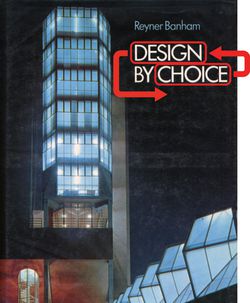
2011 Visiting Scholar Penelope Dean examines the forms of architectural and design history that dominated the twentieth century and speculates on a world in which choice is only imaginable through the prior and pervasive saturation of design. Click here for the Facebook event.
2011 Visiting Scholar Penelope Dean examines the forms of architectural and design history that dominated the twentieth century and speculates on a world in which choice is only imaginable through the prior and pervasive saturation of design. Click here for the Facebook event.
Location:
Shaughnessy House
Shaughnessy House
Date:
21 July 2011 , 6pm
21 July 2011 , 6pm
Title:
Visiting Scholar Seminar: Penelope Dean
Actions:
Description:
2011 Visiting Scholar Penelope Dean examines the forms of architectural and design history that dominated the twentieth century and speculates on a world in which choice is only imaginable through the prior and pervasive saturation of design. Click here for the Facebook event.
Visiting Scholar Seminar: Penelope Dean
Actions:
Description:
2011 Visiting Scholar Penelope Dean examines the forms of architectural and design history that dominated the twentieth century and speculates on a world in which choice is only imaginable through the prior and pervasive saturation of design. Click here for the Facebook event.
Form:
events
events
Date:
21 July 2011
6pm
21 July 2011
6pm
Location:
Shaughnessy House
Shaughnessy House


