


5165 Results
Level of archival description:
Sub-series
Sub-series
Title:
Domestic Commissions
Domestic Commissions
Reference number:
CI001.S1.D2
Description:
Hubert and Charles Rohault de Fleury received domestic commissions for both urban housing -hôtel particuliers and apartment houses- and rural dwellings -châteaux, country houses and estates. Hubert also executed designs for furniture and garden pavilions. Hubert' work is characterized by restrained classical exteriors and luxurious Empire style interiors; both Charles' exteriors and interiors, especially those for Hôtels Sauvage and Soltykoff, reflect the exuberance of the Second Empire. The CCA albums include drawings from all stages of the design process but with an emphasis on design development drawings. Hubert's albums contain cost calculations and estimates, notes and letters. In general, the drawings by Charles are from a more developed phase of design than Hubert's; Hubert's commissions are more varied than Charles'. The austere classicism of Hubert's domestic work reflects the prevailing taste of the day and reveals the strong influence of his teacher, Jean Nicholas Louis Durand. The compostional effect of the houses' façades relies on the shape and rhythm of the fenestration and the geometric division by string courses and occasionally, pilasters. Columns are used infrequently as is decorative stonework. The plans are symmetrical and modular. This approach to design is especially evident in the series of proposals for a country house for comte Treilhard (DR1974:0002:034:001-082) and in a group of unidentified designs for houses (DR1974:0002:035:001-034), all of which illustrate an emphasis on plan in the design process and a distinct approach to the composition of the elevations, both derived from Durand. Hubert's domestic work was also influenced by Palladio (see especially DR1974:0002:038:001-029). The interiors and furniture designed by Hubert are typical of the Empire style (1). The drawings in the CCA collection illustrate the materials, palette and ornamental motifs of the period. The garden structures in Hubert's albums are more fanciful than his houses and are either Rustic, Chinoiserie or classical in style (2). His garden designs follow the contemporary French trend for "jardins anglais" with winding paths and naturalistic placement of the vegetation, sometimes in combination with more formal French gardens (3). One of the most comprehensively documented domestic project by Hubert is the Rohault de Fleury House (12-14 rue d'Aguesseau; 1824). The CCA collection contains an interesting series of preliminary drawings for alternate proposals for this house, a number of highly finished wash drawings (including the interior decorative scheme) for the final scheme (DR1974:0002:011:001-08) and several earlier (ca. 1806) proposals (DR1974:0002:035:001-034). The Domaine de la Vallée album (DR1974:0002:025:001-059) is notable for the range of subject matter included as well as for the insights into the character of a working country estate in the nineteenth century. The proposed modifications encompassed both functional (a bridge, a levee, granaries and stables) and aesthetic improvements, such as ornamental garden temples. The renovation of the house also exhibits both functional and aesthetic improvements. (1) Examples of Hubert's interiors and furniture can be found in albums, DR1974:0002:007:001-068, DR1974:0002:011:001-089, DR1974:0002:025:001-059, DR1974:0002:030:001-065 and DR1974:0002:035:001-034. (2) The best examples of his pavilions are found in album, DR1974:0002:038:001-029 with other examples in albums, DR1974:0002:025:001-059, DR1974:0002:030:001-065 and DR1974:0002:035:001-034. (3) Examples are found in albums, DR1974:0002:035:001-034 and DR1974:0002 :025:001-059. Also of note are drawings, DR1974:0002:007:007 and DR1974:0002:007:068.
CI001.S1.D2
Description:
Hubert and Charles Rohault de Fleury received domestic commissions for both urban housing -hôtel particuliers and apartment houses- and rural dwellings -châteaux, country houses and estates. Hubert also executed designs for furniture and garden pavilions. Hubert' work is characterized by restrained classical exteriors and luxurious Empire style interiors; both Charles' exteriors and interiors, especially those for Hôtels Sauvage and Soltykoff, reflect the exuberance of the Second Empire. The CCA albums include drawings from all stages of the design process but with an emphasis on design development drawings. Hubert's albums contain cost calculations and estimates, notes and letters. In general, the drawings by Charles are from a more developed phase of design than Hubert's; Hubert's commissions are more varied than Charles'. The austere classicism of Hubert's domestic work reflects the prevailing taste of the day and reveals the strong influence of his teacher, Jean Nicholas Louis Durand. The compostional effect of the houses' façades relies on the shape and rhythm of the fenestration and the geometric division by string courses and occasionally, pilasters. Columns are used infrequently as is decorative stonework. The plans are symmetrical and modular. This approach to design is especially evident in the series of proposals for a country house for comte Treilhard (DR1974:0002:034:001-082) and in a group of unidentified designs for houses (DR1974:0002:035:001-034), all of which illustrate an emphasis on plan in the design process and a distinct approach to the composition of the elevations, both derived from Durand. Hubert's domestic work was also influenced by Palladio (see especially DR1974:0002:038:001-029). The interiors and furniture designed by Hubert are typical of the Empire style (1). The drawings in the CCA collection illustrate the materials, palette and ornamental motifs of the period. The garden structures in Hubert's albums are more fanciful than his houses and are either Rustic, Chinoiserie or classical in style (2). His garden designs follow the contemporary French trend for "jardins anglais" with winding paths and naturalistic placement of the vegetation, sometimes in combination with more formal French gardens (3). One of the most comprehensively documented domestic project by Hubert is the Rohault de Fleury House (12-14 rue d'Aguesseau; 1824). The CCA collection contains an interesting series of preliminary drawings for alternate proposals for this house, a number of highly finished wash drawings (including the interior decorative scheme) for the final scheme (DR1974:0002:011:001-08) and several earlier (ca. 1806) proposals (DR1974:0002:035:001-034). The Domaine de la Vallée album (DR1974:0002:025:001-059) is notable for the range of subject matter included as well as for the insights into the character of a working country estate in the nineteenth century. The proposed modifications encompassed both functional (a bridge, a levee, granaries and stables) and aesthetic improvements, such as ornamental garden temples. The renovation of the house also exhibits both functional and aesthetic improvements. (1) Examples of Hubert's interiors and furniture can be found in albums, DR1974:0002:007:001-068, DR1974:0002:011:001-089, DR1974:0002:025:001-059, DR1974:0002:030:001-065 and DR1974:0002:035:001-034. (2) The best examples of his pavilions are found in album, DR1974:0002:038:001-029 with other examples in albums, DR1974:0002:025:001-059, DR1974:0002:030:001-065 and DR1974:0002:035:001-034. (3) Examples are found in albums, DR1974:0002:035:001-034 and DR1974:0002 :025:001-059. Also of note are drawings, DR1974:0002:007:007 and DR1974:0002:007:068.
People:
Date:
1802-[1840]
1802-[1840]
Title:
Domestic Commissions
CI001.S1.D2
Description:
Hubert and Charles Rohault de Fleury received domestic commissions for both urban housing -hôtel particuliers and apartment houses- and rural dwellings -châteaux, country houses and estates. Hubert also executed designs for furniture and garden pavilions. Hubert' work is characterized by restrained classical exteriors and luxurious Empire style interiors; both Charles' exteriors and interiors, especially those for Hôtels Sauvage and Soltykoff, reflect the exuberance of the Second Empire. The CCA albums include drawings from all stages of the design process but with an emphasis on design development drawings. Hubert's albums contain cost calculations and estimates, notes and letters. In general, the drawings by Charles are from a more developed phase of design than Hubert's; Hubert's commissions are more varied than Charles'. The austere classicism of Hubert's domestic work reflects the prevailing taste of the day and reveals the strong influence of his teacher, Jean Nicholas Louis Durand. The compostional effect of the houses' façades relies on the shape and rhythm of the fenestration and the geometric division by string courses and occasionally, pilasters. Columns are used infrequently as is decorative stonework. The plans are symmetrical and modular. This approach to design is especially evident in the series of proposals for a country house for comte Treilhard (DR1974:0002:034:001-082) and in a group of unidentified designs for houses (DR1974:0002:035:001-034), all of which illustrate an emphasis on plan in the design process and a distinct approach to the composition of the elevations, both derived from Durand. Hubert's domestic work was also influenced by Palladio (see especially DR1974:0002:038:001-029). The interiors and furniture designed by Hubert are typical of the Empire style (1). The drawings in the CCA collection illustrate the materials, palette and ornamental motifs of the period. The garden structures in Hubert's albums are more fanciful than his houses and are either Rustic, Chinoiserie or classical in style (2). His garden designs follow the contemporary French trend for "jardins anglais" with winding paths and naturalistic placement of the vegetation, sometimes in combination with more formal French gardens (3). One of the most comprehensively documented domestic project by Hubert is the Rohault de Fleury House (12-14 rue d'Aguesseau; 1824). The CCA collection contains an interesting series of preliminary drawings for alternate proposals for this house, a number of highly finished wash drawings (including the interior decorative scheme) for the final scheme (DR1974:0002:011:001-08) and several earlier (ca. 1806) proposals (DR1974:0002:035:001-034). The Domaine de la Vallée album (DR1974:0002:025:001-059) is notable for the range of subject matter included as well as for the insights into the character of a working country estate in the nineteenth century. The proposed modifications encompassed both functional (a bridge, a levee, granaries and stables) and aesthetic improvements, such as ornamental garden temples. The renovation of the house also exhibits both functional and aesthetic improvements. (1) Examples of Hubert's interiors and furniture can be found in albums, DR1974:0002:007:001-068, DR1974:0002:011:001-089, DR1974:0002:025:001-059, DR1974:0002:030:001-065 and DR1974:0002:035:001-034. (2) The best examples of his pavilions are found in album, DR1974:0002:038:001-029 with other examples in albums, DR1974:0002:025:001-059, DR1974:0002:030:001-065 and DR1974:0002:035:001-034. (3) Examples are found in albums, DR1974:0002:035:001-034 and DR1974:0002 :025:001-059. Also of note are drawings, DR1974:0002:007:007 and DR1974:0002:007:068.
Domestic Commissions
CI001.S1.D2
Description:
Hubert and Charles Rohault de Fleury received domestic commissions for both urban housing -hôtel particuliers and apartment houses- and rural dwellings -châteaux, country houses and estates. Hubert also executed designs for furniture and garden pavilions. Hubert' work is characterized by restrained classical exteriors and luxurious Empire style interiors; both Charles' exteriors and interiors, especially those for Hôtels Sauvage and Soltykoff, reflect the exuberance of the Second Empire. The CCA albums include drawings from all stages of the design process but with an emphasis on design development drawings. Hubert's albums contain cost calculations and estimates, notes and letters. In general, the drawings by Charles are from a more developed phase of design than Hubert's; Hubert's commissions are more varied than Charles'. The austere classicism of Hubert's domestic work reflects the prevailing taste of the day and reveals the strong influence of his teacher, Jean Nicholas Louis Durand. The compostional effect of the houses' façades relies on the shape and rhythm of the fenestration and the geometric division by string courses and occasionally, pilasters. Columns are used infrequently as is decorative stonework. The plans are symmetrical and modular. This approach to design is especially evident in the series of proposals for a country house for comte Treilhard (DR1974:0002:034:001-082) and in a group of unidentified designs for houses (DR1974:0002:035:001-034), all of which illustrate an emphasis on plan in the design process and a distinct approach to the composition of the elevations, both derived from Durand. Hubert's domestic work was also influenced by Palladio (see especially DR1974:0002:038:001-029). The interiors and furniture designed by Hubert are typical of the Empire style (1). The drawings in the CCA collection illustrate the materials, palette and ornamental motifs of the period. The garden structures in Hubert's albums are more fanciful than his houses and are either Rustic, Chinoiserie or classical in style (2). His garden designs follow the contemporary French trend for "jardins anglais" with winding paths and naturalistic placement of the vegetation, sometimes in combination with more formal French gardens (3). One of the most comprehensively documented domestic project by Hubert is the Rohault de Fleury House (12-14 rue d'Aguesseau; 1824). The CCA collection contains an interesting series of preliminary drawings for alternate proposals for this house, a number of highly finished wash drawings (including the interior decorative scheme) for the final scheme (DR1974:0002:011:001-08) and several earlier (ca. 1806) proposals (DR1974:0002:035:001-034). The Domaine de la Vallée album (DR1974:0002:025:001-059) is notable for the range of subject matter included as well as for the insights into the character of a working country estate in the nineteenth century. The proposed modifications encompassed both functional (a bridge, a levee, granaries and stables) and aesthetic improvements, such as ornamental garden temples. The renovation of the house also exhibits both functional and aesthetic improvements. (1) Examples of Hubert's interiors and furniture can be found in albums, DR1974:0002:007:001-068, DR1974:0002:011:001-089, DR1974:0002:025:001-059, DR1974:0002:030:001-065 and DR1974:0002:035:001-034. (2) The best examples of his pavilions are found in album, DR1974:0002:038:001-029 with other examples in albums, DR1974:0002:025:001-059, DR1974:0002:030:001-065 and DR1974:0002:035:001-034. (3) Examples are found in albums, DR1974:0002:035:001-034 and DR1974:0002 :025:001-059. Also of note are drawings, DR1974:0002:007:007 and DR1974:0002:007:068.
Level of archival description:
File 2
File 2
Date:
1802-[1840]
1802-[1840]
People:
Form:
drawings
drawings
Actions:
Reference number:
ARCH276351
Description:
Ce dessin sera utilisé comme modèle pour la bannière lors du banquet royal à l'Hôtel Windsor de Montréal.
ARCH276351
Description:
Ce dessin sera utilisé comme modèle pour la bannière lors du banquet royal à l'Hôtel Windsor de Montréal.
People:
Date:
1939
1939
Title:
Détails des armoiries du Canada : A mari usque ad mare
Actions:
ARCH276351
Description:
Ce dessin sera utilisé comme modèle pour la bannière lors du banquet royal à l'Hôtel Windsor de Montréal.
Détails des armoiries du Canada : A mari usque ad mare
Actions:
ARCH276351
Description:
Ce dessin sera utilisé comme modèle pour la bannière lors du banquet royal à l'Hôtel Windsor de Montréal.
Form:
drawings
drawings
Date:
1939
1939
People:
Form:
drawings
drawings
Actions:
Reference number:
ARCH276707
Description:
Détails du Nouvel Opéra de Paris, de l'Arc de triomphe, de l'Académie Nationale de Musique et de l'Hôtel de invalides.
ARCH276707
Description:
Détails du Nouvel Opéra de Paris, de l'Arc de triomphe, de l'Académie Nationale de Musique et de l'Hôtel de invalides.
People:
Date:
1900 - 1980
1900 - 1980
Title:
Détails des façades, de ferronnerie et de sculptures ornementales
Actions:
ARCH276707
Description:
Détails du Nouvel Opéra de Paris, de l'Arc de triomphe, de l'Académie Nationale de Musique et de l'Hôtel de invalides.
Détails des façades, de ferronnerie et de sculptures ornementales
Actions:
ARCH276707
Description:
Détails du Nouvel Opéra de Paris, de l'Arc de triomphe, de l'Académie Nationale de Musique et de l'Hôtel de invalides.
Form:
drawings
drawings
Date:
1900 - 1980
1900 - 1980
People:
Form:
drawings
drawings
Title:
Détails des installations
Détails des installations
Reference number:
ARCH276397
Description:
Détails de la salle de réception de l'Hôtel Windsor, de la reconstruction de l'Hôtel de Ville de Montréal, de la salle de réception de l'Université de Montréal et du Chalet du Parc Mont-Royal, incluant le plan des toilettes privés de la royauté. Plan de l'itinéraire du défilé royal produit par le Service d'Urbanisme de la Ville de Montréal.
ARCH276397
Description:
Détails de la salle de réception de l'Hôtel Windsor, de la reconstruction de l'Hôtel de Ville de Montréal, de la salle de réception de l'Université de Montréal et du Chalet du Parc Mont-Royal, incluant le plan des toilettes privés de la royauté. Plan de l'itinéraire du défilé royal produit par le Service d'Urbanisme de la Ville de Montréal.
People:
Date:
1922 - 1939
1922 - 1939
Title:
Détails des installations
Actions:
ARCH276397
Description:
Détails de la salle de réception de l'Hôtel Windsor, de la reconstruction de l'Hôtel de Ville de Montréal, de la salle de réception de l'Université de Montréal et du Chalet du Parc Mont-Royal, incluant le plan des toilettes privés de la royauté. Plan de l'itinéraire du défilé royal produit par le Service d'Urbanisme de la Ville de Montréal.
Détails des installations
Actions:
ARCH276397
Description:
Détails de la salle de réception de l'Hôtel Windsor, de la reconstruction de l'Hôtel de Ville de Montréal, de la salle de réception de l'Université de Montréal et du Chalet du Parc Mont-Royal, incluant le plan des toilettes privés de la royauté. Plan de l'itinéraire du défilé royal produit par le Service d'Urbanisme de la Ville de Montréal.
Form:
drawings
drawings
Date:
1922 - 1939
1922 - 1939
People:
Form:
textual records
textual records
Actions:
Reference number:
ARCH256993
Description:
41 files of Permanent Files, offer of services and proposal reports for the following projects: Harbor Hotel, Bus Barn Site, Sanaa University (Yemen), Waterfront Centre, Simon Fraser University village, Saudi Arabian National Centre for Science and Technology, California Plaza schematic design, Songhees Redevelopment (Victoria), Vancouver Music Organization Recital Hall, Universal city MCA (California), British Columbia Place, Arabian Gulf University Project, Lands in Eau Claire (Calgary), California Centre (by Bunker Hill Associates), Esso Cold Lake Project, Lulu Island / Annacis Channel Study, Lethridge Hospital and Nursing Home, Hawally Local Plan and Central Area Redevelopment, Islamic University of Medina, Marathon Pier (B.C), Jeddah Main Building reconstruction, Wadi Sagra Circle, Stoker Farm report (B.C), Public Services Building (Portland).
ARCH256993
Description:
41 files of Permanent Files, offer of services and proposal reports for the following projects: Harbor Hotel, Bus Barn Site, Sanaa University (Yemen), Waterfront Centre, Simon Fraser University village, Saudi Arabian National Centre for Science and Technology, California Plaza schematic design, Songhees Redevelopment (Victoria), Vancouver Music Organization Recital Hall, Universal city MCA (California), British Columbia Place, Arabian Gulf University Project, Lands in Eau Claire (Calgary), California Centre (by Bunker Hill Associates), Esso Cold Lake Project, Lulu Island / Annacis Channel Study, Lethridge Hospital and Nursing Home, Hawally Local Plan and Central Area Redevelopment, Islamic University of Medina, Marathon Pier (B.C), Jeddah Main Building reconstruction, Wadi Sagra Circle, Stoker Farm report (B.C), Public Services Building (Portland).
People:
Date:
1980-1981;1988
1980-1981;1988
Title:
Permanent files, offer of services and proposal reports for various projects
Actions:
ARCH256993
Description:
41 files of Permanent Files, offer of services and proposal reports for the following projects: Harbor Hotel, Bus Barn Site, Sanaa University (Yemen), Waterfront Centre, Simon Fraser University village, Saudi Arabian National Centre for Science and Technology, California Plaza schematic design, Songhees Redevelopment (Victoria), Vancouver Music Organization Recital Hall, Universal city MCA (California), British Columbia Place, Arabian Gulf University Project, Lands in Eau Claire (Calgary), California Centre (by Bunker Hill Associates), Esso Cold Lake Project, Lulu Island / Annacis Channel Study, Lethridge Hospital and Nursing Home, Hawally Local Plan and Central Area Redevelopment, Islamic University of Medina, Marathon Pier (B.C), Jeddah Main Building reconstruction, Wadi Sagra Circle, Stoker Farm report (B.C), Public Services Building (Portland).
Permanent files, offer of services and proposal reports for various projects
Actions:
ARCH256993
Description:
41 files of Permanent Files, offer of services and proposal reports for the following projects: Harbor Hotel, Bus Barn Site, Sanaa University (Yemen), Waterfront Centre, Simon Fraser University village, Saudi Arabian National Centre for Science and Technology, California Plaza schematic design, Songhees Redevelopment (Victoria), Vancouver Music Organization Recital Hall, Universal city MCA (California), British Columbia Place, Arabian Gulf University Project, Lands in Eau Claire (Calgary), California Centre (by Bunker Hill Associates), Esso Cold Lake Project, Lulu Island / Annacis Channel Study, Lethridge Hospital and Nursing Home, Hawally Local Plan and Central Area Redevelopment, Islamic University of Medina, Marathon Pier (B.C), Jeddah Main Building reconstruction, Wadi Sagra Circle, Stoker Farm report (B.C), Public Services Building (Portland).
Form:
textual records
textual records
Date:
1980-1981;1988
1980-1981;1988
People:
Level of archival description:
Project
Project
Title:
Salon du livre
Salon du livre
Actions:
Reference number:
AP012.S1.SS5.D1
Description:
Le dossier est constitué de dessins et de reprographies reliés à un projet de salon du livre à l'Hôtel Windsor de Montréal.
AP012.S1.SS5.D1
Description:
Le dossier est constitué de dessins et de reprographies reliés à un projet de salon du livre à l'Hôtel Windsor de Montréal.
People:
Date:
1951-1952
1951-1952
Title:
Salon du livre
Actions:
AP012.S1.SS5.D1
Description:
Le dossier est constitué de dessins et de reprographies reliés à un projet de salon du livre à l'Hôtel Windsor de Montréal.
Salon du livre
Actions:
AP012.S1.SS5.D1
Description:
Le dossier est constitué de dessins et de reprographies reliés à un projet de salon du livre à l'Hôtel Windsor de Montréal.
Level of archival description:
Dossier 1
Dossier 1
Date:
1951-1952
1951-1952
People:
Form:
drawings
drawings
Actions:
Reference number:
ARCH276453
Description:
Détails des salles « Grill » et « Green » de l'Hôtel Windsor ainsi qu'un plan de la salle lors du banquet royal de 1939.
ARCH276453
Description:
Détails des salles « Grill » et « Green » de l'Hôtel Windsor ainsi qu'un plan de la salle lors du banquet royal de 1939.
People:
Date:
1951
1951
Title:
Études de l'agencement des tables pour le banquet royal
Actions:
ARCH276453
Description:
Détails des salles « Grill » et « Green » de l'Hôtel Windsor ainsi qu'un plan de la salle lors du banquet royal de 1939.
Études de l'agencement des tables pour le banquet royal
Actions:
ARCH276453
Description:
Détails des salles « Grill » et « Green » de l'Hôtel Windsor ainsi qu'un plan de la salle lors du banquet royal de 1939.
Form:
drawings
drawings
Date:
1951
1951
People:
Form:
drawings
drawings
Actions:
Reference number:
DR1974:0002:016:001-070
Description:
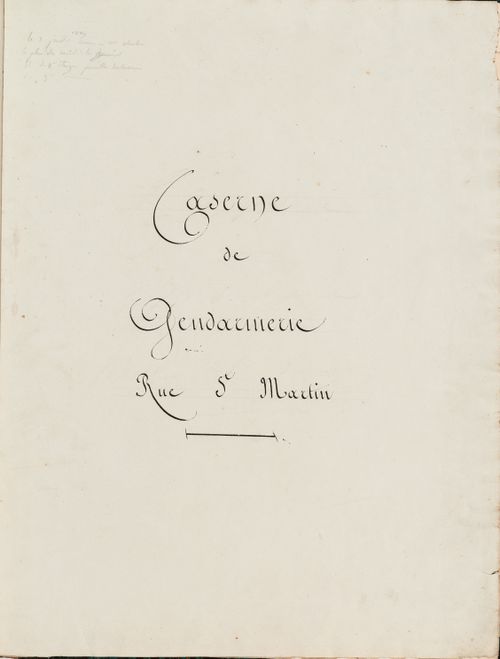
- This album contains mostly highly finished drawings - plans, elevations, and sections - for three gendarmerie barracks in Paris by Hubert Rohault de Fleury: rue du Faubourg-Saint-Martin (1829-1830 ?), rue des Minimes (1823-1825 ?), and rue Mouffetard (1821-1824). Rohault de Fleury's alterations to the Faubourg-Saint-Martin barracks were probably limited to the "2e" and "3e étages" and the sewer system (DR1974:0002:016:001 - DR1974:0002:016:006). It has not been determined whether these alterations were for the initial conversion of the Hôtel des arts into barracks, or for subsequent alterations to the barracks. The drawings for the Minimes barracks are more comprehensive and relate to work on the disposition of the interiors, the enclosing wall, and the entrance gateway (DR1974:0002:016:007 - DR1974:0002:016:022 and DR1974:0002:016:024 - DR1974:0002:016:027). The Mouffetard barracks is the largest and best known of the projects in the album (DR1974:0002:016:023, DR1974:0002:016:028 - DR1974:0002:016:070). It is comprehensively documented and includes: a bidding document for the barracks, plans of the existing Couvent des Augustines de Notre-Dame-de-la-Miséricorde situated on the site, early projects for the barracks of 1821, and the 1824 project which apparently conforms to the barracks as executed. The façades of the Caserne de la Gendarmerie royale, rue Mouffetard, are in the pared-down classical style typical of Hubert's utilitarian structures.
DR1974:0002:016:001-070
Description:
- This album contains mostly highly finished drawings - plans, elevations, and sections - for three gendarmerie barracks in Paris by Hubert Rohault de Fleury: rue du Faubourg-Saint-Martin (1829-1830 ?), rue des Minimes (1823-1825 ?), and rue Mouffetard (1821-1824). Rohault de Fleury's alterations to the Faubourg-Saint-Martin barracks were probably limited to the "2e" and "3e étages" and the sewer system (DR1974:0002:016:001 - DR1974:0002:016:006). It has not been determined whether these alterations were for the initial conversion of the Hôtel des arts into barracks, or for subsequent alterations to the barracks. The drawings for the Minimes barracks are more comprehensive and relate to work on the disposition of the interiors, the enclosing wall, and the entrance gateway (DR1974:0002:016:007 - DR1974:0002:016:022 and DR1974:0002:016:024 - DR1974:0002:016:027). The Mouffetard barracks is the largest and best known of the projects in the album (DR1974:0002:016:023, DR1974:0002:016:028 - DR1974:0002:016:070). It is comprehensively documented and includes: a bidding document for the barracks, plans of the existing Couvent des Augustines de Notre-Dame-de-la-Miséricorde situated on the site, early projects for the barracks of 1821, and the 1824 project which apparently conforms to the barracks as executed. The façades of the Caserne de la Gendarmerie royale, rue Mouffetard, are in the pared-down classical style typical of Hubert's utilitarian structures.
People:
Subject:
architecture
architecture
Date:
drawings executed 1817-1830, manuscript written 1817-1821
drawings executed 1817-1830, manuscript written 1817-1821
Title:
Album of drawings for three gendarmerie barracks: rue du Faubourg-Saint-Martin, rue des Minimes, and rue Mouffetard, Paris
Actions:
DR1974:0002:016:001-070
Description:
- This album contains mostly highly finished drawings - plans, elevations, and sections - for three gendarmerie barracks in Paris by Hubert Rohault de Fleury: rue du Faubourg-Saint-Martin (1829-1830 ?), rue des Minimes (1823-1825 ?), and rue Mouffetard (1821-1824). Rohault de Fleury's alterations to the Faubourg-Saint-Martin barracks were probably limited to the "2e" and "3e étages" and the sewer system (DR1974:0002:016:001 - DR1974:0002:016:006). It has not been determined whether these alterations were for the initial conversion of the Hôtel des arts into barracks, or for subsequent alterations to the barracks. The drawings for the Minimes barracks are more comprehensive and relate to work on the disposition of the interiors, the enclosing wall, and the entrance gateway (DR1974:0002:016:007 - DR1974:0002:016:022 and DR1974:0002:016:024 - DR1974:0002:016:027). The Mouffetard barracks is the largest and best known of the projects in the album (DR1974:0002:016:023, DR1974:0002:016:028 - DR1974:0002:016:070). It is comprehensively documented and includes: a bidding document for the barracks, plans of the existing Couvent des Augustines de Notre-Dame-de-la-Miséricorde situated on the site, early projects for the barracks of 1821, and the 1824 project which apparently conforms to the barracks as executed. The façades of the Caserne de la Gendarmerie royale, rue Mouffetard, are in the pared-down classical style typical of Hubert's utilitarian structures.
Album of drawings for three gendarmerie barracks: rue du Faubourg-Saint-Martin, rue des Minimes, and rue Mouffetard, Paris
Actions:
DR1974:0002:016:001-070
Description:
- This album contains mostly highly finished drawings - plans, elevations, and sections - for three gendarmerie barracks in Paris by Hubert Rohault de Fleury: rue du Faubourg-Saint-Martin (1829-1830 ?), rue des Minimes (1823-1825 ?), and rue Mouffetard (1821-1824). Rohault de Fleury's alterations to the Faubourg-Saint-Martin barracks were probably limited to the "2e" and "3e étages" and the sewer system (DR1974:0002:016:001 - DR1974:0002:016:006). It has not been determined whether these alterations were for the initial conversion of the Hôtel des arts into barracks, or for subsequent alterations to the barracks. The drawings for the Minimes barracks are more comprehensive and relate to work on the disposition of the interiors, the enclosing wall, and the entrance gateway (DR1974:0002:016:007 - DR1974:0002:016:022 and DR1974:0002:016:024 - DR1974:0002:016:027). The Mouffetard barracks is the largest and best known of the projects in the album (DR1974:0002:016:023, DR1974:0002:016:028 - DR1974:0002:016:070). It is comprehensively documented and includes: a bidding document for the barracks, plans of the existing Couvent des Augustines de Notre-Dame-de-la-Miséricorde situated on the site, early projects for the barracks of 1821, and the 1824 project which apparently conforms to the barracks as executed. The façades of the Caserne de la Gendarmerie royale, rue Mouffetard, are in the pared-down classical style typical of Hubert's utilitarian structures.
Form:
drawings
drawings
Date:
drawings executed 1817-1830, manuscript written 1817-1821
drawings executed 1817-1830, manuscript written 1817-1821
People:
Subject:
architecture
architecture
Level of archival description:
Project
Project
Reference number:
AP060.S3.D178
Description:
Le dossier documente la participation de Roger D'Astous au concours pour l'hôtel de ville de Winnipeg, Manitoba. Il contient des dessins et des documents photographiques produits en 1958.
AP060.S3.D178
Description:
Le dossier documente la participation de Roger D'Astous au concours pour l'hôtel de ville de Winnipeg, Manitoba. Il contient des dessins et des documents photographiques produits en 1958.
People:
Date:
1958
1958
Title:
Concours pour l'hôtel de ville de Winnipeg
Actions:
AP060.S3.D178
Description:
Le dossier documente la participation de Roger D'Astous au concours pour l'hôtel de ville de Winnipeg, Manitoba. Il contient des dessins et des documents photographiques produits en 1958.
Concours pour l'hôtel de ville de Winnipeg
Actions:
AP060.S3.D178
Description:
Le dossier documente la participation de Roger D'Astous au concours pour l'hôtel de ville de Winnipeg, Manitoba. Il contient des dessins et des documents photographiques produits en 1958.
Level of archival description:
Project
Project
Date:
1958
1958
People:
Form:
archives
Level of archival description:
Fonds
archives
Level of archival description:
Fonds
Title:
Milton Parc fonds
Milton Parc fonds
Actions:
Reference number:
AP025
Synopsis:
The Milton Parc fonds, 1969 – 1989, documents the Société du patrimoine urbaine de Montréal’s (SPUM) planning, design and renovation of Montreal’s historic Milton Parc neighbourhood. Recognized as one of the largest co-operative rehabilitation projects completed in Canada, the Milton Parc housing project (1979-1982) renovated over 135 historic buildings and 597 dwelling units within Milton Parc’s 6-block radius. The fonds consists of the following materials: approximately 600 drawings, 85 l.m. of textual records, 0.6 l.m. of slides, 0.6 l.m.of photographs, 8 posters, 3 seals, 2 models, 2 rubber stamps, and 2 audio cassettes.
AP025
Synopsis:
The Milton Parc fonds, 1969 – 1989, documents the Société du patrimoine urbaine de Montréal’s (SPUM) planning, design and renovation of Montreal’s historic Milton Parc neighbourhood. Recognized as one of the largest co-operative rehabilitation projects completed in Canada, the Milton Parc housing project (1979-1982) renovated over 135 historic buildings and 597 dwelling units within Milton Parc’s 6-block radius. The fonds consists of the following materials: approximately 600 drawings, 85 l.m. of textual records, 0.6 l.m. of slides, 0.6 l.m.of photographs, 8 posters, 3 seals, 2 models, 2 rubber stamps, and 2 audio cassettes.
People:
Date:
1962-1989
1962-1989
Title:
Milton Parc fonds
Actions:
AP025
Synopsis:
The Milton Parc fonds, 1969 – 1989, documents the Société du patrimoine urbaine de Montréal’s (SPUM) planning, design and renovation of Montreal’s historic Milton Parc neighbourhood. Recognized as one of the largest co-operative rehabilitation projects completed in Canada, the Milton Parc housing project (1979-1982) renovated over 135 historic buildings and 597 dwelling units within Milton Parc’s 6-block radius. The fonds consists of the following materials: approximately 600 drawings, 85 l.m. of textual records, 0.6 l.m. of slides, 0.6 l.m.of photographs, 8 posters, 3 seals, 2 models, 2 rubber stamps, and 2 audio cassettes.
Milton Parc fonds
Actions:
AP025
Synopsis:
The Milton Parc fonds, 1969 – 1989, documents the Société du patrimoine urbaine de Montréal’s (SPUM) planning, design and renovation of Montreal’s historic Milton Parc neighbourhood. Recognized as one of the largest co-operative rehabilitation projects completed in Canada, the Milton Parc housing project (1979-1982) renovated over 135 historic buildings and 597 dwelling units within Milton Parc’s 6-block radius. The fonds consists of the following materials: approximately 600 drawings, 85 l.m. of textual records, 0.6 l.m. of slides, 0.6 l.m.of photographs, 8 posters, 3 seals, 2 models, 2 rubber stamps, and 2 audio cassettes.
Form:
archives
Level of archival description:
Fonds
archives
Level of archival description:
Fonds
Date:
1962-1989
1962-1989
People:


