


29901 Results
Form:
photographs
photographs
Actions:
Reference number:
PH1980:1015:359
Description:
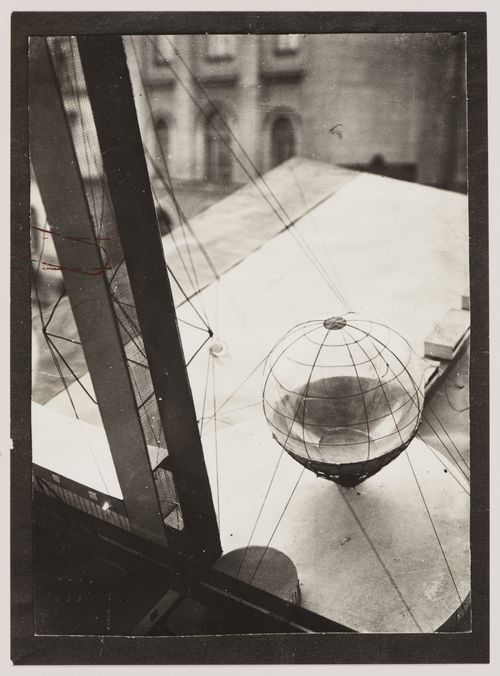
"His unexecuted diploma project in 1927 for the Lenin Institute and Library, Moscow, brought him international recognition. The scheme was prominently displayed at the Exhibition of Contemporary Architecture, Moscow, and was published in the OSA Group journal Sovremennaya arkhitektura." Ivan Leonidov [electronicsource] [cited 30 June 2009], available from: http://en.wikipedia.org/wiki/Ivan_leonidov; INTERNET.
PH1980:1015:359
Description:
"His unexecuted diploma project in 1927 for the Lenin Institute and Library, Moscow, brought him international recognition. The scheme was prominently displayed at the Exhibition of Contemporary Architecture, Moscow, and was published in the OSA Group journal Sovremennaya arkhitektura." Ivan Leonidov [electronicsource] [cited 30 June 2009], available from: http://en.wikipedia.org/wiki/Ivan_leonidov; INTERNET.
People:
Subject:
architecture
architecture
Date:
1927
1927
Title:
View of the diploma project model for the Lenin Institute and Library, Moscow, Russia (formerly U.S.S.R.)
Actions:
PH1980:1015:359
Description:
"His unexecuted diploma project in 1927 for the Lenin Institute and Library, Moscow, brought him international recognition. The scheme was prominently displayed at the Exhibition of Contemporary Architecture, Moscow, and was published in the OSA Group journal Sovremennaya arkhitektura." Ivan Leonidov [electronicsource] [cited 30 June 2009], available from: http://en.wikipedia.org/wiki/Ivan_leonidov; INTERNET.
View of the diploma project model for the Lenin Institute and Library, Moscow, Russia (formerly U.S.S.R.)
Actions:
PH1980:1015:359
Description:
"His unexecuted diploma project in 1927 for the Lenin Institute and Library, Moscow, brought him international recognition. The scheme was prominently displayed at the Exhibition of Contemporary Architecture, Moscow, and was published in the OSA Group journal Sovremennaya arkhitektura." Ivan Leonidov [electronicsource] [cited 30 June 2009], available from: http://en.wikipedia.org/wiki/Ivan_leonidov; INTERNET.
Form:
photographs
photographs
Date:
1927
1927
People:
Subject:
architecture
architecture
Form:
events
events
Actions:
Description:
Andreas Angelidakis describes his exhibition practice as a single continuous project that investigates the architecture of exhibiting. This talk will focus on the development of his practice across five exhibitions: the third Thessaloniki Biennial; The System of Objects at the DESTE Foundation in Athens; Every End Is a Beginning at the National Museum of Contemporary Art(...)
Andreas Angelidakis describes his exhibition practice as a single continuous project that investigates the architecture of exhibiting. This talk will focus on the development of his practice across five exhibitions: the third Thessaloniki Biennial; The System of Objects at the DESTE Foundation in Athens; Every End Is a Beginning at the National Museum of Contemporary Art(...)
Date:
15 October 2015 , 6pm
15 October 2015 , 6pm
Title:
Displaying Architecture: Andreas Angelidakis
Actions:
Description:
Andreas Angelidakis describes his exhibition practice as a single continuous project that investigates the architecture of exhibiting. This talk will focus on the development of his practice across five exhibitions: the third Thessaloniki Biennial; The System of Objects at the DESTE Foundation in Athens; Every End Is a Beginning at the National Museum of Contemporary Art(...)
Displaying Architecture: Andreas Angelidakis
Actions:
Description:
Andreas Angelidakis describes his exhibition practice as a single continuous project that investigates the architecture of exhibiting. This talk will focus on the development of his practice across five exhibitions: the third Thessaloniki Biennial; The System of Objects at the DESTE Foundation in Athens; Every End Is a Beginning at the National Museum of Contemporary Art(...)
Form:
events
events
Date:
15 October 2015
6pm
15 October 2015
6pm
Form:
drawings, textual records, photographs
drawings, textual records, photographs
Actions:
Reference number:
DR1995:0254:031-031
Description:
includes 2 folders and contains photographs, trade catalogues, promotional material, clippings, brochures, notes, sketches, conceptual drawings, correspondence, report, specification, price list, design report, press release, meeting notes, office memoranda, research notes, manual, design programmes, drawings, diagrams, and correspondence for an exhibition at Walker Art Center (1980)
DR1995:0254:031-031
Description:
includes 2 folders and contains photographs, trade catalogues, promotional material, clippings, brochures, notes, sketches, conceptual drawings, correspondence, report, specification, price list, design report, press release, meeting notes, office memoranda, research notes, manual, design programmes, drawings, diagrams, and correspondence for an exhibition at Walker Art Center (1980)
People:
Title:
Photographs, trade catalogues, promotional material, clippings, brochures, notes, sketches
Actions:
DR1995:0254:031-031
Description:
includes 2 folders and contains photographs, trade catalogues, promotional material, clippings, brochures, notes, sketches, conceptual drawings, correspondence, report, specification, price list, design report, press release, meeting notes, office memoranda, research notes, manual, design programmes, drawings, diagrams, and correspondence for an exhibition at Walker Art Center (1980)
Photographs, trade catalogues, promotional material, clippings, brochures, notes, sketches
Actions:
DR1995:0254:031-031
Description:
includes 2 folders and contains photographs, trade catalogues, promotional material, clippings, brochures, notes, sketches, conceptual drawings, correspondence, report, specification, price list, design report, press release, meeting notes, office memoranda, research notes, manual, design programmes, drawings, diagrams, and correspondence for an exhibition at Walker Art Center (1980)
Form:
drawings, textual records, photographs
drawings, textual records, photographs
People:
Form:
drawings, textual records, photographs
drawings, textual records, photographs
Actions:
Reference number:
AP142.S2.D3.P1
Description:
sketches, drawings, correspondence, specifications, estimates, administrative records, financial records, schedules, programmes, labels for drawings, exhibition catalogues, bochures, clippings, business cards, memorandums, notes, photocopies of views of works of art, and photographs, including views of the fair; includes material relating to the Salon International des Musées et des Expositions, 1990
AP142.S2.D3.P1
Description:
sketches, drawings, correspondence, specifications, estimates, administrative records, financial records, schedules, programmes, labels for drawings, exhibition catalogues, bochures, clippings, business cards, memorandums, notes, photocopies of views of works of art, and photographs, including views of the fair; includes material relating to the Salon International des Musées et des Expositions, 1990
People:
Title:
Sketches, drawings, correspondence, specifications
Actions:
AP142.S2.D3.P1
Description:
sketches, drawings, correspondence, specifications, estimates, administrative records, financial records, schedules, programmes, labels for drawings, exhibition catalogues, bochures, clippings, business cards, memorandums, notes, photocopies of views of works of art, and photographs, including views of the fair; includes material relating to the Salon International des Musées et des Expositions, 1990
Sketches, drawings, correspondence, specifications
Actions:
AP142.S2.D3.P1
Description:
sketches, drawings, correspondence, specifications, estimates, administrative records, financial records, schedules, programmes, labels for drawings, exhibition catalogues, bochures, clippings, business cards, memorandums, notes, photocopies of views of works of art, and photographs, including views of the fair; includes material relating to the Salon International des Musées et des Expositions, 1990
Form:
drawings, textual records, photographs
drawings, textual records, photographs
People:
Form:
photographs
photographs
Actions:
Reference number:
ARCH255750
ARCH255750
People:
Date:
1967?
1967?
Form:
photographs
photographs
Date:
1967?
1967?
People:
Form:
textual records
textual records
Actions:
Reference number:
DR2012:0015:021:025
Description:
File containing documents in English (predominant) and French, including correspondence. References are made to the National Gallery of Canada's sponsorship of an exhibition of Melvin Charney's work at the State Pushkin Museum of Fine Arts in Moscow, along with notes, and press clippings. Original folder inscribed in graphite: NATIONAL GALLERY OF CANADA / 2000+
DR2012:0015:021:025
Description:
File containing documents in English (predominant) and French, including correspondence. References are made to the National Gallery of Canada's sponsorship of an exhibition of Melvin Charney's work at the State Pushkin Museum of Fine Arts in Moscow, along with notes, and press clippings. Original folder inscribed in graphite: NATIONAL GALLERY OF CANADA / 2000+
People:
Date:
1985, 1998-2005, 2009
1985, 1998-2005, 2009
Title:
Correspondence of Melvin Charney's sponsorship for project
Actions:
DR2012:0015:021:025
Description:
File containing documents in English (predominant) and French, including correspondence. References are made to the National Gallery of Canada's sponsorship of an exhibition of Melvin Charney's work at the State Pushkin Museum of Fine Arts in Moscow, along with notes, and press clippings. Original folder inscribed in graphite: NATIONAL GALLERY OF CANADA / 2000+
Correspondence of Melvin Charney's sponsorship for project
Actions:
DR2012:0015:021:025
Description:
File containing documents in English (predominant) and French, including correspondence. References are made to the National Gallery of Canada's sponsorship of an exhibition of Melvin Charney's work at the State Pushkin Museum of Fine Arts in Moscow, along with notes, and press clippings. Original folder inscribed in graphite: NATIONAL GALLERY OF CANADA / 2000+
Form:
textual records
textual records
Date:
1985, 1998-2005, 2009
1985, 1998-2005, 2009
People:
Form:
archives
Level of archival description:
Fonds
archives
Level of archival description:
Fonds
Title:
Arthur Erickson fonds
Arthur Erickson fonds
Reference number:
AP022
Synopsis:
The Arthur Erickson fonds documents the work and activities of Canadian architect Arthur Erickson between 1947 and 2002 (predominant dates 1963-ca. 2000). It comprises architecture projects records with three hundred ninety-seven projects by Erickson / Massey, Arthur Erickson Architects and Arthur Erickson as a design consultant are documented with drawings, photographs, textual documents and other material. It also includes project administration records, records from Erickson's Toronto, Los Angeles and Vancouver offices, records related to Erickson's professional activities, material related to some of Erickson's student projects, and personal papers.
AP022
Synopsis:
The Arthur Erickson fonds documents the work and activities of Canadian architect Arthur Erickson between 1947 and 2002 (predominant dates 1963-ca. 2000). It comprises architecture projects records with three hundred ninety-seven projects by Erickson / Massey, Arthur Erickson Architects and Arthur Erickson as a design consultant are documented with drawings, photographs, textual documents and other material. It also includes project administration records, records from Erickson's Toronto, Los Angeles and Vancouver offices, records related to Erickson's professional activities, material related to some of Erickson's student projects, and personal papers.
People:
Date:
1947-2002 (predominant 1963-2000)
1947-2002 (predominant 1963-2000)
Title:
Arthur Erickson fonds
Actions:
AP022
Synopsis:
The Arthur Erickson fonds documents the work and activities of Canadian architect Arthur Erickson between 1947 and 2002 (predominant dates 1963-ca. 2000). It comprises architecture projects records with three hundred ninety-seven projects by Erickson / Massey, Arthur Erickson Architects and Arthur Erickson as a design consultant are documented with drawings, photographs, textual documents and other material. It also includes project administration records, records from Erickson's Toronto, Los Angeles and Vancouver offices, records related to Erickson's professional activities, material related to some of Erickson's student projects, and personal papers.
Arthur Erickson fonds
Actions:
AP022
Synopsis:
The Arthur Erickson fonds documents the work and activities of Canadian architect Arthur Erickson between 1947 and 2002 (predominant dates 1963-ca. 2000). It comprises architecture projects records with three hundred ninety-seven projects by Erickson / Massey, Arthur Erickson Architects and Arthur Erickson as a design consultant are documented with drawings, photographs, textual documents and other material. It also includes project administration records, records from Erickson's Toronto, Los Angeles and Vancouver offices, records related to Erickson's professional activities, material related to some of Erickson's student projects, and personal papers.
Form:
archives
Level of archival description:
Fonds
archives
Level of archival description:
Fonds
Date:
1947-2002 (predominant 1963-2000)
1947-2002 (predominant 1963-2000)
People:
Form:
events
events
Actions:
Date:
22 June 2023, 5pm to 9pm
22 June 2023, 5pm to 9pm
Form:
events
events
Date:
22 June 2023
5pm to 9pm
22 June 2023
5pm to 9pm
Level of archival description:
Project
Project
Reference number:
AP178.S1.1980.PR03
Description:
The project series documents the 1980 design entry for Block 11-12 (Kottbusser Damm). While the records were held in the office’s archives this project was assigned the number 3/80. The office assigned the date 1980 for this project. This project was submitted to the International Architectural Exhibition Berlin competition (International Bauaustellung, IBA, circa 1979-1987), an urban renewal strategy for West Berlin, Germany. Siza had previously submitted three other projects to this competition: the Görtlitzer Bad swimming pool, Block 70 and 89 (Fränkelufer residential complex), and Block 121 (Bonjour Tristesse), which was his first built international project. He would later submit design proposals for two other projects: Monument to Gestapo victims Prinz-Albrecht-Palais and the Kulturforum. The design proposal for Block 11-12 was for a residential building on Kottbusserstrasse in Kreuzberg. Documenting the design proposal are drawings, photographs, negatives, slides, and textual documentation. Among the drawings are sketches, studies, elevations, floor plans, and site plans. Photographs and negatives depict the project site and surrounding area; additionally there are slides of drawings and the model. Also included is a work contract from the IBA signed by Siza and IBA official Hardt-Waltherr Hämer, as well as several notes and calculations. Note that textual documentation in this project series includes materials on Block 70 and 89, see AP178.S1.1980.PR03.008. Sketches in this project series may also include sketches related to other Berlin projects, such as Block 70 and 89.
AP178.S1.1980.PR03
Description:
The project series documents the 1980 design entry for Block 11-12 (Kottbusser Damm). While the records were held in the office’s archives this project was assigned the number 3/80. The office assigned the date 1980 for this project. This project was submitted to the International Architectural Exhibition Berlin competition (International Bauaustellung, IBA, circa 1979-1987), an urban renewal strategy for West Berlin, Germany. Siza had previously submitted three other projects to this competition: the Görtlitzer Bad swimming pool, Block 70 and 89 (Fränkelufer residential complex), and Block 121 (Bonjour Tristesse), which was his first built international project. He would later submit design proposals for two other projects: Monument to Gestapo victims Prinz-Albrecht-Palais and the Kulturforum. The design proposal for Block 11-12 was for a residential building on Kottbusserstrasse in Kreuzberg. Documenting the design proposal are drawings, photographs, negatives, slides, and textual documentation. Among the drawings are sketches, studies, elevations, floor plans, and site plans. Photographs and negatives depict the project site and surrounding area; additionally there are slides of drawings and the model. Also included is a work contract from the IBA signed by Siza and IBA official Hardt-Waltherr Hämer, as well as several notes and calculations. Note that textual documentation in this project series includes materials on Block 70 and 89, see AP178.S1.1980.PR03.008. Sketches in this project series may also include sketches related to other Berlin projects, such as Block 70 and 89.
People:
Date:
circa 1979-1981
circa 1979-1981
Title:
Block 11 e 12, Kottbusser Damm [11-12 Kottbusser Damm], Berlin, Germany (1979-1981)
Actions:
AP178.S1.1980.PR03
Description:
The project series documents the 1980 design entry for Block 11-12 (Kottbusser Damm). While the records were held in the office’s archives this project was assigned the number 3/80. The office assigned the date 1980 for this project. This project was submitted to the International Architectural Exhibition Berlin competition (International Bauaustellung, IBA, circa 1979-1987), an urban renewal strategy for West Berlin, Germany. Siza had previously submitted three other projects to this competition: the Görtlitzer Bad swimming pool, Block 70 and 89 (Fränkelufer residential complex), and Block 121 (Bonjour Tristesse), which was his first built international project. He would later submit design proposals for two other projects: Monument to Gestapo victims Prinz-Albrecht-Palais and the Kulturforum. The design proposal for Block 11-12 was for a residential building on Kottbusserstrasse in Kreuzberg. Documenting the design proposal are drawings, photographs, negatives, slides, and textual documentation. Among the drawings are sketches, studies, elevations, floor plans, and site plans. Photographs and negatives depict the project site and surrounding area; additionally there are slides of drawings and the model. Also included is a work contract from the IBA signed by Siza and IBA official Hardt-Waltherr Hämer, as well as several notes and calculations. Note that textual documentation in this project series includes materials on Block 70 and 89, see AP178.S1.1980.PR03.008. Sketches in this project series may also include sketches related to other Berlin projects, such as Block 70 and 89.
Block 11 e 12, Kottbusser Damm [11-12 Kottbusser Damm], Berlin, Germany (1979-1981)
Actions:
AP178.S1.1980.PR03
Description:
The project series documents the 1980 design entry for Block 11-12 (Kottbusser Damm). While the records were held in the office’s archives this project was assigned the number 3/80. The office assigned the date 1980 for this project. This project was submitted to the International Architectural Exhibition Berlin competition (International Bauaustellung, IBA, circa 1979-1987), an urban renewal strategy for West Berlin, Germany. Siza had previously submitted three other projects to this competition: the Görtlitzer Bad swimming pool, Block 70 and 89 (Fränkelufer residential complex), and Block 121 (Bonjour Tristesse), which was his first built international project. He would later submit design proposals for two other projects: Monument to Gestapo victims Prinz-Albrecht-Palais and the Kulturforum. The design proposal for Block 11-12 was for a residential building on Kottbusserstrasse in Kreuzberg. Documenting the design proposal are drawings, photographs, negatives, slides, and textual documentation. Among the drawings are sketches, studies, elevations, floor plans, and site plans. Photographs and negatives depict the project site and surrounding area; additionally there are slides of drawings and the model. Also included is a work contract from the IBA signed by Siza and IBA official Hardt-Waltherr Hämer, as well as several notes and calculations. Note that textual documentation in this project series includes materials on Block 70 and 89, see AP178.S1.1980.PR03.008. Sketches in this project series may also include sketches related to other Berlin projects, such as Block 70 and 89.
Level of archival description:
Project
Project
Date:
circa 1979-1981
circa 1979-1981
People:
Actions:
Reference number:
ARCH268925
Description:
A Golden Lion award received by the Foreign Office Architects during the 9th International Architecture Exhibition (exhibited 12 September - 7 November) at the 2004 Venice Biennale of Architecture. The award was in the category of Topography, for the Foreign Office Architects' design for the Novartis Underground Car Park & Gate project, Basel, Switzerland, 2003.
ARCH268925
Description:
A Golden Lion award received by the Foreign Office Architects during the 9th International Architecture Exhibition (exhibited 12 September - 7 November) at the 2004 Venice Biennale of Architecture. The award was in the category of Topography, for the Foreign Office Architects' design for the Novartis Underground Car Park & Gate project, Basel, Switzerland, 2003.
People:
Date:
2004
2004
Title:
A Golden Lion award received by Foreign Office Architects at the 2004 Venice Biennale of Architecture
Actions:
ARCH268925
Description:
A Golden Lion award received by the Foreign Office Architects during the 9th International Architecture Exhibition (exhibited 12 September - 7 November) at the 2004 Venice Biennale of Architecture. The award was in the category of Topography, for the Foreign Office Architects' design for the Novartis Underground Car Park & Gate project, Basel, Switzerland, 2003.
A Golden Lion award received by Foreign Office Architects at the 2004 Venice Biennale of Architecture
Actions:
ARCH268925
Description:
A Golden Lion award received by the Foreign Office Architects during the 9th International Architecture Exhibition (exhibited 12 September - 7 November) at the 2004 Venice Biennale of Architecture. The award was in the category of Topography, for the Foreign Office Architects' design for the Novartis Underground Car Park & Gate project, Basel, Switzerland, 2003.
Date:
2004
2004
People:


