


2392 Results
Form:
books
books
Actions:
Price:
$37.95
(available to order)
Summary:
This is not a book about sound. It is a study of sounds that aims to write the resonance and response they call for. John Mowitt seeks to critique existing models in the expanding field of sound studies and draw attention to sound as an object of study that solicits a humanistic approach encompassing many types of sounds, not just readily classified examples such as(...)
$37.95
(available to order)
Summary:
This is not a book about sound. It is a study of sounds that aims to write the resonance and response they call for. John Mowitt seeks to critique existing models in the expanding field of sound studies and draw attention to sound as an object of study that solicits a humanistic approach encompassing many types of sounds, not just readily classified examples such as(...)
Title:
Sounds: the ambient humanities
Actions:
Price:
$37.95
(available to order)
Summary:
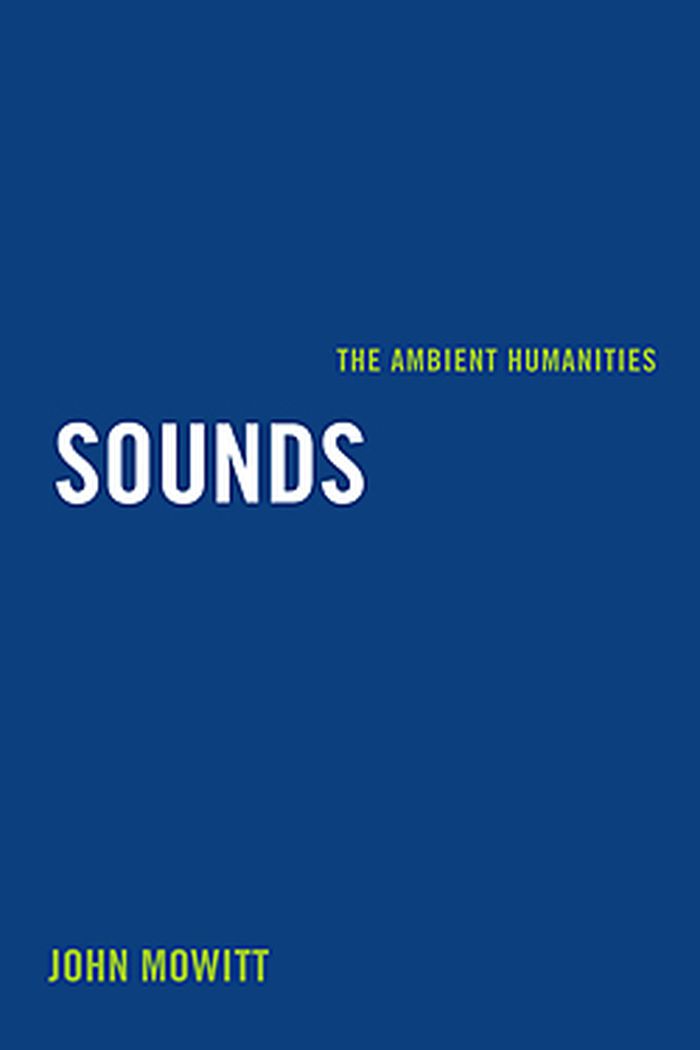
This is not a book about sound. It is a study of sounds that aims to write the resonance and response they call for. John Mowitt seeks to critique existing models in the expanding field of sound studies and draw attention to sound as an object of study that solicits a humanistic approach encompassing many types of sounds, not just readily classified examples such as speech, music, industrial sounds, or codified signals. Mowitt is particularly interested in the fact that beyond hearing and listening we “audit” sounds and do so by drawing on paradigms of thought not easily accommodated within the concept of "sound studies." To draw attention to the ways in which sounds often are not perceived for the social and political functions they serve, each chapter presents a culturally resonant sound—including a whistle, an echo, a gasp, and silence—to show how sounds enable critical social and political concepts such as dialogue, privacy, memory, social order, and art-making. Sounds: The Ambient Humanities significantly engages, provokes, and contributes to the dynamic field and inquiry of sound studies.
Sounds: the ambient humanities
Actions:
Price:
$37.95
(available to order)
Summary:
This is not a book about sound. It is a study of sounds that aims to write the resonance and response they call for. John Mowitt seeks to critique existing models in the expanding field of sound studies and draw attention to sound as an object of study that solicits a humanistic approach encompassing many types of sounds, not just readily classified examples such as speech, music, industrial sounds, or codified signals. Mowitt is particularly interested in the fact that beyond hearing and listening we “audit” sounds and do so by drawing on paradigms of thought not easily accommodated within the concept of "sound studies." To draw attention to the ways in which sounds often are not perceived for the social and political functions they serve, each chapter presents a culturally resonant sound—including a whistle, an echo, a gasp, and silence—to show how sounds enable critical social and political concepts such as dialogue, privacy, memory, social order, and art-making. Sounds: The Ambient Humanities significantly engages, provokes, and contributes to the dynamic field and inquiry of sound studies.
Form:
books
books
Publication:
July 2015
July 2015
Subject:
Acoustics
Acoustics
Form:
books
books
Actions:
Price:
$58.95
(available to order)
Summary:
In northwest Russia, in a small village called Alekhovshchina, Nadia Sablin's aunts spend the warmer months together in the family home and live as the family has always lived chopping wood to heat the house, bringing water from the well, planting potatoes, and making their own clothes. Sablin's lyrical and evocative photographs, taken over seven summers, capture the(...)
$58.95
(available to order)
Summary:
In northwest Russia, in a small village called Alekhovshchina, Nadia Sablin's aunts spend the warmer months together in the family home and live as the family has always lived chopping wood to heat the house, bringing water from the well, planting potatoes, and making their own clothes. Sablin's lyrical and evocative photographs, taken over seven summers, capture the(...)
Publication:
November 2015
November 2015
Title:
Aunties: the seven summers of Alevtina and Ludmila
Actions:
Price:
$58.95
(available to order)
Summary:
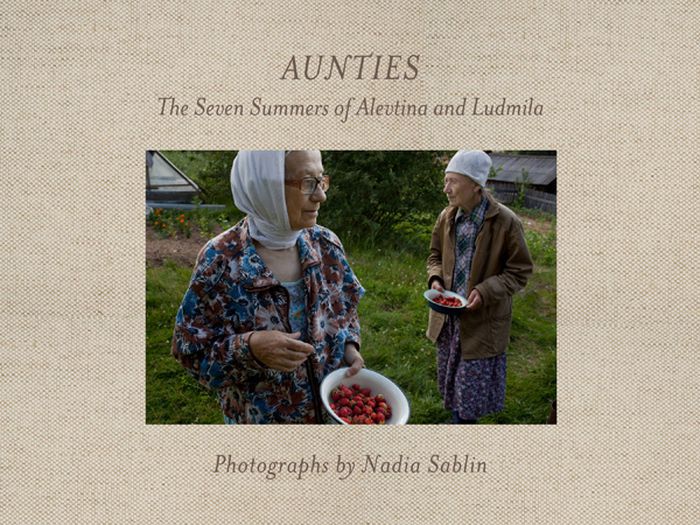
In northwest Russia, in a small village called Alekhovshchina, Nadia Sablin's aunts spend the warmer months together in the family home and live as the family has always lived chopping wood to heat the house, bringing water from the well, planting potatoes, and making their own clothes. Sablin's lyrical and evocative photographs, taken over seven summers, capture the small details and daily rituals of her aunts surprisingly colorful and dreamlike days, taking us not only to another country but to another time. Alevtina and Ludmila, now in their seventies, seem both old and young, as if time itself was as seamless and cyclical as their routines working on puzzles, sewing curtains, tatting lace, picking berries, repairing fences and as full of the same subtle mysteries. Sablin collaborated with her aunts to recreate scenes she remembered from her childhood and to make new images of the patterns of their days. In these photographs, Sablin combines observation and invention, biography and autobiography, to tell the stories of her aunts life together, and in the process, quilts together a thoughtful meditation on memory, aging, and belonging.
Aunties: the seven summers of Alevtina and Ludmila
Actions:
Price:
$58.95
(available to order)
Summary:
In northwest Russia, in a small village called Alekhovshchina, Nadia Sablin's aunts spend the warmer months together in the family home and live as the family has always lived chopping wood to heat the house, bringing water from the well, planting potatoes, and making their own clothes. Sablin's lyrical and evocative photographs, taken over seven summers, capture the small details and daily rituals of her aunts surprisingly colorful and dreamlike days, taking us not only to another country but to another time. Alevtina and Ludmila, now in their seventies, seem both old and young, as if time itself was as seamless and cyclical as their routines working on puzzles, sewing curtains, tatting lace, picking berries, repairing fences and as full of the same subtle mysteries. Sablin collaborated with her aunts to recreate scenes she remembered from her childhood and to make new images of the patterns of their days. In these photographs, Sablin combines observation and invention, biography and autobiography, to tell the stories of her aunts life together, and in the process, quilts together a thoughtful meditation on memory, aging, and belonging.
Form:
books
books
Publication:
November 2015
November 2015
Form:
books
books
Actions:
Price:
$69.00
(available to order)
Summary:
Gabriel Orozco visited the old guest apartments of Prince and Princess de Broglie (the last private owners of Château de Chaumont-sur-Loire) for but a few moments when his gaze was drawn straight to the torn wallpaper remains—so discreet that they were no longer noticed. These faded impressions, modest vestiges, extremely fragile traces of a past now behind us,(...)
$69.00
(available to order)
Summary:
Gabriel Orozco visited the old guest apartments of Prince and Princess de Broglie (the last private owners of Château de Chaumont-sur-Loire) for but a few moments when his gaze was drawn straight to the torn wallpaper remains—so discreet that they were no longer noticed. These faded impressions, modest vestiges, extremely fragile traces of a past now behind us,(...)
Subject:
Contemporary Art Monographs
Contemporary Art Monographs
Publication:
October 2016
October 2016
Title:
Gabriel Orozco: fleurs fantômes
Actions:
Price:
$69.00
(available to order)
Summary:
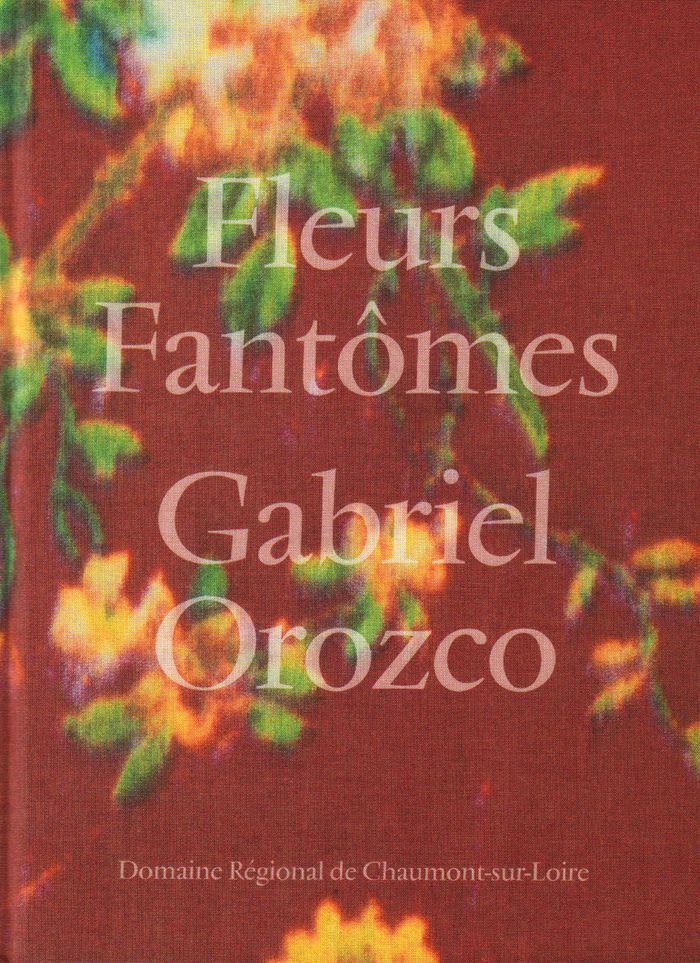
Gabriel Orozco visited the old guest apartments of Prince and Princess de Broglie (the last private owners of Château de Chaumont-sur-Loire) for but a few moments when his gaze was drawn straight to the torn wallpaper remains—so discreet that they were no longer noticed. These faded impressions, modest vestiges, extremely fragile traces of a past now behind us, immediately captured the imagination of this exceptional artist, who had been invited to “take over the château” as part of a special commission for the Centre-Loire Valley region. In his fascination with the remnants of the old tapestries that once graced the walls of these rooms—closed off and forgotten about since 1938—Orozco devoted hours to studying the palimpsest of the floral tapestries, still hanging on these old walls: photographing them over a considerable amount of time whilst listening to the echoes of ages past. For in these very rooms, now consigned to history, kings and queens from all over Europe once spent time and slept—sometimes for just a few hours—at the turn of last century, invited as guests to sumptuous parties and celebrated hunts. The artist, whose work is inspired by the quest for traces, remnants, marks left by men, has chosen an approach that looks back at the history and memory of the château at Chaumont-sur-Loire. In these fragments of old, timeworn, threadbare tapestries, Gabriel Orozco detected traces of these lives now long gone by: a matrix of a subtle meditation on space and time. The works on display in the “guest bedrooms” of the château evoke the details and the damage of the ancient wallpaper, whose elegant floral motifs have been recreated using a unique, time-consuming process of spraying oil onto canvas. The faltering impression mirrors the feeling of unease that grips visitors as they encounter these works and these blemished walls that are now in plain sight. In this way Orozco reveals not just the designs and colors that had until now faded into the background, but also the emotion suspended in the rooms. Through this poetic promenade, along the walls and complex walkways of the west and south wings of two floors of the château, Orozco invites us to partake in a dialogue with the mystery and the memory of a unique environment that is rendered omnipresent.
Gabriel Orozco: fleurs fantômes
Actions:
Price:
$69.00
(available to order)
Summary:
Gabriel Orozco visited the old guest apartments of Prince and Princess de Broglie (the last private owners of Château de Chaumont-sur-Loire) for but a few moments when his gaze was drawn straight to the torn wallpaper remains—so discreet that they were no longer noticed. These faded impressions, modest vestiges, extremely fragile traces of a past now behind us, immediately captured the imagination of this exceptional artist, who had been invited to “take over the château” as part of a special commission for the Centre-Loire Valley region. In his fascination with the remnants of the old tapestries that once graced the walls of these rooms—closed off and forgotten about since 1938—Orozco devoted hours to studying the palimpsest of the floral tapestries, still hanging on these old walls: photographing them over a considerable amount of time whilst listening to the echoes of ages past. For in these very rooms, now consigned to history, kings and queens from all over Europe once spent time and slept—sometimes for just a few hours—at the turn of last century, invited as guests to sumptuous parties and celebrated hunts. The artist, whose work is inspired by the quest for traces, remnants, marks left by men, has chosen an approach that looks back at the history and memory of the château at Chaumont-sur-Loire. In these fragments of old, timeworn, threadbare tapestries, Gabriel Orozco detected traces of these lives now long gone by: a matrix of a subtle meditation on space and time. The works on display in the “guest bedrooms” of the château evoke the details and the damage of the ancient wallpaper, whose elegant floral motifs have been recreated using a unique, time-consuming process of spraying oil onto canvas. The faltering impression mirrors the feeling of unease that grips visitors as they encounter these works and these blemished walls that are now in plain sight. In this way Orozco reveals not just the designs and colors that had until now faded into the background, but also the emotion suspended in the rooms. Through this poetic promenade, along the walls and complex walkways of the west and south wings of two floors of the château, Orozco invites us to partake in a dialogue with the mystery and the memory of a unique environment that is rendered omnipresent.
Form:
books
books
Publication:
October 2016
October 2016
Subject:
Contemporary Art Monographs
Contemporary Art Monographs
Form:
books
books
Actions:
Holdings:
Description:
187 pages : illustrations (some color) ; 22 cm.
Description:
187 pages : illustrations (some color) ; 22 cm.
Author:
Subject:
Publication:
London : Reaktion Books, 2013., ©2013
London : Reaktion Books, 2013., ©2013
Title:
Photography and travel / Graham Smith.
Actions:
Holdings:
Description:
187 pages : illustrations (some color) ; 22 cm.
Photography and travel / Graham Smith.
Actions:
Holdings:
Description:
187 pages : illustrations (some color) ; 22 cm.
Form:
books
books
Publication:
London : Reaktion Books, 2013., ©2013
London : Reaktion Books, 2013., ©2013
Author:
Subject:
Form:
books
books
Actions:
Price:
$52.00
(available to order)
Summary:
This book deals with objects of migration on the central Mediterranean route. Traces of this phenomenon include objects left more or less voluntarily by migrant people along their journey, particularly upon arrival on the shores of Lampedusa and Sicily. Since 2013, hundreds of these objects have been retrieved by Massimo Ricciardo with his colleague Thomas Kilpper, and(...)
$52.00
(available to order)
Summary:
This book deals with objects of migration on the central Mediterranean route. Traces of this phenomenon include objects left more or less voluntarily by migrant people along their journey, particularly upon arrival on the shores of Lampedusa and Sicily. Since 2013, hundreds of these objects have been retrieved by Massimo Ricciardo with his colleague Thomas Kilpper, and(...)
Title:
Encounters in an archive: Objects of migration / photo-objects of art history
Actions:
Price:
$52.00
(available to order)
Summary:
This book deals with objects of migration on the central Mediterranean route. Traces of this phenomenon include objects left more or less voluntarily by migrant people along their journey, particularly upon arrival on the shores of Lampedusa and Sicily. Since 2013, hundreds of these objects have been retrieved by Massimo Ricciardo with his colleague Thomas Kilpper, and are now part of the “Objects of Escape – Inventories of Migration’’ archive. These objects are functional to the journey, such as biscuit tins and water bottles, passports and nautical charts, but they also relate to identity and memory, such as family photographs, diaries, or a handful of earth from their homeland. In the installation “Objects of Migration, Photo-Objects of Art History: Encounters in an Archive,” Ricciardo creates a dialogue between selected objects from this archive and structures from the KHI Photothek on the other. The installation, which led to this book, raises a series of highly relevant questions about these ‘talking’ objects: who do they belong to? Are they part of the cultural heritage? What would be the appropriate artistic and curatorial approach if one decided to collect, archive, exhibit, transform them?
Encounters in an archive: Objects of migration / photo-objects of art history
Actions:
Price:
$52.00
(available to order)
Summary:
This book deals with objects of migration on the central Mediterranean route. Traces of this phenomenon include objects left more or less voluntarily by migrant people along their journey, particularly upon arrival on the shores of Lampedusa and Sicily. Since 2013, hundreds of these objects have been retrieved by Massimo Ricciardo with his colleague Thomas Kilpper, and are now part of the “Objects of Escape – Inventories of Migration’’ archive. These objects are functional to the journey, such as biscuit tins and water bottles, passports and nautical charts, but they also relate to identity and memory, such as family photographs, diaries, or a handful of earth from their homeland. In the installation “Objects of Migration, Photo-Objects of Art History: Encounters in an Archive,” Ricciardo creates a dialogue between selected objects from this archive and structures from the KHI Photothek on the other. The installation, which led to this book, raises a series of highly relevant questions about these ‘talking’ objects: who do they belong to? Are they part of the cultural heritage? What would be the appropriate artistic and curatorial approach if one decided to collect, archive, exhibit, transform them?
Form:
books
books
Publication:
April 2023
April 2023
Subject:
Theory of Photography
Theory of Photography
Form:
books
books
Actions:
Price:
$12.95
(available to order)
Summary:
Sean was born in 1948 in Hull. His lifelong passion for photography began during his time at Ealing Art College in the 1970s, where he studied the craft and honed his creative vision. He spent most of his life in Bristol, working as a skilled builder specialising in the restoration of houses. However, his love for capturing the world through his lens never wavered. Sean's(...)
$12.95
(available to order)
Summary:
Sean was born in 1948 in Hull. His lifelong passion for photography began during his time at Ealing Art College in the 1970s, where he studied the craft and honed his creative vision. He spent most of his life in Bristol, working as a skilled builder specialising in the restoration of houses. However, his love for capturing the world through his lens never wavered. Sean's(...)
Title:
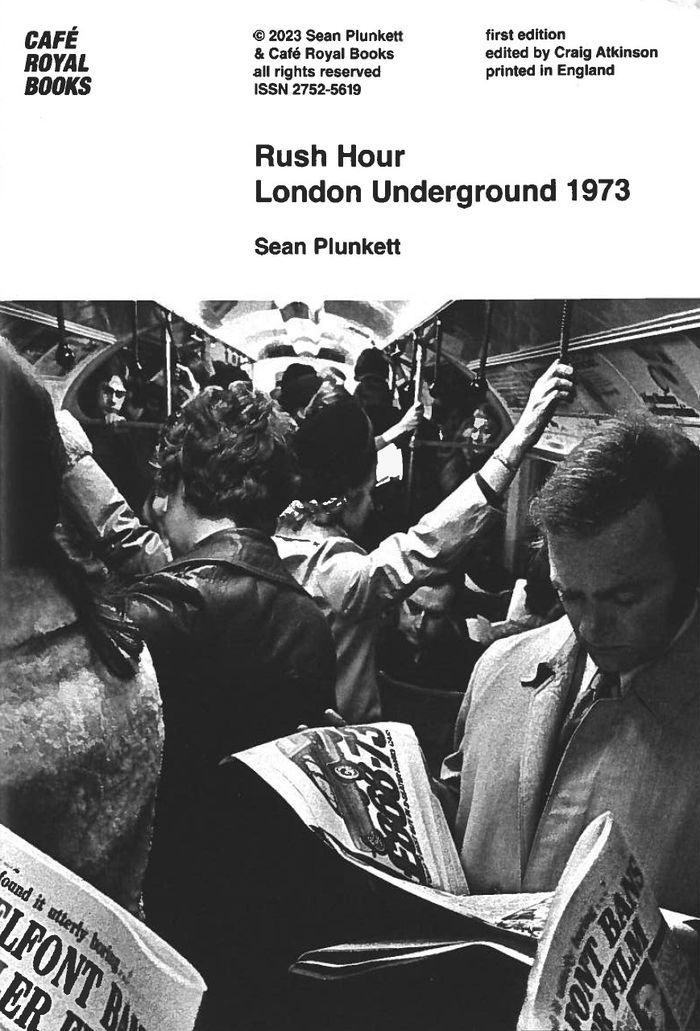
Sean Plunkett: Rush Hour London Underground 1973
Actions:
Price:
$12.95
(available to order)
Summary:
Sean was born in 1948 in Hull. His lifelong passion for photography began during his time at Ealing Art College in the 1970s, where he studied the craft and honed his creative vision. He spent most of his life in Bristol, working as a skilled builder specialising in the restoration of houses. However, his love for capturing the world through his lens never wavered. Sean's dedication to his craft was evident as he documented moments, scenes, and emotions throughout his entire life. Despite living, working, and raising a family in Bristol, Sean held a deep affection for his hometown of Hull. He took great pride in his roots, and his images often reflected the essence and character of Hull and its people. A true testament to his loyalty, Sean remained an avid supporter of Hull City, unwavering in his commitment to his beloved team.? In recent years Sean started rediscovering and scanning his negatives from the 70s. This caught the eye of the publisher Cafe Royal Books and his images are now available for the world to see. Sean sadly died at the beginning of 2023 - his memory lives on through his images.
Sean Plunkett: Rush Hour London Underground 1973
Actions:
Price:
$12.95
(available to order)
Summary:
Sean was born in 1948 in Hull. His lifelong passion for photography began during his time at Ealing Art College in the 1970s, where he studied the craft and honed his creative vision. He spent most of his life in Bristol, working as a skilled builder specialising in the restoration of houses. However, his love for capturing the world through his lens never wavered. Sean's dedication to his craft was evident as he documented moments, scenes, and emotions throughout his entire life. Despite living, working, and raising a family in Bristol, Sean held a deep affection for his hometown of Hull. He took great pride in his roots, and his images often reflected the essence and character of Hull and its people. A true testament to his loyalty, Sean remained an avid supporter of Hull City, unwavering in his commitment to his beloved team.? In recent years Sean started rediscovering and scanning his negatives from the 70s. This caught the eye of the publisher Cafe Royal Books and his images are now available for the world to see. Sean sadly died at the beginning of 2023 - his memory lives on through his images.
Form:
books
books
Publication:
August 2023
August 2023
Subject:
Photography monographs
Photography monographs
Form:
books
books
Title:
Antony Gormley Blind light
Antony Gormley Blind light
Actions:
Price:
$80.00
(available to order)
Summary:
Over the past 25 years, Antony Gormley, perhaps Britain's best-known living sculptor, has revitalized the human image in sculpture. He won the 1994 Turner Prize and has had solo exhibitions at the Whitechapel, Tate, and Hayward galleries, White Cube and The British Museum, and internationally at the Corcoran Gallery, Documenta and the Venice Biennale. His radical(...)
$80.00
(available to order)
Summary:
Over the past 25 years, Antony Gormley, perhaps Britain's best-known living sculptor, has revitalized the human image in sculpture. He won the 1994 Turner Prize and has had solo exhibitions at the Whitechapel, Tate, and Hayward galleries, White Cube and The British Museum, and internationally at the Corcoran Gallery, Documenta and the Venice Biennale. His radical(...)
Subject:
Contemporary Art Monographs
Contemporary Art Monographs
Publication:
June 2007, London
June 2007, London
Title:
Antony Gormley Blind light
Actions:
Price:
$80.00
(available to order)
Summary:
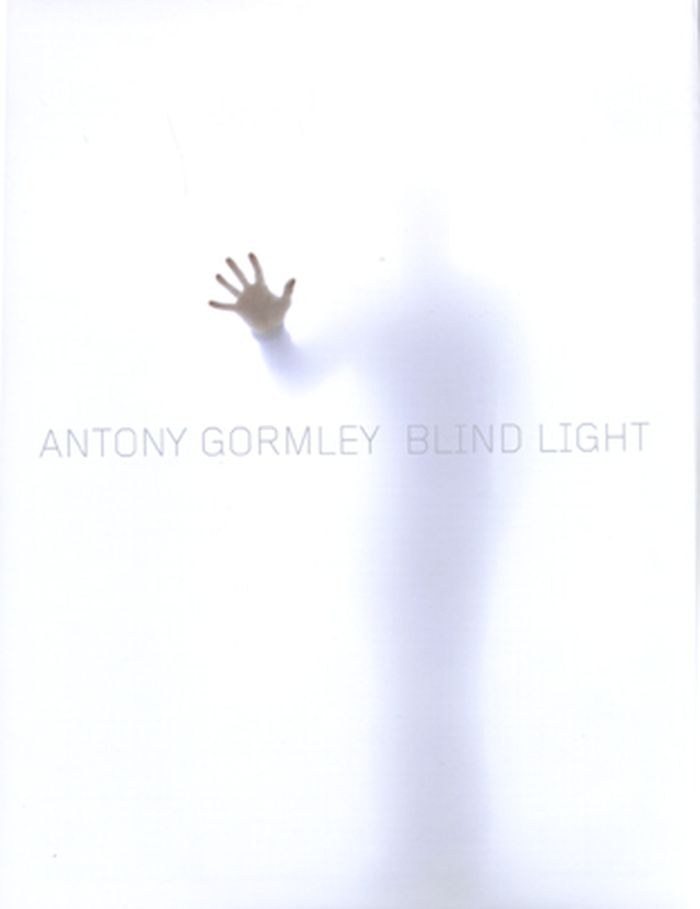
Over the past 25 years, Antony Gormley, perhaps Britain's best-known living sculptor, has revitalized the human image in sculpture. He won the 1994 Turner Prize and has had solo exhibitions at the Whitechapel, Tate, and Hayward galleries, White Cube and The British Museum, and internationally at the Corcoran Gallery, Documenta and the Venice Biennale. His radical investigations of the body as a place of memory and transformation use his own corpus as subject, tool and material. Conflating figure and ground, inside and outside, the physical and the psychological, Gormley explores complex relationships between the city, its architecture and its people. This richly illustrated catalogue is filled with new, never-before-seen sculptural works--a series of figures in light-infused webs of steel, and the monumental steel-block "Space Station," 20 feet high. Photographer Gautier Deblonde also chronicles a major new public project, "Event Horizon," which sites some 30 sculptures on buildings across central London, dramatically altering the city skyline. An in-depth interview with Gormley explores the development of his new work, as well as his relationship to the artists who have inspired him and to his contemporaries in the field of figurative sculpture.
Antony Gormley Blind light
Actions:
Price:
$80.00
(available to order)
Summary:
Over the past 25 years, Antony Gormley, perhaps Britain's best-known living sculptor, has revitalized the human image in sculpture. He won the 1994 Turner Prize and has had solo exhibitions at the Whitechapel, Tate, and Hayward galleries, White Cube and The British Museum, and internationally at the Corcoran Gallery, Documenta and the Venice Biennale. His radical investigations of the body as a place of memory and transformation use his own corpus as subject, tool and material. Conflating figure and ground, inside and outside, the physical and the psychological, Gormley explores complex relationships between the city, its architecture and its people. This richly illustrated catalogue is filled with new, never-before-seen sculptural works--a series of figures in light-infused webs of steel, and the monumental steel-block "Space Station," 20 feet high. Photographer Gautier Deblonde also chronicles a major new public project, "Event Horizon," which sites some 30 sculptures on buildings across central London, dramatically altering the city skyline. An in-depth interview with Gormley explores the development of his new work, as well as his relationship to the artists who have inspired him and to his contemporaries in the field of figurative sculpture.
Form:
books
books
Publication:
June 2007, London
June 2007, London
Subject:
Contemporary Art Monographs
Contemporary Art Monographs
Form:
books
books
Actions:
Price:
$23.95
(available to order)
Summary:
Since its invention, photography has always been inextricably tied up with remembrance: photographs recall family, beloved friends, special moments, trips and other events, speaking across time and place to create an emotional bond between subject and viewer. "Forget me not" focuses on this relationship between photography and memory, and explores the curious and(...)
$23.95
(available to order)
Summary:
Since its invention, photography has always been inextricably tied up with remembrance: photographs recall family, beloved friends, special moments, trips and other events, speaking across time and place to create an emotional bond between subject and viewer. "Forget me not" focuses on this relationship between photography and memory, and explores the curious and(...)
Title:
Forget me not : photography and remembrance
Actions:
Price:
$23.95
(available to order)
Summary:
Since its invention, photography has always been inextricably tied up with remembrance: photographs recall family, beloved friends, special moments, trips and other events, speaking across time and place to create an emotional bond between subject and viewer. "Forget me not" focuses on this relationship between photography and memory, and explores the curious and centuries-old practice of strengthening the emotional appeal of photographs by embellishing them—with text, paint, frames, embroidery, fabric, string, hair, flowers, bullets, cigar wrappers, butterfly wings, and more — to create strange and often beautiful hybrid objects. This spellbinding book features color photographs of eighty such objects, extraordinary works of art — part memento, part Joseph Cornell — created by ordinary people from the mid-19th to mid-20th century. In addition, "Forget me not" offers an alternative way to look at the history of photography, a history that effectively excludes most of the photographs — candid views, family snapshots, and the like — taken since the invention of the camera. Photography historian Geoffrey Batchen adopts a different tone in this book — a personal and speculative voice that speaks to the objects rather than about them while offering a visual treasure chest of both mysterious and beautiful images.
Forget me not : photography and remembrance
Actions:
Price:
$23.95
(available to order)
Summary:
Since its invention, photography has always been inextricably tied up with remembrance: photographs recall family, beloved friends, special moments, trips and other events, speaking across time and place to create an emotional bond between subject and viewer. "Forget me not" focuses on this relationship between photography and memory, and explores the curious and centuries-old practice of strengthening the emotional appeal of photographs by embellishing them—with text, paint, frames, embroidery, fabric, string, hair, flowers, bullets, cigar wrappers, butterfly wings, and more — to create strange and often beautiful hybrid objects. This spellbinding book features color photographs of eighty such objects, extraordinary works of art — part memento, part Joseph Cornell — created by ordinary people from the mid-19th to mid-20th century. In addition, "Forget me not" offers an alternative way to look at the history of photography, a history that effectively excludes most of the photographs — candid views, family snapshots, and the like — taken since the invention of the camera. Photography historian Geoffrey Batchen adopts a different tone in this book — a personal and speculative voice that speaks to the objects rather than about them while offering a visual treasure chest of both mysterious and beautiful images.
Form:
books
books
Publication:
August 2006, New York
August 2006, New York
Subject:
Theory of Photography
Theory of Photography
Form:
books
books
Actions:
Price:
$41.95
(available to order)
Summary:
The Centre Georges Pompidou, also called Beaubourg, is today considered an icon of contemporary Paris, the quintessence of a modern building, and a model for what a museum can be. In 1971, Renzo Piano and Richard Rogers, together with the engineering firm Ove Arup & Partners, won an international architecture competition with their innovative and irreverent design.(...)
$41.95
(available to order)
Summary:
The Centre Georges Pompidou, also called Beaubourg, is today considered an icon of contemporary Paris, the quintessence of a modern building, and a model for what a museum can be. In 1971, Renzo Piano and Richard Rogers, together with the engineering firm Ove Arup & Partners, won an international architecture competition with their innovative and irreverent design.(...)
Title:
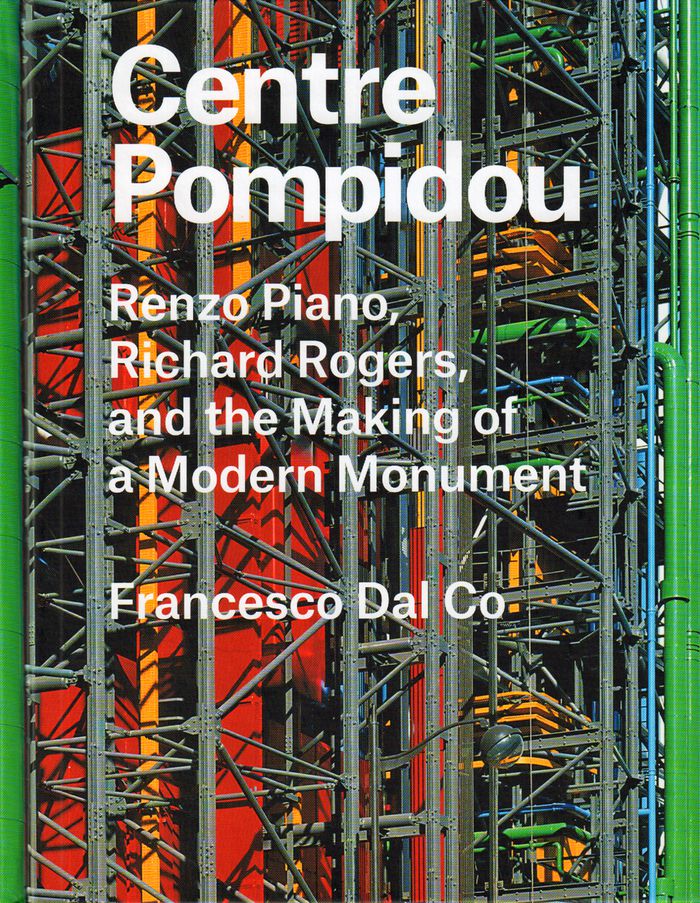
Centre Pompidou: Renzo Piano, Richard Rogers, and the making of a modern monument
Actions:
Price:
$41.95
(available to order)
Summary:
The Centre Georges Pompidou, also called Beaubourg, is today considered an icon of contemporary Paris, the quintessence of a modern building, and a model for what a museum can be. In 1971, Renzo Piano and Richard Rogers, together with the engineering firm Ove Arup & Partners, won an international architecture competition with their innovative and irreverent design. Completed in 1977, the building was at first received skeptically by critics, yet it was quickly embraced by the public as a beloved monument of the modern city of Paris. This lively intellectual biography of the building explores its history and the reasons for its success, from its genesis as a politically calculated response to Paris’s turbulent 1968 student protests to the role played by architects in its construction, as well as the historical influences and the engineering solutions that inform its design. A key reason for the Centre Pompidou’s success indeed lies in its ability to channel architectural memory, connecting it powerfully to Paris’s historic urban fabric. This essential text on one of the twentieth century’s most significant buildings is accompanied by a portfolio of rare drawings and photographs.
Centre Pompidou: Renzo Piano, Richard Rogers, and the making of a modern monument
Actions:
Price:
$41.95
(available to order)
Summary:
The Centre Georges Pompidou, also called Beaubourg, is today considered an icon of contemporary Paris, the quintessence of a modern building, and a model for what a museum can be. In 1971, Renzo Piano and Richard Rogers, together with the engineering firm Ove Arup & Partners, won an international architecture competition with their innovative and irreverent design. Completed in 1977, the building was at first received skeptically by critics, yet it was quickly embraced by the public as a beloved monument of the modern city of Paris. This lively intellectual biography of the building explores its history and the reasons for its success, from its genesis as a politically calculated response to Paris’s turbulent 1968 student protests to the role played by architects in its construction, as well as the historical influences and the engineering solutions that inform its design. A key reason for the Centre Pompidou’s success indeed lies in its ability to channel architectural memory, connecting it powerfully to Paris’s historic urban fabric. This essential text on one of the twentieth century’s most significant buildings is accompanied by a portfolio of rare drawings and photographs.
Form:
books
books
Publication:
November 2016
November 2016
Subject:
Contemporary Architecture
Contemporary Architecture
Form:
books
books
Actions:
Holdings:
Description:
209 pages ; 22 cm
Description:
209 pages ; 22 cm
Author:
Subject:
Publication:
Toronto, Ontario : Alchemy by Knopf Canada, [2025], ©2025
Toronto, Ontario : Alchemy by Knopf Canada, [2025], ©2025
Title:
Theory of water : Nishnaabe maps to the times ahead / Leanne Betasamosake Simpson.
Actions:
Holdings:
Description:
209 pages ; 22 cm
Theory of water : Nishnaabe maps to the times ahead / Leanne Betasamosake Simpson.
Actions:
Holdings:
Description:
209 pages ; 22 cm
Form:
books
books
Publication:
Toronto, Ontario : Alchemy by Knopf Canada, [2025], ©2025
Toronto, Ontario : Alchemy by Knopf Canada, [2025], ©2025
Author:
Subject:


