


2392 Results
Form:
books
books
Actions:
Price:
$43.95
(available to order)
Summary:
This third volume in the Chora series continues to explore diverse historical and critical issues in architecture. Attempting to discover architectural alternatives based on concepts of aesthetics, technology, or sociology, the contributors offer refreshing interdisciplinary explorations of architectural tradition. The thirteen essays in(...)
$43.95
(available to order)
Summary:
This third volume in the Chora series continues to explore diverse historical and critical issues in architecture. Attempting to discover architectural alternatives based on concepts of aesthetics, technology, or sociology, the contributors offer refreshing interdisciplinary explorations of architectural tradition. The thirteen essays in(...)
Subject:
Architectural Theory
Architectural Theory
Publication:
February 1999, Montréal
February 1999, Montréal
Title:
Chora 3 : intervals in the philosophy of architecture
Actions:
Price:
$43.95
(available to order)
Summary:
This third volume in the Chora series continues to explore diverse historical and critical issues in architecture. Attempting to discover architectural alternatives based on concepts of aesthetics, technology, or sociology, the contributors offer refreshing interdisciplinary explorations of architectural tradition. The thirteen essays in this collection include historical subjects as well as speculative theoretical "projects" that blur conventional boundaries between history and fiction. Ricardo Castro provides an original reading of the Kogi culture in Colombia; Maria Karvouni explores philological and architectonic connections between the Greek demas (the political individual) and domus (the house); Mark Rozahegy speculates on relationships between architecture and memory; Myriam Blais discusses technical inventions by sixteenth-century French architect Philibert de l'Orme; Alberto Pérez-Gómez examines the late sixteenth-century reconstruction of the Temple of Jerusalem by Juan Bautista Villalpando; Janine Debanné offers a new perspective on Guarino Guarini's Chapel of the Holy Shroud in Turin; Katja Grillner examines the early seventeenth-century writings of Salomon de Caus and his built work in Heidelberg; David Winterton reflects on Charles-François Viel's "Letters"; Franca Trubiano looks at Jean-Jacques Lequeu's controversial Civil Architecture; Henrik Reeh considers the work of Sigfried Kracauer, a disciple of Walter Benjamin; Irena Zantovská Murray reflects on work by artist Jana Sterbak; artist Ellen Zweig presents a textual project that demonstrates the charged poetic space created by film makers such as Antonioni and Hitchcock; and Swedish writer and architect Sören Thurell asks a riddle about architecture and its mimetic origins.
Chora 3 : intervals in the philosophy of architecture
Actions:
Price:
$43.95
(available to order)
Summary:
This third volume in the Chora series continues to explore diverse historical and critical issues in architecture. Attempting to discover architectural alternatives based on concepts of aesthetics, technology, or sociology, the contributors offer refreshing interdisciplinary explorations of architectural tradition. The thirteen essays in this collection include historical subjects as well as speculative theoretical "projects" that blur conventional boundaries between history and fiction. Ricardo Castro provides an original reading of the Kogi culture in Colombia; Maria Karvouni explores philological and architectonic connections between the Greek demas (the political individual) and domus (the house); Mark Rozahegy speculates on relationships between architecture and memory; Myriam Blais discusses technical inventions by sixteenth-century French architect Philibert de l'Orme; Alberto Pérez-Gómez examines the late sixteenth-century reconstruction of the Temple of Jerusalem by Juan Bautista Villalpando; Janine Debanné offers a new perspective on Guarino Guarini's Chapel of the Holy Shroud in Turin; Katja Grillner examines the early seventeenth-century writings of Salomon de Caus and his built work in Heidelberg; David Winterton reflects on Charles-François Viel's "Letters"; Franca Trubiano looks at Jean-Jacques Lequeu's controversial Civil Architecture; Henrik Reeh considers the work of Sigfried Kracauer, a disciple of Walter Benjamin; Irena Zantovská Murray reflects on work by artist Jana Sterbak; artist Ellen Zweig presents a textual project that demonstrates the charged poetic space created by film makers such as Antonioni and Hitchcock; and Swedish writer and architect Sören Thurell asks a riddle about architecture and its mimetic origins.
Form:
books
books
Publication:
February 1999, Montréal
February 1999, Montréal
Subject:
Architectural Theory
Architectural Theory
Form:
audio
audio
Title:
Popular Songs A.
Popular Songs A.
Actions:
Description:
1 online resource.
Author:
Subject:
Publication:
[Place of publication not identified] : Lateral Addition, 2016.
[Place of publication not identified] : Lateral Addition, 2016.
Form:
audio
audio
Publication:
[Place of publication not identified] : Lateral Addition, 2016.
[Place of publication not identified] : Lateral Addition, 2016.
Author:
Subject:
Form:
books
books
Actions:
Price:
$54.00
(available to order)
Summary:
We tend to think of architecture as a practice in permanence, but what if we looked instead for an architecture of transience? In "Things that move," Tim Anstey does just that: rather than assuming that architecture is, at a certain level, stationary, he considers how architecture moves subjects (referring to its emotive potential in the experience it creates); how it(...)
$54.00
(available to order)
Summary:
We tend to think of architecture as a practice in permanence, but what if we looked instead for an architecture of transience? In "Things that move," Tim Anstey does just that: rather than assuming that architecture is, at a certain level, stationary, he considers how architecture moves subjects (referring to its emotive potential in the experience it creates); how it(...)
Title:
Things that move: A hinterland in architectural history
Actions:
Price:
$54.00
(available to order)
Summary:
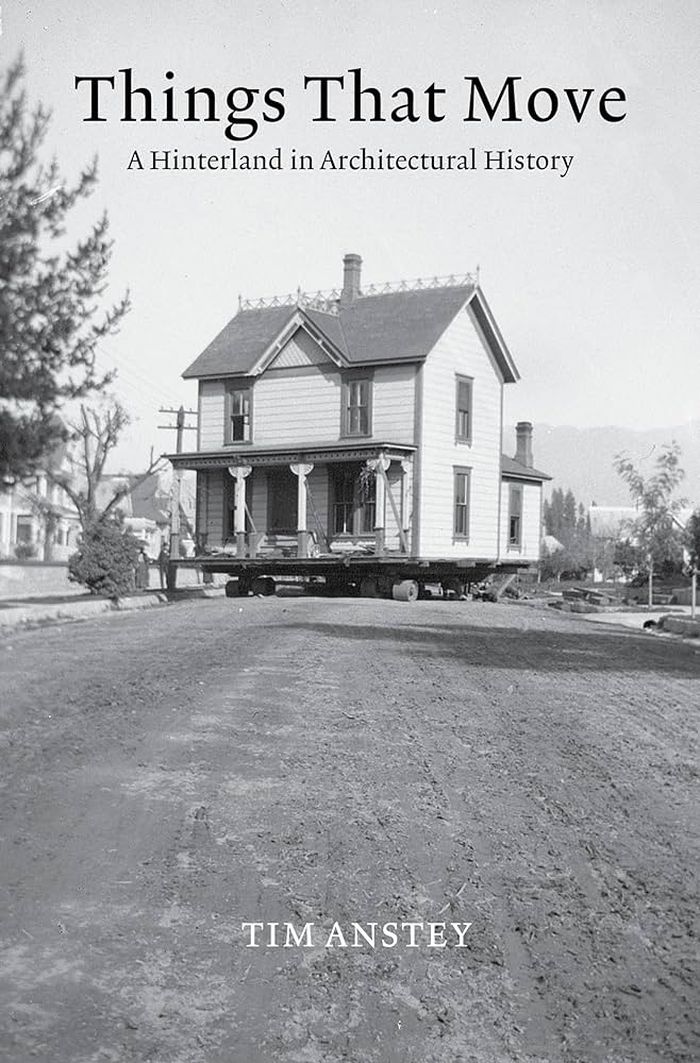
We tend to think of architecture as a practice in permanence, but what if we looked instead for an architecture of transience? In "Things that move," Tim Anstey does just that: rather than assuming that architecture is, at a certain level, stationary, he considers how architecture moves subjects (referring to its emotive potential in the experience it creates); how it moves objects (referring to how it choreographs bodies in motion); and how it is itself moved (referring to the mixture of materials, laws, affordances, and images that introduce movement into any architectural condition). The first of the book's three sections, "Cargoes," highlights the mobile peripheries of architectural history through the eighteenth and nineteenth centuries. It asks what kinds of knowledge can be included in a discussion of architecture, noting the connections between discourses of the lithe and the technical, on the one hand, and those associated with the production of monumental, static compositions on the other. The second section, “Dispatches,” reinterprets early architectural theory by examining the Renaissance ideal of decorum, the nature of the architectural work, and the ways in which architects are constituted as authors. The last part of the book, “Vehicles,” considers building in terms of literal and metaphorical movement, using two cases from the twentieth century that investigate the relationship between architecture and cultural memory. Using a broadly forensic approach to connect details in otherwise disparate cases, "Things that move" is a breathtakingly capacious architectural account that will change the way readers understand buildings, their becoming, and their significance.
Things that move: A hinterland in architectural history
Actions:
Price:
$54.00
(available to order)
Summary:
We tend to think of architecture as a practice in permanence, but what if we looked instead for an architecture of transience? In "Things that move," Tim Anstey does just that: rather than assuming that architecture is, at a certain level, stationary, he considers how architecture moves subjects (referring to its emotive potential in the experience it creates); how it moves objects (referring to how it choreographs bodies in motion); and how it is itself moved (referring to the mixture of materials, laws, affordances, and images that introduce movement into any architectural condition). The first of the book's three sections, "Cargoes," highlights the mobile peripheries of architectural history through the eighteenth and nineteenth centuries. It asks what kinds of knowledge can be included in a discussion of architecture, noting the connections between discourses of the lithe and the technical, on the one hand, and those associated with the production of monumental, static compositions on the other. The second section, “Dispatches,” reinterprets early architectural theory by examining the Renaissance ideal of decorum, the nature of the architectural work, and the ways in which architects are constituted as authors. The last part of the book, “Vehicles,” considers building in terms of literal and metaphorical movement, using two cases from the twentieth century that investigate the relationship between architecture and cultural memory. Using a broadly forensic approach to connect details in otherwise disparate cases, "Things that move" is a breathtakingly capacious architectural account that will change the way readers understand buildings, their becoming, and their significance.
Form:
books
books
Publication:
April 2024
April 2024
Subject:
Architectural Theory
Architectural Theory
Form:
books
books
Actions:
Price:
$82.95
(available in store)
Summary:
Of all the visual arts, illustration shares a unique relationship with the written word, often serving to visualize, enhance, or respond to a text. "Reading Pictures" presents a global history of this versatile art form, linking its emergence to modern developments such as the illustrated news, recreational reading, and ad-driven consumer culture. From the advent of(...)
$82.95
(available in store)
Summary:
Of all the visual arts, illustration shares a unique relationship with the written word, often serving to visualize, enhance, or respond to a text. "Reading Pictures" presents a global history of this versatile art form, linking its emergence to modern developments such as the illustrated news, recreational reading, and ad-driven consumer culture. From the advent of(...)
Title:
Reading pictures: A history of illustration
Actions:
Price:
$82.95
(available in store)
Summary:
Of all the visual arts, illustration shares a unique relationship with the written word, often serving to visualize, enhance, or respond to a text. "Reading Pictures" presents a global history of this versatile art form, linking its emergence to modern developments such as the illustrated news, recreational reading, and ad-driven consumer culture. From the advent of the printing press in the mid-fifteenth century to the modernist artistic and cultural movements of the nineteenth and twentieth centuries, D. B. Dowd traces the development of illustration as an integral part of the reading experience. He examines the move from ancient scrolls to pamphlets and book forms, and a return to the scroll in electronic form on smartphones and tablets. His story begins with relief prints and woodcuts in ancient China and Japan before moving to printing and platemaking in early modern Europe. Dowd discusses how book and periodical publishing rose sharply with the innovations of wood engraving and lithography, leading to a boom in cultural literacy; and how the illustrated press reached its zenith between the 1860s and 1960s, as printed entertainment and the news of the world became commonplace in every household, bringing with them advertising, propaganda, and consumer culture. Richly illustrated with more than four hundred images spanning the iconic to the unexpected, Reading Pictures reframes the story of illustration within the broader histories of race, gender, literacy, and the transmission of cultural memory. It reveals how reading and looking have become increasingly integrated, and that, as images have become ever more prevalent today with the digital revolution, what is meant by literacy has evolved.
Reading pictures: A history of illustration
Actions:
Price:
$82.95
(available in store)
Summary:
Of all the visual arts, illustration shares a unique relationship with the written word, often serving to visualize, enhance, or respond to a text. "Reading Pictures" presents a global history of this versatile art form, linking its emergence to modern developments such as the illustrated news, recreational reading, and ad-driven consumer culture. From the advent of the printing press in the mid-fifteenth century to the modernist artistic and cultural movements of the nineteenth and twentieth centuries, D. B. Dowd traces the development of illustration as an integral part of the reading experience. He examines the move from ancient scrolls to pamphlets and book forms, and a return to the scroll in electronic form on smartphones and tablets. His story begins with relief prints and woodcuts in ancient China and Japan before moving to printing and platemaking in early modern Europe. Dowd discusses how book and periodical publishing rose sharply with the innovations of wood engraving and lithography, leading to a boom in cultural literacy; and how the illustrated press reached its zenith between the 1860s and 1960s, as printed entertainment and the news of the world became commonplace in every household, bringing with them advertising, propaganda, and consumer culture. Richly illustrated with more than four hundred images spanning the iconic to the unexpected, Reading Pictures reframes the story of illustration within the broader histories of race, gender, literacy, and the transmission of cultural memory. It reveals how reading and looking have become increasingly integrated, and that, as images have become ever more prevalent today with the digital revolution, what is meant by literacy has evolved.
Form:
books
books
Publication:
April 2026
April 2026
Subject:
Illustration
Illustration
Form:
books
books
Title:
Well-kept ruins
Well-kept ruins
Actions:
Price:
$33.95
(available to order)
Summary:
In the Lower Saxony region of northwestern Germany sits the city of Osnabrück. This is where, in 1648, the Peace of Westphalia was signed, bringing the Thirty Years’ War and one of the most calamitous periods of European history to an end. But the city was later to witness another calamity. Today, as one walks through Old Synagogue Street in a rich neighborhood of(...)
$33.95
(available to order)
Summary:
In the Lower Saxony region of northwestern Germany sits the city of Osnabrück. This is where, in 1648, the Peace of Westphalia was signed, bringing the Thirty Years’ War and one of the most calamitous periods of European history to an end. But the city was later to witness another calamity. Today, as one walks through Old Synagogue Street in a rich neighborhood of(...)
Title:
Well-kept ruins
Actions:
Price:
$33.95
(available to order)
Summary:
In the Lower Saxony region of northwestern Germany sits the city of Osnabrück. This is where, in 1648, the Peace of Westphalia was signed, bringing the Thirty Years’ War and one of the most calamitous periods of European history to an end. But the city was later to witness another calamity. Today, as one walks through Old Synagogue Street in a rich neighborhood of Osnabrück, one might miss noticing a pile of pale stones held together by chicken wire that sits between two fashionable homes. These are the well-kept ruins from behind which stares a gaping space—a place of memory and oblivion. Four polished plaques tell the tale of the horror-filled night of November 9, 1938—today known as Kristallnacht—when the synagogue that had stood on this spot was desecrated, looted, set on fire, and eventually demolished by Hitler’s forces. On the same day, ninety parishioners were imprisoned by the Gestapo and eventually sent to the Buchenwald concentration camp. Osnabrück was also home to Eve Klein, a member of the city’s early-twentieth-century Jewish community and the mother of author Hélène Cixous. In Well-Kept Ruins, Cixous returns to the historic city in 2019 and reflects on the remains of the synagogue that “express the life lost, the life kept.” Walking the streets of the city, plumbing the depths of the past along with her own family’s history, looking deep into the future, and punctuating her poetic prose with haunting photographs, Cixous explores the ruins at the heart of humanity. Part memoir, part philosophical meditation, ''Well-kept ruins'' is a genre-defying and timely reflection of the contemporary human condition.
Well-kept ruins
Actions:
Price:
$33.95
(available to order)
Summary:
In the Lower Saxony region of northwestern Germany sits the city of Osnabrück. This is where, in 1648, the Peace of Westphalia was signed, bringing the Thirty Years’ War and one of the most calamitous periods of European history to an end. But the city was later to witness another calamity. Today, as one walks through Old Synagogue Street in a rich neighborhood of Osnabrück, one might miss noticing a pile of pale stones held together by chicken wire that sits between two fashionable homes. These are the well-kept ruins from behind which stares a gaping space—a place of memory and oblivion. Four polished plaques tell the tale of the horror-filled night of November 9, 1938—today known as Kristallnacht—when the synagogue that had stood on this spot was desecrated, looted, set on fire, and eventually demolished by Hitler’s forces. On the same day, ninety parishioners were imprisoned by the Gestapo and eventually sent to the Buchenwald concentration camp. Osnabrück was also home to Eve Klein, a member of the city’s early-twentieth-century Jewish community and the mother of author Hélène Cixous. In Well-Kept Ruins, Cixous returns to the historic city in 2019 and reflects on the remains of the synagogue that “express the life lost, the life kept.” Walking the streets of the city, plumbing the depths of the past along with her own family’s history, looking deep into the future, and punctuating her poetic prose with haunting photographs, Cixous explores the ruins at the heart of humanity. Part memoir, part philosophical meditation, ''Well-kept ruins'' is a genre-defying and timely reflection of the contemporary human condition.
Form:
books
books
Publication:
December 2022
December 2022
Subject:
Literature and poetry
Literature and poetry
Form:
books
books
Title:
Le Corbusier's hands
Le Corbusier's hands
Actions:
Price:
$18.95
(available to order)
Summary:
"Le Corbusier's Hands" offers a poetic and personal portrait of Le Corbusier-a nuanced portrayal that is in contrast to the popular image of Le Corbusier the aloof modernist. The author knew Le Corbusier intimately for thirty years, first as his draftsman and main assistant, later as his colleague and personal friend. In this book, written in the mid-1980s, Wogenscky(...)
$18.95
(available to order)
Summary:
"Le Corbusier's Hands" offers a poetic and personal portrait of Le Corbusier-a nuanced portrayal that is in contrast to the popular image of Le Corbusier the aloof modernist. The author knew Le Corbusier intimately for thirty years, first as his draftsman and main assistant, later as his colleague and personal friend. In this book, written in the mid-1980s, Wogenscky(...)
Subject:
Architecture Monographs
Architecture Monographs
Publication:
January 1900, Cambridge, Mass.
January 1900, Cambridge, Mass.
Title:
Le Corbusier's hands
Actions:
Price:
$18.95
(available to order)
Summary:
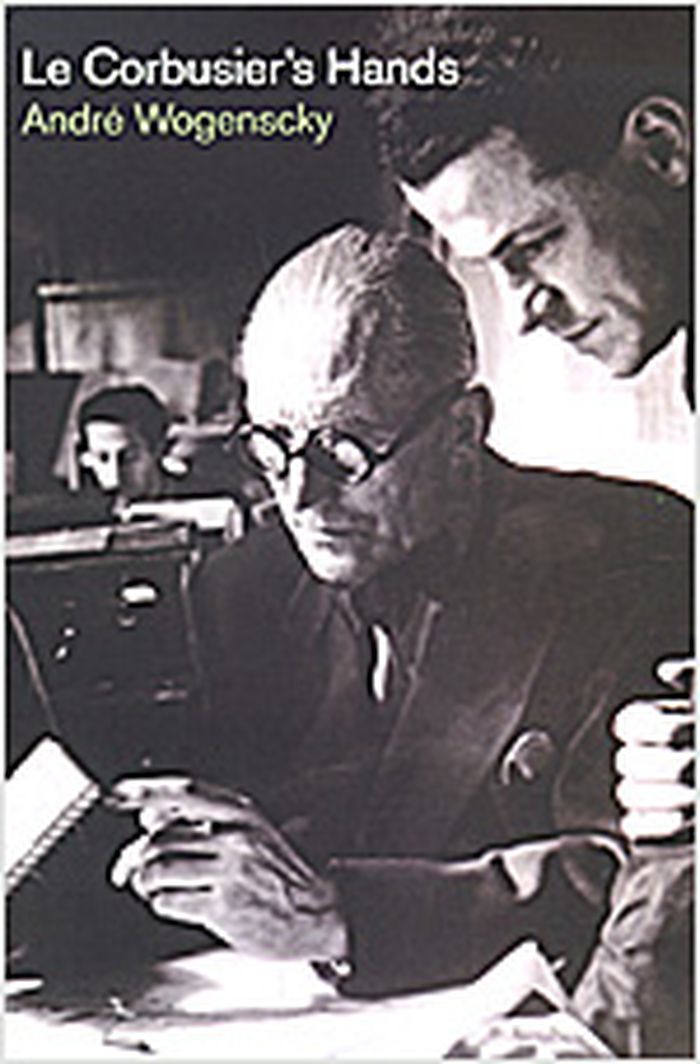
"Le Corbusier's Hands" offers a poetic and personal portrait of Le Corbusier-a nuanced portrayal that is in contrast to the popular image of Le Corbusier the aloof modernist. The author knew Le Corbusier intimately for thirty years, first as his draftsman and main assistant, later as his colleague and personal friend. In this book, written in the mid-1980s, Wogenscky remembers his mentor in a series of revealing personal statements and evocative reflections unlike anything that exists in the vast literature on Le Corbusier. Wogenscky draws a portrait in swift, deft strokes-50 short chapters, one leading to the next, one memory of Le Corbusier opening into another. Appearing and reappearing like a leitmotif are Le Corbusier's hands-touching, taking, drawing, offering, closing, opening, grasping, releasing: "It was his hands that revealed him. . . . They spoke all his feelings, all the vibrations of his inner life that his face tried to conceal." Wogenscky writes about Le Corbusier's work, including the famous design of the chapel at Ronchamp, his ideas for high-density Unités d'Habitation linked to the center of a "Radiant City," and his "Modulor" system for defining proportions-which Wogenscky compares to a piano tuner's finding the exact relation between sounds. He remembers the day Picasso spent with Le Corbusier at the Marseilles building site-"All day long they outdid one another in a show of modesty," he observes in amazement. He adds, speaking for himself and the others present, "We were inside a double energy field." And Wogenscky writes about Le Corbusier more personally. "I have spent years trying to understand what went on in his mind and in his hand," he tells us. With "Le Corbusier's hands", Wogenscky gives us a unique record of an enigmatic genius.
Le Corbusier's hands
Actions:
Price:
$18.95
(available to order)
Summary:
"Le Corbusier's Hands" offers a poetic and personal portrait of Le Corbusier-a nuanced portrayal that is in contrast to the popular image of Le Corbusier the aloof modernist. The author knew Le Corbusier intimately for thirty years, first as his draftsman and main assistant, later as his colleague and personal friend. In this book, written in the mid-1980s, Wogenscky remembers his mentor in a series of revealing personal statements and evocative reflections unlike anything that exists in the vast literature on Le Corbusier. Wogenscky draws a portrait in swift, deft strokes-50 short chapters, one leading to the next, one memory of Le Corbusier opening into another. Appearing and reappearing like a leitmotif are Le Corbusier's hands-touching, taking, drawing, offering, closing, opening, grasping, releasing: "It was his hands that revealed him. . . . They spoke all his feelings, all the vibrations of his inner life that his face tried to conceal." Wogenscky writes about Le Corbusier's work, including the famous design of the chapel at Ronchamp, his ideas for high-density Unités d'Habitation linked to the center of a "Radiant City," and his "Modulor" system for defining proportions-which Wogenscky compares to a piano tuner's finding the exact relation between sounds. He remembers the day Picasso spent with Le Corbusier at the Marseilles building site-"All day long they outdid one another in a show of modesty," he observes in amazement. He adds, speaking for himself and the others present, "We were inside a double energy field." And Wogenscky writes about Le Corbusier more personally. "I have spent years trying to understand what went on in his mind and in his hand," he tells us. With "Le Corbusier's hands", Wogenscky gives us a unique record of an enigmatic genius.
Form:
books
books
Publication:
January 1900, Cambridge, Mass.
January 1900, Cambridge, Mass.
Subject:
Architecture Monographs
Architecture Monographs
Form:
books
books
Price:
$49.95
(available to order)
Summary:
"Last Landscapes" is an exploration of the cult and celebration of death, loss and memory. It traces the history and design of burial places throughout Europe and the USA, ranging from the picturesque tradition of the village churchyard to tightly packed ‘cities of the dead’, such as the Jewish Cemetery in Prague and Père Lachaise in Paris. Other landscapes that feature(...)
$49.95
(available to order)
Summary:
"Last Landscapes" is an exploration of the cult and celebration of death, loss and memory. It traces the history and design of burial places throughout Europe and the USA, ranging from the picturesque tradition of the village churchyard to tightly packed ‘cities of the dead’, such as the Jewish Cemetery in Prague and Père Lachaise in Paris. Other landscapes that feature(...)
Title:
Last landscapes : the architecture of the cemetery in the west
Actions:
Price:
$49.95
(available to order)
Summary:
"Last Landscapes" is an exploration of the cult and celebration of death, loss and memory. It traces the history and design of burial places throughout Europe and the USA, ranging from the picturesque tradition of the village churchyard to tightly packed ‘cities of the dead’, such as the Jewish Cemetery in Prague and Père Lachaise in Paris. Other landscapes that feature in this book include the war cemeteries of northern France, Viking burial islands in central Sweden, Etruscan tombs and early Christian catacombs in Italy, the 17th-century Portuguese–Jewish cemetery 'Beth Haim' at Ouderkerk in the Netherlands, Forest Lawns in California, Derek Jarman’s garden in Kent and the Stockholm Woodland Cemetery. It is a fact that architecture ‘began with the tomb', yet, as Ken Worpole shows us in Last Landscapes, many historic cemeteries have been demolished or abandoned in recent times (notably the case with Jewish cemeteries in Eastern Europe), and there has been an increasing loss of inscription and memorialization in the modern urban cemetery. Too often cemeteries today are both poorly designed and physically and culturally marginalized. Worse, cremation denies a full architectural response to the mystery and solemnity of death. The author explores how modes of disposal – burial, cremation, inhumation in mausoleums and wall tombs – vary across Europe and North America, according to religious and other cultural influences. And Last Landscapes raises profound questions as to how, in an age of mass cremation, architects and landscape designers might create meaningful structures and settings in the absence of a body, since for most of history the human body itself has provided the fundamental structural scale. This evocative book also contemplates other forms of memorialization within modern societies, from sculptures to parks, most notably the extraordinary Duisberg Park, set in a former giant steelworks in Germany’s Ruhr Valley.
Last landscapes : the architecture of the cemetery in the west
Actions:
Price:
$49.95
(available to order)
Summary:
"Last Landscapes" is an exploration of the cult and celebration of death, loss and memory. It traces the history and design of burial places throughout Europe and the USA, ranging from the picturesque tradition of the village churchyard to tightly packed ‘cities of the dead’, such as the Jewish Cemetery in Prague and Père Lachaise in Paris. Other landscapes that feature in this book include the war cemeteries of northern France, Viking burial islands in central Sweden, Etruscan tombs and early Christian catacombs in Italy, the 17th-century Portuguese–Jewish cemetery 'Beth Haim' at Ouderkerk in the Netherlands, Forest Lawns in California, Derek Jarman’s garden in Kent and the Stockholm Woodland Cemetery. It is a fact that architecture ‘began with the tomb', yet, as Ken Worpole shows us in Last Landscapes, many historic cemeteries have been demolished or abandoned in recent times (notably the case with Jewish cemeteries in Eastern Europe), and there has been an increasing loss of inscription and memorialization in the modern urban cemetery. Too often cemeteries today are both poorly designed and physically and culturally marginalized. Worse, cremation denies a full architectural response to the mystery and solemnity of death. The author explores how modes of disposal – burial, cremation, inhumation in mausoleums and wall tombs – vary across Europe and North America, according to religious and other cultural influences. And Last Landscapes raises profound questions as to how, in an age of mass cremation, architects and landscape designers might create meaningful structures and settings in the absence of a body, since for most of history the human body itself has provided the fundamental structural scale. This evocative book also contemplates other forms of memorialization within modern societies, from sculptures to parks, most notably the extraordinary Duisberg Park, set in a former giant steelworks in Germany’s Ruhr Valley.
Form:
books
books
Publication:
June 2003, London
June 2003, London
Subject:
Gardens
Gardens
Form:
books
books
Actions:
Price:
$33.95
(available to order)
Summary:
Mucking around in the messy terrain of American trash, Jani Scandura tells the story of the United States during the Great Depression through evocative and photo-rich portraits of four different locales: Reno, Harlem, Key West, and Hollywood. In investigating these depression-era �dumps,� places that she claims contained and reclaimed the cultural, ideological, and(...)
$33.95
(available to order)
Summary:
Mucking around in the messy terrain of American trash, Jani Scandura tells the story of the United States during the Great Depression through evocative and photo-rich portraits of four different locales: Reno, Harlem, Key West, and Hollywood. In investigating these depression-era �dumps,� places that she claims contained and reclaimed the cultural, ideological, and(...)
Title:
Down in the dumps: place, modernity, american depression
Actions:
Price:
$33.95
(available to order)
Summary:
Mucking around in the messy terrain of American trash, Jani Scandura tells the story of the United States during the Great Depression through evocative and photo-rich portraits of four different locales: Reno, Harlem, Key West, and Hollywood. In investigating these depression-era �dumps,� places that she claims contained and reclaimed the cultural, ideological, and material refuse of modern America, Scandura introduces the concept of �depressive modernity,� an enduring affective component of American culture that exposes itself at those moments when the foundational myths of America and progressive modernity�capitalism, democracy, individualism, secularism, utopian aspiration�are thrown into question. Depressive modernity is modernity at a standstill. Such a modernity is not stagnant or fixed, nor immobile, but is constituted by an instantaneous unstaging of desire, territory, language, and memory that reveals itself in the shimmering of place. An interpretive bricolage that draws on an unlikely archive of 1930s detritus�office memos, scribbled manuscripts, scrapbooks, ruined photographs, newspaper clippings, glass eyes, incinerated stage sets, pulp novels, and junk washed ashore�Down in the Dumps escorts its readers through Reno�s 1930s divorce factory, where couples from across the United States came to quickly dissolve matrimonial bonds; Key West�s multilingual salvage economy and the island that became the center of an ideological tug-of-war between the American New Deal government and a politically fraught Caribbean; post-Renaissance Harlem, in the process of memorializing, remembering, grieving and rewriting a modernity that had already passed; and Studio-era Hollywood, Nathanael West�s �dump of dreams,� in which the introduction of sound film and shifts in art direction began to transform how Americans understood place-making and even being itself. A coda on Alcatraz and the Pentagon brings the book into the present, exploring how American Depression comes to bear on post-9/11 America.
Down in the dumps: place, modernity, american depression
Actions:
Price:
$33.95
(available to order)
Summary:
Mucking around in the messy terrain of American trash, Jani Scandura tells the story of the United States during the Great Depression through evocative and photo-rich portraits of four different locales: Reno, Harlem, Key West, and Hollywood. In investigating these depression-era �dumps,� places that she claims contained and reclaimed the cultural, ideological, and material refuse of modern America, Scandura introduces the concept of �depressive modernity,� an enduring affective component of American culture that exposes itself at those moments when the foundational myths of America and progressive modernity�capitalism, democracy, individualism, secularism, utopian aspiration�are thrown into question. Depressive modernity is modernity at a standstill. Such a modernity is not stagnant or fixed, nor immobile, but is constituted by an instantaneous unstaging of desire, territory, language, and memory that reveals itself in the shimmering of place. An interpretive bricolage that draws on an unlikely archive of 1930s detritus�office memos, scribbled manuscripts, scrapbooks, ruined photographs, newspaper clippings, glass eyes, incinerated stage sets, pulp novels, and junk washed ashore�Down in the Dumps escorts its readers through Reno�s 1930s divorce factory, where couples from across the United States came to quickly dissolve matrimonial bonds; Key West�s multilingual salvage economy and the island that became the center of an ideological tug-of-war between the American New Deal government and a politically fraught Caribbean; post-Renaissance Harlem, in the process of memorializing, remembering, grieving and rewriting a modernity that had already passed; and Studio-era Hollywood, Nathanael West�s �dump of dreams,� in which the introduction of sound film and shifts in art direction began to transform how Americans understood place-making and even being itself. A coda on Alcatraz and the Pentagon brings the book into the present, exploring how American Depression comes to bear on post-9/11 America.
Form:
books
books
Publication:
January 2008, Durham, London
January 2008, Durham, London
Subject:
Urban Theory
Urban Theory
Form:
books
books
Price:
$37.50
(available to order)
Summary:
Although the seemingly apocalyptic scale of the World Trade Center disaster continues to haunt people across the globe, it is only the most recent example of a city tragically wounded. Cities are, in fact, perpetually caught up in cycles of degeneration and renewal. As with the WTC, from time to time these cycles are severely ruptured by a sudden, unpredictable event.(...)
$37.50
(available to order)
Summary:
Although the seemingly apocalyptic scale of the World Trade Center disaster continues to haunt people across the globe, it is only the most recent example of a city tragically wounded. Cities are, in fact, perpetually caught up in cycles of degeneration and renewal. As with the WTC, from time to time these cycles are severely ruptured by a sudden, unpredictable event.(...)
Title:
Wounded cities : destruction and reconstruction in a globalized world
Actions:
Price:
$37.50
(available to order)
Summary:
Although the seemingly apocalyptic scale of the World Trade Center disaster continues to haunt people across the globe, it is only the most recent example of a city tragically wounded. Cities are, in fact, perpetually caught up in cycles of degeneration and renewal. As with the WTC, from time to time these cycles are severely ruptured by a sudden, unpredictable event. In the wake of recent terrorist activities, this timely book explores how urban populations are affected by "wounds" inflicted through violence, civil wars, overbuilding, drug trafficking, and the collapse of infrastructures, as well as "natural" disasters such as earthquakes. Mexico City, New York, Beirut, Belfast, Bangkok and Baghdad are just a few examples of cities riddled with problems that undermine, on a daily basis, the quality of urban life. What does it mean for urban dwellers when the infrastructure of a city collapses – transport, communication grids, heat, light, roads, water, and sanitation? What are the effects of foreign investment and huge construction projects on urban populations and how does this change the "look" and character of a city? How does drug trafficking intersect with class, race, and gender, and what impact does it have on vulnerable urban communities? How do political corruption and mafia networks distort the built environment? Drawing on in-depth case studies from across the globe, this book answers these intriguing questions through its rigorous consideration of changing global and national contexts, social movements, and corrosive urban events. Adopting a "grass roots up" approach, it places emphasis on people’s experiences of uneven development and inequality, their engagement with memory in the face of continual change, and the relevance of political activism to bettering their lives. It is especially attentive to the historical interaction of particular cities with wider political and economic forces, as these interactions have shaped local governance over time. Imagining each city as a "body politic", the authors consider its capacity both to mediate local conflict and to broach the healing of wounds.
Wounded cities : destruction and reconstruction in a globalized world
Actions:
Price:
$37.50
(available to order)
Summary:
Although the seemingly apocalyptic scale of the World Trade Center disaster continues to haunt people across the globe, it is only the most recent example of a city tragically wounded. Cities are, in fact, perpetually caught up in cycles of degeneration and renewal. As with the WTC, from time to time these cycles are severely ruptured by a sudden, unpredictable event. In the wake of recent terrorist activities, this timely book explores how urban populations are affected by "wounds" inflicted through violence, civil wars, overbuilding, drug trafficking, and the collapse of infrastructures, as well as "natural" disasters such as earthquakes. Mexico City, New York, Beirut, Belfast, Bangkok and Baghdad are just a few examples of cities riddled with problems that undermine, on a daily basis, the quality of urban life. What does it mean for urban dwellers when the infrastructure of a city collapses – transport, communication grids, heat, light, roads, water, and sanitation? What are the effects of foreign investment and huge construction projects on urban populations and how does this change the "look" and character of a city? How does drug trafficking intersect with class, race, and gender, and what impact does it have on vulnerable urban communities? How do political corruption and mafia networks distort the built environment? Drawing on in-depth case studies from across the globe, this book answers these intriguing questions through its rigorous consideration of changing global and national contexts, social movements, and corrosive urban events. Adopting a "grass roots up" approach, it places emphasis on people’s experiences of uneven development and inequality, their engagement with memory in the face of continual change, and the relevance of political activism to bettering their lives. It is especially attentive to the historical interaction of particular cities with wider political and economic forces, as these interactions have shaped local governance over time. Imagining each city as a "body politic", the authors consider its capacity both to mediate local conflict and to broach the healing of wounds.
Form:
books
books
Publication:
August 2003, Oxford
August 2003, Oxford
Subject:
Urban Theory
Urban Theory
Form:
books
books
Actions:
Price:
$59.25
(available to order)
Summary:
From Vaux-le-Vicomte to Versailles, the buildings of Louis Le Vau shaped the image of French court society. None, however, has had as dramatic an effect as Mazarin's Collège (1661-70), the Parisian landmark that now houses the Institut de France. In this first English-language book on Louis XIV's celebrated architect, Hilary Ballon deftly portrays the brilliance and(...)
$59.25
(available to order)
Summary:
From Vaux-le-Vicomte to Versailles, the buildings of Louis Le Vau shaped the image of French court society. None, however, has had as dramatic an effect as Mazarin's Collège (1661-70), the Parisian landmark that now houses the Institut de France. In this first English-language book on Louis XIV's celebrated architect, Hilary Ballon deftly portrays the brilliance and(...)
Title:
Louis Le Vau : Mazarin's Collège, Colbert's revenge
Actions:
Price:
$59.25
(available to order)
Summary:
From Vaux-le-Vicomte to Versailles, the buildings of Louis Le Vau shaped the image of French court society. None, however, has had as dramatic an effect as Mazarin's Collège (1661-70), the Parisian landmark that now houses the Institut de France. In this first English-language book on Louis XIV's celebrated architect, Hilary Ballon deftly portrays the brilliance and controversy of Le Vau's late career through an exploration of this masterpiece, a hybrid of baroque and classical styles. She tracks the design and construction of the Collège on the basis of splendid drawings, fully illustrated here, integrating into this account previously unknown dimensions of Le Vau's creative personality, his financial entanglements, and his feuds with government leaders. The story of the Collège begins in 1661 with the death of Cardinal Mazarin, who left an extravagant sum of money for a school to be built in his memory. Le Vau responded with an ambitious architectural tribute intended to launch the development of Paris in a new artistic direction. As Ballon shows, many personal factors figured into the final product, including Le Vau's activities as a real estate developer and entrepreneur, and his explosive response to the Italian baroque master Gianlorenzo Bernini, who visited Paris in 1665. The project ended up significantly over budget, and officials charged Le Vau shortly after his death with embezzling funds. The chief minister, Jean-Baptiste Colbert, led the attack on Le Vau, turning the ethical scandal into an aesthetic crusade to maintain a "classical" look for central Paris. By relating the intriguing context in which the Collège was created, Ballon explains why traditional definitions of the baroque and classical styles have failed to offer a cohesive understanding of the building. Her examination of the elements informing Le Vau's personal style and his relationship with Colbert brings into sharper focus the phenomenon of royal patronage and opens a new perspective on the development of French classicism at a turning point in Parisian architectural history.
Louis Le Vau : Mazarin's Collège, Colbert's revenge
Actions:
Price:
$59.25
(available to order)
Summary:
From Vaux-le-Vicomte to Versailles, the buildings of Louis Le Vau shaped the image of French court society. None, however, has had as dramatic an effect as Mazarin's Collège (1661-70), the Parisian landmark that now houses the Institut de France. In this first English-language book on Louis XIV's celebrated architect, Hilary Ballon deftly portrays the brilliance and controversy of Le Vau's late career through an exploration of this masterpiece, a hybrid of baroque and classical styles. She tracks the design and construction of the Collège on the basis of splendid drawings, fully illustrated here, integrating into this account previously unknown dimensions of Le Vau's creative personality, his financial entanglements, and his feuds with government leaders. The story of the Collège begins in 1661 with the death of Cardinal Mazarin, who left an extravagant sum of money for a school to be built in his memory. Le Vau responded with an ambitious architectural tribute intended to launch the development of Paris in a new artistic direction. As Ballon shows, many personal factors figured into the final product, including Le Vau's activities as a real estate developer and entrepreneur, and his explosive response to the Italian baroque master Gianlorenzo Bernini, who visited Paris in 1665. The project ended up significantly over budget, and officials charged Le Vau shortly after his death with embezzling funds. The chief minister, Jean-Baptiste Colbert, led the attack on Le Vau, turning the ethical scandal into an aesthetic crusade to maintain a "classical" look for central Paris. By relating the intriguing context in which the Collège was created, Ballon explains why traditional definitions of the baroque and classical styles have failed to offer a cohesive understanding of the building. Her examination of the elements informing Le Vau's personal style and his relationship with Colbert brings into sharper focus the phenomenon of royal patronage and opens a new perspective on the development of French classicism at a turning point in Parisian architectural history.
Form:
books
books
Publication:
January 1900, Princeton
January 1900, Princeton
Subject:
Architecture Monographs
Architecture Monographs


