


21400 Results
Form:
articles
articles
Title:
Shifting Shores
Shifting Shores
Actions:
Kirsten Keller and Feifei Zhou on the dynamic materialities of property-making in Jakarta
Title:
Shifting Shores
Kirsten Keller and Feifei Zhou on the dynamic materialities of property-making in Jakarta
Actions:
Shifting Shores
Kirsten Keller and Feifei Zhou on the dynamic materialities of property-making in Jakarta
Actions:
Issue:
Forces of Friction
Forces of Friction
Form:
exhibitions
exhibitions
Actions:
Description:
Americanism, the pattern of idealization, imitation and criticisms with which European architects greeted American urban models and building practices, is the subject of Scenes of the World to Come: European Architecture and the American Challenge, 1893–1960. The skyscrapers, massive industrial plants, and new sense of mobility and efficiency of North America became a(...)
Americanism, the pattern of idealization, imitation and criticisms with which European architects greeted American urban models and building practices, is the subject of Scenes of the World to Come: European Architecture and the American Challenge, 1893–1960. The skyscrapers, massive industrial plants, and new sense of mobility and efficiency of North America became a(...)
Location:
Main galleries
Main galleries
Date:
14 June 1995 to 14 September 1995
14 June 1995 to 14 September 1995
Title:
Scenes of the World to Come: European Architecture and the American Challenge, 1893–1960
Actions:
Description:
Americanism, the pattern of idealization, imitation and criticisms with which European architects greeted American urban models and building practices, is the subject of Scenes of the World to Come: European Architecture and the American Challenge, 1893–1960. The skyscrapers, massive industrial plants, and new sense of mobility and efficiency of North America became a(...)
Scenes of the World to Come: European Architecture and the American Challenge, 1893–1960
Actions:
Description:
Americanism, the pattern of idealization, imitation and criticisms with which European architects greeted American urban models and building practices, is the subject of Scenes of the World to Come: European Architecture and the American Challenge, 1893–1960. The skyscrapers, massive industrial plants, and new sense of mobility and efficiency of North America became a(...)
Form:
exhibitions
exhibitions
Date:
14 June 1995 to
14 September 1995
14 June 1995 to
14 September 1995
Location:
Main galleries
Main galleries
Form:
textual records
textual records
Reference number:
AP206.S2.074
Description:
File was originally housed in a binder along with content arranged in AP206.S2.072 and AP206.S2.073. This file includes the following papers: "Le Corbusier's Chandigarh: Architecture in the Cultural Context," symposium talk, 1990 "Why not Ruralisation," paper outline "Growing Problems of Cities," book review of "The Politics of Urban Redevelopment: A Study of Old Delhi by Ajay K. Mehra," 1991 "Housing as Consumer Commodity," book review of "Housing and Urbanisation: A Study of India by Cedric Pugh," 1991 "Air Pollution and Conservation of the Environment," speech
AP206.S2.074
Description:
File was originally housed in a binder along with content arranged in AP206.S2.072 and AP206.S2.073. This file includes the following papers: "Le Corbusier's Chandigarh: Architecture in the Cultural Context," symposium talk, 1990 "Why not Ruralisation," paper outline "Growing Problems of Cities," book review of "The Politics of Urban Redevelopment: A Study of Old Delhi by Ajay K. Mehra," 1991 "Housing as Consumer Commodity," book review of "Housing and Urbanisation: A Study of India by Cedric Pugh," 1991 "Air Pollution and Conservation of the Environment," speech
People:
Date:
1986-1998
1986-1998
Title:
Published and unpublished papers (folder 3 of 3)
Actions:
AP206.S2.074
Description:
File was originally housed in a binder along with content arranged in AP206.S2.072 and AP206.S2.073. This file includes the following papers: "Le Corbusier's Chandigarh: Architecture in the Cultural Context," symposium talk, 1990 "Why not Ruralisation," paper outline "Growing Problems of Cities," book review of "The Politics of Urban Redevelopment: A Study of Old Delhi by Ajay K. Mehra," 1991 "Housing as Consumer Commodity," book review of "Housing and Urbanisation: A Study of India by Cedric Pugh," 1991 "Air Pollution and Conservation of the Environment," speech
Published and unpublished papers (folder 3 of 3)
Actions:
AP206.S2.074
Description:
File was originally housed in a binder along with content arranged in AP206.S2.072 and AP206.S2.073. This file includes the following papers: "Le Corbusier's Chandigarh: Architecture in the Cultural Context," symposium talk, 1990 "Why not Ruralisation," paper outline "Growing Problems of Cities," book review of "The Politics of Urban Redevelopment: A Study of Old Delhi by Ajay K. Mehra," 1991 "Housing as Consumer Commodity," book review of "Housing and Urbanisation: A Study of India by Cedric Pugh," 1991 "Air Pollution and Conservation of the Environment," speech
Form:
textual records
textual records
Date:
1986-1998
1986-1998
People:
Form:
archives
Level of archival description:
Fonds
archives
Level of archival description:
Fonds
Title:
Hazen Sise fonds
Hazen Sise fonds
Reference number:
AP112
Synopsis:
The Hazen Sise fonds contains negatives, drawings, and other documents dating from 1933 to 1959. The negatives, taken in the early 1930s, mostly depict participants of the conferences CIAM IV and CIRPAC, including Le Corbusier, László Moholy-Nagy, Alvar Aalto and Fernand Léger. The drawings document the design of Beaver Lake Pavilion, built for the City of Montréal between 1955 and 1959 as part of the redevelopment of Mount Royal Park. Le fonds Hazen Sise est composé de négatifs, dessins, et autres documents datés entre 1933 et 1959. Les négatifs, pris au début des années 30s, présentent des participants des congres IVe CIAM et CIRPAC, incluant Le Corbusier, László Moholy-Nagy, Alvar Aalto et Fernand Léger. Les dessins documentent la conception du pavillon du Lac aux Castors, construit pour la Ville de Montréal entre 1955 et 1959 dans le cadre du réaménagement du Parc du Mont-Royal.
AP112
Synopsis:
The Hazen Sise fonds contains negatives, drawings, and other documents dating from 1933 to 1959. The negatives, taken in the early 1930s, mostly depict participants of the conferences CIAM IV and CIRPAC, including Le Corbusier, László Moholy-Nagy, Alvar Aalto and Fernand Léger. The drawings document the design of Beaver Lake Pavilion, built for the City of Montréal between 1955 and 1959 as part of the redevelopment of Mount Royal Park. Le fonds Hazen Sise est composé de négatifs, dessins, et autres documents datés entre 1933 et 1959. Les négatifs, pris au début des années 30s, présentent des participants des congres IVe CIAM et CIRPAC, incluant Le Corbusier, László Moholy-Nagy, Alvar Aalto et Fernand Léger. Les dessins documentent la conception du pavillon du Lac aux Castors, construit pour la Ville de Montréal entre 1955 et 1959 dans le cadre du réaménagement du Parc du Mont-Royal.
People:
Date:
1933-1959
1933-1959
Title:
Hazen Sise fonds
Actions:
AP112
Synopsis:
The Hazen Sise fonds contains negatives, drawings, and other documents dating from 1933 to 1959. The negatives, taken in the early 1930s, mostly depict participants of the conferences CIAM IV and CIRPAC, including Le Corbusier, László Moholy-Nagy, Alvar Aalto and Fernand Léger. The drawings document the design of Beaver Lake Pavilion, built for the City of Montréal between 1955 and 1959 as part of the redevelopment of Mount Royal Park. Le fonds Hazen Sise est composé de négatifs, dessins, et autres documents datés entre 1933 et 1959. Les négatifs, pris au début des années 30s, présentent des participants des congres IVe CIAM et CIRPAC, incluant Le Corbusier, László Moholy-Nagy, Alvar Aalto et Fernand Léger. Les dessins documentent la conception du pavillon du Lac aux Castors, construit pour la Ville de Montréal entre 1955 et 1959 dans le cadre du réaménagement du Parc du Mont-Royal.
Hazen Sise fonds
Actions:
AP112
Synopsis:
The Hazen Sise fonds contains negatives, drawings, and other documents dating from 1933 to 1959. The negatives, taken in the early 1930s, mostly depict participants of the conferences CIAM IV and CIRPAC, including Le Corbusier, László Moholy-Nagy, Alvar Aalto and Fernand Léger. The drawings document the design of Beaver Lake Pavilion, built for the City of Montréal between 1955 and 1959 as part of the redevelopment of Mount Royal Park. Le fonds Hazen Sise est composé de négatifs, dessins, et autres documents datés entre 1933 et 1959. Les négatifs, pris au début des années 30s, présentent des participants des congres IVe CIAM et CIRPAC, incluant Le Corbusier, László Moholy-Nagy, Alvar Aalto et Fernand Léger. Les dessins documentent la conception du pavillon du Lac aux Castors, construit pour la Ville de Montréal entre 1955 et 1959 dans le cadre du réaménagement du Parc du Mont-Royal.
Form:
archives
Level of archival description:
Fonds
archives
Level of archival description:
Fonds
Date:
1933-1959
1933-1959
People:
Form:
exhibitions
exhibitions
Actions:
Description:
Photographers Clara Gutsche and David Miller offer their vision of the industrial landscape and architecture surrounding the urban historical site of Lachine Canal in Montréal. The Canal, which is over one hundred years old, suffered a long period of neglect after having played a key role in the development of Canadian industry. Fifteen years after the waterway closed,(...)
Photographers Clara Gutsche and David Miller offer their vision of the industrial landscape and architecture surrounding the urban historical site of Lachine Canal in Montréal. The Canal, which is over one hundred years old, suffered a long period of neglect after having played a key role in the development of Canadian industry. Fifteen years after the waterway closed,(...)
Location:
Octagonal gallery
Octagonal gallery
Date:
15 July 1992 to 22 November 1992
15 July 1992 to 22 November 1992
Title:
An Industrial Landscape Observed: The Lachine Canal
Actions:
Description:
Photographers Clara Gutsche and David Miller offer their vision of the industrial landscape and architecture surrounding the urban historical site of Lachine Canal in Montréal. The Canal, which is over one hundred years old, suffered a long period of neglect after having played a key role in the development of Canadian industry. Fifteen years after the waterway closed,(...)
An Industrial Landscape Observed: The Lachine Canal
Actions:
Description:
Photographers Clara Gutsche and David Miller offer their vision of the industrial landscape and architecture surrounding the urban historical site of Lachine Canal in Montréal. The Canal, which is over one hundred years old, suffered a long period of neglect after having played a key role in the development of Canadian industry. Fifteen years after the waterway closed,(...)
Form:
exhibitions
exhibitions
Date:
15 July 1992 to
22 November 1992
15 July 1992 to
22 November 1992
Location:
Octagonal gallery
Octagonal gallery
Form:
exhibitions
exhibitions
Actions:
Description:
*Opening the Gates of Eighteenth-Century Montréal* explores the development of the city during the eighteenth century, when Montréal was a fortified town. The exhibition provides a unique opportunity to consider the building of the eighteenth-century military and commercial town, the nucleus from which Montréal grew. The product of nearly fifteen years of research and(...)
*Opening the Gates of Eighteenth-Century Montréal* explores the development of the city during the eighteenth century, when Montréal was a fortified town. The exhibition provides a unique opportunity to consider the building of the eighteenth-century military and commercial town, the nucleus from which Montréal grew. The product of nearly fifteen years of research and(...)
Location:
Main galleries
Main galleries
Date:
8 September 1992 to 28 February 1993
8 September 1992 to 28 February 1993
Title:
Opening the Gates of Eighteenth-Century Montréal
Actions:
Description:
*Opening the Gates of Eighteenth-Century Montréal* explores the development of the city during the eighteenth century, when Montréal was a fortified town. The exhibition provides a unique opportunity to consider the building of the eighteenth-century military and commercial town, the nucleus from which Montréal grew. The product of nearly fifteen years of research and(...)
Opening the Gates of Eighteenth-Century Montréal
Actions:
Description:
*Opening the Gates of Eighteenth-Century Montréal* explores the development of the city during the eighteenth century, when Montréal was a fortified town. The exhibition provides a unique opportunity to consider the building of the eighteenth-century military and commercial town, the nucleus from which Montréal grew. The product of nearly fifteen years of research and(...)
Form:
exhibitions
exhibitions
Date:
8 September 1992 to
28 February 1993
8 September 1992 to
28 February 1993
Location:
Main galleries
Main galleries
Form:
events
events
Description:
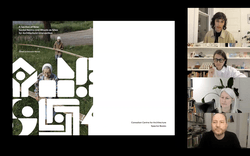
Conceived as part of the one-year investigation Catching Up with Life, A Section of Now aims to re-establish a dialogue between architecture and society that would allow for architecture to begin to contend with and address our changed and changing social norms. The publication serves as a meditation on new behaviours, rituals, and values and their spatial implications(...)
Conceived as part of the one-year investigation Catching Up with Life, A Section of Now aims to re-establish a dialogue between architecture and society that would allow for architecture to begin to contend with and address our changed and changing social norms. The publication serves as a meditation on new behaviours, rituals, and values and their spatial implications(...)
Date:
10 March 2022, 7:30pm to 8:30pm
10 March 2022, 7:30pm to 8:30pm
Title:
A Section of Now, book launch with Giovanna Borasi
Actions:
Description:
Conceived as part of the one-year investigation Catching Up with Life, A Section of Now aims to re-establish a dialogue between architecture and society that would allow for architecture to begin to contend with and address our changed and changing social norms. The publication serves as a meditation on new behaviours, rituals, and values and their spatial implications(...)
A Section of Now, book launch with Giovanna Borasi
Actions:
Description:
Conceived as part of the one-year investigation Catching Up with Life, A Section of Now aims to re-establish a dialogue between architecture and society that would allow for architecture to begin to contend with and address our changed and changing social norms. The publication serves as a meditation on new behaviours, rituals, and values and their spatial implications(...)
Form:
events
events
Date:
10 March 2022
7:30pm to 8:30pm
10 March 2022
7:30pm to 8:30pm
Form:
research
research
Title:
Visiting Scholars 2018
Visiting Scholars 2018
Actions:
Description:
Elisa Dainese,Dalhousie University, Canada Architectural Culture in Translation: Postwar Cities and African Villages Martina Hrabová, Institute of Art History, Czech Academy of Sciences, Czech Republic The Geography of an Intellectual Field: The Social Network of Le Corbusier’s Studio Lina Malfona, Rome Sapienza, Italy Political Mind: Alvaro Siza’s Urban Projects From(...)
Elisa Dainese,Dalhousie University, Canada Architectural Culture in Translation: Postwar Cities and African Villages Martina Hrabová, Institute of Art History, Czech Academy of Sciences, Czech Republic The Geography of an Intellectual Field: The Social Network of Le Corbusier’s Studio Lina Malfona, Rome Sapienza, Italy Political Mind: Alvaro Siza’s Urban Projects From(...)
Date:
June 2018 to September 2018
June 2018 to September 2018
Title:
Visiting Scholars 2018
Actions:
Description:
Elisa Dainese,Dalhousie University, Canada Architectural Culture in Translation: Postwar Cities and African Villages Martina Hrabová, Institute of Art History, Czech Academy of Sciences, Czech Republic The Geography of an Intellectual Field: The Social Network of Le Corbusier’s Studio Lina Malfona, Rome Sapienza, Italy Political Mind: Alvaro Siza’s Urban Projects From(...)
Visiting Scholars 2018
Actions:
Description:
Elisa Dainese,Dalhousie University, Canada Architectural Culture in Translation: Postwar Cities and African Villages Martina Hrabová, Institute of Art History, Czech Academy of Sciences, Czech Republic The Geography of an Intellectual Field: The Social Network of Le Corbusier’s Studio Lina Malfona, Rome Sapienza, Italy Political Mind: Alvaro Siza’s Urban Projects From(...)
Form:
research
research
Date:
June 2018 to
September 2018
June 2018 to
September 2018
Form:
textual records
textual records
Reference number:
AP206.S2.066
Description:
File was originally housed in a binder along with content arranged in AP206.S2.065, AP206.S2.067 and AP206.S2.068. This file includes the following papers: "The Politics of Urban Redevelopment: A Study of Old Delhi by Ajay K. Mehra," book review "Environmental Management of Mining Operations Human Settlements and Rehabilitation of Population," 1986 "Reminiscences of Education in Pre-independence India," 1997 "The Pedestrian, the Rickshaw and the Motor Vehicle" "Chandigarh: As I see it" "Conservation is our Future" "Sikh Architecture by PS Arshi," review "The Aftermath of Vistara" "Random Thoughts on Architectural Education"
AP206.S2.066
Description:
File was originally housed in a binder along with content arranged in AP206.S2.065, AP206.S2.067 and AP206.S2.068. This file includes the following papers: "The Politics of Urban Redevelopment: A Study of Old Delhi by Ajay K. Mehra," book review "Environmental Management of Mining Operations Human Settlements and Rehabilitation of Population," 1986 "Reminiscences of Education in Pre-independence India," 1997 "The Pedestrian, the Rickshaw and the Motor Vehicle" "Chandigarh: As I see it" "Conservation is our Future" "Sikh Architecture by PS Arshi," review "The Aftermath of Vistara" "Random Thoughts on Architectural Education"
People:
Date:
1985-1997
1985-1997
Title:
Published and unpublished papers (folder 2 of 4)
Actions:
AP206.S2.066
Description:
File was originally housed in a binder along with content arranged in AP206.S2.065, AP206.S2.067 and AP206.S2.068. This file includes the following papers: "The Politics of Urban Redevelopment: A Study of Old Delhi by Ajay K. Mehra," book review "Environmental Management of Mining Operations Human Settlements and Rehabilitation of Population," 1986 "Reminiscences of Education in Pre-independence India," 1997 "The Pedestrian, the Rickshaw and the Motor Vehicle" "Chandigarh: As I see it" "Conservation is our Future" "Sikh Architecture by PS Arshi," review "The Aftermath of Vistara" "Random Thoughts on Architectural Education"
Published and unpublished papers (folder 2 of 4)
Actions:
AP206.S2.066
Description:
File was originally housed in a binder along with content arranged in AP206.S2.065, AP206.S2.067 and AP206.S2.068. This file includes the following papers: "The Politics of Urban Redevelopment: A Study of Old Delhi by Ajay K. Mehra," book review "Environmental Management of Mining Operations Human Settlements and Rehabilitation of Population," 1986 "Reminiscences of Education in Pre-independence India," 1997 "The Pedestrian, the Rickshaw and the Motor Vehicle" "Chandigarh: As I see it" "Conservation is our Future" "Sikh Architecture by PS Arshi," review "The Aftermath of Vistara" "Random Thoughts on Architectural Education"
Form:
textual records
textual records
Date:
1985-1997
1985-1997
People:
Form:
textual records
textual records
Actions:
Reference number:
ARCH260047
Description:
Proposals and correspondence in the United States and Saudi Arabia: Maryland Academy of Sciences, Baltimore; Anchorage Hotel, Alaska; Fine Arts Complex, Arizona State University; Atlantic City, New Jersey Hotel and convention centre; Baltimore, Maryland, Inner Harbor Project competition. Projects in Saudi Arabia: Ministry of Foreign Affairs, Jeddah; Mou'ta University, Jordan; Islamic University of Madinah; Umm-Al-Aura University, Makka; Proposed shopping centre; Ministry of Defence and Aviation, Riyadh; Qaseem University, Riyadh; and Shindagha urban design, location?.
ARCH260047
Description:
Proposals and correspondence in the United States and Saudi Arabia: Maryland Academy of Sciences, Baltimore; Anchorage Hotel, Alaska; Fine Arts Complex, Arizona State University; Atlantic City, New Jersey Hotel and convention centre; Baltimore, Maryland, Inner Harbor Project competition. Projects in Saudi Arabia: Ministry of Foreign Affairs, Jeddah; Mou'ta University, Jordan; Islamic University of Madinah; Umm-Al-Aura University, Makka; Proposed shopping centre; Ministry of Defence and Aviation, Riyadh; Qaseem University, Riyadh; and Shindagha urban design, location?.
People:
Date:
1981-1988
1981-1988
Title:
Proposals and correspondence for projects in the United States and Saudi Arabia
Actions:
ARCH260047
Description:
Proposals and correspondence in the United States and Saudi Arabia: Maryland Academy of Sciences, Baltimore; Anchorage Hotel, Alaska; Fine Arts Complex, Arizona State University; Atlantic City, New Jersey Hotel and convention centre; Baltimore, Maryland, Inner Harbor Project competition. Projects in Saudi Arabia: Ministry of Foreign Affairs, Jeddah; Mou'ta University, Jordan; Islamic University of Madinah; Umm-Al-Aura University, Makka; Proposed shopping centre; Ministry of Defence and Aviation, Riyadh; Qaseem University, Riyadh; and Shindagha urban design, location?.
Proposals and correspondence for projects in the United States and Saudi Arabia
Actions:
ARCH260047
Description:
Proposals and correspondence in the United States and Saudi Arabia: Maryland Academy of Sciences, Baltimore; Anchorage Hotel, Alaska; Fine Arts Complex, Arizona State University; Atlantic City, New Jersey Hotel and convention centre; Baltimore, Maryland, Inner Harbor Project competition. Projects in Saudi Arabia: Ministry of Foreign Affairs, Jeddah; Mou'ta University, Jordan; Islamic University of Madinah; Umm-Al-Aura University, Makka; Proposed shopping centre; Ministry of Defence and Aviation, Riyadh; Qaseem University, Riyadh; and Shindagha urban design, location?.
Form:
textual records
textual records
Date:
1981-1988
1981-1988
People:


