


5849 Results
Form:
drawings
drawings
Title:
Planimetric maps, studies, axonometric drawings and plans for the project Faubourg St-Laurent
Planimetric maps, studies, axonometric drawings and plans for the project Faubourg St-Laurent
Actions:
Reference number:
DR2012:0012:046:020
Description:
Includes planimetric maps, studies, axonometric drawings and plans for the project Faubourg St-Laurent, Montréal, Québec, 1989. One plan is titled "Le Faubourg dans la ville: Les grands axes".
DR2012:0012:046:020
Description:
Includes planimetric maps, studies, axonometric drawings and plans for the project Faubourg St-Laurent, Montréal, Québec, 1989. One plan is titled "Le Faubourg dans la ville: Les grands axes".
People:
Date:
1989-1990
1989-1990
Title:
Planimetric maps, studies, axonometric drawings and plans for the project Faubourg St-Laurent
Actions:
DR2012:0012:046:020
Description:
Includes planimetric maps, studies, axonometric drawings and plans for the project Faubourg St-Laurent, Montréal, Québec, 1989. One plan is titled "Le Faubourg dans la ville: Les grands axes".
Planimetric maps, studies, axonometric drawings and plans for the project Faubourg St-Laurent
Actions:
DR2012:0012:046:020
Description:
Includes planimetric maps, studies, axonometric drawings and plans for the project Faubourg St-Laurent, Montréal, Québec, 1989. One plan is titled "Le Faubourg dans la ville: Les grands axes".
Form:
drawings
drawings
Date:
1989-1990
1989-1990
People:
Form:
events
events
Actions:
Description:
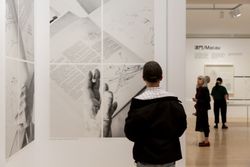
The exhibition The fortune of the city is that it has never been perfect explores the challenges of urban development through Álvaro Siza’s experiential approach to the city, characterized by respect for and an understanding of a place, its shape, its embodied history, and its life.
The exhibition The fortune of the city is that it has never been perfect explores the challenges of urban development through Álvaro Siza’s experiential approach to the city, characterized by respect for and an understanding of a place, its shape, its embodied history, and its life.
Location:
Main Galleries
Main Galleries
Date:
25 August 2026, 6pm to 8pm
25 August 2026, 6pm to 8pm
Title:
Guided tour for Friends of the CCA
Actions:
Description:
The exhibition The fortune of the city is that it has never been perfect explores the challenges of urban development through Álvaro Siza’s experiential approach to the city, characterized by respect for and an understanding of a place, its shape, its embodied history, and its life.
Guided tour for Friends of the CCA
Actions:
Description:
The exhibition The fortune of the city is that it has never been perfect explores the challenges of urban development through Álvaro Siza’s experiential approach to the city, characterized by respect for and an understanding of a place, its shape, its embodied history, and its life.
Form:
events
events
Date:
25 August 2026
6pm to 8pm
25 August 2026
6pm to 8pm
Location:
Main Galleries
Main Galleries
Form:
textual records
textual records
Actions:
Reference number:
ARCH258696
Description:
Comprends des croquis, incluant des études de plusieurs livres (Mémoires de Voltaire, Gallérie des Belles Amours, Formulaire Magistral, Notre Province?), étude de couleur, étude du livre « Ville ô ma Ville » avec échantillons de cuirs, échantillons de papiers décoré, notes sur la teinture des cuirs, un dossier des plusieurs couvertures de livres originaux que Cormier à ôté.
ARCH258696
Description:
Comprends des croquis, incluant des études de plusieurs livres (Mémoires de Voltaire, Gallérie des Belles Amours, Formulaire Magistral, Notre Province?), étude de couleur, étude du livre « Ville ô ma Ville » avec échantillons de cuirs, échantillons de papiers décoré, notes sur la teinture des cuirs, un dossier des plusieurs couvertures de livres originaux que Cormier à ôté.
People:
Title:
Croquis et échantillons de papier pour projets reliures
Actions:
ARCH258696
Description:
Comprends des croquis, incluant des études de plusieurs livres (Mémoires de Voltaire, Gallérie des Belles Amours, Formulaire Magistral, Notre Province?), étude de couleur, étude du livre « Ville ô ma Ville » avec échantillons de cuirs, échantillons de papiers décoré, notes sur la teinture des cuirs, un dossier des plusieurs couvertures de livres originaux que Cormier à ôté.
Croquis et échantillons de papier pour projets reliures
Actions:
ARCH258696
Description:
Comprends des croquis, incluant des études de plusieurs livres (Mémoires de Voltaire, Gallérie des Belles Amours, Formulaire Magistral, Notre Province?), étude de couleur, étude du livre « Ville ô ma Ville » avec échantillons de cuirs, échantillons de papiers décoré, notes sur la teinture des cuirs, un dossier des plusieurs couvertures de livres originaux que Cormier à ôté.
Form:
textual records
textual records
People:
Form:
articles
articles

Title:
9 of 99 Actions
9 of 99 Actions
Actions:
Take a closer look at the city
Keyword(s):
Actions: What You Can Do with the City
Actions: What You Can Do with the City
Published:
2 March 2016
2 March 2016
Actions:
Reference number:
ARCH2340
Description:
Film intitulé "H.H. Camp." H.H. pourraient représenter les initiales du sculpteur montréalais Henri Hébert. Les séquences dépeignent: Vue du centre-ville de Montréal et du jardin depuis la terrasse du 1418 avenue des Pins. Ernest Cormier donnant la main à une personne. Réunion d'amis sur la terrasse.
ARCH2340
Description:
Film intitulé "H.H. Camp." H.H. pourraient représenter les initiales du sculpteur montréalais Henri Hébert. Les séquences dépeignent: Vue du centre-ville de Montréal et du jardin depuis la terrasse du 1418 avenue des Pins. Ernest Cormier donnant la main à une personne. Réunion d'amis sur la terrasse.
People:
Date:
ca. 1932
ca. 1932
Title:
Négatifs originaux 16mm pour le film intitulé "H.H. Camp"
Actions:
ARCH2340
Description:
Film intitulé "H.H. Camp." H.H. pourraient représenter les initiales du sculpteur montréalais Henri Hébert. Les séquences dépeignent: Vue du centre-ville de Montréal et du jardin depuis la terrasse du 1418 avenue des Pins. Ernest Cormier donnant la main à une personne. Réunion d'amis sur la terrasse.
Négatifs originaux 16mm pour le film intitulé "H.H. Camp"
Actions:
ARCH2340
Description:
Film intitulé "H.H. Camp." H.H. pourraient représenter les initiales du sculpteur montréalais Henri Hébert. Les séquences dépeignent: Vue du centre-ville de Montréal et du jardin depuis la terrasse du 1418 avenue des Pins. Ernest Cormier donnant la main à une personne. Réunion d'amis sur la terrasse.
Date:
ca. 1932
ca. 1932
People:
Level of archival description:
Series
Series
Title:
Œuvres du prix de Rome
Œuvres du prix de Rome
Actions:
Reference number:
AP066.S4
Description:
Cette série rassemble les documents produits par Jacques Rousseau dans le cadre du Prix de Rome (1988), soit: les esquisses préparatoires et les gravures blanches (sans encre) qui illustrent un projet de "Nouveau-Port" pour Montréal, et les dessins à la craie sèche sur papier intitulés "Mémoire virtuelle ...". On y retrouve également des avenues de projet qui n'ont pas été développées, "Étude du flanc est du Mont-Royal" et projet de "Boucliers de papier", et des documents issus de l'exposition intitulée Montréal vue de Rome présentée à la Maison Coloniale en mai 1990. Le dossier contient des dessins, des documents textuels, des documents photographiques et un artéfact. Description du projet par l'architecte: "Amorcé en 1985, lors de la consultation publique concernant le Vieux-Port de Montréal, "le projet du Nouveau Port" complète son cycle alors que je séjourne à Rome à titre de Prix de Rome du Conseil des Arts du Canada. Prétexte par excellence pour réfléchir sur l'espoir et la transformation de Montréal, le sujet du Nouveau Port m'est apparu comme le moyen d'informer une approche de la transformation de la ville. J'ai pensé le projet possible, nécessaire même et j'ai plongé." Jacques Rousseau, "Le projet du Nouveau Port", ARQ : Architecture-Québec, nº 67, p. 30.
AP066.S4
Description:
Cette série rassemble les documents produits par Jacques Rousseau dans le cadre du Prix de Rome (1988), soit: les esquisses préparatoires et les gravures blanches (sans encre) qui illustrent un projet de "Nouveau-Port" pour Montréal, et les dessins à la craie sèche sur papier intitulés "Mémoire virtuelle ...". On y retrouve également des avenues de projet qui n'ont pas été développées, "Étude du flanc est du Mont-Royal" et projet de "Boucliers de papier", et des documents issus de l'exposition intitulée Montréal vue de Rome présentée à la Maison Coloniale en mai 1990. Le dossier contient des dessins, des documents textuels, des documents photographiques et un artéfact. Description du projet par l'architecte: "Amorcé en 1985, lors de la consultation publique concernant le Vieux-Port de Montréal, "le projet du Nouveau Port" complète son cycle alors que je séjourne à Rome à titre de Prix de Rome du Conseil des Arts du Canada. Prétexte par excellence pour réfléchir sur l'espoir et la transformation de Montréal, le sujet du Nouveau Port m'est apparu comme le moyen d'informer une approche de la transformation de la ville. J'ai pensé le projet possible, nécessaire même et j'ai plongé." Jacques Rousseau, "Le projet du Nouveau Port", ARQ : Architecture-Québec, nº 67, p. 30.
People:
Date:
1987-1990
1987-1990
Title:
Œuvres du prix de Rome
Actions:
AP066.S4
Description:
Cette série rassemble les documents produits par Jacques Rousseau dans le cadre du Prix de Rome (1988), soit: les esquisses préparatoires et les gravures blanches (sans encre) qui illustrent un projet de "Nouveau-Port" pour Montréal, et les dessins à la craie sèche sur papier intitulés "Mémoire virtuelle ...". On y retrouve également des avenues de projet qui n'ont pas été développées, "Étude du flanc est du Mont-Royal" et projet de "Boucliers de papier", et des documents issus de l'exposition intitulée Montréal vue de Rome présentée à la Maison Coloniale en mai 1990. Le dossier contient des dessins, des documents textuels, des documents photographiques et un artéfact. Description du projet par l'architecte: "Amorcé en 1985, lors de la consultation publique concernant le Vieux-Port de Montréal, "le projet du Nouveau Port" complète son cycle alors que je séjourne à Rome à titre de Prix de Rome du Conseil des Arts du Canada. Prétexte par excellence pour réfléchir sur l'espoir et la transformation de Montréal, le sujet du Nouveau Port m'est apparu comme le moyen d'informer une approche de la transformation de la ville. J'ai pensé le projet possible, nécessaire même et j'ai plongé." Jacques Rousseau, "Le projet du Nouveau Port", ARQ : Architecture-Québec, nº 67, p. 30.
Œuvres du prix de Rome
Actions:
AP066.S4
Description:
Cette série rassemble les documents produits par Jacques Rousseau dans le cadre du Prix de Rome (1988), soit: les esquisses préparatoires et les gravures blanches (sans encre) qui illustrent un projet de "Nouveau-Port" pour Montréal, et les dessins à la craie sèche sur papier intitulés "Mémoire virtuelle ...". On y retrouve également des avenues de projet qui n'ont pas été développées, "Étude du flanc est du Mont-Royal" et projet de "Boucliers de papier", et des documents issus de l'exposition intitulée Montréal vue de Rome présentée à la Maison Coloniale en mai 1990. Le dossier contient des dessins, des documents textuels, des documents photographiques et un artéfact. Description du projet par l'architecte: "Amorcé en 1985, lors de la consultation publique concernant le Vieux-Port de Montréal, "le projet du Nouveau Port" complète son cycle alors que je séjourne à Rome à titre de Prix de Rome du Conseil des Arts du Canada. Prétexte par excellence pour réfléchir sur l'espoir et la transformation de Montréal, le sujet du Nouveau Port m'est apparu comme le moyen d'informer une approche de la transformation de la ville. J'ai pensé le projet possible, nécessaire même et j'ai plongé." Jacques Rousseau, "Le projet du Nouveau Port", ARQ : Architecture-Québec, nº 67, p. 30.
Level of archival description:
Série 4
Série 4
Date:
1987-1990
1987-1990
People:
Title:
Lettre de Donald Hanson de l'Organisation internationale des Nations Unies, à Pierre Jeanneret
Lettre de Donald Hanson de l'Organisation internationale des Nations Unies, à Pierre Jeanneret
Actions:
Reference number:
ARCH263957
Description:
La lettre traite de la planification et du développement de villes nouvelles.
ARCH263957
Description:
La lettre traite de la planification et du développement de villes nouvelles.
People:
Date:
22 juillet 1964
22 juillet 1964
Title:
Lettre de Donald Hanson de l'Organisation internationale des Nations Unies, à Pierre Jeanneret
Actions:
ARCH263957
Description:
La lettre traite de la planification et du développement de villes nouvelles.
Lettre de Donald Hanson de l'Organisation internationale des Nations Unies, à Pierre Jeanneret
Actions:
ARCH263957
Description:
La lettre traite de la planification et du développement de villes nouvelles.
Date:
22 juillet 1964
22 juillet 1964
People:
Form:
drawings, textual records, photographs
drawings, textual records, photographs
Title:
Opération 20 000 logements
Opération 20 000 logements
Actions:
Reference number:
ARCH172149
Description:
Opération 20 000 logements: soumission pour la construction de logements Site Berri/Lagauchetière: lettres, présentation du projet (textes), factures Brochure sur l'opération 35 photographies du site Opération 10 000 logements: brochure de présentation de la Ville, croquis, notes 9 dessins
ARCH172149
Description:
Opération 20 000 logements: soumission pour la construction de logements Site Berri/Lagauchetière: lettres, présentation du projet (textes), factures Brochure sur l'opération 35 photographies du site Opération 10 000 logements: brochure de présentation de la Ville, croquis, notes 9 dessins
People:
Date:
1981 et 1983
1981 et 1983
Title:
Opération 20 000 logements
Actions:
ARCH172149
Description:
Opération 20 000 logements: soumission pour la construction de logements Site Berri/Lagauchetière: lettres, présentation du projet (textes), factures Brochure sur l'opération 35 photographies du site Opération 10 000 logements: brochure de présentation de la Ville, croquis, notes 9 dessins
Opération 20 000 logements
Actions:
ARCH172149
Description:
Opération 20 000 logements: soumission pour la construction de logements Site Berri/Lagauchetière: lettres, présentation du projet (textes), factures Brochure sur l'opération 35 photographies du site Opération 10 000 logements: brochure de présentation de la Ville, croquis, notes 9 dessins
Form:
drawings, textual records, photographs
drawings, textual records, photographs
Date:
1981 et 1983
1981 et 1983
People:
Form:
graphic materials
graphic materials
Actions:
Reference number:
ARCH173340
Description:
Affiche pour le " Cours conférence - DES/4830 - 9 & 16 fév - Pour tous - l'opération 10,000/20,000 logements / 1979 à 1983 - Salle 4930 à 16:00 juste - L'émergence de la Cidem à la ville de Montréal " avec photographie aérienne du quartier Centre-Sud
ARCH173340
Description:
Affiche pour le " Cours conférence - DES/4830 - 9 & 16 fév - Pour tous - l'opération 10,000/20,000 logements / 1979 à 1983 - Salle 4930 à 16:00 juste - L'émergence de la Cidem à la ville de Montréal " avec photographie aérienne du quartier Centre-Sud
People:
Date:
1984
1984
Title:
Opération 10,000/20,000 logements
Actions:
ARCH173340
Description:
Affiche pour le " Cours conférence - DES/4830 - 9 & 16 fév - Pour tous - l'opération 10,000/20,000 logements / 1979 à 1983 - Salle 4930 à 16:00 juste - L'émergence de la Cidem à la ville de Montréal " avec photographie aérienne du quartier Centre-Sud
Opération 10,000/20,000 logements
Actions:
ARCH173340
Description:
Affiche pour le " Cours conférence - DES/4830 - 9 & 16 fév - Pour tous - l'opération 10,000/20,000 logements / 1979 à 1983 - Salle 4930 à 16:00 juste - L'émergence de la Cidem à la ville de Montréal " avec photographie aérienne du quartier Centre-Sud
Form:
graphic materials
graphic materials
Date:
1984
1984
People:
Form:
textual records
textual records
Reference number:
DR2012:0015:021:007
Description:
File containing documents in English and French (predominant), including correspondence (primarily typewritten) and notes related to La Ville: art et architecture en Europe 1870-1994. Original folder inscribed in graphite: CENTRE GEORGES POMPIDOU / CCI
DR2012:0015:021:007
Description:
File containing documents in English and French (predominant), including correspondence (primarily typewritten) and notes related to La Ville: art et architecture en Europe 1870-1994. Original folder inscribed in graphite: CENTRE GEORGES POMPIDOU / CCI
People:
Date:
1974-1979, 1991-1994
1974-1979, 1991-1994
Title:
Correspondence with the Centre Georges Pompidou
Actions:
DR2012:0015:021:007
Description:
File containing documents in English and French (predominant), including correspondence (primarily typewritten) and notes related to La Ville: art et architecture en Europe 1870-1994. Original folder inscribed in graphite: CENTRE GEORGES POMPIDOU / CCI
Correspondence with the Centre Georges Pompidou
Actions:
DR2012:0015:021:007
Description:
File containing documents in English and French (predominant), including correspondence (primarily typewritten) and notes related to La Ville: art et architecture en Europe 1870-1994. Original folder inscribed in graphite: CENTRE GEORGES POMPIDOU / CCI
Form:
textual records
textual records
Date:
1974-1979, 1991-1994
1974-1979, 1991-1994
People:


