


2877 Results
Form:
books
books
Actions:
Price:
$29.95
(available in store)
Summary:
Media theory has long overlooked the built environment and its communicative capacity: how built structures and spaces convey meaning through material embodiment and symbolization. "Architecture as communication" advances the idea that built environments function as media of communication. Using practice theory in conjunction with the concept of style, this book is(...)
$29.95
(available in store)
Summary:
Media theory has long overlooked the built environment and its communicative capacity: how built structures and spaces convey meaning through material embodiment and symbolization. "Architecture as communication" advances the idea that built environments function as media of communication. Using practice theory in conjunction with the concept of style, this book is(...)
Title:
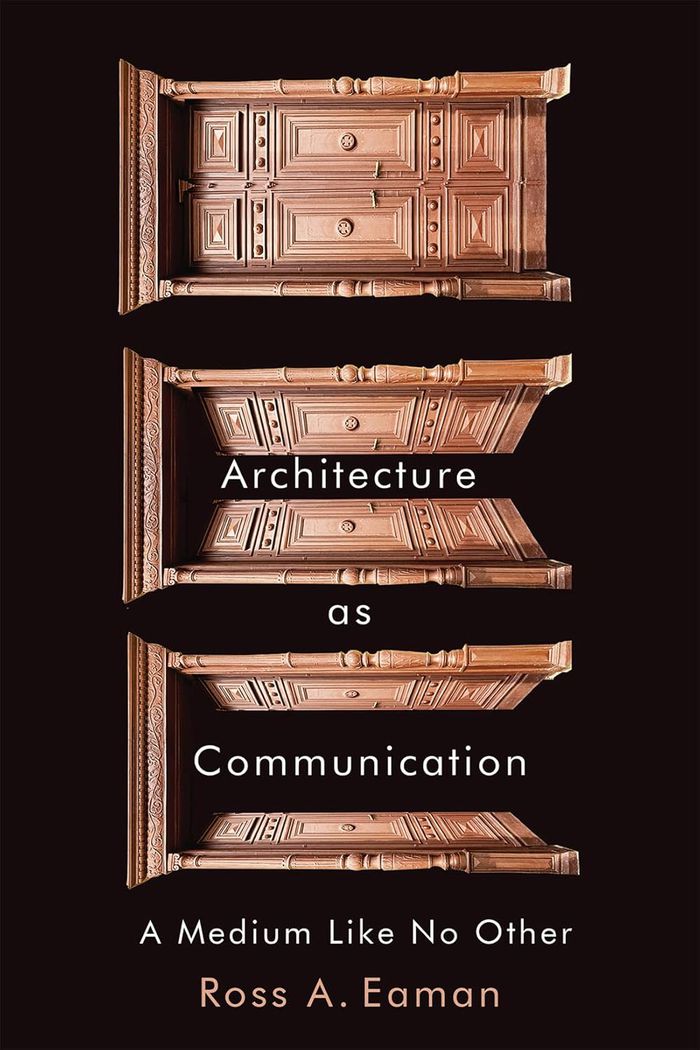
Architecture as communication: A medium like no other
Actions:
Price:
$29.95
(available in store)
Summary:
Media theory has long overlooked the built environment and its communicative capacity: how built structures and spaces convey meaning through material embodiment and symbolization. "Architecture as communication" advances the idea that built environments function as media of communication. Using practice theory in conjunction with the concept of style, this book is anchored in three historical determinants: the quest for perfect proportion in buildings, the belief in architectural determinism, and the ongoing efforts within other media to influence how those who experience built environments understand them. Ross Eaman explores how houses, schools, places of worship, factories, office buildings, stores, malls, opera houses, plazas, and parks have meaning for people as subjective life-worlds. "Architecture as communication" proposes media theory that articulates the social construction of meaning as a unique way of understanding the built environment – one in which the users and observers of structures and spaces participate along with architects and designers.
Architecture as communication: A medium like no other
Actions:
Price:
$29.95
(available in store)
Summary:
Media theory has long overlooked the built environment and its communicative capacity: how built structures and spaces convey meaning through material embodiment and symbolization. "Architecture as communication" advances the idea that built environments function as media of communication. Using practice theory in conjunction with the concept of style, this book is anchored in three historical determinants: the quest for perfect proportion in buildings, the belief in architectural determinism, and the ongoing efforts within other media to influence how those who experience built environments understand them. Ross Eaman explores how houses, schools, places of worship, factories, office buildings, stores, malls, opera houses, plazas, and parks have meaning for people as subjective life-worlds. "Architecture as communication" proposes media theory that articulates the social construction of meaning as a unique way of understanding the built environment – one in which the users and observers of structures and spaces participate along with architects and designers.
Form:
books
books
Publication:
April 2025
April 2025
Subject:
Architectural Theory
Architectural Theory
Form:
journals and magazines
journals and magazines
Actions:
Price:
$34.95
(available in store)
Summary:
Under the title ‘Community Care’, AV Proyectos 128 features six works that cater to specific needs through an attentive and sensitive architecture that prioritizes a collective approach, as show the centers designed by Mae Architects, Vivas Arquitectos, or Dorte Mandrup. Paz Martín, architect and expert in the field, introduces the dossier with an essay that analyzes how(...)
$34.95
(available in store)
Summary:
Under the title ‘Community Care’, AV Proyectos 128 features six works that cater to specific needs through an attentive and sensitive architecture that prioritizes a collective approach, as show the centers designed by Mae Architects, Vivas Arquitectos, or Dorte Mandrup. Paz Martín, architect and expert in the field, introduces the dossier with an essay that analyzes how(...)
Title:
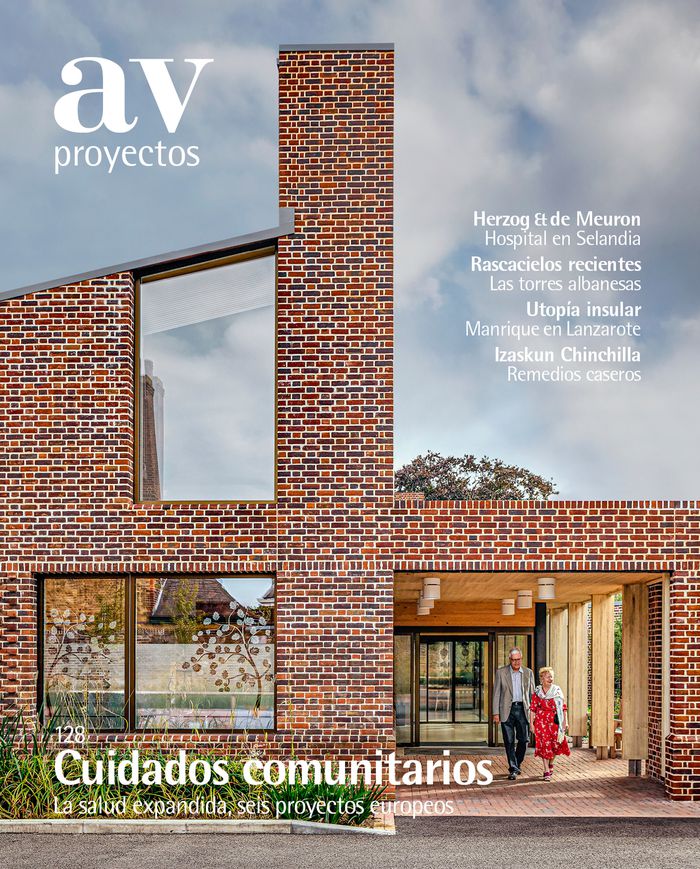
AV Proyectos 128: Community care
Actions:
Price:
$34.95
(available in store)
Summary:
Under the title ‘Community Care’, AV Proyectos 128 features six works that cater to specific needs through an attentive and sensitive architecture that prioritizes a collective approach, as show the centers designed by Mae Architects, Vivas Arquitectos, or Dorte Mandrup. Paz Martín, architect and expert in the field, introduces the dossier with an essay that analyzes how assistance can shape the project strategy. Along the same lines, in an interview with the magazine the architect and professor Izaskun Chinchilla talks about the city of care and how the buildings that compose it are not just hospitals and clinics. In the process section, the complex by Herzog & de Meuron in North Zealand is an example of how to depart from traditional hospital building typologies. The issue also analyzes the high-rise construction boom in Albania, with proposals by MVRDV, Valerio Olgiati, and Bofill Taller de Arquitectura, among other firms.
AV Proyectos 128: Community care
Actions:
Price:
$34.95
(available in store)
Summary:
Under the title ‘Community Care’, AV Proyectos 128 features six works that cater to specific needs through an attentive and sensitive architecture that prioritizes a collective approach, as show the centers designed by Mae Architects, Vivas Arquitectos, or Dorte Mandrup. Paz Martín, architect and expert in the field, introduces the dossier with an essay that analyzes how assistance can shape the project strategy. Along the same lines, in an interview with the magazine the architect and professor Izaskun Chinchilla talks about the city of care and how the buildings that compose it are not just hospitals and clinics. In the process section, the complex by Herzog & de Meuron in North Zealand is an example of how to depart from traditional hospital building typologies. The issue also analyzes the high-rise construction boom in Albania, with proposals by MVRDV, Valerio Olgiati, and Bofill Taller de Arquitectura, among other firms.
Form:
journals and magazines
journals and magazines
Publication:
April 2025
April 2025
Subject:
Magazines
Magazines
Form:
books
books
Actions:
Price:
$64.00
(available to order)
Summary:
Louis I. Kahn is one of the most influential and poetic architects of the twentieth century, a figure whose appeal extends beyond the realm of specialists. In this book, noted Kahn expert John Lobell explores how Kahn's focus on structure, respect for materials, clarity of program, and reverence for details come together to manifest an overall philosophy. Kahn's work(...)
$64.00
(available to order)
Summary:
Louis I. Kahn is one of the most influential and poetic architects of the twentieth century, a figure whose appeal extends beyond the realm of specialists. In this book, noted Kahn expert John Lobell explores how Kahn's focus on structure, respect for materials, clarity of program, and reverence for details come together to manifest an overall philosophy. Kahn's work(...)
Title:
Louis Kahn: Architecture as philosophy
Actions:
Price:
$64.00
(available to order)
Summary:
Louis I. Kahn is one of the most influential and poetic architects of the twentieth century, a figure whose appeal extends beyond the realm of specialists. In this book, noted Kahn expert John Lobell explores how Kahn's focus on structure, respect for materials, clarity of program, and reverence for details come together to manifest an overall philosophy. Kahn's work clearly conveys a kind of "transcendent rootedness"--a rootedness in the fundamentals of architecture that also asks soaring questions about our experience of light and space, and even how we fit into the world. In Louis Kahn: The Philosophy of Architecture, John Lobell seeks to reveal how Kahn's buildings speak to grand humanistic concerns. An architecture book that touches on topics that addresses the universal human interests of consciousness and creativity, Louis Kahn: The Philosophy of Architecture helps us understand our place and the nature of well-being in the built environment.
Louis Kahn: Architecture as philosophy
Actions:
Price:
$64.00
(available to order)
Summary:
Louis I. Kahn is one of the most influential and poetic architects of the twentieth century, a figure whose appeal extends beyond the realm of specialists. In this book, noted Kahn expert John Lobell explores how Kahn's focus on structure, respect for materials, clarity of program, and reverence for details come together to manifest an overall philosophy. Kahn's work clearly conveys a kind of "transcendent rootedness"--a rootedness in the fundamentals of architecture that also asks soaring questions about our experience of light and space, and even how we fit into the world. In Louis Kahn: The Philosophy of Architecture, John Lobell seeks to reveal how Kahn's buildings speak to grand humanistic concerns. An architecture book that touches on topics that addresses the universal human interests of consciousness and creativity, Louis Kahn: The Philosophy of Architecture helps us understand our place and the nature of well-being in the built environment.
Form:
books
books
Publication:
July 2020
July 2020
Subject:
Architecture Monographs
Architecture Monographs
Form:
books
books
Price:
$66.95
(available to order)
Summary:
101 Things that Open and Close the City. 50 leading experts provide tools for analyzing how the Open City is made and unmade. Urban History 101 teaches us that the built environment is not the product of invisible, uncontrollable market forces, but of human-made tools that could have been used differently (or not at all). The Arsenal of Exclusion & Inclusion is an(...)
$66.95
(available to order)
Summary:
101 Things that Open and Close the City. 50 leading experts provide tools for analyzing how the Open City is made and unmade. Urban History 101 teaches us that the built environment is not the product of invisible, uncontrollable market forces, but of human-made tools that could have been used differently (or not at all). The Arsenal of Exclusion & Inclusion is an(...)
Title:
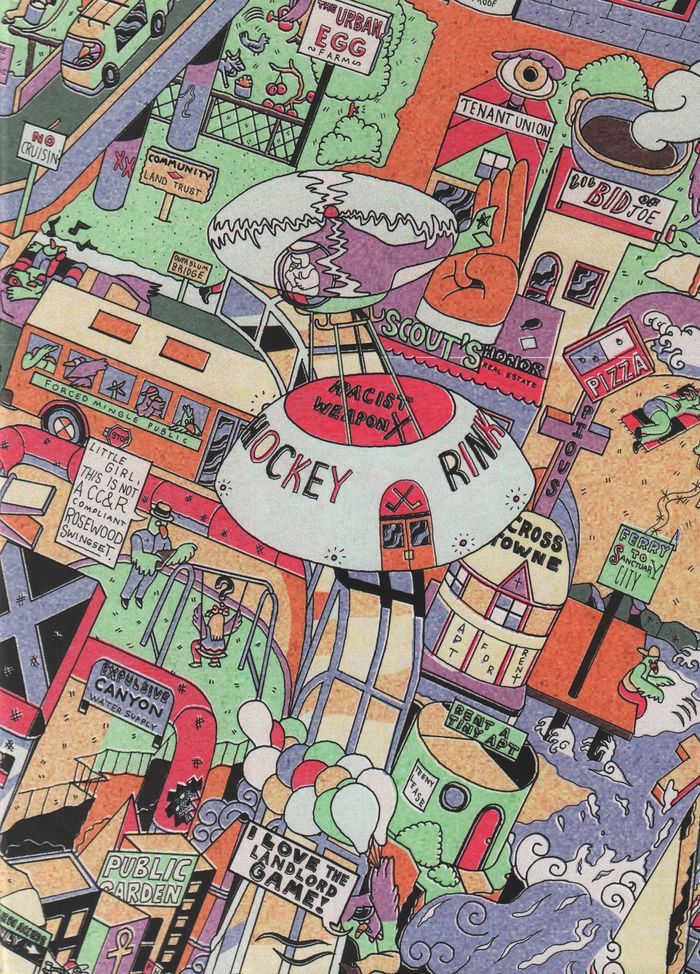
Arsenal of exclusion/inclusion: 101 things that open and close the city
Actions:
Price:
$66.95
(available to order)
Summary:
101 Things that Open and Close the City. 50 leading experts provide tools for analyzing how the Open City is made and unmade. Urban History 101 teaches us that the built environment is not the product of invisible, uncontrollable market forces, but of human-made tools that could have been used differently (or not at all). The Arsenal of Exclusion & Inclusion is an encyclopedia of the human-made tools used by architects, planners, policy-makers, developers, real estate brokers, activists, and other urban actors in the United States to restrict or increase access to the spaces of our cities and suburbs. The Arsenal of Exclusion & Inclusion inventories these tools—or what we call weapons—examines how they have been used, and speculates about how they might be deployed (or retired) to make more open cities in which more people feel welcome in more spaces.
Arsenal of exclusion/inclusion: 101 things that open and close the city
Actions:
Price:
$66.95
(available to order)
Summary:
101 Things that Open and Close the City. 50 leading experts provide tools for analyzing how the Open City is made and unmade. Urban History 101 teaches us that the built environment is not the product of invisible, uncontrollable market forces, but of human-made tools that could have been used differently (or not at all). The Arsenal of Exclusion & Inclusion is an encyclopedia of the human-made tools used by architects, planners, policy-makers, developers, real estate brokers, activists, and other urban actors in the United States to restrict or increase access to the spaces of our cities and suburbs. The Arsenal of Exclusion & Inclusion inventories these tools—or what we call weapons—examines how they have been used, and speculates about how they might be deployed (or retired) to make more open cities in which more people feel welcome in more spaces.
Form:
books
books
Publication:
June 2017
June 2017
Form:
books
books
Actions:
Price:
$70.00
(available to order)
Summary:
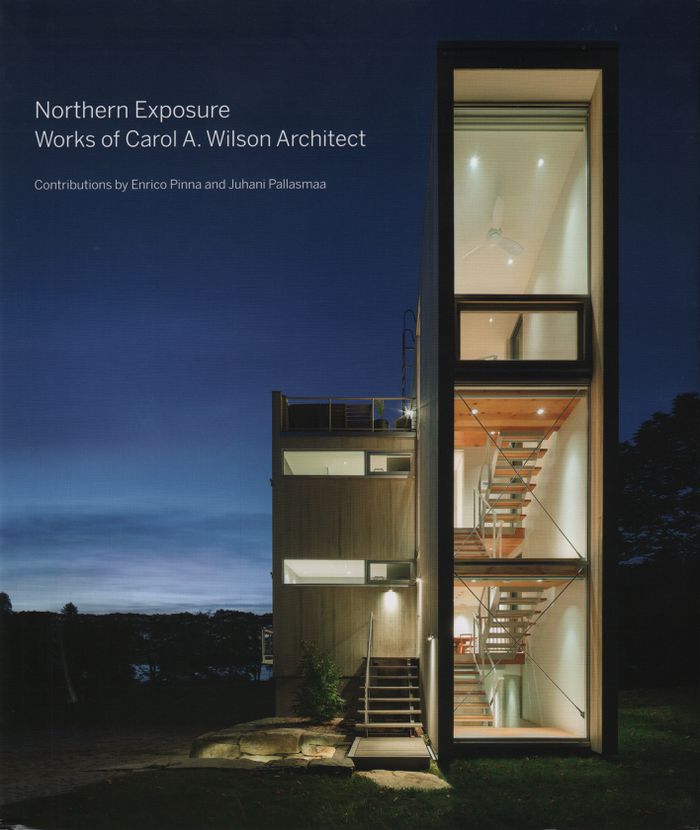
This intimate portrait of eight houses by the Maine architect Carol A. Wilson illustrates how "local" is an idea as close to architecture as it is to food. Focusing on climate, seasons, views, local materials, the ecological history of building sites, and collaborations with local artisans, Wilson crafts exquisitely designed and built houses that celebrate the beauty of(...)
$70.00
(available to order)
Summary:
This intimate portrait of eight houses by the Maine architect Carol A. Wilson illustrates how "local" is an idea as close to architecture as it is to food. Focusing on climate, seasons, views, local materials, the ecological history of building sites, and collaborations with local artisans, Wilson crafts exquisitely designed and built houses that celebrate the beauty of(...)
Title:
Northern exposure: works of Carol A. Wilson Architect
Actions:
Price:
$70.00
(available to order)
Summary:
This intimate portrait of eight houses by the Maine architect Carol A. Wilson illustrates how "local" is an idea as close to architecture as it is to food. Focusing on climate, seasons, views, local materials, the ecological history of building sites, and collaborations with local artisans, Wilson crafts exquisitely designed and built houses that celebrate the beauty of New England and the power of architecture to combine modern forms with a traditional built landscape. Following introductory texts by Enrico Pinna and Juhani Pallasmaa, and a conversation between Wilson and John Leroux, each project opens with a foldout of plans---transitioning from hand-drawn to computer-aided---and information about the house, before culminating in a selection of exterior, interior, and detail photographs. The book closes with an interview in twenty questions that elaborates on Wilson's working principles and the history of her studio for the past thirty years.
Northern exposure: works of Carol A. Wilson Architect
Actions:
Price:
$70.00
(available to order)
Summary:
This intimate portrait of eight houses by the Maine architect Carol A. Wilson illustrates how "local" is an idea as close to architecture as it is to food. Focusing on climate, seasons, views, local materials, the ecological history of building sites, and collaborations with local artisans, Wilson crafts exquisitely designed and built houses that celebrate the beauty of New England and the power of architecture to combine modern forms with a traditional built landscape. Following introductory texts by Enrico Pinna and Juhani Pallasmaa, and a conversation between Wilson and John Leroux, each project opens with a foldout of plans---transitioning from hand-drawn to computer-aided---and information about the house, before culminating in a selection of exterior, interior, and detail photographs. The book closes with an interview in twenty questions that elaborates on Wilson's working principles and the history of her studio for the past thirty years.
Form:
books
books
Publication:
October 2017
October 2017
Subject:
Architecture Monographs
Architecture Monographs
Form:
books
books
Actions:
Price:
$54.00
(available to order)
Summary:
In ''Vitruvius: Writing the body of architecture,'' Indra Kagis McEwen argued that Vitruvius's first-century BCE treatise ''De architectura'' was informed by imperial ideology, giving architecture a role in the imperial Roman project of world rule. In her sequel, ''All the King's Horses,'' McEwen focuses on the early Renaissance reception of Vitruvius's thought beginning(...)
$54.00
(available to order)
Summary:
In ''Vitruvius: Writing the body of architecture,'' Indra Kagis McEwen argued that Vitruvius's first-century BCE treatise ''De architectura'' was informed by imperial ideology, giving architecture a role in the imperial Roman project of world rule. In her sequel, ''All the King's Horses,'' McEwen focuses on the early Renaissance reception of Vitruvius's thought beginning(...)
Title:
All the king's horses: Vitruvius in an age of princes
Actions:
Price:
$54.00
(available to order)
Summary:
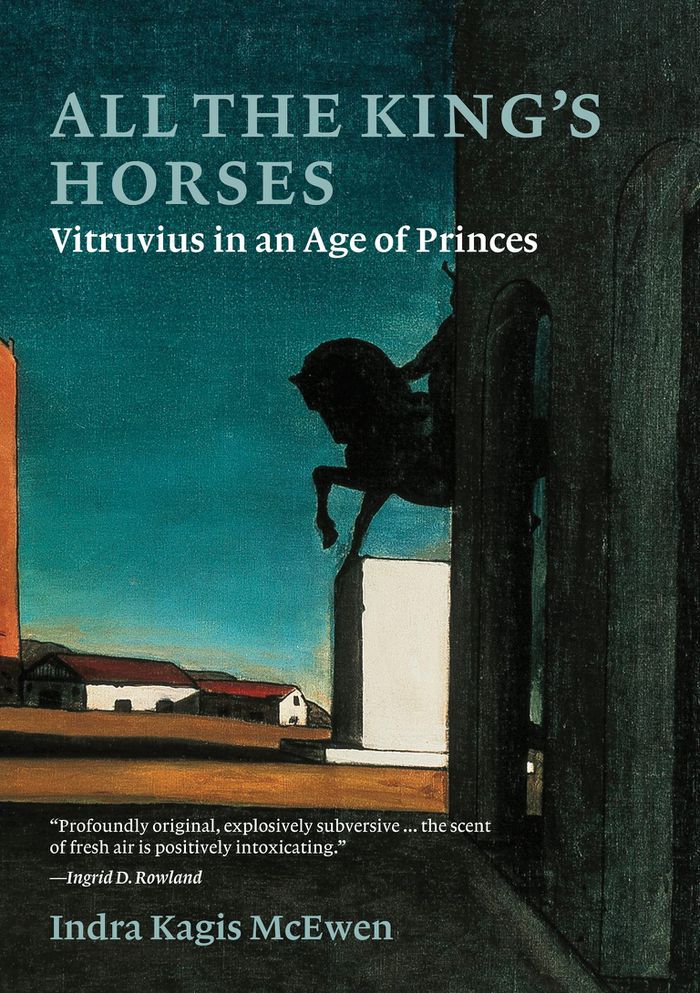
In ''Vitruvius: Writing the body of architecture,'' Indra Kagis McEwen argued that Vitruvius's first-century BCE treatise ''De architectura'' was informed by imperial ideology, giving architecture a role in the imperial Roman project of world rule. In her sequel, ''All the King's Horses,'' McEwen focuses on the early Renaissance reception of Vitruvius's thought beginning with Petrarch—a political reception preoccupied with legitimating existing power structures. During this ''age of princes'' various signori took over Italian towns and cities, displacing independent communes and their avowed ideal of the common good. Architects, taking up Vitruvius's mantle, designed buildings and other structures for these princes with the intent of celebrating and making their power manifest. Through meticulous descriptions of the work of architects and artists from Alberti to Leonardo, McEwen explains how architecture became an instrument of control in the early Italian Renaissance. She shows how architectural magnificence supported claims to power, a phenomenon best displayed in one of the era's most prominent monumental themes: the equestrian statue of a prince, in which the horse became an emanation of the will of the rider, its strength the expression of his strength.
All the king's horses: Vitruvius in an age of princes
Actions:
Price:
$54.00
(available to order)
Summary:
In ''Vitruvius: Writing the body of architecture,'' Indra Kagis McEwen argued that Vitruvius's first-century BCE treatise ''De architectura'' was informed by imperial ideology, giving architecture a role in the imperial Roman project of world rule. In her sequel, ''All the King's Horses,'' McEwen focuses on the early Renaissance reception of Vitruvius's thought beginning with Petrarch—a political reception preoccupied with legitimating existing power structures. During this ''age of princes'' various signori took over Italian towns and cities, displacing independent communes and their avowed ideal of the common good. Architects, taking up Vitruvius's mantle, designed buildings and other structures for these princes with the intent of celebrating and making their power manifest. Through meticulous descriptions of the work of architects and artists from Alberti to Leonardo, McEwen explains how architecture became an instrument of control in the early Italian Renaissance. She shows how architectural magnificence supported claims to power, a phenomenon best displayed in one of the era's most prominent monumental themes: the equestrian statue of a prince, in which the horse became an emanation of the will of the rider, its strength the expression of his strength.
Form:
books
books
Publication:
April 2023
April 2023
Subject:
Architectural Theory
Architectural Theory
Form:
books
books
Actions:
Price:
$34.95
(available to order)
Summary:
Jorge Otero-Pailos shows how architectural phenomenology radically transformed how architects engaged, theorized, and produced history. In the first critical intellectual account of the movement, Otero-Pailos discusses the contributions of leading members, including Jean Labatut, Charles Moore, Christian Norberg-Schulz, and Kenneth Frampton. For architects maturing after(...)
$34.95
(available to order)
Summary:
Jorge Otero-Pailos shows how architectural phenomenology radically transformed how architects engaged, theorized, and produced history. In the first critical intellectual account of the movement, Otero-Pailos discusses the contributions of leading members, including Jean Labatut, Charles Moore, Christian Norberg-Schulz, and Kenneth Frampton. For architects maturing after(...)
Title:
Architecture's historical turn: phenomenology and the rise of the postmodern
Actions:
Price:
$34.95
(available to order)
Summary:
Jorge Otero-Pailos shows how architectural phenomenology radically transformed how architects engaged, theorized, and produced history. In the first critical intellectual account of the movement, Otero-Pailos discusses the contributions of leading members, including Jean Labatut, Charles Moore, Christian Norberg-Schulz, and Kenneth Frampton. For architects maturing after World War II, Otero-Pailos contends, architectural history was a problem rather than a given. Paradoxically, their awareness of modernism’s historicity led some of them to search for an ahistorical experiential constant that might underpin all architectural expression. They drew from phenomenology, exploring the work of Bachelard, Merleau-Ponty, Heidegger, and Ricoeur, which they translated for architectural audiences. Initially, the concept that experience could be a timeless architectural language provided a unifying intellectual basis for the stylistic pluralism that characterized postmodernism. It helped give theory—especially the theory of architectural history—a new importance over practice. However, as Otero-Pailos makes clear, architectural phenomenologists could not accept the idea of theory as an end in itself. In the mid-1980s they were caught in the contradictory and untenable position of having to formulate their own demotion of theory.
Architecture's historical turn: phenomenology and the rise of the postmodern
Actions:
Price:
$34.95
(available to order)
Summary:
Jorge Otero-Pailos shows how architectural phenomenology radically transformed how architects engaged, theorized, and produced history. In the first critical intellectual account of the movement, Otero-Pailos discusses the contributions of leading members, including Jean Labatut, Charles Moore, Christian Norberg-Schulz, and Kenneth Frampton. For architects maturing after World War II, Otero-Pailos contends, architectural history was a problem rather than a given. Paradoxically, their awareness of modernism’s historicity led some of them to search for an ahistorical experiential constant that might underpin all architectural expression. They drew from phenomenology, exploring the work of Bachelard, Merleau-Ponty, Heidegger, and Ricoeur, which they translated for architectural audiences. Initially, the concept that experience could be a timeless architectural language provided a unifying intellectual basis for the stylistic pluralism that characterized postmodernism. It helped give theory—especially the theory of architectural history—a new importance over practice. However, as Otero-Pailos makes clear, architectural phenomenologists could not accept the idea of theory as an end in itself. In the mid-1980s they were caught in the contradictory and untenable position of having to formulate their own demotion of theory.
Form:
books
books
Publication:
April 2010
April 2010
Subject:
Architectural Theory
Architectural Theory
Form:
books
books
Actions:
Price:
$43.95
(available to order)
Summary:
The Architect as Worker presents a range of essays exploring the issues central to architectural labor. These include questions about the nature of design work; immaterial and creative labor and how it gets categorized, spatialized, and monetized within architecture; the connection between parametrics and BIM and labor; theories of architectural work; architectural design(...)
$43.95
(available to order)
Summary:
The Architect as Worker presents a range of essays exploring the issues central to architectural labor. These include questions about the nature of design work; immaterial and creative labor and how it gets categorized, spatialized, and monetized within architecture; the connection between parametrics and BIM and labor; theories of architectural work; architectural design(...)
Title:
The architect as worker: immaterial labor, the creative class, and the politics of design
Actions:
Price:
$43.95
(available to order)
Summary:
The Architect as Worker presents a range of essays exploring the issues central to architectural labor. These include questions about the nature of design work; immaterial and creative labor and how it gets categorized, spatialized, and monetized within architecture; the connection between parametrics and BIM and labor; theories of architectural work; architectural design as a cultural and economic condition; entrepreneurialism; and the possibility of ethical and rewarding architectural practice.
The architect as worker: immaterial labor, the creative class, and the politics of design
Actions:
Price:
$43.95
(available to order)
Summary:
The Architect as Worker presents a range of essays exploring the issues central to architectural labor. These include questions about the nature of design work; immaterial and creative labor and how it gets categorized, spatialized, and monetized within architecture; the connection between parametrics and BIM and labor; theories of architectural work; architectural design as a cultural and economic condition; entrepreneurialism; and the possibility of ethical and rewarding architectural practice.
Form:
books
books
Publication:
August 2015
August 2015
Subject:
Architectural Theory
Architectural Theory
Form:
books
books
Actions:
Price:
$61.50
(available to order)
Summary:
In the 1960s and ’70s, architects, influenced by recent developments in computing and the rise of structuralist and poststructuralist thinking, began to radically rethink how architecture could be created. Though various new approaches gained favor, they had one thing in common: they advocated moving away from the traditional reliance on an individual architect’s(...)
$61.50
(available to order)
Summary:
In the 1960s and ’70s, architects, influenced by recent developments in computing and the rise of structuralist and poststructuralist thinking, began to radically rethink how architecture could be created. Though various new approaches gained favor, they had one thing in common: they advocated moving away from the traditional reliance on an individual architect’s(...)
Title:
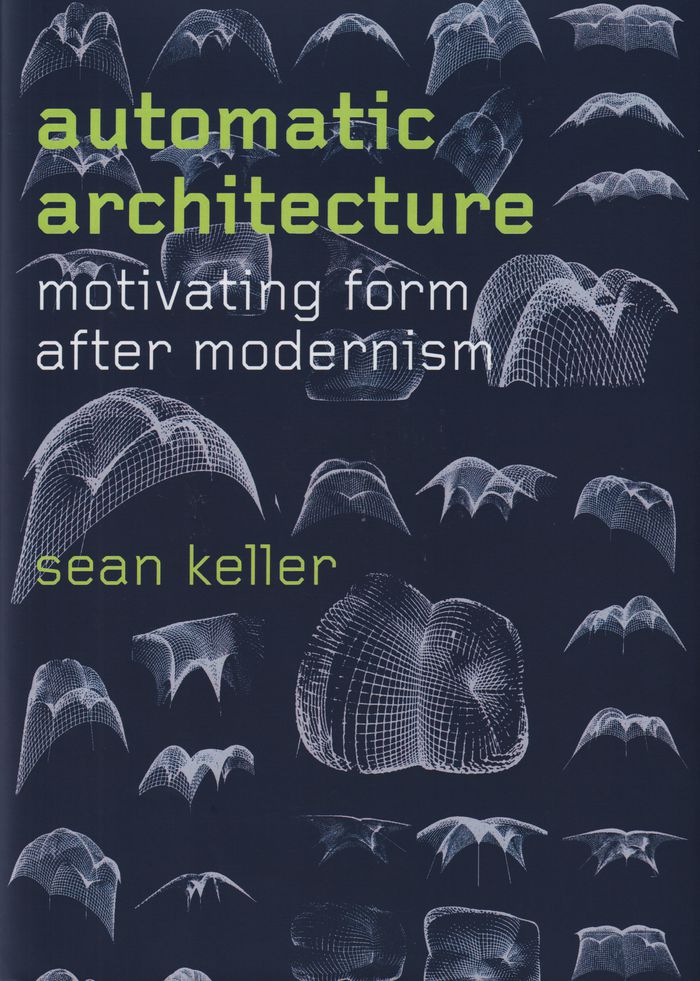
Automatic architecture: motivating form after modernism
Actions:
Price:
$61.50
(available to order)
Summary:
In the 1960s and ’70s, architects, influenced by recent developments in computing and the rise of structuralist and poststructuralist thinking, began to radically rethink how architecture could be created. Though various new approaches gained favor, they had one thing in common: they advocated moving away from the traditional reliance on an individual architect’s knowledge and instincts and toward the use of external tools and processes that were considered objective, logical, or natural. Automatic architecture was born.
Automatic architecture: motivating form after modernism
Actions:
Price:
$61.50
(available to order)
Summary:
In the 1960s and ’70s, architects, influenced by recent developments in computing and the rise of structuralist and poststructuralist thinking, began to radically rethink how architecture could be created. Though various new approaches gained favor, they had one thing in common: they advocated moving away from the traditional reliance on an individual architect’s knowledge and instincts and toward the use of external tools and processes that were considered objective, logical, or natural. Automatic architecture was born.
Form:
books
books
Publication:
February 2018
February 2018
Subject:
Architectural Theory
Architectural Theory
Form:
books
books
Price:
$34.00
(available to order)
Summary:
'Architecture's Odd Couple', traces the historical threads connecting 20th century architects Frank Lloyd Wright and Philip Johnson, and offers readers a distinct perspective on the era they so enlivened with their designs. Featuring many of the structures that defined modern space--from Fallingwater to the Guggenheim, from the Glass House to the Seagram Building--this(...)
$34.00
(available to order)
Summary:
'Architecture's Odd Couple', traces the historical threads connecting 20th century architects Frank Lloyd Wright and Philip Johnson, and offers readers a distinct perspective on the era they so enlivened with their designs. Featuring many of the structures that defined modern space--from Fallingwater to the Guggenheim, from the Glass House to the Seagram Building--this(...)
Title:
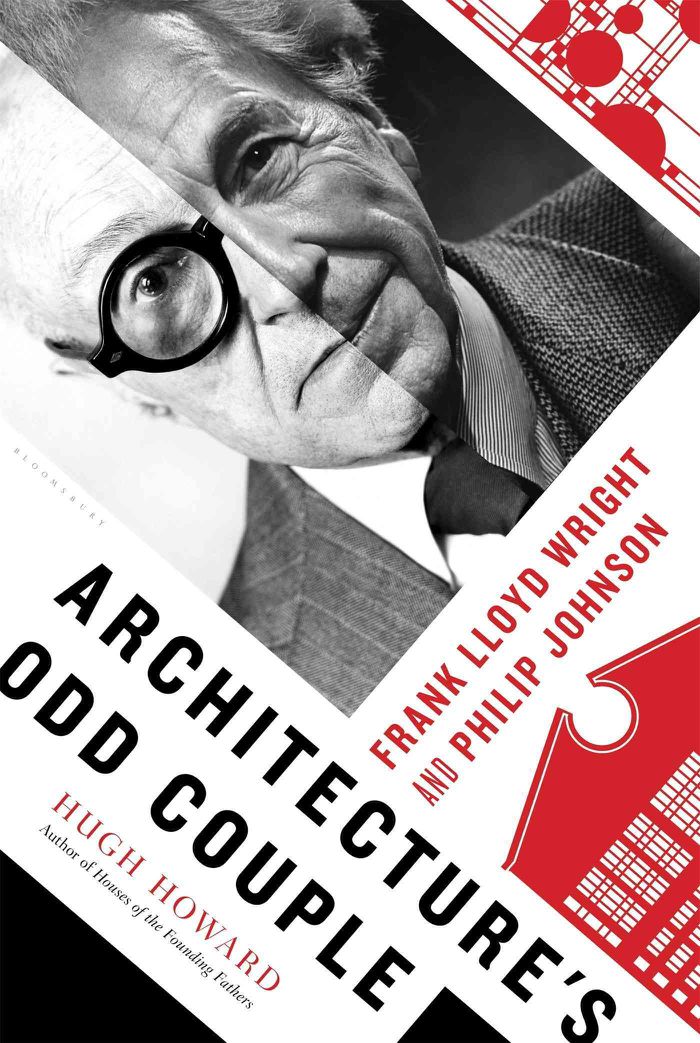
Architecture's odd couple: Frank Lloyd Wright and Philip Johhnson
Actions:
Price:
$34.00
(available to order)
Summary:
'Architecture's Odd Couple', traces the historical threads connecting 20th century architects Frank Lloyd Wright and Philip Johnson, and offers readers a distinct perspective on the era they so enlivened with their designs. Featuring many of the structures that defined modern space--from Fallingwater to the Guggenheim, from the Glass House to the Seagram Building--this book presents an arresting portrait of modern architecture's odd couple and how they shaped the American landscape by shaping each other.
Architecture's odd couple: Frank Lloyd Wright and Philip Johhnson
Actions:
Price:
$34.00
(available to order)
Summary:
'Architecture's Odd Couple', traces the historical threads connecting 20th century architects Frank Lloyd Wright and Philip Johnson, and offers readers a distinct perspective on the era they so enlivened with their designs. Featuring many of the structures that defined modern space--from Fallingwater to the Guggenheim, from the Glass House to the Seagram Building--this book presents an arresting portrait of modern architecture's odd couple and how they shaped the American landscape by shaping each other.
Form:
books
books
Publication:
May 2016
May 2016
Subject:
Architectural Theory
Architectural Theory


