


2505 Results
Form:
books
books

Actions:
Price:
$66.00
(available to order)
Summary:
Natural, renewable, reusable, and aesthetically pleasing, wood is the consummate building material. Thanks to incredible advances in both application and sustainability, it is being used across the world to create new and surprising styles. This global survey features exquisite photography that captures a wide range of twenty-first century construction in residential,(...)
$66.00
(available to order)
Summary:
Natural, renewable, reusable, and aesthetically pleasing, wood is the consummate building material. Thanks to incredible advances in both application and sustainability, it is being used across the world to create new and surprising styles. This global survey features exquisite photography that captures a wide range of twenty-first century construction in residential,(...)
Title:
Building with wood: the new timber architecture
Actions:
Price:
$66.00
(available to order)
Summary:
Natural, renewable, reusable, and aesthetically pleasing, wood is the consummate building material. Thanks to incredible advances in both application and sustainability, it is being used across the world to create new and surprising styles. This global survey features exquisite photography that captures a wide range of twenty-first century construction in residential, public, cultural, educational, commercial, and entertainment-related spaces. From the Mount Fuji World Heritage Center in Shizuoka, Japan and the Eystur Town Hall in the Faroe Islands to the College of Forestry at Oregon State University, each building is featured in double-page spreads with colour photographs that allow readers to appreciate timber’s intrinsic qualities against a variety of backgrounds, scales, and typologies. Plans and building specifications are accompanied by the latest developments in research and design. Eco-friendly and robust, timber’s applications are almost unlimited, extending to the tallest skyscrapers, and to every livable corner of our planet. This volume offers encouraging proof that architects around the world are responding to the climate crisis in ways that not only preserve the earth, but also provide pleasing environments in which to live, work, and play.
Building with wood: the new timber architecture
Actions:
Price:
$66.00
(available to order)
Summary:
Natural, renewable, reusable, and aesthetically pleasing, wood is the consummate building material. Thanks to incredible advances in both application and sustainability, it is being used across the world to create new and surprising styles. This global survey features exquisite photography that captures a wide range of twenty-first century construction in residential, public, cultural, educational, commercial, and entertainment-related spaces. From the Mount Fuji World Heritage Center in Shizuoka, Japan and the Eystur Town Hall in the Faroe Islands to the College of Forestry at Oregon State University, each building is featured in double-page spreads with colour photographs that allow readers to appreciate timber’s intrinsic qualities against a variety of backgrounds, scales, and typologies. Plans and building specifications are accompanied by the latest developments in research and design. Eco-friendly and robust, timber’s applications are almost unlimited, extending to the tallest skyscrapers, and to every livable corner of our planet. This volume offers encouraging proof that architects around the world are responding to the climate crisis in ways that not only preserve the earth, but also provide pleasing environments in which to live, work, and play.
Form:
books
books
Publication:
July 2023
July 2023
Subject:
Timber Construction
Timber Construction
Form:
books
books
Actions:
Price:
$27.95
(available in store)
Summary:
As London emerged from the devastation of the Second World War, planners and policymakers sought to rebuild the city in ways that would reshape the behavior of its citizens as much as it would its buildings and infrastructure—a program defined by a strong emphasis on civic order and conservative values of national community. One of the groups most significantly affected(...)
$27.95
(available in store)
Summary:
As London emerged from the devastation of the Second World War, planners and policymakers sought to rebuild the city in ways that would reshape the behavior of its citizens as much as it would its buildings and infrastructure—a program defined by a strong emphasis on civic order and conservative values of national community. One of the groups most significantly affected(...)
Title:
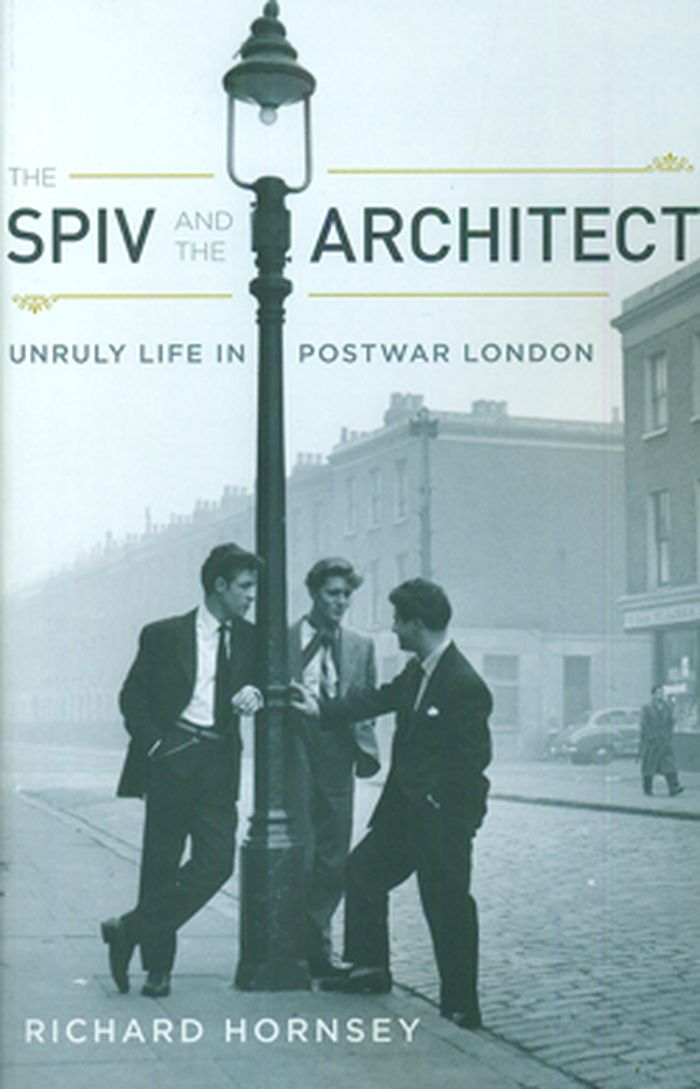
The spiv and the architect: unruly life in postwar London
Actions:
Price:
$27.95
(available in store)
Summary:
As London emerged from the devastation of the Second World War, planners and policymakers sought to rebuild the city in ways that would reshape the behavior of its citizens as much as it would its buildings and infrastructure—a program defined by a strong emphasis on civic order and conservative values of national community. One of the groups most significantly affected by this new, moralistic climate of reformation and renewal was queer men, whom the police, the media, and lawmakers targeted as an urgent urban problem by marking their lives and desires as criminal and deviant. Richard Hornsey examines how queer men legitimized, resisted, and reinvented this ambitious reconstruction program, which extended from the design of basic public spaces and municipal libraries to private living rooms and home decor. From their association with the urban stereotype of the spiv (slang for a young petty criminal who lived by his wits and shirked legitimate work) and vilification in the tabloids as perverts to the assimilated homosexuals within reformist psychology, Hornsey details how these efforts to transform London fundamentally restructured the experiences and identities of gay men in the city and throughout the country.
The spiv and the architect: unruly life in postwar London
Actions:
Price:
$27.95
(available in store)
Summary:
As London emerged from the devastation of the Second World War, planners and policymakers sought to rebuild the city in ways that would reshape the behavior of its citizens as much as it would its buildings and infrastructure—a program defined by a strong emphasis on civic order and conservative values of national community. One of the groups most significantly affected by this new, moralistic climate of reformation and renewal was queer men, whom the police, the media, and lawmakers targeted as an urgent urban problem by marking their lives and desires as criminal and deviant. Richard Hornsey examines how queer men legitimized, resisted, and reinvented this ambitious reconstruction program, which extended from the design of basic public spaces and municipal libraries to private living rooms and home decor. From their association with the urban stereotype of the spiv (slang for a young petty criminal who lived by his wits and shirked legitimate work) and vilification in the tabloids as perverts to the assimilated homosexuals within reformist psychology, Hornsey details how these efforts to transform London fundamentally restructured the experiences and identities of gay men in the city and throughout the country.
Form:
books
books
Publication:
April 2010
April 2010
Subject:
Gender Theory in Architecture
Gender Theory in Architecture
Form:
books
books
Actions:
Price:
$64.95
(available to order)
Summary:
Ecological Urbanism: The Nature of the City asks the questions that are important inside and outside the built environment professions: what are climate change, urbanisation and ecology doing to the theory and practice of urban design? How does Ecological Urbanism figure in this change? What is Ecological Urbanism? In answer, this book is neither definitive – impossible(...)
$64.95
(available to order)
Summary:
Ecological Urbanism: The Nature of the City asks the questions that are important inside and outside the built environment professions: what are climate change, urbanisation and ecology doing to the theory and practice of urban design? How does Ecological Urbanism figure in this change? What is Ecological Urbanism? In answer, this book is neither definitive – impossible(...)
Title:
Ecological urbanism: the nature of the city
Actions:
Price:
$64.95
(available to order)
Summary:
Ecological Urbanism: The Nature of the City asks the questions that are important inside and outside the built environment professions: what are climate change, urbanisation and ecology doing to the theory and practice of urban design? How does Ecological Urbanism figure in this change? What is Ecological Urbanism? In answer, this book is neither definitive – impossible when a subject is still in motion – nor encyclopaedic – equally impossible when so much has been written on almost every aspect of these essays. Instead, it seeks to rebalance the ecological narrative and its embryonic modes of practice with the narratives of urbanism and its older, deeply embedded modes of practice. It examines the implications for cities and the designers of cities now we are required to again address their metabolic as well as social and formal dimensions, and it explores the extent to which environmental engineering and natural systems design can and should become drivers for the remaking of cities in the 21st century. Above all, it argues that sooner rather than later, urbanism needs to become environmentally literate, and environmental design needs to become culturally literate.
Ecological urbanism: the nature of the city
Actions:
Price:
$64.95
(available to order)
Summary:
Ecological Urbanism: The Nature of the City asks the questions that are important inside and outside the built environment professions: what are climate change, urbanisation and ecology doing to the theory and practice of urban design? How does Ecological Urbanism figure in this change? What is Ecological Urbanism? In answer, this book is neither definitive – impossible when a subject is still in motion – nor encyclopaedic – equally impossible when so much has been written on almost every aspect of these essays. Instead, it seeks to rebalance the ecological narrative and its embryonic modes of practice with the narratives of urbanism and its older, deeply embedded modes of practice. It examines the implications for cities and the designers of cities now we are required to again address their metabolic as well as social and formal dimensions, and it explores the extent to which environmental engineering and natural systems design can and should become drivers for the remaking of cities in the 21st century. Above all, it argues that sooner rather than later, urbanism needs to become environmentally literate, and environmental design needs to become culturally literate.
Form:
books
books
Publication:
November 2014
November 2014
Subject:
Urban Landscapes
Urban Landscapes
Form:
books
books
Actions:
Holdings:
Description:
191 pages : illustrations (some color) ; 24 cm
Description:
191 pages : illustrations (some color) ; 24 cm
Author:
Subject:
Publication:
Montréal : Éditions Écosociété, 2019., ©2019
Montréal : Éditions Écosociété, 2019., ©2019
Title:
La vie dans l'espace public : comment l'étudier / Jan Gehl et Birgitte Svarre ; traduit de l'anglais par Nicolas Calvé ; préface d'Anne Hidalgo et Valérie Plante ; postface de Jayne Engle.
Actions:
Holdings:
Description:
191 pages : illustrations (some color) ; 24 cm
La vie dans l'espace public : comment l'étudier / Jan Gehl et Birgitte Svarre ; traduit de l'anglais par Nicolas Calvé ; préface d'Anne Hidalgo et Valérie Plante ; postface de Jayne Engle.
Actions:
Holdings:
Description:
191 pages : illustrations (some color) ; 24 cm
Form:
books
books
Publication:
Montréal : Éditions Écosociété, 2019., ©2019
Montréal : Éditions Écosociété, 2019., ©2019
Author:
Subject:
Form:
books
books
Holdings:
Description:
147 pages ; 19 cm.
Description:
147 pages ; 19 cm.
Author:
Subject:
Publication:
Paris : Presses universitaires de France, 2010.
Paris : Presses universitaires de France, 2010.
Title:
La ville-événement : foules et publics urbains / Dominique Boullier.
Actions:
Holdings:
Description:
147 pages ; 19 cm.
La ville-événement : foules et publics urbains / Dominique Boullier.
Actions:
Holdings:
Description:
147 pages ; 19 cm.
Form:
books
books
Publication:
Paris : Presses universitaires de France, 2010.
Paris : Presses universitaires de France, 2010.
Author:
Subject:
Form:
journals and magazines
journals and magazines
Actions:
Price:
$52.00
(available in store)
Summary:
We humans long for daylight, a view of greenery, and a sense of connection. Yet today, transparent building envelopes seem less in demand. Instead of granting views in and out, we create retreats. What forms of transparency remain desirable amid social uncertainty and urban densification? And do transparent or translucent envelopes still make sense when contemporary(...)
$52.00
(available in store)
Summary:
We humans long for daylight, a view of greenery, and a sense of connection. Yet today, transparent building envelopes seem less in demand. Instead of granting views in and out, we create retreats. What forms of transparency remain desirable amid social uncertainty and urban densification? And do transparent or translucent envelopes still make sense when contemporary(...)
Title:
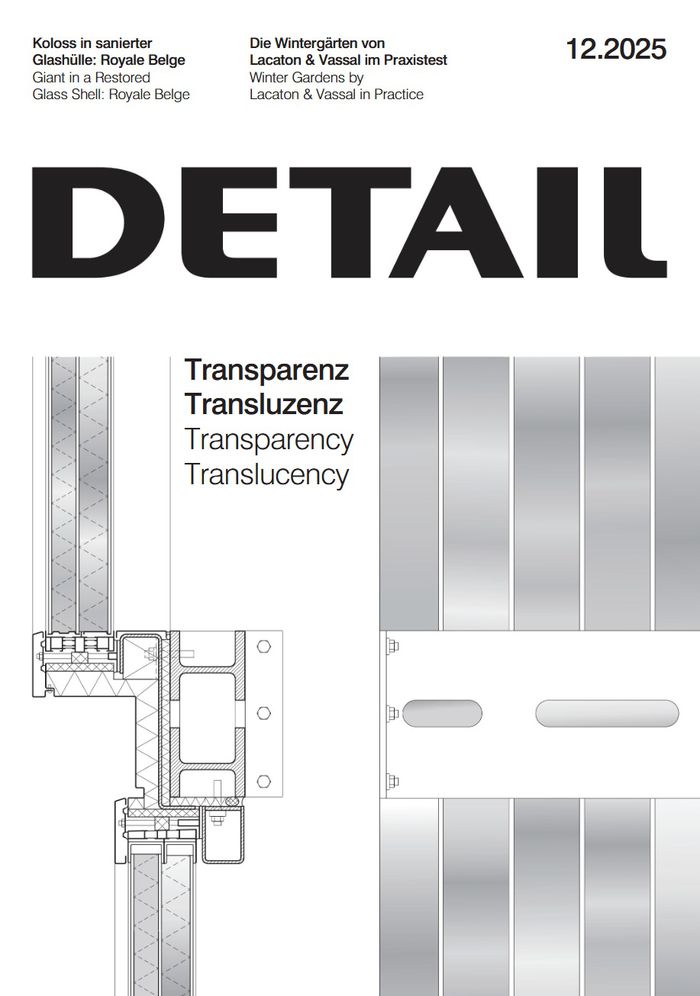
Detail 12 2025 : Transparency translucency
Actions:
Price:
$52.00
(available in store)
Summary:
We humans long for daylight, a view of greenery, and a sense of connection. Yet today, transparent building envelopes seem less in demand. Instead of granting views in and out, we create retreats. What forms of transparency remain desirable amid social uncertainty and urban densification? And do transparent or translucent envelopes still make sense when contemporary energy concepts are applied? Light, air, and sun are no longer universally welcome. The spaces behind the climate envelope must be protected from solar gains and heat loss. Limited opening ratios, smart building technology, and algorithm-driven facade design have become the norm. In such scenarios, people are treated as disruptive elements, better kept passive. Anne Lacaton and Jean-Philippe Vassal show that another way is possible. Working with 51N4E in Brussels, Lacaton & Vassal recently extended a residential block in the Peterbos district using their familiar approach: adding new winter gardens. Transparent and translucent sliding panels alternate, while curtains provide shade or privacy when needed. The result is adaptable space that responds to changing conditions – yet always leaves the final decision to the human user. A drawn curtain can create a sense of withdrawal, but it can just as easily be opened again
Detail 12 2025 : Transparency translucency
Actions:
Price:
$52.00
(available in store)
Summary:
We humans long for daylight, a view of greenery, and a sense of connection. Yet today, transparent building envelopes seem less in demand. Instead of granting views in and out, we create retreats. What forms of transparency remain desirable amid social uncertainty and urban densification? And do transparent or translucent envelopes still make sense when contemporary energy concepts are applied? Light, air, and sun are no longer universally welcome. The spaces behind the climate envelope must be protected from solar gains and heat loss. Limited opening ratios, smart building technology, and algorithm-driven facade design have become the norm. In such scenarios, people are treated as disruptive elements, better kept passive. Anne Lacaton and Jean-Philippe Vassal show that another way is possible. Working with 51N4E in Brussels, Lacaton & Vassal recently extended a residential block in the Peterbos district using their familiar approach: adding new winter gardens. Transparent and translucent sliding panels alternate, while curtains provide shade or privacy when needed. The result is adaptable space that responds to changing conditions – yet always leaves the final decision to the human user. A drawn curtain can create a sense of withdrawal, but it can just as easily be opened again
Form:
journals and magazines
journals and magazines
Publication:
December 2025
December 2025
Subject:
Magazines
Magazines
Form:
books
books
Actions:
Holdings:
Description:
240 pages : color illustrations ; 30 cm
Description:
240 pages : color illustrations ; 30 cm
Author:
Subject:
Publication:
New York, NY : Published by Cooper Hewitt, Smithsonian Design Museum, [2019], New York, NY : Distributed Worldwide by ARTBOOK / D.A.P., ©2019
New York, NY : Published by Cooper Hewitt, Smithsonian Design Museum, [2019], New York, NY : Distributed Worldwide by ARTBOOK / D.A.P., ©2019
Title:
Nature : collaborations in design / Cooper Hewitt Design Triennial, co-organized with Cube Design Museum ; Andrea Lipps, Matilda McQuaid, Caitlin Condell, Gène Bertrand.
Actions:
Holdings:
Description:
240 pages : color illustrations ; 30 cm
Nature : collaborations in design / Cooper Hewitt Design Triennial, co-organized with Cube Design Museum ; Andrea Lipps, Matilda McQuaid, Caitlin Condell, Gène Bertrand.
Actions:
Holdings:
Description:
240 pages : color illustrations ; 30 cm
Form:
books
books
Publication:
New York, NY : Published by Cooper Hewitt, Smithsonian Design Museum, [2019], New York, NY : Distributed Worldwide by ARTBOOK / D.A.P., ©2019
New York, NY : Published by Cooper Hewitt, Smithsonian Design Museum, [2019], New York, NY : Distributed Worldwide by ARTBOOK / D.A.P., ©2019
Author:
Subject:
Form:
books
books
Title:
Gens du fleuve, gens de l'île : Hochelaga en Laurentie iroquoienne au XVIe siècle / Roland Viau.
Gens du fleuve, gens de l'île : Hochelaga en Laurentie iroquoienne au XVIe siècle / Roland Viau.
Actions:
Holdings:
Description:
344 pages : illustrations, maps ; 23 cm
Description:
344 pages : illustrations, maps ; 23 cm
Author:
Subject:
Publication:
Montréal (Québec) : Boréal, [2021], ©2021
Montréal (Québec) : Boréal, [2021], ©2021
Title:
Gens du fleuve, gens de l'île : Hochelaga en Laurentie iroquoienne au XVIe siècle / Roland Viau.
Actions:
Holdings:
Description:
344 pages : illustrations, maps ; 23 cm
Gens du fleuve, gens de l'île : Hochelaga en Laurentie iroquoienne au XVIe siècle / Roland Viau.
Actions:
Holdings:
Description:
344 pages : illustrations, maps ; 23 cm
Form:
books
books
Publication:
Montréal (Québec) : Boréal, [2021], ©2021
Montréal (Québec) : Boréal, [2021], ©2021
Author:
Subject:
Form:
books
books
Price:
$39.95
(available to order)
Summary:
How human behavior brought our world to the brink, and how human behavior can save us. The world is a mess. Our dire predicament, from collapsing social structures to the climate crisis, has been millennia in the making and can be traced back to the erroneous belief that the earth's resources are infinite. The key to change, says Don Norman, is human behavior, covered(...)
$39.95
(available to order)
Summary:
How human behavior brought our world to the brink, and how human behavior can save us. The world is a mess. Our dire predicament, from collapsing social structures to the climate crisis, has been millennia in the making and can be traced back to the erroneous belief that the earth's resources are infinite. The key to change, says Don Norman, is human behavior, covered(...)
Title:
Design for a better world: meaningful, sustainable, humanity centered
Actions:
Price:
$39.95
(available to order)
Summary:
How human behavior brought our world to the brink, and how human behavior can save us. The world is a mess. Our dire predicament, from collapsing social structures to the climate crisis, has been millennia in the making and can be traced back to the erroneous belief that the earth's resources are infinite. The key to change, says Don Norman, is human behavior, covered in the book's three major themes: meaning, sustainability, and humanity-centeredness. Emphasize quality of life, not monetary rewards; restructure how we live to better protect the environment; and focus on all of humanity. ''Design for a better world'' presents an eye-opening diagnosis of where we've gone wrong and a clear prescription for making things better. Norman proposes a new way of thinking, one that recognizes our place in a complex global system where even simple behaviors affect the entire world. He identifies the economic metrics that contribute to the harmful effects of commerce and manufacturing and proposes a recalibration of what we consider important in life. His experience as both a scientist and business executive gives him the perspective to show how to make these changes while maintaining a thriving economy. Let the change begin with this book before it's too late.
Design for a better world: meaningful, sustainable, humanity centered
Actions:
Price:
$39.95
(available to order)
Summary:
How human behavior brought our world to the brink, and how human behavior can save us. The world is a mess. Our dire predicament, from collapsing social structures to the climate crisis, has been millennia in the making and can be traced back to the erroneous belief that the earth's resources are infinite. The key to change, says Don Norman, is human behavior, covered in the book's three major themes: meaning, sustainability, and humanity-centeredness. Emphasize quality of life, not monetary rewards; restructure how we live to better protect the environment; and focus on all of humanity. ''Design for a better world'' presents an eye-opening diagnosis of where we've gone wrong and a clear prescription for making things better. Norman proposes a new way of thinking, one that recognizes our place in a complex global system where even simple behaviors affect the entire world. He identifies the economic metrics that contribute to the harmful effects of commerce and manufacturing and proposes a recalibration of what we consider important in life. His experience as both a scientist and business executive gives him the perspective to show how to make these changes while maintaining a thriving economy. Let the change begin with this book before it's too late.
Form:
books
books
Publication:
March 2023
March 2023
Subject:
Design Theory
Design Theory
Form:
books
books
Actions:
Price:
$30.00
(available to order)
Summary:
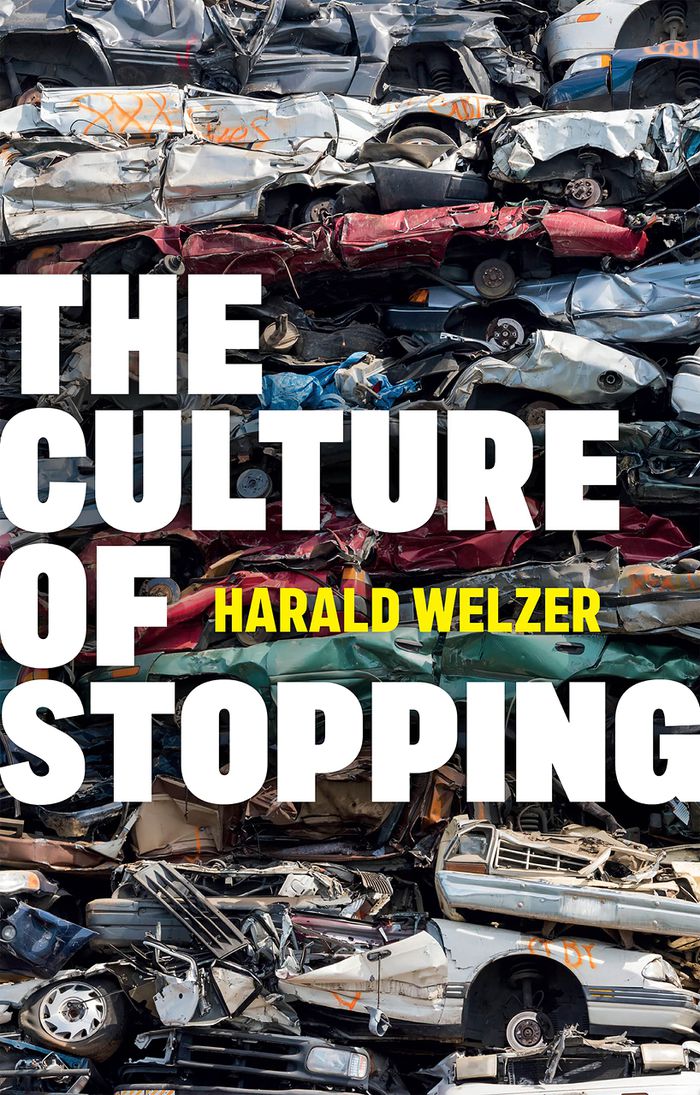
Our culture has no concept of stopping. We continue to build motorways and airports for a future in which cars and planes may no longer exist. We’re converting our planet from a natural one to an artificial one in which the quantity of man-made objects – houses, asphalt, cars, plastic, computers and so on – now exceeds the totality of living matter. And while biomass(...)
$30.00
(available to order)
Summary:
Our culture has no concept of stopping. We continue to build motorways and airports for a future in which cars and planes may no longer exist. We’re converting our planet from a natural one to an artificial one in which the quantity of man-made objects – houses, asphalt, cars, plastic, computers and so on – now exceeds the totality of living matter. And while biomass(...)
Title:
The culture of stopping: obituary to myself
Actions:
Price:
$30.00
(available to order)
Summary:
Our culture has no concept of stopping. We continue to build motorways and airports for a future in which cars and planes may no longer exist. We’re converting our planet from a natural one to an artificial one in which the quantity of man-made objects – houses, asphalt, cars, plastic, computers and so on – now exceeds the totality of living matter. And while biomass continues to decline due to deforestation and species extinction, the mass of man-made objects is growing faster than ever. We’re on a treadmill to disaster. To get off this treadmill, argues Harald Welzer, we need to learn how to stop: as individuals and as societies, we need to stop doing what we’re doing and say ‘enough’. We find it hard to do this because our culture has trained us to regard endless escalation as desirable, and we’re reluctant to surrender the material benefits of growth. But as long as the expansive cultural model continues to prevail, there will be no change of course in favour of sustainable and climate-friendly practices and lifestyles. We need a cultural model in which the beauty of stopping is given the recognition needed for the project of civilization to continue. Optimizing processes that are heading in the wrong direction only makes matters worse.
The culture of stopping: obituary to myself
Actions:
Price:
$30.00
(available to order)
Summary:
Our culture has no concept of stopping. We continue to build motorways and airports for a future in which cars and planes may no longer exist. We’re converting our planet from a natural one to an artificial one in which the quantity of man-made objects – houses, asphalt, cars, plastic, computers and so on – now exceeds the totality of living matter. And while biomass continues to decline due to deforestation and species extinction, the mass of man-made objects is growing faster than ever. We’re on a treadmill to disaster. To get off this treadmill, argues Harald Welzer, we need to learn how to stop: as individuals and as societies, we need to stop doing what we’re doing and say ‘enough’. We find it hard to do this because our culture has trained us to regard endless escalation as desirable, and we’re reluctant to surrender the material benefits of growth. But as long as the expansive cultural model continues to prevail, there will be no change of course in favour of sustainable and climate-friendly practices and lifestyles. We need a cultural model in which the beauty of stopping is given the recognition needed for the project of civilization to continue. Optimizing processes that are heading in the wrong direction only makes matters worse.
Form:
books
books
Publication:
August 2023
August 2023
Subject:
Social
Social


