


2576 Results
Form:
books
books
Actions:
Price:
$46.95
(available to order)
Summary:
From the dawn of European civilization to the twentieth century, the automaton—better known today as the robot—has captured the Western imagination and provided a vital lens into the nature of humanity. Historian Minsoo Kang argues that to properly understand the human-as-machine and the human-as-fundamentally-different-from-machine, we must trace the origins of these(...)
$46.95
(available to order)
Summary:
From the dawn of European civilization to the twentieth century, the automaton—better known today as the robot—has captured the Western imagination and provided a vital lens into the nature of humanity. Historian Minsoo Kang argues that to properly understand the human-as-machine and the human-as-fundamentally-different-from-machine, we must trace the origins of these(...)
Title:
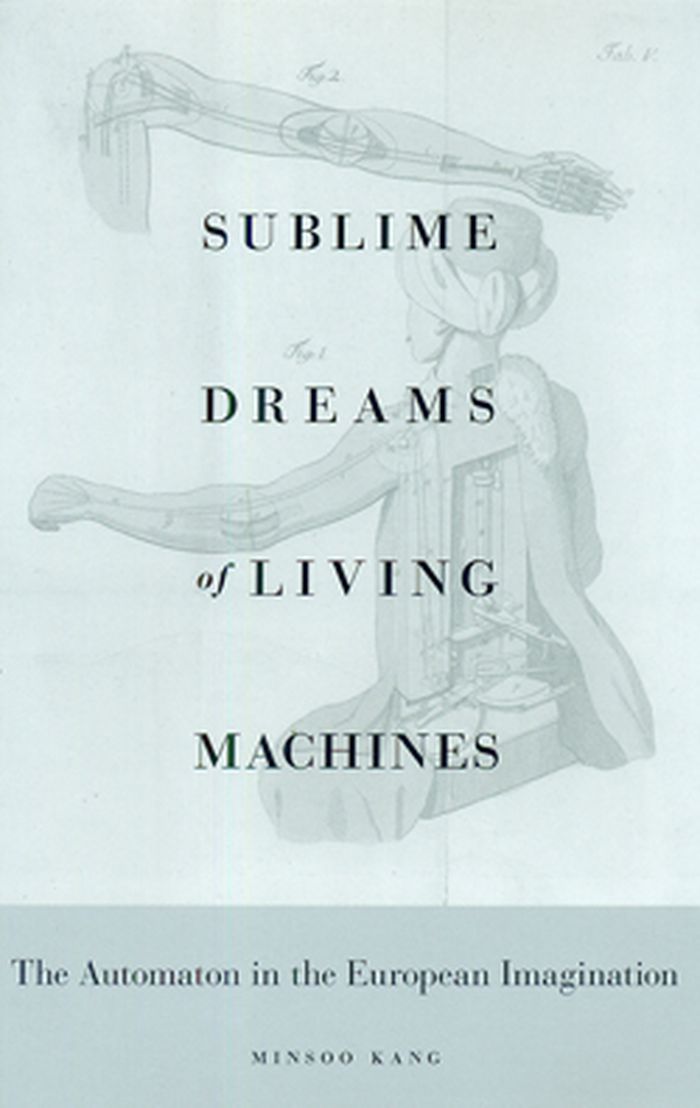
Sublime dreams of living machines: The automaton in the European imagination
Actions:
Price:
$46.95
(available to order)
Summary:
From the dawn of European civilization to the twentieth century, the automaton—better known today as the robot—has captured the Western imagination and provided a vital lens into the nature of humanity. Historian Minsoo Kang argues that to properly understand the human-as-machine and the human-as-fundamentally-different-from-machine, we must trace the origins of these ideas and examine how they were transformed by intellectual, cultural, and artistic appearances of the automaton throughout the history of the West. Kang tracks the first appearance of the automaton in ancient myths through the medieval and Renaissance periods, marks the proliferation of the automaton as a central intellectual concept in the Scientific Revolution and the subsequent backlash during the Enlightenment, and details appearances in Romantic literature and the introduction of the living machine in the Industrial Age.
Sublime dreams of living machines: The automaton in the European imagination
Actions:
Price:
$46.95
(available to order)
Summary:
From the dawn of European civilization to the twentieth century, the automaton—better known today as the robot—has captured the Western imagination and provided a vital lens into the nature of humanity. Historian Minsoo Kang argues that to properly understand the human-as-machine and the human-as-fundamentally-different-from-machine, we must trace the origins of these ideas and examine how they were transformed by intellectual, cultural, and artistic appearances of the automaton throughout the history of the West. Kang tracks the first appearance of the automaton in ancient myths through the medieval and Renaissance periods, marks the proliferation of the automaton as a central intellectual concept in the Scientific Revolution and the subsequent backlash during the Enlightenment, and details appearances in Romantic literature and the introduction of the living machine in the Industrial Age.
Form:
books
books
Publication:
February 2011
February 2011
Subject:
Critical Theory
Critical Theory
Form:
books
books
Actions:
Price:
$54.00
(available to order)
Summary:
With his memorably titled 1956 collage "Just What is it that Makes Today's Homes So Different, So Appealing?", British artist Richard Hamilton (born 1922) heralded the British Pop revolution; and with his 1967 Swingeing London series of prints, which depicted the arrest of Mick Jagger and Robert Fraser, Hamilton's art entered the general public consciousness. But unlike(...)
$54.00
(available to order)
Summary:
With his memorably titled 1956 collage "Just What is it that Makes Today's Homes So Different, So Appealing?", British artist Richard Hamilton (born 1922) heralded the British Pop revolution; and with his 1967 Swingeing London series of prints, which depicted the arrest of Mick Jagger and Robert Fraser, Hamilton's art entered the general public consciousness. But unlike(...)
Subject:
Contemporary Art Monographs
Contemporary Art Monographs
Publication:
July 2010
July 2010
Title:
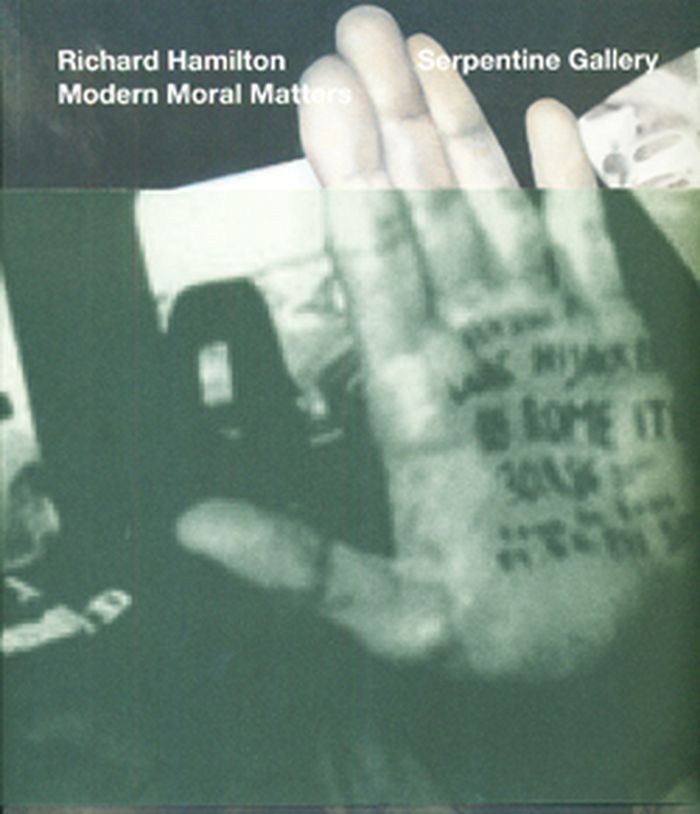
Richard Hamilton : Modern moral matters
Actions:
Price:
$54.00
(available to order)
Summary:
With his memorably titled 1956 collage "Just What is it that Makes Today's Homes So Different, So Appealing?", British artist Richard Hamilton (born 1922) heralded the British Pop revolution; and with his 1967 Swingeing London series of prints, which depicted the arrest of Mick Jagger and Robert Fraser, Hamilton's art entered the general public consciousness. But unlike so many Pop artists, Hamilton was never an uncritical or ambivalent advocate of postwar society, and he has often agitated directly against it, producing a great deal of openly political, satirical work that assaults both consumer culture at large and more immediate political events. This monograph, published for Hamilton's 2010 exhibition at the Serpentine Gallery in London (his first exhibition since 1992), brings together Hamilton's famous "protest" paintings as well as newer political works and features essays by Benjamin H.D. Buchloh and Michael Bracewell.
Richard Hamilton : Modern moral matters
Actions:
Price:
$54.00
(available to order)
Summary:
With his memorably titled 1956 collage "Just What is it that Makes Today's Homes So Different, So Appealing?", British artist Richard Hamilton (born 1922) heralded the British Pop revolution; and with his 1967 Swingeing London series of prints, which depicted the arrest of Mick Jagger and Robert Fraser, Hamilton's art entered the general public consciousness. But unlike so many Pop artists, Hamilton was never an uncritical or ambivalent advocate of postwar society, and he has often agitated directly against it, producing a great deal of openly political, satirical work that assaults both consumer culture at large and more immediate political events. This monograph, published for Hamilton's 2010 exhibition at the Serpentine Gallery in London (his first exhibition since 1992), brings together Hamilton's famous "protest" paintings as well as newer political works and features essays by Benjamin H.D. Buchloh and Michael Bracewell.
Form:
books
books
Publication:
July 2010
July 2010
Subject:
Contemporary Art Monographs
Contemporary Art Monographs
Form:
books
books
Title:
Two cheers for anarchism
Two cheers for anarchism
Actions:
Price:
$26.95
(available to order)
Summary:
Having studied how people in marginal societies deal with the state, Yale political scientist and anthropologist Scott (The Art of Not Being Governed) found himself drawn to a study of anarchism. his brief, six-part study is the result. Having concluded that revolution too often leads to such repressive regimes as France's Committee of Public Safety or the Soviet(...)
$26.95
(available to order)
Summary:
Having studied how people in marginal societies deal with the state, Yale political scientist and anthropologist Scott (The Art of Not Being Governed) found himself drawn to a study of anarchism. his brief, six-part study is the result. Having concluded that revolution too often leads to such repressive regimes as France's Committee of Public Safety or the Soviet(...)
Title:
Two cheers for anarchism
Actions:
Price:
$26.95
(available to order)
Summary:
Having studied how people in marginal societies deal with the state, Yale political scientist and anthropologist Scott (The Art of Not Being Governed) found himself drawn to a study of anarchism. his brief, six-part study is the result. Having concluded that revolution too often leads to such repressive regimes as France's Committee of Public Safety or the Soviet state, Scott began to examine leaderless mass efforts disorganized strivings towards social improvement. Scott recognizes that anarchism is not a panacea and that there are problems that only government can treat. Nevertheless, he expresses a strong dislike for centralized governance and a preference for expanding chaos. He refers to his sections as "fragments," highlighting the book's key shortcoming: every chapter seems rushed and incomplete, as though Scott were hurrying to get his thoughts down on paper before they vanished.
Two cheers for anarchism
Actions:
Price:
$26.95
(available to order)
Summary:
Having studied how people in marginal societies deal with the state, Yale political scientist and anthropologist Scott (The Art of Not Being Governed) found himself drawn to a study of anarchism. his brief, six-part study is the result. Having concluded that revolution too often leads to such repressive regimes as France's Committee of Public Safety or the Soviet state, Scott began to examine leaderless mass efforts disorganized strivings towards social improvement. Scott recognizes that anarchism is not a panacea and that there are problems that only government can treat. Nevertheless, he expresses a strong dislike for centralized governance and a preference for expanding chaos. He refers to his sections as "fragments," highlighting the book's key shortcoming: every chapter seems rushed and incomplete, as though Scott were hurrying to get his thoughts down on paper before they vanished.
Form:
books
books
Publication:
November 2012
November 2012
Subject:
Critical Theory
Critical Theory
Form:
books
books
Actions:
Price:
$46.95
(available to order)
Summary:
In 'The Topography of Wellness', Sara Jensen Carr offers a chronological narrative of how six epidemics transformed the American urban landscape, reflecting changing views of the power of design, pathology of disease, and the epidemiology of the environment. From the infectious diseases of cholera and tuberculosis, to so-called social diseases of idleness and crime, to(...)
$46.95
(available to order)
Summary:
In 'The Topography of Wellness', Sara Jensen Carr offers a chronological narrative of how six epidemics transformed the American urban landscape, reflecting changing views of the power of design, pathology of disease, and the epidemiology of the environment. From the infectious diseases of cholera and tuberculosis, to so-called social diseases of idleness and crime, to(...)
Title:
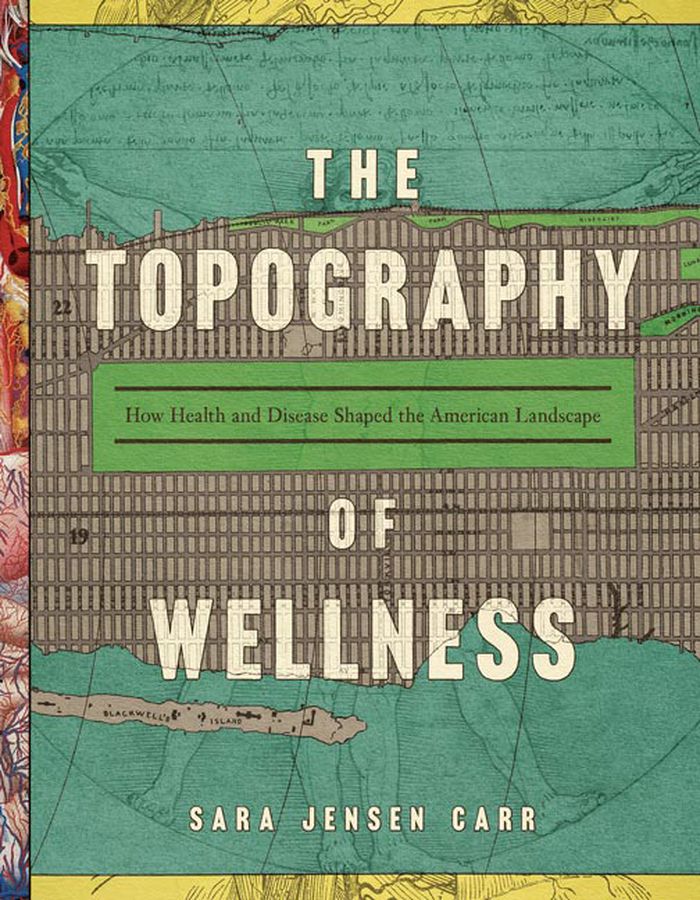
The topography of wellness: how health and disease shaped the American landscape
Actions:
Price:
$46.95
(available to order)
Summary:
In 'The Topography of Wellness', Sara Jensen Carr offers a chronological narrative of how six epidemics transformed the American urban landscape, reflecting changing views of the power of design, pathology of disease, and the epidemiology of the environment. From the infectious diseases of cholera and tuberculosis, to so-called social diseases of idleness and crime, to the more complicated origins of today’s chronic diseases, each illness and its associated combat strategies has left its mark on our surroundings. While each solution succeeded in eliminating the disease on some level, sweeping environmental changes often came with significant social and physical consequences. Even more unexpectedly, some adaptations inadvertently incubated future epidemics. From the Industrial Revolution to present day, this book illuminates the constant evolution of our relationship to wellness and the environment by documenting the shifting grounds of illness and the urban landscape.
The topography of wellness: how health and disease shaped the American landscape
Actions:
Price:
$46.95
(available to order)
Summary:
In 'The Topography of Wellness', Sara Jensen Carr offers a chronological narrative of how six epidemics transformed the American urban landscape, reflecting changing views of the power of design, pathology of disease, and the epidemiology of the environment. From the infectious diseases of cholera and tuberculosis, to so-called social diseases of idleness and crime, to the more complicated origins of today’s chronic diseases, each illness and its associated combat strategies has left its mark on our surroundings. While each solution succeeded in eliminating the disease on some level, sweeping environmental changes often came with significant social and physical consequences. Even more unexpectedly, some adaptations inadvertently incubated future epidemics. From the Industrial Revolution to present day, this book illuminates the constant evolution of our relationship to wellness and the environment by documenting the shifting grounds of illness and the urban landscape.
Form:
books
books
Publication:
October 2021
October 2021
Subject:
Urban Theory
Urban Theory
Form:
books
books
Actions:
Price:
$45.95
(available to order)
Summary:
Archivio opens its third editorial cycle: four thematic issues, each curated by a Guest Editor with deep expertise, offering access to worlds where past, present, and future converge. The third issue, Archivio N°11, focuses on technology and is curated by Massimo Banzi, co-founder of Arduino, together with Cecilia Botta, technology historian and Head of Memories at(...)
$45.95
(available to order)
Summary:
Archivio opens its third editorial cycle: four thematic issues, each curated by a Guest Editor with deep expertise, offering access to worlds where past, present, and future converge. The third issue, Archivio N°11, focuses on technology and is curated by Massimo Banzi, co-founder of Arduino, together with Cecilia Botta, technology historian and Head of Memories at(...)
Title:
Archivio n.11 : The Tech Issue
Actions:
Price:
$45.95
(available to order)
Summary:
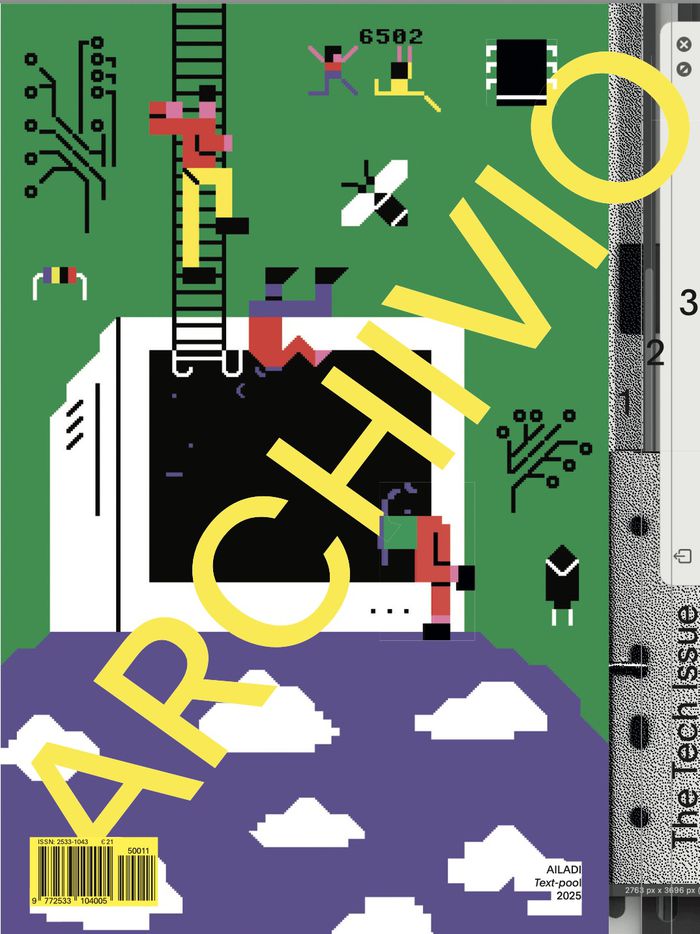
Archivio opens its third editorial cycle: four thematic issues, each curated by a Guest Editor with deep expertise, offering access to worlds where past, present, and future converge. The third issue, Archivio N°11, focuses on technology and is curated by Massimo Banzi, co-founder of Arduino, together with Cecilia Botta, technology historian and Head of Memories at Promemoria Group, the magazine's publisher. Daniela Hamaui oversees editorial direction, while Alessandro Gori shapes the art direction. The cover, designed by artist Ailadi, pays tribute to the early aesthetics of the digital age. Created using PETSCII, the character set of Commodore 8-bit computers, it evokes the visual language of technology in its formative years. Archivio N°11 maps the international landscape of technology archives, tracing the roots of the digital revolution and exploring the places where our technological past is preserved, along with the collectors and institutions that recognized its cultural value.
Archivio n.11 : The Tech Issue
Actions:
Price:
$45.95
(available to order)
Summary:
Archivio opens its third editorial cycle: four thematic issues, each curated by a Guest Editor with deep expertise, offering access to worlds where past, present, and future converge. The third issue, Archivio N°11, focuses on technology and is curated by Massimo Banzi, co-founder of Arduino, together with Cecilia Botta, technology historian and Head of Memories at Promemoria Group, the magazine's publisher. Daniela Hamaui oversees editorial direction, while Alessandro Gori shapes the art direction. The cover, designed by artist Ailadi, pays tribute to the early aesthetics of the digital age. Created using PETSCII, the character set of Commodore 8-bit computers, it evokes the visual language of technology in its formative years. Archivio N°11 maps the international landscape of technology archives, tracing the roots of the digital revolution and exploring the places where our technological past is preserved, along with the collectors and institutions that recognized its cultural value.
Form:
books
books
Publication:
December 2025
December 2025
Subject:
Magazines
Magazines
Form:
books
books

Actions:
Price:
$42.00
(available in store)
Summary:
Hey culture worker! Are you feeling alone and afraid while the world burns? "It’s Too Late. Do It Anyway!" is two books in one, created for cultural workers who want to get off the racial capitalist high-speed-train-to-nowhere and start structuring revolution through collective care. "It’s Too Late. Do It Anyway!" offers two routes into a fractal support network designed(...)
$42.00
(available in store)
Summary:
Hey culture worker! Are you feeling alone and afraid while the world burns? "It’s Too Late. Do It Anyway!" is two books in one, created for cultural workers who want to get off the racial capitalist high-speed-train-to-nowhere and start structuring revolution through collective care. "It’s Too Late. Do It Anyway!" offers two routes into a fractal support network designed(...)
Title:
It’s Too Late. Do It Anyway! A Book about being a cultural worker in the apocalypse
Actions:
Price:
$42.00
(available in store)
Summary:
Hey culture worker! Are you feeling alone and afraid while the world burns? "It’s Too Late. Do It Anyway!" is two books in one, created for cultural workers who want to get off the racial capitalist high-speed-train-to-nowhere and start structuring revolution through collective care. "It’s Too Late. Do It Anyway!" offers two routes into a fractal support network designed to shed absurd, useless forms of artworld prestige in favor of collectively producing a world organized to support caregivers. "It’s Too Late" tells the true story of an exhibition about care that exposed the difference between making symbolic gestures and actually doing something. "Do It Anyway!" serves as a manual for The Hologram, a prism-shaped collective care protocol conceptualized by artist Cassie Thornton, inspired by the Social Solidarity Clinic of Thessaloniki in Greece, and now practiced by people all over the world.
It’s Too Late. Do It Anyway! A Book about being a cultural worker in the apocalypse
Actions:
Price:
$42.00
(available in store)
Summary:
Hey culture worker! Are you feeling alone and afraid while the world burns? "It’s Too Late. Do It Anyway!" is two books in one, created for cultural workers who want to get off the racial capitalist high-speed-train-to-nowhere and start structuring revolution through collective care. "It’s Too Late. Do It Anyway!" offers two routes into a fractal support network designed to shed absurd, useless forms of artworld prestige in favor of collectively producing a world organized to support caregivers. "It’s Too Late" tells the true story of an exhibition about care that exposed the difference between making symbolic gestures and actually doing something. "Do It Anyway!" serves as a manual for The Hologram, a prism-shaped collective care protocol conceptualized by artist Cassie Thornton, inspired by the Social Solidarity Clinic of Thessaloniki in Greece, and now practiced by people all over the world.
Form:
books
books
Publication:
September 2025
September 2025
Subject:
Social
Social
Form:
books
books
Price:
$62.00
(available in store)
Summary:
Architecture, as a living organism, establishes a relationship between beings and their environment, where the notions of energy, breathing and light are the vectors for the conception of spaces. For Serero, ?architecture should reach the minimum impact on its local environment and aims to vanish and resiliate in nature. The work rethink architecture and shifts away its(...)
$62.00
(available in store)
Summary:
Architecture, as a living organism, establishes a relationship between beings and their environment, where the notions of energy, breathing and light are the vectors for the conception of spaces. For Serero, ?architecture should reach the minimum impact on its local environment and aims to vanish and resiliate in nature. The work rethink architecture and shifts away its(...)
Title:
Data. Energy. Matter: Why architecture is key to climate change
Actions:
Price:
$62.00
(available in store)
Summary:
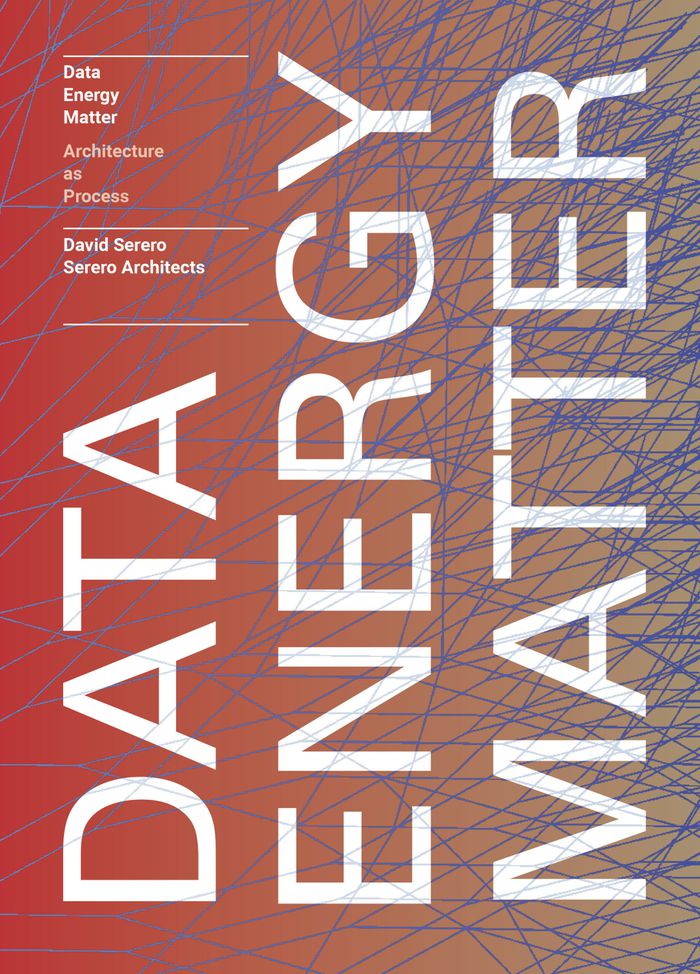
Architecture, as a living organism, establishes a relationship between beings and their environment, where the notions of energy, breathing and light are the vectors for the conception of spaces. For Serero, ?architecture should reach the minimum impact on its local environment and aims to vanish and resiliate in nature. The work rethink architecture and shifts away its permanent condition towards a transient and ephemeral one, with greater spatial versatility and multiplying the potential usage to propose an open architecture. This book reveals 3 profound transformations of recent architecture: the digital revolution and its impact on creative work in all conceptual aspects, the emergence of an internet of energy ?that buildings will contribute to create to share energy, and the profusion of new usage of private and public spaces, both collaborative and connected, creating an interstitial experience of spaces ?between the physical and the virtual.
Data. Energy. Matter: Why architecture is key to climate change
Actions:
Price:
$62.00
(available in store)
Summary:
Architecture, as a living organism, establishes a relationship between beings and their environment, where the notions of energy, breathing and light are the vectors for the conception of spaces. For Serero, ?architecture should reach the minimum impact on its local environment and aims to vanish and resiliate in nature. The work rethink architecture and shifts away its permanent condition towards a transient and ephemeral one, with greater spatial versatility and multiplying the potential usage to propose an open architecture. This book reveals 3 profound transformations of recent architecture: the digital revolution and its impact on creative work in all conceptual aspects, the emergence of an internet of energy ?that buildings will contribute to create to share energy, and the profusion of new usage of private and public spaces, both collaborative and connected, creating an interstitial experience of spaces ?between the physical and the virtual.
Form:
books
books
Publication:
December 2025
December 2025
Subject:
Environment and environmental theory
Environment and environmental theory
Form:
books
books
Actions:
Price:
$35.00
(available to order)
Summary:
In Empire of the Senses the senses are considered as cultural systems. Bringing together classic pieces by key thinkers--from Marshall McLuhan and Alain Corbin to Susan Stewart and Oliver Sacks--as well as newly commissioned articles, this path-breaking book provides a comprehensive overview of the "sensual revolution," where all manner of disciplines converge. Its aim is(...)
$35.00
(available to order)
Summary:
In Empire of the Senses the senses are considered as cultural systems. Bringing together classic pieces by key thinkers--from Marshall McLuhan and Alain Corbin to Susan Stewart and Oliver Sacks--as well as newly commissioned articles, this path-breaking book provides a comprehensive overview of the "sensual revolution," where all manner of disciplines converge. Its aim is(...)
Title:
Empire of the Senses : The sensual culture reader
Actions:
Price:
$35.00
(available to order)
Summary:
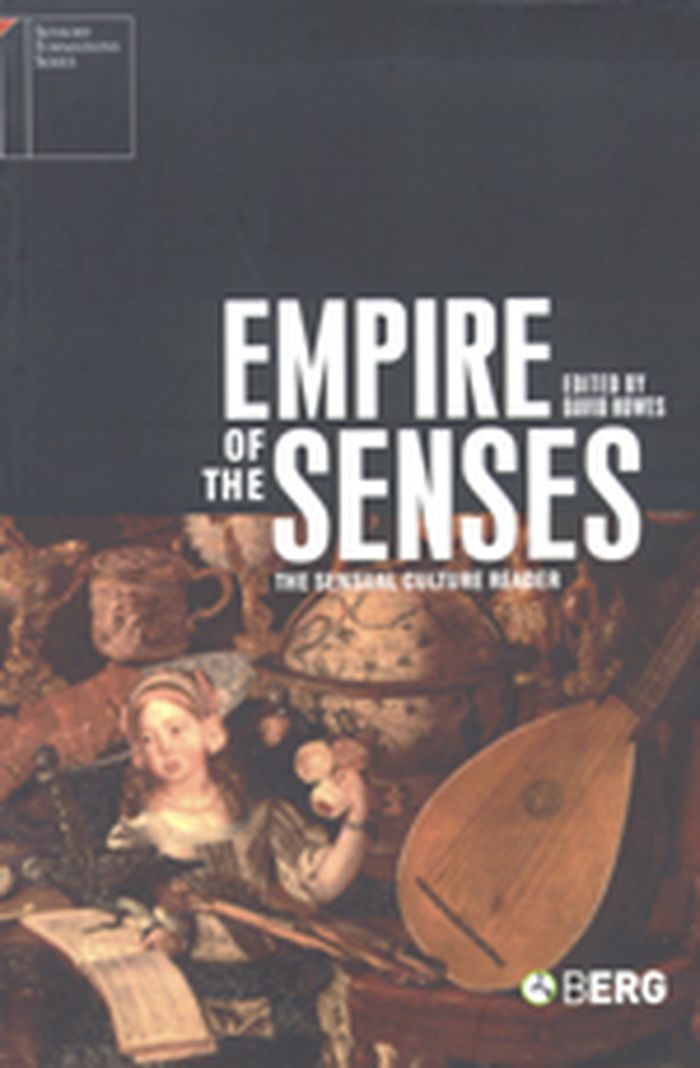
In Empire of the Senses the senses are considered as cultural systems. Bringing together classic pieces by key thinkers--from Marshall McLuhan and Alain Corbin to Susan Stewart and Oliver Sacks--as well as newly commissioned articles, this path-breaking book provides a comprehensive overview of the "sensual revolution," where all manner of disciplines converge. Its aim is to enhance our understanding of the role of the senses in history and across cultures by overturning the hegemony of vision in contemporary theory and demonstrating that all senses play a role in mediating cultural experience. It asks provocative questions that most of us take for granted. Are there, for example, only five senses, or is this assumption a Western construct? This radical contribution to revisioning cultural studies will be essential reading for anyone hoping to understand the full complexity of how we experience our world.
Empire of the Senses : The sensual culture reader
Actions:
Price:
$35.00
(available to order)
Summary:
In Empire of the Senses the senses are considered as cultural systems. Bringing together classic pieces by key thinkers--from Marshall McLuhan and Alain Corbin to Susan Stewart and Oliver Sacks--as well as newly commissioned articles, this path-breaking book provides a comprehensive overview of the "sensual revolution," where all manner of disciplines converge. Its aim is to enhance our understanding of the role of the senses in history and across cultures by overturning the hegemony of vision in contemporary theory and demonstrating that all senses play a role in mediating cultural experience. It asks provocative questions that most of us take for granted. Are there, for example, only five senses, or is this assumption a Western construct? This radical contribution to revisioning cultural studies will be essential reading for anyone hoping to understand the full complexity of how we experience our world.
Form:
books
books
Publication:
December 2004, Oxford New York
December 2004, Oxford New York
Subject:
Architectural Theory
Architectural Theory
Form:
books
books
Actions:
Price:
$25.95
(available to order)
Summary:
The Earth has entered a new epoch: the Anthropocene. What we are facing is not only an environmental crisis, but a geological revolution of human origin. In two centuries, our planet has tipped into a state unknown for millions of years. How did we get to this point? Refuting the convenient view of a “human species” that upset the Earth system, unaware of what it was(...)
$25.95
(available to order)
Summary:
The Earth has entered a new epoch: the Anthropocene. What we are facing is not only an environmental crisis, but a geological revolution of human origin. In two centuries, our planet has tipped into a state unknown for millions of years. How did we get to this point? Refuting the convenient view of a “human species” that upset the Earth system, unaware of what it was(...)
Subject:
Environment and environmental theory
Environment and environmental theory
Publication:
April 2017
April 2017
Title:
The shock of the anthropocene: the earth, history and us
Actions:
Price:
$25.95
(available to order)
Summary:
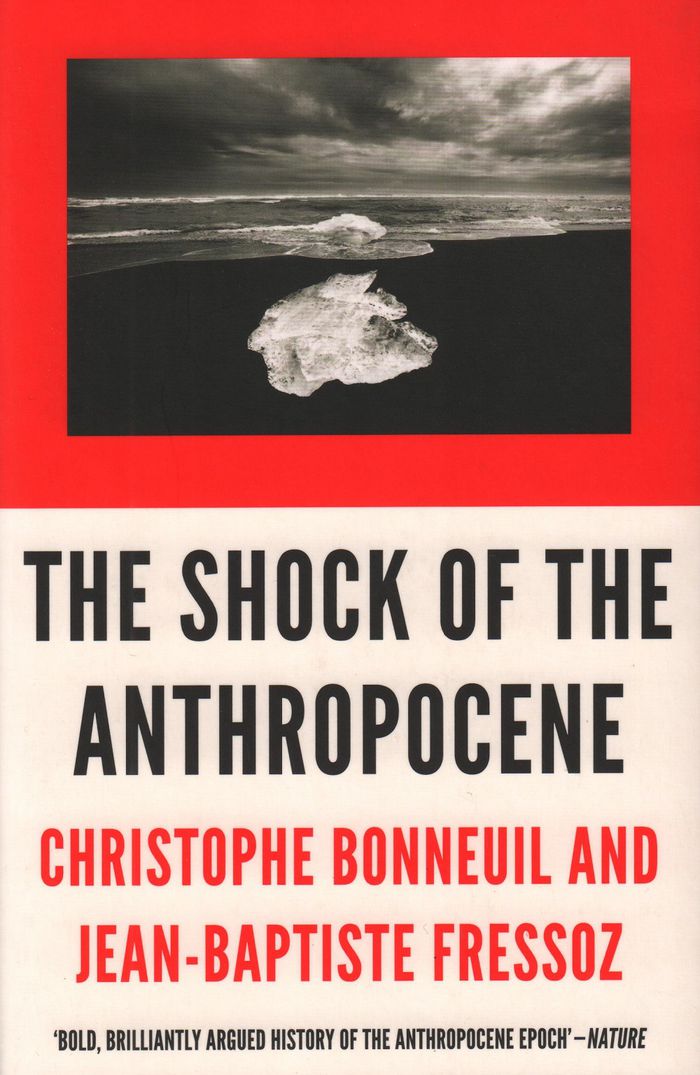
The Earth has entered a new epoch: the Anthropocene. What we are facing is not only an environmental crisis, but a geological revolution of human origin. In two centuries, our planet has tipped into a state unknown for millions of years. How did we get to this point? Refuting the convenient view of a “human species” that upset the Earth system, unaware of what it was doing, this book proposes the first critical history of the Anthropocene, shaking up many accepted ideas: about our supposedly recent “environmental awareness,” about previous challenges to industrialism, about the manufacture of ignorance and consumerism, about so-called energy transitions, as well as about the role of the military in environmental destruction. In a dialogue between science and history, The Shock of the Anthropocene dissects a new theoretical buzzword and explores paths for living and acting politically in this rapidly developing geological epoch.
The shock of the anthropocene: the earth, history and us
Actions:
Price:
$25.95
(available to order)
Summary:
The Earth has entered a new epoch: the Anthropocene. What we are facing is not only an environmental crisis, but a geological revolution of human origin. In two centuries, our planet has tipped into a state unknown for millions of years. How did we get to this point? Refuting the convenient view of a “human species” that upset the Earth system, unaware of what it was doing, this book proposes the first critical history of the Anthropocene, shaking up many accepted ideas: about our supposedly recent “environmental awareness,” about previous challenges to industrialism, about the manufacture of ignorance and consumerism, about so-called energy transitions, as well as about the role of the military in environmental destruction. In a dialogue between science and history, The Shock of the Anthropocene dissects a new theoretical buzzword and explores paths for living and acting politically in this rapidly developing geological epoch.
Form:
books
books
Publication:
April 2017
April 2017
Subject:
Environment and environmental theory
Environment and environmental theory
Form:
books
books
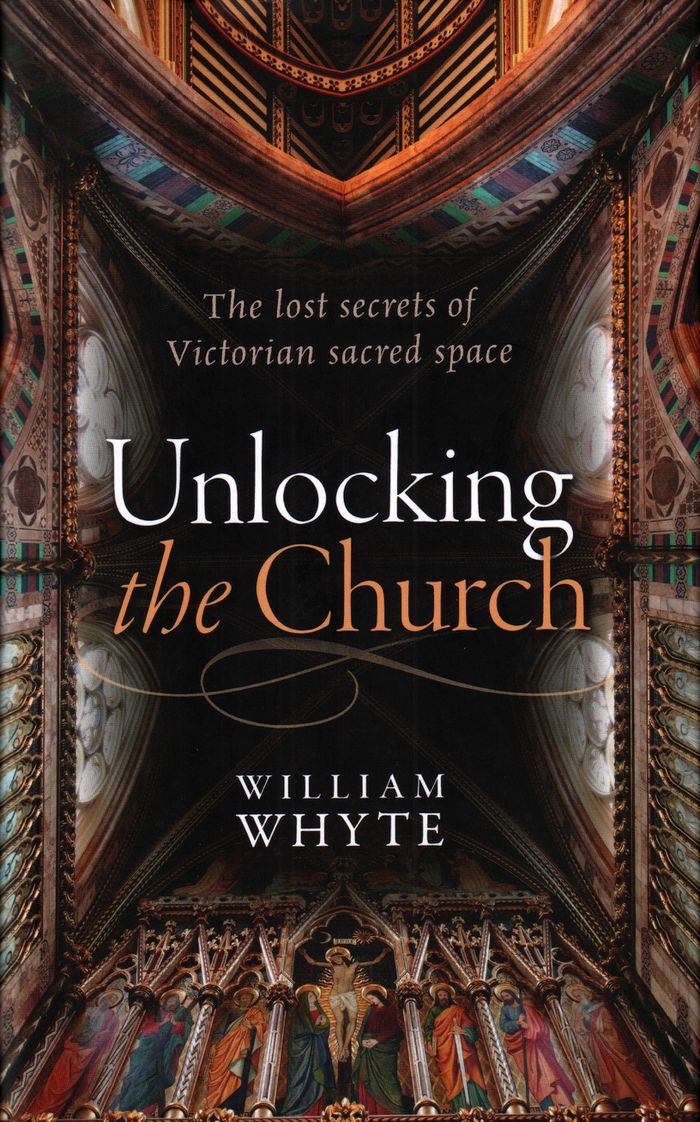
Price:
$27.50
(available to order)
Summary:
In Unlocking the Church, William Whyte explores a forgotten revolution in social and architectural history and in the history of the Church. He details the architectural and theological debates of the day, explaining how the Tractarians of Oxford and the Ecclesiologists of Cambridge were embroiled in the aesthetics of architecture, and how the Victorians profoundly(...)
$27.50
(available to order)
Summary:
In Unlocking the Church, William Whyte explores a forgotten revolution in social and architectural history and in the history of the Church. He details the architectural and theological debates of the day, explaining how the Tractarians of Oxford and the Ecclesiologists of Cambridge were embroiled in the aesthetics of architecture, and how the Victorians profoundly(...)
Title:
Unlocking the church: the lost secrets of Victorian sacred space
Actions:
Price:
$27.50
(available to order)
Summary:
In Unlocking the Church, William Whyte explores a forgotten revolution in social and architectural history and in the history of the Church. He details the architectural and theological debates of the day, explaining how the Tractarians of Oxford and the Ecclesiologists of Cambridge were embroiled in the aesthetics of architecture, and how the Victorians profoundly changed the ways in which buildings were understood and experienced. No longer mere receptacles for worship, churches became active agents in their own rights, capable of conveying theological ideas and designed to shape people's emotions. These church buildings are now a challenge: their maintenance, repair or repurposing are pressing problems for parishes in age of declining attendance and dwindling funds. By understanding their past, unlocking the secrets of their space, there might be answers in how to deal with the legacy of the Victorians now and into the future.
Unlocking the church: the lost secrets of Victorian sacred space
Actions:
Price:
$27.50
(available to order)
Summary:
In Unlocking the Church, William Whyte explores a forgotten revolution in social and architectural history and in the history of the Church. He details the architectural and theological debates of the day, explaining how the Tractarians of Oxford and the Ecclesiologists of Cambridge were embroiled in the aesthetics of architecture, and how the Victorians profoundly changed the ways in which buildings were understood and experienced. No longer mere receptacles for worship, churches became active agents in their own rights, capable of conveying theological ideas and designed to shape people's emotions. These church buildings are now a challenge: their maintenance, repair or repurposing are pressing problems for parishes in age of declining attendance and dwindling funds. By understanding their past, unlocking the secrets of their space, there might be answers in how to deal with the legacy of the Victorians now and into the future.
Form:
books
books
Publication:
November 2017
November 2017
Subject:
Architectural Theory
Architectural Theory


