


2585 Results
Form:
books
books
Title:
The Art of Yamaguchi Akira
The Art of Yamaguchi Akira
Actions:
Price:
$34.95
(available to order)
Summary:
Young painter Akira Yamaguchi has taken Japan's art world by storm. His work combines the techniques of classical Japanese painting with the observant eye of a modern-day Peter Breughel and the humor and draftsmanship of a manga cartoonist. Yamaguchi's landscapes of the imagination, compressions of time and space, and quixotic human/machine figures combine Eastern and(...)
$34.95
(available to order)
Summary:
Young painter Akira Yamaguchi has taken Japan's art world by storm. His work combines the techniques of classical Japanese painting with the observant eye of a modern-day Peter Breughel and the humor and draftsmanship of a manga cartoonist. Yamaguchi's landscapes of the imagination, compressions of time and space, and quixotic human/machine figures combine Eastern and(...)
Title:
The Art of Yamaguchi Akira
Actions:
Price:
$34.95
(available to order)
Summary:
Young painter Akira Yamaguchi has taken Japan's art world by storm. His work combines the techniques of classical Japanese painting with the observant eye of a modern-day Peter Breughel and the humor and draftsmanship of a manga cartoonist. Yamaguchi's landscapes of the imagination, compressions of time and space, and quixotic human/machine figures combine Eastern and Western sensibilities and techniques into artwork that transcends exoticism. This beautiful volume collects the artist's work from the past decade, including several pieces never before published, allowing Western readers to share the delight of Japanese critics and audiences in this fresh, new view of the world. Also included are an introduction by art historian Yuji Yamashita, 80 pages of full-color illustrative plates, and a magnifying glass for enhanced viewing of painting details.
The Art of Yamaguchi Akira
Actions:
Price:
$34.95
(available to order)
Summary:
Young painter Akira Yamaguchi has taken Japan's art world by storm. His work combines the techniques of classical Japanese painting with the observant eye of a modern-day Peter Breughel and the humor and draftsmanship of a manga cartoonist. Yamaguchi's landscapes of the imagination, compressions of time and space, and quixotic human/machine figures combine Eastern and Western sensibilities and techniques into artwork that transcends exoticism. This beautiful volume collects the artist's work from the past decade, including several pieces never before published, allowing Western readers to share the delight of Japanese critics and audiences in this fresh, new view of the world. Also included are an introduction by art historian Yuji Yamashita, 80 pages of full-color illustrative plates, and a magnifying glass for enhanced viewing of painting details.
Form:
books
books
Publication:
May 2005, Tokyo
May 2005, Tokyo
Subject:
Contemporary Art Monographs
Contemporary Art Monographs
Form:
journals and magazines
journals and magazines
Actions:
Price:
$19.00
(available in store)
Summary:
Aucune machine n’a jamais été inventée pour ralentir. Si nos outils excellent dans l’art de l’accélération, aucun n’a été conçu pour suspendre le mouvement. La « dromologie (1) » de Paul Virilio a fait de la vitesse la mesure même d’un progrès dont l’ombre portée serait l’accident. Dans la théorie de l’accélération sociale, Hartmut Rosa rappelle que le présent est une(...)
$19.00
(available in store)
Summary:
Aucune machine n’a jamais été inventée pour ralentir. Si nos outils excellent dans l’art de l’accélération, aucun n’a été conçu pour suspendre le mouvement. La « dromologie (1) » de Paul Virilio a fait de la vitesse la mesure même d’un progrès dont l’ombre portée serait l’accident. Dans la théorie de l’accélération sociale, Hartmut Rosa rappelle que le présent est une(...)
Title:
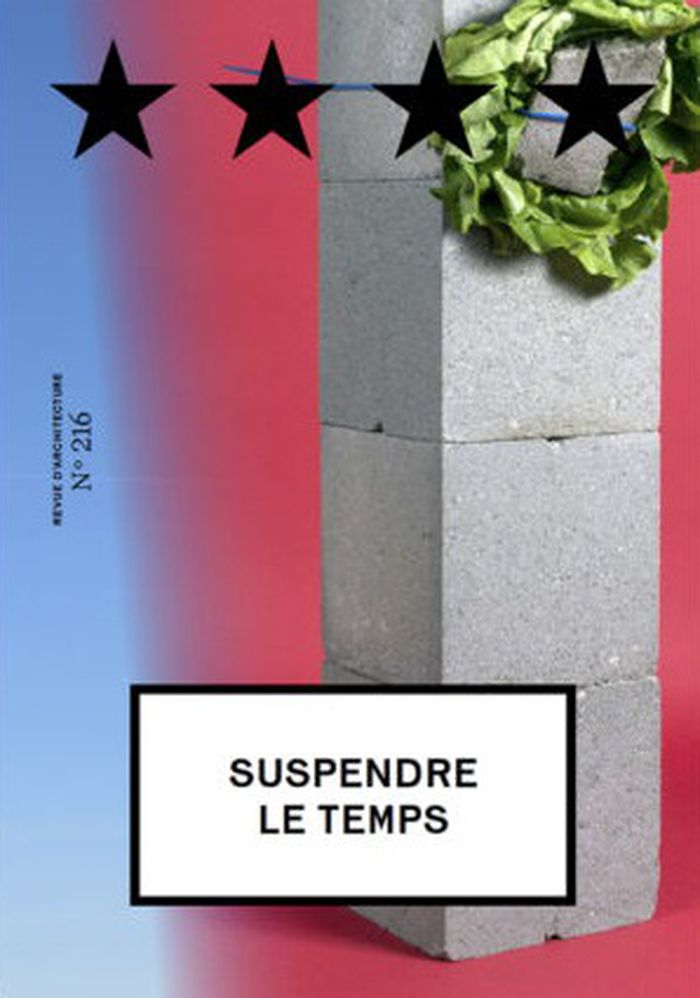
Plan L**** 216 : suspendre le temps
Actions:
Price:
$19.00
(available in store)
Summary:
Aucune machine n’a jamais été inventée pour ralentir. Si nos outils excellent dans l’art de l’accélération, aucun n’a été conçu pour suspendre le mouvement. La « dromologie (1) » de Paul Virilio a fait de la vitesse la mesure même d’un progrès dont l’ombre portée serait l’accident. Dans la théorie de l’accélération sociale, Hartmut Rosa rappelle que le présent est une période durant laquelle nos connaissances, nos institutions, nos techniques ou nos habitudes restent suffisamment stables pour orienter notre action. Il façonne le concept de « rétrécissement de présent », dans lequel la fragmentation de nos expériences, les obsolescences rapides nous privent du temps d’habiter les choses (2). Notre époque produit du mouvement plus vite qu’elle ne produit du sens. Se « présenter » à nouveau, un peu plus longtemps, est alors une tentative de faire sens.
Plan L**** 216 : suspendre le temps
Actions:
Price:
$19.00
(available in store)
Summary:
Aucune machine n’a jamais été inventée pour ralentir. Si nos outils excellent dans l’art de l’accélération, aucun n’a été conçu pour suspendre le mouvement. La « dromologie (1) » de Paul Virilio a fait de la vitesse la mesure même d’un progrès dont l’ombre portée serait l’accident. Dans la théorie de l’accélération sociale, Hartmut Rosa rappelle que le présent est une période durant laquelle nos connaissances, nos institutions, nos techniques ou nos habitudes restent suffisamment stables pour orienter notre action. Il façonne le concept de « rétrécissement de présent », dans lequel la fragmentation de nos expériences, les obsolescences rapides nous privent du temps d’habiter les choses (2). Notre époque produit du mouvement plus vite qu’elle ne produit du sens. Se « présenter » à nouveau, un peu plus longtemps, est alors une tentative de faire sens.
Form:
journals and magazines
journals and magazines
Publication:
July 2026
July 2026
Subject:
Magazines
Magazines
Form:
books
books
Title:
Encyclopédie
Encyclopédie
Actions:
Price:
$22.95
(available in store)
Summary:
L'article "Encyclopédie" est la pièce maîtresse de la "machine de guerre de la pensée nouvelle contre les dogmes et les obscurantismes" que constitue l'Encyclopédie, ou Dictionnaire raisonné des sciences, des arts et des métiers, telle que la conçoit Diderot. Projet au coeur de l'oeuvre, comme la clé d'un tiroir dans le tiroir lui-même, il ouvre la voie à une conception(...)
$22.95
(available in store)
Summary:
L'article "Encyclopédie" est la pièce maîtresse de la "machine de guerre de la pensée nouvelle contre les dogmes et les obscurantismes" que constitue l'Encyclopédie, ou Dictionnaire raisonné des sciences, des arts et des métiers, telle que la conçoit Diderot. Projet au coeur de l'oeuvre, comme la clé d'un tiroir dans le tiroir lui-même, il ouvre la voie à une conception(...)
Title:
Encyclopédie
Actions:
Price:
$22.95
(available in store)
Summary:
L'article "Encyclopédie" est la pièce maîtresse de la "machine de guerre de la pensée nouvelle contre les dogmes et les obscurantismes" que constitue l'Encyclopédie, ou Dictionnaire raisonné des sciences, des arts et des métiers, telle que la conçoit Diderot. Projet au coeur de l'oeuvre, comme la clé d'un tiroir dans le tiroir lui-même, il ouvre la voie à une conception collective et relativiste de la connaissance, synonyme dès lors de liberté. Ecrit dans un style d'une extraordinaire vigueur, où "l'impétuosité de l'éloquence" rivalise avec "la rapidité de la pensée", il prend aujourd'hui une dimension nouvelle avec le développement des "communautés de la toile" et des encyclopédies en ligne, que n'aurait peut-être pas désavouées Diderot si elles avaient su associer à l'accumulation des connaissances une pleine conscience des limites de l'accumulation.
Encyclopédie
Actions:
Price:
$22.95
(available in store)
Summary:
L'article "Encyclopédie" est la pièce maîtresse de la "machine de guerre de la pensée nouvelle contre les dogmes et les obscurantismes" que constitue l'Encyclopédie, ou Dictionnaire raisonné des sciences, des arts et des métiers, telle que la conçoit Diderot. Projet au coeur de l'oeuvre, comme la clé d'un tiroir dans le tiroir lui-même, il ouvre la voie à une conception collective et relativiste de la connaissance, synonyme dès lors de liberté. Ecrit dans un style d'une extraordinaire vigueur, où "l'impétuosité de l'éloquence" rivalise avec "la rapidité de la pensée", il prend aujourd'hui une dimension nouvelle avec le développement des "communautés de la toile" et des encyclopédies en ligne, que n'aurait peut-être pas désavouées Diderot si elles avaient su associer à l'accumulation des connaissances une pleine conscience des limites de l'accumulation.
Form:
books
books
Publication:
May 2013
May 2013
Subject:
Critical Theory
Critical Theory
Form:
books
books

Title:
Objects of fascination
Objects of fascination
Actions:
Price:
$50.00
(available to order)
Summary:
During the pandemic, 45 people were invited to take part in a "serious game": each participant selected the image of a personal object of fascination, out of which a shape was extracted, redrawn, scaled and sent to a CNC machine to be cut out of a 5 mm thick aluminium sheet and become a low table. Each table is here presented through the original image that generated it,(...)
$50.00
(available to order)
Summary:
During the pandemic, 45 people were invited to take part in a "serious game": each participant selected the image of a personal object of fascination, out of which a shape was extracted, redrawn, scaled and sent to a CNC machine to be cut out of a 5 mm thick aluminium sheet and become a low table. Each table is here presented through the original image that generated it,(...)
Title:
Objects of fascination
Actions:
Price:
$50.00
(available to order)
Summary:
During the pandemic, 45 people were invited to take part in a "serious game": each participant selected the image of a personal object of fascination, out of which a shape was extracted, redrawn, scaled and sent to a CNC machine to be cut out of a 5 mm thick aluminium sheet and become a low table. Each table is here presented through the original image that generated it, the selected contour, a text by its author and photographs of the prototype taken by Maxime Delvaux and printed in silver. 'Objects of Fascination' explores digital technology and craftsmanship through found forms. It can be seen as a collection of personal worldviews by an emerging generation of architects, as much as an attempt to give a physical form to the multiplicity of our collective cultural background.
Objects of fascination
Actions:
Price:
$50.00
(available to order)
Summary:
During the pandemic, 45 people were invited to take part in a "serious game": each participant selected the image of a personal object of fascination, out of which a shape was extracted, redrawn, scaled and sent to a CNC machine to be cut out of a 5 mm thick aluminium sheet and become a low table. Each table is here presented through the original image that generated it, the selected contour, a text by its author and photographs of the prototype taken by Maxime Delvaux and printed in silver. 'Objects of Fascination' explores digital technology and craftsmanship through found forms. It can be seen as a collection of personal worldviews by an emerging generation of architects, as much as an attempt to give a physical form to the multiplicity of our collective cultural background.
Form:
books
books
Publication:
January 2022
January 2022
Subject:
Industrial Design
Industrial Design
Form:
books
books

Actions:
Price:
$110.00
(available to order)
Summary:
Au cours des années 1930, parallèlement à ses activités d'architecte, de designer, d'urbaniste et de militante, la photographie occupe une place importante dans sa création. L'aventure photographique débute en 1927 et se clôt au Japon en 1940. Se déployant tout au long de la période pionnière, quand se développe la modernité, elle s'éteint sur l'espoir d'un monde(...)
$110.00
(available to order)
Summary:
Au cours des années 1930, parallèlement à ses activités d'architecte, de designer, d'urbaniste et de militante, la photographie occupe une place importante dans sa création. L'aventure photographique débute en 1927 et se clôt au Japon en 1940. Se déployant tout au long de la période pionnière, quand se développe la modernité, elle s'éteint sur l'espoir d'un monde(...)
Title:
Charlotte Perriand et la photographie
Actions:
Price:
$110.00
(available to order)
Summary:
Au cours des années 1930, parallèlement à ses activités d'architecte, de designer, d'urbaniste et de militante, la photographie occupe une place importante dans sa création. L'aventure photographique débute en 1927 et se clôt au Japon en 1940. Se déployant tout au long de la période pionnière, quand se développe la modernité, elle s'éteint sur l'espoir d'un monde meilleur anéanti par la seconde guerre mondiale. La photographie est pour Charlotte Perriand le " laboratoire secret " de ses recherches plastiques et philosophiques : c'est une " machine " à penser. Son oeuvre photographique, qui exprime les principaux thèmes et les interrogations des modernes des années 1930, s'inscrit dans le vaste mouvement des avant-gardes où peintres, architectes et photographes, parfois confondus, travaillent côte à côte dans une communauté d'esprit, où chaque expression s'enrichit du regard de l'autre.
Charlotte Perriand et la photographie
Actions:
Price:
$110.00
(available to order)
Summary:
Au cours des années 1930, parallèlement à ses activités d'architecte, de designer, d'urbaniste et de militante, la photographie occupe une place importante dans sa création. L'aventure photographique débute en 1927 et se clôt au Japon en 1940. Se déployant tout au long de la période pionnière, quand se développe la modernité, elle s'éteint sur l'espoir d'un monde meilleur anéanti par la seconde guerre mondiale. La photographie est pour Charlotte Perriand le " laboratoire secret " de ses recherches plastiques et philosophiques : c'est une " machine " à penser. Son oeuvre photographique, qui exprime les principaux thèmes et les interrogations des modernes des années 1930, s'inscrit dans le vaste mouvement des avant-gardes où peintres, architectes et photographes, parfois confondus, travaillent côte à côte dans une communauté d'esprit, où chaque expression s'enrichit du regard de l'autre.
Form:
books
books
Publication:
March 2011
March 2011
Subject:
Photography monographs
Photography monographs
Form:
books
books

Title:
(Re) Tokyo
(Re) Tokyo
Actions:
Price:
$73.50
(available to order)
Summary:
"[re]TOKYO" explores a wide, understanding vision of the transformative processes of one of the most influential and unknown metropolitan areas in the world, from large scale efforts such as Tokyo’s land engineering transformations, to smaller examples such as its capital vending machine system. Four hundred pages, compiling 400 years of history, are covered in this(...)
$73.50
(available to order)
Summary:
"[re]TOKYO" explores a wide, understanding vision of the transformative processes of one of the most influential and unknown metropolitan areas in the world, from large scale efforts such as Tokyo’s land engineering transformations, to smaller examples such as its capital vending machine system. Four hundred pages, compiling 400 years of history, are covered in this(...)
Title:
(Re) Tokyo
Actions:
Price:
$73.50
(available to order)
Summary:
"[re]TOKYO" explores a wide, understanding vision of the transformative processes of one of the most influential and unknown metropolitan areas in the world, from large scale efforts such as Tokyo’s land engineering transformations, to smaller examples such as its capital vending machine system. Four hundred pages, compiling 400 years of history, are covered in this uniquely Japanese complexity of social conurbation, including more than 1,400 illustrations, diagrams, photographs, and maps in order to visually support selected themes. "[re]TOKYO" develops the idea of [re]definition processes to explain what, who, when, where, and why all these changes took place, concluding with a collection of the essential processes that comprehensively elaborate Tokyo’s changes – a tool to understand its history and speculate about its future as an exciting metropolis and cultural center of the world.
(Re) Tokyo
Actions:
Price:
$73.50
(available to order)
Summary:
"[re]TOKYO" explores a wide, understanding vision of the transformative processes of one of the most influential and unknown metropolitan areas in the world, from large scale efforts such as Tokyo’s land engineering transformations, to smaller examples such as its capital vending machine system. Four hundred pages, compiling 400 years of history, are covered in this uniquely Japanese complexity of social conurbation, including more than 1,400 illustrations, diagrams, photographs, and maps in order to visually support selected themes. "[re]TOKYO" develops the idea of [re]definition processes to explain what, who, when, where, and why all these changes took place, concluding with a collection of the essential processes that comprehensively elaborate Tokyo’s changes – a tool to understand its history and speculate about its future as an exciting metropolis and cultural center of the world.
Form:
books
books
Publication:
November 2018
November 2018
Form:
books
books
Actions:
Price:
$45.00
(available to order)
Summary:
The Collected Drawings of Aquirax Uno Le Cahier de Coquelicots / Une Recontre sur Papier: A Propos des Objets pour la Conception des Livres Mitsuru Katsumoto / Works of Terry Dowling Design: Vaughan Oliver, Text: D.W.S. Gray / Encyclopedia of Kuchusen Shokyoku Poetry and Book Design of Mio Hibixi / The World of Fumio Tachibanam Fumio Tachibana of the World / Book Design(...)
$45.00
(available to order)
Summary:
The Collected Drawings of Aquirax Uno Le Cahier de Coquelicots / Une Recontre sur Papier: A Propos des Objets pour la Conception des Livres Mitsuru Katsumoto / Works of Terry Dowling Design: Vaughan Oliver, Text: D.W.S. Gray / Encyclopedia of Kuchusen Shokyoku Poetry and Book Design of Mio Hibixi / The World of Fumio Tachibanam Fumio Tachibana of the World / Book Design(...)
Title:
Idea 315 Aquirax Uno / Mitsuru Katsumoto / Terry Dowling
Actions:
Price:
$45.00
(available to order)
Summary:
The Collected Drawings of Aquirax Uno Le Cahier de Coquelicots / Une Recontre sur Papier: A Propos des Objets pour la Conception des Livres Mitsuru Katsumoto / Works of Terry Dowling Design: Vaughan Oliver, Text: D.W.S. Gray / Encyclopedia of Kuchusen Shokyoku Poetry and Book Design of Mio Hibixi / The World of Fumio Tachibanam Fumio Tachibana of the World / Book Design of Yuri Nonaka for Poetry and Literature / On Typewriter: Visibe Writing Machine / The Sketches of Chris Cunningham / Concettismo: Cover art of Shuji Tateishi / design mannerism Vol. 4 "Tabula Mundai" Text by Hiroshi Takayama / On Hand Lettering Vol.1 What is Hand Lettering? Koga Hirano, Naomichi Kawahata and Hiroshi Komiytama Design by Hirokazu Mukai / Shinro Ohtake Original Serial Poster [2nd impact] Part 17 Side A(inside): 'Puzzle Punks 2006', Side B(outside): 'Zen Kei I'
Idea 315 Aquirax Uno / Mitsuru Katsumoto / Terry Dowling
Actions:
Price:
$45.00
(available to order)
Summary:
The Collected Drawings of Aquirax Uno Le Cahier de Coquelicots / Une Recontre sur Papier: A Propos des Objets pour la Conception des Livres Mitsuru Katsumoto / Works of Terry Dowling Design: Vaughan Oliver, Text: D.W.S. Gray / Encyclopedia of Kuchusen Shokyoku Poetry and Book Design of Mio Hibixi / The World of Fumio Tachibanam Fumio Tachibana of the World / Book Design of Yuri Nonaka for Poetry and Literature / On Typewriter: Visibe Writing Machine / The Sketches of Chris Cunningham / Concettismo: Cover art of Shuji Tateishi / design mannerism Vol. 4 "Tabula Mundai" Text by Hiroshi Takayama / On Hand Lettering Vol.1 What is Hand Lettering? Koga Hirano, Naomichi Kawahata and Hiroshi Komiytama Design by Hirokazu Mukai / Shinro Ohtake Original Serial Poster [2nd impact] Part 17 Side A(inside): 'Puzzle Punks 2006', Side B(outside): 'Zen Kei I'
Form:
books
books
Publication:
March 2006, Tokyo
March 2006, Tokyo
Subject:
Graphic Design and Typography
Graphic Design and Typography
Form:
books
books
Actions:
Price:
$28.00
(available to order)
Summary:
Un autre point de vue, un nouveau type de regard s'avèrent nécessaire afin d'apprivoiser la grande ville contemporaine. Tout regard présuppose un sujet. La ville idéale de la Renaissance était inséparable de cet homme générique, animal doué de raison, microcosme ordonnateur, dont la perspective cherchait à codifier la vision. Dans cet essai, le cyborg(...)
$28.00
(available to order)
Summary:
Un autre point de vue, un nouveau type de regard s'avèrent nécessaire afin d'apprivoiser la grande ville contemporaine. Tout regard présuppose un sujet. La ville idéale de la Renaissance était inséparable de cet homme générique, animal doué de raison, microcosme ordonnateur, dont la perspective cherchait à codifier la vision. Dans cet essai, le cyborg(...)
Title:
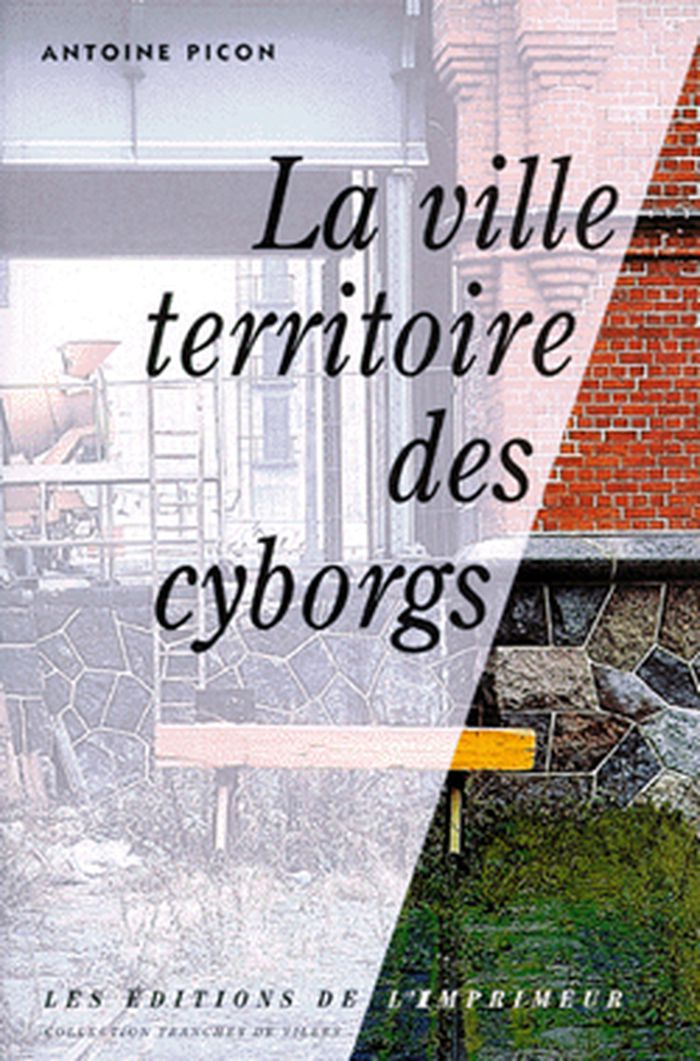
La ville territoire des cyborgs
Actions:
Price:
$28.00
(available to order)
Summary:
Un autre point de vue, un nouveau type de regard s'avèrent nécessaire afin d'apprivoiser la grande ville contemporaine. Tout regard présuppose un sujet. La ville idéale de la Renaissance était inséparable de cet homme générique, animal doué de raison, microcosme ordonnateur, dont la perspective cherchait à codifier la vision. Dans cet essai, le cyborg tient un rôle comparable, s'agissant cette fois d'explorer les complexités de la ville territoire d'aujourd'hui. Hybride d'homme et de machine, individu parfait parce que rendu pleinement autonome par la technologie, le cyborg est bien sûr une fiction. Cette fiction n'en permet pas moins d'analyser des aspects essentiels de la grande ville d'aujourd'hui, de son étrange parenté avec l'univers des jeux électroniques au rôle qu'y tiennent les réseaux avant de se pencher sur son architecture.
La ville territoire des cyborgs
Actions:
Price:
$28.00
(available to order)
Summary:
Un autre point de vue, un nouveau type de regard s'avèrent nécessaire afin d'apprivoiser la grande ville contemporaine. Tout regard présuppose un sujet. La ville idéale de la Renaissance était inséparable de cet homme générique, animal doué de raison, microcosme ordonnateur, dont la perspective cherchait à codifier la vision. Dans cet essai, le cyborg tient un rôle comparable, s'agissant cette fois d'explorer les complexités de la ville territoire d'aujourd'hui. Hybride d'homme et de machine, individu parfait parce que rendu pleinement autonome par la technologie, le cyborg est bien sûr une fiction. Cette fiction n'en permet pas moins d'analyser des aspects essentiels de la grande ville d'aujourd'hui, de son étrange parenté avec l'univers des jeux électroniques au rôle qu'y tiennent les réseaux avant de se pencher sur son architecture.
Form:
books
books
Publication:
April 1998, Paris
April 1998, Paris
Subject:
Urban Theory
Urban Theory
Form:
books
books

Price:
$55.00
(available to order)
Summary:
The immersive soundscape installations and intimate environments of the Canadian artist duo Janet Cardiff (born 1957) and Georges Bures Miller (born 1960) present an ongoing series of chapters in the life of the ghost in the machine. Their works describe tales of tag-sale menace and shared loneliness through aural means, wholly reconceiving the gallery experience. A(...)
$55.00
(available to order)
Summary:
The immersive soundscape installations and intimate environments of the Canadian artist duo Janet Cardiff (born 1957) and Georges Bures Miller (born 1960) present an ongoing series of chapters in the life of the ghost in the machine. Their works describe tales of tag-sale menace and shared loneliness through aural means, wholly reconceiving the gallery experience. A(...)
Title:
Janet Cardiff & George Bures Miller: works from the Goetz collection
Actions:
Price:
$55.00
(available to order)
Summary:
The immersive soundscape installations and intimate environments of the Canadian artist duo Janet Cardiff (born 1957) and Georges Bures Miller (born 1960) present an ongoing series of chapters in the life of the ghost in the machine. Their works describe tales of tag-sale menace and shared loneliness through aural means, wholly reconceiving the gallery experience. A pioneering collector of new media art, Ingvild Goetz has assembled a significant series of works by Cardiff and Miller over the years, and this publication presents this important collection for the first time. Texts by Goetz, Okwui Enwezor, León Krempel and Rainald Schumacher provide background details and references to each work that shed light on its place in the artists’ oeuvre, with a particular focus on the couple’s very personal and theatrical use of sound.
Janet Cardiff & George Bures Miller: works from the Goetz collection
Actions:
Price:
$55.00
(available to order)
Summary:
The immersive soundscape installations and intimate environments of the Canadian artist duo Janet Cardiff (born 1957) and Georges Bures Miller (born 1960) present an ongoing series of chapters in the life of the ghost in the machine. Their works describe tales of tag-sale menace and shared loneliness through aural means, wholly reconceiving the gallery experience. A pioneering collector of new media art, Ingvild Goetz has assembled a significant series of works by Cardiff and Miller over the years, and this publication presents this important collection for the first time. Texts by Goetz, Okwui Enwezor, León Krempel and Rainald Schumacher provide background details and references to each work that shed light on its place in the artists’ oeuvre, with a particular focus on the couple’s very personal and theatrical use of sound.
Form:
books
books
Publication:
August 2012
August 2012
Subject:
Contemporary Art Monographs
Contemporary Art Monographs
Form:
books
books
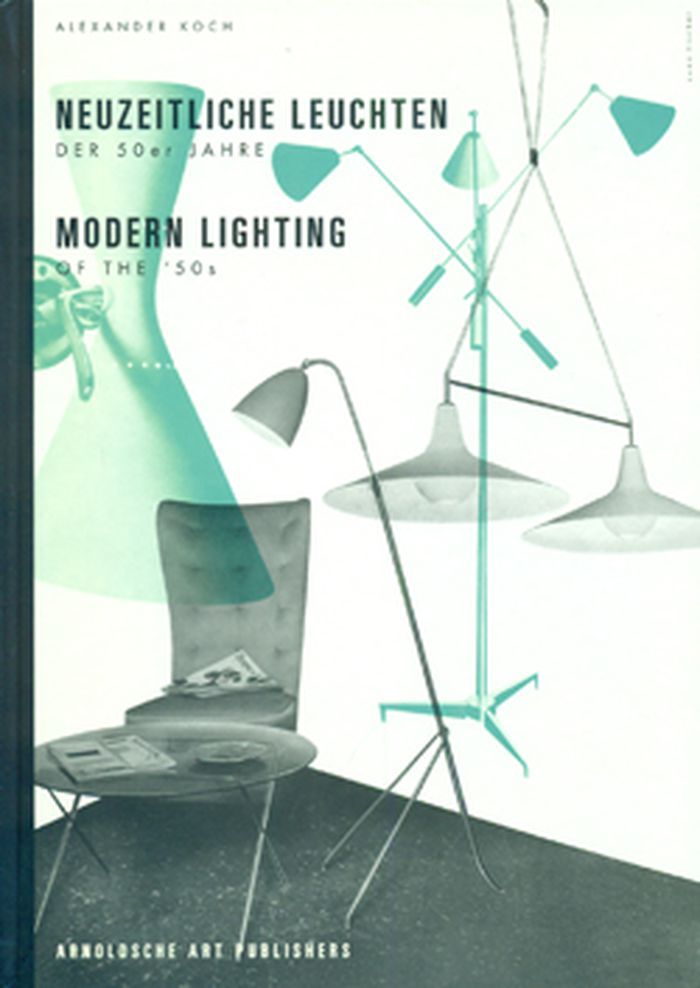
Title:
Modern lighting of the '50s
Modern lighting of the '50s
Actions:
Price:
$77.00
(available to order)
Summary:
In 1953 the journalist and publisher Alexander Koch published his book 'Neuzeitliche Leuchten' (Lighting in the Modern Era). Nowadays Koch’s then selection of lighting by international designers and manufacturers seems truly visionary. Koch presents a spectrum of diverse designs, whose origins lay not only in the addition of basic geometrical shapes as with the(...)
$77.00
(available to order)
Summary:
In 1953 the journalist and publisher Alexander Koch published his book 'Neuzeitliche Leuchten' (Lighting in the Modern Era). Nowadays Koch’s then selection of lighting by international designers and manufacturers seems truly visionary. Koch presents a spectrum of diverse designs, whose origins lay not only in the addition of basic geometrical shapes as with the(...)
Title:
Modern lighting of the '50s
Actions:
Price:
$77.00
(available to order)
Summary:
In 1953 the journalist and publisher Alexander Koch published his book 'Neuzeitliche Leuchten' (Lighting in the Modern Era). Nowadays Koch’s then selection of lighting by international designers and manufacturers seems truly visionary. Koch presents a spectrum of diverse designs, whose origins lay not only in the addition of basic geometrical shapes as with the pre-war avant-gardists, but also in the respective temperaments of the different countries of origin. It is very apparent that after the war America, Scandinavia and Italy exerted a strong influence on designs hitherto rather dominated by Bauhaus purism in Germany. An organic design concept, emancipated from the ideal of a machine and inspired by artists such as Alexander Calder, Henry Moore and Naum Gabo, along with new materials and manufacturing techniques, gave rise to designs with enormous innovative energy.
Modern lighting of the '50s
Actions:
Price:
$77.00
(available to order)
Summary:
In 1953 the journalist and publisher Alexander Koch published his book 'Neuzeitliche Leuchten' (Lighting in the Modern Era). Nowadays Koch’s then selection of lighting by international designers and manufacturers seems truly visionary. Koch presents a spectrum of diverse designs, whose origins lay not only in the addition of basic geometrical shapes as with the pre-war avant-gardists, but also in the respective temperaments of the different countries of origin. It is very apparent that after the war America, Scandinavia and Italy exerted a strong influence on designs hitherto rather dominated by Bauhaus purism in Germany. An organic design concept, emancipated from the ideal of a machine and inspired by artists such as Alexander Calder, Henry Moore and Naum Gabo, along with new materials and manufacturing techniques, gave rise to designs with enormous innovative energy.
Form:
books
books
Publication:
January 2013
January 2013
Subject:
Materials and Lighting
Materials and Lighting


