


252 Results
Form:
books
books
Price:
$38.00
(available to order)
Summary:
Fifty years after the British annexed the Punjab and made Lahore its provincial capital, the city—once a prosperous Mughal center that had long since fallen into ruin—was transformed. British and Indian officials had designed a modern, architecturally distinct city center adjacent to the old walled city, administered under new methods of urban governance. In Making(...)
$38.00
(available to order)
Summary:
Fifty years after the British annexed the Punjab and made Lahore its provincial capital, the city—once a prosperous Mughal center that had long since fallen into ruin—was transformed. British and Indian officials had designed a modern, architecturally distinct city center adjacent to the old walled city, administered under new methods of urban governance. In Making(...)
Title:
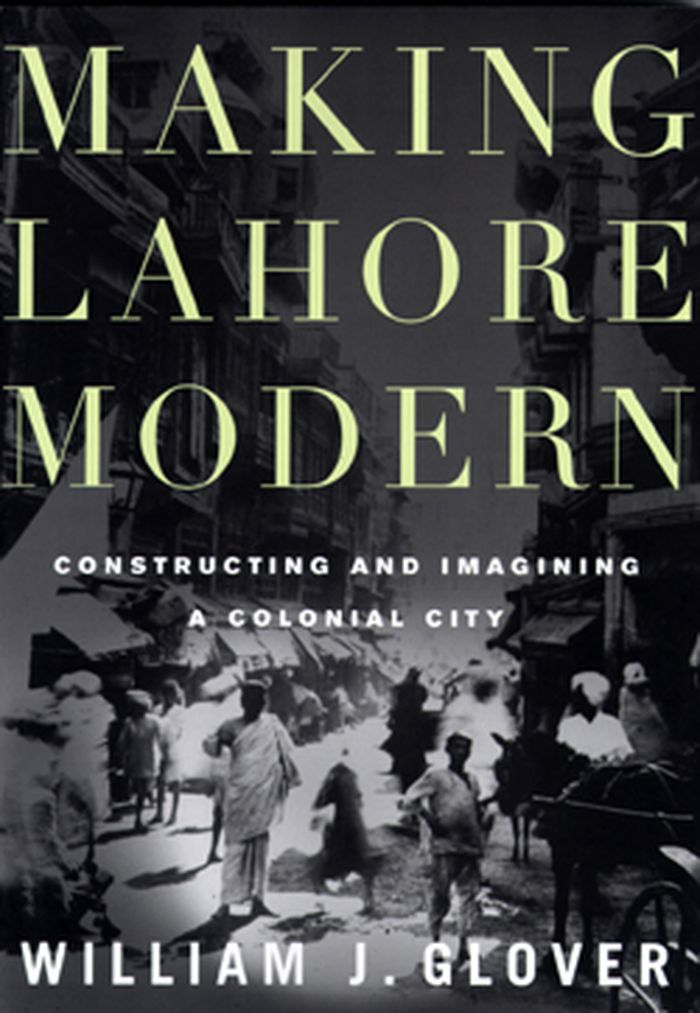
Making Lahore Modern: constructing and imagining a colonial city
Actions:
Price:
$38.00
(available to order)
Summary:
Fifty years after the British annexed the Punjab and made Lahore its provincial capital, the city—once a prosperous Mughal center that had long since fallen into ruin—was transformed. British and Indian officials had designed a modern, architecturally distinct city center adjacent to the old walled city, administered under new methods of urban governance. In Making Lahore Modern, William J. Glover investigates the traditions that shaped colonial Lahore. In particular, he focuses on the conviction that both British and Indian actors who implemented urbanization came to share: that the material fabric of the city could lead to social and moral improvement. This belief in the power of the physical environment to shape individual and collective sentiments, he argues, links the colonial history of Lahore to nineteenth-century urbanization around the world. Glover highlights three aspects of Lahore’s history that show this process unfolding. First, he examines the concepts through which the British understood the Indian city and envisioned its transformation. Second, through a detailed study of new buildings and the adaptation of existing structures, he explores the role of planning, design, and reuse. Finally, he analyzes the changes in urban imagination as evidenced in Indian writings on the city in this period. Throughout, Glover emphasizes that colonial urbanism was not simply imposed; it was a collaborative project between Indian citizens and the British. Offering an in-depth study of a single provincial city, Glover reveals that urban change in colonial India was not a monolithic process and establishes Lahore as a key site for understanding the genealogy of modern global urbanism. William J. Glover is associate professor of architecture at the University of Michigan.
Making Lahore Modern: constructing and imagining a colonial city
Actions:
Price:
$38.00
(available to order)
Summary:
Fifty years after the British annexed the Punjab and made Lahore its provincial capital, the city—once a prosperous Mughal center that had long since fallen into ruin—was transformed. British and Indian officials had designed a modern, architecturally distinct city center adjacent to the old walled city, administered under new methods of urban governance. In Making Lahore Modern, William J. Glover investigates the traditions that shaped colonial Lahore. In particular, he focuses on the conviction that both British and Indian actors who implemented urbanization came to share: that the material fabric of the city could lead to social and moral improvement. This belief in the power of the physical environment to shape individual and collective sentiments, he argues, links the colonial history of Lahore to nineteenth-century urbanization around the world. Glover highlights three aspects of Lahore’s history that show this process unfolding. First, he examines the concepts through which the British understood the Indian city and envisioned its transformation. Second, through a detailed study of new buildings and the adaptation of existing structures, he explores the role of planning, design, and reuse. Finally, he analyzes the changes in urban imagination as evidenced in Indian writings on the city in this period. Throughout, Glover emphasizes that colonial urbanism was not simply imposed; it was a collaborative project between Indian citizens and the British. Offering an in-depth study of a single provincial city, Glover reveals that urban change in colonial India was not a monolithic process and establishes Lahore as a key site for understanding the genealogy of modern global urbanism. William J. Glover is associate professor of architecture at the University of Michigan.
Form:
books
books
Publication:
January 1900, Miineapolis, London
January 1900, Miineapolis, London
Subject:
Urban Theory
Urban Theory
Form:
books
books
Title:
Voyage à Chandigarh
Voyage à Chandigarh
Actions:
Price:
$83.95
(available in store)
Summary:
C'est à Chandigarh, capitale indienne au pied de l'Himalaya, que Le Corbusier mit en oeuvre pour l'unique fois de sa vie ses théories urbaines à l'échelle d'une ville entière. En 1947, lors de la partition de l'Inde et du Pakistan, l'état du Punjab fut divisé : Lahore, son ancienne capitale, étant désormais au Pakistan, Nehru confia trois ans plus tard la construction(...)
$83.95
(available in store)
Summary:
C'est à Chandigarh, capitale indienne au pied de l'Himalaya, que Le Corbusier mit en oeuvre pour l'unique fois de sa vie ses théories urbaines à l'échelle d'une ville entière. En 1947, lors de la partition de l'Inde et du Pakistan, l'état du Punjab fut divisé : Lahore, son ancienne capitale, étant désormais au Pakistan, Nehru confia trois ans plus tard la construction(...)
Title:
Voyage à Chandigarh
Actions:
Price:
$83.95
(available in store)
Summary:
C'est à Chandigarh, capitale indienne au pied de l'Himalaya, que Le Corbusier mit en oeuvre pour l'unique fois de sa vie ses théories urbaines à l'échelle d'une ville entière. En 1947, lors de la partition de l'Inde et du Pakistan, l'état du Punjab fut divisé : Lahore, son ancienne capitale, étant désormais au Pakistan, Nehru confia trois ans plus tard la construction d'une nouvelle capitale à une équipe dirigée par Le Corbusier. En photographiant Chandigarh à partir de 2010, l'intention de Manuel Bougot était de faire un portrait intime de la ville en figeant sur la pellicule exclusivement des intérieurs privés et administratifs. Mais face à l'architecture impressionnante des sites et notamment celle du Capitole Complex, qui regroupe la Haute cour de justice, l'Assemblée législative et le Secrétariat général, ce projet a évolué pour raconter cette ville que ses habitants appellent "The City Beautiful". Manuel Bougot s'est attaché à montrer l'appropriation par les Indiens de cette architecture occidentale et, au-delà, la confrontation de deux cultures que tout semblerait opposer, faisant un état des lieux soixante ans après la naissance de cette capitale prévue pour cinq cent mille habitants et qui en compte aujourd'hui plus de deux millions. A des années-lumière de l'idée que l'on se fait des grandes villes indiennes, au coeur de la densité minérale des bâtiments en béton, Chandigarh exhibe de magnifiques espaces verts, des parcs luxuriants où écureuils et singes se promènent en liberté et où les habitants font leur jogging quotidien. C'est cette capitale originale, le plus grand chantier de Le Corbusier, que nous restitue le photographe, dans ce livre auquel contribuent également l'historienne de l'architecture Caroline Maniaque, et l'architecte indien Balkrishna Doshi, Pritzker prize 2018, qui accompagna Le Corbusier dans cette aventure hors norme.
Voyage à Chandigarh
Actions:
Price:
$83.95
(available in store)
Summary:
C'est à Chandigarh, capitale indienne au pied de l'Himalaya, que Le Corbusier mit en oeuvre pour l'unique fois de sa vie ses théories urbaines à l'échelle d'une ville entière. En 1947, lors de la partition de l'Inde et du Pakistan, l'état du Punjab fut divisé : Lahore, son ancienne capitale, étant désormais au Pakistan, Nehru confia trois ans plus tard la construction d'une nouvelle capitale à une équipe dirigée par Le Corbusier. En photographiant Chandigarh à partir de 2010, l'intention de Manuel Bougot était de faire un portrait intime de la ville en figeant sur la pellicule exclusivement des intérieurs privés et administratifs. Mais face à l'architecture impressionnante des sites et notamment celle du Capitole Complex, qui regroupe la Haute cour de justice, l'Assemblée législative et le Secrétariat général, ce projet a évolué pour raconter cette ville que ses habitants appellent "The City Beautiful". Manuel Bougot s'est attaché à montrer l'appropriation par les Indiens de cette architecture occidentale et, au-delà, la confrontation de deux cultures que tout semblerait opposer, faisant un état des lieux soixante ans après la naissance de cette capitale prévue pour cinq cent mille habitants et qui en compte aujourd'hui plus de deux millions. A des années-lumière de l'idée que l'on se fait des grandes villes indiennes, au coeur de la densité minérale des bâtiments en béton, Chandigarh exhibe de magnifiques espaces verts, des parcs luxuriants où écureuils et singes se promènent en liberté et où les habitants font leur jogging quotidien. C'est cette capitale originale, le plus grand chantier de Le Corbusier, que nous restitue le photographe, dans ce livre auquel contribuent également l'historienne de l'architecture Caroline Maniaque, et l'architecte indien Balkrishna Doshi, Pritzker prize 2018, qui accompagna Le Corbusier dans cette aventure hors norme.
Form:
books
books
Publication:
December 2019
December 2019
Subject:
Journeys
Journeys


