


257 Results
Form:
books
books
Price:
$32.95
(available to order)
Summary:
La désobéissance inventive, ou la nécessité de faire autrement. C'est ce que recommande Nicolas Michelin, architecte urbaniste, dans ces nouveaux textes. C'est-à-dire sortir de la routine, contourner les objectifs réglementaires incertains ou absurdes, éviter les alibis environnementaux douteux, pour échapper au carcan qui uniformise la production architecturale actuelle.(...)
$32.95
(available to order)
Summary:
La désobéissance inventive, ou la nécessité de faire autrement. C'est ce que recommande Nicolas Michelin, architecte urbaniste, dans ces nouveaux textes. C'est-à-dire sortir de la routine, contourner les objectifs réglementaires incertains ou absurdes, éviter les alibis environnementaux douteux, pour échapper au carcan qui uniformise la production architecturale actuelle.(...)
Title:
Attitudes ; propos sur l'architecture, la ville, l'environnement
Actions:
Price:
$32.95
(available to order)
Summary:
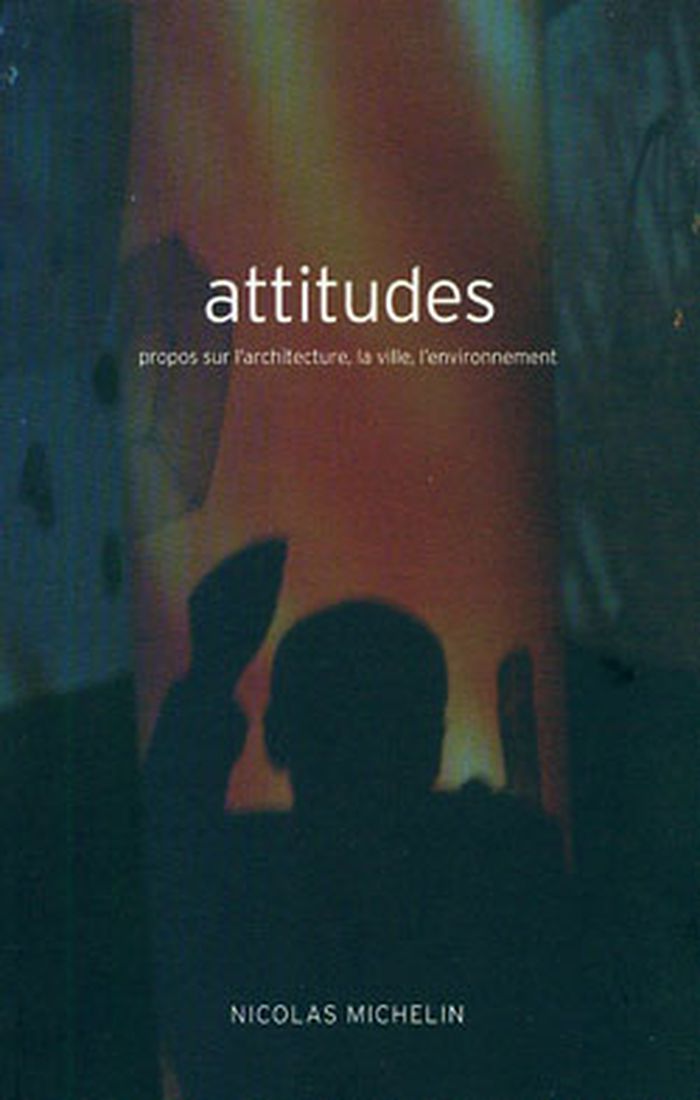
La désobéissance inventive, ou la nécessité de faire autrement. C'est ce que recommande Nicolas Michelin, architecte urbaniste, dans ces nouveaux textes. C'est-à-dire sortir de la routine, contourner les objectifs réglementaires incertains ou absurdes, éviter les alibis environnementaux douteux, pour échapper au carcan qui uniformise la production architecturale actuelle. Mais, Nicolas Michelin fait soudain un pas de côté. De manière inattendue, il livre quatre courtes fictions qui entraînent le lecteur dans d'étranges univers, incursions dans des mondes parallèles où l'architecture apparaît toujours en filigrane. À partir de constructions ou de paysages réels, il glisse vers des hallucinations dans des temporalités et des spatialités étrangement subverties. Puis, il mène trois conversations avec des interlocuteurs proches de son mode de pensée. Il échange avec ses deux associés sur la pratique de l'agence sur la double échelle, de l'urbanisme et de l'architecture. Il partage sa parole avec un artiste, à propos de la Renaissance, et s'interroge avec deux architectes plus jeunes sur la notion d'engagement. Au fil de ces textes, il explicite sa position d'architecte et sa vision de ce métier politique.
Attitudes ; propos sur l'architecture, la ville, l'environnement
Actions:
Price:
$32.95
(available to order)
Summary:
La désobéissance inventive, ou la nécessité de faire autrement. C'est ce que recommande Nicolas Michelin, architecte urbaniste, dans ces nouveaux textes. C'est-à-dire sortir de la routine, contourner les objectifs réglementaires incertains ou absurdes, éviter les alibis environnementaux douteux, pour échapper au carcan qui uniformise la production architecturale actuelle. Mais, Nicolas Michelin fait soudain un pas de côté. De manière inattendue, il livre quatre courtes fictions qui entraînent le lecteur dans d'étranges univers, incursions dans des mondes parallèles où l'architecture apparaît toujours en filigrane. À partir de constructions ou de paysages réels, il glisse vers des hallucinations dans des temporalités et des spatialités étrangement subverties. Puis, il mène trois conversations avec des interlocuteurs proches de son mode de pensée. Il échange avec ses deux associés sur la pratique de l'agence sur la double échelle, de l'urbanisme et de l'architecture. Il partage sa parole avec un artiste, à propos de la Renaissance, et s'interroge avec deux architectes plus jeunes sur la notion d'engagement. Au fil de ces textes, il explicite sa position d'architecte et sa vision de ce métier politique.
Form:
books
books
Publication:
November 2010
November 2010
Subject:
Architectural Theory
Architectural Theory
Form:
books
books
Actions:
Price:
$100.00
(available to order)
Summary:
The only full treatise on architecture and its related arts to survive from classical antiquity, the "Architectura libri decem" ("Ten Books of Architecture") is the (...)
$100.00
(available to order)
Summary:
The only full treatise on architecture and its related arts to survive from classical antiquity, the "Architectura libri decem" ("Ten Books of Architecture") is the (...)
Title:
Vitruvius : Ten books on architecture
Actions:
Price:
$100.00
(available to order)
Summary:
The only full treatise on architecture and its related arts to survive from classical antiquity, the "Architectura libri decem" ("Ten Books of Architecture") is the single most important work of architectural history in the Western world, having shaped humanist architecture and the image of the architect from the Renaissance to the present. Extremely influential in the formation of the medieval and modern concept of a broad liberal arts education as the basis for responsible professionals, this work is remarkable also because over half of its content deals with aspects of Hellenistic art, science, and technology, music theory, law, artillery, siege machinery, proportion and philosophy, among other topics. This new, critical edition of Vitruvius' "Ten Books of Architecture" is the first to be published for an English-language audience in more than half a century.
Vitruvius : Ten books on architecture
Actions:
Price:
$100.00
(available to order)
Summary:
The only full treatise on architecture and its related arts to survive from classical antiquity, the "Architectura libri decem" ("Ten Books of Architecture") is the single most important work of architectural history in the Western world, having shaped humanist architecture and the image of the architect from the Renaissance to the present. Extremely influential in the formation of the medieval and modern concept of a broad liberal arts education as the basis for responsible professionals, this work is remarkable also because over half of its content deals with aspects of Hellenistic art, science, and technology, music theory, law, artillery, siege machinery, proportion and philosophy, among other topics. This new, critical edition of Vitruvius' "Ten Books of Architecture" is the first to be published for an English-language audience in more than half a century.
Form:
books
books
Publication:
August 1999, Cambridge
August 1999, Cambridge
Subject:
Treatises
Treatises
Form:
books
books
Price:
$31.95
(available in store)
Summary:
Et si la perspective moderne n'existait pas? Ne faut-il nuancer la thèse massivement admise qu'au Quattrocento, un dispositif unitaire de représentation se mettrait en place dans la peinture, dont la fonction demeurerait inchangée jusqu'à l'âge classique? En relisant les textes d'Alberti, de Piero della Francesca, de Léonard de Vinci et d'Albert Dürer, en regardant(...)
$31.95
(available in store)
Summary:
Et si la perspective moderne n'existait pas? Ne faut-il nuancer la thèse massivement admise qu'au Quattrocento, un dispositif unitaire de représentation se mettrait en place dans la peinture, dont la fonction demeurerait inchangée jusqu'à l'âge classique? En relisant les textes d'Alberti, de Piero della Francesca, de Léonard de Vinci et d'Albert Dürer, en regardant(...)
Title:
Archéologie de la perspective : sur Piero della Francesca, Vinci et Dürer
Actions:
Price:
$31.95
(available in store)
Summary:
Et si la perspective moderne n'existait pas? Ne faut-il nuancer la thèse massivement admise qu'au Quattrocento, un dispositif unitaire de représentation se mettrait en place dans la peinture, dont la fonction demeurerait inchangée jusqu'à l'âge classique? En relisant les textes d'Alberti, de Piero della Francesca, de Léonard de Vinci et d'Albert Dürer, en regardant autrement les peintures de la Renaissance, des fresques d'Azzero ou dela Cène de Milan, ce livre met en effet en évidence des dispositifs singuliers, liés pour chaque peintre à des régimes différents de la représentation, du visible, de la vision et du regard. Pourtant, au XVIIe siècle, le discours sur la perspective est soudain convoqué par la philosophie, pour éclairer le nouveau partage entre la représentation du sujet pensant et une matière désormais géométrisable. À quelles conditions, improbables et contingentes, la perspective a-t-elle pu tenir cette place à la fois décisive et ambiguë dans l'émergence de l'âme classique? Par quelles transformations, de la surface de la peinture et de laplace du spectateur, a-t-elle dû passer pour rendre possible la clôture de l'image sur la représentation classique? À l'histoire d'une forme symbolique, ce livre substitue le récit désormais éclaté d'une archéologie ou d'une généalogie de la modernité.
Archéologie de la perspective : sur Piero della Francesca, Vinci et Dürer
Actions:
Price:
$31.95
(available in store)
Summary:
Et si la perspective moderne n'existait pas? Ne faut-il nuancer la thèse massivement admise qu'au Quattrocento, un dispositif unitaire de représentation se mettrait en place dans la peinture, dont la fonction demeurerait inchangée jusqu'à l'âge classique? En relisant les textes d'Alberti, de Piero della Francesca, de Léonard de Vinci et d'Albert Dürer, en regardant autrement les peintures de la Renaissance, des fresques d'Azzero ou dela Cène de Milan, ce livre met en effet en évidence des dispositifs singuliers, liés pour chaque peintre à des régimes différents de la représentation, du visible, de la vision et du regard. Pourtant, au XVIIe siècle, le discours sur la perspective est soudain convoqué par la philosophie, pour éclairer le nouveau partage entre la représentation du sujet pensant et une matière désormais géométrisable. À quelles conditions, improbables et contingentes, la perspective a-t-elle pu tenir cette place à la fois décisive et ambiguë dans l'émergence de l'âme classique? Par quelles transformations, de la surface de la peinture et de laplace du spectateur, a-t-elle dû passer pour rendre possible la clôture de l'image sur la représentation classique? À l'histoire d'une forme symbolique, ce livre substitue le récit désormais éclaté d'une archéologie ou d'une généalogie de la modernité.
Form:
books
books
Publication:
May 2007, Paris
May 2007, Paris
Subject:
Architectural Theory
Architectural Theory
Form:
books
books
Actions:
Price:
$31.00
(available to order)
Summary:
As with the compass needle, so people have always been most powerfully attracted northwards; everyone carries within them their own concept of north. The Idea of North is a study, ranging widely in time and place, of some of the ways in which these ideas have found expression. Peter Davidson explores the topography of north as represented in images and literature, taking(...)
$31.00
(available to order)
Summary:
As with the compass needle, so people have always been most powerfully attracted northwards; everyone carries within them their own concept of north. The Idea of North is a study, ranging widely in time and place, of some of the ways in which these ideas have found expression. Peter Davidson explores the topography of north as represented in images and literature, taking(...)
Title:
The idea of north, 2nd edition
Actions:
Price:
$31.00
(available to order)
Summary:
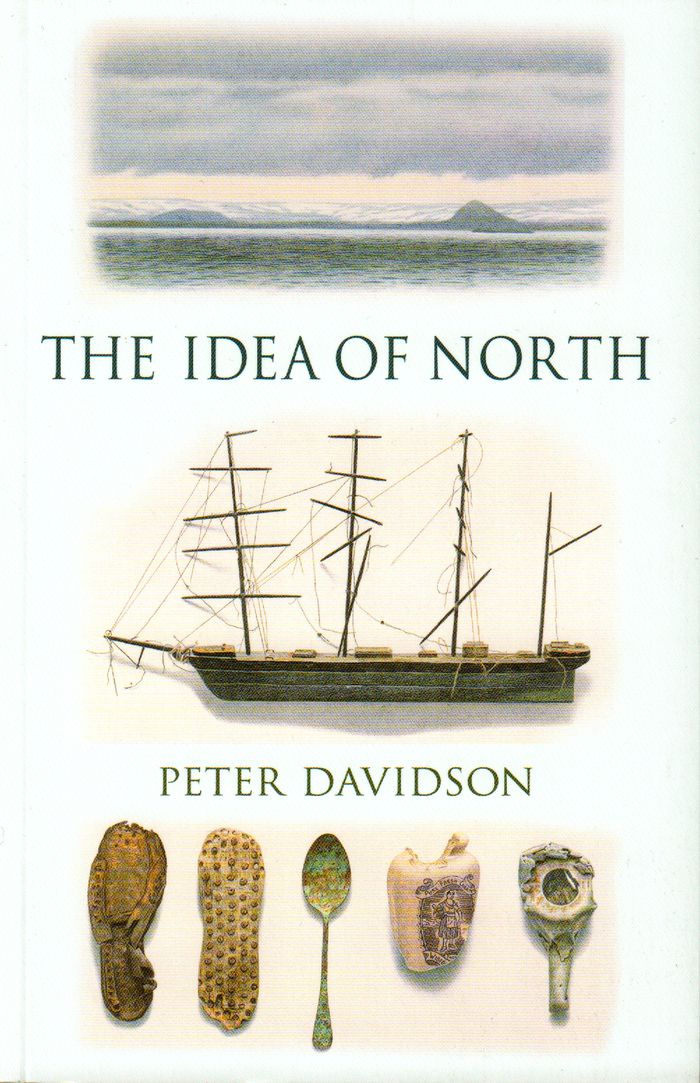
As with the compass needle, so people have always been most powerfully attracted northwards; everyone carries within them their own concept of north. The Idea of North is a study, ranging widely in time and place, of some of the ways in which these ideas have found expression. Peter Davidson explores the topography of north as represented in images and literature, taking in Netherlandic winter paintings of the Renaissance, German Romantic landscapes, Scandinavian Biedermeyer and twentieth-century topographical painting and printmaking. He examines a bewildering diversity of mythologies and imaginings of north, including The Snow Queen; Scandinavian Sagas; ghost-stories; Moomintrolls, Arctic exploration; the fictitious snowy kingdoms of Zembla and Naboland; Nabokov's nostalgias; Baltic midsummer; rooms in winter light; compasses and star-stones; hoar-frost; ice; and glass. The book also traces a northward journey, describing northern rural England, industrial sites, and the long emptiness of the borders, Scotland and the Highlands. He looks at the region far north of Scotland, then moves to the Northern Netherlands and Scandinavia to explore their identifiable northernness.The last visited place is Iceland, identified by W. H. Auden and Louis McNeice in 1936 as 'furthest, most remote, most distant, most northerly'. An engaging meditation on solitude, absence and stillness, The Idea of North shows north to be a goal rather than a destination, a place of revelation that is always somewhere ultimate and austere.
The idea of north, 2nd edition
Actions:
Price:
$31.00
(available to order)
Summary:
As with the compass needle, so people have always been most powerfully attracted northwards; everyone carries within them their own concept of north. The Idea of North is a study, ranging widely in time and place, of some of the ways in which these ideas have found expression. Peter Davidson explores the topography of north as represented in images and literature, taking in Netherlandic winter paintings of the Renaissance, German Romantic landscapes, Scandinavian Biedermeyer and twentieth-century topographical painting and printmaking. He examines a bewildering diversity of mythologies and imaginings of north, including The Snow Queen; Scandinavian Sagas; ghost-stories; Moomintrolls, Arctic exploration; the fictitious snowy kingdoms of Zembla and Naboland; Nabokov's nostalgias; Baltic midsummer; rooms in winter light; compasses and star-stones; hoar-frost; ice; and glass. The book also traces a northward journey, describing northern rural England, industrial sites, and the long emptiness of the borders, Scotland and the Highlands. He looks at the region far north of Scotland, then moves to the Northern Netherlands and Scandinavia to explore their identifiable northernness.The last visited place is Iceland, identified by W. H. Auden and Louis McNeice in 1936 as 'furthest, most remote, most distant, most northerly'. An engaging meditation on solitude, absence and stillness, The Idea of North shows north to be a goal rather than a destination, a place of revelation that is always somewhere ultimate and austere.
Form:
books
books
Publication:
June 2016
June 2016
Subject:
Architectural Theory
Architectural Theory
Form:
books
books
Title:
The city as a project
The city as a project
Actions:
Price:
$41.95
(available to order)
Summary:
What if the city can be seen differently than as a sort of self-organising chaos? Shaped not only by material forces, but also by cultural and didactic visions, the city may instead result from political intention in the form of architectural projects. This collection of eight essays, edited by Pier Vittorio Aureli, examines a fascinating set of urban conditions across(...)
$41.95
(available to order)
Summary:
What if the city can be seen differently than as a sort of self-organising chaos? Shaped not only by material forces, but also by cultural and didactic visions, the city may instead result from political intention in the form of architectural projects. This collection of eight essays, edited by Pier Vittorio Aureli, examines a fascinating set of urban conditions across(...)
Title:
The city as a project
Actions:
Price:
$41.95
(available to order)
Summary:
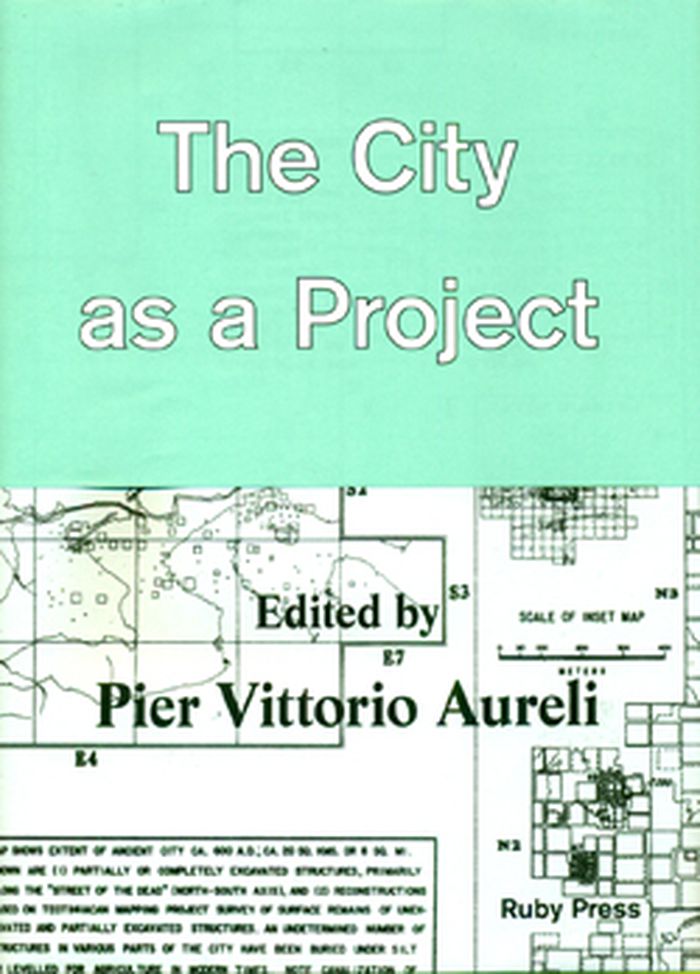
What if the city can be seen differently than as a sort of self-organising chaos? Shaped not only by material forces, but also by cultural and didactic visions, the city may instead result from political intention in the form of architectural projects. This collection of eight essays, edited by Pier Vittorio Aureli, examines a fascinating set of urban conditions across more than two millennia of history, from the political theology of the Islamic city to the political economy of Renaissance architecture, and from the planned Mesoamerican metropolis to the Fordist factory floor, revealing the ways in which the city arises from the constant interaction between ideas and spatial conditions.
The city as a project
Actions:
Price:
$41.95
(available to order)
Summary:
What if the city can be seen differently than as a sort of self-organising chaos? Shaped not only by material forces, but also by cultural and didactic visions, the city may instead result from political intention in the form of architectural projects. This collection of eight essays, edited by Pier Vittorio Aureli, examines a fascinating set of urban conditions across more than two millennia of history, from the political theology of the Islamic city to the political economy of Renaissance architecture, and from the planned Mesoamerican metropolis to the Fordist factory floor, revealing the ways in which the city arises from the constant interaction between ideas and spatial conditions.
Form:
books
books
Publication:
February 2014
February 2014
Subject:
Urban Theory
Urban Theory
Form:
books
books

Actions:
Price:
$41.95
(available to order)
Summary:
Notre habitation, notre habitat, l'espace où nous évoluons est un médium que nous croyons façonner selon notre désir, selon l'image que nous voulons donner de nous-même selon notre ego. En fait, il restitue nos craintes et nos joies, qui ressurgissent du plus lointain de notre mémoire génétique. Notre habitation n'est que le reflet de nous-mêmes. Ce n'est pas seulement(...)
$41.95
(available to order)
Summary:
Notre habitation, notre habitat, l'espace où nous évoluons est un médium que nous croyons façonner selon notre désir, selon l'image que nous voulons donner de nous-même selon notre ego. En fait, il restitue nos craintes et nos joies, qui ressurgissent du plus lointain de notre mémoire génétique. Notre habitation n'est que le reflet de nous-mêmes. Ce n'est pas seulement(...)
Title:
Les origines symboliques de notre habitat
Actions:
Price:
$41.95
(available to order)
Summary:
Notre habitation, notre habitat, l'espace où nous évoluons est un médium que nous croyons façonner selon notre désir, selon l'image que nous voulons donner de nous-même selon notre ego. En fait, il restitue nos craintes et nos joies, qui ressurgissent du plus lointain de notre mémoire génétique. Notre habitation n'est que le reflet de nous-mêmes. Ce n'est pas seulement l'architecture sacrée qui véhicule des symboles mais la plus simple demeure reflète aussi des archétypes qui proviennent de la tradition primordiale. Des premières croyances humaines pour les déesses mères, comme Gaia, la terre nourricière jusqu'à la Sophia, la sagesse grecque. vénérée encore par les hermétistes de la Renaissance, la lignée ininterrompue des bâtisseurs qui ont construit selon les principes de la géométrie sacrée, du mythe osirien au corpus hermeticum, issu de l'Hermès trismégiste, il y a eu un fil conducteur pour que l'union du ciel et de la terre puisse se réaliser. Il y a eu une transmission du savoir de constructeurs initiés, qui n'ont cessé, à travers des civilisations très éloignées, semble-t-il, les unes des autres, de rassembler ce qui était épars, qui nous vient encore de la nature et qui n'a pas été inventé par l'homme mais seulement réappris et réutilisé. Suivons l'auteur à la découverte de nos racines profondes et dont le développement s'est fait identiquement et analogiquement à celles de l'Asie, de l'Orient ou du Nouveau Monde.
Les origines symboliques de notre habitat
Actions:
Price:
$41.95
(available to order)
Summary:
Notre habitation, notre habitat, l'espace où nous évoluons est un médium que nous croyons façonner selon notre désir, selon l'image que nous voulons donner de nous-même selon notre ego. En fait, il restitue nos craintes et nos joies, qui ressurgissent du plus lointain de notre mémoire génétique. Notre habitation n'est que le reflet de nous-mêmes. Ce n'est pas seulement l'architecture sacrée qui véhicule des symboles mais la plus simple demeure reflète aussi des archétypes qui proviennent de la tradition primordiale. Des premières croyances humaines pour les déesses mères, comme Gaia, la terre nourricière jusqu'à la Sophia, la sagesse grecque. vénérée encore par les hermétistes de la Renaissance, la lignée ininterrompue des bâtisseurs qui ont construit selon les principes de la géométrie sacrée, du mythe osirien au corpus hermeticum, issu de l'Hermès trismégiste, il y a eu un fil conducteur pour que l'union du ciel et de la terre puisse se réaliser. Il y a eu une transmission du savoir de constructeurs initiés, qui n'ont cessé, à travers des civilisations très éloignées, semble-t-il, les unes des autres, de rassembler ce qui était épars, qui nous vient encore de la nature et qui n'a pas été inventé par l'homme mais seulement réappris et réutilisé. Suivons l'auteur à la découverte de nos racines profondes et dont le développement s'est fait identiquement et analogiquement à celles de l'Asie, de l'Orient ou du Nouveau Monde.
Form:
books
books
Publication:
September 2007, Paris
September 2007, Paris
Subject:
Architectural Theory
Architectural Theory
Form:
books
books
Actions:
Price:
$32.50
(available to order)
Summary:
Who are you? And how can you prove it? How were individuals described and identified by people who had never seen them before, in the centuries before photography and fingerprinting, in a world without centralized administrations, where names and addresses were constantly changing? In "Who are you?", Valentin Groebner traces the early modern European history of(...)
$32.50
(available to order)
Summary:
Who are you? And how can you prove it? How were individuals described and identified by people who had never seen them before, in the centuries before photography and fingerprinting, in a world without centralized administrations, where names and addresses were constantly changing? In "Who are you?", Valentin Groebner traces the early modern European history of(...)
Title:
Who are you? : identification, deception, and surveillance in early modern Europe
Actions:
Price:
$32.50
(available to order)
Summary:
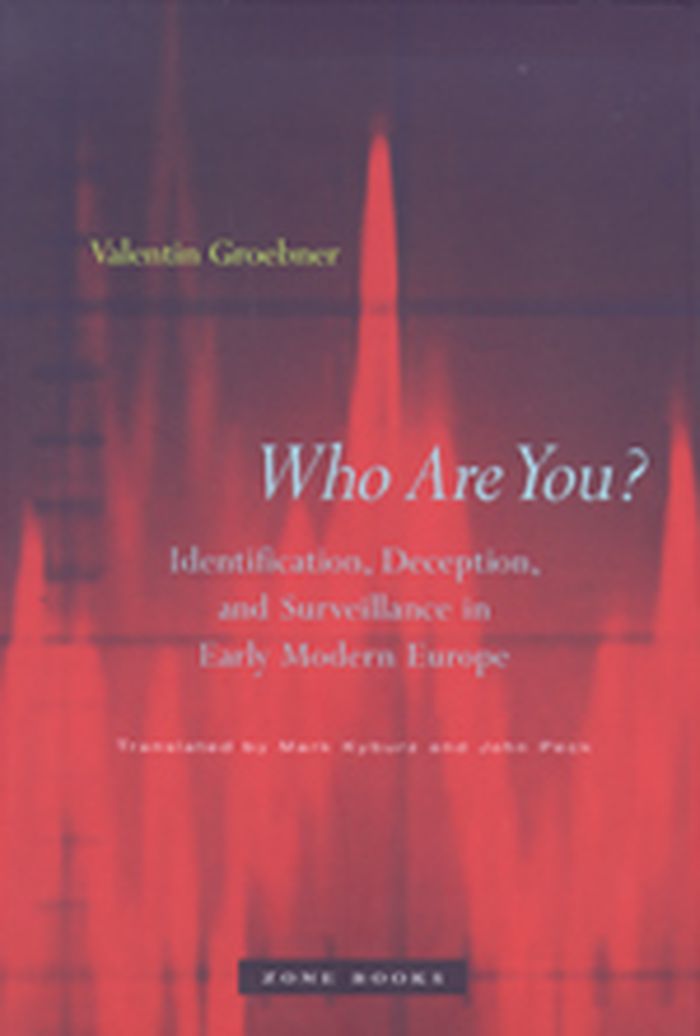
Who are you? And how can you prove it? How were individuals described and identified by people who had never seen them before, in the centuries before photography and fingerprinting, in a world without centralized administrations, where names and addresses were constantly changing? In "Who are you?", Valentin Groebner traces the early modern European history of identification practices and identity papers. The documents, seals, stamps, and signatures were — and are — powerful tools that created the double of a person in writ and bore the indelible signs of bureaucratic authenticity. Ultimately, as Groebner lucidly explains, they revealed as much about their makers’ illustory fantasies as they did about their bearers’ actual identity. The bureaucratic desire to register and control the population created, from the sixteenth century onward, an intricate administrative system for tracking individual identities. Most important, the proof of one’s identity was intimately linked and determined by the identification papers the authorities demanded and endlessly supplied. At the same time, these papers and practices gave birth to two uncanny doppelgängers of administrative identity procedures : the spy who craftily forged official documents and passports, and the impostor who dissimulated and mimed any individual he so disired. Through careful research and powerful narrative, Groebner recounts the complicated and bizarre stories of the many ways in which identities were stolen, created, and doubled. Groebner argues that identity papers cannot be interpreted literally as pure and simple documents. They are themselves pieces of history, histories of individuals and individuality, papers that both document and transform their owner’s identity — from Renaissance vagrants and gypsies to the illegal immigrants of today who remain "sans papiers", without papers.
Who are you? : identification, deception, and surveillance in early modern Europe
Actions:
Price:
$32.50
(available to order)
Summary:
Who are you? And how can you prove it? How were individuals described and identified by people who had never seen them before, in the centuries before photography and fingerprinting, in a world without centralized administrations, where names and addresses were constantly changing? In "Who are you?", Valentin Groebner traces the early modern European history of identification practices and identity papers. The documents, seals, stamps, and signatures were — and are — powerful tools that created the double of a person in writ and bore the indelible signs of bureaucratic authenticity. Ultimately, as Groebner lucidly explains, they revealed as much about their makers’ illustory fantasies as they did about their bearers’ actual identity. The bureaucratic desire to register and control the population created, from the sixteenth century onward, an intricate administrative system for tracking individual identities. Most important, the proof of one’s identity was intimately linked and determined by the identification papers the authorities demanded and endlessly supplied. At the same time, these papers and practices gave birth to two uncanny doppelgängers of administrative identity procedures : the spy who craftily forged official documents and passports, and the impostor who dissimulated and mimed any individual he so disired. Through careful research and powerful narrative, Groebner recounts the complicated and bizarre stories of the many ways in which identities were stolen, created, and doubled. Groebner argues that identity papers cannot be interpreted literally as pure and simple documents. They are themselves pieces of history, histories of individuals and individuality, papers that both document and transform their owner’s identity — from Renaissance vagrants and gypsies to the illegal immigrants of today who remain "sans papiers", without papers.
Form:
books
books
Publication:
March 2007, New York
March 2007, New York
Subject:
Architectural Theory
Architectural Theory


