


272 Results
Form:
books
books
Actions:
Price:
$34.95
(available to order)
Summary:
Le palais des Beaux-Arts de Lille conserve depuis 1987 dans ses collections un ensemble de quinze maquettes historiques des villes fortifiées ayant assuré la défense du nord de la France face aux Pays-Bas espagnols à partir du règne de Louis XIV. La collection des plans-reliefs a été créée en 1668 par Louvois, ministre de la guerre de Louis XIV. Outils employés pour la(...)
$34.95
(available to order)
Summary:
Le palais des Beaux-Arts de Lille conserve depuis 1987 dans ses collections un ensemble de quinze maquettes historiques des villes fortifiées ayant assuré la défense du nord de la France face aux Pays-Bas espagnols à partir du règne de Louis XIV. La collection des plans-reliefs a été créée en 1668 par Louvois, ministre de la guerre de Louis XIV. Outils employés pour la(...)
Title:
Les plans en relief : des places fortes du nord
Actions:
Price:
$34.95
(available to order)
Summary:
Le palais des Beaux-Arts de Lille conserve depuis 1987 dans ses collections un ensemble de quinze maquettes historiques des villes fortifiées ayant assuré la défense du nord de la France face aux Pays-Bas espagnols à partir du règne de Louis XIV. La collection des plans-reliefs a été créée en 1668 par Louvois, ministre de la guerre de Louis XIV. Outils employés pour la conception de nouvelles fortifications, puis œuvres de prestige servant la glorification de la puissance des souverains, ces plans-reliefs, chefs-d'œuvre de miniaturisation, offrent le témoignage de plus de deux siècles d'histoire de la fortification bastionnée, de la guerre de siège et de la constitution du territoire, de Louis XIV au XIXe siècle. Ils constituent une source documentaire unique pour l'histoire de la fortification, de l'urbanisme, de l'architecture et du paysage des anciens Pays-Bas français.
Les plans en relief : des places fortes du nord
Actions:
Price:
$34.95
(available to order)
Summary:
Le palais des Beaux-Arts de Lille conserve depuis 1987 dans ses collections un ensemble de quinze maquettes historiques des villes fortifiées ayant assuré la défense du nord de la France face aux Pays-Bas espagnols à partir du règne de Louis XIV. La collection des plans-reliefs a été créée en 1668 par Louvois, ministre de la guerre de Louis XIV. Outils employés pour la conception de nouvelles fortifications, puis œuvres de prestige servant la glorification de la puissance des souverains, ces plans-reliefs, chefs-d'œuvre de miniaturisation, offrent le témoignage de plus de deux siècles d'histoire de la fortification bastionnée, de la guerre de siège et de la constitution du territoire, de Louis XIV au XIXe siècle. Ils constituent une source documentaire unique pour l'histoire de la fortification, de l'urbanisme, de l'architecture et du paysage des anciens Pays-Bas français.
Form:
books
books
Publication:
December 2006, Paris / Lille
December 2006, Paris / Lille
Subject:
Treatises
Treatises
Form:
books
books

Actions:
Price:
$42.95
(available to order)
Summary:
Au milieu du siècle dernier, alors que l’image en mouvement s’est pleinement constituée comme forme culturelle et intellectuelle, la phénoménologie et l’esthétique du cinéma partagent le projet délicat d’une mise en suspens partielle du langage verbal. L’union des actes de vision et de pensée anime alors simultanément les écrits de Maurice Merleau-Ponty et de Jean(...)
$42.95
(available to order)
Summary:
Au milieu du siècle dernier, alors que l’image en mouvement s’est pleinement constituée comme forme culturelle et intellectuelle, la phénoménologie et l’esthétique du cinéma partagent le projet délicat d’une mise en suspens partielle du langage verbal. L’union des actes de vision et de pensée anime alors simultanément les écrits de Maurice Merleau-Ponty et de Jean(...)
Title:
Corps et machine : cinéma et philosophie chez Jean Epstein et Maurice Merleau-Ponty
Actions:
Price:
$42.95
(available to order)
Summary:
Au milieu du siècle dernier, alors que l’image en mouvement s’est pleinement constituée comme forme culturelle et intellectuelle, la phénoménologie et l’esthétique du cinéma partagent le projet délicat d’une mise en suspens partielle du langage verbal. L’union des actes de vision et de pensée anime alors simultanément les écrits de Maurice Merleau-Ponty et de Jean Epstein, autour desquels de nouvelles pistes de réflexion se sont ouvertes ces dernières années. Chez le philosophe, cette nouvelle constitution du savoir se manifeste par le retour à l’attitude corporelle. Pour le cinéaste, c’est la rencontre avec le regard de la machine cinématographique qui dévoile une terra incognita face à la connaissance rationnelle. Cet ouvrage propose une rencontre inédite entre deux pensées incontournables de l’image et une exploration des frontières plus que jamais complexes entre la philosophie et l’esthétique du cinéma.
Corps et machine : cinéma et philosophie chez Jean Epstein et Maurice Merleau-Ponty
Actions:
Price:
$42.95
(available to order)
Summary:
Au milieu du siècle dernier, alors que l’image en mouvement s’est pleinement constituée comme forme culturelle et intellectuelle, la phénoménologie et l’esthétique du cinéma partagent le projet délicat d’une mise en suspens partielle du langage verbal. L’union des actes de vision et de pensée anime alors simultanément les écrits de Maurice Merleau-Ponty et de Jean Epstein, autour desquels de nouvelles pistes de réflexion se sont ouvertes ces dernières années. Chez le philosophe, cette nouvelle constitution du savoir se manifeste par le retour à l’attitude corporelle. Pour le cinéaste, c’est la rencontre avec le regard de la machine cinématographique qui dévoile une terra incognita face à la connaissance rationnelle. Cet ouvrage propose une rencontre inédite entre deux pensées incontournables de l’image et une exploration des frontières plus que jamais complexes entre la philosophie et l’esthétique du cinéma.
Form:
books
books
Publication:
August 2016
August 2016
Subject:
Architecture and Film, Set Design
Architecture and Film, Set Design
Form:
books
books
Price:
$34.00
(available to order)
Summary:
This volume addresses the complex relationships that the reproducible image creates with its viewers, their bodies, their minds, and their sense of the physical and metaphysical world. The selection addresses the image’s role in the social constitution of individual and collective identity, in social practices of resistance to the structural violences of racism, or in(...)
$34.00
(available to order)
Summary:
This volume addresses the complex relationships that the reproducible image creates with its viewers, their bodies, their minds, and their sense of the physical and metaphysical world. The selection addresses the image’s role in the social constitution of individual and collective identity, in social practices of resistance to the structural violences of racism, or in(...)
Subject:
Theory of Photography
Theory of Photography
Publication:
October 2021
October 2021
Title:
The lives of images, vol. 2 : analogy, attunement and attention
Actions:
Price:
$34.00
(available to order)
Summary:
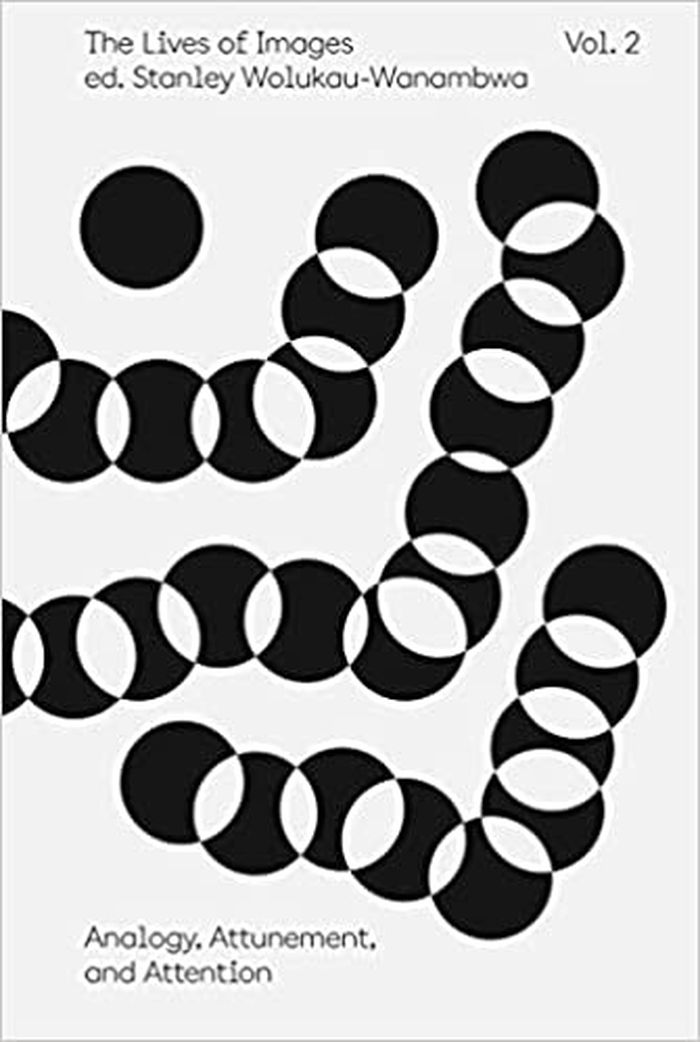
This volume addresses the complex relationships that the reproducible image creates with its viewers, their bodies, their minds, and their sense of the physical and metaphysical world. The selection addresses the image’s role in the social constitution of individual and collective identity, in social practices of resistance to the structural violences of racism, or in relation to state exercises of power. Of particular importance in this volume are questions of our changing relationship to space and to selfhood as mediated by the image and by the many networked technologies and norms built around it. Essays in the volume ask: what modes of attention are required of us as viewers and agents of image circulation? The question of how image technologies provide us with an array of freedoms is here combined with and read against the many ways images are deployed to reorient, repress, or reduce our field of vision—thus affecting our capacity to see and to act in social space.
The lives of images, vol. 2 : analogy, attunement and attention
Actions:
Price:
$34.00
(available to order)
Summary:
This volume addresses the complex relationships that the reproducible image creates with its viewers, their bodies, their minds, and their sense of the physical and metaphysical world. The selection addresses the image’s role in the social constitution of individual and collective identity, in social practices of resistance to the structural violences of racism, or in relation to state exercises of power. Of particular importance in this volume are questions of our changing relationship to space and to selfhood as mediated by the image and by the many networked technologies and norms built around it. Essays in the volume ask: what modes of attention are required of us as viewers and agents of image circulation? The question of how image technologies provide us with an array of freedoms is here combined with and read against the many ways images are deployed to reorient, repress, or reduce our field of vision—thus affecting our capacity to see and to act in social space.
Form:
books
books
Publication:
October 2021
October 2021
Subject:
Theory of Photography
Theory of Photography
Form:
books
books
Price:
$38.95
(available to order)
Summary:
La ville suburbaine est l'utopie réalisée de la prospérité. Elle est l'expansion sans fin du confort à la campagne qui a transformé la planète en réseau de parcs. C'est la ville vernaculaire du XXe siècle. Pour comprendre la fabrication de cette grande installation planétaire, Emeric Lambert dresse un portrait chinois du projet suburbain. Il reconstruit une histoire(...)
$38.95
(available to order)
Summary:
La ville suburbaine est l'utopie réalisée de la prospérité. Elle est l'expansion sans fin du confort à la campagne qui a transformé la planète en réseau de parcs. C'est la ville vernaculaire du XXe siècle. Pour comprendre la fabrication de cette grande installation planétaire, Emeric Lambert dresse un portrait chinois du projet suburbain. Il reconstruit une histoire(...)
Title:
Le parc planétaire : la fabrication de l’environnement suburbain
Actions:
Price:
$38.95
(available to order)
Summary:
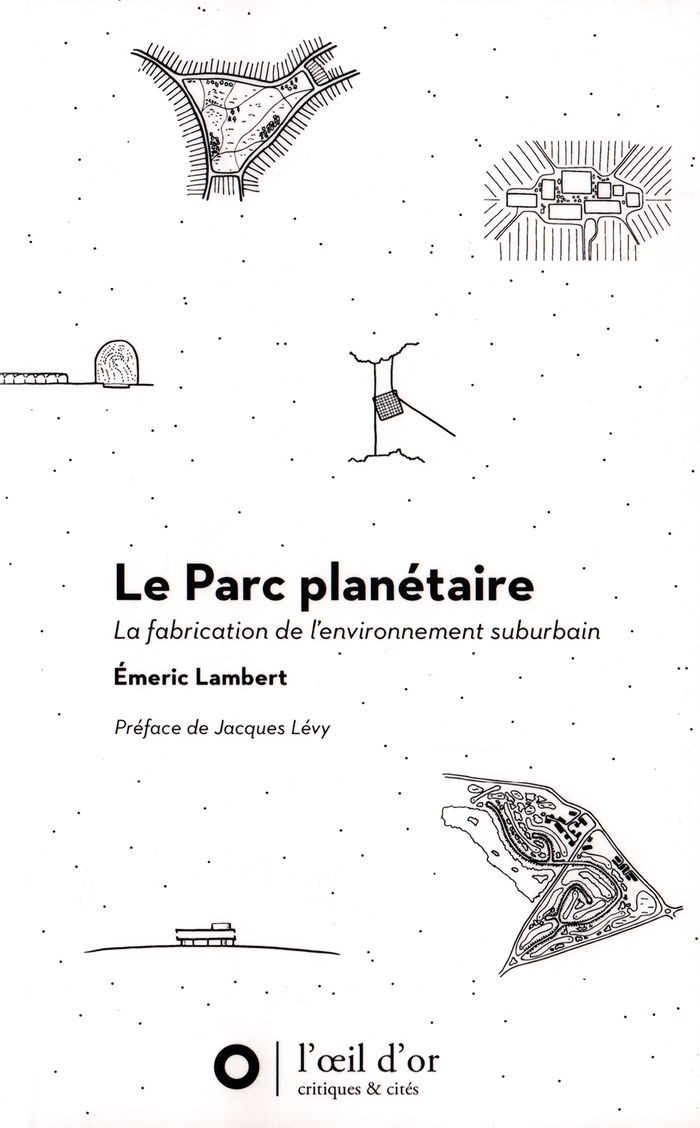
La ville suburbaine est l'utopie réalisée de la prospérité. Elle est l'expansion sans fin du confort à la campagne qui a transformé la planète en réseau de parcs. C'est la ville vernaculaire du XXe siècle. Pour comprendre la fabrication de cette grande installation planétaire, Emeric Lambert dresse un portrait chinois du projet suburbain. Il reconstruit une histoire décentrée de la ville. En suivant l'épopée de la constitution de la ville de Sénart, il montre comment l'urbanisme planifié hérité de la modernité a cédé la place à l'opportunisme opérationnel. Il construit ainsi la théorie informulée du suburbanisme qui a oeuvré au développement d'une ville informe et pourtant très efficace. Plus qu'une vision d'urbaniste, c'est un phénomène culturel, dont les ramifications s'étendent à la technologique, à l'art et à la politique, qui est exposé ici avec pragmatisme. Cette enquête suburbaine s'adresse à tous ceux qui s'intéressent à la fabrication de notre environnement et aux controverses démocratiques qu'elle soulève.
Le parc planétaire : la fabrication de l’environnement suburbain
Actions:
Price:
$38.95
(available to order)
Summary:
La ville suburbaine est l'utopie réalisée de la prospérité. Elle est l'expansion sans fin du confort à la campagne qui a transformé la planète en réseau de parcs. C'est la ville vernaculaire du XXe siècle. Pour comprendre la fabrication de cette grande installation planétaire, Emeric Lambert dresse un portrait chinois du projet suburbain. Il reconstruit une histoire décentrée de la ville. En suivant l'épopée de la constitution de la ville de Sénart, il montre comment l'urbanisme planifié hérité de la modernité a cédé la place à l'opportunisme opérationnel. Il construit ainsi la théorie informulée du suburbanisme qui a oeuvré au développement d'une ville informe et pourtant très efficace. Plus qu'une vision d'urbaniste, c'est un phénomène culturel, dont les ramifications s'étendent à la technologique, à l'art et à la politique, qui est exposé ici avec pragmatisme. Cette enquête suburbaine s'adresse à tous ceux qui s'intéressent à la fabrication de notre environnement et aux controverses démocratiques qu'elle soulève.
Form:
books
books
Publication:
January 2018
January 2018
Subject:
Suburbs
Suburbs
Form:
books
books

Title:
De l'eau jusqu'au nombril
De l'eau jusqu'au nombril
Actions:
Price:
$14.95
(available in store)
Summary:
De 1973 à 1978, le groupe d’architectes, artistes et designers Ant Farm, composé d’une dizaine de membres, a travaillé à la conception d’une plateforme marine destinée à communiquer avec les dauphins. Il ne s’agissait pas seulement de les observer mais bien de parler et d’échanger des informations avec les cétacés. Cette structure flottante, la Dolphin Embassy, concentre(...)
$14.95
(available in store)
Summary:
De 1973 à 1978, le groupe d’architectes, artistes et designers Ant Farm, composé d’une dizaine de membres, a travaillé à la conception d’une plateforme marine destinée à communiquer avec les dauphins. Il ne s’agissait pas seulement de les observer mais bien de parler et d’échanger des informations avec les cétacés. Cette structure flottante, la Dolphin Embassy, concentre(...)
Title:
De l'eau jusqu'au nombril
Actions:
Price:
$14.95
(available in store)
Summary:
De 1973 à 1978, le groupe d’architectes, artistes et designers Ant Farm, composé d’une dizaine de membres, a travaillé à la conception d’une plateforme marine destinée à communiquer avec les dauphins. Il ne s’agissait pas seulement de les observer mais bien de parler et d’échanger des informations avec les cétacés. Cette structure flottante, la Dolphin Embassy, concentre bon nombre des réflexions qui ont animées les mouvements radicaux et contre-culturels de l’époque : l’ouverture à la nature et aux espèces non humaines, la constitution de communautés élargies, la recherche de nouveaux espaces perceptifs et communicationnels. Ce texte s’appuie notamment sur les documents présents dans les archives d’Ant Farm, rassemblées dans le sous-sol du Berkeley Art Museum and Pacific Film Archive. Parmi la centaine de documents relatifs à ce projet, sont notamment conservés quelques dessins préparatoires, des « rushes » de film, des diapositives, de la littérature scientifique sur les dauphins et de la correspondance échangée entre les membres du groupe. De leur consultation est né ce récit ; un récit qui dérive à mesure que les pages défilent.
De l'eau jusqu'au nombril
Actions:
Price:
$14.95
(available in store)
Summary:
De 1973 à 1978, le groupe d’architectes, artistes et designers Ant Farm, composé d’une dizaine de membres, a travaillé à la conception d’une plateforme marine destinée à communiquer avec les dauphins. Il ne s’agissait pas seulement de les observer mais bien de parler et d’échanger des informations avec les cétacés. Cette structure flottante, la Dolphin Embassy, concentre bon nombre des réflexions qui ont animées les mouvements radicaux et contre-culturels de l’époque : l’ouverture à la nature et aux espèces non humaines, la constitution de communautés élargies, la recherche de nouveaux espaces perceptifs et communicationnels. Ce texte s’appuie notamment sur les documents présents dans les archives d’Ant Farm, rassemblées dans le sous-sol du Berkeley Art Museum and Pacific Film Archive. Parmi la centaine de documents relatifs à ce projet, sont notamment conservés quelques dessins préparatoires, des « rushes » de film, des diapositives, de la littérature scientifique sur les dauphins et de la correspondance échangée entre les membres du groupe. De leur consultation est né ce récit ; un récit qui dérive à mesure que les pages défilent.
Form:
books
books
Publication:
November 2023
November 2023
Subject:
Architectural Theory
Architectural Theory
Form:
books
books
Actions:
Price:
$41.95
(available to order)
Summary:
Du mobilier d'usage à l'objet théorique ou de contemplation jusqu'à la typographie, ce septième ouvrage réalisé en collaboration avec Martin Szekely donne donne à voir, à travers une série de photographies prises par Fabrice Gousset, la formation initiale de son auteur. Ce volume inventorie les cinq derniers projets aboutis du designer : Moon Wood (2016) / The Drawers and(...)
$41.95
(available to order)
Summary:
Du mobilier d'usage à l'objet théorique ou de contemplation jusqu'à la typographie, ce septième ouvrage réalisé en collaboration avec Martin Szekely donne donne à voir, à travers une série de photographies prises par Fabrice Gousset, la formation initiale de son auteur. Ce volume inventorie les cinq derniers projets aboutis du designer : Moon Wood (2016) / The Drawers and(...)
Title:
Martin Szekely : Drawers and I, Moon wood, Martin et Pierre, Matière lente, Opus
Actions:
Price:
$41.95
(available to order)
Summary:
Du mobilier d'usage à l'objet théorique ou de contemplation jusqu'à la typographie, ce septième ouvrage réalisé en collaboration avec Martin Szekely donne donne à voir, à travers une série de photographies prises par Fabrice Gousset, la formation initiale de son auteur. Ce volume inventorie les cinq derniers projets aboutis du designer : Moon Wood (2016) / The Drawers and I (2017-2018) / Matière Lente (2020-2021) / Martin et Pierre (2020) / Opus (2016). Chaque projet se distingue par son propos et son usage, par son matériau naturel ou composite, sa constitution monolithique ou modulaire et son échelle. Moon Wood, The Drawers and I, Matière Lente, Martin et Pierre, Opus est le septième ouvrage publié sur le travail de Martin Szekely aux Editions B42. Dans le cadre de cette série entamée en 2017, les Editions B42 se sont associées avec le designer français pour donner à voir son travail de manière exhaustive, en textes et en images. Chaque ouvrage s'attarde ainsi sur une pièce, une série de pièces ou une exposition et analyse la production du designer.
Martin Szekely : Drawers and I, Moon wood, Martin et Pierre, Matière lente, Opus
Actions:
Price:
$41.95
(available to order)
Summary:
Du mobilier d'usage à l'objet théorique ou de contemplation jusqu'à la typographie, ce septième ouvrage réalisé en collaboration avec Martin Szekely donne donne à voir, à travers une série de photographies prises par Fabrice Gousset, la formation initiale de son auteur. Ce volume inventorie les cinq derniers projets aboutis du designer : Moon Wood (2016) / The Drawers and I (2017-2018) / Matière Lente (2020-2021) / Martin et Pierre (2020) / Opus (2016). Chaque projet se distingue par son propos et son usage, par son matériau naturel ou composite, sa constitution monolithique ou modulaire et son échelle. Moon Wood, The Drawers and I, Matière Lente, Martin et Pierre, Opus est le septième ouvrage publié sur le travail de Martin Szekely aux Editions B42. Dans le cadre de cette série entamée en 2017, les Editions B42 se sont associées avec le designer français pour donner à voir son travail de manière exhaustive, en textes et en images. Chaque ouvrage s'attarde ainsi sur une pièce, une série de pièces ou une exposition et analyse la production du designer.
Form:
books
books
Publication:
August 2022
August 2022
Subject:
Design Monographs
Design Monographs
Form:
journals and magazines
journals and magazines
Actions:
Description:
1 online resource (volumes)
Author:
Subject:
Publication:
Freiburg : J.C.B. Mohr (Paul Siebeck), 1886-
Freiburg : J.C.B. Mohr (Paul Siebeck), 1886-
Form:
journals and magazines
journals and magazines
Publication:
Freiburg : J.C.B. Mohr (Paul Siebeck), 1886-
Freiburg : J.C.B. Mohr (Paul Siebeck), 1886-
Author:
Subject:
Form:
books
books
Actions:
Holdings:
Description:
vii, 288 pages : illustrations ; 26 cm
Description:
vii, 288 pages : illustrations ; 26 cm
Author:
Subject:
Publication:
Toronto, Canada : Ontario Ministry of Citizenship and Culture, 1984.
Toronto, Canada : Ontario Ministry of Citizenship and Culture, 1984.
Title:
Publications of the Province of Upper Canada and of Great Britain : relating to Upper Canada, 1791-1840 / Olga Bernice Bishop.
Actions:
Holdings:
Description:
vii, 288 pages : illustrations ; 26 cm
Publications of the Province of Upper Canada and of Great Britain : relating to Upper Canada, 1791-1840 / Olga Bernice Bishop.
Actions:
Holdings:
Description:
vii, 288 pages : illustrations ; 26 cm
Form:
books
books
Publication:
Toronto, Canada : Ontario Ministry of Citizenship and Culture, 1984.
Toronto, Canada : Ontario Ministry of Citizenship and Culture, 1984.
Author:
Subject:
Form:
books
books
Actions:
Price:
$25.95
(available to order)
Summary:
Between 1979 and 1981, Alfredo Jaar asked Chileans a deceptively simple question: "Are you happy?" Through private interviews, sidewalk polls and video-recorded forums, among other interventions, Jaar's three-year and seven-phase project, ''Studies on happiness'', addressed a furtive and fearful population living under Augusto Pinochet's military dictatorship. It also(...)
$25.95
(available to order)
Summary:
Between 1979 and 1981, Alfredo Jaar asked Chileans a deceptively simple question: "Are you happy?" Through private interviews, sidewalk polls and video-recorded forums, among other interventions, Jaar's three-year and seven-phase project, ''Studies on happiness'', addressed a furtive and fearful population living under Augusto Pinochet's military dictatorship. It also(...)
Title:
Alfredo Jaar: Studies on happiness
Actions:
Price:
$25.95
(available to order)
Summary:
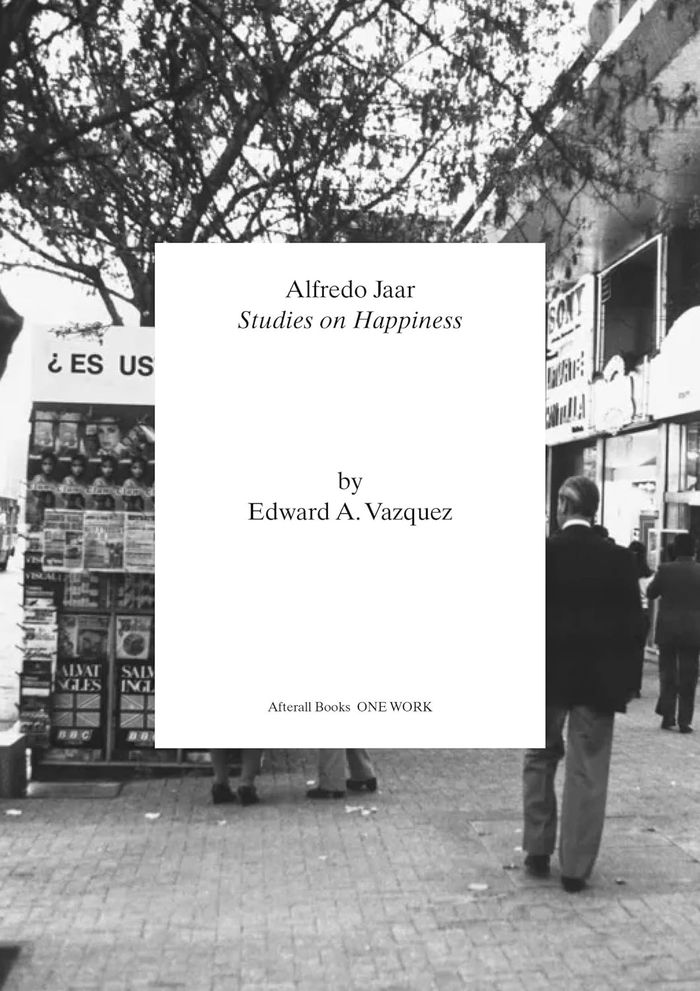
Between 1979 and 1981, Alfredo Jaar asked Chileans a deceptively simple question: "Are you happy?" Through private interviews, sidewalk polls and video-recorded forums, among other interventions, Jaar's three-year and seven-phase project, ''Studies on happiness'', addressed a furtive and fearful population living under Augusto Pinochet's military dictatorship. It also spoke to a country in transition, as a newly adopted constitution remade Chile through privatisation and other neoliberal reforms. In its varied interventions and direct mode of address, ''Studies on happiness'' functioned as a feedback device meant to catalyse a critical awareness with its blunt questioning. Edward A. Vazquez contextualises Studies on Happiness within Jaar's early production and situates his practice within a Chilean art world haunted by the residues of political violence. This study foregrounds the project's historical embeddedness and the deep political stakes of its apparent sociality, recognising the crucial role that context has always played in Jaar's practice. By turning to the Santiago of Studies on Happiness, Vazquez explores the work's political and art historical environment and provides a wedge to realign current interpretations of Chilean art and hemispheric conceptualism with the openness central to Jaar's project.
Alfredo Jaar: Studies on happiness
Actions:
Price:
$25.95
(available to order)
Summary:
Between 1979 and 1981, Alfredo Jaar asked Chileans a deceptively simple question: "Are you happy?" Through private interviews, sidewalk polls and video-recorded forums, among other interventions, Jaar's three-year and seven-phase project, ''Studies on happiness'', addressed a furtive and fearful population living under Augusto Pinochet's military dictatorship. It also spoke to a country in transition, as a newly adopted constitution remade Chile through privatisation and other neoliberal reforms. In its varied interventions and direct mode of address, ''Studies on happiness'' functioned as a feedback device meant to catalyse a critical awareness with its blunt questioning. Edward A. Vazquez contextualises Studies on Happiness within Jaar's early production and situates his practice within a Chilean art world haunted by the residues of political violence. This study foregrounds the project's historical embeddedness and the deep political stakes of its apparent sociality, recognising the crucial role that context has always played in Jaar's practice. By turning to the Santiago of Studies on Happiness, Vazquez explores the work's political and art historical environment and provides a wedge to realign current interpretations of Chilean art and hemispheric conceptualism with the openness central to Jaar's project.
Form:
books
books
Publication:
November 2023
November 2023
Subject:
Art Theory
Art Theory
Form:
books
books
Actions:
Price:
$39.95
(available in store)
Summary:
Powerless under the country's constitution, Canadian municipal governments often find themselves in conflict with their provincial masters. In 2002, the Province of Quebec forcibly merged all cities on the Island of Montreal into a single municipality - a decision that was partially reversed in 2006. The first book-length study of the series of mergers imposed by the(...)
$39.95
(available in store)
Summary:
Powerless under the country's constitution, Canadian municipal governments often find themselves in conflict with their provincial masters. In 2002, the Province of Quebec forcibly merged all cities on the Island of Montreal into a single municipality - a decision that was partially reversed in 2006. The first book-length study of the series of mergers imposed by the(...)
Title:
Merger delusion : how swallowing its suburbs made an even bigger mess of Montreal
Actions:
Price:
$39.95
(available in store)
Summary:
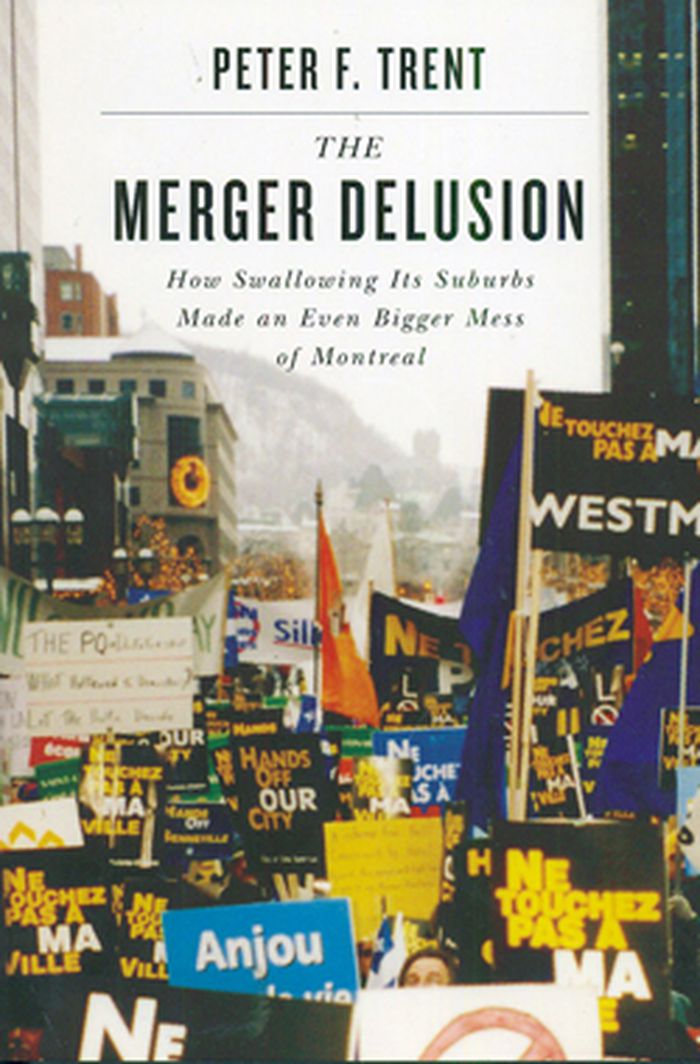
Powerless under the country's constitution, Canadian municipal governments often find themselves in conflict with their provincial masters. In 2002, the Province of Quebec forcibly merged all cities on the Island of Montreal into a single municipality - a decision that was partially reversed in 2006. The first book-length study of the series of mergers imposed by the Parti Québécois government, The Merger Delusion is a critique by a key player in anti-merger politics. Peter Trent, mayor of the City of Westmount, Quebec, foresaw the numerous financial and institutional problems posed by amalgamating municipalities into megacities. Here, he presents a stirring and detailed account of the battle he led against the provincial government, the City of Montreal, the Board of Trade, and many of his former colleagues. Describing how he took the struggle all the way to the Supreme Court of Canada, Trent demonstrates the ways in which de-mergers resonated with voters and eventually helped the Quebec Liberal Party win the 2003 provincial election. As the cost and pitfalls of forced mergers become clearer in hindsight, The Merger Delusion recounts a compelling case study with broad implications for cities across the globe.
Merger delusion : how swallowing its suburbs made an even bigger mess of Montreal
Actions:
Price:
$39.95
(available in store)
Summary:
Powerless under the country's constitution, Canadian municipal governments often find themselves in conflict with their provincial masters. In 2002, the Province of Quebec forcibly merged all cities on the Island of Montreal into a single municipality - a decision that was partially reversed in 2006. The first book-length study of the series of mergers imposed by the Parti Québécois government, The Merger Delusion is a critique by a key player in anti-merger politics. Peter Trent, mayor of the City of Westmount, Quebec, foresaw the numerous financial and institutional problems posed by amalgamating municipalities into megacities. Here, he presents a stirring and detailed account of the battle he led against the provincial government, the City of Montreal, the Board of Trade, and many of his former colleagues. Describing how he took the struggle all the way to the Supreme Court of Canada, Trent demonstrates the ways in which de-mergers resonated with voters and eventually helped the Quebec Liberal Party win the 2003 provincial election. As the cost and pitfalls of forced mergers become clearer in hindsight, The Merger Delusion recounts a compelling case study with broad implications for cities across the globe.
Form:
books
books
Publication:
October 2012
October 2012
Subject:
Architecture de Montréal
Architecture de Montréal


