


2585 Results
Form:
books
books
Title:
The Panopticon writings
The Panopticon writings
Actions:
Price:
$23.95
(available to order)
Summary:
The Panopticon project for a model prison obsessed the English philosopher Jeremy Bentham for almost 20 years. In the end, the project came to nothing; the Panopticon was never built. But it is precisely this that makes the Panopticon project the best exemplification of Bentham's own theory of fictions, according to which non-existent fictitious entities can have all too(...)
$23.95
(available to order)
Summary:
The Panopticon project for a model prison obsessed the English philosopher Jeremy Bentham for almost 20 years. In the end, the project came to nothing; the Panopticon was never built. But it is precisely this that makes the Panopticon project the best exemplification of Bentham's own theory of fictions, according to which non-existent fictitious entities can have all too(...)
Title:
The Panopticon writings
Actions:
Price:
$23.95
(available to order)
Summary:
The Panopticon project for a model prison obsessed the English philosopher Jeremy Bentham for almost 20 years. In the end, the project came to nothing; the Panopticon was never built. But it is precisely this that makes the Panopticon project the best exemplification of Bentham's own theory of fictions, according to which non-existent fictitious entities can have all too real effects. There is probably no building that has stirred more philosophical controversy than Bentham's Panopticon. It is not merely, as Foucault thought, "a cruel, ingenious cage", in which subjects collaborate in their own subjection, but much more - constructing the Panopticon produces not only a prison, but also a god within it. It is a machine which on assembly is already inhabited by a ghost. It is through the Panopticon and the closely related theory of fictions that Bentham has made his greatest impact on modern thought; above all, on the theory of power.
The Panopticon writings
Actions:
Price:
$23.95
(available to order)
Summary:
The Panopticon project for a model prison obsessed the English philosopher Jeremy Bentham for almost 20 years. In the end, the project came to nothing; the Panopticon was never built. But it is precisely this that makes the Panopticon project the best exemplification of Bentham's own theory of fictions, according to which non-existent fictitious entities can have all too real effects. There is probably no building that has stirred more philosophical controversy than Bentham's Panopticon. It is not merely, as Foucault thought, "a cruel, ingenious cage", in which subjects collaborate in their own subjection, but much more - constructing the Panopticon produces not only a prison, but also a god within it. It is a machine which on assembly is already inhabited by a ghost. It is through the Panopticon and the closely related theory of fictions that Bentham has made his greatest impact on modern thought; above all, on the theory of power.
Form:
books
books
Publication:
January 2011
January 2011
Subject:
Critical Theory
Critical Theory
Form:
books
books
Actions:
Price:
$35.95
(available in store)
Summary:
In this volume, Mario Carpo points to one key practice of modernity: the making of identical copies. Carpo highlights two examples of identicality crucial to the shaping of architectural modernity: in the fifteenth century, Leon Battista Alberti's invention of architectural design, according to which a building is an identical copy of the architect's design; and, in the(...)
$35.95
(available in store)
Summary:
In this volume, Mario Carpo points to one key practice of modernity: the making of identical copies. Carpo highlights two examples of identicality crucial to the shaping of architectural modernity: in the fifteenth century, Leon Battista Alberti's invention of architectural design, according to which a building is an identical copy of the architect's design; and, in the(...)
Title:
The alphabet and the algorithm
Actions:
Price:
$35.95
(available in store)
Summary:
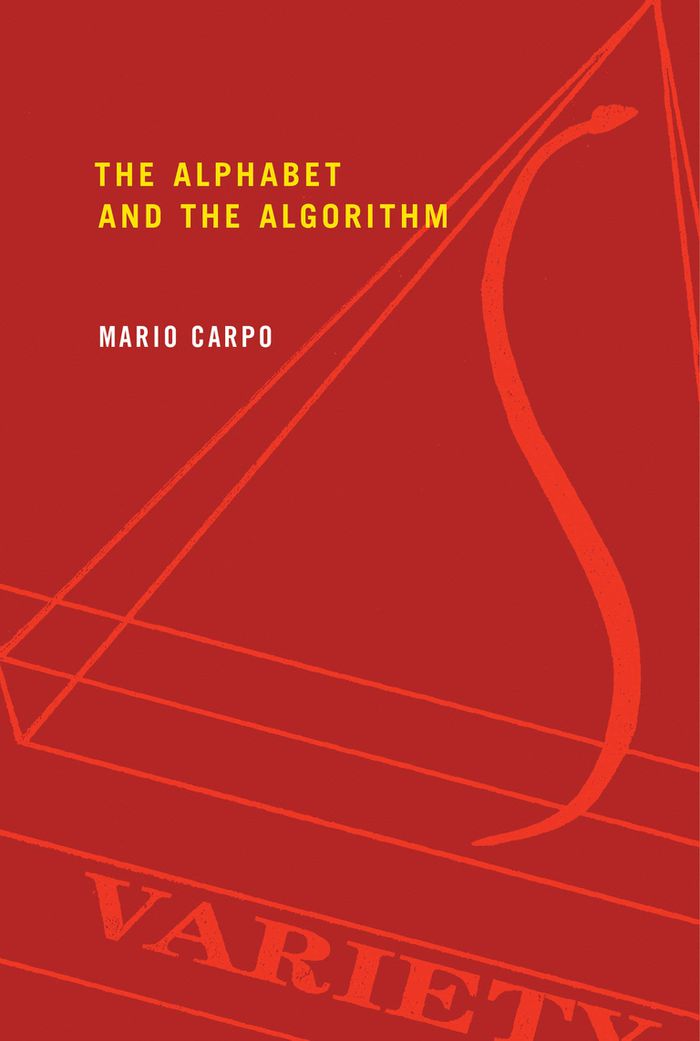
In this volume, Mario Carpo points to one key practice of modernity: the making of identical copies. Carpo highlights two examples of identicality crucial to the shaping of architectural modernity: in the fifteenth century, Leon Battista Alberti's invention of architectural design, according to which a building is an identical copy of the architect's design; and, in the nineteenth and twentieth centuries, the mass production of identical copies from mechanical master models, matrixes, imprints, or molds. The modern power of the identical, Carpo argues, came to an end with the rise of digital technologies. Everything digital is variable. Carpo compares new forms of postindustrial digital craftsmanship to hand-making and the cultures and technologies of variations that existed before the coming of machine-made, identical copies. Carpo reviews the unfolding of digitally based design and construction from the early 1990s to the present, and suggests a new agenda for architecture in an age of variable objects and of generic and participatory authorship.
The alphabet and the algorithm
Actions:
Price:
$35.95
(available in store)
Summary:
In this volume, Mario Carpo points to one key practice of modernity: the making of identical copies. Carpo highlights two examples of identicality crucial to the shaping of architectural modernity: in the fifteenth century, Leon Battista Alberti's invention of architectural design, according to which a building is an identical copy of the architect's design; and, in the nineteenth and twentieth centuries, the mass production of identical copies from mechanical master models, matrixes, imprints, or molds. The modern power of the identical, Carpo argues, came to an end with the rise of digital technologies. Everything digital is variable. Carpo compares new forms of postindustrial digital craftsmanship to hand-making and the cultures and technologies of variations that existed before the coming of machine-made, identical copies. Carpo reviews the unfolding of digitally based design and construction from the early 1990s to the present, and suggests a new agenda for architecture in an age of variable objects and of generic and participatory authorship.
Form:
books
books
Publication:
March 2011
March 2011
Form:
books
books
Title:
L'invention du béton armé
L'invention du béton armé
Actions:
Price:
$45.50
(available to order)
Summary:
L'histoire de l'architecture a du mal à relater l'énorme dependance matérielle de son objet. Aujourd'hui, en France tout au moins, les statistiques affirment que 80% du poids de la construction produite annuellement est en béton. Or que sait-on de ce qui fonde cette moderne sujétion? Une figure capitalise toutes les valeurs originelle, et en partie originale, du béton(...)
$45.50
(available to order)
Summary:
L'histoire de l'architecture a du mal à relater l'énorme dependance matérielle de son objet. Aujourd'hui, en France tout au moins, les statistiques affirment que 80% du poids de la construction produite annuellement est en béton. Or que sait-on de ce qui fonde cette moderne sujétion? Une figure capitalise toutes les valeurs originelle, et en partie originale, du béton(...)
Title:
L'invention du béton armé
Actions:
Price:
$45.50
(available to order)
Summary:
L'histoire de l'architecture a du mal à relater l'énorme dependance matérielle de son objet. Aujourd'hui, en France tout au moins, les statistiques affirment que 80% du poids de la construction produite annuellement est en béton. Or que sait-on de ce qui fonde cette moderne sujétion? Une figure capitalise toutes les valeurs originelle, et en partie originale, du béton armé: elle a pour nom Hennebique. Il fallait en faire le portrait, il fallait en caractériser l'entreprises, il fallait décrire la sorte de magnétisme qui le positionne comme l'incontournable expérimentateur du matériau de la modernité architecturale. Le récit qu'à élaboré Gwenaël Delhumeau autout de la personnalité de François Hennebique répond à ces attentes: il démonte, pièce par pièce, la gigantesque machine que l'entrepreneur a contruite pour faire du béton armé les parois de nos espaces ou la matière de nos horizons. Le béton armé, «marbre du XXe siècle» selon Tadao Ando, méritait qu'on en restitue la paternité. Avec ce livre, c'est chose faite.
L'invention du béton armé
Actions:
Price:
$45.50
(available to order)
Summary:
L'histoire de l'architecture a du mal à relater l'énorme dependance matérielle de son objet. Aujourd'hui, en France tout au moins, les statistiques affirment que 80% du poids de la construction produite annuellement est en béton. Or que sait-on de ce qui fonde cette moderne sujétion? Une figure capitalise toutes les valeurs originelle, et en partie originale, du béton armé: elle a pour nom Hennebique. Il fallait en faire le portrait, il fallait en caractériser l'entreprises, il fallait décrire la sorte de magnétisme qui le positionne comme l'incontournable expérimentateur du matériau de la modernité architecturale. Le récit qu'à élaboré Gwenaël Delhumeau autout de la personnalité de François Hennebique répond à ces attentes: il démonte, pièce par pièce, la gigantesque machine que l'entrepreneur a contruite pour faire du béton armé les parois de nos espaces ou la matière de nos horizons. Le béton armé, «marbre du XXe siècle» selon Tadao Ando, méritait qu'on en restitue la paternité. Avec ce livre, c'est chose faite.
Form:
books
books
Publication:
June 1999, Paris
June 1999, Paris
Subject:
Engineering Structures
Engineering Structures
Form:
books
books
Actions:
Price:
$49.00
(available to order)
Summary:
From the onset of her career, Charlotte Perriand was a maverick who believed in good design as a force for the betterment of society. Many young designers would be devastated by a rejection from Le Corbusier’s studio, but when the great architect told her they had no use for a female furniture designer, Perriand only became more determined to prove her mettle as an(...)
$49.00
(available to order)
Summary:
From the onset of her career, Charlotte Perriand was a maverick who believed in good design as a force for the betterment of society. Many young designers would be devastated by a rejection from Le Corbusier’s studio, but when the great architect told her they had no use for a female furniture designer, Perriand only became more determined to prove her mettle as an(...)
Title:
Charlotte Perriand: the modern life
Actions:
Price:
$49.00
(available to order)
Summary:
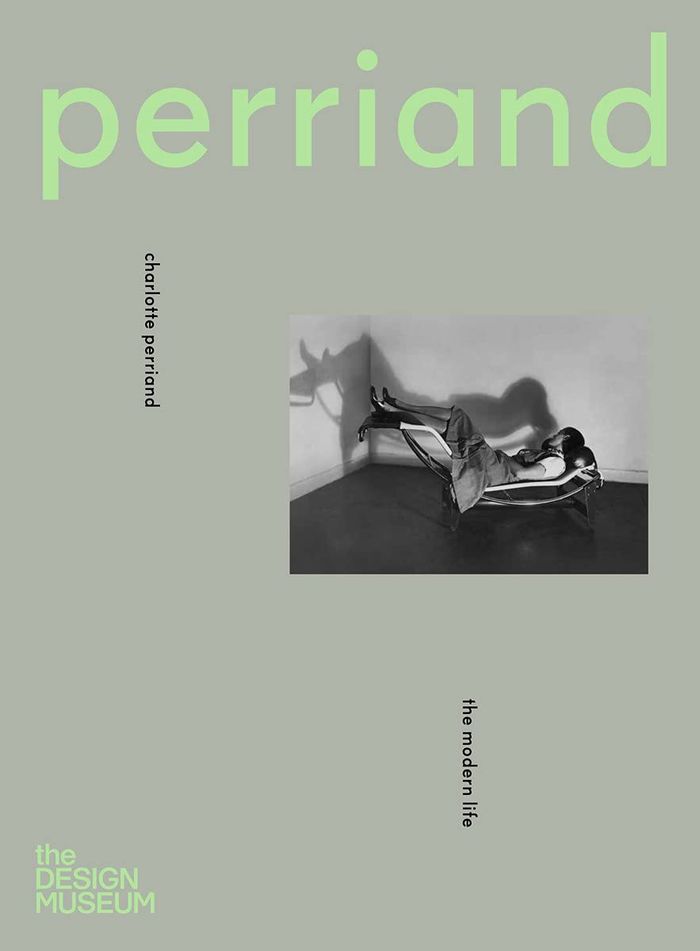
From the onset of her career, Charlotte Perriand was a maverick who believed in good design as a force for the betterment of society. Many young designers would be devastated by a rejection from Le Corbusier’s studio, but when the great architect told her they had no use for a female furniture designer, Perriand only became more determined to prove her mettle as an artist. Under Le Corbusier, and long after she left his studio, Perriand’s contributions to both furniture design and architecture demonstrated a unique attention to the organic artistry of nature as well as the egalitarian possibilities of the machine age. Her leftwing populist politics motivated much of her work, from modular furniture systems to major architectural projects. This monograph explores Perriand’s most famous interiors, original furniture and architectural projects, as well as her never-before-seen sketchbooks, shedding new light on her creative process and place in design history.
Charlotte Perriand: the modern life
Actions:
Price:
$49.00
(available to order)
Summary:
From the onset of her career, Charlotte Perriand was a maverick who believed in good design as a force for the betterment of society. Many young designers would be devastated by a rejection from Le Corbusier’s studio, but when the great architect told her they had no use for a female furniture designer, Perriand only became more determined to prove her mettle as an artist. Under Le Corbusier, and long after she left his studio, Perriand’s contributions to both furniture design and architecture demonstrated a unique attention to the organic artistry of nature as well as the egalitarian possibilities of the machine age. Her leftwing populist politics motivated much of her work, from modular furniture systems to major architectural projects. This monograph explores Perriand’s most famous interiors, original furniture and architectural projects, as well as her never-before-seen sketchbooks, shedding new light on her creative process and place in design history.
Form:
books
books
Publication:
August 2021
August 2021
Subject:
Design Monographs
Design Monographs
Form:
books
books
Actions:
Price:
$24.95
(available to order)
Summary:
The vast social apparatus of the computer network has aligned people with technology in unprecedented ways. The intimacy of the human-computer interface has made it impossible to distinguish technology from the social and cultural business of being human. Cyberculture is the broader name given to this process of becoming through technological means. This book shows that(...)
$24.95
(available to order)
Summary:
The vast social apparatus of the computer network has aligned people with technology in unprecedented ways. The intimacy of the human-computer interface has made it impossible to distinguish technology from the social and cultural business of being human. Cyberculture is the broader name given to this process of becoming through technological means. This book shows that(...)
Publication:
May 2014
May 2014
Title:
Prefiguring cyberculture: an intellectual history
Actions:
Price:
$24.95
(available to order)
Summary:
The vast social apparatus of the computer network has aligned people with technology in unprecedented ways. The intimacy of the human-computer interface has made it impossible to distinguish technology from the social and cultural business of being human. Cyberculture is the broader name given to this process of becoming through technological means. This book shows that cyberculture has been a long time coming.In Prefiguring Cyberculture, media critics and theorists, philosophers, and historians of science explore the antecedents of such aspects of contemporary technological culture as the Internet, the World Wide Web, artificial intelligence, genetic engineering, virtual reality, and the cyborg. The contributors examine key texts that anticipate cybercultural practice and theory, including Plato's "Simile of the Cave"; the Renaissance Ars Memoria; Descartes's Meditations (on the mind-body split); Mary Shelley's Frankenstein; Alan Turing's Computing Machinery and Intelligence; Philip K. Dick's Man, Android, and Machine; William Gibson's Neuromancer; and Arthur C. Clarke's Profiles of the Future.
Prefiguring cyberculture: an intellectual history
Actions:
Price:
$24.95
(available to order)
Summary:
The vast social apparatus of the computer network has aligned people with technology in unprecedented ways. The intimacy of the human-computer interface has made it impossible to distinguish technology from the social and cultural business of being human. Cyberculture is the broader name given to this process of becoming through technological means. This book shows that cyberculture has been a long time coming.In Prefiguring Cyberculture, media critics and theorists, philosophers, and historians of science explore the antecedents of such aspects of contemporary technological culture as the Internet, the World Wide Web, artificial intelligence, genetic engineering, virtual reality, and the cyborg. The contributors examine key texts that anticipate cybercultural practice and theory, including Plato's "Simile of the Cave"; the Renaissance Ars Memoria; Descartes's Meditations (on the mind-body split); Mary Shelley's Frankenstein; Alan Turing's Computing Machinery and Intelligence; Philip K. Dick's Man, Android, and Machine; William Gibson's Neuromancer; and Arthur C. Clarke's Profiles of the Future.
Form:
books
books
Publication:
May 2014
May 2014
Form:
books
books

Price:
$23.00
(available to order)
Summary:
Le 16 juillet 1929, l'aristocrate Charles de Beistegui passe commande à Le Corbusier d'un appartement-terrasse au n°136 des Champs-Élysées – l'ancien hôtel particulier de sa grand-mère. Membre de la haute bohème cosmopolite des Années folles, ce jeune dandy entend s'inspirer des fêtes légendaires se déroulant dans le penthouse de Condé Nast sur Madison Avenue (1925), et(...)
$23.00
(available to order)
Summary:
Le 16 juillet 1929, l'aristocrate Charles de Beistegui passe commande à Le Corbusier d'un appartement-terrasse au n°136 des Champs-Élysées – l'ancien hôtel particulier de sa grand-mère. Membre de la haute bohème cosmopolite des Années folles, ce jeune dandy entend s'inspirer des fêtes légendaires se déroulant dans le penthouse de Condé Nast sur Madison Avenue (1925), et(...)
Title:
Beistegui avant le Corbusier: genèse du penthouse des Champs-Élysées
Actions:
Price:
$23.00
(available to order)
Summary:
Le 16 juillet 1929, l'aristocrate Charles de Beistegui passe commande à Le Corbusier d'un appartement-terrasse au n°136 des Champs-Élysées – l'ancien hôtel particulier de sa grand-mère. Membre de la haute bohème cosmopolite des Années folles, ce jeune dandy entend s'inspirer des fêtes légendaires se déroulant dans le penthouse de Condé Nast sur Madison Avenue (1925), et relatées dans les titres à la mode lui appartenant – dont Vogue et Vanity Fair. Mais pour Wim van den Bergh, la « machine à amuser » dont rêve Beistegui (avec périscope et baie motorisée), aurait aussi à voir avec le château et la « petite maison » Art Déco réalisés par Robert Mallet-Stevens pour ses amis Paul Poiret « Le Magnifique » (1921-1923, inachevé) ainsi que Charles et Marie-Laure de Noailles (1923-1933)... Architecte diplômé de l'Université technique d'Eindhoven, Wim van den Bergh enseigne depuis 2001 à la RWTH Aachen University d'Aix-la-Chapelle, en Allemagne.
Beistegui avant le Corbusier: genèse du penthouse des Champs-Élysées
Actions:
Price:
$23.00
(available to order)
Summary:
Le 16 juillet 1929, l'aristocrate Charles de Beistegui passe commande à Le Corbusier d'un appartement-terrasse au n°136 des Champs-Élysées – l'ancien hôtel particulier de sa grand-mère. Membre de la haute bohème cosmopolite des Années folles, ce jeune dandy entend s'inspirer des fêtes légendaires se déroulant dans le penthouse de Condé Nast sur Madison Avenue (1925), et relatées dans les titres à la mode lui appartenant – dont Vogue et Vanity Fair. Mais pour Wim van den Bergh, la « machine à amuser » dont rêve Beistegui (avec périscope et baie motorisée), aurait aussi à voir avec le château et la « petite maison » Art Déco réalisés par Robert Mallet-Stevens pour ses amis Paul Poiret « Le Magnifique » (1921-1923, inachevé) ainsi que Charles et Marie-Laure de Noailles (1923-1933)... Architecte diplômé de l'Université technique d'Eindhoven, Wim van den Bergh enseigne depuis 2001 à la RWTH Aachen University d'Aix-la-Chapelle, en Allemagne.
Form:
books
books
Publication:
May 2015
May 2015
Subject:
Architectural Theory
Architectural Theory
Form:
books
books
Actions:
Holdings:
Description:
xxiii, 297 pages : illustrations, maps ; 25 cm
Description:
xxiii, 297 pages : illustrations, maps ; 25 cm
Author:
Subject:
Publication:
Chicago : University of Chicago Press, 1994.
Chicago : University of Chicago Press, 1994.
Title:
Real places : an unconventional guide to America's generic landscape / Grady Clay.
Actions:
Holdings:
Description:
xxiii, 297 pages : illustrations, maps ; 25 cm
Real places : an unconventional guide to America's generic landscape / Grady Clay.
Actions:
Holdings:
Description:
xxiii, 297 pages : illustrations, maps ; 25 cm
Form:
books
books
Publication:
Chicago : University of Chicago Press, 1994.
Chicago : University of Chicago Press, 1994.
Author:
Subject:
Form:
books
books
Actions:
Holdings:
Description:
677 pages, 27 unnumbered pages : color illustrations, photographs ; 31 cm
Description:
677 pages, 27 unnumbered pages : color illustrations, photographs ; 31 cm
Author:
Subject:
Publication:
Karlsruhe, Germany : ZKM / Center for Art and Media, [2021], Cambridge, Massachusetts : Distributed by the MIT Press, ©2021
Karlsruhe, Germany : ZKM / Center for Art and Media, [2021], Cambridge, Massachusetts : Distributed by the MIT Press, ©2021
Title:
Negative space : trajectories of sculpture in the 20th and 21st centuries / conceived and written by Peter Weibel ; edited by Peter Weibel with Anett Holzheid.
Actions:
Holdings:
Description:
677 pages, 27 unnumbered pages : color illustrations, photographs ; 31 cm
Negative space : trajectories of sculpture in the 20th and 21st centuries / conceived and written by Peter Weibel ; edited by Peter Weibel with Anett Holzheid.
Actions:
Holdings:
Description:
677 pages, 27 unnumbered pages : color illustrations, photographs ; 31 cm
Form:
books
books
Publication:
Karlsruhe, Germany : ZKM / Center for Art and Media, [2021], Cambridge, Massachusetts : Distributed by the MIT Press, ©2021
Karlsruhe, Germany : ZKM / Center for Art and Media, [2021], Cambridge, Massachusetts : Distributed by the MIT Press, ©2021
Author:
Subject:
Form:
books
books
Actions:
Price:
$94.95
(available to order)
Summary:
Paradigms in Computing: Making, Machines, and Models for Design Agency in Architecture brings together critical, theoretical, and practical research and design that illustrates the plurality of computing approaches within the broad spectrum of design and mediated practices. It is an interrogation of our primary field of architecture through the lens of computing, and yet(...)
$94.95
(available to order)
Summary:
Paradigms in Computing: Making, Machines, and Models for Design Agency in Architecture brings together critical, theoretical, and practical research and design that illustrates the plurality of computing approaches within the broad spectrum of design and mediated practices. It is an interrogation of our primary field of architecture through the lens of computing, and yet(...)
Subject:
Contemporary Architecture
Contemporary Architecture
Publication:
December 2015
December 2015
Title:
Paradigms in computing: making, machines and models for design agency in architecture
Actions:
Price:
$94.95
(available to order)
Summary:
Paradigms in Computing: Making, Machines, and Models for Design Agency in Architecture brings together critical, theoretical, and practical research and design that illustrates the plurality of computing approaches within the broad spectrum of design and mediated practices. It is an interrogation of our primary field of architecture through the lens of computing, and yet one that realizes a productive expanding of our métier’s definition and boundaries. It is a compilation that purposefully promotes architecture’s disciplinary reach and incorporations beyond the design and construction of buildings and cities. The book offers a glimpse into the wide range of positions and experiences that are shaping practice and discourse today. The work included in Paradigms in Computing is evidence that models for enquiry are many and proliferating. As digitalization and computation continue to infuse our processes with new tools and new design environments, some of the trends collected in this book will continue to be central to the production and speculation of architecture, and others will, in retrospect, be recognized as the seeds of new, or perhaps multiple, paradigms.
Paradigms in computing: making, machines and models for design agency in architecture
Actions:
Price:
$94.95
(available to order)
Summary:
Paradigms in Computing: Making, Machines, and Models for Design Agency in Architecture brings together critical, theoretical, and practical research and design that illustrates the plurality of computing approaches within the broad spectrum of design and mediated practices. It is an interrogation of our primary field of architecture through the lens of computing, and yet one that realizes a productive expanding of our métier’s definition and boundaries. It is a compilation that purposefully promotes architecture’s disciplinary reach and incorporations beyond the design and construction of buildings and cities. The book offers a glimpse into the wide range of positions and experiences that are shaping practice and discourse today. The work included in Paradigms in Computing is evidence that models for enquiry are many and proliferating. As digitalization and computation continue to infuse our processes with new tools and new design environments, some of the trends collected in this book will continue to be central to the production and speculation of architecture, and others will, in retrospect, be recognized as the seeds of new, or perhaps multiple, paradigms.
Form:
books
books
Publication:
December 2015
December 2015
Subject:
Contemporary Architecture
Contemporary Architecture
Form:
books
books
Actions:
Price:
$28.00
(available to order)
Summary:
In a world increasingly dominated by the digital, the critical response to digital art generally ranges from hype to counterhype. Popular writing about specific artworks seldom goes beyond promoting a given piece and explaining how it operates, while scholars and critics remain unsure about how to interpret and evaluate them. This is where Roberto Simanowski intervenes,(...)
$28.00
(available to order)
Summary:
In a world increasingly dominated by the digital, the critical response to digital art generally ranges from hype to counterhype. Popular writing about specific artworks seldom goes beyond promoting a given piece and explaining how it operates, while scholars and critics remain unsure about how to interpret and evaluate them. This is where Roberto Simanowski intervenes,(...)
Title:
Digital art and meaning: reading kinetic poetry, text machines, mapping art, and interactive installations
Actions:
Price:
$28.00
(available to order)
Summary:
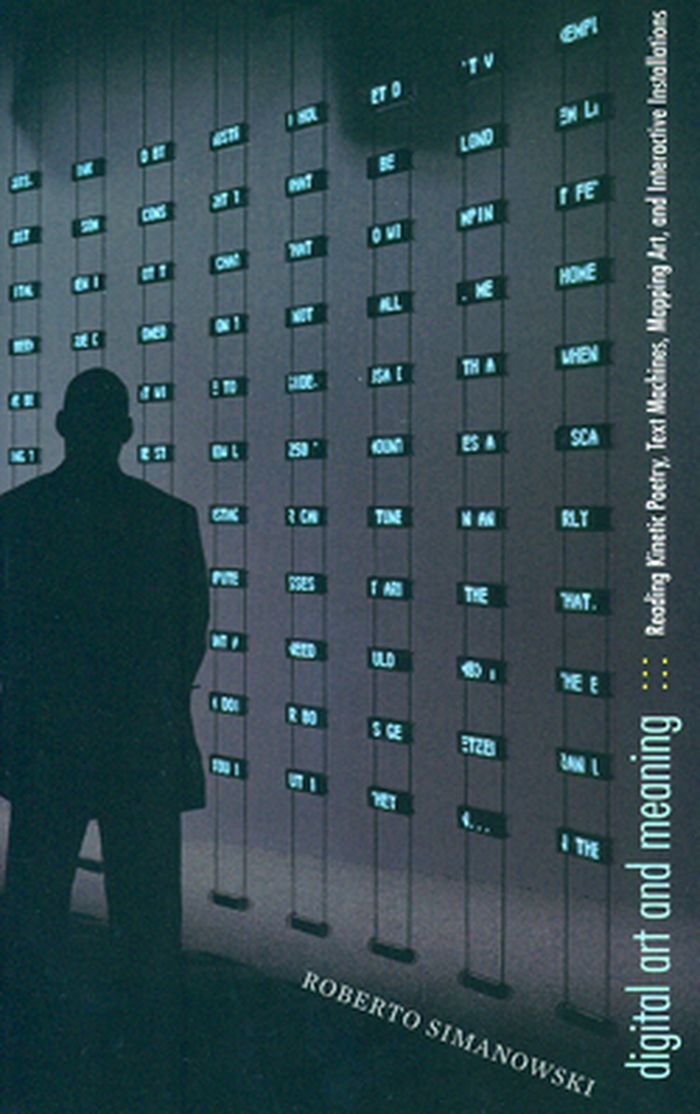
In a world increasingly dominated by the digital, the critical response to digital art generally ranges from hype to counterhype. Popular writing about specific artworks seldom goes beyond promoting a given piece and explaining how it operates, while scholars and critics remain unsure about how to interpret and evaluate them. This is where Roberto Simanowski intervenes, demonstrating how such critical work can be done. Digital Art and Meaning offers close readings of varied examples from genres of digital art such as kinetic concrete poetry, computer-generated text, interactive installation, mapping art, and information sculpture. For instance, Simanowski deciphers the complex meaning of words that not only form an image on a screen but also react to the viewer’s behavior; images that are progressively destroyed by the human gaze; text machines generating nonsense sentences out of a Kafka story; and a light show above Mexico City’s historic square, created by Internet users all over the world. Simanowski combines these illuminating explanations with a theoretical discussion that employs art philosophy and history to achieve a deeper understanding of each particular example of digital art and, ultimately, of the genre as a whole.
Digital art and meaning: reading kinetic poetry, text machines, mapping art, and interactive installations
Actions:
Price:
$28.00
(available to order)
Summary:
In a world increasingly dominated by the digital, the critical response to digital art generally ranges from hype to counterhype. Popular writing about specific artworks seldom goes beyond promoting a given piece and explaining how it operates, while scholars and critics remain unsure about how to interpret and evaluate them. This is where Roberto Simanowski intervenes, demonstrating how such critical work can be done. Digital Art and Meaning offers close readings of varied examples from genres of digital art such as kinetic concrete poetry, computer-generated text, interactive installation, mapping art, and information sculpture. For instance, Simanowski deciphers the complex meaning of words that not only form an image on a screen but also react to the viewer’s behavior; images that are progressively destroyed by the human gaze; text machines generating nonsense sentences out of a Kafka story; and a light show above Mexico City’s historic square, created by Internet users all over the world. Simanowski combines these illuminating explanations with a theoretical discussion that employs art philosophy and history to achieve a deeper understanding of each particular example of digital art and, ultimately, of the genre as a whole.
Form:
books
books
Publication:
July 2011
July 2011


