


31224 Results
Form:
exhibitions
exhibitions
Actions:
Description:
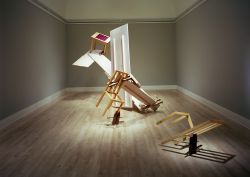
Parables and Other Allegories: The Work of Melvin Charney 1975–1990 comprises approximately 100 drawings, including many large-scale, sketches, photographs, and three large constructions. By assembling works from various public and private collections, including the CCA, the exhibition permits a comprehensive analysis of Charney’s artistic process to reveal the dialogue(...)
Parables and Other Allegories: The Work of Melvin Charney 1975–1990 comprises approximately 100 drawings, including many large-scale, sketches, photographs, and three large constructions. By assembling works from various public and private collections, including the CCA, the exhibition permits a comprehensive analysis of Charney’s artistic process to reveal the dialogue(...)
Location:
Main galleries
Main galleries
Date:
9 October 1991 to 12 January 1992
9 October 1991 to 12 January 1992
Title:
Parables and Other Allegories: The Work of Melvin Charney, 1975-1990
Actions:
Description:
Parables and Other Allegories: The Work of Melvin Charney 1975–1990 comprises approximately 100 drawings, including many large-scale, sketches, photographs, and three large constructions. By assembling works from various public and private collections, including the CCA, the exhibition permits a comprehensive analysis of Charney’s artistic process to reveal the dialogue(...)
Parables and Other Allegories: The Work of Melvin Charney, 1975-1990
Actions:
Description:
Parables and Other Allegories: The Work of Melvin Charney 1975–1990 comprises approximately 100 drawings, including many large-scale, sketches, photographs, and three large constructions. By assembling works from various public and private collections, including the CCA, the exhibition permits a comprehensive analysis of Charney’s artistic process to reveal the dialogue(...)
Form:
exhibitions
exhibitions
Date:
9 October 1991 to
12 January 1992
9 October 1991 to
12 January 1992
Location:
Main galleries
Main galleries
Form:
exhibitions
exhibitions
Actions:
Description:
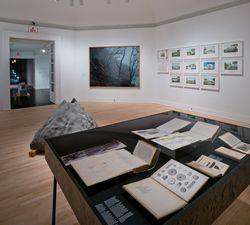
Between 1836 and 1848, the German-Dutch explorer Franz Wilhelm Junghuhn made several expeditions in Java in the service of the Dutch colonial authorities. He was among the first colonists to climb the island’s many volcanoes. His scientific works, books, maps, and lithographs made him the “Humboldt of Java.” This exhibition follows Junghuhn’s footsteps and explores(...)
Between 1836 and 1848, the German-Dutch explorer Franz Wilhelm Junghuhn made several expeditions in Java in the service of the Dutch colonial authorities. He was among the first colonists to climb the island’s many volcanoes. His scientific works, books, maps, and lithographs made him the “Humboldt of Java.” This exhibition follows Junghuhn’s footsteps and explores(...)
Location:
Octagonal gallery
Octagonal gallery
Date:
29 September 2016 to 22 January 2017
29 September 2016 to 22 January 2017
Title:
17 Volcanoes: Works by Franz Wilhelm Junghuhn, Armin Linke, and Bas Princen
Actions:
Description:
Between 1836 and 1848, the German-Dutch explorer Franz Wilhelm Junghuhn made several expeditions in Java in the service of the Dutch colonial authorities. He was among the first colonists to climb the island’s many volcanoes. His scientific works, books, maps, and lithographs made him the “Humboldt of Java.” This exhibition follows Junghuhn’s footsteps and explores(...)
17 Volcanoes: Works by Franz Wilhelm Junghuhn, Armin Linke, and Bas Princen
Actions:
Description:
Between 1836 and 1848, the German-Dutch explorer Franz Wilhelm Junghuhn made several expeditions in Java in the service of the Dutch colonial authorities. He was among the first colonists to climb the island’s many volcanoes. His scientific works, books, maps, and lithographs made him the “Humboldt of Java.” This exhibition follows Junghuhn’s footsteps and explores(...)
Form:
exhibitions
exhibitions
Date:
29 September 2016 to
22 January 2017
29 September 2016 to
22 January 2017
Location:
Octagonal gallery
Octagonal gallery
Form:
exhibitions
exhibitions
Description:
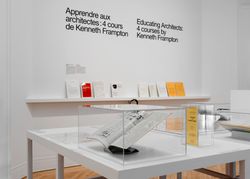
Amid education reform in American schools of architecture in the 1970s, Kenneth Frampton was integral in transforming the curriculum of Columbia University’s Graduate School of Architecture Planning. In particular, he designed and taught what became three core courses: the theory seminar “Comparative Critical Analysis,” the history lectures “Thresholds of Modern(...)
Amid education reform in American schools of architecture in the 1970s, Kenneth Frampton was integral in transforming the curriculum of Columbia University’s Graduate School of Architecture Planning. In particular, he designed and taught what became three core courses: the theory seminar “Comparative Critical Analysis,” the history lectures “Thresholds of Modern(...)
Date:
31 May 2017 to 24 September 2017
31 May 2017 to 24 September 2017
Title:
Educating Architects: Four Courses by Kenneth Frampton
Actions:
Description:
Amid education reform in American schools of architecture in the 1970s, Kenneth Frampton was integral in transforming the curriculum of Columbia University’s Graduate School of Architecture Planning. In particular, he designed and taught what became three core courses: the theory seminar “Comparative Critical Analysis,” the history lectures “Thresholds of Modern(...)
Educating Architects: Four Courses by Kenneth Frampton
Actions:
Description:
Amid education reform in American schools of architecture in the 1970s, Kenneth Frampton was integral in transforming the curriculum of Columbia University’s Graduate School of Architecture Planning. In particular, he designed and taught what became three core courses: the theory seminar “Comparative Critical Analysis,” the history lectures “Thresholds of Modern(...)
Form:
exhibitions
exhibitions
Date:
31 May 2017 to
24 September 2017
31 May 2017 to
24 September 2017
Form:
exhibitions
exhibitions
Actions:
Description:
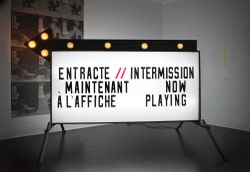
The CCA galleries are transformed into cinematic screening rooms to present a range of artistic, scientific, and experimental films on speed and space. Selected by curators from the archives of NASA, the Smithsonian National Air and Space Museum (NASM), the National Film Board of Canada (NFB), and UbuWeb, the films explore the impact of velocity and technology on our(...)
The CCA galleries are transformed into cinematic screening rooms to present a range of artistic, scientific, and experimental films on speed and space. Selected by curators from the archives of NASA, the Smithsonian National Air and Space Museum (NASM), the National Film Board of Canada (NFB), and UbuWeb, the films explore the impact of velocity and technology on our(...)
Location:
Main galleries
Main galleries
Date:
25 November 2009 to 28 February 2010
25 November 2009 to 28 February 2010
Title:
Intermission: Films From a Heroic Future
Actions:
Description:
The CCA galleries are transformed into cinematic screening rooms to present a range of artistic, scientific, and experimental films on speed and space. Selected by curators from the archives of NASA, the Smithsonian National Air and Space Museum (NASM), the National Film Board of Canada (NFB), and UbuWeb, the films explore the impact of velocity and technology on our(...)
Intermission: Films From a Heroic Future
Actions:
Description:
The CCA galleries are transformed into cinematic screening rooms to present a range of artistic, scientific, and experimental films on speed and space. Selected by curators from the archives of NASA, the Smithsonian National Air and Space Museum (NASM), the National Film Board of Canada (NFB), and UbuWeb, the films explore the impact of velocity and technology on our(...)
Form:
exhibitions
exhibitions
Date:
25 November 2009 to
28 February 2010
25 November 2009 to
28 February 2010
Location:
Main galleries
Main galleries
Form:
archives
Level of archival description:
Collection
archives
Level of archival description:
Collection
Title:
Rohault de Fleury collection
Rohault de Fleury collection
Reference number:
CI001
Synopsis:
The Rohault de Fleury collection documents the work of three generations of French architects, Hubert, his son Charles, and his grandson Georges, spanning from the early 18th to late 19th century. The collection is extremely varied encompassing both private and government commissions and including domestic work, institutional buildings, commercial buildings, urban planning, and student work from both the École des beaux-arts and the École polytechnique, and archaeological studies. Stylistically, the projects incorporate the two dominant contemporary directions in French architecture - functionalism as advocated by Jean-Nicolas-Louis Durand and the classicism of the École des beaux-arts.
CI001
Synopsis:
The Rohault de Fleury collection documents the work of three generations of French architects, Hubert, his son Charles, and his grandson Georges, spanning from the early 18th to late 19th century. The collection is extremely varied encompassing both private and government commissions and including domestic work, institutional buildings, commercial buildings, urban planning, and student work from both the École des beaux-arts and the École polytechnique, and archaeological studies. Stylistically, the projects incorporate the two dominant contemporary directions in French architecture - functionalism as advocated by Jean-Nicolas-Louis Durand and the classicism of the École des beaux-arts.
People:
Date:
1717-[1884]
1717-[1884]
Title:
Rohault de Fleury collection
CI001
Synopsis:
The Rohault de Fleury collection documents the work of three generations of French architects, Hubert, his son Charles, and his grandson Georges, spanning from the early 18th to late 19th century. The collection is extremely varied encompassing both private and government commissions and including domestic work, institutional buildings, commercial buildings, urban planning, and student work from both the École des beaux-arts and the École polytechnique, and archaeological studies. Stylistically, the projects incorporate the two dominant contemporary directions in French architecture - functionalism as advocated by Jean-Nicolas-Louis Durand and the classicism of the École des beaux-arts.
Rohault de Fleury collection
CI001
Synopsis:
The Rohault de Fleury collection documents the work of three generations of French architects, Hubert, his son Charles, and his grandson Georges, spanning from the early 18th to late 19th century. The collection is extremely varied encompassing both private and government commissions and including domestic work, institutional buildings, commercial buildings, urban planning, and student work from both the École des beaux-arts and the École polytechnique, and archaeological studies. Stylistically, the projects incorporate the two dominant contemporary directions in French architecture - functionalism as advocated by Jean-Nicolas-Louis Durand and the classicism of the École des beaux-arts.
Form:
archives
Level of archival description:
Collection 1
archives
Level of archival description:
Collection 1
Date:
1717-[1884]
1717-[1884]
People:
Form:
events
events
Actions:
Description:
Soon after the opening of The University Is Now on Air: Broadcasting Modern Architecture, Tim Benton presents another reading of the new exhibition through a counter-tour. Rather than a tour through the galleries that gives voice to the curator’s ideas, counter-tours propose critical, subversive, corrective, or alternative versions of a given project through encounters(...)
Soon after the opening of The University Is Now on Air: Broadcasting Modern Architecture, Tim Benton presents another reading of the new exhibition through a counter-tour. Rather than a tour through the galleries that gives voice to the curator’s ideas, counter-tours propose critical, subversive, corrective, or alternative versions of a given project through encounters(...)
Date:
16 November 2017
16 November 2017
Title:
Counter-tour: Tim Benton’s Cut
Actions:
Description:
Soon after the opening of The University Is Now on Air: Broadcasting Modern Architecture, Tim Benton presents another reading of the new exhibition through a counter-tour. Rather than a tour through the galleries that gives voice to the curator’s ideas, counter-tours propose critical, subversive, corrective, or alternative versions of a given project through encounters(...)
Counter-tour: Tim Benton’s Cut
Actions:
Description:
Soon after the opening of The University Is Now on Air: Broadcasting Modern Architecture, Tim Benton presents another reading of the new exhibition through a counter-tour. Rather than a tour through the galleries that gives voice to the curator’s ideas, counter-tours propose critical, subversive, corrective, or alternative versions of a given project through encounters(...)
Form:
events
events
Date:
16 November 2017
16 November 2017
Form:
exhibitions
exhibitions
Title:
The Mound of Vendôme
The Mound of Vendôme
Actions:
Description:
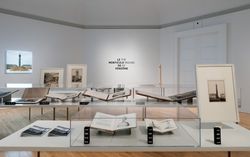
The mound of Vendôme is a seemingly simple yet provocative artifact: an earthwork that became a central part of a radical attempt to transform urban iconography during the two-month rule of the Paris Commune in 1871. This exhibition and research project recalls this lost structure and calls for its contemporary reconstruction and historicization. Curated by David Gissen,(...)
The mound of Vendôme is a seemingly simple yet provocative artifact: an earthwork that became a central part of a radical attempt to transform urban iconography during the two-month rule of the Paris Commune in 1871. This exhibition and research project recalls this lost structure and calls for its contemporary reconstruction and historicization. Curated by David Gissen,(...)
Location:
Octagonal gallery
Octagonal gallery
Date:
19 June 2014 to 28 September 2014
19 June 2014 to 28 September 2014
Title:
The Mound of Vendôme
Actions:
Description:
The mound of Vendôme is a seemingly simple yet provocative artifact: an earthwork that became a central part of a radical attempt to transform urban iconography during the two-month rule of the Paris Commune in 1871. This exhibition and research project recalls this lost structure and calls for its contemporary reconstruction and historicization. Curated by David Gissen,(...)
The Mound of Vendôme
Actions:
Description:
The mound of Vendôme is a seemingly simple yet provocative artifact: an earthwork that became a central part of a radical attempt to transform urban iconography during the two-month rule of the Paris Commune in 1871. This exhibition and research project recalls this lost structure and calls for its contemporary reconstruction and historicization. Curated by David Gissen,(...)
Form:
exhibitions
exhibitions
Date:
19 June 2014 to
28 September 2014
19 June 2014 to
28 September 2014
Location:
Octagonal gallery
Octagonal gallery
Form:
exhibitions
exhibitions
Description:
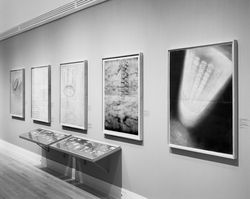
The exhibition explores one of the most adventurous and influential moments in the history of architecture: the explosion of invention and ideas that followed the October Revolution in Russia. The Soviet avant-garde architects were productivist as much as aesthetic in their concerns; they saw architecture and the arts as one, and they were committed to bringing design(...)
The exhibition explores one of the most adventurous and influential moments in the history of architecture: the explosion of invention and ideas that followed the October Revolution in Russia. The Soviet avant-garde architects were productivist as much as aesthetic in their concerns; they saw architecture and the arts as one, and they were committed to bringing design(...)
Location:
Main galleries
Main galleries
Date:
19 June 1991 to 8 September 1991
19 June 1991 to 8 September 1991
Title:
Architectural Drawings of the Russian Avant-Garde, 1917-1935
Actions:
Description:
The exhibition explores one of the most adventurous and influential moments in the history of architecture: the explosion of invention and ideas that followed the October Revolution in Russia. The Soviet avant-garde architects were productivist as much as aesthetic in their concerns; they saw architecture and the arts as one, and they were committed to bringing design(...)
Architectural Drawings of the Russian Avant-Garde, 1917-1935
Actions:
Description:
The exhibition explores one of the most adventurous and influential moments in the history of architecture: the explosion of invention and ideas that followed the October Revolution in Russia. The Soviet avant-garde architects were productivist as much as aesthetic in their concerns; they saw architecture and the arts as one, and they were committed to bringing design(...)
Form:
exhibitions
exhibitions
Date:
19 June 1991 to
8 September 1991
19 June 1991 to
8 September 1991
Location:
Main galleries
Main galleries
Form:
exhibitions
exhibitions
Title:
John Soane 1753-1837
John Soane 1753-1837
Actions:
Description:
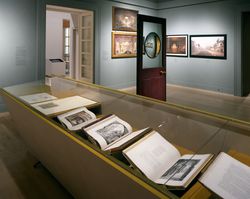
Described by Henry James as “one of the most curious things in London,” Sir John Soane’s Museum was built as the picturesque and enigmatic home, office, collector’s trove, and personal showplace of one of history’s most innovative architects. This exhibition is a major re-evaluation of Soane’s career, as well as a reconsideration of his importance to the history of modern(...)
Described by Henry James as “one of the most curious things in London,” Sir John Soane’s Museum was built as the picturesque and enigmatic home, office, collector’s trove, and personal showplace of one of history’s most innovative architects. This exhibition is a major re-evaluation of Soane’s career, as well as a reconsideration of his importance to the history of modern(...)
Location:
Main galleries
Main galleries
Date:
16 May 2001 to 3 September 2001
16 May 2001 to 3 September 2001
Title:
John Soane 1753-1837
Actions:
Description:
Described by Henry James as “one of the most curious things in London,” Sir John Soane’s Museum was built as the picturesque and enigmatic home, office, collector’s trove, and personal showplace of one of history’s most innovative architects. This exhibition is a major re-evaluation of Soane’s career, as well as a reconsideration of his importance to the history of modern(...)
John Soane 1753-1837
Actions:
Description:
Described by Henry James as “one of the most curious things in London,” Sir John Soane’s Museum was built as the picturesque and enigmatic home, office, collector’s trove, and personal showplace of one of history’s most innovative architects. This exhibition is a major re-evaluation of Soane’s career, as well as a reconsideration of his importance to the history of modern(...)
Form:
exhibitions
exhibitions
Date:
16 May 2001 to
3 September 2001
16 May 2001 to
3 September 2001
Location:
Main galleries
Main galleries
Form:
articles
articles
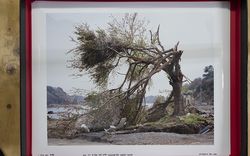
Title:
Unintended Memories
Unintended Memories
Actions:
Naoya Hatakeyama in conversation with Stefano Graziani and Bas Princen
Keyword(s):
The Lives of Documents, Photography as a Project, Stefano Graziani and Bas Princen, Naoya Hatakeyama, conversation, oral history
The Lives of Documents, Photography as a Project, Stefano Graziani and Bas Princen, Naoya Hatakeyama, conversation, oral history
Published:
11 September 2023
11 September 2023
Title:
Unintended Memories
Naoya Hatakeyama in conversation with Stefano Graziani and Bas Princen
Actions:
Unintended Memories
Naoya Hatakeyama in conversation with Stefano Graziani and Bas Princen
Actions:


