


2585 Results
Form:
books
books
Title:
Toward an architecture
Toward an architecture
Actions:
Price:
$36.50
(available in store)
Summary:
Published in 1923, Toward an Architecture had an immediate impact on architects throughout Europe and remains a foundational text for students and professionals. Le Corbusier urges readers to cease thinking of architecture as a matter of historical styles and instead open their eyes to the modern world. Simultaneously a historian, critic, and prophet, he provocatively(...)
$36.50
(available in store)
Summary:
Published in 1923, Toward an Architecture had an immediate impact on architects throughout Europe and remains a foundational text for students and professionals. Le Corbusier urges readers to cease thinking of architecture as a matter of historical styles and instead open their eyes to the modern world. Simultaneously a historian, critic, and prophet, he provocatively(...)
Title:
Toward an architecture
Actions:
Price:
$36.50
(available in store)
Summary:
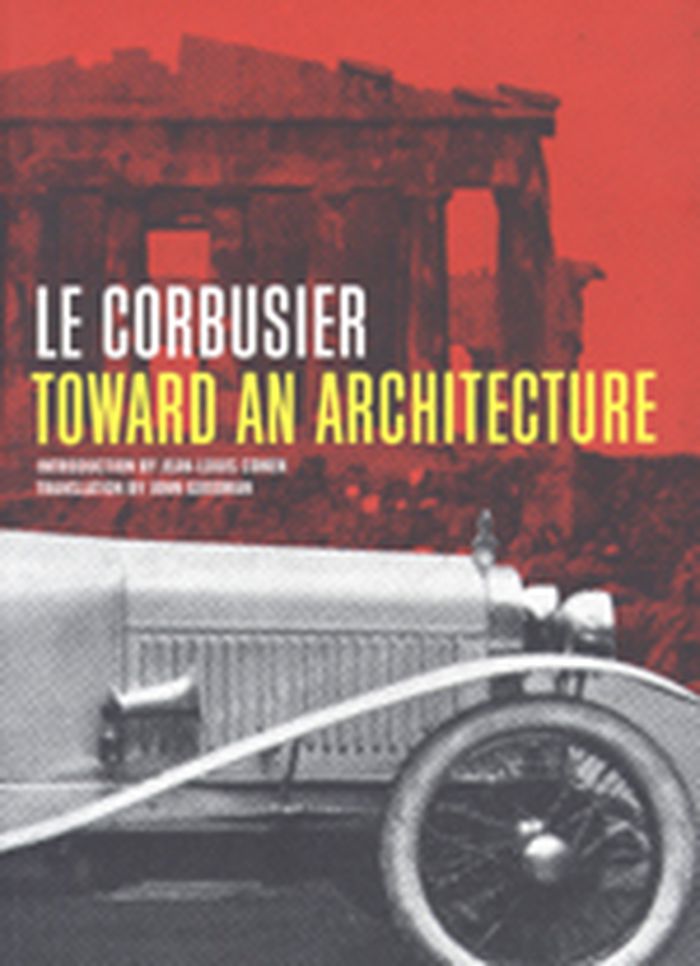
Published in 1923, Toward an Architecture had an immediate impact on architects throughout Europe and remains a foundational text for students and professionals. Le Corbusier urges readers to cease thinking of architecture as a matter of historical styles and instead open their eyes to the modern world. Simultaneously a historian, critic, and prophet, he provocatively juxtaposes views of classical Greece and Renaissance Rome with images of airplanes, cars, and ocean liners. Le Corbusier's slogans�such as "the house is a machine for living in"�and philosophy changed how his contemporaries saw the relationship between architecture, technology, and history. This edition includes a new translation of the original text, a scholarly introduction, and background notes that illuminate the text and illustrations. Jean-Louis Cohen is the Sheldon H. Solow Chair in the History of Architecture at New York University's Institute of Fine Arts. He has written extensively on Le Corbusier's work. John Goodman is a translator and art historian. He has rendered some thirty books from French into English.
Toward an architecture
Actions:
Price:
$36.50
(available in store)
Summary:
Published in 1923, Toward an Architecture had an immediate impact on architects throughout Europe and remains a foundational text for students and professionals. Le Corbusier urges readers to cease thinking of architecture as a matter of historical styles and instead open their eyes to the modern world. Simultaneously a historian, critic, and prophet, he provocatively juxtaposes views of classical Greece and Renaissance Rome with images of airplanes, cars, and ocean liners. Le Corbusier's slogans�such as "the house is a machine for living in"�and philosophy changed how his contemporaries saw the relationship between architecture, technology, and history. This edition includes a new translation of the original text, a scholarly introduction, and background notes that illuminate the text and illustrations. Jean-Louis Cohen is the Sheldon H. Solow Chair in the History of Architecture at New York University's Institute of Fine Arts. He has written extensively on Le Corbusier's work. John Goodman is a translator and art historian. He has rendered some thirty books from French into English.
Form:
books
books
Publication:
January 2007, Los Angeles
January 2007, Los Angeles
Subject:
Architecture Monographs
Architecture Monographs
Form:
books
books
Actions:
Price:
$43.95
(available to order)
Summary:
The contributors announce the demise of the city of broad shoulders and the transformation of its physical, social, cultural, and economic institutions into a new Chicago. In this book, twenty scholars, journalists, and activists, relying on data from the 2000 census and many years of direct experience with the city, identify five converging forces in American(...)
$43.95
(available to order)
Summary:
The contributors announce the demise of the city of broad shoulders and the transformation of its physical, social, cultural, and economic institutions into a new Chicago. In this book, twenty scholars, journalists, and activists, relying on data from the 2000 census and many years of direct experience with the city, identify five converging forces in American(...)
Subject:
Urban Theory
Urban Theory
Publication:
September 2006, Philadelphia
September 2006, Philadelphia
Title:
The new Chicago : a social and cultural analysis
Actions:
Price:
$43.95
(available to order)
Summary:
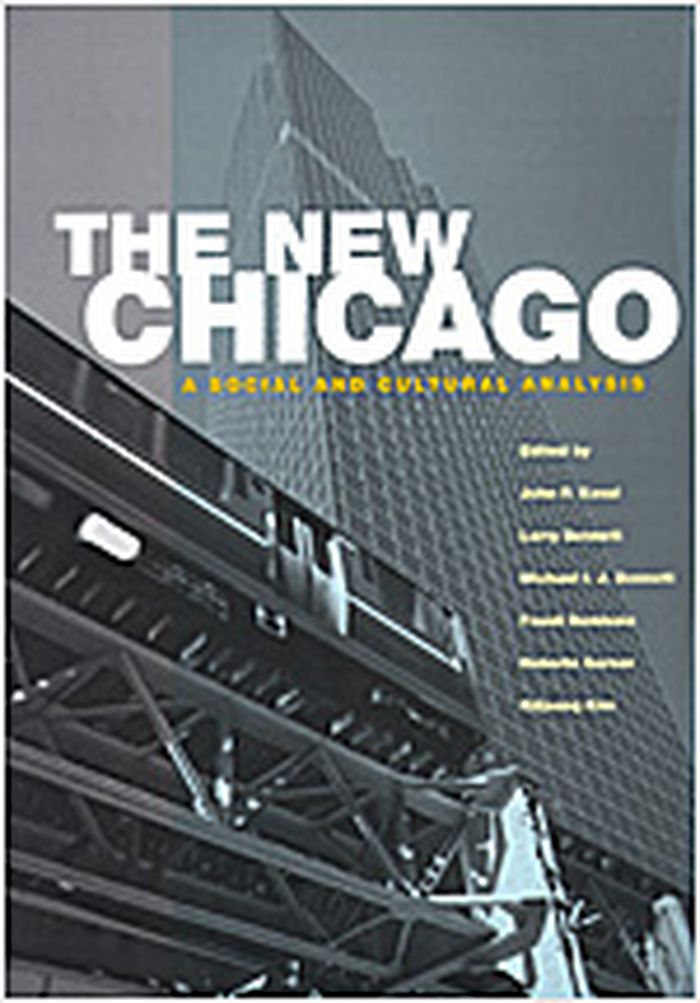
The contributors announce the demise of the city of broad shoulders and the transformation of its physical, social, cultural, and economic institutions into a new Chicago. In this book, twenty scholars, journalists, and activists, relying on data from the 2000 census and many years of direct experience with the city, identify five converging forces in American urbanization which are reshaping this storied metropolis. The twenty-six essays included here analyze Chicago by way of globalization and its impact on the contemporary city; economic restructuring; the evolution of machine-style politics into managerial politics; physical transformations of the central city and its suburbs; and race relations in a multicultural era. In elaborating on the effects of these broad forces, contributors detail the role of eight significant racial, ethnic, and immigrant communities in shaping the character of the new Chicago and present ten case studies of innovative governmental, grassroots, and civic action. Edited by John P. Koval, Larry Bennett, Michael I. J. Bennett, Fassil Demissie, Roberta Garner and Kiljoong Kim.
The new Chicago : a social and cultural analysis
Actions:
Price:
$43.95
(available to order)
Summary:
The contributors announce the demise of the city of broad shoulders and the transformation of its physical, social, cultural, and economic institutions into a new Chicago. In this book, twenty scholars, journalists, and activists, relying on data from the 2000 census and many years of direct experience with the city, identify five converging forces in American urbanization which are reshaping this storied metropolis. The twenty-six essays included here analyze Chicago by way of globalization and its impact on the contemporary city; economic restructuring; the evolution of machine-style politics into managerial politics; physical transformations of the central city and its suburbs; and race relations in a multicultural era. In elaborating on the effects of these broad forces, contributors detail the role of eight significant racial, ethnic, and immigrant communities in shaping the character of the new Chicago and present ten case studies of innovative governmental, grassroots, and civic action. Edited by John P. Koval, Larry Bennett, Michael I. J. Bennett, Fassil Demissie, Roberta Garner and Kiljoong Kim.
Form:
books
books
Publication:
September 2006, Philadelphia
September 2006, Philadelphia
Subject:
Urban Theory
Urban Theory
Form:
books
books
Actions:
Price:
$63.95
(available to order)
Summary:
Reyner Banham (1922-88) was one of the most influential writers on architecture, design, and popular culture from the mid-1950s to the late 1980s. Trained in mechanical engineering and art history, he was convinced that technology was making society not only more exciting but more democratic. His combination of academic rigor and pop culture sensibility put him in(...)
$63.95
(available to order)
Summary:
Reyner Banham (1922-88) was one of the most influential writers on architecture, design, and popular culture from the mid-1950s to the late 1980s. Trained in mechanical engineering and art history, he was convinced that technology was making society not only more exciting but more democratic. His combination of academic rigor and pop culture sensibility put him in(...)
Title:
Reyner Banham : historian of the immediate future
Actions:
Price:
$63.95
(available to order)
Summary:
Reyner Banham (1922-88) was one of the most influential writers on architecture, design, and popular culture from the mid-1950s to the late 1980s. Trained in mechanical engineering and art history, he was convinced that technology was making society not only more exciting but more democratic. His combination of academic rigor and pop culture sensibility put him in opposition to both traditionalists and orthodox Modernists, but placed him in a unique position to understand the cultural, social, and political implications of the visual arts in the postwar period. His first book, "Theory and Design in the First Machine Age", was central to the overhaul of Modernism, and it gave Futurism and Expressionism credibility amid the dynamism and change of the 1960s. This intellectual biography is the first comprehensive critical examination of Banham’s theories and ideas, not only on architecture but also on the wide variety of subjects that interested him. It covers the full range of his oeuvre and discusses the values, enthusiasms, and influences that formed his thinking.
Reyner Banham : historian of the immediate future
Actions:
Price:
$63.95
(available to order)
Summary:
Reyner Banham (1922-88) was one of the most influential writers on architecture, design, and popular culture from the mid-1950s to the late 1980s. Trained in mechanical engineering and art history, he was convinced that technology was making society not only more exciting but more democratic. His combination of academic rigor and pop culture sensibility put him in opposition to both traditionalists and orthodox Modernists, but placed him in a unique position to understand the cultural, social, and political implications of the visual arts in the postwar period. His first book, "Theory and Design in the First Machine Age", was central to the overhaul of Modernism, and it gave Futurism and Expressionism credibility amid the dynamism and change of the 1960s. This intellectual biography is the first comprehensive critical examination of Banham’s theories and ideas, not only on architecture but also on the wide variety of subjects that interested him. It covers the full range of his oeuvre and discusses the values, enthusiasms, and influences that formed his thinking.
Form:
books
books
Publication:
October 2001, Cambridge, MA
October 2001, Cambridge, MA
Subject:
Architectural Theory
Architectural Theory
Form:
books
books
Actions:
Price:
$68.95
(available to order)
Summary:
Monospaced fonts originate from the typewriter and are characterized by the peculiarity that all letters, digits and characters have the same width. "Mono is the new black" discusses the function and aesthetics of this unique kind of typeface and deals with its cult status in the (mainly young) design scene. The aim of the handbook is to inform and inspire typographers,(...)
$68.95
(available to order)
Summary:
Monospaced fonts originate from the typewriter and are characterized by the peculiarity that all letters, digits and characters have the same width. "Mono is the new black" discusses the function and aesthetics of this unique kind of typeface and deals with its cult status in the (mainly young) design scene. The aim of the handbook is to inform and inspire typographers,(...)
Title:
Mono is the new black: Monospace fonctionary
Actions:
Price:
$68.95
(available to order)
Summary:
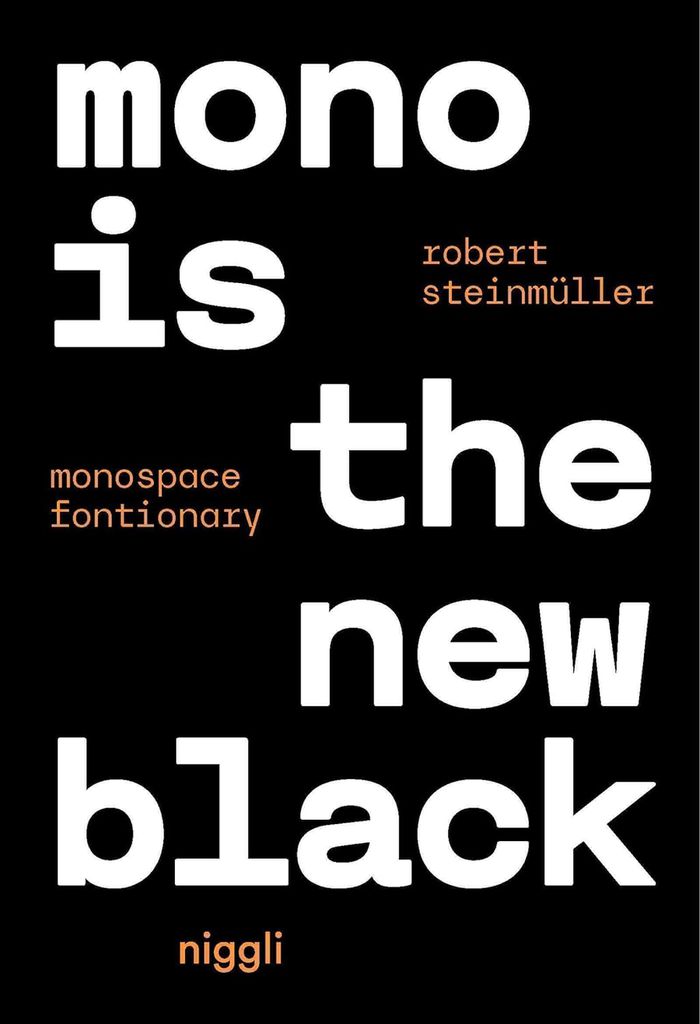
Monospaced fonts originate from the typewriter and are characterized by the peculiarity that all letters, digits and characters have the same width. "Mono is the new black" discusses the function and aesthetics of this unique kind of typeface and deals with its cult status in the (mainly young) design scene. The aim of the handbook is to inform and inspire typographers, typeface developers, designers, as well as readers interested in culture in general with facts, analyses, expert positions, practical examples, and a comprehensive font collection. In a cultural-historical outline, the author first presents the historical aspects of this typeface and shows how closely intertwined type, technical progress, and social development are. In the middle section, he presents a selection of examples of the work of globally active designers and agencies with a focus on the many possible applications. The final section is a script compendium that provides a clear overview of 175 monospaced fonts and shows the changes that these distinctive monospaced fonts have undergone, from machine type to entirely digitally developed coding fonts.
Mono is the new black: Monospace fonctionary
Actions:
Price:
$68.95
(available to order)
Summary:
Monospaced fonts originate from the typewriter and are characterized by the peculiarity that all letters, digits and characters have the same width. "Mono is the new black" discusses the function and aesthetics of this unique kind of typeface and deals with its cult status in the (mainly young) design scene. The aim of the handbook is to inform and inspire typographers, typeface developers, designers, as well as readers interested in culture in general with facts, analyses, expert positions, practical examples, and a comprehensive font collection. In a cultural-historical outline, the author first presents the historical aspects of this typeface and shows how closely intertwined type, technical progress, and social development are. In the middle section, he presents a selection of examples of the work of globally active designers and agencies with a focus on the many possible applications. The final section is a script compendium that provides a clear overview of 175 monospaced fonts and shows the changes that these distinctive monospaced fonts have undergone, from machine type to entirely digitally developed coding fonts.
Form:
books
books
Publication:
November 2023
November 2023
Subject:
Graphic Design and Typography
Graphic Design and Typography
Form:
books
books
Actions:
Price:
$49.50
(available to order)
Summary:
"Digital Ground" is an architect's response to the design challenge posed by pervasive computing. One century into the electronic age, people have become accustomed to interacting indirectly, mediated through networks. But now as digital technology becomes invisibly embedded in everyday things, even more activities become mediated, and networks extend rather than replace(...)
$49.50
(available to order)
Summary:
"Digital Ground" is an architect's response to the design challenge posed by pervasive computing. One century into the electronic age, people have become accustomed to interacting indirectly, mediated through networks. But now as digital technology becomes invisibly embedded in everyday things, even more activities become mediated, and networks extend rather than replace(...)
Title:
Digital ground : architecture, pervasive computing, and environmental knowing
Actions:
Price:
$49.50
(available to order)
Summary:
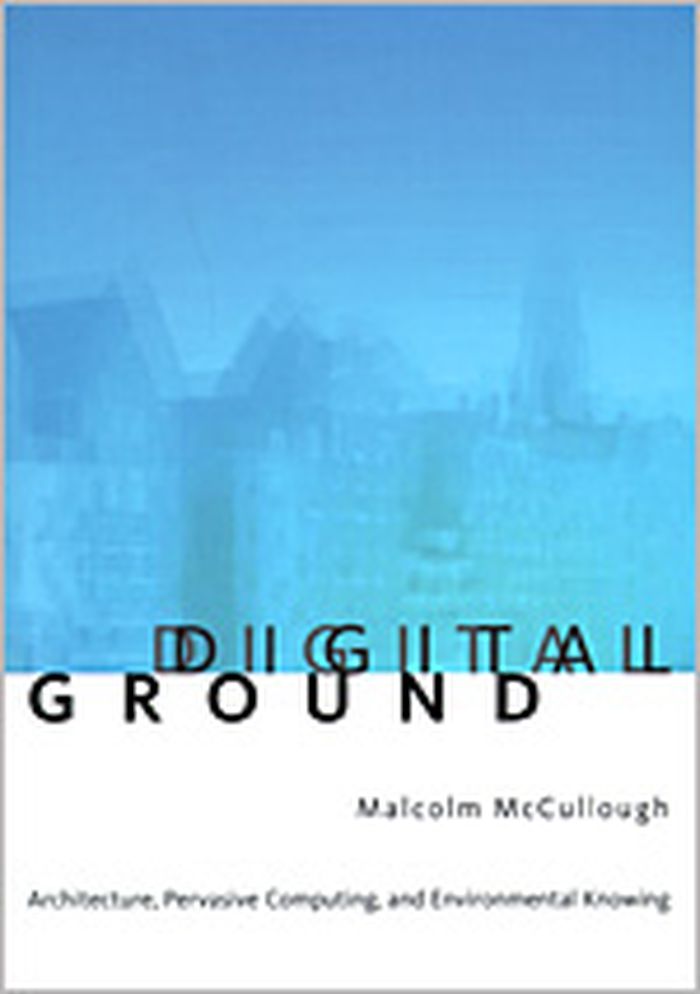
"Digital Ground" is an architect's response to the design challenge posed by pervasive computing. One century into the electronic age, people have become accustomed to interacting indirectly, mediated through networks. But now as digital technology becomes invisibly embedded in everyday things, even more activities become mediated, and networks extend rather than replace architecture. The young field of interaction design reflects not only how people deal with machine interfaces but also how people deal with each other in situations where interactivity has become ambient. It shifts previously utilitarian digital design concerns to a cultural level, adding notions of premise, appropriateness, and appreciation. Malcolm McCullough offers an account of the intersections of architecture and interaction design, arguing that the ubiquitous technology does not obviate the human need for place. His concept of "digital ground" expresses an alternative to anytime-anyplace sameness in computing; he shows that context not only shapes usability but ideally becomes the subject matter of interaction design and that "environmental knowing" is a process that technology may serve and not erode.
Digital ground : architecture, pervasive computing, and environmental knowing
Actions:
Price:
$49.50
(available to order)
Summary:
"Digital Ground" is an architect's response to the design challenge posed by pervasive computing. One century into the electronic age, people have become accustomed to interacting indirectly, mediated through networks. But now as digital technology becomes invisibly embedded in everyday things, even more activities become mediated, and networks extend rather than replace architecture. The young field of interaction design reflects not only how people deal with machine interfaces but also how people deal with each other in situations where interactivity has become ambient. It shifts previously utilitarian digital design concerns to a cultural level, adding notions of premise, appropriateness, and appreciation. Malcolm McCullough offers an account of the intersections of architecture and interaction design, arguing that the ubiquitous technology does not obviate the human need for place. His concept of "digital ground" expresses an alternative to anytime-anyplace sameness in computing; he shows that context not only shapes usability but ideally becomes the subject matter of interaction design and that "environmental knowing" is a process that technology may serve and not erode.
Form:
books
books
Publication:
April 2004, Cambridge, Mass.
April 2004, Cambridge, Mass.
Subject:
Architectural Theory
Architectural Theory
Form:
books
books
Title:
Josef Frank : life and work
Josef Frank : life and work
Actions:
Price:
$112.00
(available in store)
Summary:
Educated in Vienna just after the turn of the century, Frank became the leader of the younger generation of architects in Austria after the First World War. But Frank fell from grace when he emerged as a forceful critic of the extremes of modern architecture and design during the early 1930s. Dismissing the demands for a unified modern style, Frank insisted that it was(...)
$112.00
(available in store)
Summary:
Educated in Vienna just after the turn of the century, Frank became the leader of the younger generation of architects in Austria after the First World War. But Frank fell from grace when he emerged as a forceful critic of the extremes of modern architecture and design during the early 1930s. Dismissing the demands for a unified modern style, Frank insisted that it was(...)
Title:
Josef Frank : life and work
Actions:
Price:
$112.00
(available in store)
Summary:
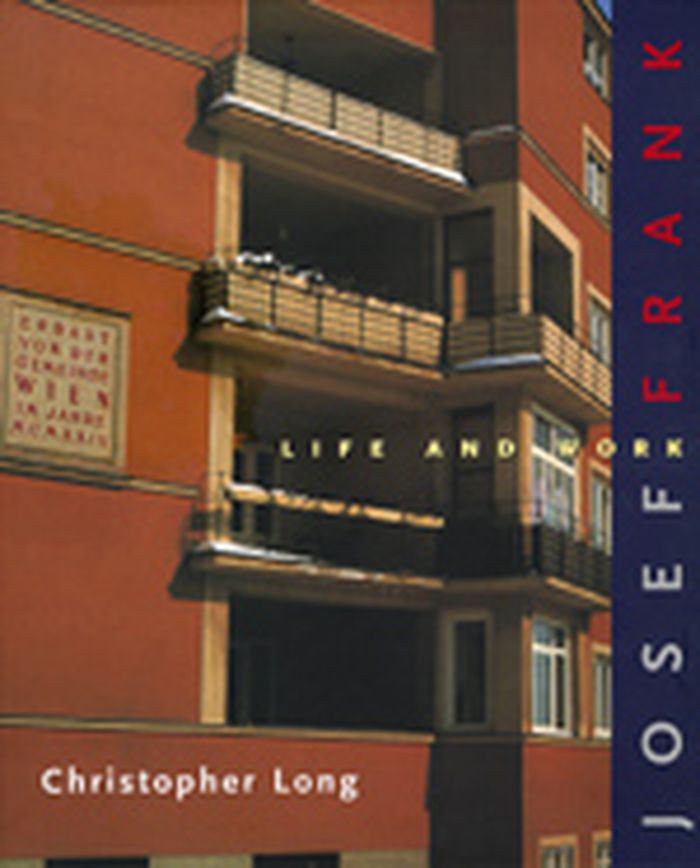
Educated in Vienna just after the turn of the century, Frank became the leader of the younger generation of architects in Austria after the First World War. But Frank fell from grace when he emerged as a forceful critic of the extremes of modern architecture and design during the early 1930s. Dismissing the demands for a unified modern style, Frank insisted that it was pluralism, not uniformity, that most characterized life in the new machine age. He called instead for a more humane modernism, one that responded to people's everyday needs and left room for sentimentality and historical influences. He was able to put these ideas into practice when, in 1933, he was forced to leave Vienna for Sweden. There his work came to define Swedish (or Scandinavian) modern design. For more than thirty years he was the chief designer for the Stockholm furnishings firm Svenskt Tenn, producing colorful, cozy, and eclectic designs that provided a refreshing alternative to the architectural mainstream of the day and presaged the coming revolt against modernism in the 1960s.
Josef Frank : life and work
Actions:
Price:
$112.00
(available in store)
Summary:
Educated in Vienna just after the turn of the century, Frank became the leader of the younger generation of architects in Austria after the First World War. But Frank fell from grace when he emerged as a forceful critic of the extremes of modern architecture and design during the early 1930s. Dismissing the demands for a unified modern style, Frank insisted that it was pluralism, not uniformity, that most characterized life in the new machine age. He called instead for a more humane modernism, one that responded to people's everyday needs and left room for sentimentality and historical influences. He was able to put these ideas into practice when, in 1933, he was forced to leave Vienna for Sweden. There his work came to define Swedish (or Scandinavian) modern design. For more than thirty years he was the chief designer for the Stockholm furnishings firm Svenskt Tenn, producing colorful, cozy, and eclectic designs that provided a refreshing alternative to the architectural mainstream of the day and presaged the coming revolt against modernism in the 1960s.
Form:
books
books
Publication:
November 2002, Chicago
November 2002, Chicago
Subject:
Architecture Monographs
Architecture Monographs
Form:
books
books
Title:
Buckminster Fuller
Buckminster Fuller
Actions:
Price:
$35.95
(available to order)
Summary:
Première édition, premier numéros de la collection Carnets d'architectes, bibliographie "Monsieur Fuller n'est heureusement pas architecte. Il n'est heureusement pas non plus ingénieur, mais il a commencé à philosopher sur le logement, sur la machine idéale adaptée à l'habitation, sans les apriorismes formels ni architecturaux du passé." Voilà la façon dont Harvey W.(...)
$35.95
(available to order)
Summary:
Première édition, premier numéros de la collection Carnets d'architectes, bibliographie "Monsieur Fuller n'est heureusement pas architecte. Il n'est heureusement pas non plus ingénieur, mais il a commencé à philosopher sur le logement, sur la machine idéale adaptée à l'habitation, sans les apriorismes formels ni architecturaux du passé." Voilà la façon dont Harvey W.(...)
Publication:
October 2008, Gollion
October 2008, Gollion
Title:
Buckminster Fuller
Actions:
Price:
$35.95
(available to order)
Summary:
Première édition, premier numéros de la collection Carnets d'architectes, bibliographie "Monsieur Fuller n'est heureusement pas architecte. Il n'est heureusement pas non plus ingénieur, mais il a commencé à philosopher sur le logement, sur la machine idéale adaptée à l'habitation, sans les apriorismes formels ni architecturaux du passé." Voilà la façon dont Harvey W. Corbett président de Architectural League de New York, présente R. Buckminster Fuller ses collègues, l'été 1929. Née comme produit dérivé des icônes de la technologie et de la mobilité, la maison que Buckminster Fuller dévoile ce jour-là cache, un projet d'habitat entendu dans le sens le plus large. Au fil des années, de son atelier d'inventeur nomade, sortiront des prototypes des véhicules, des toilettes portables, du mobilier, des mappemondes et ses célèbres coupoles géodésiques qui lui vaudront sa réputation internationale. Inspiré de la logique d'un album de photos, ce livre articule le récit biographique sur l'œuvre de R. Buckminster Fuller avec quelques uns de ses projets-phare qui ouvrent - par leur forme ou par leur technologie des nouvelles pistes à la réflexion architecturale.
Buckminster Fuller
Actions:
Price:
$35.95
(available to order)
Summary:
Première édition, premier numéros de la collection Carnets d'architectes, bibliographie "Monsieur Fuller n'est heureusement pas architecte. Il n'est heureusement pas non plus ingénieur, mais il a commencé à philosopher sur le logement, sur la machine idéale adaptée à l'habitation, sans les apriorismes formels ni architecturaux du passé." Voilà la façon dont Harvey W. Corbett président de Architectural League de New York, présente R. Buckminster Fuller ses collègues, l'été 1929. Née comme produit dérivé des icônes de la technologie et de la mobilité, la maison que Buckminster Fuller dévoile ce jour-là cache, un projet d'habitat entendu dans le sens le plus large. Au fil des années, de son atelier d'inventeur nomade, sortiront des prototypes des véhicules, des toilettes portables, du mobilier, des mappemondes et ses célèbres coupoles géodésiques qui lui vaudront sa réputation internationale. Inspiré de la logique d'un album de photos, ce livre articule le récit biographique sur l'œuvre de R. Buckminster Fuller avec quelques uns de ses projets-phare qui ouvrent - par leur forme ou par leur technologie des nouvelles pistes à la réflexion architecturale.
Form:
books
books
Publication:
October 2008, Gollion
October 2008, Gollion
Form:
books
books
Actions:
Price:
$64.95
(available to order)
Summary:
Risography, named after the Japanese firm Riso, is a stencil printing process based on screen printing techniques that was developed in the transition phase from mechanical to digital printing. Although the printer looks like a copying machine, the colors are transferred onto the paper without the use of heat or chemicals, saving energy and making the process ecologically(...)
$64.95
(available to order)
Summary:
Risography, named after the Japanese firm Riso, is a stencil printing process based on screen printing techniques that was developed in the transition phase from mechanical to digital printing. Although the printer looks like a copying machine, the colors are transferred onto the paper without the use of heat or chemicals, saving energy and making the process ecologically(...)
Title:
Risomania: the new spirit of printing
Actions:
Price:
$64.95
(available to order)
Summary:
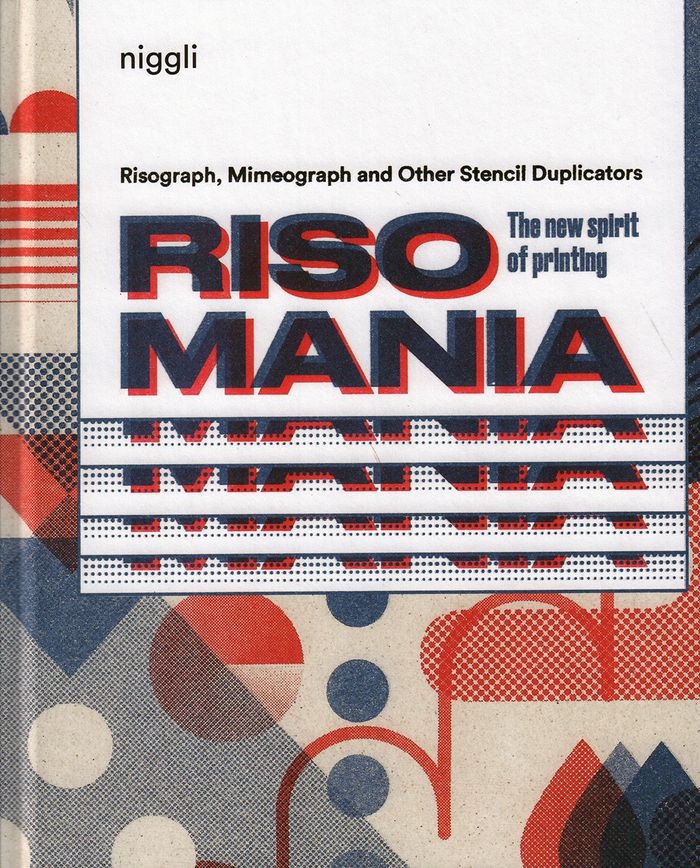
Risography, named after the Japanese firm Riso, is a stencil printing process based on screen printing techniques that was developed in the transition phase from mechanical to digital printing. Although the printer looks like a copying machine, the colors are transferred onto the paper without the use of heat or chemicals, saving energy and making the process ecologically friendly. Graphic artists and designers from around the world have now rediscovered the risograph for themselves – along with other machines for similar, almost forgotten techniques such as mimeography – and sparked an unexpected renaissance of analog printing. A comprehensive introduction that addresses past, present and future is followed by an essay about the key pioneers in the contemporary risography scene. In the chapter "Risoworld" notable risography-oriented publishers, printers and design studios from around the world are presented. At the heart of the book are fabulous, hugely diverse examples such as postcards, magazines, posters, flyers and experimental printed products, all inspired by the force of their color, their unique textures and, above all, the pefectly imperfect authenticity of risography.
Risomania: the new spirit of printing
Actions:
Price:
$64.95
(available to order)
Summary:
Risography, named after the Japanese firm Riso, is a stencil printing process based on screen printing techniques that was developed in the transition phase from mechanical to digital printing. Although the printer looks like a copying machine, the colors are transferred onto the paper without the use of heat or chemicals, saving energy and making the process ecologically friendly. Graphic artists and designers from around the world have now rediscovered the risograph for themselves – along with other machines for similar, almost forgotten techniques such as mimeography – and sparked an unexpected renaissance of analog printing. A comprehensive introduction that addresses past, present and future is followed by an essay about the key pioneers in the contemporary risography scene. In the chapter "Risoworld" notable risography-oriented publishers, printers and design studios from around the world are presented. At the heart of the book are fabulous, hugely diverse examples such as postcards, magazines, posters, flyers and experimental printed products, all inspired by the force of their color, their unique textures and, above all, the pefectly imperfect authenticity of risography.
Form:
books
books
Publication:
March 2017
March 2017
Subject:
Graphic Design and Typography
Graphic Design and Typography
Form:
books
books
Actions:
Subject:
Publication:
The Avery Review 2021
The Avery Review 2021
Form:
books
books
Publication:
The Avery Review 2021
The Avery Review 2021
Subject:
Form:
books
books
Price:
$19.95
(available to order)
Summary:
We all have something in our lives that while not obviously valuable, is displayed as though it were a precious and irreplaceable artifact. Inquire about the object's provenance and you'll likely be treated to a lively anecdote about how it came into your host's possession. Keep digging, and you might even crack the code of what the thing really means. "Taking things(...)
$19.95
(available to order)
Summary:
We all have something in our lives that while not obviously valuable, is displayed as though it were a precious and irreplaceable artifact. Inquire about the object's provenance and you'll likely be treated to a lively anecdote about how it came into your host's possession. Keep digging, and you might even crack the code of what the thing really means. "Taking things(...)
Title:
Taking things seriously : 75 objects with unexpected significance
Actions:
Price:
$19.95
(available to order)
Summary:
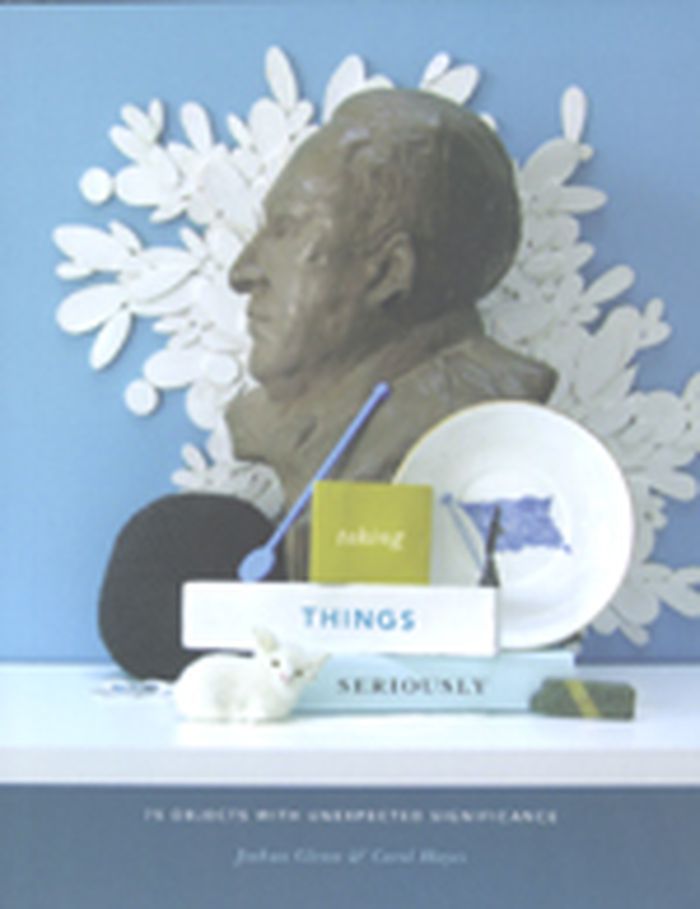
We all have something in our lives that while not obviously valuable, is displayed as though it were a precious and irreplaceable artifact. Inquire about the object's provenance and you'll likely be treated to a lively anecdote about how it came into your host's possession. Keep digging, and you might even crack the code of what the thing really means. "Taking things seriously" is a wonder cabinet of seventy-five unlikely thingamajigs that have been invested with significance and transformed into totems, talismans, charms, relics, and fetishes : scraps of movie posters scavenged from the streets of New York by Low Life author Luc Sante; the World War I helmet that inoculated social critic Thomas Frank against jingoism; the trash-picked, robot-shaped hairdo machine described by its owner as a chick magnet; the bagel burned by actor Christopher Walken, moonlighting as a short-order cook. The owners of these objects convey their excitement in short, often poignant essays that invite readers to participate in the enjoyable act of interpreting things. You'll never look at the bric-a-brac on your shelves the same way again.
Taking things seriously : 75 objects with unexpected significance
Actions:
Price:
$19.95
(available to order)
Summary:
We all have something in our lives that while not obviously valuable, is displayed as though it were a precious and irreplaceable artifact. Inquire about the object's provenance and you'll likely be treated to a lively anecdote about how it came into your host's possession. Keep digging, and you might even crack the code of what the thing really means. "Taking things seriously" is a wonder cabinet of seventy-five unlikely thingamajigs that have been invested with significance and transformed into totems, talismans, charms, relics, and fetishes : scraps of movie posters scavenged from the streets of New York by Low Life author Luc Sante; the World War I helmet that inoculated social critic Thomas Frank against jingoism; the trash-picked, robot-shaped hairdo machine described by its owner as a chick magnet; the bagel burned by actor Christopher Walken, moonlighting as a short-order cook. The owners of these objects convey their excitement in short, often poignant essays that invite readers to participate in the enjoyable act of interpreting things. You'll never look at the bric-a-brac on your shelves the same way again.
Form:
books
books
Publication:
October 2007, New York
October 2007, New York
Subject:
Industrial Design
Industrial Design


