


2576 Results
Form:
books
books
Actions:
Price:
$18.95
(available to order)
Summary:
The fictitious hero of this 1984 installation is a lonely dreamer who develops an impossible project: to fly alone in cosmic space. But this dream is also an individual appropriation of a collective Soviet project and the official Soviet propaganda connected to it. Having built a makeshift slingshot, the hero apparently flies through the ceiling of his shabby room and(...)
$18.95
(available to order)
Summary:
The fictitious hero of this 1984 installation is a lonely dreamer who develops an impossible project: to fly alone in cosmic space. But this dream is also an individual appropriation of a collective Soviet project and the official Soviet propaganda connected to it. Having built a makeshift slingshot, the hero apparently flies through the ceiling of his shabby room and(...)
Title:
Ilka Kabakov: the man who flew into space from his apartment
Actions:
Price:
$18.95
(available to order)
Summary:
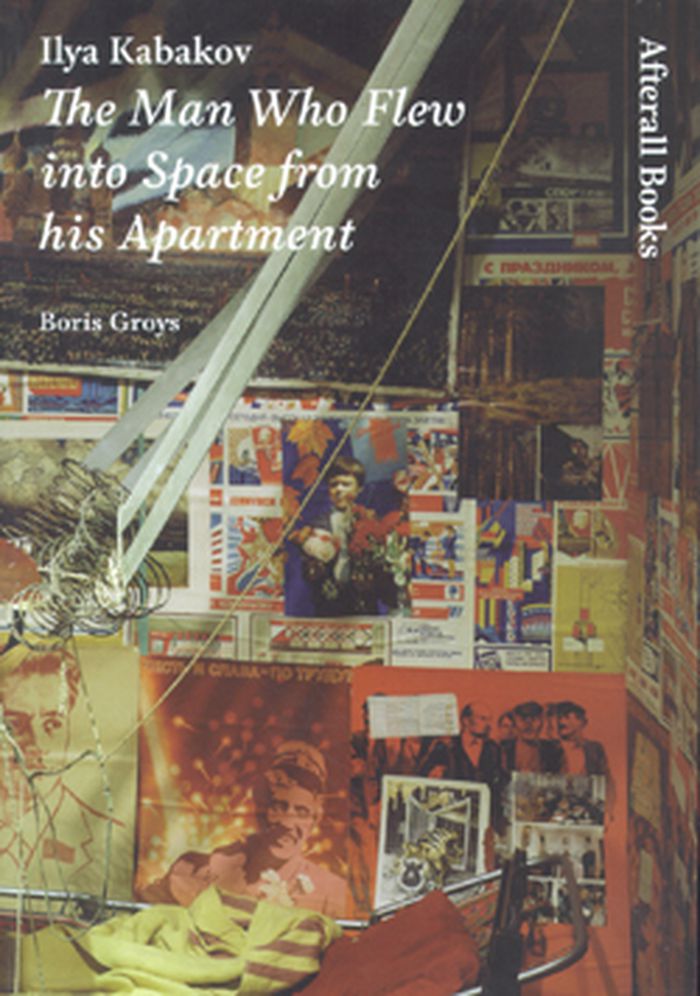
The fictitious hero of this 1984 installation is a lonely dreamer who develops an impossible project: to fly alone in cosmic space. But this dream is also an individual appropriation of a collective Soviet project and the official Soviet propaganda connected to it. Having built a makeshift slingshot, the hero apparently flies through the ceiling of his shabby room and vanishes into space. The miserable room and the primitive slingshot suggest the reality behind the Soviet utopia, in which where cosmic vision and the political project of the Communist revolution are seen as indissoluble. The Man who Flew into Space from His Apartment also raises questions of authorship in modernity. All of Kabakov's work is made in the name of other, fictitious artists. This reveals a hidden rule of the modern art system: only an artist who doesn't want to be an artist or who doesn't even know that he is an artist is a real artist—just as only an artwork that does not look like an artwork is a real artwork. The installation is a narrative, the documentation of a fictitious event. Boris Groys is Professor of Philosophy and Art Theory at the Academy for Design in Karlsruhe, Germany, and Global Professor at New York University.
Ilka Kabakov: the man who flew into space from his apartment
Actions:
Price:
$18.95
(available to order)
Summary:
The fictitious hero of this 1984 installation is a lonely dreamer who develops an impossible project: to fly alone in cosmic space. But this dream is also an individual appropriation of a collective Soviet project and the official Soviet propaganda connected to it. Having built a makeshift slingshot, the hero apparently flies through the ceiling of his shabby room and vanishes into space. The miserable room and the primitive slingshot suggest the reality behind the Soviet utopia, in which where cosmic vision and the political project of the Communist revolution are seen as indissoluble. The Man who Flew into Space from His Apartment also raises questions of authorship in modernity. All of Kabakov's work is made in the name of other, fictitious artists. This reveals a hidden rule of the modern art system: only an artist who doesn't want to be an artist or who doesn't even know that he is an artist is a real artist—just as only an artwork that does not look like an artwork is a real artwork. The installation is a narrative, the documentation of a fictitious event. Boris Groys is Professor of Philosophy and Art Theory at the Academy for Design in Karlsruhe, Germany, and Global Professor at New York University.
Form:
books
books
Publication:
May 2006, London
May 2006, London
Subject:
Art Theory
Art Theory
Form:
books
books
Title:
6,000 years of housing
6,000 years of housing
Actions:
Price:
$54.00
(available to order)
Summary:
Part architecture, part history, and part anthropology, this encyclopedic book limns the story of housing around the world from the pre-urban dwellings of nomadic, semi-nomadic, and sedentary agricultural societies to the present. Ancient urban dwellings were inward-looking, ranged around a courtyard. Until fairly recently, these dwelling types survived in indigenous(...)
$54.00
(available to order)
Summary:
Part architecture, part history, and part anthropology, this encyclopedic book limns the story of housing around the world from the pre-urban dwellings of nomadic, semi-nomadic, and sedentary agricultural societies to the present. Ancient urban dwellings were inward-looking, ranged around a courtyard. Until fairly recently, these dwelling types survived in indigenous(...)
Title:
6,000 years of housing
Actions:
Price:
$54.00
(available to order)
Summary:
Part architecture, part history, and part anthropology, this encyclopedic book limns the story of housing around the world from the pre-urban dwellings of nomadic, semi-nomadic, and sedentary agricultural societies to the present. Ancient urban dwellings were inward-looking, ranged around a courtyard. Until fairly recently, these dwelling types survived in indigenous urban house forms in the Islamic world, India, China, and the Iberian peninsula and Latin America. After the collapse of the Roman Empire, however, outward-looking house forms replaced the ancient form in most of Europe and the New World. In the Middle Ages houses served both as homes and as places of work, but gradually the domestic and business lives of the inhabitants became separate. In the wake of the Industrial Revolution, profound changes in the residential development of the western world occurred: housing became segregated along socioeconomic lines and dwelling types polarized, with low-density, single-family houses at one extreme, and tall, high-density, multifamily tenements and apartments at the other. Side effects of America’s automobile-intensive suburban dream housing include inefficient land use, pollution, and urban decay. "6,000 Years of Housing" chronicles how this came about, and suggests solutions based on a rich variety of historical precedents.
6,000 years of housing
Actions:
Price:
$54.00
(available to order)
Summary:
Part architecture, part history, and part anthropology, this encyclopedic book limns the story of housing around the world from the pre-urban dwellings of nomadic, semi-nomadic, and sedentary agricultural societies to the present. Ancient urban dwellings were inward-looking, ranged around a courtyard. Until fairly recently, these dwelling types survived in indigenous urban house forms in the Islamic world, India, China, and the Iberian peninsula and Latin America. After the collapse of the Roman Empire, however, outward-looking house forms replaced the ancient form in most of Europe and the New World. In the Middle Ages houses served both as homes and as places of work, but gradually the domestic and business lives of the inhabitants became separate. In the wake of the Industrial Revolution, profound changes in the residential development of the western world occurred: housing became segregated along socioeconomic lines and dwelling types polarized, with low-density, single-family houses at one extreme, and tall, high-density, multifamily tenements and apartments at the other. Side effects of America’s automobile-intensive suburban dream housing include inefficient land use, pollution, and urban decay. "6,000 Years of Housing" chronicles how this came about, and suggests solutions based on a rich variety of historical precedents.
Form:
books
books
Publication:
July 2003, New York
July 2003, New York
Subject:
Collective Housing
Collective Housing
Form:
books
books
Actions:
Price:
$31.50
(available to order)
Summary:
A manifesto for a radically different philosophy and practice of manufacture and environmentalism. "Reduce, reuse, recycle" urge environmentalists; in other words, do more with less in order to minimize damage. As William McDonough and Michael Braungart argue in their provocative, visionary book, however, this approach perpetuates a one-way, "cradle to grave"(...)
$31.50
(available to order)
Summary:
A manifesto for a radically different philosophy and practice of manufacture and environmentalism. "Reduce, reuse, recycle" urge environmentalists; in other words, do more with less in order to minimize damage. As William McDonough and Michael Braungart argue in their provocative, visionary book, however, this approach perpetuates a one-way, "cradle to grave"(...)
Subject:
Green Architecture
Green Architecture
Publication:
January 1900, New York
January 1900, New York
Title:
Cradle to cradle : remaking the way we make things
Actions:
Price:
$31.50
(available to order)
Summary:
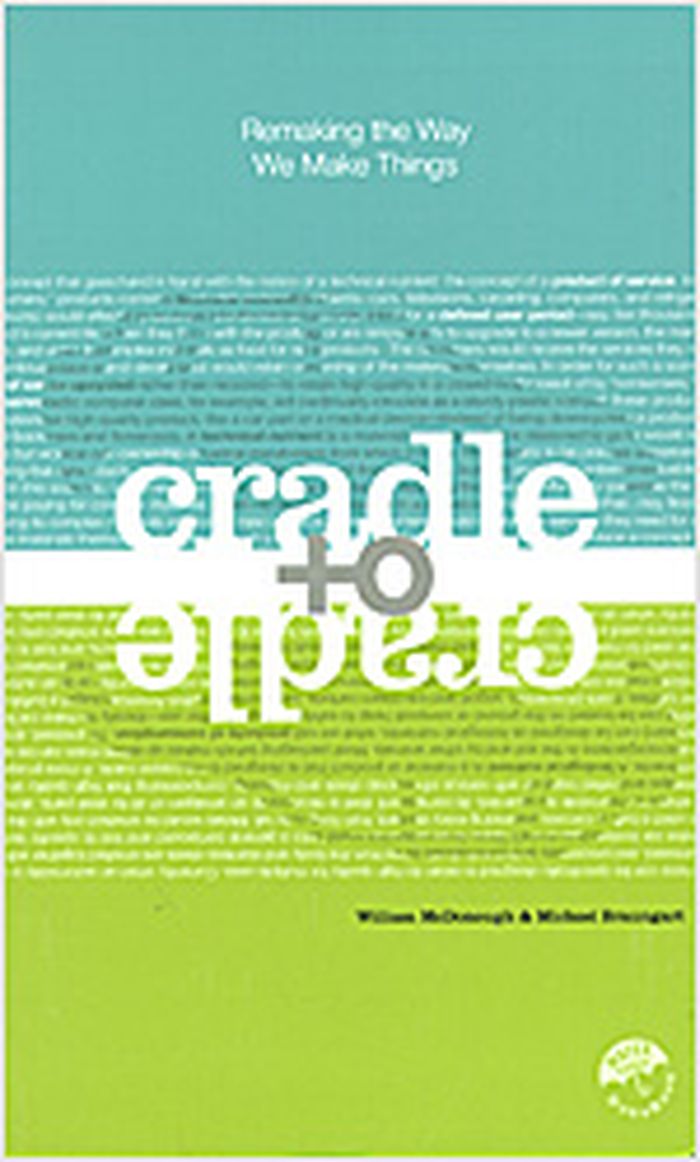
A manifesto for a radically different philosophy and practice of manufacture and environmentalism. "Reduce, reuse, recycle" urge environmentalists; in other words, do more with less in order to minimize damage. As William McDonough and Michael Braungart argue in their provocative, visionary book, however, this approach perpetuates a one-way, "cradle to grave" manufacturing model that dates to the industrial revolution and casts off as much as 90 percent of the materials it uses as waste, much of it toxic. Why not challenge the notion that human industry must inevitably damage the natural world, they ask. In fact, why not take nature itself as our model? A tree produces thousands of blossoms in order to create another tree, yet we do not consider its abundance wasteful but safe, beautiful, and highly effective; hence, "waste equals food" is the first principle the book sets forth. Products might be designed so that, after their useful life, they provide nourishment for something new-either as "biological nutrients" that safely re-enter the environment or as "technical nutrients" that circulate within closed-loop industrial cycles, without being "downcycled" into low-grade uses (as most "recyclables" now are). Elaborating their principles from experience (re)designing everything from carpeting to corporate campuses, the authors make an exciting and viable case for change.
Cradle to cradle : remaking the way we make things
Actions:
Price:
$31.50
(available to order)
Summary:
A manifesto for a radically different philosophy and practice of manufacture and environmentalism. "Reduce, reuse, recycle" urge environmentalists; in other words, do more with less in order to minimize damage. As William McDonough and Michael Braungart argue in their provocative, visionary book, however, this approach perpetuates a one-way, "cradle to grave" manufacturing model that dates to the industrial revolution and casts off as much as 90 percent of the materials it uses as waste, much of it toxic. Why not challenge the notion that human industry must inevitably damage the natural world, they ask. In fact, why not take nature itself as our model? A tree produces thousands of blossoms in order to create another tree, yet we do not consider its abundance wasteful but safe, beautiful, and highly effective; hence, "waste equals food" is the first principle the book sets forth. Products might be designed so that, after their useful life, they provide nourishment for something new-either as "biological nutrients" that safely re-enter the environment or as "technical nutrients" that circulate within closed-loop industrial cycles, without being "downcycled" into low-grade uses (as most "recyclables" now are). Elaborating their principles from experience (re)designing everything from carpeting to corporate campuses, the authors make an exciting and viable case for change.
Form:
books
books
Publication:
January 1900, New York
January 1900, New York
Subject:
Green Architecture
Green Architecture
Form:
books
books
Price:
$48.00
(available in store)
Summary:
Idealized representations of America, as both an aspiration and a menace, played an important role in shaping Russian architecture and urban design from the American Revolution until the fall of the Soviet Union. In Building a new New World, Jean-Louis Cohen traces the concept of “Amerikanizm” and its impact on Russia’s built environment from early czarist interest in(...)
$48.00
(available in store)
Summary:
Idealized representations of America, as both an aspiration and a menace, played an important role in shaping Russian architecture and urban design from the American Revolution until the fall of the Soviet Union. In Building a new New World, Jean-Louis Cohen traces the concept of “Amerikanizm” and its impact on Russia’s built environment from early czarist interest in(...)
Title:
Building a new New World: Amerikanizm in Russian Architecture
Actions:
Price:
$48.00
(available in store)
Summary:
Idealized representations of America, as both an aspiration and a menace, played an important role in shaping Russian architecture and urban design from the American Revolution until the fall of the Soviet Union. In Building a new New World, Jean-Louis Cohen traces the concept of “Amerikanizm” and its impact on Russia’s built environment from early czarist interest in Revolutionary America, through the spectacular World’s Fairs of the nineteenth century, to department stores, skyscrapers, and factories built in Russia using American methods during the twentieth century. Visions of America also captivated the Russian avant-garde, from El Lissitzky to Moisei Ginzburg, and Cohen explores the ongoing artistic dialogue maintained between the two countries at the mid-century and in the late Soviet era, when the Cold War induced a strategic competition. Tracing the many journeys of Russian writers, politicians, and planners through the American territory, foregrounding the constant streams of cultural and technological transfer from the U.S.A. to Russia, and revealing the parallel fascination among Russian and American intellectuals with the ongoing pursuit of land occupation and development within their respective borders, this study of Amerikanizm in the architecture and urban design of Russia makes a timely contribution to our understanding of modern architecture and its broader geopolitics.
Building a new New World: Amerikanizm in Russian Architecture
Actions:
Price:
$48.00
(available in store)
Summary:
Idealized representations of America, as both an aspiration and a menace, played an important role in shaping Russian architecture and urban design from the American Revolution until the fall of the Soviet Union. In Building a new New World, Jean-Louis Cohen traces the concept of “Amerikanizm” and its impact on Russia’s built environment from early czarist interest in Revolutionary America, through the spectacular World’s Fairs of the nineteenth century, to department stores, skyscrapers, and factories built in Russia using American methods during the twentieth century. Visions of America also captivated the Russian avant-garde, from El Lissitzky to Moisei Ginzburg, and Cohen explores the ongoing artistic dialogue maintained between the two countries at the mid-century and in the late Soviet era, when the Cold War induced a strategic competition. Tracing the many journeys of Russian writers, politicians, and planners through the American territory, foregrounding the constant streams of cultural and technological transfer from the U.S.A. to Russia, and revealing the parallel fascination among Russian and American intellectuals with the ongoing pursuit of land occupation and development within their respective borders, this study of Amerikanizm in the architecture and urban design of Russia makes a timely contribution to our understanding of modern architecture and its broader geopolitics.
Form:
books
books
Publication:
December 2019
December 2019
Subject:
CCA Publications
CCA Publications
Form:
books
books
Actions:
Price:
$45.00
(available to order)
Summary:
In the dazzling global metropolis of Shanghai, what has it meant to call this city home? In this account—part microhistory, part memoir—Jie Li salvages intimate recollections by successive generations of inhabitants of two vibrant, culturally mixed Shanghai alleyways from the Republican, Maoist, and post-Mao eras. Exploring three dimensions of private life—territories,(...)
$45.00
(available to order)
Summary:
In the dazzling global metropolis of Shanghai, what has it meant to call this city home? In this account—part microhistory, part memoir—Jie Li salvages intimate recollections by successive generations of inhabitants of two vibrant, culturally mixed Shanghai alleyways from the Republican, Maoist, and post-Mao eras. Exploring three dimensions of private life—territories,(...)
Title:
Shanghai homes: palimpsests of private life
Actions:
Price:
$45.00
(available to order)
Summary:
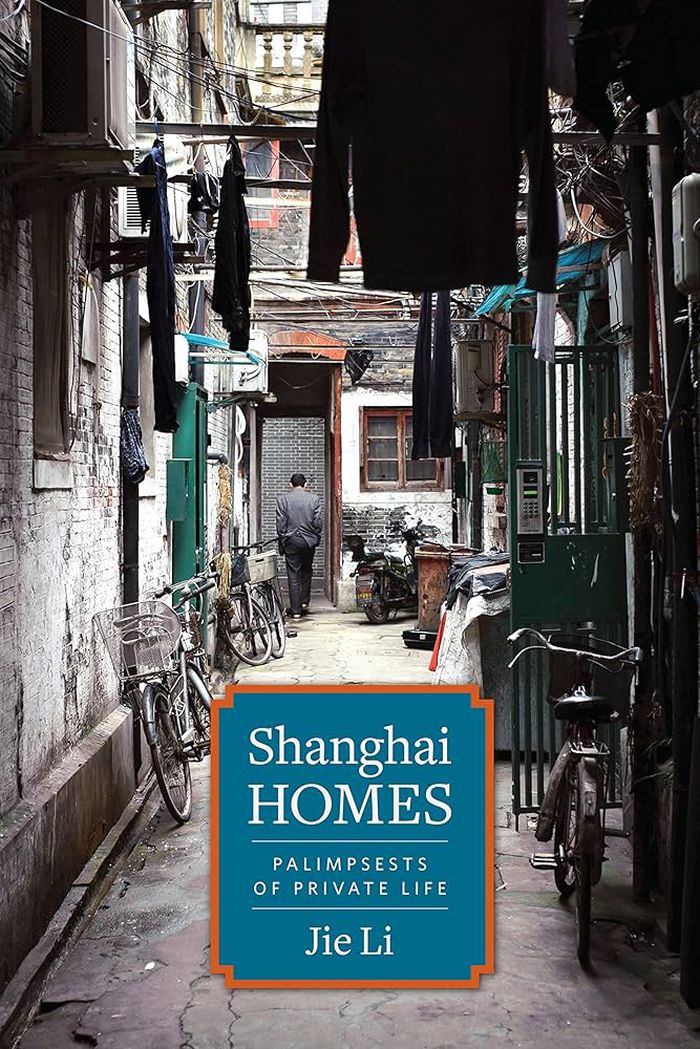
In the dazzling global metropolis of Shanghai, what has it meant to call this city home? In this account—part microhistory, part memoir—Jie Li salvages intimate recollections by successive generations of inhabitants of two vibrant, culturally mixed Shanghai alleyways from the Republican, Maoist, and post-Mao eras. Exploring three dimensions of private life—territories, artifacts, and gossip—Li re-creates the sounds, smells, look, and feel of home over a tumultuous century. First built by British and Japanese companies in 1915 and 1927, the two homes at the center of this narrative were located in an industrial part of the former "International Settlement." Before their recent demolition, they were nestled in Shanghai's labyrinthine alleyways, which housed more than half of the city's population from the Sino-Japanese War to the Cultural Revolution. Through interviews with her own family members as well as their neighbors, classmates, and co-workers, Li weaves a complex social tapestry reflecting the lived experiences of ordinary people struggling to absorb and adapt to major historical change. These voices include workers, intellectuals, Communists, Nationalists, foreigners, compradors, wives, concubines, and children who all fought for a foothold and haven in this city, witnessing spectacles so full of farce and pathos they could only be whispered as secret histories.
Shanghai homes: palimpsests of private life
Actions:
Price:
$45.00
(available to order)
Summary:
In the dazzling global metropolis of Shanghai, what has it meant to call this city home? In this account—part microhistory, part memoir—Jie Li salvages intimate recollections by successive generations of inhabitants of two vibrant, culturally mixed Shanghai alleyways from the Republican, Maoist, and post-Mao eras. Exploring three dimensions of private life—territories, artifacts, and gossip—Li re-creates the sounds, smells, look, and feel of home over a tumultuous century. First built by British and Japanese companies in 1915 and 1927, the two homes at the center of this narrative were located in an industrial part of the former "International Settlement." Before their recent demolition, they were nestled in Shanghai's labyrinthine alleyways, which housed more than half of the city's population from the Sino-Japanese War to the Cultural Revolution. Through interviews with her own family members as well as their neighbors, classmates, and co-workers, Li weaves a complex social tapestry reflecting the lived experiences of ordinary people struggling to absorb and adapt to major historical change. These voices include workers, intellectuals, Communists, Nationalists, foreigners, compradors, wives, concubines, and children who all fought for a foothold and haven in this city, witnessing spectacles so full of farce and pathos they could only be whispered as secret histories.
Form:
books
books
Publication:
April 2015
April 2015
Subject:
Contemporary Asian Architecture
Contemporary Asian Architecture
Form:
books
books
Title:
The Bauhaus: #itsalldesign
The Bauhaus: #itsalldesign
Actions:
Price:
$95.00
(available to order)
Summary:
This volume offers a comprehensive overview of the extended concept of design that was initiated at the Bauhaus. Alongside rare exhibits from design, architecture, art, film and photography--some of which have never previously been published--the book documents the development processes as well as the socio-political concepts behind the Bauhaus. To underline their(...)
$95.00
(available to order)
Summary:
This volume offers a comprehensive overview of the extended concept of design that was initiated at the Bauhaus. Alongside rare exhibits from design, architecture, art, film and photography--some of which have never previously been published--the book documents the development processes as well as the socio-political concepts behind the Bauhaus. To underline their(...)
Title:
The Bauhaus: #itsalldesign
Actions:
Price:
$95.00
(available to order)
Summary:
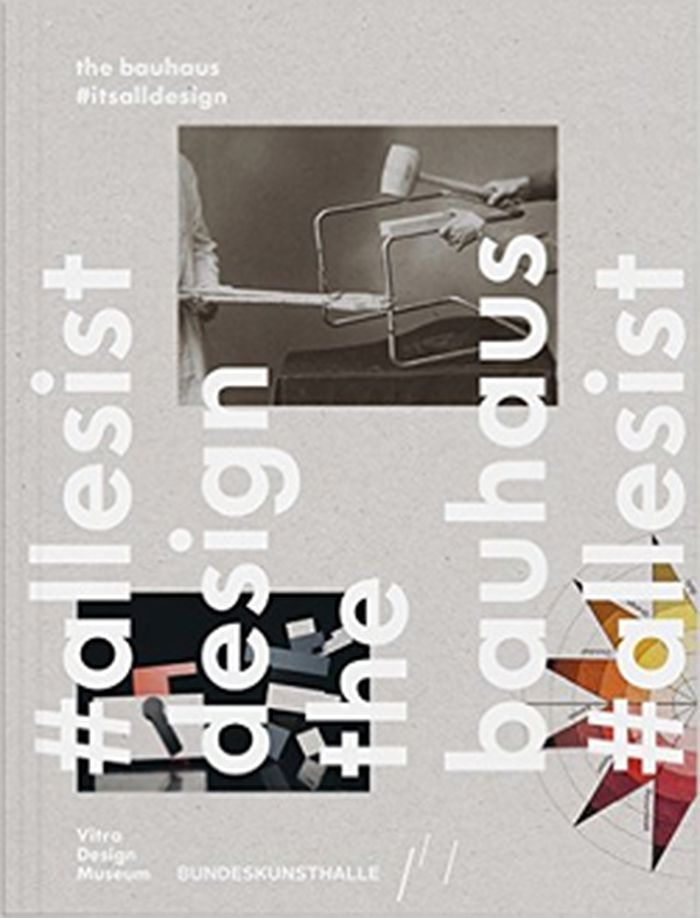
This volume offers a comprehensive overview of the extended concept of design that was initiated at the Bauhaus. Alongside rare exhibits from design, architecture, art, film and photography--some of which have never previously been published--the book documents the development processes as well as the socio-political concepts behind the Bauhaus. To underline their relevance for today's creative practice, these ideas are contrasted to current themes in design such as the digital revolution, and the works of numerous present-day artists and designers. The lavishly illustrated publication features essays by renowned authors such as Arthur Rüegg and Jan Boelen, a glossary of the basic ideas behind design at the Bauhaus, as well as a detailed catalogue section. Among others, Olaf Nicolai, Adrian Sauer, Wilfried Kühn and Joseph Grima have created artistic works on the topic especially for the exhibition. Numerous short articles by distinguished designers, artists and architects from all over the world, who, with their ideas, projects and theories reflect on the topicality of the Bauhaus and its influence on 21st-century design, form part of this new and contemporary look at the movement. With works by Josef Albers, Marcel Breuer, Walter Gropius, Marianne Brandt, Wassily Kandinsky, Ludwig Mies van der Rohe, Herbert Bayer and many others.
The Bauhaus: #itsalldesign
Actions:
Price:
$95.00
(available to order)
Summary:
This volume offers a comprehensive overview of the extended concept of design that was initiated at the Bauhaus. Alongside rare exhibits from design, architecture, art, film and photography--some of which have never previously been published--the book documents the development processes as well as the socio-political concepts behind the Bauhaus. To underline their relevance for today's creative practice, these ideas are contrasted to current themes in design such as the digital revolution, and the works of numerous present-day artists and designers. The lavishly illustrated publication features essays by renowned authors such as Arthur Rüegg and Jan Boelen, a glossary of the basic ideas behind design at the Bauhaus, as well as a detailed catalogue section. Among others, Olaf Nicolai, Adrian Sauer, Wilfried Kühn and Joseph Grima have created artistic works on the topic especially for the exhibition. Numerous short articles by distinguished designers, artists and architects from all over the world, who, with their ideas, projects and theories reflect on the topicality of the Bauhaus and its influence on 21st-century design, form part of this new and contemporary look at the movement. With works by Josef Albers, Marcel Breuer, Walter Gropius, Marianne Brandt, Wassily Kandinsky, Ludwig Mies van der Rohe, Herbert Bayer and many others.
Form:
books
books
Publication:
October 2015
October 2015
Subject:
Modernism
Modernism
Form:
books
books
Actions:
Price:
$50.00
(available to order)
Summary:
Beneath the veneer of a very successful China that the world readily acknowledges, a quiet revolution is taking place within the realms of architecture and the city. The social, architectural and urban theories documented in this book are organized around the established canons of social actions – from mobilizing, laboring, resisting and mediating, to networking,(...)
$50.00
(available to order)
Summary:
Beneath the veneer of a very successful China that the world readily acknowledges, a quiet revolution is taking place within the realms of architecture and the city. The social, architectural and urban theories documented in this book are organized around the established canons of social actions – from mobilizing, laboring, resisting and mediating, to networking,(...)
Title:
The social imperative: Architecture and the city in China
Actions:
Price:
$50.00
(available to order)
Summary:
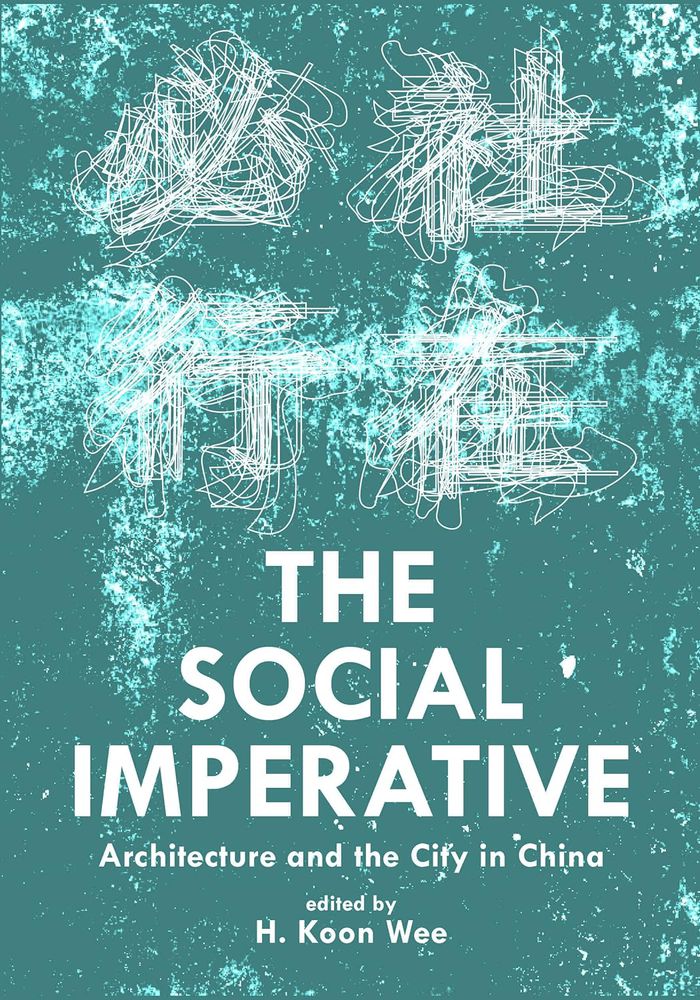
Beneath the veneer of a very successful China that the world readily acknowledges, a quiet revolution is taking place within the realms of architecture and the city. The social, architectural and urban theories documented in this book are organized around the established canons of social actions – from mobilizing, laboring, resisting and mediating, to networking, controlling, rationalizing and aestheticizing. This book aims to put the social agenda squarely back in the rapid development of the built environment in China. This publication is the culmination of a three-year study of social issues in the architecture and cities of China. It involved visits to sites undergoing massive change, discussions and debates among architects and critics, reflections by practitioners about their own work, and activists lobbying for social change. Supported by the non-profit AA Asia, the edition of the contents relied heavily on original input and exchanges between architects and theorists committed to China, from Asia and beyond. Since the 1990s, AA Asia remains one of a few unique think tanks committed to the study of architecture and cities in Asia. As an advocacy with strong academic roots, it seeks to establish the differences across various postcolonial and Asian contexts, and recalibrate the role of architecture in a technocratic era dominated by the global economy.
The social imperative: Architecture and the city in China
Actions:
Price:
$50.00
(available to order)
Summary:
Beneath the veneer of a very successful China that the world readily acknowledges, a quiet revolution is taking place within the realms of architecture and the city. The social, architectural and urban theories documented in this book are organized around the established canons of social actions – from mobilizing, laboring, resisting and mediating, to networking, controlling, rationalizing and aestheticizing. This book aims to put the social agenda squarely back in the rapid development of the built environment in China. This publication is the culmination of a three-year study of social issues in the architecture and cities of China. It involved visits to sites undergoing massive change, discussions and debates among architects and critics, reflections by practitioners about their own work, and activists lobbying for social change. Supported by the non-profit AA Asia, the edition of the contents relied heavily on original input and exchanges between architects and theorists committed to China, from Asia and beyond. Since the 1990s, AA Asia remains one of a few unique think tanks committed to the study of architecture and cities in Asia. As an advocacy with strong academic roots, it seeks to establish the differences across various postcolonial and Asian contexts, and recalibrate the role of architecture in a technocratic era dominated by the global economy.
Form:
books
books
Publication:
September 2017
September 2017
Subject:
Current Exhibitions
Current Exhibitions
Form:
books
books
Title:
In a human voice
In a human voice
Actions:
Price:
$17.95
(available to order)
Summary:
Carol Gilligan’s landmark book ''In a different voice'' – the ''little book that started a revolution'' – brought women’s voices to the fore in work on the self and moral development, enabling women to be heard in their own right, and with their own integrity, for the first time. Forty years later, Gilligan returns to the subject matter of her classic book,(...)
$17.95
(available to order)
Summary:
Carol Gilligan’s landmark book ''In a different voice'' – the ''little book that started a revolution'' – brought women’s voices to the fore in work on the self and moral development, enabling women to be heard in their own right, and with their own integrity, for the first time. Forty years later, Gilligan returns to the subject matter of her classic book,(...)
Title:
In a human voice
Actions:
Price:
$17.95
(available to order)
Summary:
Carol Gilligan’s landmark book ''In a different voice'' – the ''little book that started a revolution'' – brought women’s voices to the fore in work on the self and moral development, enabling women to be heard in their own right, and with their own integrity, for the first time. Forty years later, Gilligan returns to the subject matter of her classic book, re-examining its central arguments and concerns from the vantage point of the present. Thanks to the work that she and others have done in recent decades, it is now possible to clarify and articulate what couldn’t quite be seen or said at the time of the original publication: that the ''different voice'' (of care ethics), although initially heard as a ''feminine'' voice, is in fact a human voice; that the voice it differs from is a patriarchal voice (bound to gender binaries and hierarchies); and that where patriarchy is in force or enforced, the human voice is a voice of resistance, and care ethics is an ethics of liberation. While gender is central to the story Gilligan tells, this is not a story about gender: it is a human story. With this clarification, it becomes evident why ''In a different voice'' continues to resonate strongly with people’s experience and, perhaps more crucially, why the different voice is a voice for the 21st century.
In a human voice
Actions:
Price:
$17.95
(available to order)
Summary:
Carol Gilligan’s landmark book ''In a different voice'' – the ''little book that started a revolution'' – brought women’s voices to the fore in work on the self and moral development, enabling women to be heard in their own right, and with their own integrity, for the first time. Forty years later, Gilligan returns to the subject matter of her classic book, re-examining its central arguments and concerns from the vantage point of the present. Thanks to the work that she and others have done in recent decades, it is now possible to clarify and articulate what couldn’t quite be seen or said at the time of the original publication: that the ''different voice'' (of care ethics), although initially heard as a ''feminine'' voice, is in fact a human voice; that the voice it differs from is a patriarchal voice (bound to gender binaries and hierarchies); and that where patriarchy is in force or enforced, the human voice is a voice of resistance, and care ethics is an ethics of liberation. While gender is central to the story Gilligan tells, this is not a story about gender: it is a human story. With this clarification, it becomes evident why ''In a different voice'' continues to resonate strongly with people’s experience and, perhaps more crucially, why the different voice is a voice for the 21st century.
Form:
books
books
Publication:
September 2023
September 2023
Subject:
Gender Theory in Architecture
Gender Theory in Architecture
Form:
books
books
Actions:
Price:
$49.95
(available to order)
Summary:
Over the past decade, a seismic shift in economic and political forces has transformed life in the second-largest city on the West Coast, situated at the most heavily trafficked international border crossing in the world. Tijuana’s newfound wealth and haphazard expansion have changed patterns of migration for the city’s many artists, who once routinely moved north to Los(...)
$49.95
(available to order)
Summary:
Over the past decade, a seismic shift in economic and political forces has transformed life in the second-largest city on the West Coast, situated at the most heavily trafficked international border crossing in the world. Tijuana’s newfound wealth and haphazard expansion have changed patterns of migration for the city’s many artists, who once routinely moved north to Los(...)
Title:
Strange new world : art and design from Tijuana
Actions:
Price:
$49.95
(available to order)
Summary:
Over the past decade, a seismic shift in economic and political forces has transformed life in the second-largest city on the West Coast, situated at the most heavily trafficked international border crossing in the world. Tijuana’s newfound wealth and haphazard expansion have changed patterns of migration for the city’s many artists, who once routinely moved north to Los Angeles but are now staying or returning, and being joined by friends from Mexico City and beyond. This flourishing, strengthening artistic community has responded to the city’s accelerated evolution with a broad range of work, from painting to conceptually driven installations; from street-level digital video to ambitious photo-documentation, filmmaking and political work; from architectural proposals to product design associated with the "Nortec" musical movement. The work gathered in "Strange new world" embraces Tijuana as a paradigm of a new postmodern form of urbanization shaped by the pressures of economic globalization and cultural transnationalism since 1994. It struggles to make sense of new realities changing the ways in which people live in cities around the globe. Like Aldous Huxley's Brave New World, it is part science fiction, part political commentary and part artistic revolution and cultural critique. Arranged around the concepts of the urban theorist Michael Smith, it features work by ERRE, Einar and Jamex de la Torre and Yvonne Venegas, among others.
Strange new world : art and design from Tijuana
Actions:
Price:
$49.95
(available to order)
Summary:
Over the past decade, a seismic shift in economic and political forces has transformed life in the second-largest city on the West Coast, situated at the most heavily trafficked international border crossing in the world. Tijuana’s newfound wealth and haphazard expansion have changed patterns of migration for the city’s many artists, who once routinely moved north to Los Angeles but are now staying or returning, and being joined by friends from Mexico City and beyond. This flourishing, strengthening artistic community has responded to the city’s accelerated evolution with a broad range of work, from painting to conceptually driven installations; from street-level digital video to ambitious photo-documentation, filmmaking and political work; from architectural proposals to product design associated with the "Nortec" musical movement. The work gathered in "Strange new world" embraces Tijuana as a paradigm of a new postmodern form of urbanization shaped by the pressures of economic globalization and cultural transnationalism since 1994. It struggles to make sense of new realities changing the ways in which people live in cities around the globe. Like Aldous Huxley's Brave New World, it is part science fiction, part political commentary and part artistic revolution and cultural critique. Arranged around the concepts of the urban theorist Michael Smith, it features work by ERRE, Einar and Jamex de la Torre and Yvonne Venegas, among others.
Form:
books
books
Publication:
August 2006, La Jolla
August 2006, La Jolla
Subject:
Contemporary Art Monographs
Contemporary Art Monographs
Form:
books
books
Title:
Hannah Höch album
Hannah Höch album
Actions:
Price:
$91.00
(available to order)
Summary:
As one of the protagonists of the Berlin Dada movement, Hannah Höch railed against tradition and conservatism in 1920s Germany. Höch and such cohorts as George Grosz and Raoul Hausmann raised anarchic revolution through cutting photomontage, nonsensical performance, and biting visual satire. A singular and important work in the artist's oeuvre is the so-called(...)
$91.00
(available to order)
Summary:
As one of the protagonists of the Berlin Dada movement, Hannah Höch railed against tradition and conservatism in 1920s Germany. Höch and such cohorts as George Grosz and Raoul Hausmann raised anarchic revolution through cutting photomontage, nonsensical performance, and biting visual satire. A singular and important work in the artist's oeuvre is the so-called(...)
Title:
Hannah Höch album
Actions:
Price:
$91.00
(available to order)
Summary:
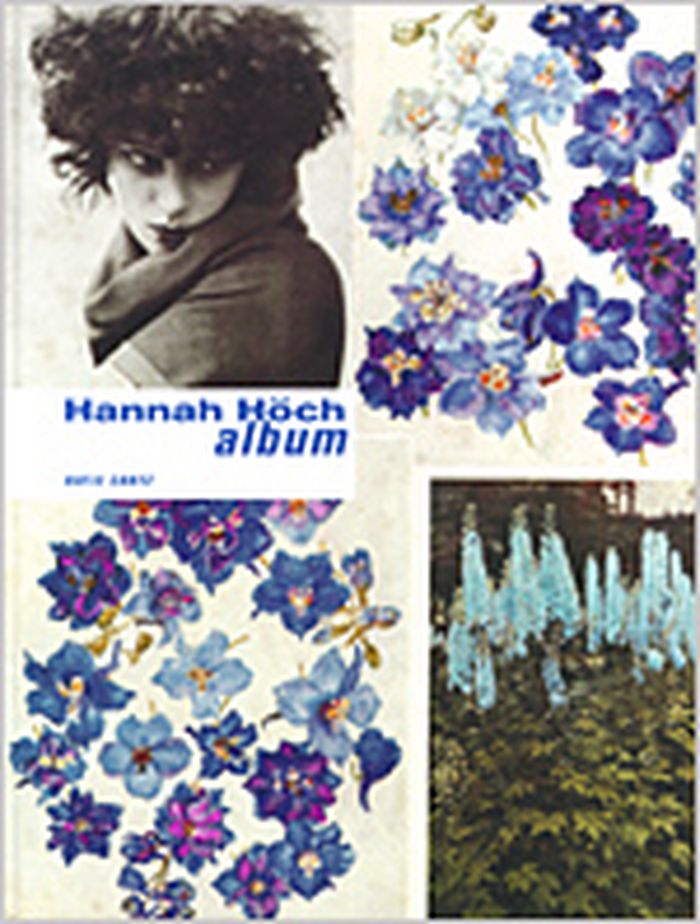
As one of the protagonists of the Berlin Dada movement, Hannah Höch railed against tradition and conservatism in 1920s Germany. Höch and such cohorts as George Grosz and Raoul Hausmann raised anarchic revolution through cutting photomontage, nonsensical performance, and biting visual satire. A singular and important work in the artist's oeuvre is the so-called "Sammelalbum," which she produced and pasted together from found imagery for her own pleasure and use, circa 1933. In it, she arranged a choice selection of newspaper and magazine photographs cut from popular German magazines of the time, such as the Berliner Illustrirte and Der Dame. A diverse, allusive group of images they are, representing everything from her favorite film stars to oddly captured animals and toy dolls, nudes, landscapes, scenic travel vistas, and synchronized dancers. By combining the collected pictures in continuous and sometimes contradictory sequences and double-page spreads, Höch created startling and often jarring photo collages. Never before published, Album can be considered to represent a heretofore unknown aspect of Höch's work, since its style of collage differs strongly from her well-known photomontages. This publication presents the entire Album in an exquisite facsimile reproduction, maintaining the filmic quality of its order and layout. In an accompanying essay, Gunda Luyken considers the content and history of the Album, locating it in the wider context of Höch’s oeuvre.
Hannah Höch album
Actions:
Price:
$91.00
(available to order)
Summary:
As one of the protagonists of the Berlin Dada movement, Hannah Höch railed against tradition and conservatism in 1920s Germany. Höch and such cohorts as George Grosz and Raoul Hausmann raised anarchic revolution through cutting photomontage, nonsensical performance, and biting visual satire. A singular and important work in the artist's oeuvre is the so-called "Sammelalbum," which she produced and pasted together from found imagery for her own pleasure and use, circa 1933. In it, she arranged a choice selection of newspaper and magazine photographs cut from popular German magazines of the time, such as the Berliner Illustrirte and Der Dame. A diverse, allusive group of images they are, representing everything from her favorite film stars to oddly captured animals and toy dolls, nudes, landscapes, scenic travel vistas, and synchronized dancers. By combining the collected pictures in continuous and sometimes contradictory sequences and double-page spreads, Höch created startling and often jarring photo collages. Never before published, Album can be considered to represent a heretofore unknown aspect of Höch's work, since its style of collage differs strongly from her well-known photomontages. This publication presents the entire Album in an exquisite facsimile reproduction, maintaining the filmic quality of its order and layout. In an accompanying essay, Gunda Luyken considers the content and history of the Album, locating it in the wider context of Höch’s oeuvre.
Form:
books
books
Publication:
February 2004, Ostfildern
February 2004, Ostfildern
Subject:
Photography monographs
Photography monographs


