


2692 Results
Form:
books
books
Title:
The ruins lesson
The ruins lesson
Actions:
Price:
$48.95
(available in store)
Summary:
How have ruins become so valued in Western culture and so central to our art and literature? Covering a vast chronological and geographical range, from ancient Egyptian inscriptions to twentieth-century memorials, Susan Stewart seeks to answer this question as she traces the appeal of ruins and ruins images, and the lessons that writers and artists have drawn from their(...)
$48.95
(available in store)
Summary:
How have ruins become so valued in Western culture and so central to our art and literature? Covering a vast chronological and geographical range, from ancient Egyptian inscriptions to twentieth-century memorials, Susan Stewart seeks to answer this question as she traces the appeal of ruins and ruins images, and the lessons that writers and artists have drawn from their(...)
Title:
The ruins lesson
Actions:
Price:
$48.95
(available in store)
Summary:
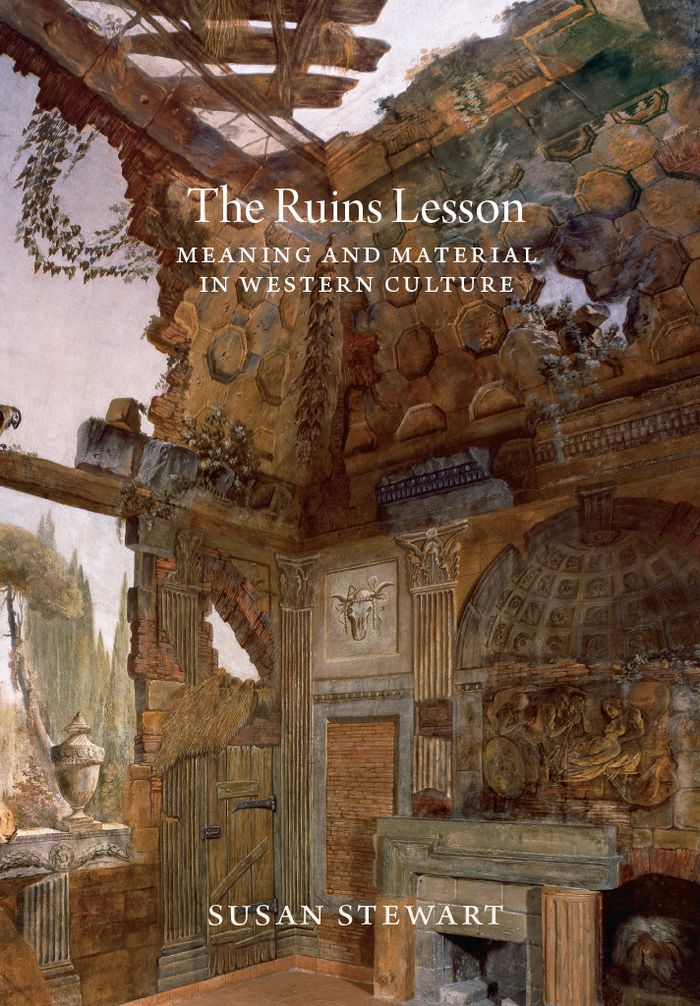
How have ruins become so valued in Western culture and so central to our art and literature? Covering a vast chronological and geographical range, from ancient Egyptian inscriptions to twentieth-century memorials, Susan Stewart seeks to answer this question as she traces the appeal of ruins and ruins images, and the lessons that writers and artists have drawn from their haunting forms. Stewart takes us on a sweeping journey through founding legends of broken covenants and original sin, the Christian appropriation of the classical past, and images of decay in early modern allegory. Stewart looks in depth at the works of Goethe, Piranesi, Blake, and Wordsworth, each of whom found in ruins a means of reinventing his art. "The ruins lesson" ultimately asks what can resist ruination—and finds in the self-transforming, ever-fleeting practices of language and thought a clue to what might truly endure.
The ruins lesson
Actions:
Price:
$48.95
(available in store)
Summary:
How have ruins become so valued in Western culture and so central to our art and literature? Covering a vast chronological and geographical range, from ancient Egyptian inscriptions to twentieth-century memorials, Susan Stewart seeks to answer this question as she traces the appeal of ruins and ruins images, and the lessons that writers and artists have drawn from their haunting forms. Stewart takes us on a sweeping journey through founding legends of broken covenants and original sin, the Christian appropriation of the classical past, and images of decay in early modern allegory. Stewart looks in depth at the works of Goethe, Piranesi, Blake, and Wordsworth, each of whom found in ruins a means of reinventing his art. "The ruins lesson" ultimately asks what can resist ruination—and finds in the self-transforming, ever-fleeting practices of language and thought a clue to what might truly endure.
Form:
books
books
Publication:
June 2021
June 2021
Subject:
Architectural Theory
Architectural Theory
Form:
books
books
Title:
Architecture and the sense in the Italian Renaissance: the varieties of architectural experience
Architecture and the sense in the Italian Renaissance: the varieties of architectural experience
Actions:
Price:
$114.95
(available in store)
Summary:
This is the first study of Renaissance architecture as an immersive, multisensory experience that combines historical analysis with the evidence of first-hand accounts. Questioning the universalizing claims of contemporary architectural phenomenologists, David Karmon emphasizes the infinite variety of meanings produced through human interactions with the built(...)
$114.95
(available in store)
Summary:
This is the first study of Renaissance architecture as an immersive, multisensory experience that combines historical analysis with the evidence of first-hand accounts. Questioning the universalizing claims of contemporary architectural phenomenologists, David Karmon emphasizes the infinite variety of meanings produced through human interactions with the built(...)
Title:
Architecture and the sense in the Italian Renaissance: the varieties of architectural experience
Actions:
Price:
$114.95
(available in store)
Summary:
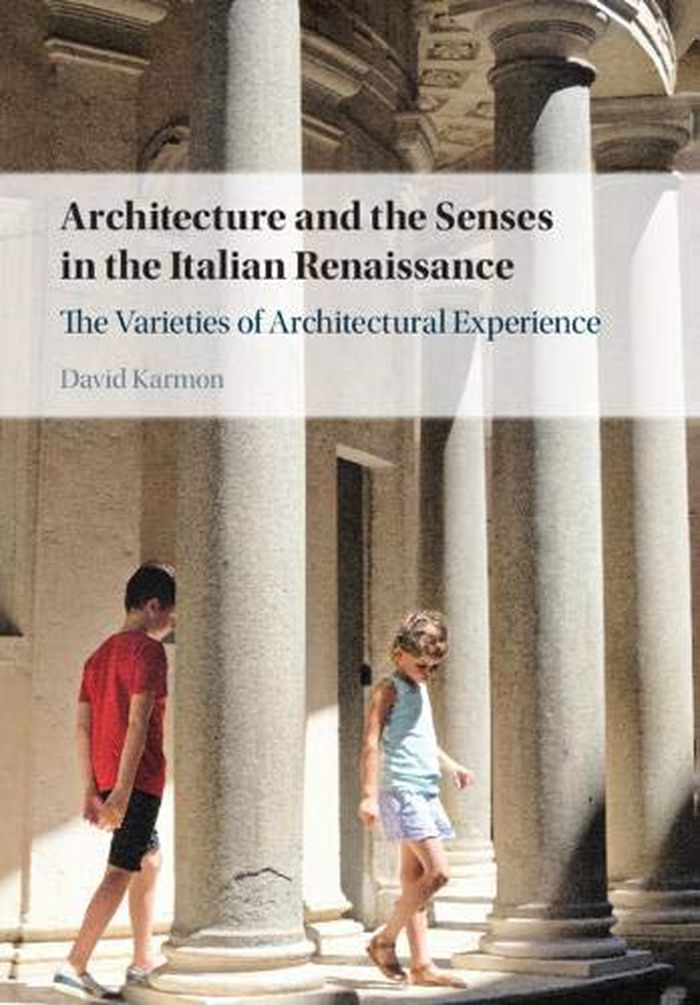
This is the first study of Renaissance architecture as an immersive, multisensory experience that combines historical analysis with the evidence of first-hand accounts. Questioning the universalizing claims of contemporary architectural phenomenologists, David Karmon emphasizes the infinite variety of meanings produced through human interactions with the built environment. His book draws upon the close study of literary and visual sources to prove that early modern audiences paid sustained attention to the multisensory experience of the buildings and cities in which they lived. Through reconstructing the Renaissance understanding of the senses, we can better gauge how constant interaction with the built environment shaped daily practices and contributed to new forms of understanding.'' Architecture and the senses in the Italian Renaissance'' offers a stimulating new approach to the study of Renaissance architecture and urbanism as a kind of ''experiential trigger'' that shaped ways of both thinking and being in the world.
Architecture and the sense in the Italian Renaissance: the varieties of architectural experience
Actions:
Price:
$114.95
(available in store)
Summary:
This is the first study of Renaissance architecture as an immersive, multisensory experience that combines historical analysis with the evidence of first-hand accounts. Questioning the universalizing claims of contemporary architectural phenomenologists, David Karmon emphasizes the infinite variety of meanings produced through human interactions with the built environment. His book draws upon the close study of literary and visual sources to prove that early modern audiences paid sustained attention to the multisensory experience of the buildings and cities in which they lived. Through reconstructing the Renaissance understanding of the senses, we can better gauge how constant interaction with the built environment shaped daily practices and contributed to new forms of understanding.'' Architecture and the senses in the Italian Renaissance'' offers a stimulating new approach to the study of Renaissance architecture and urbanism as a kind of ''experiential trigger'' that shaped ways of both thinking and being in the world.
Form:
books
books
Publication:
May 2021
May 2021
Subject:
History until 1900, Renaissance
History until 1900, Renaissance
Form:
books
books
Price:
$35.95
(available to order)
Summary:
Considered one of the most iconic and recognizable examples of mid-century modern homes in the world, it was first envisioned by the owners Buck and Carlotta Stahl, designed by architect Pierre Koenig, and immortalized by photographer Julius Shulman. The book shares the never-before-told inside story by the Stahl family's adult children who grew up there and still(...)
$35.95
(available to order)
Summary:
Considered one of the most iconic and recognizable examples of mid-century modern homes in the world, it was first envisioned by the owners Buck and Carlotta Stahl, designed by architect Pierre Koenig, and immortalized by photographer Julius Shulman. The book shares the never-before-told inside story by the Stahl family's adult children who grew up there and still(...)
Subject:
Residential Architecture
Residential Architecture
Publication:
November 2021
November 2021
Title:
The Stahl House: Case study house #22: The making of modernist icon
Actions:
Price:
$35.95
(available to order)
Summary:
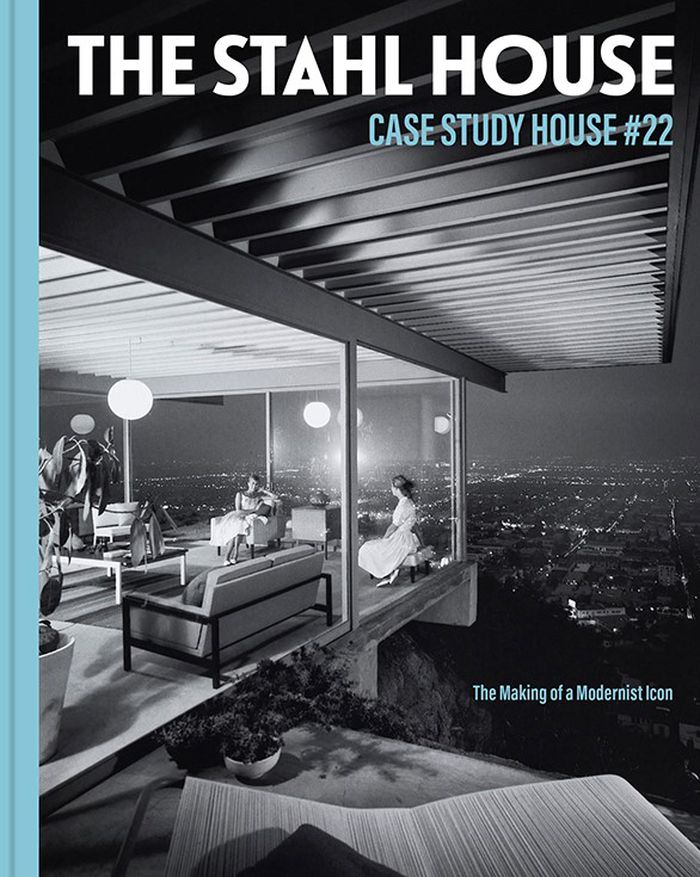
Considered one of the most iconic and recognizable examples of mid-century modern homes in the world, it was first envisioned by the owners Buck and Carlotta Stahl, designed by architect Pierre Koenig, and immortalized by photographer Julius Shulman. The book shares the never-before-told inside story by the Stahl family's adult children who grew up there and still graciously give home tours to fans from around the world. Through extensive research and interviews, historical information and personal photos are featured. This includes Buck Stahl's initial vision of the home with his own DIY schematic model for how to build on the complicated site. It also includes blueprints, floor plans, and sketches by Pierre Koenig, as well as Julius Shulman’s renowned photographs. Additionally, photographs of the house used in high-end, fashion ad campaigns and film and television are also included, cementing The Stahl House’s prominence in contemporary culture.
The Stahl House: Case study house #22: The making of modernist icon
Actions:
Price:
$35.95
(available to order)
Summary:
Considered one of the most iconic and recognizable examples of mid-century modern homes in the world, it was first envisioned by the owners Buck and Carlotta Stahl, designed by architect Pierre Koenig, and immortalized by photographer Julius Shulman. The book shares the never-before-told inside story by the Stahl family's adult children who grew up there and still graciously give home tours to fans from around the world. Through extensive research and interviews, historical information and personal photos are featured. This includes Buck Stahl's initial vision of the home with his own DIY schematic model for how to build on the complicated site. It also includes blueprints, floor plans, and sketches by Pierre Koenig, as well as Julius Shulman’s renowned photographs. Additionally, photographs of the house used in high-end, fashion ad campaigns and film and television are also included, cementing The Stahl House’s prominence in contemporary culture.
Form:
books
books
Publication:
November 2021
November 2021
Subject:
Residential Architecture
Residential Architecture
Form:
books
books
Title:
In pursuit of color. From fungi to fossil fuels: Uncovering the origins of the world's famous dyes
In pursuit of color. From fungi to fossil fuels: Uncovering the origins of the world's famous dyes
Actions:
Price:
$66.95
(available to order)
Summary:
Over the centuries our manipulation of the natural world has resulted in an explosion of synthetic dye production and application globally. To gain insight into the history of how folk practices have been lost and technical processes found, anthropologist and textile artist Lauren MacDonald explores a practice that is both ancient and wholly modern: coloring cloth. The(...)
$66.95
(available to order)
Summary:
Over the centuries our manipulation of the natural world has resulted in an explosion of synthetic dye production and application globally. To gain insight into the history of how folk practices have been lost and technical processes found, anthropologist and textile artist Lauren MacDonald explores a practice that is both ancient and wholly modern: coloring cloth. The(...)
Title:
In pursuit of color. From fungi to fossil fuels: Uncovering the origins of the world's famous dyes
Actions:
Price:
$66.95
(available to order)
Summary:
Over the centuries our manipulation of the natural world has resulted in an explosion of synthetic dye production and application globally. To gain insight into the history of how folk practices have been lost and technical processes found, anthropologist and textile artist Lauren MacDonald explores a practice that is both ancient and wholly modern: coloring cloth. The pursuit of color has long spurred economic and social contest, and through this deeply researched volume we explore the stories that the materials used to dye cloth tell us about our complex relationship to nature, our troubling ideas about progress and our understanding of power and labor. In Pursuit of Color: From Fungi to Fossil Fuels: Uncovering the Origins of the World's Most Famous Dyes brings together historic techniques, archive photography, specimens and present-day events to tell the histories of some of the world’s most important dyestuffs.
In pursuit of color. From fungi to fossil fuels: Uncovering the origins of the world's famous dyes
Actions:
Price:
$66.95
(available to order)
Summary:
Over the centuries our manipulation of the natural world has resulted in an explosion of synthetic dye production and application globally. To gain insight into the history of how folk practices have been lost and technical processes found, anthropologist and textile artist Lauren MacDonald explores a practice that is both ancient and wholly modern: coloring cloth. The pursuit of color has long spurred economic and social contest, and through this deeply researched volume we explore the stories that the materials used to dye cloth tell us about our complex relationship to nature, our troubling ideas about progress and our understanding of power and labor. In Pursuit of Color: From Fungi to Fossil Fuels: Uncovering the Origins of the World's Most Famous Dyes brings together historic techniques, archive photography, specimens and present-day events to tell the histories of some of the world’s most important dyestuffs.
Form:
books
books
Publication:
November 2022
November 2022
Subject:
Colour Theory and Design
Colour Theory and Design
Form:
journals and magazines
journals and magazines
Title:
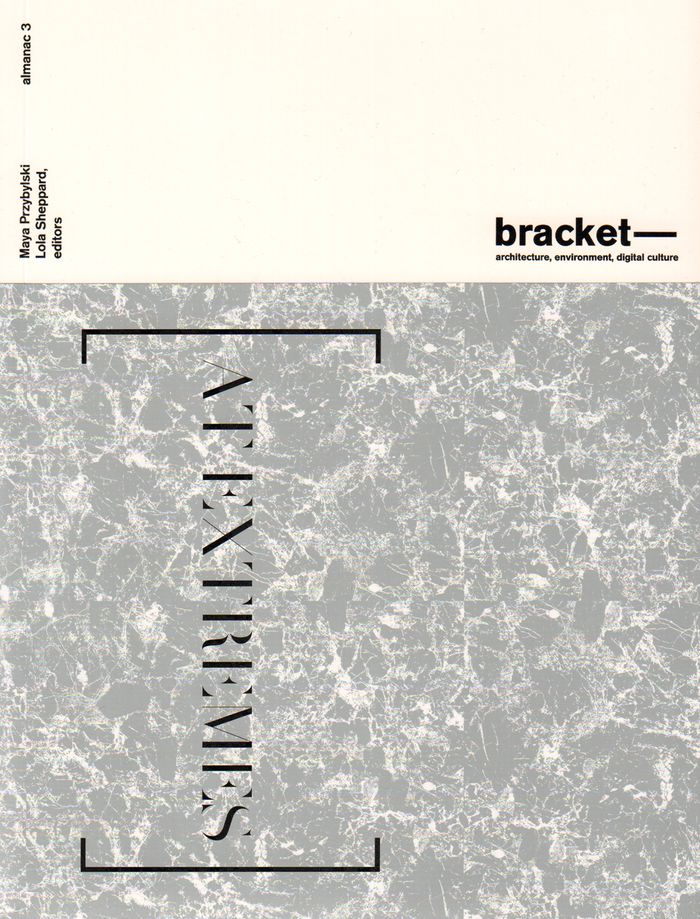
Bracket 3, At Extremes
Bracket 3, At Extremes
Actions:
Price:
$51.95
(available to order)
Summary:
"Bracket [at Extremes]" includes critical articles and unpublished design projects that investigate architecture, infrastructure and technology as they operate in conditions of imbalance, negotiate tipping points and test limit states. We are conditioned, as designers of the built environment, towards the organization of people, programs and movement. Indeed the history(...)
$51.95
(available to order)
Summary:
"Bracket [at Extremes]" includes critical articles and unpublished design projects that investigate architecture, infrastructure and technology as they operate in conditions of imbalance, negotiate tipping points and test limit states. We are conditioned, as designers of the built environment, towards the organization of people, programs and movement. Indeed the history(...)
Title:
Bracket 3, At Extremes
Actions:
Price:
$51.95
(available to order)
Summary:
"Bracket [at Extremes]" includes critical articles and unpublished design projects that investigate architecture, infrastructure and technology as they operate in conditions of imbalance, negotiate tipping points and test limit states. We are conditioned, as designers of the built environment, towards the organization of people, programs and movement. Indeed the history of modern urbanism, architecture and building science has been predicated on an anti-entropic notion of programmatic and social order. But are there scenarios in which a state of extremity or imbalance is productive? Bracket [at Extremes] seeks to understand what new spatial orders emerge in this liminal space. How might it be leveraged as an opportunity for invention? What are the limits of wilderness and control, of the natural and artificial, the real and the virtual? What new landscapes, networks, and urban models might emerge in the wake of destabilized economic, social and environmental conditions?
Bracket 3, At Extremes
Actions:
Price:
$51.95
(available to order)
Summary:
"Bracket [at Extremes]" includes critical articles and unpublished design projects that investigate architecture, infrastructure and technology as they operate in conditions of imbalance, negotiate tipping points and test limit states. We are conditioned, as designers of the built environment, towards the organization of people, programs and movement. Indeed the history of modern urbanism, architecture and building science has been predicated on an anti-entropic notion of programmatic and social order. But are there scenarios in which a state of extremity or imbalance is productive? Bracket [at Extremes] seeks to understand what new spatial orders emerge in this liminal space. How might it be leveraged as an opportunity for invention? What are the limits of wilderness and control, of the natural and artificial, the real and the virtual? What new landscapes, networks, and urban models might emerge in the wake of destabilized economic, social and environmental conditions?
Form:
journals and magazines
journals and magazines
Publication:
September 2016
September 2016
Subject:
Magazines
Magazines
Form:
books
books
Actions:
Price:
$49.95
(available to order)
Summary:
Traditional and modern design come together to form a sharp new aesthetic in Geometric Graphics, a collection that features the best of contemporary design utilizing geometric shapes. While it may be easy to take shapes like quadrilaterals, circles and even straight lines for granted, the projects in this volume show how designers can create fresh concepts with these(...)
$49.95
(available to order)
Summary:
Traditional and modern design come together to form a sharp new aesthetic in Geometric Graphics, a collection that features the best of contemporary design utilizing geometric shapes. While it may be easy to take shapes like quadrilaterals, circles and even straight lines for granted, the projects in this volume show how designers can create fresh concepts with these(...)
Title:
Geometric graphics: a visual celebration of simple forms
Actions:
Price:
$49.95
(available to order)
Summary:
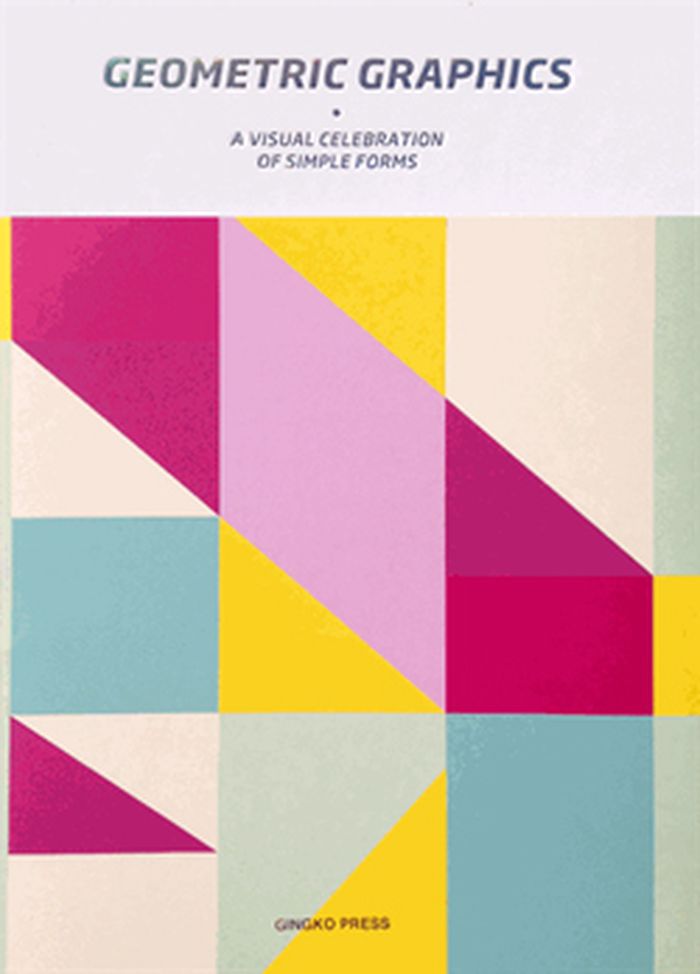
Traditional and modern design come together to form a sharp new aesthetic in Geometric Graphics, a collection that features the best of contemporary design utilizing geometric shapes. While it may be easy to take shapes like quadrilaterals, circles and even straight lines for granted, the projects in this volume show how designers can create fresh concepts with these seemingly rigid forms. The works in Geometric Graphics tap into the philosophy of geometry, allowing them a sense of timelessness despite the undeniably current feel of the designs; album covers, calendars, clothing lines, even packaging for canned fish are reworked with crisp, minimalist designs centering around timeless shapes that are used in visually fascinating new ways. With projects drawn from a multitude of brands and designers, Geometric Graphics is a valuable resource for design creatives as well as those casually interested in the hipness of squares.
Geometric graphics: a visual celebration of simple forms
Actions:
Price:
$49.95
(available to order)
Summary:
Traditional and modern design come together to form a sharp new aesthetic in Geometric Graphics, a collection that features the best of contemporary design utilizing geometric shapes. While it may be easy to take shapes like quadrilaterals, circles and even straight lines for granted, the projects in this volume show how designers can create fresh concepts with these seemingly rigid forms. The works in Geometric Graphics tap into the philosophy of geometry, allowing them a sense of timelessness despite the undeniably current feel of the designs; album covers, calendars, clothing lines, even packaging for canned fish are reworked with crisp, minimalist designs centering around timeless shapes that are used in visually fascinating new ways. With projects drawn from a multitude of brands and designers, Geometric Graphics is a valuable resource for design creatives as well as those casually interested in the hipness of squares.
Form:
books
books
Publication:
December 2014
December 2014
Subject:
Graphic Design and Typography
Graphic Design and Typography
Form:
books
books
Actions:
Price:
$69.95
(available to order)
Summary:
Walker Evans (1903-1975) was one of the most important and influential artists of the twentieth century, producing a body of photographs that continues to shape our understanding of the modern era. He worked in every genre and format, in black & white and colour, but two passions were constant: literature and the printed page. While his photographic books are among the(...)
$69.95
(available to order)
Summary:
Walker Evans (1903-1975) was one of the most important and influential artists of the twentieth century, producing a body of photographs that continues to shape our understanding of the modern era. He worked in every genre and format, in black & white and colour, but two passions were constant: literature and the printed page. While his photographic books are among the(...)
Title:
Walker Evans: the magazine work
Actions:
Price:
$69.95
(available to order)
Summary:
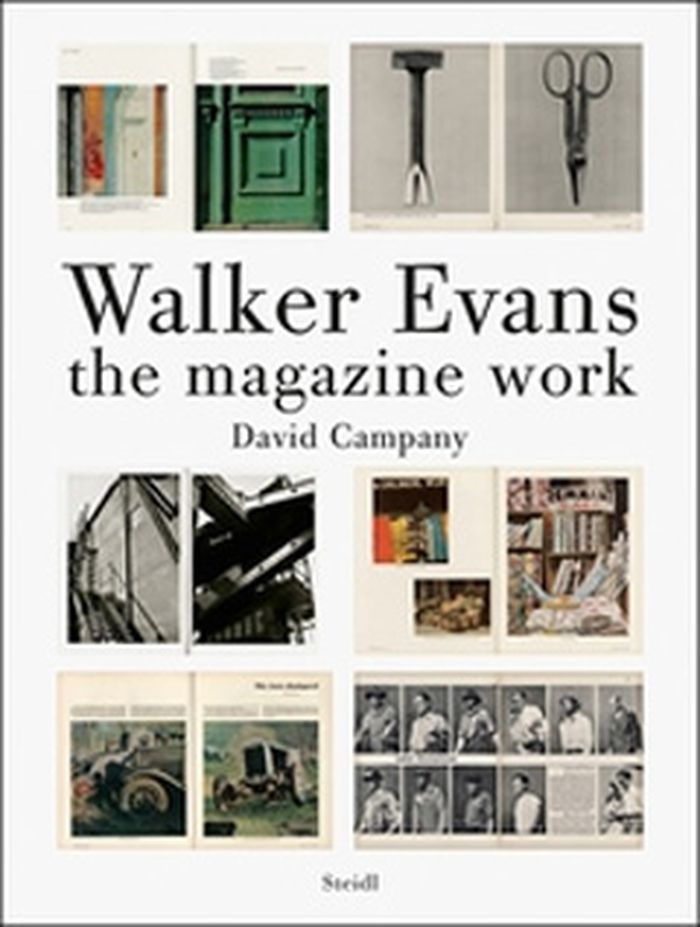
Walker Evans (1903-1975) was one of the most important and influential artists of the twentieth century, producing a body of photographs that continues to shape our understanding of the modern era. He worked in every genre and format, in black & white and colour, but two passions were constant: literature and the printed page. While his photographic books are among the most influential in the medium's history, Evans's more ephemeral pages remain largely unknown. From small avant-garde publications to mainstream titles such as Harper's Bazaar, Vogue, Architectural Forum, Life and Fortune he produced innovative and independent journalism, often setting his own assignments, editing, writing and designing his pages. Presenting many of his photo-essays in their entirety Walker Evans: the Magazine Work assembles the unwritten history of this work, allowing us to see how he protected his autonomy, earned a living and found audiences far beyond the museum and gallery.
Walker Evans: the magazine work
Actions:
Price:
$69.95
(available to order)
Summary:
Walker Evans (1903-1975) was one of the most important and influential artists of the twentieth century, producing a body of photographs that continues to shape our understanding of the modern era. He worked in every genre and format, in black & white and colour, but two passions were constant: literature and the printed page. While his photographic books are among the most influential in the medium's history, Evans's more ephemeral pages remain largely unknown. From small avant-garde publications to mainstream titles such as Harper's Bazaar, Vogue, Architectural Forum, Life and Fortune he produced innovative and independent journalism, often setting his own assignments, editing, writing and designing his pages. Presenting many of his photo-essays in their entirety Walker Evans: the Magazine Work assembles the unwritten history of this work, allowing us to see how he protected his autonomy, earned a living and found audiences far beyond the museum and gallery.
Form:
books
books
Publication:
April 2013
April 2013
Subject:
Photography monographs
Photography monographs
Form:
books
books
Title:
Frank Lloyd Wright
Frank Lloyd Wright
Actions:
Price:
$21.50
(available to order)
Summary:
The life and architecture of Frank Lloyd Wright (1867-1959) have been much-studied, yet there is a consistent division between analyses of his architecture, which exclude any discussion of his daily life, and books that tell the often sensational tale of his life, with barely a passing reference to the buildings themselves. The result is that, despite the large number of(...)
$21.50
(available to order)
Summary:
The life and architecture of Frank Lloyd Wright (1867-1959) have been much-studied, yet there is a consistent division between analyses of his architecture, which exclude any discussion of his daily life, and books that tell the often sensational tale of his life, with barely a passing reference to the buildings themselves. The result is that, despite the large number of(...)
Title:
Frank Lloyd Wright
Actions:
Price:
$21.50
(available to order)
Summary:
The life and architecture of Frank Lloyd Wright (1867-1959) have been much-studied, yet there is a consistent division between analyses of his architecture, which exclude any discussion of his daily life, and books that tell the often sensational tale of his life, with barely a passing reference to the buildings themselves. The result is that, despite the large number of volumes on Wright, the most essential part of his life – his life as an architect, working, as he said, ‘in the cause of architecture’ – remains virtually unexplored. "Frank Lloyd Wright" offers an account of Wright’s life as an architect, the ideas, beliefs and relationships that shaped his life and work, and the manner in which these affected, and are reflected in, his architecture. During a tumultuous life and extensive career which includes such hugely defining buildings as the Guggenheim Museum, Fallingwater, Taliesin, Unity Temple, and the prolific Prairie Houses, Wright endeavoured to shape the emerging and evolving American democracy, its mode of dwelling, and its relation to the traditional conception of the city. Fusing ancient construction geometries with contemporary ideals of Transcendental philosophy, Wright sought to develop an appropriate architecture for the new world of the twentieth century. In doing so, he served as the primary inspiration for the emergence of Modern architecture around the world. Robert McCarter examines how Wright’s architecture crystallized key conceptions of both private dwelling and public citizenship for American society, and relates how, through his work and writings, Wright developed relationships with key leaders of the arts, industry and society. He analyses how and why Wright maintained that architecture was the ‘background or framework’ for daily life, never the literal ‘object’ of our attention, as well as Wright’s belief that architects have the most significant ethical responsibilities to improve the larger society and culture to which they belong. In exploring Wright’s life, times and culture, Robert McCarter shows how Wright was an architect of astonishing ability, whose works continue to shape the world around us, fifty years after his death.
Frank Lloyd Wright
Actions:
Price:
$21.50
(available to order)
Summary:
The life and architecture of Frank Lloyd Wright (1867-1959) have been much-studied, yet there is a consistent division between analyses of his architecture, which exclude any discussion of his daily life, and books that tell the often sensational tale of his life, with barely a passing reference to the buildings themselves. The result is that, despite the large number of volumes on Wright, the most essential part of his life – his life as an architect, working, as he said, ‘in the cause of architecture’ – remains virtually unexplored. "Frank Lloyd Wright" offers an account of Wright’s life as an architect, the ideas, beliefs and relationships that shaped his life and work, and the manner in which these affected, and are reflected in, his architecture. During a tumultuous life and extensive career which includes such hugely defining buildings as the Guggenheim Museum, Fallingwater, Taliesin, Unity Temple, and the prolific Prairie Houses, Wright endeavoured to shape the emerging and evolving American democracy, its mode of dwelling, and its relation to the traditional conception of the city. Fusing ancient construction geometries with contemporary ideals of Transcendental philosophy, Wright sought to develop an appropriate architecture for the new world of the twentieth century. In doing so, he served as the primary inspiration for the emergence of Modern architecture around the world. Robert McCarter examines how Wright’s architecture crystallized key conceptions of both private dwelling and public citizenship for American society, and relates how, through his work and writings, Wright developed relationships with key leaders of the arts, industry and society. He analyses how and why Wright maintained that architecture was the ‘background or framework’ for daily life, never the literal ‘object’ of our attention, as well as Wright’s belief that architects have the most significant ethical responsibilities to improve the larger society and culture to which they belong. In exploring Wright’s life, times and culture, Robert McCarter shows how Wright was an architect of astonishing ability, whose works continue to shape the world around us, fifty years after his death.
Form:
books
books
Publication:
March 2006, London
March 2006, London
Subject:
Architecture Monographs
Architecture Monographs
Form:
books
books
Price:
$47.95
(available to order)
Summary:
In "Architectures of Time", Sanford Kwinter offers a critical guide to the modern history of time and to the interplay between the physical sciences and the arts. Tracing the transformation of twentieth-century epistemology to the rise of thermodynamics and statistical mechanics, Kwinter explains how the demise of the concept of absolute time, and of the classical notion(...)
$47.95
(available to order)
Summary:
In "Architectures of Time", Sanford Kwinter offers a critical guide to the modern history of time and to the interplay between the physical sciences and the arts. Tracing the transformation of twentieth-century epistemology to the rise of thermodynamics and statistical mechanics, Kwinter explains how the demise of the concept of absolute time, and of the classical notion(...)
Title:
Architectures of time : toward a theory of the event in modernist culture
Actions:
Price:
$47.95
(available to order)
Summary:
In "Architectures of Time", Sanford Kwinter offers a critical guide to the modern history of time and to the interplay between the physical sciences and the arts. Tracing the transformation of twentieth-century epistemology to the rise of thermodynamics and statistical mechanics, Kwinter explains how the demise of the concept of absolute time, and of the classical notion of space as a fixed background against which things occur, led to field theory and a physics of the "event." He suggests that the closed, controlled, and mechanical world of physics gave way to the approximate, active, and qualitative world of biology as a model of both scientific and metaphysical explanation. Kwinter examines theory of time and space in Einstein's theories of relativity and shows how these ideas were reflected in the writings of the sculptor Umberto Boccioni, the town planning schema of the Futurist architect Antonio Sant'Elia, the philosophy of Henri Bergson, and the writings of Franz Kafka. He argues that the writings of Boccioni and the visionary architecture of Sant'Elia represent the earliest and most profound deployments of the concepts of field and event. In discussing Kafka's work, he moves away from the thermodynamic model in favor of the closely related one of Bergsonian durée, or virtuality. He argues that Kafka's work manifests a coherent cosmology that can be understood only in relation to the constant temporal flux that underlies it.
Architectures of time : toward a theory of the event in modernist culture
Actions:
Price:
$47.95
(available to order)
Summary:
In "Architectures of Time", Sanford Kwinter offers a critical guide to the modern history of time and to the interplay between the physical sciences and the arts. Tracing the transformation of twentieth-century epistemology to the rise of thermodynamics and statistical mechanics, Kwinter explains how the demise of the concept of absolute time, and of the classical notion of space as a fixed background against which things occur, led to field theory and a physics of the "event." He suggests that the closed, controlled, and mechanical world of physics gave way to the approximate, active, and qualitative world of biology as a model of both scientific and metaphysical explanation. Kwinter examines theory of time and space in Einstein's theories of relativity and shows how these ideas were reflected in the writings of the sculptor Umberto Boccioni, the town planning schema of the Futurist architect Antonio Sant'Elia, the philosophy of Henri Bergson, and the writings of Franz Kafka. He argues that the writings of Boccioni and the visionary architecture of Sant'Elia represent the earliest and most profound deployments of the concepts of field and event. In discussing Kafka's work, he moves away from the thermodynamic model in favor of the closely related one of Bergsonian durée, or virtuality. He argues that Kafka's work manifests a coherent cosmology that can be understood only in relation to the constant temporal flux that underlies it.
Form:
books
books
Publication:
June 2001, Cambridge
June 2001, Cambridge
Subject:
Architectural Theory
Architectural Theory
Form:
books
books

Price:
$52.95
(available to order)
Summary:
The German-American architect Dirk Lohan began to record his conversations with his grandfather Ludwig Mies van der Rohe in the summer of 1969. The tapes, recorded during the final weeks of Mies's life, captured some of the architect's very last words. They were sent to the Museum of Modern Art in New York after his death, though they went missing under unknown(...)
$52.95
(available to order)
Summary:
The German-American architect Dirk Lohan began to record his conversations with his grandfather Ludwig Mies van der Rohe in the summer of 1969. The tapes, recorded during the final weeks of Mies's life, captured some of the architect's very last words. They were sent to the Museum of Modern Art in New York after his death, though they went missing under unknown(...)
Title:
The lost, last words of Mies van der Rohe: the Lohan tapes from 1969
Actions:
Price:
$52.95
(available to order)
Summary:
The German-American architect Dirk Lohan began to record his conversations with his grandfather Ludwig Mies van der Rohe in the summer of 1969. The tapes, recorded during the final weeks of Mies's life, captured some of the architect's very last words. They were sent to the Museum of Modern Art in New York after his death, though they went missing under unknown circumstances. Only an incomplete typescript remains as a testimony to the conversations. ''The lost, last words of Mies van der Rohe'' presents this text in its entirety for the very first time. The conversations relayed in the typescript reveal the famously reticent Mies speaking about his own life with a level of detail, precision, and candour found nowhere else. They shed new light on Mies's character – not only as a serious, philosophical man but also as a human being alive to the humorous aspects of life. This book features a foreword by Dirk Lohan and an introductory essay by Fritz Neumeyer, the world's foremost scholar on Mies. Neumeyer's commentary and analysis provide keen insights into how Mies developed his architectural thinking during his early career, on his way to becoming the most important modern architects of the twentieth century.
The lost, last words of Mies van der Rohe: the Lohan tapes from 1969
Actions:
Price:
$52.95
(available to order)
Summary:
The German-American architect Dirk Lohan began to record his conversations with his grandfather Ludwig Mies van der Rohe in the summer of 1969. The tapes, recorded during the final weeks of Mies's life, captured some of the architect's very last words. They were sent to the Museum of Modern Art in New York after his death, though they went missing under unknown circumstances. Only an incomplete typescript remains as a testimony to the conversations. ''The lost, last words of Mies van der Rohe'' presents this text in its entirety for the very first time. The conversations relayed in the typescript reveal the famously reticent Mies speaking about his own life with a level of detail, precision, and candour found nowhere else. They shed new light on Mies's character – not only as a serious, philosophical man but also as a human being alive to the humorous aspects of life. This book features a foreword by Dirk Lohan and an introductory essay by Fritz Neumeyer, the world's foremost scholar on Mies. Neumeyer's commentary and analysis provide keen insights into how Mies developed his architectural thinking during his early career, on his way to becoming the most important modern architects of the twentieth century.
Form:
books
books
Publication:
December 2020
December 2020
Subject:
Architecture Monographs
Architecture Monographs


