


2654 Results
Form:
books
books
Actions:
Price:
$25.00
(available to order)
Summary:
''‘Vladimir Mayakovsky’ & Other Poems'' is the only single-volume selection in English to fully represent the work of one of Modernism’s vital literary forces. The poems encompass Mayakovsky’s pre-Revolutionary surrealism as well as his exclamatory agitprop of the 1920s, by which time he had become the pre-eminent Soviet poet. New translations of key works are included(...)
$25.00
(available to order)
Summary:
''‘Vladimir Mayakovsky’ & Other Poems'' is the only single-volume selection in English to fully represent the work of one of Modernism’s vital literary forces. The poems encompass Mayakovsky’s pre-Revolutionary surrealism as well as his exclamatory agitprop of the 1920s, by which time he had become the pre-eminent Soviet poet. New translations of key works are included(...)
Title:
Vladimir Mayakovsky and other poems
Actions:
Price:
$25.00
(available to order)
Summary:
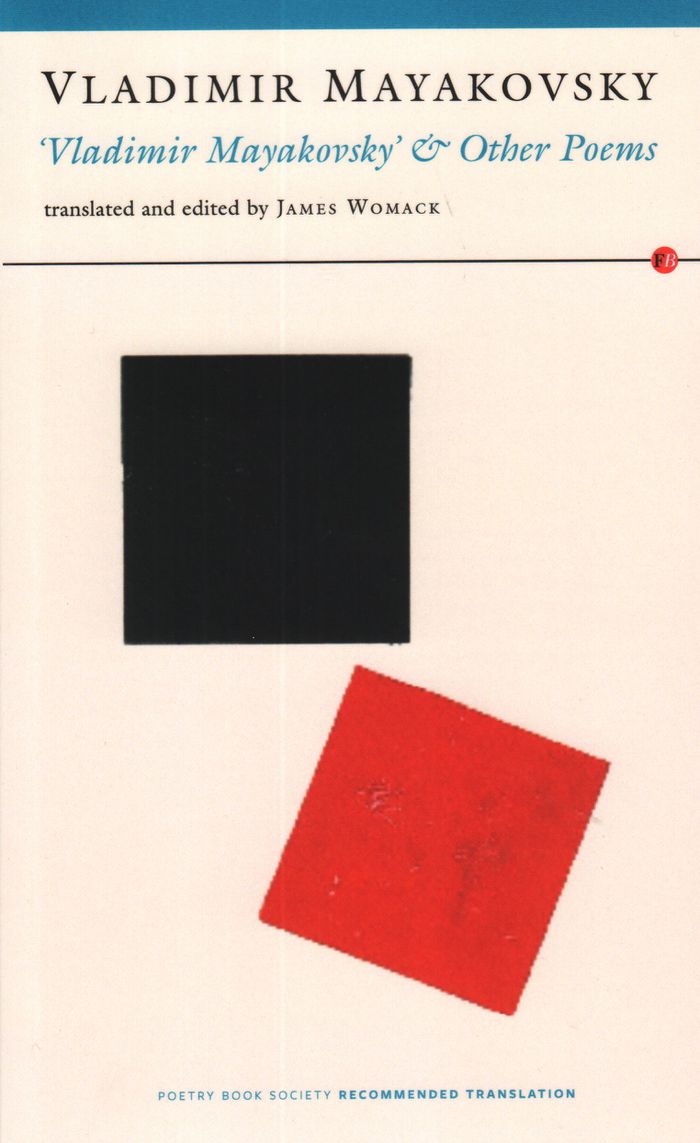
''‘Vladimir Mayakovsky’ & Other Poems'' is the only single-volume selection in English to fully represent the work of one of Modernism’s vital literary forces. The poems encompass Mayakovsky’s pre-Revolutionary surrealism as well as his exclamatory agitprop of the 1920s, by which time he had become the pre-eminent Soviet poet. New translations of key works are included alongside several poems that have never been translated into English before, while an introduction and notes provide helpful contexts and elucidations. Screenplays, dramatic scripts and advertising slogans give a sense of the unusual breadth and invention of Mayakovsky’s project, and his skill both as poet and propagandist.
Vladimir Mayakovsky and other poems
Actions:
Price:
$25.00
(available to order)
Summary:
''‘Vladimir Mayakovsky’ & Other Poems'' is the only single-volume selection in English to fully represent the work of one of Modernism’s vital literary forces. The poems encompass Mayakovsky’s pre-Revolutionary surrealism as well as his exclamatory agitprop of the 1920s, by which time he had become the pre-eminent Soviet poet. New translations of key works are included alongside several poems that have never been translated into English before, while an introduction and notes provide helpful contexts and elucidations. Screenplays, dramatic scripts and advertising slogans give a sense of the unusual breadth and invention of Mayakovsky’s project, and his skill both as poet and propagandist.
Form:
books
books
Publication:
October 2016
October 2016
Subject:
Current Exhibitions
Current Exhibitions
Form:
books
books
Actions:
Price:
$60.00
(available to order)
Summary:
Dirk Leyman became interested at a very young age in these peculiar accordion postcard albums, which every self-respecting tourist and souvenir hunter used to take home from their holiday. Dirk started to systematically collect them as time went by. The snapshots, which are folded in zig-zag fashion, are like relics of a long-gone era. Some are veritable typographical and(...)
$60.00
(available to order)
Summary:
Dirk Leyman became interested at a very young age in these peculiar accordion postcard albums, which every self-respecting tourist and souvenir hunter used to take home from their holiday. Dirk started to systematically collect them as time went by. The snapshots, which are folded in zig-zag fashion, are like relics of a long-gone era. Some are veritable typographical and(...)
Title:
Europe express: a Grand Tour through time
Actions:
Price:
$60.00
(available to order)
Summary:
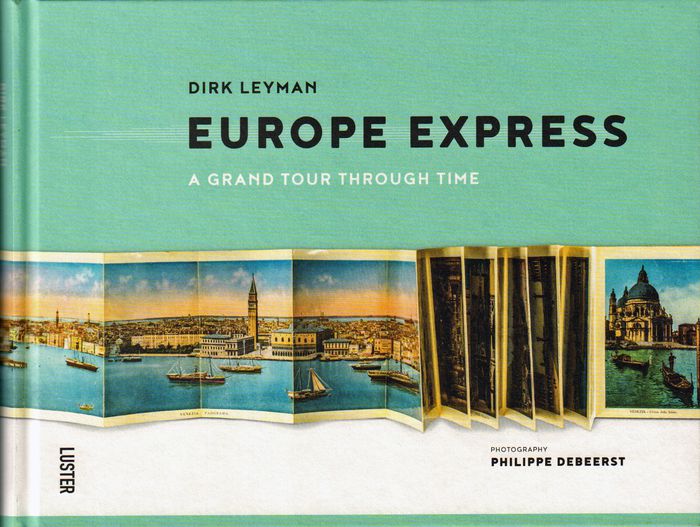
Dirk Leyman became interested at a very young age in these peculiar accordion postcard albums, which every self-respecting tourist and souvenir hunter used to take home from their holiday. Dirk started to systematically collect them as time went by. The snapshots, which are folded in zig-zag fashion, are like relics of a long-gone era. Some are veritable typographical and photographic gems. Others are borderline kitsch, with their heavy-handed use of color. Europe Express spans the decades between the two World Wars to the early Eighties, with photos of San Marco in Venice and the elegant Grand Hotels and the utopian, upstanding world of the former Soviet Union.
Europe express: a Grand Tour through time
Actions:
Price:
$60.00
(available to order)
Summary:
Dirk Leyman became interested at a very young age in these peculiar accordion postcard albums, which every self-respecting tourist and souvenir hunter used to take home from their holiday. Dirk started to systematically collect them as time went by. The snapshots, which are folded in zig-zag fashion, are like relics of a long-gone era. Some are veritable typographical and photographic gems. Others are borderline kitsch, with their heavy-handed use of color. Europe Express spans the decades between the two World Wars to the early Eighties, with photos of San Marco in Venice and the elegant Grand Hotels and the utopian, upstanding world of the former Soviet Union.
Form:
books
books
Publication:
August 2016
August 2016
Subject:
Printed Matter
Printed Matter
Form:
books
books
Title:
World film location : Prague
World film location : Prague
Actions:
Price:
$28.95
(available to order)
Summary:
Prague, the “Hollywood of the East,” has played an important role in the history of cinema and this publication traverses the city’s topography to examine an internationally diverse range of movies made in the Czech capital. Exploring legendary Prague landmarks as they appear onscreen — including the Charles Bridge, Old Town, Malá Strana, Liechtenstein Palace, Wenceslas(...)
$28.95
(available to order)
Summary:
Prague, the “Hollywood of the East,” has played an important role in the history of cinema and this publication traverses the city’s topography to examine an internationally diverse range of movies made in the Czech capital. Exploring legendary Prague landmarks as they appear onscreen — including the Charles Bridge, Old Town, Malá Strana, Liechtenstein Palace, Wenceslas(...)
Title:
World film location : Prague
Actions:
Price:
$28.95
(available to order)
Summary:
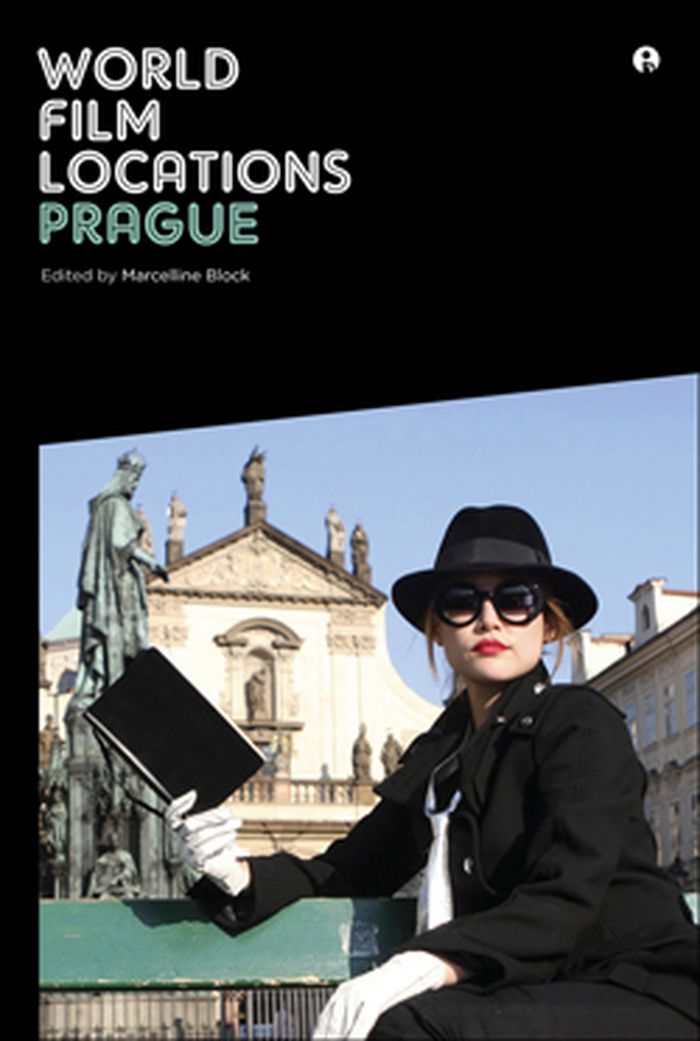
Prague, the “Hollywood of the East,” has played an important role in the history of cinema and this publication traverses the city’s topography to examine an internationally diverse range of movies made in the Czech capital. Exploring legendary Prague landmarks as they appear onscreen — including the Charles Bridge, Old Town, Malá Strana, Liechtenstein Palace, Wenceslas Square, and Prague Castle — the book also discusses the intersection of the capital city and its cinematic representations; Prague and the Czech New Wave; the iconic Barrandov Studios; and the impact of political events such as the Prague Spring, the Soviet Invasion of 1968, and the Velvet Revolution on the city’s film industry.
World film location : Prague
Actions:
Price:
$28.95
(available to order)
Summary:
Prague, the “Hollywood of the East,” has played an important role in the history of cinema and this publication traverses the city’s topography to examine an internationally diverse range of movies made in the Czech capital. Exploring legendary Prague landmarks as they appear onscreen — including the Charles Bridge, Old Town, Malá Strana, Liechtenstein Palace, Wenceslas Square, and Prague Castle — the book also discusses the intersection of the capital city and its cinematic representations; Prague and the Czech New Wave; the iconic Barrandov Studios; and the impact of political events such as the Prague Spring, the Soviet Invasion of 1968, and the Velvet Revolution on the city’s film industry.
Form:
books
books
Publication:
September 2013
September 2013
Subject:
Architecture and Film, Set Design
Architecture and Film, Set Design
Form:
books
books
Holdings:
Description:
171 pages : illustrations (some color) ; 24 cm
Description:
171 pages : illustrations (some color) ; 24 cm
Author:
Subject:
Publication:
Marseille : Parenthèses, [2015]
Marseille : Parenthèses, [2015]
Title:
Une ville neuve en URSS : Togliatti = Tolʹi︠a︡tti / Fabien Bellat.
Actions:
Holdings:
Description:
171 pages : illustrations (some color) ; 24 cm
Une ville neuve en URSS : Togliatti = Tolʹi︠a︡tti / Fabien Bellat.
Actions:
Holdings:
Description:
171 pages : illustrations (some color) ; 24 cm
Form:
books
books
Publication:
Marseille : Parenthèses, [2015]
Marseille : Parenthèses, [2015]
Author:
Subject:
Form:
books
books
Title:
Endre Tót: Gladness and Rain
Endre Tót: Gladness and Rain
Actions:
Price:
$25.00
(available in store)
Summary:
Printed Matter is pleased to present "Endre Tót: Gladness and Rain," a survey show on the work of Hungarian artist Endre Tót. Curated by Darling Green, the in-person and online exhibition puts on view over 100 items, including artists’ books, printed matter, performance works, and mail art correspondence, with an emphasis on Tót’s print output of the 1970s and 80s which(...)
$25.00
(available in store)
Summary:
Printed Matter is pleased to present "Endre Tót: Gladness and Rain," a survey show on the work of Hungarian artist Endre Tót. Curated by Darling Green, the in-person and online exhibition puts on view over 100 items, including artists’ books, printed matter, performance works, and mail art correspondence, with an emphasis on Tót’s print output of the 1970s and 80s which(...)
Subject:
Contemporary Art Monographs
Contemporary Art Monographs
Publication:
October 2023
October 2023
Title:
Endre Tót: Gladness and Rain
Actions:
Price:
$25.00
(available in store)
Summary:
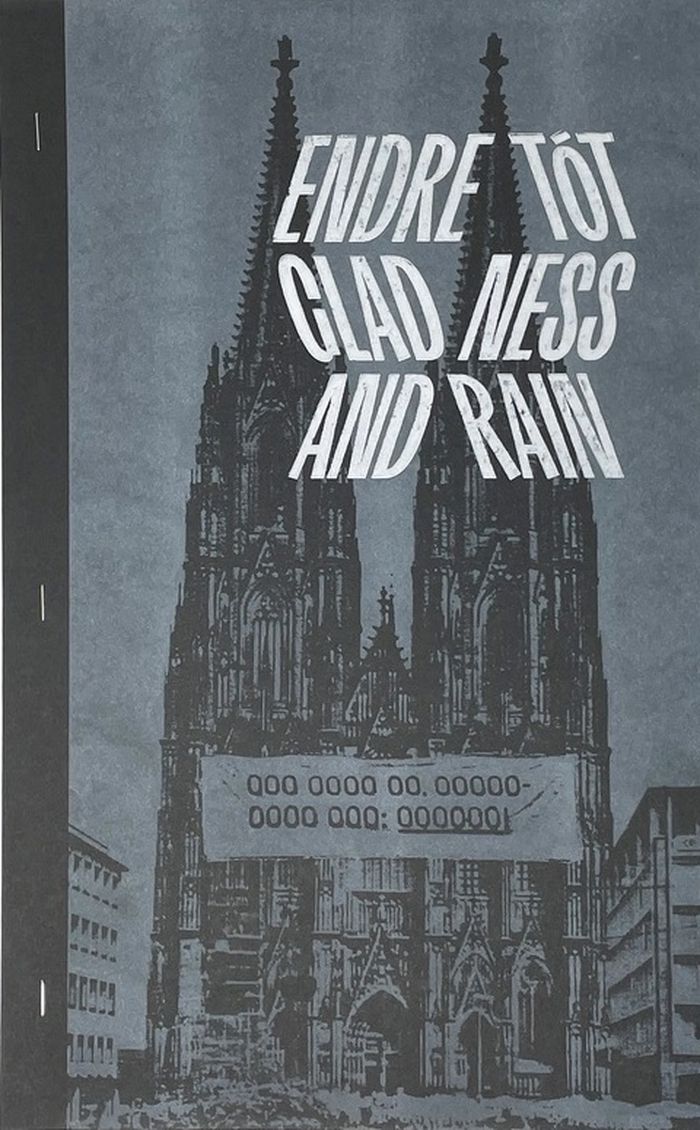
Printed Matter is pleased to present "Endre Tót: Gladness and Rain," a survey show on the work of Hungarian artist Endre Tót. Curated by Darling Green, the in-person and online exhibition puts on view over 100 items, including artists’ books, printed matter, performance works, and mail art correspondence, with an emphasis on Tót’s print output of the 1970s and 80s which defied the censorship of Soviet-controlled Hungary with humor and absurdity. This new 24-page risograph-printed and hand-stamped publication includes highlights from the exhibition, an essay by Darling Green and an interview with Tót. The publication contains full size facsimiles of many of Tót’s printed, typed, stamped, and mailed works from the 1970s and 80s.
Endre Tót: Gladness and Rain
Actions:
Price:
$25.00
(available in store)
Summary:
Printed Matter is pleased to present "Endre Tót: Gladness and Rain," a survey show on the work of Hungarian artist Endre Tót. Curated by Darling Green, the in-person and online exhibition puts on view over 100 items, including artists’ books, printed matter, performance works, and mail art correspondence, with an emphasis on Tót’s print output of the 1970s and 80s which defied the censorship of Soviet-controlled Hungary with humor and absurdity. This new 24-page risograph-printed and hand-stamped publication includes highlights from the exhibition, an essay by Darling Green and an interview with Tót. The publication contains full size facsimiles of many of Tót’s printed, typed, stamped, and mailed works from the 1970s and 80s.
Form:
books
books
Publication:
October 2023
October 2023
Subject:
Contemporary Art Monographs
Contemporary Art Monographs
Form:
books
books
Price:
$68.95
(available to order)
Summary:
Russian artist El Lissitzky’s work spans painting, photography, theatrical and exhibition design, architecture, graphic design, typography, and literature. He was active in the Jewish cultural renaissance, formed an artists’ collective with Kazimir Malevich, was a key figure in the dissemination of early Soviet art in Western Europe, and designed propaganda for the Stalin(...)
$68.95
(available to order)
Summary:
Russian artist El Lissitzky’s work spans painting, photography, theatrical and exhibition design, architecture, graphic design, typography, and literature. He was active in the Jewish cultural renaissance, formed an artists’ collective with Kazimir Malevich, was a key figure in the dissemination of early Soviet art in Western Europe, and designed propaganda for the Stalin(...)
Title:
El Lissitzky on paper: Print culture, architecture, politics, 1919-1933
Actions:
Price:
$68.95
(available to order)
Summary:
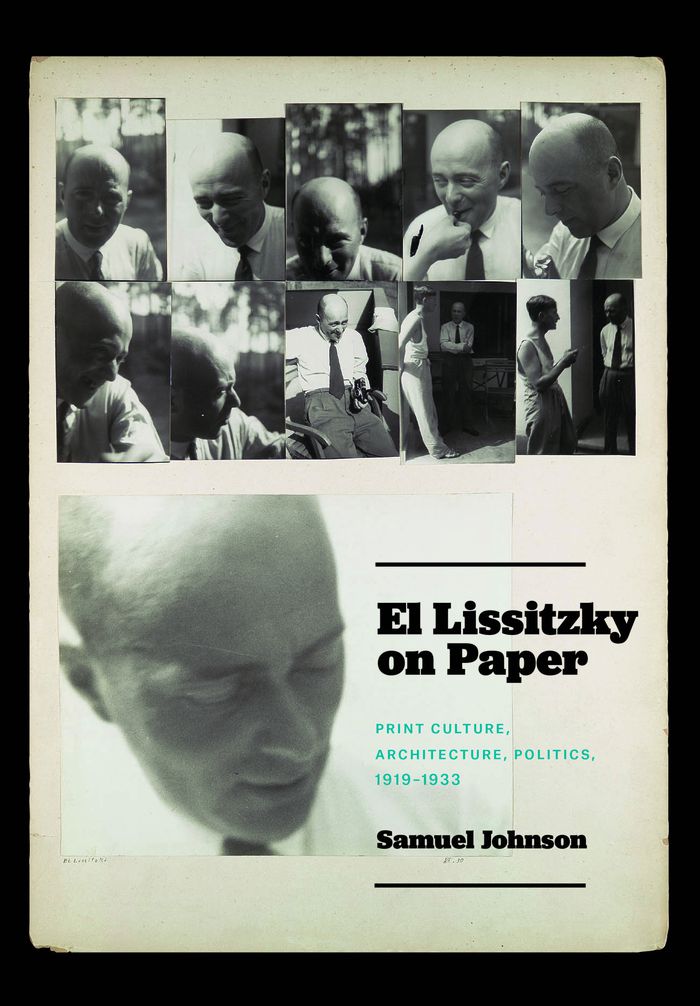
Russian artist El Lissitzky’s work spans painting, photography, theatrical and exhibition design, architecture, graphic design, typography, and literature. He was active in the Jewish cultural renaissance, formed an artists’ collective with Kazimir Malevich, was a key figure in the dissemination of early Soviet art in Western Europe, and designed propaganda for the Stalin regime. With such a varied history and body of work, scholars have often struggled to identify the core principles that tied his diverse oeuvre together. With this book, Johnson presents a significant contribution to scholarship on this major artist, revealing new connections between Lissitzky’s work in architecture and visual art and bringing to light sources from largely unstudied Russian archives.
El Lissitzky on paper: Print culture, architecture, politics, 1919-1933
Actions:
Price:
$68.95
(available to order)
Summary:
Russian artist El Lissitzky’s work spans painting, photography, theatrical and exhibition design, architecture, graphic design, typography, and literature. He was active in the Jewish cultural renaissance, formed an artists’ collective with Kazimir Malevich, was a key figure in the dissemination of early Soviet art in Western Europe, and designed propaganda for the Stalin regime. With such a varied history and body of work, scholars have often struggled to identify the core principles that tied his diverse oeuvre together. With this book, Johnson presents a significant contribution to scholarship on this major artist, revealing new connections between Lissitzky’s work in architecture and visual art and bringing to light sources from largely unstudied Russian archives.
Form:
books
books
Publication:
May 2024
May 2024
Subject:
Architecture Monographs
Architecture Monographs
Form:
books
books
Price:
$63.00
(available in store)
Summary:
Anna Andreeva (1917–2008) was a Soviet textile designer and leading artist at the famous Red Rose Silk Factory in Moscow from 1944 to 1984. The former Giraud silk factory, nationalized in 1919 after the October Revolution and renamed to commemorate the murdered Polish-German socialist revolutionary Rosa Luxemburg, became a site of collective female design labor that(...)
$63.00
(available in store)
Summary:
Anna Andreeva (1917–2008) was a Soviet textile designer and leading artist at the famous Red Rose Silk Factory in Moscow from 1944 to 1984. The former Giraud silk factory, nationalized in 1919 after the October Revolution and renamed to commemorate the murdered Polish-German socialist revolutionary Rosa Luxemburg, became a site of collective female design labor that(...)
Title:
Collective threads: Anna Andreeva at the Red Rose Silk Factory
Actions:
Price:
$63.00
(available in store)
Summary:
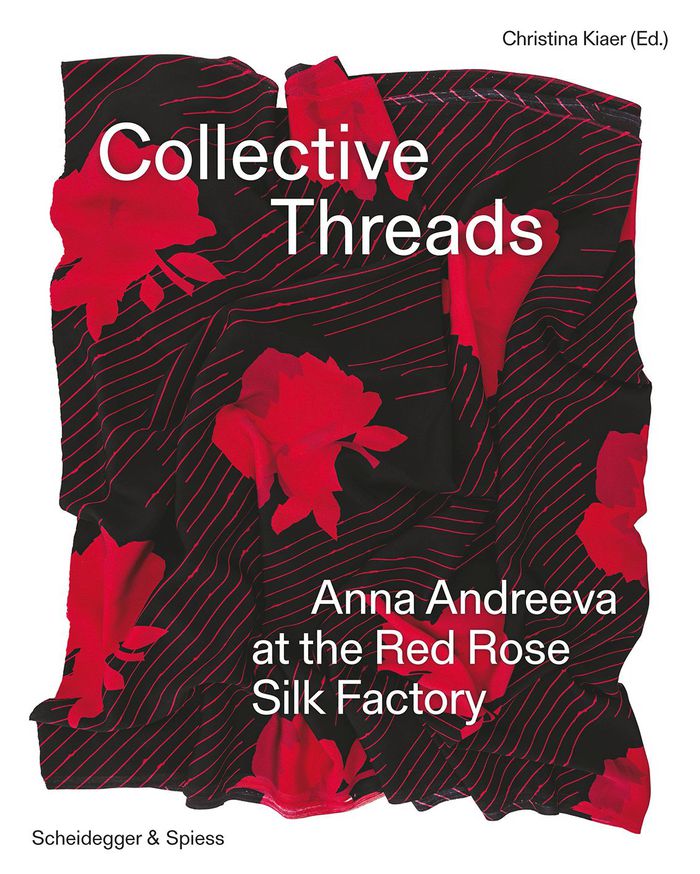
Anna Andreeva (1917–2008) was a Soviet textile designer and leading artist at the famous Red Rose Silk Factory in Moscow from 1944 to 1984. The former Giraud silk factory, nationalized in 1919 after the October Revolution and renamed to commemorate the murdered Polish-German socialist revolutionary Rosa Luxemburg, became a site of collective female design labor that shaped the fashion and material culture of late socialism. Andreeva’s spectacular patterns range from abstract and geometric to cosmic and space-age and to pictorial themes of the city of Moscow and Russian folk art. Her mass-produced designs were among the most popular textile prints distributed within the USSR in the 1960s and 1970s.
Collective threads: Anna Andreeva at the Red Rose Silk Factory
Actions:
Price:
$63.00
(available in store)
Summary:
Anna Andreeva (1917–2008) was a Soviet textile designer and leading artist at the famous Red Rose Silk Factory in Moscow from 1944 to 1984. The former Giraud silk factory, nationalized in 1919 after the October Revolution and renamed to commemorate the murdered Polish-German socialist revolutionary Rosa Luxemburg, became a site of collective female design labor that shaped the fashion and material culture of late socialism. Andreeva’s spectacular patterns range from abstract and geometric to cosmic and space-age and to pictorial themes of the city of Moscow and Russian folk art. Her mass-produced designs were among the most popular textile prints distributed within the USSR in the 1960s and 1970s.
Form:
books
books
Publication:
August 2025
August 2025
Subject:
Design Monographs
Design Monographs
Form:
books
books
Title:
Looking for Lenin
Looking for Lenin
Actions:
Price:
$42.50
(available to order)
Summary:
In the process of decommunisation, Ukraine has toppled all its Lenin monuments. The authors have hunted down and photographed these banned Soviet statues, revealing their inglorious fate. Photographer Niels Ackermann and journalist Sébastien Gobert, both based in Kyiv, have scoured the country in search of the remains of these toppled figures. They found them in the most(...)
$42.50
(available to order)
Summary:
In the process of decommunisation, Ukraine has toppled all its Lenin monuments. The authors have hunted down and photographed these banned Soviet statues, revealing their inglorious fate. Photographer Niels Ackermann and journalist Sébastien Gobert, both based in Kyiv, have scoured the country in search of the remains of these toppled figures. They found them in the most(...)
Title:
Looking for Lenin
Actions:
Price:
$42.50
(available to order)
Summary:
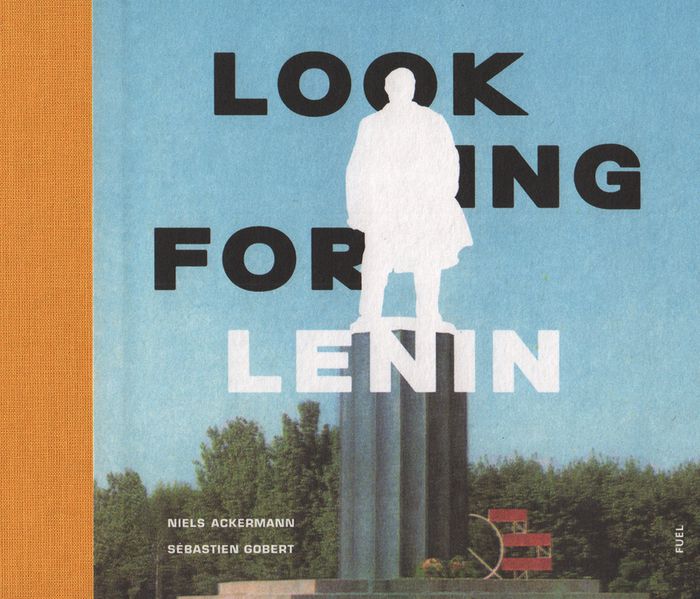
In the process of decommunisation, Ukraine has toppled all its Lenin monuments. The authors have hunted down and photographed these banned Soviet statues, revealing their inglorious fate. Photographer Niels Ackermann and journalist Sébastien Gobert, both based in Kyiv, have scoured the country in search of the remains of these toppled figures. They found them in the most unlikely of places: Lenin inhabits gardens, scrap yards and store rooms. He has fallen on hard times - cut into pieces; daubed with paint in the colors of the Ukrainian flag; transformed into a Cossack or Darth Vader - but despite these attempts to reduce their status, the statues retain a sinister quality, resisting all efforts to separate them from their history.
Looking for Lenin
Actions:
Price:
$42.50
(available to order)
Summary:
In the process of decommunisation, Ukraine has toppled all its Lenin monuments. The authors have hunted down and photographed these banned Soviet statues, revealing their inglorious fate. Photographer Niels Ackermann and journalist Sébastien Gobert, both based in Kyiv, have scoured the country in search of the remains of these toppled figures. They found them in the most unlikely of places: Lenin inhabits gardens, scrap yards and store rooms. He has fallen on hard times - cut into pieces; daubed with paint in the colors of the Ukrainian flag; transformed into a Cossack or Darth Vader - but despite these attempts to reduce their status, the statues retain a sinister quality, resisting all efforts to separate them from their history.
Form:
books
books
Publication:
June 2017
June 2017
Subject:
Photography monographs
Photography monographs
Form:
books
books
Actions:
Price:
$11.95
(available to order)
Summary:
Russia's sheer size has made it difficult to mobilize resources and to govern effectively, especially given its harsh climate, vast and vulnerable borders, and the diversity of its people. In this '"Very Short Introduction," Geoffrey Hosking discusses all aspects of Russian history, from the struggle by the state to control society to the transformation of the nation into(...)
$11.95
(available to order)
Summary:
Russia's sheer size has made it difficult to mobilize resources and to govern effectively, especially given its harsh climate, vast and vulnerable borders, and the diversity of its people. In this '"Very Short Introduction," Geoffrey Hosking discusses all aspects of Russian history, from the struggle by the state to control society to the transformation of the nation into(...)
Title:
Russian History: a very short introduction
Actions:
Price:
$11.95
(available to order)
Summary:
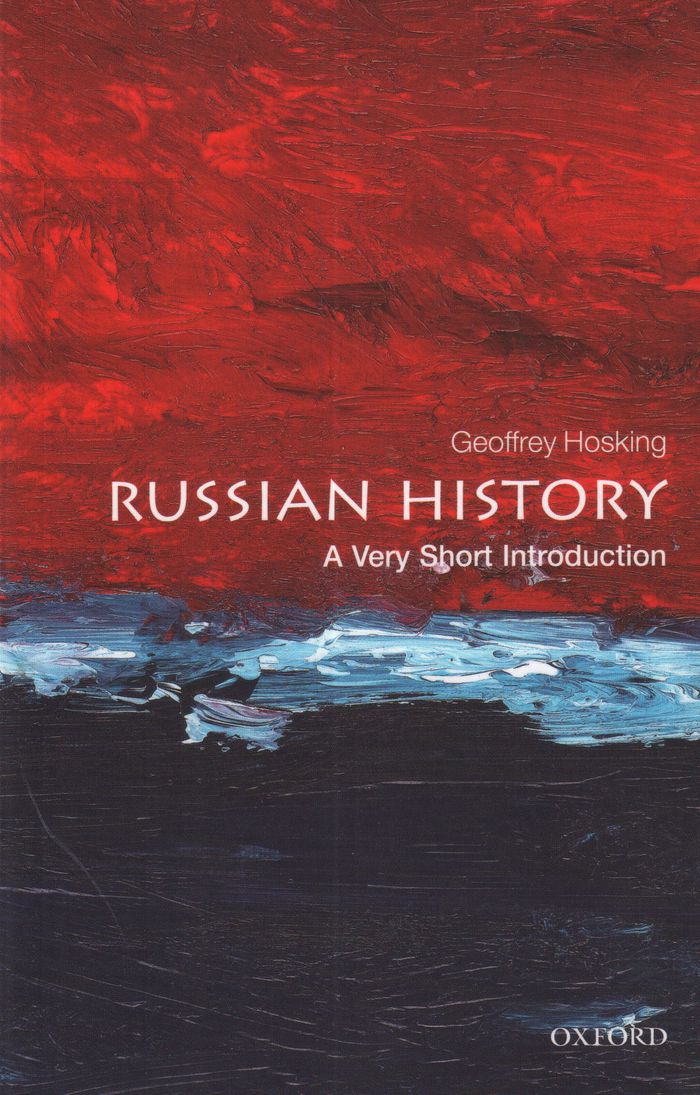
Russia's sheer size has made it difficult to mobilize resources and to govern effectively, especially given its harsh climate, vast and vulnerable borders, and the diversity of its people. In this '"Very Short Introduction," Geoffrey Hosking discusses all aspects of Russian history, from the struggle by the state to control society to the transformation of the nation into a multi-ethnic empire, Russia's relations with the West, and the post-Soviet era. Hosking, a leading international authority, examines Russian history in an impartial way, arguing that "Good Russia" and "Bad Russia" are one and the same. He also evaluates important individuals in Russian history, from Peter the Great and Catherine II to Lenin and Stalin.
Russian History: a very short introduction
Actions:
Price:
$11.95
(available to order)
Summary:
Russia's sheer size has made it difficult to mobilize resources and to govern effectively, especially given its harsh climate, vast and vulnerable borders, and the diversity of its people. In this '"Very Short Introduction," Geoffrey Hosking discusses all aspects of Russian history, from the struggle by the state to control society to the transformation of the nation into a multi-ethnic empire, Russia's relations with the West, and the post-Soviet era. Hosking, a leading international authority, examines Russian history in an impartial way, arguing that "Good Russia" and "Bad Russia" are one and the same. He also evaluates important individuals in Russian history, from Peter the Great and Catherine II to Lenin and Stalin.
Form:
books
books
Publication:
March 2012
March 2012
Subject:
History until 1900, Russia
History until 1900, Russia
Form:
books
books
Actions:
Price:
$26.95
(available to order)
Summary:
The dossier of the latest issue of AV Proyectos is dedicated to BIG, the studio established in Copenhagen in 2005 by Bjarke Ingels, the only architect on Time’s list of ‘The 100 Most Influential People’ in 2016. The issue includes BIG’s most recent proposals organized in accordance with the relationship between climate and architecture: from the warmest to the coolest(...)
$26.95
(available to order)
Summary:
The dossier of the latest issue of AV Proyectos is dedicated to BIG, the studio established in Copenhagen in 2005 by Bjarke Ingels, the only architect on Time’s list of ‘The 100 Most Influential People’ in 2016. The issue includes BIG’s most recent proposals organized in accordance with the relationship between climate and architecture: from the warmest to the coolest(...)
Title:
AV Proyectos 074: Dossier BIG
Actions:
Price:
$26.95
(available to order)
Summary:
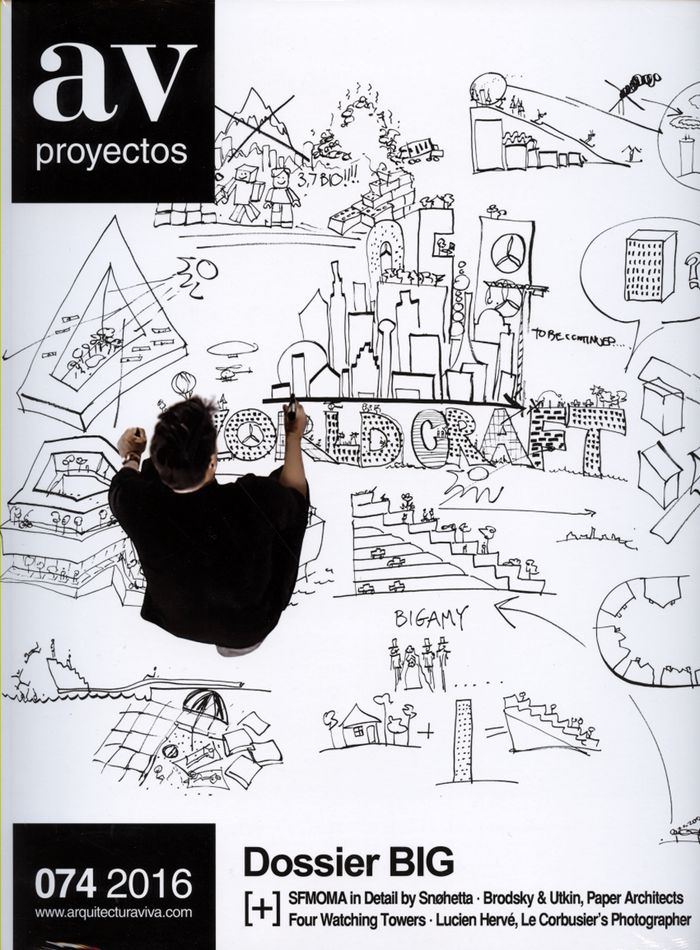
The dossier of the latest issue of AV Proyectos is dedicated to BIG, the studio established in Copenhagen in 2005 by Bjarke Ingels, the only architect on Time’s list of ‘The 100 Most Influential People’ in 2016. The issue includes BIG’s most recent proposals organized in accordance with the relationship between climate and architecture: from the warmest to the coolest context, just as they appear in the studio’s recent publication 'BIG, Hot to Cold: An Odyssey of Architectural Adaptation'. The issue also covers the utopian proposals of the ‘Paper Architects’ Alexander Brodsky and Ilya Utkin, whose oneiric drawings suggest a critical analysis of the austere and rigid character of official Soviet architecture.
AV Proyectos 074: Dossier BIG
Actions:
Price:
$26.95
(available to order)
Summary:
The dossier of the latest issue of AV Proyectos is dedicated to BIG, the studio established in Copenhagen in 2005 by Bjarke Ingels, the only architect on Time’s list of ‘The 100 Most Influential People’ in 2016. The issue includes BIG’s most recent proposals organized in accordance with the relationship between climate and architecture: from the warmest to the coolest context, just as they appear in the studio’s recent publication 'BIG, Hot to Cold: An Odyssey of Architectural Adaptation'. The issue also covers the utopian proposals of the ‘Paper Architects’ Alexander Brodsky and Ilya Utkin, whose oneiric drawings suggest a critical analysis of the austere and rigid character of official Soviet architecture.
Form:
books
books
Publication:
August 2016
August 2016
Subject:
Magazines
Magazines


