


2723 Results
Form:
books
books
Price:
$81.95
(available in store)
Summary:
Devenu République soviétique socialiste en 1936, le Kirghizistan entendait inventer pour sa capitale une architecture monumentale spécifique qui exprime son ralliement à l’utopie d’espérance de la grande famille communiste. Il faut toutefois attendre l’après-guerre pour voir surgir les premiers grands équipements staliniens (opéra, palais des Pionniers) dans un style(...)
$81.95
(available in store)
Summary:
Devenu République soviétique socialiste en 1936, le Kirghizistan entendait inventer pour sa capitale une architecture monumentale spécifique qui exprime son ralliement à l’utopie d’espérance de la grande famille communiste. Il faut toutefois attendre l’après-guerre pour voir surgir les premiers grands équipements staliniens (opéra, palais des Pionniers) dans un style(...)
Title:
Architectures soviétiques: A Bichkek, capitale du Kirghizstan
Actions:
Price:
$81.95
(available in store)
Summary:
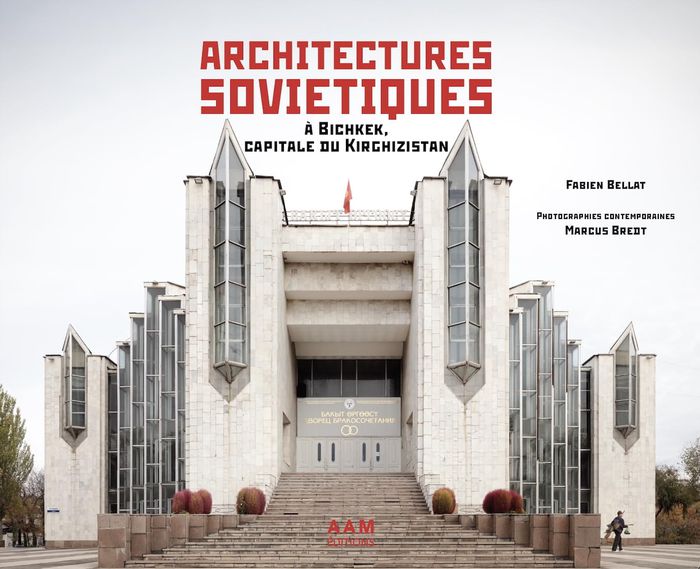
Devenu République soviétique socialiste en 1936, le Kirghizistan entendait inventer pour sa capitale une architecture monumentale spécifique qui exprime son ralliement à l’utopie d’espérance de la grande famille communiste. Il faut toutefois attendre l’après-guerre pour voir surgir les premiers grands équipements staliniens (opéra, palais des Pionniers) dans un style emphatique d’inspiration classique avec, ici et là, des citations de la culture kirghize. La période 1960-1980 voit se multiplier les édifices emblématiques de la capitale (stade, bibliothèque, gare routière, palais des mariages…), chacun des dirigeants soviétiques successifs voulant imprimer leur marque dans l’architecture. Les réalisations présentées dans ce livre témoignent d’une audace et d’un souffle certes souvent déclamatoire et hyperbolique, qui ne cessent d’étonner par leur puissance expressionniste.
Architectures soviétiques: A Bichkek, capitale du Kirghizstan
Actions:
Price:
$81.95
(available in store)
Summary:
Devenu République soviétique socialiste en 1936, le Kirghizistan entendait inventer pour sa capitale une architecture monumentale spécifique qui exprime son ralliement à l’utopie d’espérance de la grande famille communiste. Il faut toutefois attendre l’après-guerre pour voir surgir les premiers grands équipements staliniens (opéra, palais des Pionniers) dans un style emphatique d’inspiration classique avec, ici et là, des citations de la culture kirghize. La période 1960-1980 voit se multiplier les édifices emblématiques de la capitale (stade, bibliothèque, gare routière, palais des mariages…), chacun des dirigeants soviétiques successifs voulant imprimer leur marque dans l’architecture. Les réalisations présentées dans ce livre témoignent d’une audace et d’un souffle certes souvent déclamatoire et hyperbolique, qui ne cessent d’étonner par leur puissance expressionniste.
Form:
books
books
Publication:
May 2025
May 2025
Form:
books
books
Actions:
Holdings:
Description:
xxx, 378 pages : illustrations, 1 portrait ; 22 cm
Description:
xxx, 378 pages : illustrations, 1 portrait ; 22 cm
Author:
Subject:
Publication:
London : Penguin, 1999.
London : Penguin, 1999.
Title:
Utopias : Russian modernist texts 1905-1940 / edited by Catriona Kelly.
Actions:
Holdings:
Description:
xxx, 378 pages : illustrations, 1 portrait ; 22 cm
Utopias : Russian modernist texts 1905-1940 / edited by Catriona Kelly.
Actions:
Holdings:
Description:
xxx, 378 pages : illustrations, 1 portrait ; 22 cm
Form:
books
books
Publication:
London : Penguin, 1999.
London : Penguin, 1999.
Author:
Subject:
Form:
books
books
Title:
Baku: oil and urbanism
Baku: oil and urbanism
Actions:
Price:
$75.00
(available to order)
Summary:
Baku, the capital of Azerbaijan and formerly part of the Russian Empire and Soviet Union, is the original oil city, with oil and urbanism thoroughly intertwined—economically, politically, and physical—in the city’s fabric. Baku saw its first oil boom in the late nineteenth century, driven by the Russian branch of the Nobel family modernizing the oil fields around Baku as(...)
$75.00
(available to order)
Summary:
Baku, the capital of Azerbaijan and formerly part of the Russian Empire and Soviet Union, is the original oil city, with oil and urbanism thoroughly intertwined—economically, politically, and physical—in the city’s fabric. Baku saw its first oil boom in the late nineteenth century, driven by the Russian branch of the Nobel family modernizing the oil fields around Baku as(...)
Title:
Baku: oil and urbanism
Actions:
Price:
$75.00
(available to order)
Summary:
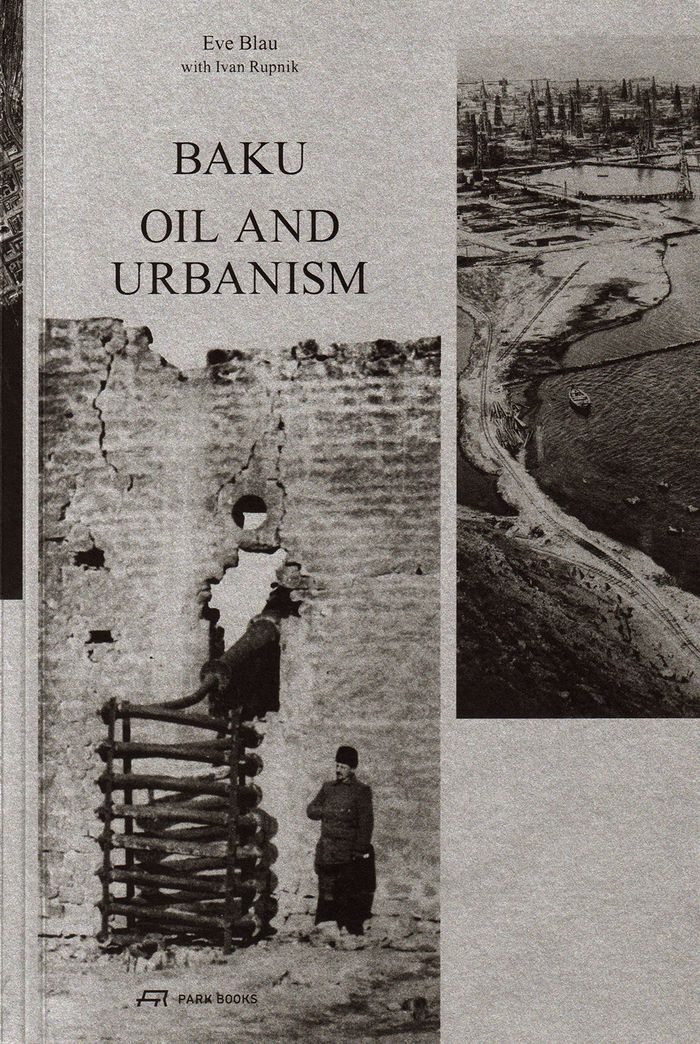
Baku, the capital of Azerbaijan and formerly part of the Russian Empire and Soviet Union, is the original oil city, with oil and urbanism thoroughly intertwined—economically, politically, and physical—in the city’s fabric. Baku saw its first oil boom in the late nineteenth century, driven by the Russian branch of the Nobel family modernizing the oil fields around Baku as local oil barons poured their new wealth into building a cosmopolitan city center. During the Soviet period, Baku became the site of an urban experiment: the shaping of an oil city of socialist man. That project included Neft Dashlari, a city built on trestles in the Caspian Sea and designed to house thousands of workers, schools, shops, gardens, clinics, and cinemas as well as 2,000 oil rigs, pipelines, and collecting stations. Today, as it heads into an uncertain post-oil future, Baku’s planners and business elites regard the legacy of its past as a resource that sustains new aspirations and identities.
Baku: oil and urbanism
Actions:
Price:
$75.00
(available to order)
Summary:
Baku, the capital of Azerbaijan and formerly part of the Russian Empire and Soviet Union, is the original oil city, with oil and urbanism thoroughly intertwined—economically, politically, and physical—in the city’s fabric. Baku saw its first oil boom in the late nineteenth century, driven by the Russian branch of the Nobel family modernizing the oil fields around Baku as local oil barons poured their new wealth into building a cosmopolitan city center. During the Soviet period, Baku became the site of an urban experiment: the shaping of an oil city of socialist man. That project included Neft Dashlari, a city built on trestles in the Caspian Sea and designed to house thousands of workers, schools, shops, gardens, clinics, and cinemas as well as 2,000 oil rigs, pipelines, and collecting stations. Today, as it heads into an uncertain post-oil future, Baku’s planners and business elites regard the legacy of its past as a resource that sustains new aspirations and identities.
Form:
books
books
Publication:
February 2019
February 2019
Form:
books
books
Price:
$89.95
(available in store)
Summary:
The Viipuri Library has international reputation as a seminal early work of Alvar Aalto, and is a key example of modern architecture. Simultaneously, the meanings associated with it stem from its geopolitical location: the library was originally opened to the Finnish city of Viipuri, but at the end of the World War II the city was annexed to the Soviet Union. Since 1991(...)
$89.95
(available in store)
Summary:
The Viipuri Library has international reputation as a seminal early work of Alvar Aalto, and is a key example of modern architecture. Simultaneously, the meanings associated with it stem from its geopolitical location: the library was originally opened to the Finnish city of Viipuri, but at the end of the World War II the city was annexed to the Soviet Union. Since 1991(...)
Title:
The building that disappeared: the Viipuri library by Alvar Aalto
Actions:
Price:
$89.95
(available in store)
Summary:
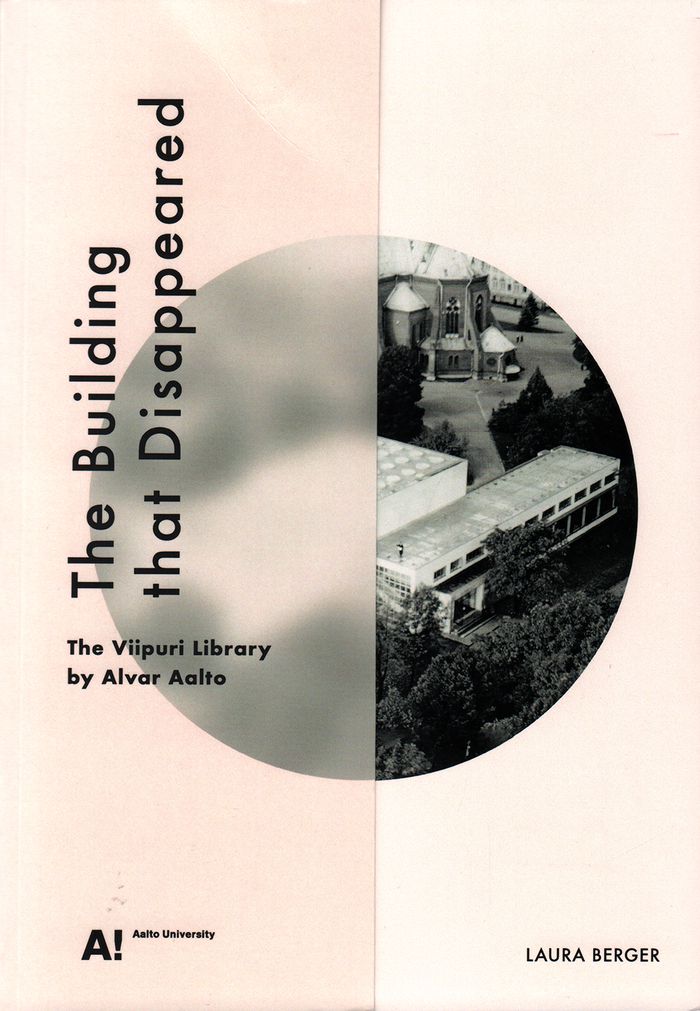
The Viipuri Library has international reputation as a seminal early work of Alvar Aalto, and is a key example of modern architecture. Simultaneously, the meanings associated with it stem from its geopolitical location: the library was originally opened to the Finnish city of Viipuri, but at the end of the World War II the city was annexed to the Soviet Union. Since 1991 the building has been located in modern day Russia. The title of the book reflects the widely spread misunderstanding that the Library has been lost at war, and future generations can learn about it only from drawings and images. This work unfolds its 'life’ in four thematic chapters, each presenting a totally different perspective to what this building is all about: First, the context of the city of Viipuri, second, the Library as a work of Aalto, third, the time period of the Second World War and the Soviet Union, and last, the international restoration project.
The building that disappeared: the Viipuri library by Alvar Aalto
Actions:
Price:
$89.95
(available in store)
Summary:
The Viipuri Library has international reputation as a seminal early work of Alvar Aalto, and is a key example of modern architecture. Simultaneously, the meanings associated with it stem from its geopolitical location: the library was originally opened to the Finnish city of Viipuri, but at the end of the World War II the city was annexed to the Soviet Union. Since 1991 the building has been located in modern day Russia. The title of the book reflects the widely spread misunderstanding that the Library has been lost at war, and future generations can learn about it only from drawings and images. This work unfolds its 'life’ in four thematic chapters, each presenting a totally different perspective to what this building is all about: First, the context of the city of Viipuri, second, the Library as a work of Aalto, third, the time period of the Second World War and the Soviet Union, and last, the international restoration project.
Form:
books
books
Publication:
January 2019
January 2019
Subject:
Architecture Monographs
Architecture Monographs
Form:
books
books
Price:
$100.00
(available to order)
Summary:
Throughout the 1920s and ’30s, the Higher Art and Technical Studios in Moscow, more commonly known as Vkhutemas, adopted what it called the ''objective method'' to facilitate instruction on a mass scale. The school was the first to implement mass art and technology education, which was seen as essential to the Soviet Union’s dominant modernist paradigm. With ''Avant-Garde(...)
$100.00
(available to order)
Summary:
Throughout the 1920s and ’30s, the Higher Art and Technical Studios in Moscow, more commonly known as Vkhutemas, adopted what it called the ''objective method'' to facilitate instruction on a mass scale. The school was the first to implement mass art and technology education, which was seen as essential to the Soviet Union’s dominant modernist paradigm. With ''Avant-Garde(...)
Title:
Avant-garde as method: Vkhutemas and the pedagogy of space 1920-1930
Actions:
Price:
$100.00
(available to order)
Summary:
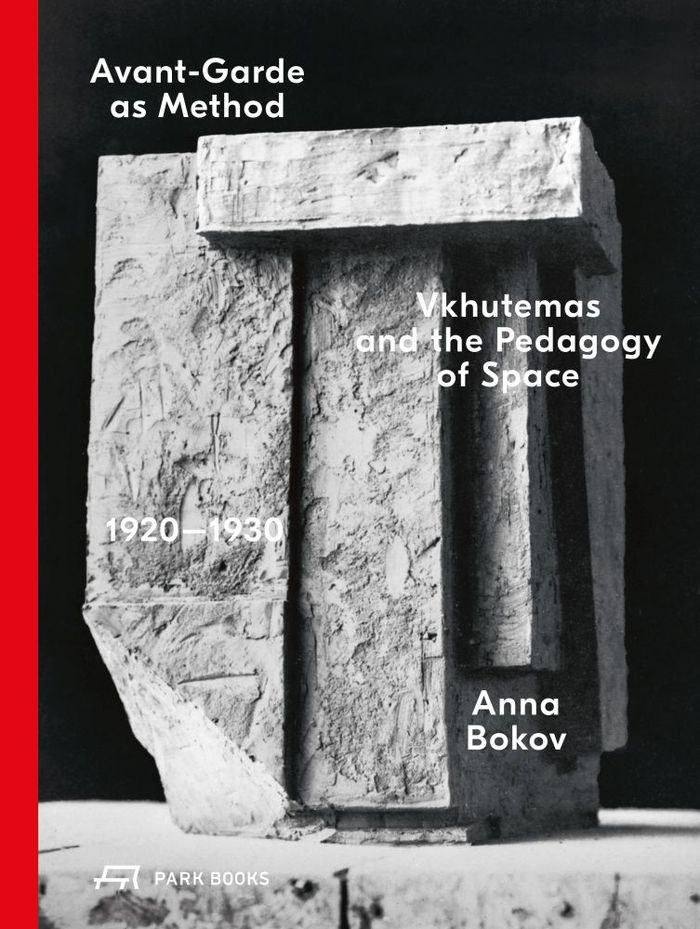
Throughout the 1920s and ’30s, the Higher Art and Technical Studios in Moscow, more commonly known as Vkhutemas, adopted what it called the ''objective method'' to facilitate instruction on a mass scale. The school was the first to implement mass art and technology education, which was seen as essential to the Soviet Union’s dominant modernist paradigm. With ''Avant-Garde as method,'' architect and historian Anna Bokov explores the nature of art and technology education in the Soviet Union. The pedagogical program at Vkhutemas, she shows, combined longstanding academic ideas and practices with more nascent industrial era ones to initiate a new type of pedagogy that took an explorative approach and drew its strength from continuous feedback and exchange between students and educators. Elaborating on the ways the Vkhutemas curriculum challenged established canons of academic tradition by replacing it with open-ended inquiry, Bokov then shows how this came to be articulated in architectural and urban projects within the school’s advanced studios.
Avant-garde as method: Vkhutemas and the pedagogy of space 1920-1930
Actions:
Price:
$100.00
(available to order)
Summary:
Throughout the 1920s and ’30s, the Higher Art and Technical Studios in Moscow, more commonly known as Vkhutemas, adopted what it called the ''objective method'' to facilitate instruction on a mass scale. The school was the first to implement mass art and technology education, which was seen as essential to the Soviet Union’s dominant modernist paradigm. With ''Avant-Garde as method,'' architect and historian Anna Bokov explores the nature of art and technology education in the Soviet Union. The pedagogical program at Vkhutemas, she shows, combined longstanding academic ideas and practices with more nascent industrial era ones to initiate a new type of pedagogy that took an explorative approach and drew its strength from continuous feedback and exchange between students and educators. Elaborating on the ways the Vkhutemas curriculum challenged established canons of academic tradition by replacing it with open-ended inquiry, Bokov then shows how this came to be articulated in architectural and urban projects within the school’s advanced studios.
Form:
books
books
Publication:
April 2020
April 2020
Subject:
Modernism
Modernism
Form:
books
books
Title:
The circus and other stories
The circus and other stories
Actions:
Price:
$29.95
(available to order)
Summary:
In 1920s Soviet Russia, writer and poet Samuil Marshak and graphic artist Vladimir Lebedev came together to bring the energy and boldness of Russian avant-garde art into children’s publishing. The results of this remarkable collaboration were a series of stunning picture books, four of which are collected and reproduced in full here, newly translated, together in one(...)
$29.95
(available to order)
Summary:
In 1920s Soviet Russia, writer and poet Samuil Marshak and graphic artist Vladimir Lebedev came together to bring the energy and boldness of Russian avant-garde art into children’s publishing. The results of this remarkable collaboration were a series of stunning picture books, four of which are collected and reproduced in full here, newly translated, together in one(...)
Title:
The circus and other stories
Actions:
Price:
$29.95
(available to order)
Summary:
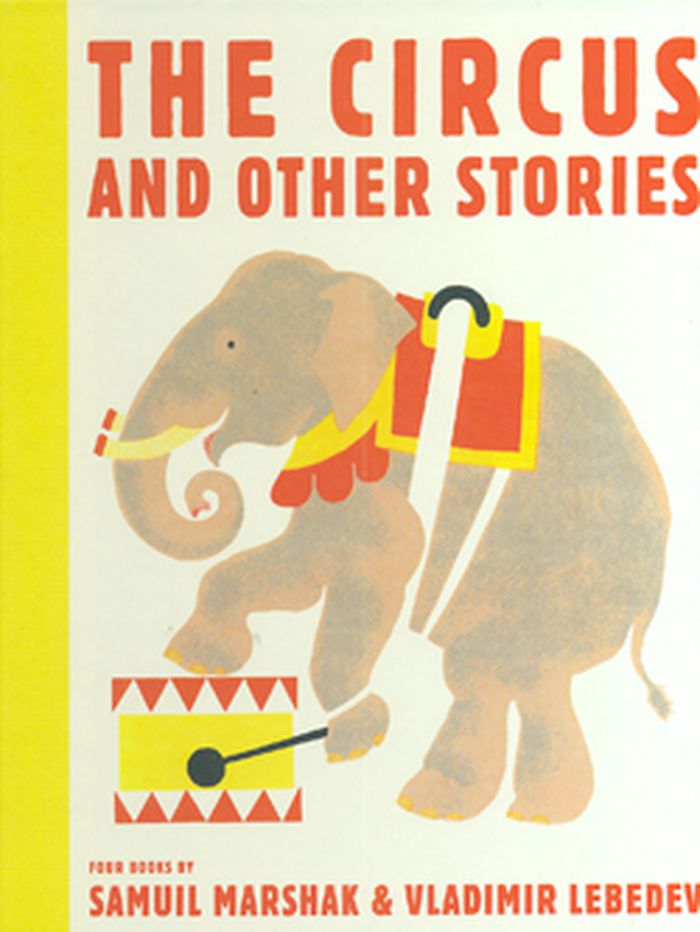
In 1920s Soviet Russia, writer and poet Samuil Marshak and graphic artist Vladimir Lebedev came together to bring the energy and boldness of Russian avant-garde art into children’s publishing. The results of this remarkable collaboration were a series of stunning picture books, four of which are collected and reproduced in full here, newly translated, together in one volume for the first time.
The circus and other stories
Actions:
Price:
$29.95
(available to order)
Summary:
In 1920s Soviet Russia, writer and poet Samuil Marshak and graphic artist Vladimir Lebedev came together to bring the energy and boldness of Russian avant-garde art into children’s publishing. The results of this remarkable collaboration were a series of stunning picture books, four of which are collected and reproduced in full here, newly translated, together in one volume for the first time.
Form:
books
books
Publication:
June 2013
June 2013
Subject:
Children's Books
Children's Books
Form:
books
books
Actions:
Price:
$80.95
(available to order)
Summary:
Photographer Frédéric Chaubin reveals 90 buildings sited in fourteen former Soviet Republics which express what he considers to be the fourth age of Soviet architecture. His poetic pictures reveal an unexpected rebirth of imagination, an unknown burgeoning that took place from 1970 until 1990. Contrary to the 1920s and 1950s, no “school” or main trend emerges here. These(...)
$80.95
(available to order)
Summary:
Photographer Frédéric Chaubin reveals 90 buildings sited in fourteen former Soviet Republics which express what he considers to be the fourth age of Soviet architecture. His poetic pictures reveal an unexpected rebirth of imagination, an unknown burgeoning that took place from 1970 until 1990. Contrary to the 1920s and 1950s, no “school” or main trend emerges here. These(...)
Subject:
Photography monographs
Photography monographs
Publication:
September 2010
September 2010
Title:
Cosmic communist constructions photographed
Actions:
Price:
$80.95
(available to order)
Summary:
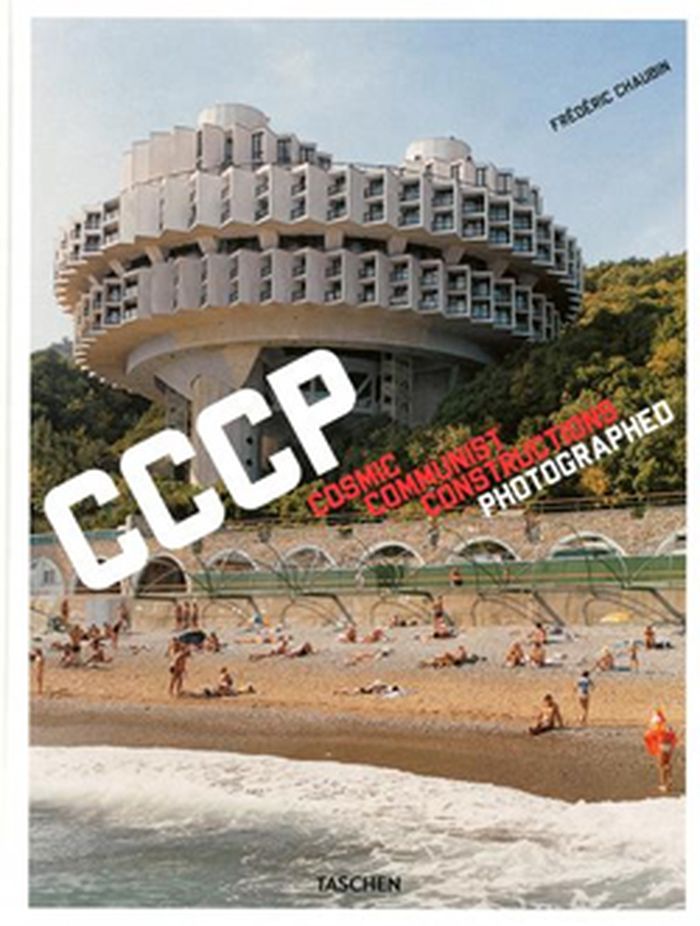
Photographer Frédéric Chaubin reveals 90 buildings sited in fourteen former Soviet Republics which express what he considers to be the fourth age of Soviet architecture. His poetic pictures reveal an unexpected rebirth of imagination, an unknown burgeoning that took place from 1970 until 1990. Contrary to the 1920s and 1950s, no “school” or main trend emerges here. These buildings represent a chaotic impulse brought about by a decaying system. Their diversity announced the end of the Soviet Union. Taking advantage of the collapsing monolithic structure, the holes in the widening net, architects went far beyond modernism, going back to the roots or freely innovating. Some of the daring ones completed projects that the Constructivists would have dreamt of (Druzhba Sanatorium, Yalta), others expressed their imagination in an expressionist way (Palace of Weddings, Tbilisi). A summer camp, inspired by sketches of a prototype lunar base, lays claim to Suprematist influence (Prometheus youth camp, Bogatyr). Then comes the "speaking architecture" widespread in the last years of the USSR : a crematorium adorned with concrete flames (Crematorium, Kiev), a technological institute with a flying saucer crashed on the roof (Institute of Scientific Research, Kiev), a political center watching you like Big Brother (House of Soviets, Kaliningrad). This puzzle of styles testifies to all the ideological dreams of the period, from the obsession with the cosmos to the rebirth of identity. It also outlines the geography of the USSR, showing how local influences made their exotic twists before the country was brought to its end.
Cosmic communist constructions photographed
Actions:
Price:
$80.95
(available to order)
Summary:
Photographer Frédéric Chaubin reveals 90 buildings sited in fourteen former Soviet Republics which express what he considers to be the fourth age of Soviet architecture. His poetic pictures reveal an unexpected rebirth of imagination, an unknown burgeoning that took place from 1970 until 1990. Contrary to the 1920s and 1950s, no “school” or main trend emerges here. These buildings represent a chaotic impulse brought about by a decaying system. Their diversity announced the end of the Soviet Union. Taking advantage of the collapsing monolithic structure, the holes in the widening net, architects went far beyond modernism, going back to the roots or freely innovating. Some of the daring ones completed projects that the Constructivists would have dreamt of (Druzhba Sanatorium, Yalta), others expressed their imagination in an expressionist way (Palace of Weddings, Tbilisi). A summer camp, inspired by sketches of a prototype lunar base, lays claim to Suprematist influence (Prometheus youth camp, Bogatyr). Then comes the "speaking architecture" widespread in the last years of the USSR : a crematorium adorned with concrete flames (Crematorium, Kiev), a technological institute with a flying saucer crashed on the roof (Institute of Scientific Research, Kiev), a political center watching you like Big Brother (House of Soviets, Kaliningrad). This puzzle of styles testifies to all the ideological dreams of the period, from the obsession with the cosmos to the rebirth of identity. It also outlines the geography of the USSR, showing how local influences made their exotic twists before the country was brought to its end.
Form:
books
books
Publication:
September 2010
September 2010
Subject:
Photography monographs
Photography monographs
Form:
books
books
Actions:
Price:
$28.95
(available to order)
Summary:
Les architectures et les paysages témoignent de chronologies paradoxales. Comme l'ont illustré l'effet de la « dé-communisation » issue de la révolution de Maïdan et l'immédiate mise en musée des événements dans le Donbass, une partie de l'histoire est supprimée pour être tout de suite remplacée par une autre. Ce livre explore une Ukraine construite en diachronie,(...)
$28.95
(available to order)
Summary:
Les architectures et les paysages témoignent de chronologies paradoxales. Comme l'ont illustré l'effet de la « dé-communisation » issue de la révolution de Maïdan et l'immédiate mise en musée des événements dans le Donbass, une partie de l'histoire est supprimée pour être tout de suite remplacée par une autre. Ce livre explore une Ukraine construite en diachronie,(...)
Title:
L'Ukraine Post-Euromaïdan dans ses liens intangibles avec l'Union Soviétique
Actions:
Price:
$28.95
(available to order)
Summary:
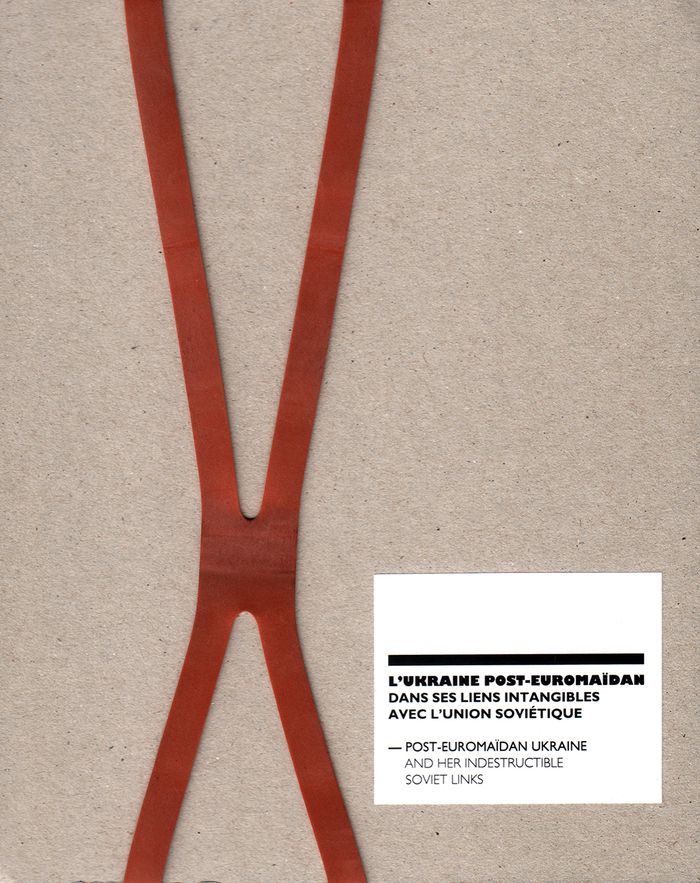
Les architectures et les paysages témoignent de chronologies paradoxales. Comme l'ont illustré l'effet de la « dé-communisation » issue de la révolution de Maïdan et l'immédiate mise en musée des événements dans le Donbass, une partie de l'histoire est supprimée pour être tout de suite remplacée par une autre. Ce livre explore une Ukraine construite en diachronie, constamment modifiée par les révolutions et les guerres. // The architectures and landscapes reveal the paradoxical chronologies that Ukraine cannot hide. As illustrated by the effect of 'decommunisation' post Maïdan, paralleled with the immediate establishment of the current affairs in Donbass, part of the history is suppressed to be immediately replaced with another. This book explores a Ukraine built in a diachrony, constantly modified by revolution and war.
L'Ukraine Post-Euromaïdan dans ses liens intangibles avec l'Union Soviétique
Actions:
Price:
$28.95
(available to order)
Summary:
Les architectures et les paysages témoignent de chronologies paradoxales. Comme l'ont illustré l'effet de la « dé-communisation » issue de la révolution de Maïdan et l'immédiate mise en musée des événements dans le Donbass, une partie de l'histoire est supprimée pour être tout de suite remplacée par une autre. Ce livre explore une Ukraine construite en diachronie, constamment modifiée par les révolutions et les guerres. // The architectures and landscapes reveal the paradoxical chronologies that Ukraine cannot hide. As illustrated by the effect of 'decommunisation' post Maïdan, paralleled with the immediate establishment of the current affairs in Donbass, part of the history is suppressed to be immediately replaced with another. This book explores a Ukraine built in a diachrony, constantly modified by revolution and war.
Form:
books
books
Publication:
February 2016
February 2016
Subject:
Photography by Region
Photography by Region
Form:
books
books
Title:
The road to Oxiana
The road to Oxiana
Actions:
Price:
$15.95
(available in store)
Summary:
In 1933, the delightfully eccentric travel writer Robert Byron set out on a journey through the Middle East via Beirut, Jerusalem, Baghdad and Teheran to Oxiana, near the border between Afghanistan and the Soviet Union. The Road to Oxiana serves as a rare account of the architectural treasures of a region now inaccessible to most Western travelers, and a nostalgic(...)
$15.95
(available in store)
Summary:
In 1933, the delightfully eccentric travel writer Robert Byron set out on a journey through the Middle East via Beirut, Jerusalem, Baghdad and Teheran to Oxiana, near the border between Afghanistan and the Soviet Union. The Road to Oxiana serves as a rare account of the architectural treasures of a region now inaccessible to most Western travelers, and a nostalgic(...)
Title:
The road to Oxiana
Actions:
Price:
$15.95
(available in store)
Summary:
In 1933, the delightfully eccentric travel writer Robert Byron set out on a journey through the Middle East via Beirut, Jerusalem, Baghdad and Teheran to Oxiana, near the border between Afghanistan and the Soviet Union. The Road to Oxiana serves as a rare account of the architectural treasures of a region now inaccessible to most Western travelers, and a nostalgic look back at a more innocent time.
The road to Oxiana
Actions:
Price:
$15.95
(available in store)
Summary:
In 1933, the delightfully eccentric travel writer Robert Byron set out on a journey through the Middle East via Beirut, Jerusalem, Baghdad and Teheran to Oxiana, near the border between Afghanistan and the Soviet Union. The Road to Oxiana serves as a rare account of the architectural treasures of a region now inaccessible to most Western travelers, and a nostalgic look back at a more innocent time.
Form:
books
books
Publication:
September 2007
September 2007
Subject:
Transportation, Tourism, Migration
Transportation, Tourism, Migration
Form:
books
books
Actions:
Price:
$59.95
(available to order)
Summary:
Urbanism in dictatorship has been discussed from the national view only, but urbanism has always been an instrument to gain recognition by other states. The book analyses dictatorship in Italy, Portugal, Spain, Germany and the Soviet Union, discusses the current state of research, and presents new research. An overall view helps to understand the characteristics of each(...)
$59.95
(available to order)
Summary:
Urbanism in dictatorship has been discussed from the national view only, but urbanism has always been an instrument to gain recognition by other states. The book analyses dictatorship in Italy, Portugal, Spain, Germany and the Soviet Union, discusses the current state of research, and presents new research. An overall view helps to understand the characteristics of each(...)
Title:
Urbanism and dictatorship: a european perspective
Actions:
Price:
$59.95
(available to order)
Summary:
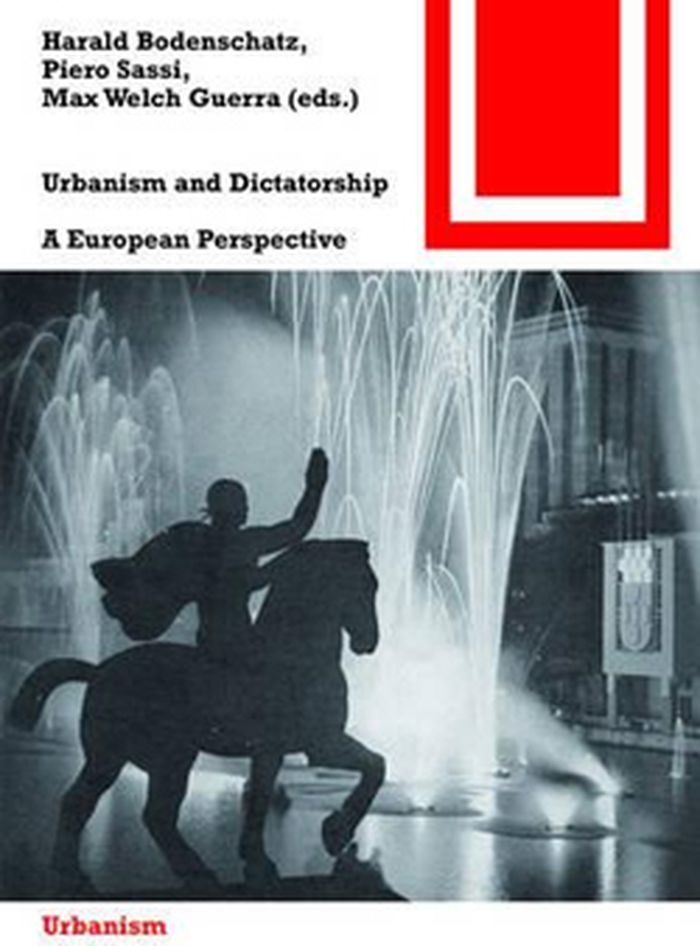
Urbanism in dictatorship has been discussed from the national view only, but urbanism has always been an instrument to gain recognition by other states. The book analyses dictatorship in Italy, Portugal, Spain, Germany and the Soviet Union, discusses the current state of research, and presents new research. An overall view helps to understand the characteristics of each country and prevents to oversimplify the understanding of dictatorship.
Urbanism and dictatorship: a european perspective
Actions:
Price:
$59.95
(available to order)
Summary:
Urbanism in dictatorship has been discussed from the national view only, but urbanism has always been an instrument to gain recognition by other states. The book analyses dictatorship in Italy, Portugal, Spain, Germany and the Soviet Union, discusses the current state of research, and presents new research. An overall view helps to understand the characteristics of each country and prevents to oversimplify the understanding of dictatorship.
Form:
books
books
Publication:
September 2015
September 2015
Subject:
Urban Theory
Urban Theory


