


9835 Results
Form:
models
models
Actions:
Reference number:
AP140.S2.SS1.D26.P30.1
Description:
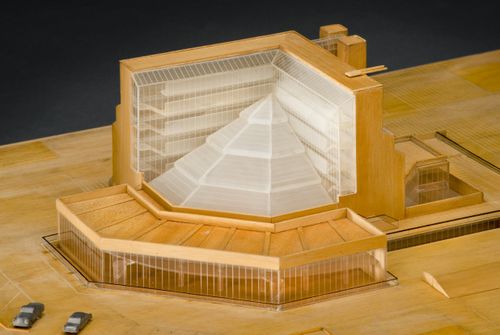
model shows the site and immediate surroundings of the History Faculty Building, and interior elements including the library mezzanine and the galleries and escape stairs of the L-shaped block; the model was part of the 1963 competition entry, and shows the library roof oriented towards the south-west, rather than towards the south-east, as in the executed design; also shows a different design for the terrace to the north, and for the stairs flanking the brick end walls
AP140.S2.SS1.D26.P30.1
Description:
model shows the site and immediate surroundings of the History Faculty Building, and interior elements including the library mezzanine and the galleries and escape stairs of the L-shaped block; the model was part of the 1963 competition entry, and shows the library roof oriented towards the south-west, rather than towards the south-east, as in the executed design; also shows a different design for the terrace to the north, and for the stairs flanking the brick end walls
People:
Date:
1963
1963
Title:
History Faculty Building, University of Cambridge, Cambridge, England: presentation model
Actions:
AP140.S2.SS1.D26.P30.1
Description:
model shows the site and immediate surroundings of the History Faculty Building, and interior elements including the library mezzanine and the galleries and escape stairs of the L-shaped block; the model was part of the 1963 competition entry, and shows the library roof oriented towards the south-west, rather than towards the south-east, as in the executed design; also shows a different design for the terrace to the north, and for the stairs flanking the brick end walls
History Faculty Building, University of Cambridge, Cambridge, England: presentation model
Actions:
AP140.S2.SS1.D26.P30.1
Description:
model shows the site and immediate surroundings of the History Faculty Building, and interior elements including the library mezzanine and the galleries and escape stairs of the L-shaped block; the model was part of the 1963 competition entry, and shows the library roof oriented towards the south-west, rather than towards the south-east, as in the executed design; also shows a different design for the terrace to the north, and for the stairs flanking the brick end walls
Form:
models
models
Date:
1963
1963
People:
Level of archival description:
Project
Project
Reference number:
AP143.S4.D8
Description:
File documents an executed project for a private gallery for the display and study of antique toys entitled Barenholtz Pavilion and also known as House I. The project was built as an addition to the existing residence of Mr. and Mrs. Bernard Barenholtz on the corner of Rosedale Road and Galbreath Drive, Princeton, New Jersey. The architect of Mr. and Mrs. Bernard's residence is unknown. Material in this file was produced in 1967 and 1968. Eisenman explores the permutations of architectural elements at the basis of House I in over 300 conceptual sketches (DR1994:0129:001-339). Furniture and display layouts for the antique toys are also part of this group (DR1994:0129:276-282). There is an apparently complete set of nineteen working drawings for the addition, which consists of a two-storey gallery with display areas for toys on the first and second floors, and an entertainment area with fireplace, bar and restroom on the first floor (DR1994:0129:405-423). Eleven design development drawings are not by Eisenman; they were perhaps produced by Michael Erdman, whose name appears on the title block of some of the working drawings but whose role in this project has not been determined (DR1994:0129:340-350). File contains conceptual drawings, design development drawings, presentation drawings, working drawings, publication drawings, photographic materials, and textual records. Conceptual drawings include plans, axonometrics, elevations, sections, furniture layouts, and details. Design development drawings include plans, elevations, and site plans. Manuscripts include load calculations with bending moment diagrams. Presentation drawings include elevations, sections, and axonometrics. Publication drawings include axonometrics. Working drawings include site plans, plans, elevations, sections, and details. Textual records include notes, some illustrated. Photographic materials include views of a model and drawing.
AP143.S4.D8
Description:
File documents an executed project for a private gallery for the display and study of antique toys entitled Barenholtz Pavilion and also known as House I. The project was built as an addition to the existing residence of Mr. and Mrs. Bernard Barenholtz on the corner of Rosedale Road and Galbreath Drive, Princeton, New Jersey. The architect of Mr. and Mrs. Bernard's residence is unknown. Material in this file was produced in 1967 and 1968. Eisenman explores the permutations of architectural elements at the basis of House I in over 300 conceptual sketches (DR1994:0129:001-339). Furniture and display layouts for the antique toys are also part of this group (DR1994:0129:276-282). There is an apparently complete set of nineteen working drawings for the addition, which consists of a two-storey gallery with display areas for toys on the first and second floors, and an entertainment area with fireplace, bar and restroom on the first floor (DR1994:0129:405-423). Eleven design development drawings are not by Eisenman; they were perhaps produced by Michael Erdman, whose name appears on the title block of some of the working drawings but whose role in this project has not been determined (DR1994:0129:340-350). File contains conceptual drawings, design development drawings, presentation drawings, working drawings, publication drawings, photographic materials, and textual records. Conceptual drawings include plans, axonometrics, elevations, sections, furniture layouts, and details. Design development drawings include plans, elevations, and site plans. Manuscripts include load calculations with bending moment diagrams. Presentation drawings include elevations, sections, and axonometrics. Publication drawings include axonometrics. Working drawings include site plans, plans, elevations, sections, and details. Textual records include notes, some illustrated. Photographic materials include views of a model and drawing.
People:
Date:
1967-1968
1967-1968
Title:
Barenholtz Pavilion (House I)
Actions:
AP143.S4.D8
Description:
File documents an executed project for a private gallery for the display and study of antique toys entitled Barenholtz Pavilion and also known as House I. The project was built as an addition to the existing residence of Mr. and Mrs. Bernard Barenholtz on the corner of Rosedale Road and Galbreath Drive, Princeton, New Jersey. The architect of Mr. and Mrs. Bernard's residence is unknown. Material in this file was produced in 1967 and 1968. Eisenman explores the permutations of architectural elements at the basis of House I in over 300 conceptual sketches (DR1994:0129:001-339). Furniture and display layouts for the antique toys are also part of this group (DR1994:0129:276-282). There is an apparently complete set of nineteen working drawings for the addition, which consists of a two-storey gallery with display areas for toys on the first and second floors, and an entertainment area with fireplace, bar and restroom on the first floor (DR1994:0129:405-423). Eleven design development drawings are not by Eisenman; they were perhaps produced by Michael Erdman, whose name appears on the title block of some of the working drawings but whose role in this project has not been determined (DR1994:0129:340-350). File contains conceptual drawings, design development drawings, presentation drawings, working drawings, publication drawings, photographic materials, and textual records. Conceptual drawings include plans, axonometrics, elevations, sections, furniture layouts, and details. Design development drawings include plans, elevations, and site plans. Manuscripts include load calculations with bending moment diagrams. Presentation drawings include elevations, sections, and axonometrics. Publication drawings include axonometrics. Working drawings include site plans, plans, elevations, sections, and details. Textual records include notes, some illustrated. Photographic materials include views of a model and drawing.
Barenholtz Pavilion (House I)
Actions:
AP143.S4.D8
Description:
File documents an executed project for a private gallery for the display and study of antique toys entitled Barenholtz Pavilion and also known as House I. The project was built as an addition to the existing residence of Mr. and Mrs. Bernard Barenholtz on the corner of Rosedale Road and Galbreath Drive, Princeton, New Jersey. The architect of Mr. and Mrs. Bernard's residence is unknown. Material in this file was produced in 1967 and 1968. Eisenman explores the permutations of architectural elements at the basis of House I in over 300 conceptual sketches (DR1994:0129:001-339). Furniture and display layouts for the antique toys are also part of this group (DR1994:0129:276-282). There is an apparently complete set of nineteen working drawings for the addition, which consists of a two-storey gallery with display areas for toys on the first and second floors, and an entertainment area with fireplace, bar and restroom on the first floor (DR1994:0129:405-423). Eleven design development drawings are not by Eisenman; they were perhaps produced by Michael Erdman, whose name appears on the title block of some of the working drawings but whose role in this project has not been determined (DR1994:0129:340-350). File contains conceptual drawings, design development drawings, presentation drawings, working drawings, publication drawings, photographic materials, and textual records. Conceptual drawings include plans, axonometrics, elevations, sections, furniture layouts, and details. Design development drawings include plans, elevations, and site plans. Manuscripts include load calculations with bending moment diagrams. Presentation drawings include elevations, sections, and axonometrics. Publication drawings include axonometrics. Working drawings include site plans, plans, elevations, sections, and details. Textual records include notes, some illustrated. Photographic materials include views of a model and drawing.
Level of archival description:
File 8
File 8
Date:
1967-1968
1967-1968
People:
Level of archival description:
Project
Project
Actions:
Reference number:
AP018.S1.1974.PR17
Description:
This project series documents renovations to the Minaki Lodge in Minaki, Ontario from 1974-1977. The office identified the project number as 7422. The Minaki Lodge, owned by the Government of Ontario at the time of this project, was located on the banks of the Winnipeg River and was originally built in 1914 by the Grand Trunk Pacific Railway. The site included an X-shaped main lodge, a motor lodge and power house, a ski chalet and Holst Point on a nearby island. This project, which was phase I of the work, consisted of renovations to the main lodge including a complete reimagining of the interior layouts and the addition of a new convention hall and approximately 200 new guest rooms. This project mainly consisted of work on the interior layouts, while work for the additions continued under a new project number assigned by the office (see project series AP018.S1.1974.PR18 in this fonds). Drawings in this project series include drawings of the building before this project, at several points in its history. Originals and reprographic copies from 1945 were prepared by architect John Schofield for the Canadian National Railways. Reprographic copies of drawings dating from 1925-1930 were prepared by the Canadian National Railways. Reprographic copies from 1972 were prepared by architect Jack M. Ross. The project is recorded through drawings, photographs and textual records dating primarily from 1974-1977. There are originals of drawings from 1925-1926 prepared by the Canadian National Railways for a different project. The photographs show the building before this project commenced. The textual records include correspondence, conference and site reports, interoffice letters, consultancy files, zoning documentation, financial records, tender documents, change orders, design notes, specifications and supplementary instructions.
AP018.S1.1974.PR17
Description:
This project series documents renovations to the Minaki Lodge in Minaki, Ontario from 1974-1977. The office identified the project number as 7422. The Minaki Lodge, owned by the Government of Ontario at the time of this project, was located on the banks of the Winnipeg River and was originally built in 1914 by the Grand Trunk Pacific Railway. The site included an X-shaped main lodge, a motor lodge and power house, a ski chalet and Holst Point on a nearby island. This project, which was phase I of the work, consisted of renovations to the main lodge including a complete reimagining of the interior layouts and the addition of a new convention hall and approximately 200 new guest rooms. This project mainly consisted of work on the interior layouts, while work for the additions continued under a new project number assigned by the office (see project series AP018.S1.1974.PR18 in this fonds). Drawings in this project series include drawings of the building before this project, at several points in its history. Originals and reprographic copies from 1945 were prepared by architect John Schofield for the Canadian National Railways. Reprographic copies of drawings dating from 1925-1930 were prepared by the Canadian National Railways. Reprographic copies from 1972 were prepared by architect Jack M. Ross. The project is recorded through drawings, photographs and textual records dating primarily from 1974-1977. There are originals of drawings from 1925-1926 prepared by the Canadian National Railways for a different project. The photographs show the building before this project commenced. The textual records include correspondence, conference and site reports, interoffice letters, consultancy files, zoning documentation, financial records, tender documents, change orders, design notes, specifications and supplementary instructions.
People:
Date:
1974-1977
1974-1977
Title:
Minaki Lodge, Renovations, Minaki, Ontario (1974-1977)
Actions:
AP018.S1.1974.PR17
Description:
This project series documents renovations to the Minaki Lodge in Minaki, Ontario from 1974-1977. The office identified the project number as 7422. The Minaki Lodge, owned by the Government of Ontario at the time of this project, was located on the banks of the Winnipeg River and was originally built in 1914 by the Grand Trunk Pacific Railway. The site included an X-shaped main lodge, a motor lodge and power house, a ski chalet and Holst Point on a nearby island. This project, which was phase I of the work, consisted of renovations to the main lodge including a complete reimagining of the interior layouts and the addition of a new convention hall and approximately 200 new guest rooms. This project mainly consisted of work on the interior layouts, while work for the additions continued under a new project number assigned by the office (see project series AP018.S1.1974.PR18 in this fonds). Drawings in this project series include drawings of the building before this project, at several points in its history. Originals and reprographic copies from 1945 were prepared by architect John Schofield for the Canadian National Railways. Reprographic copies of drawings dating from 1925-1930 were prepared by the Canadian National Railways. Reprographic copies from 1972 were prepared by architect Jack M. Ross. The project is recorded through drawings, photographs and textual records dating primarily from 1974-1977. There are originals of drawings from 1925-1926 prepared by the Canadian National Railways for a different project. The photographs show the building before this project commenced. The textual records include correspondence, conference and site reports, interoffice letters, consultancy files, zoning documentation, financial records, tender documents, change orders, design notes, specifications and supplementary instructions.
Minaki Lodge, Renovations, Minaki, Ontario (1974-1977)
Actions:
AP018.S1.1974.PR17
Description:
This project series documents renovations to the Minaki Lodge in Minaki, Ontario from 1974-1977. The office identified the project number as 7422. The Minaki Lodge, owned by the Government of Ontario at the time of this project, was located on the banks of the Winnipeg River and was originally built in 1914 by the Grand Trunk Pacific Railway. The site included an X-shaped main lodge, a motor lodge and power house, a ski chalet and Holst Point on a nearby island. This project, which was phase I of the work, consisted of renovations to the main lodge including a complete reimagining of the interior layouts and the addition of a new convention hall and approximately 200 new guest rooms. This project mainly consisted of work on the interior layouts, while work for the additions continued under a new project number assigned by the office (see project series AP018.S1.1974.PR18 in this fonds). Drawings in this project series include drawings of the building before this project, at several points in its history. Originals and reprographic copies from 1945 were prepared by architect John Schofield for the Canadian National Railways. Reprographic copies of drawings dating from 1925-1930 were prepared by the Canadian National Railways. Reprographic copies from 1972 were prepared by architect Jack M. Ross. The project is recorded through drawings, photographs and textual records dating primarily from 1974-1977. There are originals of drawings from 1925-1926 prepared by the Canadian National Railways for a different project. The photographs show the building before this project commenced. The textual records include correspondence, conference and site reports, interoffice letters, consultancy files, zoning documentation, financial records, tender documents, change orders, design notes, specifications and supplementary instructions.
Level of archival description:
Project
Project
Date:
1974-1977
1974-1977
People:
Level of archival description:
Project
Project
Actions:
Reference number:
AP198.S1.1997.PR01
Description:
Project records document OCEAN North’s design for their competition entry for the Töölö Football Stadium in Helsinki in 1997. The project was titled Open Arena by OCEAN North. The site for the football stadium was in the Töölö neighbourhood, between a park area including the Helsinki Olympic Stadium, and a residential area. OCEAN North’s entry was a building that would integrate with its natural surroundings while being able to accommodate a variety of activities and events. The structure for Open Arena has three topological surfaces. The first provides stadium access to the players and the public, and includes services such as restaurant, cafeteria, and bars. Its shape aims to integrate with the natural landscape. The second contains the audience seating areas, including VIP and press areas, and aimed to arrange the audience as if it was loosely dispersed on a hillside. The third topological surface consists of the roof. The Töölö Football Stadium marks the introduction of the Channelling Systems process, defining building’s integration to its surroundings and distributing functions across the structure. Records show different stages of the design process and include two digitized photographs of Plexiglas sections that were used to physically explore the design. Digital files are grouped under categories such as Board images, Board lay-out, Graft, Sections, Siteplans, digital model images, scanned plans and site images. This last directory contains digitized photographs of the grounds surrounding the Helsinki Olympic Stadium. All drawings are vector or raster images of the whole or parts of the structure, with some including the identifications of the structure’s parts. Project records also include preliminary or working plans. Most were drawn to scale on paper and some were printed from CAD drawings. They chiefly reflect the design work to define the surfaces and shapes of the stadium’s structure. Source: Ateljé Sotamaa. “Portfolio: Open Arena”. http://portfolio.sotamaa.net/Open-Arena accessed in February 2018.
AP198.S1.1997.PR01
Description:
Project records document OCEAN North’s design for their competition entry for the Töölö Football Stadium in Helsinki in 1997. The project was titled Open Arena by OCEAN North. The site for the football stadium was in the Töölö neighbourhood, between a park area including the Helsinki Olympic Stadium, and a residential area. OCEAN North’s entry was a building that would integrate with its natural surroundings while being able to accommodate a variety of activities and events. The structure for Open Arena has three topological surfaces. The first provides stadium access to the players and the public, and includes services such as restaurant, cafeteria, and bars. Its shape aims to integrate with the natural landscape. The second contains the audience seating areas, including VIP and press areas, and aimed to arrange the audience as if it was loosely dispersed on a hillside. The third topological surface consists of the roof. The Töölö Football Stadium marks the introduction of the Channelling Systems process, defining building’s integration to its surroundings and distributing functions across the structure. Records show different stages of the design process and include two digitized photographs of Plexiglas sections that were used to physically explore the design. Digital files are grouped under categories such as Board images, Board lay-out, Graft, Sections, Siteplans, digital model images, scanned plans and site images. This last directory contains digitized photographs of the grounds surrounding the Helsinki Olympic Stadium. All drawings are vector or raster images of the whole or parts of the structure, with some including the identifications of the structure’s parts. Project records also include preliminary or working plans. Most were drawn to scale on paper and some were printed from CAD drawings. They chiefly reflect the design work to define the surfaces and shapes of the stadium’s structure. Source: Ateljé Sotamaa. “Portfolio: Open Arena”. http://portfolio.sotamaa.net/Open-Arena accessed in February 2018.
People:
Date:
1997
1997
Title:
Open Arena – Töölö Football Stadium, international competition entry
Actions:
AP198.S1.1997.PR01
Description:
Project records document OCEAN North’s design for their competition entry for the Töölö Football Stadium in Helsinki in 1997. The project was titled Open Arena by OCEAN North. The site for the football stadium was in the Töölö neighbourhood, between a park area including the Helsinki Olympic Stadium, and a residential area. OCEAN North’s entry was a building that would integrate with its natural surroundings while being able to accommodate a variety of activities and events. The structure for Open Arena has three topological surfaces. The first provides stadium access to the players and the public, and includes services such as restaurant, cafeteria, and bars. Its shape aims to integrate with the natural landscape. The second contains the audience seating areas, including VIP and press areas, and aimed to arrange the audience as if it was loosely dispersed on a hillside. The third topological surface consists of the roof. The Töölö Football Stadium marks the introduction of the Channelling Systems process, defining building’s integration to its surroundings and distributing functions across the structure. Records show different stages of the design process and include two digitized photographs of Plexiglas sections that were used to physically explore the design. Digital files are grouped under categories such as Board images, Board lay-out, Graft, Sections, Siteplans, digital model images, scanned plans and site images. This last directory contains digitized photographs of the grounds surrounding the Helsinki Olympic Stadium. All drawings are vector or raster images of the whole or parts of the structure, with some including the identifications of the structure’s parts. Project records also include preliminary or working plans. Most were drawn to scale on paper and some were printed from CAD drawings. They chiefly reflect the design work to define the surfaces and shapes of the stadium’s structure. Source: Ateljé Sotamaa. “Portfolio: Open Arena”. http://portfolio.sotamaa.net/Open-Arena accessed in February 2018.
Open Arena – Töölö Football Stadium, international competition entry
Actions:
AP198.S1.1997.PR01
Description:
Project records document OCEAN North’s design for their competition entry for the Töölö Football Stadium in Helsinki in 1997. The project was titled Open Arena by OCEAN North. The site for the football stadium was in the Töölö neighbourhood, between a park area including the Helsinki Olympic Stadium, and a residential area. OCEAN North’s entry was a building that would integrate with its natural surroundings while being able to accommodate a variety of activities and events. The structure for Open Arena has three topological surfaces. The first provides stadium access to the players and the public, and includes services such as restaurant, cafeteria, and bars. Its shape aims to integrate with the natural landscape. The second contains the audience seating areas, including VIP and press areas, and aimed to arrange the audience as if it was loosely dispersed on a hillside. The third topological surface consists of the roof. The Töölö Football Stadium marks the introduction of the Channelling Systems process, defining building’s integration to its surroundings and distributing functions across the structure. Records show different stages of the design process and include two digitized photographs of Plexiglas sections that were used to physically explore the design. Digital files are grouped under categories such as Board images, Board lay-out, Graft, Sections, Siteplans, digital model images, scanned plans and site images. This last directory contains digitized photographs of the grounds surrounding the Helsinki Olympic Stadium. All drawings are vector or raster images of the whole or parts of the structure, with some including the identifications of the structure’s parts. Project records also include preliminary or working plans. Most were drawn to scale on paper and some were printed from CAD drawings. They chiefly reflect the design work to define the surfaces and shapes of the stadium’s structure. Source: Ateljé Sotamaa. “Portfolio: Open Arena”. http://portfolio.sotamaa.net/Open-Arena accessed in February 2018.
Level of archival description:
Project
Project
Date:
1997
1997
People:
Level of archival description:
Project
Project
Reference number:
AP178.S1.1998.PR07
Description:
This project series documents the C. Cultural e Audit. para a Fundação Ibere Camargo in Porto Alegre, Brazil. While the records were held in the office’s archives this project was assigned the number 102/90. The office assigned the date 1998 to this project. At the end of the nineties, an architectural competition was held for the construction of a new building for the Iberê Camargo Foundation. The foundation holds the archives and work of the Brazilian painter Ibere Carmargo, as well as hosts temporary exhibitions and seminars. The project site is located near the Guaíba River, between a cliff and the Avenida Padre Cacique. Collaborators on the project were Barbara Rangel, Pedro Polonia, Michele Gigante, Francesca Montalto, Atsushi Ueno, Rita Amaral, José Luiz Cana, and Camargo Correa. The three-stories building is 88,000 square feet and includes nine galleries, storage spaces, offices, a bookstore, an auditorium, and a video library. Each of the galleries is independent but linked via a system of ramps. One of the unique qualities of the building are the ramps that come out of its concrete façade. Due to the limited space, the parking was built below the Avenida Padre Cacique. The building respects the concept of sustainable development, with a sewage treatment station that redistributes the water to the surrounding vegetation. The museum was Siza's first built project in Brazil and it was inaugurated in 2008. Siza received the Golden Lion award at the Venice Architecture Biennale in 2003 for this project. Documenting this project are sketches, studies, preliminary drawings, working drawings, technical drawings, and electrical drawings. Textual material includes project documentation, correspondence, and documentation regarding exhibitions about the building. Photographic material documents the models, project site, and built project.
AP178.S1.1998.PR07
Description:
This project series documents the C. Cultural e Audit. para a Fundação Ibere Camargo in Porto Alegre, Brazil. While the records were held in the office’s archives this project was assigned the number 102/90. The office assigned the date 1998 to this project. At the end of the nineties, an architectural competition was held for the construction of a new building for the Iberê Camargo Foundation. The foundation holds the archives and work of the Brazilian painter Ibere Carmargo, as well as hosts temporary exhibitions and seminars. The project site is located near the Guaíba River, between a cliff and the Avenida Padre Cacique. Collaborators on the project were Barbara Rangel, Pedro Polonia, Michele Gigante, Francesca Montalto, Atsushi Ueno, Rita Amaral, José Luiz Cana, and Camargo Correa. The three-stories building is 88,000 square feet and includes nine galleries, storage spaces, offices, a bookstore, an auditorium, and a video library. Each of the galleries is independent but linked via a system of ramps. One of the unique qualities of the building are the ramps that come out of its concrete façade. Due to the limited space, the parking was built below the Avenida Padre Cacique. The building respects the concept of sustainable development, with a sewage treatment station that redistributes the water to the surrounding vegetation. The museum was Siza's first built project in Brazil and it was inaugurated in 2008. Siza received the Golden Lion award at the Venice Architecture Biennale in 2003 for this project. Documenting this project are sketches, studies, preliminary drawings, working drawings, technical drawings, and electrical drawings. Textual material includes project documentation, correspondence, and documentation regarding exhibitions about the building. Photographic material documents the models, project site, and built project.
People:
Date:
1998-2006
1998-2006
Title:
C. Cultural e Audit. para a Fundação Iberê Camargo [Iberê Camargo Foundation Museum], Porto Alegre, Brazil (1998)
Actions:
AP178.S1.1998.PR07
Description:
This project series documents the C. Cultural e Audit. para a Fundação Ibere Camargo in Porto Alegre, Brazil. While the records were held in the office’s archives this project was assigned the number 102/90. The office assigned the date 1998 to this project. At the end of the nineties, an architectural competition was held for the construction of a new building for the Iberê Camargo Foundation. The foundation holds the archives and work of the Brazilian painter Ibere Carmargo, as well as hosts temporary exhibitions and seminars. The project site is located near the Guaíba River, between a cliff and the Avenida Padre Cacique. Collaborators on the project were Barbara Rangel, Pedro Polonia, Michele Gigante, Francesca Montalto, Atsushi Ueno, Rita Amaral, José Luiz Cana, and Camargo Correa. The three-stories building is 88,000 square feet and includes nine galleries, storage spaces, offices, a bookstore, an auditorium, and a video library. Each of the galleries is independent but linked via a system of ramps. One of the unique qualities of the building are the ramps that come out of its concrete façade. Due to the limited space, the parking was built below the Avenida Padre Cacique. The building respects the concept of sustainable development, with a sewage treatment station that redistributes the water to the surrounding vegetation. The museum was Siza's first built project in Brazil and it was inaugurated in 2008. Siza received the Golden Lion award at the Venice Architecture Biennale in 2003 for this project. Documenting this project are sketches, studies, preliminary drawings, working drawings, technical drawings, and electrical drawings. Textual material includes project documentation, correspondence, and documentation regarding exhibitions about the building. Photographic material documents the models, project site, and built project.
C. Cultural e Audit. para a Fundação Iberê Camargo [Iberê Camargo Foundation Museum], Porto Alegre, Brazil (1998)
Actions:
AP178.S1.1998.PR07
Description:
This project series documents the C. Cultural e Audit. para a Fundação Ibere Camargo in Porto Alegre, Brazil. While the records were held in the office’s archives this project was assigned the number 102/90. The office assigned the date 1998 to this project. At the end of the nineties, an architectural competition was held for the construction of a new building for the Iberê Camargo Foundation. The foundation holds the archives and work of the Brazilian painter Ibere Carmargo, as well as hosts temporary exhibitions and seminars. The project site is located near the Guaíba River, between a cliff and the Avenida Padre Cacique. Collaborators on the project were Barbara Rangel, Pedro Polonia, Michele Gigante, Francesca Montalto, Atsushi Ueno, Rita Amaral, José Luiz Cana, and Camargo Correa. The three-stories building is 88,000 square feet and includes nine galleries, storage spaces, offices, a bookstore, an auditorium, and a video library. Each of the galleries is independent but linked via a system of ramps. One of the unique qualities of the building are the ramps that come out of its concrete façade. Due to the limited space, the parking was built below the Avenida Padre Cacique. The building respects the concept of sustainable development, with a sewage treatment station that redistributes the water to the surrounding vegetation. The museum was Siza's first built project in Brazil and it was inaugurated in 2008. Siza received the Golden Lion award at the Venice Architecture Biennale in 2003 for this project. Documenting this project are sketches, studies, preliminary drawings, working drawings, technical drawings, and electrical drawings. Textual material includes project documentation, correspondence, and documentation regarding exhibitions about the building. Photographic material documents the models, project site, and built project.
Level of archival description:
Project
Project
Date:
1998-2006
1998-2006
People:
Level of archival description:
Sub-series
Sub-series
Reference number:
AP178.S1.2002.PR05.SS1
Description:
This project subseries documents the Parque de Vidago Complexo Termal e Hotel Palace in Vidago, Portugal. While the records were held in the office’s archives this project was assigned the number 49/00. The office assigned the date 2002 to this project. The project consisted of major renovations to update and modernize the Vidago Palace Hotel, originally opened in 1910, and the addition of a new thermal spa. Architects José Pedro Lopes Vieira and Diogo Rosa Lã were responsible for the interior decoration of the Palace Hotel, while Siza designed the Spa. The full or partial demolition of some parts of the hotel and nearby buildings was necessary to maintain the original character of the resort. In contrast to the historic hotel, the new spa was contemporary and minimalist with marble interiors. It included pools, Turkish baths, treatment and relaxation rooms, a gym, bars and meditation area. This project subseries is documented through drawings, photographic materials, study models and textual records dating from 2002-2012. These materials primarily document the spa but documentation for the surrounding site, Palace Hotel, Fonte Salus (spring), gatehouse and Serralves exhibition space is also included. The drawings are largely reprographic copies of printed CAD drawings and include sketches, studies, plans, details, sections, elevations, demolition drawings and mechanical, electrical and structural drawings. The textual records include correspondence, meeting minutes, studies, building programs, furniture and spa equipment documentation, budgets and contracts. A large amount of documentation on various electrical, structural and mechanical systems is also included. The photographic materials are mostly printed digital photos showing buildings across the site, pre and post construction work and reference images. There are also a number of photos, postcards and brochures showing historical images of the hotel.
AP178.S1.2002.PR05.SS1
Description:
This project subseries documents the Parque de Vidago Complexo Termal e Hotel Palace in Vidago, Portugal. While the records were held in the office’s archives this project was assigned the number 49/00. The office assigned the date 2002 to this project. The project consisted of major renovations to update and modernize the Vidago Palace Hotel, originally opened in 1910, and the addition of a new thermal spa. Architects José Pedro Lopes Vieira and Diogo Rosa Lã were responsible for the interior decoration of the Palace Hotel, while Siza designed the Spa. The full or partial demolition of some parts of the hotel and nearby buildings was necessary to maintain the original character of the resort. In contrast to the historic hotel, the new spa was contemporary and minimalist with marble interiors. It included pools, Turkish baths, treatment and relaxation rooms, a gym, bars and meditation area. This project subseries is documented through drawings, photographic materials, study models and textual records dating from 2002-2012. These materials primarily document the spa but documentation for the surrounding site, Palace Hotel, Fonte Salus (spring), gatehouse and Serralves exhibition space is also included. The drawings are largely reprographic copies of printed CAD drawings and include sketches, studies, plans, details, sections, elevations, demolition drawings and mechanical, electrical and structural drawings. The textual records include correspondence, meeting minutes, studies, building programs, furniture and spa equipment documentation, budgets and contracts. A large amount of documentation on various electrical, structural and mechanical systems is also included. The photographic materials are mostly printed digital photos showing buildings across the site, pre and post construction work and reference images. There are also a number of photos, postcards and brochures showing historical images of the hotel.
People:
Date:
2002-2012
2002-2012
Title:
Parque de Vidago, Complexo Termal e Hotel Palace [Vidago Palace Hotel and Spa], Vidago, Portugal (2002)
Actions:
AP178.S1.2002.PR05.SS1
Description:
This project subseries documents the Parque de Vidago Complexo Termal e Hotel Palace in Vidago, Portugal. While the records were held in the office’s archives this project was assigned the number 49/00. The office assigned the date 2002 to this project. The project consisted of major renovations to update and modernize the Vidago Palace Hotel, originally opened in 1910, and the addition of a new thermal spa. Architects José Pedro Lopes Vieira and Diogo Rosa Lã were responsible for the interior decoration of the Palace Hotel, while Siza designed the Spa. The full or partial demolition of some parts of the hotel and nearby buildings was necessary to maintain the original character of the resort. In contrast to the historic hotel, the new spa was contemporary and minimalist with marble interiors. It included pools, Turkish baths, treatment and relaxation rooms, a gym, bars and meditation area. This project subseries is documented through drawings, photographic materials, study models and textual records dating from 2002-2012. These materials primarily document the spa but documentation for the surrounding site, Palace Hotel, Fonte Salus (spring), gatehouse and Serralves exhibition space is also included. The drawings are largely reprographic copies of printed CAD drawings and include sketches, studies, plans, details, sections, elevations, demolition drawings and mechanical, electrical and structural drawings. The textual records include correspondence, meeting minutes, studies, building programs, furniture and spa equipment documentation, budgets and contracts. A large amount of documentation on various electrical, structural and mechanical systems is also included. The photographic materials are mostly printed digital photos showing buildings across the site, pre and post construction work and reference images. There are also a number of photos, postcards and brochures showing historical images of the hotel.
Parque de Vidago, Complexo Termal e Hotel Palace [Vidago Palace Hotel and Spa], Vidago, Portugal (2002)
Actions:
AP178.S1.2002.PR05.SS1
Description:
This project subseries documents the Parque de Vidago Complexo Termal e Hotel Palace in Vidago, Portugal. While the records were held in the office’s archives this project was assigned the number 49/00. The office assigned the date 2002 to this project. The project consisted of major renovations to update and modernize the Vidago Palace Hotel, originally opened in 1910, and the addition of a new thermal spa. Architects José Pedro Lopes Vieira and Diogo Rosa Lã were responsible for the interior decoration of the Palace Hotel, while Siza designed the Spa. The full or partial demolition of some parts of the hotel and nearby buildings was necessary to maintain the original character of the resort. In contrast to the historic hotel, the new spa was contemporary and minimalist with marble interiors. It included pools, Turkish baths, treatment and relaxation rooms, a gym, bars and meditation area. This project subseries is documented through drawings, photographic materials, study models and textual records dating from 2002-2012. These materials primarily document the spa but documentation for the surrounding site, Palace Hotel, Fonte Salus (spring), gatehouse and Serralves exhibition space is also included. The drawings are largely reprographic copies of printed CAD drawings and include sketches, studies, plans, details, sections, elevations, demolition drawings and mechanical, electrical and structural drawings. The textual records include correspondence, meeting minutes, studies, building programs, furniture and spa equipment documentation, budgets and contracts. A large amount of documentation on various electrical, structural and mechanical systems is also included. The photographic materials are mostly printed digital photos showing buildings across the site, pre and post construction work and reference images. There are also a number of photos, postcards and brochures showing historical images of the hotel.
Level of archival description:
Project
Project
Date:
2002-2012
2002-2012
People:
Form:
archives
Level of archival description:
Fonds
archives
Level of archival description:
Fonds
Reference number:
AP096
Synopsis:
The Charles B.K. Van Norman fonds consists of photographs, drawings, albums, a presentation panel, and textual records. The material ranges in date from ca. 1942 to 1967, and shows the variety of building types that Van Norman designed, primarily for corporate and government clients, through the busiest period of his career.
AP096
Synopsis:
The Charles B.K. Van Norman fonds consists of photographs, drawings, albums, a presentation panel, and textual records. The material ranges in date from ca. 1942 to 1967, and shows the variety of building types that Van Norman designed, primarily for corporate and government clients, through the busiest period of his career.
People:
Date:
[ca. 1942-1967]
[ca. 1942-1967]
Title:
Charles B.K. Van Norman fonds
Actions:
AP096
Synopsis:
The Charles B.K. Van Norman fonds consists of photographs, drawings, albums, a presentation panel, and textual records. The material ranges in date from ca. 1942 to 1967, and shows the variety of building types that Van Norman designed, primarily for corporate and government clients, through the busiest period of his career.
Charles B.K. Van Norman fonds
Actions:
AP096
Synopsis:
The Charles B.K. Van Norman fonds consists of photographs, drawings, albums, a presentation panel, and textual records. The material ranges in date from ca. 1942 to 1967, and shows the variety of building types that Van Norman designed, primarily for corporate and government clients, through the busiest period of his career.
Form:
archives
Level of archival description:
Fonds
archives
Level of archival description:
Fonds
Date:
[ca. 1942-1967]
[ca. 1942-1967]
People:
Form:
photographs
photographs
Title:
Views of two models
Views of two models
Reference number:
AP140.S2.SS1.D29.P6
Description:
views of two models, one being a site model in wood (not otherwise present in project documents) that shows an earlier design for the service and circulation towers of the office building, the other being a more detailed model for what is probably the final design that shows the office building in section with the external steel structure and splayed glass wall of the front elevation
AP140.S2.SS1.D29.P6
Description:
views of two models, one being a site model in wood (not otherwise present in project documents) that shows an earlier design for the service and circulation towers of the office building, the other being a more detailed model for what is probably the final design that shows the office building in section with the external steel structure and splayed glass wall of the front elevation
People:
Title:
Views of two models
Actions:
AP140.S2.SS1.D29.P6
Description:
views of two models, one being a site model in wood (not otherwise present in project documents) that shows an earlier design for the service and circulation towers of the office building, the other being a more detailed model for what is probably the final design that shows the office building in section with the external steel structure and splayed glass wall of the front elevation
Views of two models
Actions:
AP140.S2.SS1.D29.P6
Description:
views of two models, one being a site model in wood (not otherwise present in project documents) that shows an earlier design for the service and circulation towers of the office building, the other being a more detailed model for what is probably the final design that shows the office building in section with the external steel structure and splayed glass wall of the front elevation
Form:
photographs
photographs
People:
Form:
photographs
photographs
Title:
Views of two models
Views of two models
Actions:
Reference number:
AP140.S2.SS1.D29.P7
Description:
views of two models, one being a site model in wood (not otherwise present in project documents) that shows an earlier design for the service and circulation towers of the office building, the other being a more detailed model for what is probably the final design that shows the office building in section with the external steel structure and splayed glass wall of the front elevation
AP140.S2.SS1.D29.P7
Description:
views of two models, one being a site model in wood (not otherwise present in project documents) that shows an earlier design for the service and circulation towers of the office building, the other being a more detailed model for what is probably the final design that shows the office building in section with the external steel structure and splayed glass wall of the front elevation
People:
Date:
1965
1965
Title:
Views of two models
Actions:
AP140.S2.SS1.D29.P7
Description:
views of two models, one being a site model in wood (not otherwise present in project documents) that shows an earlier design for the service and circulation towers of the office building, the other being a more detailed model for what is probably the final design that shows the office building in section with the external steel structure and splayed glass wall of the front elevation
Views of two models
Actions:
AP140.S2.SS1.D29.P7
Description:
views of two models, one being a site model in wood (not otherwise present in project documents) that shows an earlier design for the service and circulation towers of the office building, the other being a more detailed model for what is probably the final design that shows the office building in section with the external steel structure and splayed glass wall of the front elevation
Form:
photographs
photographs
Date:
1965
1965
People:
Form:
photographs
photographs
Title:
Views of two models
Views of two models
Reference number:
AP140.S2.SS1.D29.P8
Description:
views of two models, one being a site model in wood (not otherwise present in project documents) that shows an earlier design for the service and circulation towers of the office building, the other being a more detailed model for what is probably the final design that shows the office building in section with the external steel structure and splayed glass wall of the front elevation
AP140.S2.SS1.D29.P8
Description:
views of two models, one being a site model in wood (not otherwise present in project documents) that shows an earlier design for the service and circulation towers of the office building, the other being a more detailed model for what is probably the final design that shows the office building in section with the external steel structure and splayed glass wall of the front elevation
People:
Title:
Views of two models
Actions:
AP140.S2.SS1.D29.P8
Description:
views of two models, one being a site model in wood (not otherwise present in project documents) that shows an earlier design for the service and circulation towers of the office building, the other being a more detailed model for what is probably the final design that shows the office building in section with the external steel structure and splayed glass wall of the front elevation
Views of two models
Actions:
AP140.S2.SS1.D29.P8
Description:
views of two models, one being a site model in wood (not otherwise present in project documents) that shows an earlier design for the service and circulation towers of the office building, the other being a more detailed model for what is probably the final design that shows the office building in section with the external steel structure and splayed glass wall of the front elevation
Form:
photographs
photographs
People:


