


29901 Results
Form:
exhibitions
exhibitions
Description:
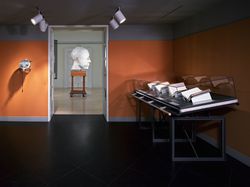
Meditations on Piero presents contemporary sculptures by British/Canadian artist Geoffrey Smedley alongside over thirty rare books from the fifteenth to the eighteenth centuries. The sculptures draw their inspiration from a series of drawings of the human head by the great Italian Renaissance artist Piero della Francesca. The exhibition relates these drawings and(...)
Meditations on Piero presents contemporary sculptures by British/Canadian artist Geoffrey Smedley alongside over thirty rare books from the fifteenth to the eighteenth centuries. The sculptures draw their inspiration from a series of drawings of the human head by the great Italian Renaissance artist Piero della Francesca. The exhibition relates these drawings and(...)
Location:
Octagonal gallery
Octagonal gallery
Date:
2 May 2001 to 16 September 2001
2 May 2001 to 16 September 2001
Title:
Meditations on Piero
Actions:
Description:
Meditations on Piero presents contemporary sculptures by British/Canadian artist Geoffrey Smedley alongside over thirty rare books from the fifteenth to the eighteenth centuries. The sculptures draw their inspiration from a series of drawings of the human head by the great Italian Renaissance artist Piero della Francesca. The exhibition relates these drawings and(...)
Meditations on Piero
Actions:
Description:
Meditations on Piero presents contemporary sculptures by British/Canadian artist Geoffrey Smedley alongside over thirty rare books from the fifteenth to the eighteenth centuries. The sculptures draw their inspiration from a series of drawings of the human head by the great Italian Renaissance artist Piero della Francesca. The exhibition relates these drawings and(...)
Form:
exhibitions
exhibitions
Date:
2 May 2001 to
16 September 2001
2 May 2001 to
16 September 2001
Location:
Octagonal gallery
Octagonal gallery
Form:
events
events

Actions:
Description:
In conjunction with the exhibition The Other Architect, Todd Rouhe and Rachel Himmelfarb of common room present the groups collaborative working process: This question—what’s the problem?—is central to how common room works. The question defines a process of searching, experiencing, interacting, and communicating that not only informs how we understand architecture and(...)
In conjunction with the exhibition The Other Architect, Todd Rouhe and Rachel Himmelfarb of common room present the groups collaborative working process: This question—what’s the problem?—is central to how common room works. The question defines a process of searching, experiencing, interacting, and communicating that not only informs how we understand architecture and(...)
Location:
Paul-Desmarais Theatre
Paul-Desmarais Theatre
Date:
19 November 2015
19 November 2015
Title:
common room: What's the Problem?
Actions:
Description:
In conjunction with the exhibition The Other Architect, Todd Rouhe and Rachel Himmelfarb of common room present the groups collaborative working process: This question—what’s the problem?—is central to how common room works. The question defines a process of searching, experiencing, interacting, and communicating that not only informs how we understand architecture and(...)
common room: What's the Problem?
Actions:
Description:
In conjunction with the exhibition The Other Architect, Todd Rouhe and Rachel Himmelfarb of common room present the groups collaborative working process: This question—what’s the problem?—is central to how common room works. The question defines a process of searching, experiencing, interacting, and communicating that not only informs how we understand architecture and(...)
Form:
events
events
Date:
19 November 2015
19 November 2015
Location:
Paul-Desmarais Theatre
Paul-Desmarais Theatre
Form:
exhibitions
exhibitions
Actions:
Description:
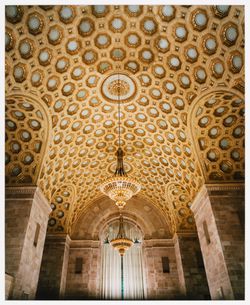
Money Matters: A Critical Look at Bank Architecture surveys the history and cultural significance of bank architecture, focusing on bank architecture as a building typology rather than in the context of a single architect or architectural firm. Challenging the standard notion that bank buildings are repetitive, dull and conservative, the exhibition reveals banks as(...)
Money Matters: A Critical Look at Bank Architecture surveys the history and cultural significance of bank architecture, focusing on bank architecture as a building typology rather than in the context of a single architect or architectural firm. Challenging the standard notion that bank buildings are repetitive, dull and conservative, the exhibition reveals banks as(...)
Location:
Main galleries
Main galleries
Date:
14 November 1990 to 24 February 1991
14 November 1990 to 24 February 1991
Title:
Money Matters: A Critical Look at Bank Architecture
Actions:
Description:
Money Matters: A Critical Look at Bank Architecture surveys the history and cultural significance of bank architecture, focusing on bank architecture as a building typology rather than in the context of a single architect or architectural firm. Challenging the standard notion that bank buildings are repetitive, dull and conservative, the exhibition reveals banks as(...)
Money Matters: A Critical Look at Bank Architecture
Actions:
Description:
Money Matters: A Critical Look at Bank Architecture surveys the history and cultural significance of bank architecture, focusing on bank architecture as a building typology rather than in the context of a single architect or architectural firm. Challenging the standard notion that bank buildings are repetitive, dull and conservative, the exhibition reveals banks as(...)
Form:
exhibitions
exhibitions
Date:
14 November 1990 to
24 February 1991
14 November 1990 to
24 February 1991
Location:
Main galleries
Main galleries
Form:
exhibitions
exhibitions
Actions:
Description:
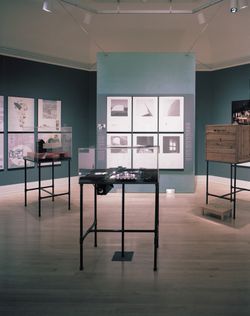
The exhibition presents the work of a generation of Japanese architects that reached architectural maturity at a time of unprecedented wealth in Japan. The six young architects included—Kiyoshi Sey Takeyama/AMORPHE; Norihiko Dan; Hiroyuki Wakabayashi; WORKSHOP; Hisashi Hara; and Atsushi Kitagawara—freely incorporate Western and Japanese architectural traditions. For this(...)
The exhibition presents the work of a generation of Japanese architects that reached architectural maturity at a time of unprecedented wealth in Japan. The six young architects included—Kiyoshi Sey Takeyama/AMORPHE; Norihiko Dan; Hiroyuki Wakabayashi; WORKSHOP; Hisashi Hara; and Atsushi Kitagawara—freely incorporate Western and Japanese architectural traditions. For this(...)
Location:
Octagonal gallery
Octagonal gallery
Date:
17 April 1991 to 30 June 1991
17 April 1991 to 30 June 1991
Title:
Emerging Japanese Architects of the 1990s
Actions:
Description:
The exhibition presents the work of a generation of Japanese architects that reached architectural maturity at a time of unprecedented wealth in Japan. The six young architects included—Kiyoshi Sey Takeyama/AMORPHE; Norihiko Dan; Hiroyuki Wakabayashi; WORKSHOP; Hisashi Hara; and Atsushi Kitagawara—freely incorporate Western and Japanese architectural traditions. For this(...)
Emerging Japanese Architects of the 1990s
Actions:
Description:
The exhibition presents the work of a generation of Japanese architects that reached architectural maturity at a time of unprecedented wealth in Japan. The six young architects included—Kiyoshi Sey Takeyama/AMORPHE; Norihiko Dan; Hiroyuki Wakabayashi; WORKSHOP; Hisashi Hara; and Atsushi Kitagawara—freely incorporate Western and Japanese architectural traditions. For this(...)
Form:
exhibitions
exhibitions
Date:
17 April 1991 to
30 June 1991
17 April 1991 to
30 June 1991
Location:
Octagonal gallery
Octagonal gallery
Form:
exhibitions
exhibitions
Actions:
Description:
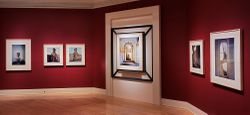
Visions and Views combines contemporary photography and engravings from the seventeenth and eighteenth centuries to establish a dialogue between two different approaches to representing Francesco Borromini’s built work. The photographs, part of a larger commission acquired by the CCA, were taken in Rome by Toronto photographer Edward Burtynsky in 1999. They are presented(...)
Visions and Views combines contemporary photography and engravings from the seventeenth and eighteenth centuries to establish a dialogue between two different approaches to representing Francesco Borromini’s built work. The photographs, part of a larger commission acquired by the CCA, were taken in Rome by Toronto photographer Edward Burtynsky in 1999. They are presented(...)
Location:
Octagonal gallery
Octagonal gallery
Date:
15 March 2000 to 7 May 2000
15 March 2000 to 7 May 2000
Title:
Visions and Views: The Architecture of Borromini in the Photographs of Edward Burtynsky
Actions:
Description:
Visions and Views combines contemporary photography and engravings from the seventeenth and eighteenth centuries to establish a dialogue between two different approaches to representing Francesco Borromini’s built work. The photographs, part of a larger commission acquired by the CCA, were taken in Rome by Toronto photographer Edward Burtynsky in 1999. They are presented(...)
Visions and Views: The Architecture of Borromini in the Photographs of Edward Burtynsky
Actions:
Description:
Visions and Views combines contemporary photography and engravings from the seventeenth and eighteenth centuries to establish a dialogue between two different approaches to representing Francesco Borromini’s built work. The photographs, part of a larger commission acquired by the CCA, were taken in Rome by Toronto photographer Edward Burtynsky in 1999. They are presented(...)
Form:
exhibitions
exhibitions
Date:
15 March 2000 to
7 May 2000
15 March 2000 to
7 May 2000
Location:
Octagonal gallery
Octagonal gallery
Form:
events
events
Title:
Scouting Skateboard Sites
Scouting Skateboard Sites
Actions:
Description:
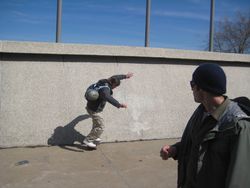
Skateboarder and landscape architect Mathieu Robichaud takes participants on a guided walk, analysing the skateboarding potential of urban spaces. Robichaud, of the firm Bloom Paysage, specialises in the design of skate parks. Inspired by the exhibition Actions: What You Can Do With the City (2008), the CCA hosts a series of workshops devoted to public actions in urban(...)
Skateboarder and landscape architect Mathieu Robichaud takes participants on a guided walk, analysing the skateboarding potential of urban spaces. Robichaud, of the firm Bloom Paysage, specialises in the design of skate parks. Inspired by the exhibition Actions: What You Can Do With the City (2008), the CCA hosts a series of workshops devoted to public actions in urban(...)
Date:
11 April 2009
11 April 2009
Title:
Scouting Skateboard Sites
Actions:
Description:
Skateboarder and landscape architect Mathieu Robichaud takes participants on a guided walk, analysing the skateboarding potential of urban spaces. Robichaud, of the firm Bloom Paysage, specialises in the design of skate parks. Inspired by the exhibition Actions: What You Can Do With the City (2008), the CCA hosts a series of workshops devoted to public actions in urban(...)
Scouting Skateboard Sites
Actions:
Description:
Skateboarder and landscape architect Mathieu Robichaud takes participants on a guided walk, analysing the skateboarding potential of urban spaces. Robichaud, of the firm Bloom Paysage, specialises in the design of skate parks. Inspired by the exhibition Actions: What You Can Do With the City (2008), the CCA hosts a series of workshops devoted to public actions in urban(...)
Form:
events
events
Date:
11 April 2009
11 April 2009
Form:
textual records
textual records
Actions:
Reference number:
DR2021:0052:001-039
Description:
The papers in this collection are related to the participation of Barry Campbell in a project to create a 1:50 scale model for the Maison d'Artiste, an unbuilt project designed by architects Theo van Doesburg and Cor van Eesteren in 1923. The model, sponsored by lawyer Piet Sanders and Barry Campbell, was made by Frans Postma and was exhibited at the Stedelijk Museum De Lakenhal (2009-2010) and the Tate Modern (2010) as part of the exhibition "Van Doesburg and the International Avant Garde: Constructing a New World". In 2013, Barry Campbell, Frans Postma and Victor Veldhuijzen van Zanten donated the 1:50 model to Het Nieuwe Instituut/The New Institute in Rotterdam, the Netherlands (Piet Sanders, who died in September, 2012, was also named as a donor). A 1:75 scale model was made for each of the donors. Textual records in the collection include correspondence, a copy of the donor agreement, and a text by Bertus Mulder. Drawings include printouts of plans, elevations, sections, and perspectives. There are also photographs of drawings. Digital files consist of a panorama by Postma & Partner. The collection includes a printout of a photograph of Barry Campbell with the 1:50 model.
DR2021:0052:001-039
Description:
The papers in this collection are related to the participation of Barry Campbell in a project to create a 1:50 scale model for the Maison d'Artiste, an unbuilt project designed by architects Theo van Doesburg and Cor van Eesteren in 1923. The model, sponsored by lawyer Piet Sanders and Barry Campbell, was made by Frans Postma and was exhibited at the Stedelijk Museum De Lakenhal (2009-2010) and the Tate Modern (2010) as part of the exhibition "Van Doesburg and the International Avant Garde: Constructing a New World". In 2013, Barry Campbell, Frans Postma and Victor Veldhuijzen van Zanten donated the 1:50 model to Het Nieuwe Instituut/The New Institute in Rotterdam, the Netherlands (Piet Sanders, who died in September, 2012, was also named as a donor). A 1:75 scale model was made for each of the donors. Textual records in the collection include correspondence, a copy of the donor agreement, and a text by Bertus Mulder. Drawings include printouts of plans, elevations, sections, and perspectives. There are also photographs of drawings. Digital files consist of a panorama by Postma & Partner. The collection includes a printout of a photograph of Barry Campbell with the 1:50 model.
People:
Date:
2007-2013
2007-2013
Title:
Barry Campbell papers related to a 1:50 scale model for the Maison d'Artiste
Actions:
DR2021:0052:001-039
Description:
The papers in this collection are related to the participation of Barry Campbell in a project to create a 1:50 scale model for the Maison d'Artiste, an unbuilt project designed by architects Theo van Doesburg and Cor van Eesteren in 1923. The model, sponsored by lawyer Piet Sanders and Barry Campbell, was made by Frans Postma and was exhibited at the Stedelijk Museum De Lakenhal (2009-2010) and the Tate Modern (2010) as part of the exhibition "Van Doesburg and the International Avant Garde: Constructing a New World". In 2013, Barry Campbell, Frans Postma and Victor Veldhuijzen van Zanten donated the 1:50 model to Het Nieuwe Instituut/The New Institute in Rotterdam, the Netherlands (Piet Sanders, who died in September, 2012, was also named as a donor). A 1:75 scale model was made for each of the donors. Textual records in the collection include correspondence, a copy of the donor agreement, and a text by Bertus Mulder. Drawings include printouts of plans, elevations, sections, and perspectives. There are also photographs of drawings. Digital files consist of a panorama by Postma & Partner. The collection includes a printout of a photograph of Barry Campbell with the 1:50 model.
Barry Campbell papers related to a 1:50 scale model for the Maison d'Artiste
Actions:
DR2021:0052:001-039
Description:
The papers in this collection are related to the participation of Barry Campbell in a project to create a 1:50 scale model for the Maison d'Artiste, an unbuilt project designed by architects Theo van Doesburg and Cor van Eesteren in 1923. The model, sponsored by lawyer Piet Sanders and Barry Campbell, was made by Frans Postma and was exhibited at the Stedelijk Museum De Lakenhal (2009-2010) and the Tate Modern (2010) as part of the exhibition "Van Doesburg and the International Avant Garde: Constructing a New World". In 2013, Barry Campbell, Frans Postma and Victor Veldhuijzen van Zanten donated the 1:50 model to Het Nieuwe Instituut/The New Institute in Rotterdam, the Netherlands (Piet Sanders, who died in September, 2012, was also named as a donor). A 1:75 scale model was made for each of the donors. Textual records in the collection include correspondence, a copy of the donor agreement, and a text by Bertus Mulder. Drawings include printouts of plans, elevations, sections, and perspectives. There are also photographs of drawings. Digital files consist of a panorama by Postma & Partner. The collection includes a printout of a photograph of Barry Campbell with the 1:50 model.
Form:
textual records
textual records
Date:
2007-2013
2007-2013
People:
Form:
exhibitions
exhibitions
Actions:
Description:
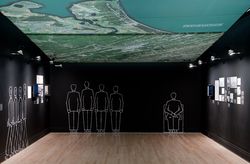
The armies of World War Two represented only the tips of colliding icebergs, the belligerent nations which had mobilized and transformed themselves for a global “war of production” of unprecedented scale. Architecture in Uniform: Designing and Building for the Second World War documents the extensive contribution of architecture to the war between the bombings of Guernica(...)
The armies of World War Two represented only the tips of colliding icebergs, the belligerent nations which had mobilized and transformed themselves for a global “war of production” of unprecedented scale. Architecture in Uniform: Designing and Building for the Second World War documents the extensive contribution of architecture to the war between the bombings of Guernica(...)
Location:
Main galleries
Main galleries
Date:
13 April 2011 to 18 September 2011
13 April 2011 to 18 September 2011
Title:
Architecture in Uniform: Designing and Building for the Second World War
Actions:
Description:
The armies of World War Two represented only the tips of colliding icebergs, the belligerent nations which had mobilized and transformed themselves for a global “war of production” of unprecedented scale. Architecture in Uniform: Designing and Building for the Second World War documents the extensive contribution of architecture to the war between the bombings of Guernica(...)
Architecture in Uniform: Designing and Building for the Second World War
Actions:
Description:
The armies of World War Two represented only the tips of colliding icebergs, the belligerent nations which had mobilized and transformed themselves for a global “war of production” of unprecedented scale. Architecture in Uniform: Designing and Building for the Second World War documents the extensive contribution of architecture to the war between the bombings of Guernica(...)
Form:
exhibitions
exhibitions
Date:
13 April 2011 to
18 September 2011
13 April 2011 to
18 September 2011
Location:
Main galleries
Main galleries
Form:
exhibitions
exhibitions
Actions:
Description:
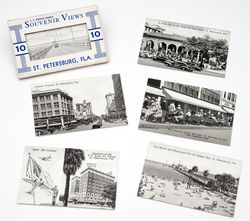
Mass-produced objects are often overlooked in favour of more sophisticated and more scholarly sources as the basis for understanding architecture as it is perceived and interpreted for popular assimilation. Focusing on the United States between the 1890s and the 1960s Popularizing Architecture in the U.S.A. highlights ephemeral items that have created public awareness of(...)
Mass-produced objects are often overlooked in favour of more sophisticated and more scholarly sources as the basis for understanding architecture as it is perceived and interpreted for popular assimilation. Focusing on the United States between the 1890s and the 1960s Popularizing Architecture in the U.S.A. highlights ephemeral items that have created public awareness of(...)
Location:
Hall cases
Hall cases
Date:
14 June 1995 to 29 October 1995
14 June 1995 to 29 October 1995
Title:
Popularizing Architecture in the U.S.A.
Actions:
Description:
Mass-produced objects are often overlooked in favour of more sophisticated and more scholarly sources as the basis for understanding architecture as it is perceived and interpreted for popular assimilation. Focusing on the United States between the 1890s and the 1960s Popularizing Architecture in the U.S.A. highlights ephemeral items that have created public awareness of(...)
Popularizing Architecture in the U.S.A.
Actions:
Description:
Mass-produced objects are often overlooked in favour of more sophisticated and more scholarly sources as the basis for understanding architecture as it is perceived and interpreted for popular assimilation. Focusing on the United States between the 1890s and the 1960s Popularizing Architecture in the U.S.A. highlights ephemeral items that have created public awareness of(...)
Form:
exhibitions
exhibitions
Date:
14 June 1995 to
29 October 1995
14 June 1995 to
29 October 1995
Location:
Hall cases
Hall cases
Form:
events
events
Description:
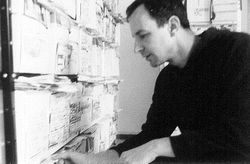
Wolfgang Ernst, chair of media theories at Humboldt University in Berlin, introduces media archaeology as a method of research and discusses recent concepts of the dynamic archive. He expresses the need for a virtual museum of computer architecture and addresses the concept of the so-called digital humanities, with special attention to the sound-related epistemology(...)
Wolfgang Ernst, chair of media theories at Humboldt University in Berlin, introduces media archaeology as a method of research and discusses recent concepts of the dynamic archive. He expresses the need for a virtual museum of computer architecture and addresses the concept of the so-called digital humanities, with special attention to the sound-related epistemology(...)
Location:
Paul-Desmarais Theatre
Paul-Desmarais Theatre
Date:
25 September 2014 , 6pm
25 September 2014 , 6pm
Title:
Digital Media Archaeology: Archive, Museum and Sonicity
Actions:
Description:
Wolfgang Ernst, chair of media theories at Humboldt University in Berlin, introduces media archaeology as a method of research and discusses recent concepts of the dynamic archive. He expresses the need for a virtual museum of computer architecture and addresses the concept of the so-called digital humanities, with special attention to the sound-related epistemology(...)
Digital Media Archaeology: Archive, Museum and Sonicity
Actions:
Description:
Wolfgang Ernst, chair of media theories at Humboldt University in Berlin, introduces media archaeology as a method of research and discusses recent concepts of the dynamic archive. He expresses the need for a virtual museum of computer architecture and addresses the concept of the so-called digital humanities, with special attention to the sound-related epistemology(...)
Form:
events
events
Date:
25 September 2014
6pm
25 September 2014
6pm
Location:
Paul-Desmarais Theatre
Paul-Desmarais Theatre


