


2616 Results
Form:
books
books
Title:
Le Corbusier et le Japon
Le Corbusier et le Japon
Actions:
Price:
$72.95
(available in store)
Summary:
Aucun autre pays que le Japon n'a fait une telle place à Le Corbusier, à ses disciples et aux architectes qu'il a longtemps inspirés. Nulle part ailleurs, ses écrits n'ont été si rapidement traduits, publiés et commentés. Ce sont les jeunes architectes japonais, attirés par le prestige des textes de Le Corbusier, qui ont donné le départ d'un formidable intérêt pour(...)
$72.95
(available in store)
Summary:
Aucun autre pays que le Japon n'a fait une telle place à Le Corbusier, à ses disciples et aux architectes qu'il a longtemps inspirés. Nulle part ailleurs, ses écrits n'ont été si rapidement traduits, publiés et commentés. Ce sont les jeunes architectes japonais, attirés par le prestige des textes de Le Corbusier, qui ont donné le départ d'un formidable intérêt pour(...)
Subject:
Architecture Monographs
Architecture Monographs
Publication:
February 2007, Paris
February 2007, Paris
Title:
Le Corbusier et le Japon
Actions:
Price:
$72.95
(available in store)
Summary:
Aucun autre pays que le Japon n'a fait une telle place à Le Corbusier, à ses disciples et aux architectes qu'il a longtemps inspirés. Nulle part ailleurs, ses écrits n'ont été si rapidement traduits, publiés et commentés. Ce sont les jeunes architectes japonais, attirés par le prestige des textes de Le Corbusier, qui ont donné le départ d'un formidable intérêt pour l'agence de la rue de Sèvres ; cet intérêt pour l'architecte était d'ailleurs sélectif, il laissait de côté aussi bien l'urbanisme que l'œuvre plastique du dessinateur ou du peintre, et combinait plusieurs images successives de Le Corbusier, qui était d'abord, dans les années 1920 et 1930, un " jeune héros ", puis, après 1945, un " maître " du modernisme, et enfin, l'architecte de référence d'une nouvelle approche de l'espace qu'au Japon, en raison des conditions d'une intense démarche de modernisation, on expérimente avec passion. Jusqu'à présent cependant cette relation de Le Corbusier avec le Japon n'avait pas fait l'objet d'une étude. A côté des grandes sagas, celle de Le Corbusier en Amérique latine, celle de Le Corbusier en URSS, la relation de Le Corbusier avec le Japon était demeurée une page blanche, qui attendait son approche, son écriture, ses interprétations. C'est ce qu'apportent les travaux du colloque réuni à Tokyo en 1997, que nous présentons ici aux lecteurs de langue française.
Le Corbusier et le Japon
Actions:
Price:
$72.95
(available in store)
Summary:
Aucun autre pays que le Japon n'a fait une telle place à Le Corbusier, à ses disciples et aux architectes qu'il a longtemps inspirés. Nulle part ailleurs, ses écrits n'ont été si rapidement traduits, publiés et commentés. Ce sont les jeunes architectes japonais, attirés par le prestige des textes de Le Corbusier, qui ont donné le départ d'un formidable intérêt pour l'agence de la rue de Sèvres ; cet intérêt pour l'architecte était d'ailleurs sélectif, il laissait de côté aussi bien l'urbanisme que l'œuvre plastique du dessinateur ou du peintre, et combinait plusieurs images successives de Le Corbusier, qui était d'abord, dans les années 1920 et 1930, un " jeune héros ", puis, après 1945, un " maître " du modernisme, et enfin, l'architecte de référence d'une nouvelle approche de l'espace qu'au Japon, en raison des conditions d'une intense démarche de modernisation, on expérimente avec passion. Jusqu'à présent cependant cette relation de Le Corbusier avec le Japon n'avait pas fait l'objet d'une étude. A côté des grandes sagas, celle de Le Corbusier en Amérique latine, celle de Le Corbusier en URSS, la relation de Le Corbusier avec le Japon était demeurée une page blanche, qui attendait son approche, son écriture, ses interprétations. C'est ce qu'apportent les travaux du colloque réuni à Tokyo en 1997, que nous présentons ici aux lecteurs de langue française.
Form:
books
books
Publication:
February 2007, Paris
February 2007, Paris
Subject:
Architecture Monographs
Architecture Monographs
Form:
books
books
Title:
Les Orients de Pierre Loti
Les Orients de Pierre Loti
Actions:
Price:
$32.95
(available to order)
Summary:
Où l'on voit qu'à travers ces Orients photographiés, l'imaginaire exotique transforme à la fois l'œuvre et la vie de Loti. Pierre Loti a voyagé toute sa vie. Comme officier de la Marine nationale, il a sillonné les océans du monde entier, traversé déserts et brousses, arpenté villes et palais pour ses missions officielles. Mais, assoiffé d'ailleurs et d'inconnu, il a(...)
$32.95
(available to order)
Summary:
Où l'on voit qu'à travers ces Orients photographiés, l'imaginaire exotique transforme à la fois l'œuvre et la vie de Loti. Pierre Loti a voyagé toute sa vie. Comme officier de la Marine nationale, il a sillonné les océans du monde entier, traversé déserts et brousses, arpenté villes et palais pour ses missions officielles. Mais, assoiffé d'ailleurs et d'inconnu, il a(...)
Title:
Les Orients de Pierre Loti
Actions:
Price:
$32.95
(available to order)
Summary:
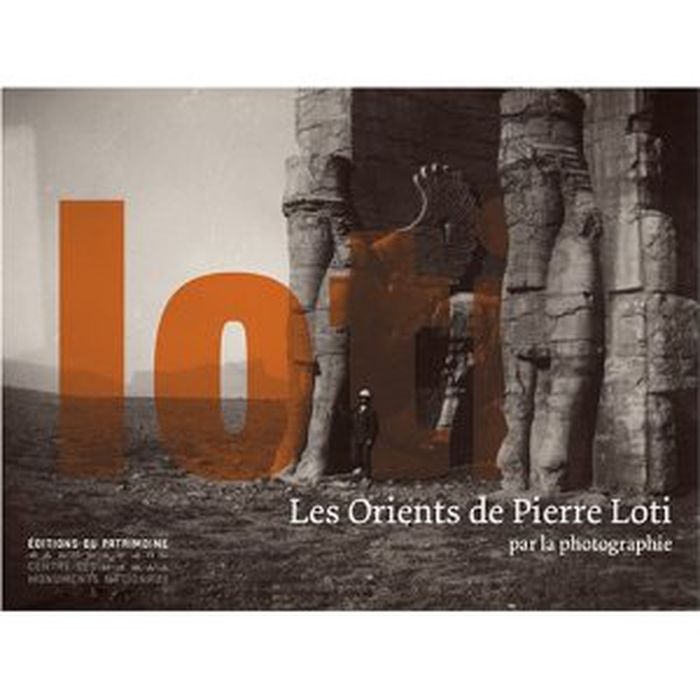
Où l'on voit qu'à travers ces Orients photographiés, l'imaginaire exotique transforme à la fois l'œuvre et la vie de Loti. Pierre Loti a voyagé toute sa vie. Comme officier de la Marine nationale, il a sillonné les océans du monde entier, traversé déserts et brousses, arpenté villes et palais pour ses missions officielles. Mais, assoiffé d'ailleurs et d'inconnu, il a aussi cherché dans l'exotisme l'expérience de vies multiples en miroir de son tempérament inquiet. Pour autant, d'Istanbul à Ispahan et Bangkok, de Bou Saada à Tokyo ou Assouan, mais aussi du Néguev à la mer de Chine et du Gange à la baie d'Along, ce sont les Orients qui, par-dessus tout, l'ont fasciné : Orient proche ou extrême, africain, arabe, balkanique, biblique, la photographie est pour lui un moyen privilégié de capter la magie orientale et surtout de fixer l'éphémère - l'une des obsessions majeures et fondatrices de son œuvre. Il collectionne les images de photographes connus - les frères Beato ou Zangaki, Bourne, Shepherd, Bonfils... ; quant aux siennes, elles manifestent un sens aigu de la composition et du cadrage, que ce soit pour les monuments, les paysages grandioses, les visages et les attitudes des gens de tous les jours dans un cadre de vie réaliste, " humaniste " avant la lettre. De quoi découvrir un Loti de l'image et du regard autant que du texte.
Les Orients de Pierre Loti
Actions:
Price:
$32.95
(available to order)
Summary:
Où l'on voit qu'à travers ces Orients photographiés, l'imaginaire exotique transforme à la fois l'œuvre et la vie de Loti. Pierre Loti a voyagé toute sa vie. Comme officier de la Marine nationale, il a sillonné les océans du monde entier, traversé déserts et brousses, arpenté villes et palais pour ses missions officielles. Mais, assoiffé d'ailleurs et d'inconnu, il a aussi cherché dans l'exotisme l'expérience de vies multiples en miroir de son tempérament inquiet. Pour autant, d'Istanbul à Ispahan et Bangkok, de Bou Saada à Tokyo ou Assouan, mais aussi du Néguev à la mer de Chine et du Gange à la baie d'Along, ce sont les Orients qui, par-dessus tout, l'ont fasciné : Orient proche ou extrême, africain, arabe, balkanique, biblique, la photographie est pour lui un moyen privilégié de capter la magie orientale et surtout de fixer l'éphémère - l'une des obsessions majeures et fondatrices de son œuvre. Il collectionne les images de photographes connus - les frères Beato ou Zangaki, Bourne, Shepherd, Bonfils... ; quant aux siennes, elles manifestent un sens aigu de la composition et du cadrage, que ce soit pour les monuments, les paysages grandioses, les visages et les attitudes des gens de tous les jours dans un cadre de vie réaliste, " humaniste " avant la lettre. De quoi découvrir un Loti de l'image et du regard autant que du texte.
Form:
books
books
Publication:
November 2006, Paris
November 2006, Paris
Subject:
Photography monographs
Photography monographs
Form:
books
books
Title:
Les gratte-ciel
Les gratte-ciel
Actions:
Price:
$64.95
(available to order)
Summary:
Avec l'apparition des gratte-ciel, véritables symboles de modernité urbaine, le paysage architectural des grandes métropoles connaît, dès la fin du XIXe siècle, des transformations majeures. Ces buildings spectaculaires, qui s'élancent dans les ciels de Tokyo, de Shanghai, de Riyad, de Londres ou de Chicago, sont non seulement les symboles de la croissance économique et(...)
$64.95
(available to order)
Summary:
Avec l'apparition des gratte-ciel, véritables symboles de modernité urbaine, le paysage architectural des grandes métropoles connaît, dès la fin du XIXe siècle, des transformations majeures. Ces buildings spectaculaires, qui s'élancent dans les ciels de Tokyo, de Shanghai, de Riyad, de Londres ou de Chicago, sont non seulement les symboles de la croissance économique et(...)
Title:
Les gratte-ciel
Actions:
Price:
$64.95
(available to order)
Summary:
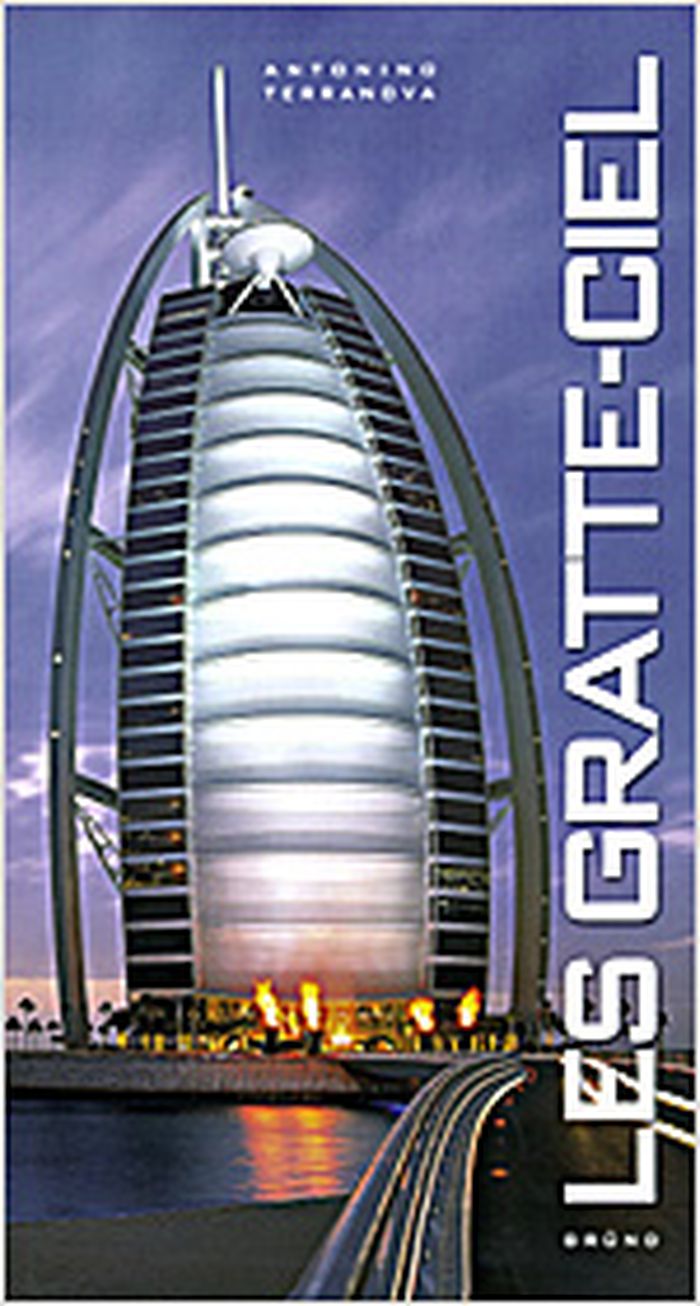
Avec l'apparition des gratte-ciel, véritables symboles de modernité urbaine, le paysage architectural des grandes métropoles connaît, dès la fin du XIXe siècle, des transformations majeures. Ces buildings spectaculaires, qui s'élancent dans les ciels de Tokyo, de Shanghai, de Riyad, de Londres ou de Chicago, sont non seulement les symboles de la croissance économique et financière de ces villes, mais aussi des œuvres d'art. Constructions innovantes -au niveau des techniques et des matériaux de construction - ou géants d'acier, de verre et de granit qui adaptent aux exigences de la modernité des éléments issus de l'architecture traditionnelle, les gratte-ciel transforment les paysages dans lesquels ils s'inscrivent. Si au début le principal défi était celui de la prouesse technique et du toujours plus haut, aujourd'hui les concepteurs privilégient l'habitabilité de l'immeuble et se montrent de plus en plus soucieux du bien-être environnemental. Les fonctions remplies par ces buildings dans un espace urbain en perpétuelle évolution sont très diverses : centres financiers ou administratifs, bureaux ou sièges d'entreprises, centres commerciaux ou hôtels. Cet ouvrage recense les gratte-ciel les plus spectaculaires et extravagants et raconte l'histoire de leur construction. Des images et des plans dévoilent la structure et l'organisation invisibles des buildings qui ont transformé le paysage architectural des métropoles. Les textes d'Antonino Terranova racontent toute la variété et l'originalité des gratte-ciel.
Les gratte-ciel
Actions:
Price:
$64.95
(available to order)
Summary:
Avec l'apparition des gratte-ciel, véritables symboles de modernité urbaine, le paysage architectural des grandes métropoles connaît, dès la fin du XIXe siècle, des transformations majeures. Ces buildings spectaculaires, qui s'élancent dans les ciels de Tokyo, de Shanghai, de Riyad, de Londres ou de Chicago, sont non seulement les symboles de la croissance économique et financière de ces villes, mais aussi des œuvres d'art. Constructions innovantes -au niveau des techniques et des matériaux de construction - ou géants d'acier, de verre et de granit qui adaptent aux exigences de la modernité des éléments issus de l'architecture traditionnelle, les gratte-ciel transforment les paysages dans lesquels ils s'inscrivent. Si au début le principal défi était celui de la prouesse technique et du toujours plus haut, aujourd'hui les concepteurs privilégient l'habitabilité de l'immeuble et se montrent de plus en plus soucieux du bien-être environnemental. Les fonctions remplies par ces buildings dans un espace urbain en perpétuelle évolution sont très diverses : centres financiers ou administratifs, bureaux ou sièges d'entreprises, centres commerciaux ou hôtels. Cet ouvrage recense les gratte-ciel les plus spectaculaires et extravagants et raconte l'histoire de leur construction. Des images et des plans dévoilent la structure et l'organisation invisibles des buildings qui ont transformé le paysage architectural des métropoles. Les textes d'Antonino Terranova racontent toute la variété et l'originalité des gratte-ciel.
Form:
books
books
Publication:
September 2006, Paris
September 2006, Paris
Subject:
Gratte-ciels
Gratte-ciels
Form:
books
books

Actions:
Price:
$85.00
(available to order)
Summary:
How can housing better meet people’s diverse and changing needs? Moving away from the focus on capsule architecture that dominates so many studies of Japan’s Metabolist architects, ''Digesting Metabolism'' investigates the impact on Japanese housing of Le Corbusier’s idea of 'artificial land,' perhaps architecture’s most famous concept that the fewest number of people(...)
$85.00
(available to order)
Summary:
How can housing better meet people’s diverse and changing needs? Moving away from the focus on capsule architecture that dominates so many studies of Japan’s Metabolist architects, ''Digesting Metabolism'' investigates the impact on Japanese housing of Le Corbusier’s idea of 'artificial land,' perhaps architecture’s most famous concept that the fewest number of people(...)
Title:
Digesting Metabolism: Artificial land in Japan 1954-2202
Actions:
Price:
$85.00
(available to order)
Summary:
How can housing better meet people’s diverse and changing needs? Moving away from the focus on capsule architecture that dominates so many studies of Japan’s Metabolist architects, ''Digesting Metabolism'' investigates the impact on Japanese housing of Le Corbusier’s idea of 'artificial land,' perhaps architecture’s most famous concept that the fewest number of people have heard of. Long buried by the term 'megastructure' that it inspired, artificial land joins the individual and collective, envisioning housing as stacked platforms of plots for building freestanding homes of all variety. This book explores in detail 11 Japanese projects that translate this dream of durability combined with flexibility into built reality, illuminating its appeal for a nation whose existing land—from both earthquakes and cost—is highly unstable. First introduced to Japan in 1954 by Le Corbusier’s protégé, Takamasa Yosizaka, artificial land is essential to the Metabolists who debuted in Tokyo in 1960, with it sparking their desire to add ''a time factor into city planning.'' Yet artificial land has had a hold on Japan’s metabolic imagination well beyond the ‘60s, promising domestic satisfaction and environmental resilience from the postwar period to today’s government policies. ''Digesting Metabolism'' uncovers this unique Japanese history and its possible future, finding examples of infrastructure, adaptation and dweller control that challenge commodified models of housing around the world.
Digesting Metabolism: Artificial land in Japan 1954-2202
Actions:
Price:
$85.00
(available to order)
Summary:
How can housing better meet people’s diverse and changing needs? Moving away from the focus on capsule architecture that dominates so many studies of Japan’s Metabolist architects, ''Digesting Metabolism'' investigates the impact on Japanese housing of Le Corbusier’s idea of 'artificial land,' perhaps architecture’s most famous concept that the fewest number of people have heard of. Long buried by the term 'megastructure' that it inspired, artificial land joins the individual and collective, envisioning housing as stacked platforms of plots for building freestanding homes of all variety. This book explores in detail 11 Japanese projects that translate this dream of durability combined with flexibility into built reality, illuminating its appeal for a nation whose existing land—from both earthquakes and cost—is highly unstable. First introduced to Japan in 1954 by Le Corbusier’s protégé, Takamasa Yosizaka, artificial land is essential to the Metabolists who debuted in Tokyo in 1960, with it sparking their desire to add ''a time factor into city planning.'' Yet artificial land has had a hold on Japan’s metabolic imagination well beyond the ‘60s, promising domestic satisfaction and environmental resilience from the postwar period to today’s government policies. ''Digesting Metabolism'' uncovers this unique Japanese history and its possible future, finding examples of infrastructure, adaptation and dweller control that challenge commodified models of housing around the world.
Form:
books
books
Publication:
November 2022
November 2022
Subject:
Modernism
Modernism
Form:
books
books
Title:
Buildings must die
Buildings must die
Actions:
Price:
$38.95
(available to order)
Summary:
Buildings, although inanimate, are often assumed to have “life.” And the architect, through the act of design, is assumed to be their conceiver and creator. But what of the “death” of buildings? What of the decay, deterioration, and destruction to which they are inevitably subject? And what might such endings mean for architecture’s sense of itself? In Buildings Must Die,(...)
$38.95
(available to order)
Summary:
Buildings, although inanimate, are often assumed to have “life.” And the architect, through the act of design, is assumed to be their conceiver and creator. But what of the “death” of buildings? What of the decay, deterioration, and destruction to which they are inevitably subject? And what might such endings mean for architecture’s sense of itself? In Buildings Must Die,(...)
Title:
Buildings must die
Actions:
Price:
$38.95
(available to order)
Summary:
Buildings, although inanimate, are often assumed to have “life.” And the architect, through the act of design, is assumed to be their conceiver and creator. But what of the “death” of buildings? What of the decay, deterioration, and destruction to which they are inevitably subject? And what might such endings mean for architecture’s sense of itself? In Buildings Must Die, Stephen Cairns and Jane Jacobs look awry at core architectural concerns. They examine spalling concrete and creeping rust, contemplate ruins old and new, and pick through the rubble of earthquake-shattered churches, imploded housing projects, and demolished Brutalist office buildings. Their investigation of the death of buildings reorders architectural notions of creativity, reshapes architecture’s preoccupation with good form, loosens its vanities of durability, and expands its sense of value. It does so not to kill off architecture as we know it, but to rethink its agency and its capacity to make worlds differently. Cairns and Jacobs offer an original contemplation of architecture that draws on theories of waste and value. Their richly illustrated case studies of building “deaths” include the planned and the unintended, the lamented and the celebrated. They take us from Moline to Christchurch, from London to Bangkok, from Tokyo to Paris. And they feature the work of such architects as Eero Saarinen, Carlo Scarpa, Cedric Price, Arata Isozaki, Rem Koolhaas and François Roche.
Buildings must die
Actions:
Price:
$38.95
(available to order)
Summary:
Buildings, although inanimate, are often assumed to have “life.” And the architect, through the act of design, is assumed to be their conceiver and creator. But what of the “death” of buildings? What of the decay, deterioration, and destruction to which they are inevitably subject? And what might such endings mean for architecture’s sense of itself? In Buildings Must Die, Stephen Cairns and Jane Jacobs look awry at core architectural concerns. They examine spalling concrete and creeping rust, contemplate ruins old and new, and pick through the rubble of earthquake-shattered churches, imploded housing projects, and demolished Brutalist office buildings. Their investigation of the death of buildings reorders architectural notions of creativity, reshapes architecture’s preoccupation with good form, loosens its vanities of durability, and expands its sense of value. It does so not to kill off architecture as we know it, but to rethink its agency and its capacity to make worlds differently. Cairns and Jacobs offer an original contemplation of architecture that draws on theories of waste and value. Their richly illustrated case studies of building “deaths” include the planned and the unintended, the lamented and the celebrated. They take us from Moline to Christchurch, from London to Bangkok, from Tokyo to Paris. And they feature the work of such architects as Eero Saarinen, Carlo Scarpa, Cedric Price, Arata Isozaki, Rem Koolhaas and François Roche.
Form:
books
books
Publication:
August 2017
August 2017
Subject:
Architectural Theory
Architectural Theory
Form:
books
books
Price:
$36.95
(available to order)
Summary:
By United Nations estimates, 60 percent of the world's population will be urban by 2030. With the increasing speed of urbanization, especially in the developing world, scholars are now rethinking standard concepts and histories of modern cities. "The Spaces of the Modern City" historicizes the contemporary discussion of urbanism, highlighting the local and global breadth(...)
$36.95
(available to order)
Summary:
By United Nations estimates, 60 percent of the world's population will be urban by 2030. With the increasing speed of urbanization, especially in the developing world, scholars are now rethinking standard concepts and histories of modern cities. "The Spaces of the Modern City" historicizes the contemporary discussion of urbanism, highlighting the local and global breadth(...)
Subject:
Urban Theory
Urban Theory
Publication:
February 2008, Princeton, Oxford
February 2008, Princeton, Oxford
Title:
The Spaces of the Modern city : imaginaries, politics, and everyday life
Actions:
Price:
$36.95
(available to order)
Summary:
By United Nations estimates, 60 percent of the world's population will be urban by 2030. With the increasing speed of urbanization, especially in the developing world, scholars are now rethinking standard concepts and histories of modern cities. "The Spaces of the Modern City" historicizes the contemporary discussion of urbanism, highlighting the local and global breadth of the city landscape. This interdisciplinary collection examines how the city develops in the interactions of space and imagination. The essays focus on issues such as street design in Vienna, the motion picture industry in Los Angeles, architecture in Marseilles and Algiers, and the kaleidoscopic paradox of post-apartheid Johannesburg. They explore the nature of spatial politics, examining the disparate worlds of eighteenth-century Baghdad, nineteenth-century Morelia, Cold War-era West Berlin, and postwar Los Angeles. They also show the meaning of everyday spaces to urban life, illuminating issues such as crime in metropolitan London, youth culture in Dakar, "memory projects" in Tokyo, and Bombay cinema. Informed by a range of theoretical writings, this collection offers a fresh and truly global perspective on the nature of the modern city. The contributors are Sheila Crane, Belinda Davis, Mamadou Diouf, Philip J. Ethington, David Frisby, Christina M. Jiménez, Dina Rizk Khoury, Ranjani Mazumdar, Frank Mort, Martin Murray, Jordan Sand, and Sarah Schrank.
The Spaces of the Modern city : imaginaries, politics, and everyday life
Actions:
Price:
$36.95
(available to order)
Summary:
By United Nations estimates, 60 percent of the world's population will be urban by 2030. With the increasing speed of urbanization, especially in the developing world, scholars are now rethinking standard concepts and histories of modern cities. "The Spaces of the Modern City" historicizes the contemporary discussion of urbanism, highlighting the local and global breadth of the city landscape. This interdisciplinary collection examines how the city develops in the interactions of space and imagination. The essays focus on issues such as street design in Vienna, the motion picture industry in Los Angeles, architecture in Marseilles and Algiers, and the kaleidoscopic paradox of post-apartheid Johannesburg. They explore the nature of spatial politics, examining the disparate worlds of eighteenth-century Baghdad, nineteenth-century Morelia, Cold War-era West Berlin, and postwar Los Angeles. They also show the meaning of everyday spaces to urban life, illuminating issues such as crime in metropolitan London, youth culture in Dakar, "memory projects" in Tokyo, and Bombay cinema. Informed by a range of theoretical writings, this collection offers a fresh and truly global perspective on the nature of the modern city. The contributors are Sheila Crane, Belinda Davis, Mamadou Diouf, Philip J. Ethington, David Frisby, Christina M. Jiménez, Dina Rizk Khoury, Ranjani Mazumdar, Frank Mort, Martin Murray, Jordan Sand, and Sarah Schrank.
Form:
books
books
Publication:
February 2008, Princeton, Oxford
February 2008, Princeton, Oxford
Subject:
Urban Theory
Urban Theory
Form:
journals and magazines
journals and magazines
Price:
$44.00
(available to order)
Summary:
The city has become an important new starting point in the quest for architecture. At a time of extreme urbanisation, unharnessed urban growth has led many architects to rethink the way that buildings are designed for the global metropolis. It is no longer practical or desirable to impose the standardised, idealized planning of the 20th century. Rather than viewing the(...)
$44.00
(available to order)
Summary:
The city has become an important new starting point in the quest for architecture. At a time of extreme urbanisation, unharnessed urban growth has led many architects to rethink the way that buildings are designed for the global metropolis. It is no longer practical or desirable to impose the standardised, idealized planning of the 20th century. Rather than viewing the(...)
Title:
AD- City catalyst: design architecture in the age of extreme urbanisation
Actions:
Price:
$44.00
(available to order)
Summary:
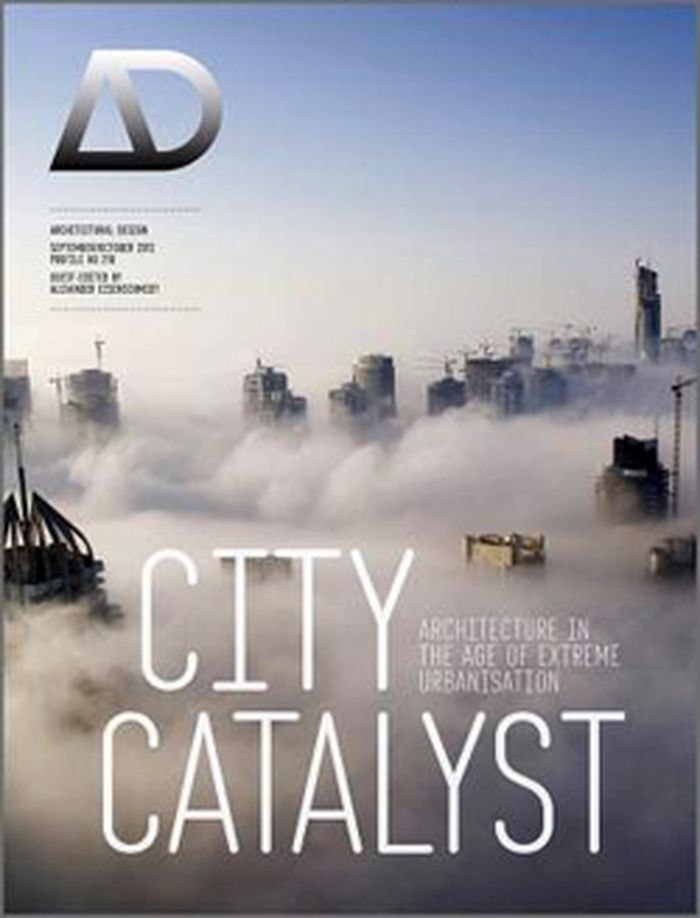
The city has become an important new starting point in the quest for architecture. At a time of extreme urbanisation, unharnessed urban growth has led many architects to rethink the way that buildings are designed for the global metropolis. It is no longer practical or desirable to impose the standardised, idealized planning of the 20th century. Rather than viewing the city as a fixed entity, architects are now seeking direct inspiration from the existing urban environment and learning from its ever-changing state that resists predetermination. The city, in all its complexity, has become a realm of invention and a space for possibilities where new designs can be tested. This is as apparent in the work that architects are undertaking in the informal settlements, or favelas, of Latin America, as in the more regulated spaces of Chicago, London or Tokyo. Favouring an inclusive way of viewing the city, no aspect of the urban world is any longer rejected outright, and architects and urban designers instead find potential and learn from the underlying dynamics of the contemporary city. This attitude highlights the generative capacities of the city and finds new ways of engaging it. At the very least, it advances an architectural thinking that engages the city on its own ground, abets its potential and seeks opportunities in the existing condition.
AD- City catalyst: design architecture in the age of extreme urbanisation
Actions:
Price:
$44.00
(available to order)
Summary:
The city has become an important new starting point in the quest for architecture. At a time of extreme urbanisation, unharnessed urban growth has led many architects to rethink the way that buildings are designed for the global metropolis. It is no longer practical or desirable to impose the standardised, idealized planning of the 20th century. Rather than viewing the city as a fixed entity, architects are now seeking direct inspiration from the existing urban environment and learning from its ever-changing state that resists predetermination. The city, in all its complexity, has become a realm of invention and a space for possibilities where new designs can be tested. This is as apparent in the work that architects are undertaking in the informal settlements, or favelas, of Latin America, as in the more regulated spaces of Chicago, London or Tokyo. Favouring an inclusive way of viewing the city, no aspect of the urban world is any longer rejected outright, and architects and urban designers instead find potential and learn from the underlying dynamics of the contemporary city. This attitude highlights the generative capacities of the city and finds new ways of engaging it. At the very least, it advances an architectural thinking that engages the city on its own ground, abets its potential and seeks opportunities in the existing condition.
Form:
journals and magazines
journals and magazines
Publication:
October 2012
October 2012
Subject:
Magazines
Magazines
Form:
books
books
Actions:
Price:
$51.85
(available to order)
Summary:
Paper is generally presumed to be the stock-in-trade of the graphic design profession. However, due to the diverse qualities of paper, and the constant desire of designers to push the boundaries of their profession, its potential is being explored more and more by all disciplines of design. "More Paperwork" follows on from "Paperwork", which looked at the use of paper(...)
$51.85
(available to order)
Summary:
Paper is generally presumed to be the stock-in-trade of the graphic design profession. However, due to the diverse qualities of paper, and the constant desire of designers to push the boundaries of their profession, its potential is being explored more and more by all disciplines of design. "More Paperwork" follows on from "Paperwork", which looked at the use of paper(...)
Title:
More paperwork : exploring the potential of paper in design and architecture
Actions:
Price:
$51.85
(available to order)
Summary:
Paper is generally presumed to be the stock-in-trade of the graphic design profession. However, due to the diverse qualities of paper, and the constant desire of designers to push the boundaries of their profession, its potential is being explored more and more by all disciplines of design. "More Paperwork" follows on from "Paperwork", which looked at the use of paper in graphic design, and reviews the amazing developments in its application across all areas of design in the last ten years, including product, furniture, fashion and architecture. The interactive features of the first book have also been extended in the second, to create a range of special effects designed to be completed by the reader. Through the selected work of leading designers around the world, from Amsterdam to Tokyo and New York to Zagreb, this book sets out to demonstrate how the astounding and diverse qualities of paper can be applied. From an inspirational church by Shigeru Ban and a humorous airmail dress by Hussein Chalayan, to an intricate range of packaging by Pentagram and the Honey Pop chair by Tokujin Yoshioka, "More Paperwork" shows that paper can be used to create functional, exciting and innovative designs. The book will also include items that are not necessarily chosen for the beauty of their design, but rather because they demonstrate some of the astounding things that paper is capable of: these items still display an intrinsic beauty that will be demonstrated with beautiful photographs.
More paperwork : exploring the potential of paper in design and architecture
Actions:
Price:
$51.85
(available to order)
Summary:
Paper is generally presumed to be the stock-in-trade of the graphic design profession. However, due to the diverse qualities of paper, and the constant desire of designers to push the boundaries of their profession, its potential is being explored more and more by all disciplines of design. "More Paperwork" follows on from "Paperwork", which looked at the use of paper in graphic design, and reviews the amazing developments in its application across all areas of design in the last ten years, including product, furniture, fashion and architecture. The interactive features of the first book have also been extended in the second, to create a range of special effects designed to be completed by the reader. Through the selected work of leading designers around the world, from Amsterdam to Tokyo and New York to Zagreb, this book sets out to demonstrate how the astounding and diverse qualities of paper can be applied. From an inspirational church by Shigeru Ban and a humorous airmail dress by Hussein Chalayan, to an intricate range of packaging by Pentagram and the Honey Pop chair by Tokujin Yoshioka, "More Paperwork" shows that paper can be used to create functional, exciting and innovative designs. The book will also include items that are not necessarily chosen for the beauty of their design, but rather because they demonstrate some of the astounding things that paper is capable of: these items still display an intrinsic beauty that will be demonstrated with beautiful photographs.
Form:
books
books
Publication:
May 2005, London
May 2005, London
Subject:
Graphic Design and Typography
Graphic Design and Typography
Form:
books
books
Actions:
Price:
$60.00
(available to order)
Summary:
L'ornement est-il un crime ou un style? C'est en ces termes que s'ouvrit à Vienne la scène qui décida de son statut au XXe siècle: d'un côté, sa condamnation par Loos et par tout le modernisme au nom de la pureté, et, de l'autre, l'élaboration d'une stylistique, de Riegl à Worringer, ou Deleuze. Développer aujourd'hui une "philosophie de l'ornement", c'est donc revenir(...)
$60.00
(available to order)
Summary:
L'ornement est-il un crime ou un style? C'est en ces termes que s'ouvrit à Vienne la scène qui décida de son statut au XXe siècle: d'un côté, sa condamnation par Loos et par tout le modernisme au nom de la pureté, et, de l'autre, l'élaboration d'une stylistique, de Riegl à Worringer, ou Deleuze. Développer aujourd'hui une "philosophie de l'ornement", c'est donc revenir(...)
Title:
Philosophie de l'ornement: d'orient en Occident
Actions:
Price:
$60.00
(available to order)
Summary:
L'ornement est-il un crime ou un style? C'est en ces termes que s'ouvrit à Vienne la scène qui décida de son statut au XXe siècle: d'un côté, sa condamnation par Loos et par tout le modernisme au nom de la pureté, et, de l'autre, l'élaboration d'une stylistique, de Riegl à Worringer, ou Deleuze. Développer aujourd'hui une "philosophie de l'ornement", c'est donc revenir sur ses enjeux et ses refoulés: ligne courbe du féminin, décor et exotisme de tous les Orients ou parures "primitives". Aussi cette philosophie prend-elle la forme d'un voyage dans l'ornemental, de Vienne à Tokyo. Car il s'agit de déjouer les visions dualistes d'un Orient radicalement autre" pour mieux confronter l'ornementalisme islamique ou japonais à certains moments privilégiés de la modernité, qu'il s'agisse du cogito ornemental de Venise, de Fontainebleau et de toutes les " manières ", ou du modernisme américain. Cette réinterprétation de la modernité "décorative", revendiquée par Matisse et Klee, traverse les frontières établies entre le pur et l'impur, l'art noble et l'art mineur, le masculin et le féminin, l'abstrait et le décoratif, pour dégager une esthétique transversale propre à l'articulation des différences culturelles d'une pensée postcoloniale. C'est pourquoi, à l'heure de la mondialisation, cette philosophie de l'ornement relève d'une culture de la fluidité et d'un "ornement de masse" qui exige une nouvelle théorie de l'artificiel et une philosophie du style" réinventée. Mais, à devenir virtuel, l'ornement, à travers toutes ses singularités culturelles et anthropologiques, ne devient-il pas aussi, ou surtout, universel?
Philosophie de l'ornement: d'orient en Occident
Actions:
Price:
$60.00
(available to order)
Summary:
L'ornement est-il un crime ou un style? C'est en ces termes que s'ouvrit à Vienne la scène qui décida de son statut au XXe siècle: d'un côté, sa condamnation par Loos et par tout le modernisme au nom de la pureté, et, de l'autre, l'élaboration d'une stylistique, de Riegl à Worringer, ou Deleuze. Développer aujourd'hui une "philosophie de l'ornement", c'est donc revenir sur ses enjeux et ses refoulés: ligne courbe du féminin, décor et exotisme de tous les Orients ou parures "primitives". Aussi cette philosophie prend-elle la forme d'un voyage dans l'ornemental, de Vienne à Tokyo. Car il s'agit de déjouer les visions dualistes d'un Orient radicalement autre" pour mieux confronter l'ornementalisme islamique ou japonais à certains moments privilégiés de la modernité, qu'il s'agisse du cogito ornemental de Venise, de Fontainebleau et de toutes les " manières ", ou du modernisme américain. Cette réinterprétation de la modernité "décorative", revendiquée par Matisse et Klee, traverse les frontières établies entre le pur et l'impur, l'art noble et l'art mineur, le masculin et le féminin, l'abstrait et le décoratif, pour dégager une esthétique transversale propre à l'articulation des différences culturelles d'une pensée postcoloniale. C'est pourquoi, à l'heure de la mondialisation, cette philosophie de l'ornement relève d'une culture de la fluidité et d'un "ornement de masse" qui exige une nouvelle théorie de l'artificiel et une philosophie du style" réinventée. Mais, à devenir virtuel, l'ornement, à travers toutes ses singularités culturelles et anthropologiques, ne devient-il pas aussi, ou surtout, universel?
Form:
books
books
Publication:
March 2008, Paris
March 2008, Paris
Subject:
Architectural Theory
Architectural Theory
Form:
books
books
Actions:
Price:
$92.50
(available to order)
Summary:
MVRDV is a Rotterdam-based architecture and urban design practice founded in 1993 (its name is an acronym for founding members Winy Maas, Jacob van Rijs and Nathalie de Vries). In cooperation with Ilka and Andreas Ruby, MVRDV assembled a monographic overview of 20 years of architectural practice, "MVRDV Buildings", now available in a new, updated edition. Featuring user(...)
$92.50
(available to order)
Summary:
MVRDV is a Rotterdam-based architecture and urban design practice founded in 1993 (its name is an acronym for founding members Winy Maas, Jacob van Rijs and Nathalie de Vries). In cooperation with Ilka and Andreas Ruby, MVRDV assembled a monographic overview of 20 years of architectural practice, "MVRDV Buildings", now available in a new, updated edition. Featuring user(...)
Title:
MVRDV buildings, updated edition
Actions:
Price:
$92.50
(available to order)
Summary:
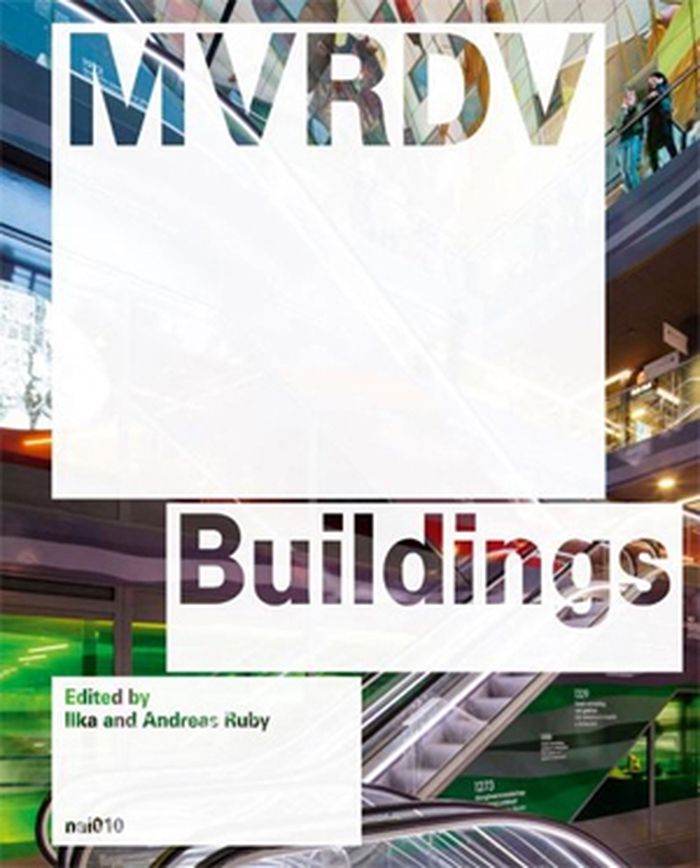
MVRDV is a Rotterdam-based architecture and urban design practice founded in 1993 (its name is an acronym for founding members Winy Maas, Jacob van Rijs and Nathalie de Vries). In cooperation with Ilka and Andreas Ruby, MVRDV assembled a monographic overview of 20 years of architectural practice, "MVRDV Buildings", now available in a new, updated edition. Featuring user testimonies, journalistic articles, and previously unpublished images and drawings, "MVRDV Buildings"surveys the realized work to date of one of the world’s top architecture bureaus. Acclaimed for its visionary research and thought-provoking projects such as Pig City (a high-rise landscape designed to solve lack-of-space problems for the pig meat industry in the Netherlands) and Grand Paris (a proposal to join Paris and its suburbs into a high-density "post-Kyoto city" by 2030), MVRDV has realized a stunning portfolio of buildings and urban plans. This volume includes MVRDV’s famous projects, such as Villa VPRO (Hilversum), WoZoCo (Amsterdam), Balancing Barn (Suffolk, UK) and Edificio Mirador (Madrid), and explores these with a characteristically inquisitive attitude. How do these buildings perform? What is life like in a blue house (in Didden Village, near Rotterdam), on an orange tribune (The Why Factory, situated within a courtyard at Delft University of Technology), in a vertical shopping street (the Gyre Shopping Center in Tokyo) or inside a mountain of books (the Book Mountain library in Spijkenisse)?
MVRDV buildings, updated edition
Actions:
Price:
$92.50
(available to order)
Summary:
MVRDV is a Rotterdam-based architecture and urban design practice founded in 1993 (its name is an acronym for founding members Winy Maas, Jacob van Rijs and Nathalie de Vries). In cooperation with Ilka and Andreas Ruby, MVRDV assembled a monographic overview of 20 years of architectural practice, "MVRDV Buildings", now available in a new, updated edition. Featuring user testimonies, journalistic articles, and previously unpublished images and drawings, "MVRDV Buildings"surveys the realized work to date of one of the world’s top architecture bureaus. Acclaimed for its visionary research and thought-provoking projects such as Pig City (a high-rise landscape designed to solve lack-of-space problems for the pig meat industry in the Netherlands) and Grand Paris (a proposal to join Paris and its suburbs into a high-density "post-Kyoto city" by 2030), MVRDV has realized a stunning portfolio of buildings and urban plans. This volume includes MVRDV’s famous projects, such as Villa VPRO (Hilversum), WoZoCo (Amsterdam), Balancing Barn (Suffolk, UK) and Edificio Mirador (Madrid), and explores these with a characteristically inquisitive attitude. How do these buildings perform? What is life like in a blue house (in Didden Village, near Rotterdam), on an orange tribune (The Why Factory, situated within a courtyard at Delft University of Technology), in a vertical shopping street (the Gyre Shopping Center in Tokyo) or inside a mountain of books (the Book Mountain library in Spijkenisse)?
Form:
books
books
Publication:
February 2016
February 2016
Subject:
Architecture Monographs
Architecture Monographs


