


2709 Results
Form:
drawings
drawings
Actions:
Reference number:
AP075.S1.2001.PR01.001
AP075.S1.2001.PR01.001
People:
Date:
2001-2002
2001-2002
Title:
Site plans and presentation drawings, Alberta Children's Hospital, Calgary, Alberta
Actions:
AP075.S1.2001.PR01.001
Site plans and presentation drawings, Alberta Children's Hospital, Calgary, Alberta
Actions:
AP075.S1.2001.PR01.001
Form:
drawings
drawings
Date:
2001-2002
2001-2002
People:
Form:
books
books
Actions:
Reference number:
ARCH280012
ARCH280012
People:
Date:
1967
1967
Title:
Booklet on the Children's Creative Centre, Canadian Federal Pavilion, Expo '67
Actions:
ARCH280012
Booklet on the Children's Creative Centre, Canadian Federal Pavilion, Expo '67
Actions:
ARCH280012
Form:
books
books
Date:
1967
1967
People:
Level of archival description:
Project
Project
Reference number:
AP075.S1.1977.PR03
Description:
Project series documents Cornelia Hahn Oberlander's project for a play area project at Simon Fraser University, Burnaby, British Columbia, in 1977, and contains correspondence and design development documents.
AP075.S1.1977.PR03
Description:
Project series documents Cornelia Hahn Oberlander's project for a play area project at Simon Fraser University, Burnaby, British Columbia, in 1977, and contains correspondence and design development documents.
People:
Date:
1977
1977
Title:
Children's Area, Simon Fraser University, Burnaby, British Columbia (1977)
Actions:
AP075.S1.1977.PR03
Description:
Project series documents Cornelia Hahn Oberlander's project for a play area project at Simon Fraser University, Burnaby, British Columbia, in 1977, and contains correspondence and design development documents.
Children's Area, Simon Fraser University, Burnaby, British Columbia (1977)
Actions:
AP075.S1.1977.PR03
Description:
Project series documents Cornelia Hahn Oberlander's project for a play area project at Simon Fraser University, Burnaby, British Columbia, in 1977, and contains correspondence and design development documents.
Level of archival description:
Project
Project
Date:
1977
1977
People:
Form:
photographs
photographs
Actions:
Reference number:
PH2000:0550
PH2000:0550
People:
Subject:
architecture
architecture
Date:
1930 or after
1930 or after
Form:
photographs
photographs
Date:
1930 or after
1930 or after
People:
Subject:
architecture
architecture
Form:
textual records
textual records
Reference number:
AP075.S1.1977.PR03.001
Description:
Original folder entitled "SFU CHILDREN'S AREA".
AP075.S1.1977.PR03.001
Description:
Original folder entitled "SFU CHILDREN'S AREA".
People:
Date:
circa 1977
circa 1977
Title:
Design development and correspondence, Children's Area, Simon Fraser University, Burnaby, British Columbia
Actions:
AP075.S1.1977.PR03.001
Description:
Original folder entitled "SFU CHILDREN'S AREA".
Design development and correspondence, Children's Area, Simon Fraser University, Burnaby, British Columbia
Actions:
AP075.S1.1977.PR03.001
Description:
Original folder entitled "SFU CHILDREN'S AREA".
Form:
textual records
textual records
Date:
circa 1977
circa 1977
People:
Form:
drawings, photographs
drawings, photographs
Actions:
Reference number:
AP075.S3.SS2.223
Description:
Most common file formats: Tagged Image File Format. Contains photographs of the completed playground with children playing, a photograph of a model and a playground plan.
AP075.S3.SS2.223
Description:
Most common file formats: Tagged Image File Format. Contains photographs of the completed playground with children playing, a photograph of a model and a playground plan.
People:
Date:
2005
2005
Title:
Promotional material for Cornelia Hahn Oberlander’s Children’s Creative Centre Playground, Canadian Federal Pavilion at Expo ‘67
Actions:
AP075.S3.SS2.223
Description:
Most common file formats: Tagged Image File Format. Contains photographs of the completed playground with children playing, a photograph of a model and a playground plan.
Promotional material for Cornelia Hahn Oberlander’s Children’s Creative Centre Playground, Canadian Federal Pavilion at Expo ‘67
Actions:
AP075.S3.SS2.223
Description:
Most common file formats: Tagged Image File Format. Contains photographs of the completed playground with children playing, a photograph of a model and a playground plan.
Form:
drawings, photographs
drawings, photographs
Date:
2005
2005
People:
Level of archival description:
Project
Project
Reference number:
AP075.S1.1965.PR01
Description:
This project series documents Cornelia Hahn Oberlander's landscape project for the outdoor playground of the Children's Creative Centre. The Centre was part of the Canadian Federal Pavilion built for the Universal and International Exposition of 1967 (Expo 67), located at the south end of Notre-Dame Island in Montréal. Oberlander worked on this project from 1965-1966. She based her design on children's spontaneous exploration, to encourage self-motivation and creative play. The playground included a rolling terrain, looping paths, a wobble walk made of short logs embeded in the ground, a canal, and "giant wooden building pieces and a rocking boat in water replaced static sculptures". [1] The playground included a sand beach-like area with drifwood and plants to be used as play props. At the centre of the playground was a grass mound with an interior cave and a high wooden platform only reachable by a commando rope. A forty-foot long circulating water channel was situated in the east section of the playground and included two small islands linked by bridges, but was narrow enough to allow children to jump over it. The project series contains sketches, preliminary landscape concept plans, site plans, general landscape plans at different stages of design development, several sections and detail drawings for the playground's equipment and installations, and presentation drawings, including perspective views. The project series also contains architectural, electrical, and structural drawings of the Pavilion, which were provided to Oberlander for reference. Also included are photographs of the playground, research material on playgrounds, and articles and publications on the project, including Oberlander's writings, and publications on Expo '67. Source: [1] Herrington, Susan. Cornelia Hahn Oberlander: Making the Modern Landscape, University of Virginia Press, 2014, 304 pages. p. 106.
AP075.S1.1965.PR01
Description:
This project series documents Cornelia Hahn Oberlander's landscape project for the outdoor playground of the Children's Creative Centre. The Centre was part of the Canadian Federal Pavilion built for the Universal and International Exposition of 1967 (Expo 67), located at the south end of Notre-Dame Island in Montréal. Oberlander worked on this project from 1965-1966. She based her design on children's spontaneous exploration, to encourage self-motivation and creative play. The playground included a rolling terrain, looping paths, a wobble walk made of short logs embeded in the ground, a canal, and "giant wooden building pieces and a rocking boat in water replaced static sculptures". [1] The playground included a sand beach-like area with drifwood and plants to be used as play props. At the centre of the playground was a grass mound with an interior cave and a high wooden platform only reachable by a commando rope. A forty-foot long circulating water channel was situated in the east section of the playground and included two small islands linked by bridges, but was narrow enough to allow children to jump over it. The project series contains sketches, preliminary landscape concept plans, site plans, general landscape plans at different stages of design development, several sections and detail drawings for the playground's equipment and installations, and presentation drawings, including perspective views. The project series also contains architectural, electrical, and structural drawings of the Pavilion, which were provided to Oberlander for reference. Also included are photographs of the playground, research material on playgrounds, and articles and publications on the project, including Oberlander's writings, and publications on Expo '67. Source: [1] Herrington, Susan. Cornelia Hahn Oberlander: Making the Modern Landscape, University of Virginia Press, 2014, 304 pages. p. 106.
People:
Date:
1965-1971
1965-1971
Title:
Children's Creative Centre Playground, Canadian Federal Pavilion, Expo '67, Montréal, Québec (1965-1967)
Actions:
AP075.S1.1965.PR01
Description:
This project series documents Cornelia Hahn Oberlander's landscape project for the outdoor playground of the Children's Creative Centre. The Centre was part of the Canadian Federal Pavilion built for the Universal and International Exposition of 1967 (Expo 67), located at the south end of Notre-Dame Island in Montréal. Oberlander worked on this project from 1965-1966. She based her design on children's spontaneous exploration, to encourage self-motivation and creative play. The playground included a rolling terrain, looping paths, a wobble walk made of short logs embeded in the ground, a canal, and "giant wooden building pieces and a rocking boat in water replaced static sculptures". [1] The playground included a sand beach-like area with drifwood and plants to be used as play props. At the centre of the playground was a grass mound with an interior cave and a high wooden platform only reachable by a commando rope. A forty-foot long circulating water channel was situated in the east section of the playground and included two small islands linked by bridges, but was narrow enough to allow children to jump over it. The project series contains sketches, preliminary landscape concept plans, site plans, general landscape plans at different stages of design development, several sections and detail drawings for the playground's equipment and installations, and presentation drawings, including perspective views. The project series also contains architectural, electrical, and structural drawings of the Pavilion, which were provided to Oberlander for reference. Also included are photographs of the playground, research material on playgrounds, and articles and publications on the project, including Oberlander's writings, and publications on Expo '67. Source: [1] Herrington, Susan. Cornelia Hahn Oberlander: Making the Modern Landscape, University of Virginia Press, 2014, 304 pages. p. 106.
Children's Creative Centre Playground, Canadian Federal Pavilion, Expo '67, Montréal, Québec (1965-1967)
Actions:
AP075.S1.1965.PR01
Description:
This project series documents Cornelia Hahn Oberlander's landscape project for the outdoor playground of the Children's Creative Centre. The Centre was part of the Canadian Federal Pavilion built for the Universal and International Exposition of 1967 (Expo 67), located at the south end of Notre-Dame Island in Montréal. Oberlander worked on this project from 1965-1966. She based her design on children's spontaneous exploration, to encourage self-motivation and creative play. The playground included a rolling terrain, looping paths, a wobble walk made of short logs embeded in the ground, a canal, and "giant wooden building pieces and a rocking boat in water replaced static sculptures". [1] The playground included a sand beach-like area with drifwood and plants to be used as play props. At the centre of the playground was a grass mound with an interior cave and a high wooden platform only reachable by a commando rope. A forty-foot long circulating water channel was situated in the east section of the playground and included two small islands linked by bridges, but was narrow enough to allow children to jump over it. The project series contains sketches, preliminary landscape concept plans, site plans, general landscape plans at different stages of design development, several sections and detail drawings for the playground's equipment and installations, and presentation drawings, including perspective views. The project series also contains architectural, electrical, and structural drawings of the Pavilion, which were provided to Oberlander for reference. Also included are photographs of the playground, research material on playgrounds, and articles and publications on the project, including Oberlander's writings, and publications on Expo '67. Source: [1] Herrington, Susan. Cornelia Hahn Oberlander: Making the Modern Landscape, University of Virginia Press, 2014, 304 pages. p. 106.
Level of archival description:
Project
Project
Date:
1965-1971
1965-1971
People:
Form:
drawings
drawings
Actions:
Reference number:
ARCH401949
ARCH401949
People:
Date:
June 1977
June 1977
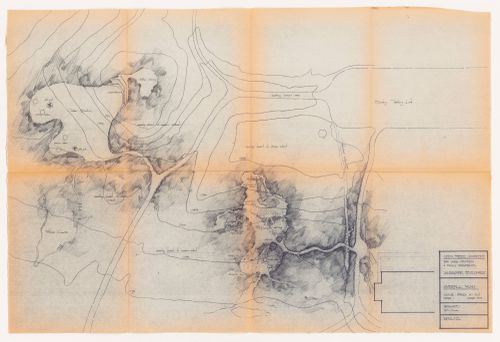
Title:
Site plan for Children's Area, Simon Fraser University, Burnaby, British Columbia
Actions:
ARCH401949
Site plan for Children's Area, Simon Fraser University, Burnaby, British Columbia
Actions:
ARCH401949
Form:
drawings
drawings
Date:
June 1977
June 1977
People:
Form:
drawings
drawings
Title:
Children's park and Leisure Valley drawings produced by Office of the Chief Architect of Chandigarh
Children's park and Leisure Valley drawings produced by Office of the Chief Architect of Chandigarh
Actions:
Reference number:
AP206.S4.034
AP206.S4.034
People:
Date:
circa 1980s-1990s
circa 1980s-1990s
Form:
drawings
drawings
Date:
circa 1980s-1990s
circa 1980s-1990s
People:
Form:
textual records
textual records
Title:
Collected documentation on children's garden, VanDusen Botanical Garden, Vancouver, British Columbia
Collected documentation on children's garden, VanDusen Botanical Garden, Vancouver, British Columbia
Actions:
Reference number:
AP075.S1.2009.PR01.006
AP075.S1.2009.PR01.006
People:
Date:
2007-2011
2007-2011
Title:
Collected documentation on children's garden, VanDusen Botanical Garden, Vancouver, British Columbia
Actions:
AP075.S1.2009.PR01.006
Collected documentation on children's garden, VanDusen Botanical Garden, Vancouver, British Columbia
Actions:
AP075.S1.2009.PR01.006
Form:
textual records
textual records
Date:
2007-2011
2007-2011
People:


