


280 Results
Form:
books
books
Actions:
Holdings:
Description:
xx, 394 pages : illustrations ; 24 cm
Description:
xx, 394 pages : illustrations ; 24 cm
Author:
Subject:
Publication:
New York : Viking, [2016]
New York : Viking, [2016]
Title:
Urban forests : a natural history of trees in the American cityscape / Jill Jonnes.
Actions:
Holdings:
Description:
xx, 394 pages : illustrations ; 24 cm
Urban forests : a natural history of trees in the American cityscape / Jill Jonnes.
Actions:
Holdings:
Description:
xx, 394 pages : illustrations ; 24 cm
Form:
books
books
Publication:
New York : Viking, [2016]
New York : Viking, [2016]
Author:
Subject:
Form:
books
books
Actions:
Price:
$25.95
(available to order)
Summary:
In the twenty-first century, new technologies should liberate us from work. Automation, rather than undermining an economy built on full employment, is instead the path to a world of liberty, luxury and happiness—for everyone. Technological advance will reduce the value of commodities—food, healthcare and housing—towards zero. Improvements in renewable energies will(...)
$25.95
(available to order)
Summary:
In the twenty-first century, new technologies should liberate us from work. Automation, rather than undermining an economy built on full employment, is instead the path to a world of liberty, luxury and happiness—for everyone. Technological advance will reduce the value of commodities—food, healthcare and housing—towards zero. Improvements in renewable energies will(...)
Title:
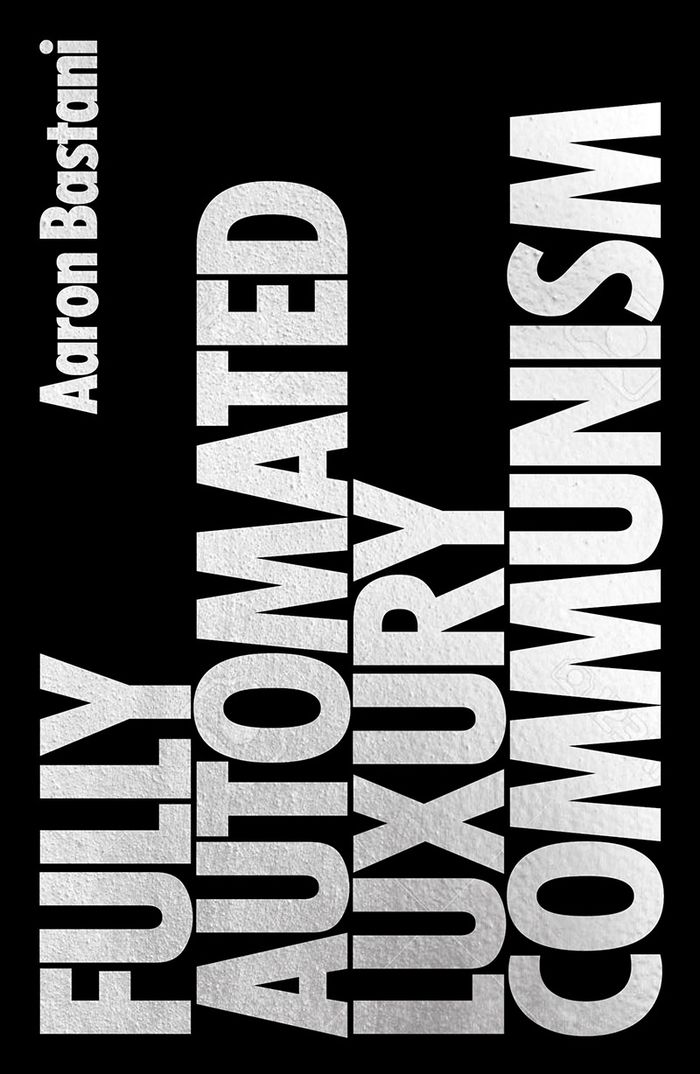
Fully automated luxury communism: a manifesto
Actions:
Price:
$25.95
(available to order)
Summary:
In the twenty-first century, new technologies should liberate us from work. Automation, rather than undermining an economy built on full employment, is instead the path to a world of liberty, luxury and happiness—for everyone. Technological advance will reduce the value of commodities—food, healthcare and housing—towards zero. Improvements in renewable energies will make fossil fuels a thing of the past. Asteroids will be mined for essential minerals. Genetic editing and synthetic biology will prolong life, virtually eliminate disease and provide meat without animals. New horizons beckon. In Fully Automated Luxury Communism, Aaron Bastani conjures a vision of extraordinary hope, showing how we move to energy abundance, feed a world of 9 billion, overcome work, transcend the limits of biology, and establish meaningful freedom for everyone. Rather than a final destination, such a society merely heralds the real beginning of history.
Fully automated luxury communism: a manifesto
Actions:
Price:
$25.95
(available to order)
Summary:
In the twenty-first century, new technologies should liberate us from work. Automation, rather than undermining an economy built on full employment, is instead the path to a world of liberty, luxury and happiness—for everyone. Technological advance will reduce the value of commodities—food, healthcare and housing—towards zero. Improvements in renewable energies will make fossil fuels a thing of the past. Asteroids will be mined for essential minerals. Genetic editing and synthetic biology will prolong life, virtually eliminate disease and provide meat without animals. New horizons beckon. In Fully Automated Luxury Communism, Aaron Bastani conjures a vision of extraordinary hope, showing how we move to energy abundance, feed a world of 9 billion, overcome work, transcend the limits of biology, and establish meaningful freedom for everyone. Rather than a final destination, such a society merely heralds the real beginning of history.
Form:
books
books
Publication:
June 2020
June 2020
Subject:
Critical Theory
Critical Theory
Form:
books
books
Actions:
Price:
$31.95
(available to order)
Summary:
In distressed urban neighborhoods where residential segregation concentrates poverty, liquor stores outnumber supermarkets, toxic sites are next to playgrounds, and more money is spent on prisons than schools, residents also suffer disproportionately from disease and premature death. Recognizing that city environments and the planning processes that shape them are(...)
$31.95
(available to order)
Summary:
In distressed urban neighborhoods where residential segregation concentrates poverty, liquor stores outnumber supermarkets, toxic sites are next to playgrounds, and more money is spent on prisons than schools, residents also suffer disproportionately from disease and premature death. Recognizing that city environments and the planning processes that shape them are(...)
Title:
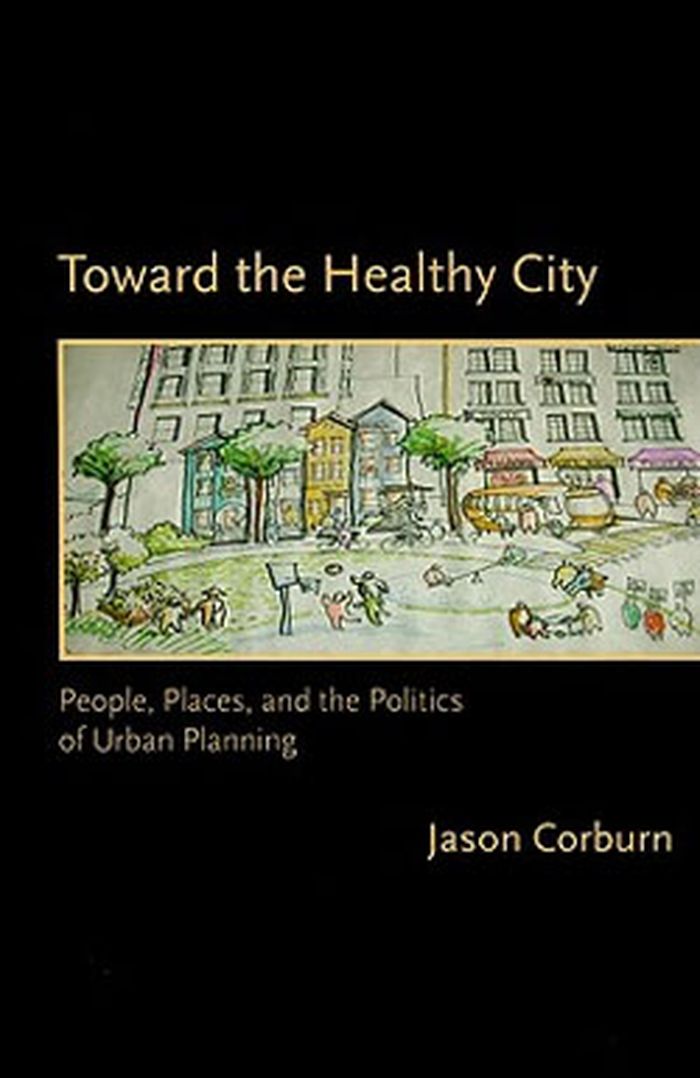
Toward the healthy city: people, places, and the politics of urban planning
Actions:
Price:
$31.95
(available to order)
Summary:
In distressed urban neighborhoods where residential segregation concentrates poverty, liquor stores outnumber supermarkets, toxic sites are next to playgrounds, and more money is spent on prisons than schools, residents also suffer disproportionately from disease and premature death. Recognizing that city environments and the planning processes that shape them are powerful determinants of population health, urban planners today are beginning to take on the added challenge of revitalizing neglected urban neighborhoods in ways that improve health and promote greater equity. In this book, Jason Corburn argues that city planning must return to its roots in public health and social justice. To show healthy city planning in action, Corburn examines collaborations between government agencies and community coalitions in the San Francisco Bay area, including efforts to link environmental justice, residents' chronic illnesses, housing and real estate development projects, and planning processes with public health.
Toward the healthy city: people, places, and the politics of urban planning
Actions:
Price:
$31.95
(available to order)
Summary:
In distressed urban neighborhoods where residential segregation concentrates poverty, liquor stores outnumber supermarkets, toxic sites are next to playgrounds, and more money is spent on prisons than schools, residents also suffer disproportionately from disease and premature death. Recognizing that city environments and the planning processes that shape them are powerful determinants of population health, urban planners today are beginning to take on the added challenge of revitalizing neglected urban neighborhoods in ways that improve health and promote greater equity. In this book, Jason Corburn argues that city planning must return to its roots in public health and social justice. To show healthy city planning in action, Corburn examines collaborations between government agencies and community coalitions in the San Francisco Bay area, including efforts to link environmental justice, residents' chronic illnesses, housing and real estate development projects, and planning processes with public health.
Form:
books
books
Publication:
July 2009
July 2009
Subject:
Urban Theory
Urban Theory
Form:
books
books
Title:
Petrochemical America
Petrochemical America
Actions:
Price:
$80.00
(available to order)
Summary:
Petrochemical America offers an in-depth analysis of the causes of sustained environmental abuse along the largest river system in North America. It combines Richard Misrach's haunting photographs of Louisiana's "Chemical Corridor" with landscape architect Kate Orff's "Ecological Atlas" - a series of speculative drawings developed through intensive research and mapping of(...)
$80.00
(available to order)
Summary:
Petrochemical America offers an in-depth analysis of the causes of sustained environmental abuse along the largest river system in North America. It combines Richard Misrach's haunting photographs of Louisiana's "Chemical Corridor" with landscape architect Kate Orff's "Ecological Atlas" - a series of speculative drawings developed through intensive research and mapping of(...)
Title:
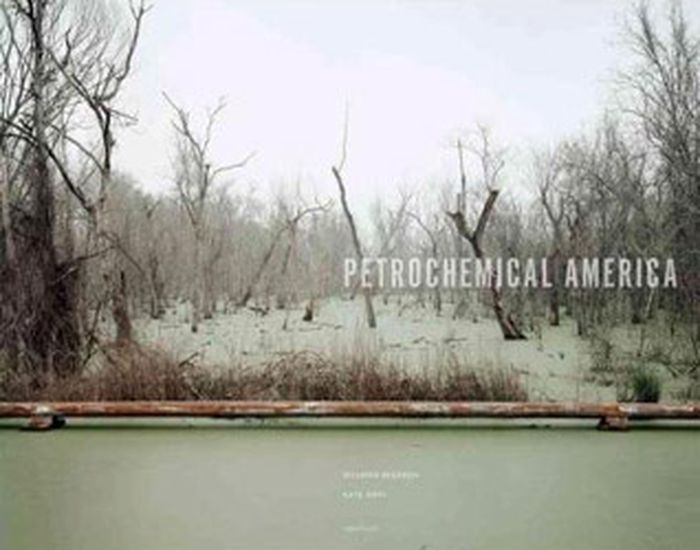
Petrochemical America
Actions:
Price:
$80.00
(available to order)
Summary:
Petrochemical America offers an in-depth analysis of the causes of sustained environmental abuse along the largest river system in North America. It combines Richard Misrach's haunting photographs of Louisiana's "Chemical Corridor" with landscape architect Kate Orff's "Ecological Atlas" - a series of speculative drawings developed through intensive research and mapping of data from the region. Misrach and Orff's joint effort depicts and unpacks the complex cultural, physical and economic ecologies of a particular region along 150 miles of the Mississippi River, from Baton Rouge to New Orleans - an area of intense chemical production that became known as "Cancer Alley" when unusually high occurrences of the disease were discovered in the region. This revelatory collaboration has resulted in a complex document and an extensively researched guidebook to the ways in which the petrochemical industry has permeated every facet of contemporary life.
Petrochemical America
Actions:
Price:
$80.00
(available to order)
Summary:
Petrochemical America offers an in-depth analysis of the causes of sustained environmental abuse along the largest river system in North America. It combines Richard Misrach's haunting photographs of Louisiana's "Chemical Corridor" with landscape architect Kate Orff's "Ecological Atlas" - a series of speculative drawings developed through intensive research and mapping of data from the region. Misrach and Orff's joint effort depicts and unpacks the complex cultural, physical and economic ecologies of a particular region along 150 miles of the Mississippi River, from Baton Rouge to New Orleans - an area of intense chemical production that became known as "Cancer Alley" when unusually high occurrences of the disease were discovered in the region. This revelatory collaboration has resulted in a complex document and an extensively researched guidebook to the ways in which the petrochemical industry has permeated every facet of contemporary life.
Form:
books
books
Publication:
February 2012
February 2012
Subject:
Photography monographs
Photography monographs
Form:
books
books

Actions:
Price:
$25.00
(available to order)
Summary:
"Prescriptions" is a transcription of a handwritten manuscript, dated to approximately 1650, containing a wide range of medicinal and magical remedies. Currently housed in the Cornell University Witchcraft Collection, it is assumed this practical handbook was a reference for healing, midwifery, and other medical/magical advice. Recipes and instruction cover various(...)
$25.00
(available to order)
Summary:
"Prescriptions" is a transcription of a handwritten manuscript, dated to approximately 1650, containing a wide range of medicinal and magical remedies. Currently housed in the Cornell University Witchcraft Collection, it is assumed this practical handbook was a reference for healing, midwifery, and other medical/magical advice. Recipes and instruction cover various(...)
Title:
Prescriptions: A collection for many evils of body and the mind, also for witchcraft
Actions:
Price:
$25.00
(available to order)
Summary:
"Prescriptions" is a transcription of a handwritten manuscript, dated to approximately 1650, containing a wide range of medicinal and magical remedies. Currently housed in the Cornell University Witchcraft Collection, it is assumed this practical handbook was a reference for healing, midwifery, and other medical/magical advice. Recipes and instruction cover various methods of purging, ointments for swellings, fevers, and pain reduction, lotions for venereal disease, advice for childbirth, and dilemmas such as "worms in the ear." Accompanying these medicinal prescriptions are a series of magical prescriptions: charms, rituals, and spells recorded to fortify the ailing body, induce amorous desire, or seek revenge. With its mix of Latin words, Early Modern English parlance, colloquial plant names, apothecary weights, and archaic medical terms, the recipes can at first appear opaque, but with sustained engagement one can begin to decipher the logics and structures within the writer(s)' shorthand.
Prescriptions: A collection for many evils of body and the mind, also for witchcraft
Actions:
Price:
$25.00
(available to order)
Summary:
"Prescriptions" is a transcription of a handwritten manuscript, dated to approximately 1650, containing a wide range of medicinal and magical remedies. Currently housed in the Cornell University Witchcraft Collection, it is assumed this practical handbook was a reference for healing, midwifery, and other medical/magical advice. Recipes and instruction cover various methods of purging, ointments for swellings, fevers, and pain reduction, lotions for venereal disease, advice for childbirth, and dilemmas such as "worms in the ear." Accompanying these medicinal prescriptions are a series of magical prescriptions: charms, rituals, and spells recorded to fortify the ailing body, induce amorous desire, or seek revenge. With its mix of Latin words, Early Modern English parlance, colloquial plant names, apothecary weights, and archaic medical terms, the recipes can at first appear opaque, but with sustained engagement one can begin to decipher the logics and structures within the writer(s)' shorthand.
Form:
books
books
Publication:
January 2024
January 2024
Subject:
Zines
Zines
Form:
books
books
Title:
Nadav Kander: The Meeting
Nadav Kander: The Meeting
Actions:
Price:
$130.00
(available to order)
Summary:
Regardless of his sitter whether family member or influential celebrity the portraiture of London-based photographer Nadav Kander (born 1961) shows what makes that particular individual human. His aim is to move beyond capturing an accurate likeness?to access the emotions within, the uncertainty, the shadow as much as the light, the complex sense of self that otherwise(...)
$130.00
(available to order)
Summary:
Regardless of his sitter whether family member or influential celebrity the portraiture of London-based photographer Nadav Kander (born 1961) shows what makes that particular individual human. His aim is to move beyond capturing an accurate likeness?to access the emotions within, the uncertainty, the shadow as much as the light, the complex sense of self that otherwise(...)
Title:
Nadav Kander: The Meeting
Actions:
Price:
$130.00
(available to order)
Summary:
Regardless of his sitter whether family member or influential celebrity the portraiture of London-based photographer Nadav Kander (born 1961) shows what makes that particular individual human. His aim is to move beyond capturing an accurate likeness?to access the emotions within, the uncertainty, the shadow as much as the light, the complex sense of self that otherwise lays hidden. “Revealed and concealed, beauty and destruction, ease and disease, shame and shameless,” explains Kander, “These paradoxes are essential to all my work and represent what is common to all my varied subject matter.” This collection, the first book dedicated to his portraiture, shows the range and nuance of Kander’s work. His enigmatic depictions of actors, artists, musicians, authors, sports icons and political leaders?from Barack Obama, John le Carré and Alexander McQueen to Tracey Emin, Robert Plant and Prince Charles are layered and penetrating, revealing unexpected moments of reverie and vulnerability.
Nadav Kander: The Meeting
Actions:
Price:
$130.00
(available to order)
Summary:
Regardless of his sitter whether family member or influential celebrity the portraiture of London-based photographer Nadav Kander (born 1961) shows what makes that particular individual human. His aim is to move beyond capturing an accurate likeness?to access the emotions within, the uncertainty, the shadow as much as the light, the complex sense of self that otherwise lays hidden. “Revealed and concealed, beauty and destruction, ease and disease, shame and shameless,” explains Kander, “These paradoxes are essential to all my work and represent what is common to all my varied subject matter.” This collection, the first book dedicated to his portraiture, shows the range and nuance of Kander’s work. His enigmatic depictions of actors, artists, musicians, authors, sports icons and political leaders?from Barack Obama, John le Carré and Alexander McQueen to Tracey Emin, Robert Plant and Prince Charles are layered and penetrating, revealing unexpected moments of reverie and vulnerability.
Form:
books
books
Publication:
December 2019
December 2019
Subject:
Photography monographs
Photography monographs
Form:
books
books
Actions:
Price:
$38.95
(available to order)
Summary:
During US colonial rule in the Philippines, reinforced concrete was used to the near exclusion of all other building materials. In Concrete Colonialism , Diana Jean S. Martinez examines the motivations for and lasting effects of this forgotten colonial policy. Arguing that the pervasive use of reinforced concrete technologies revolutionized techniques of imperial(...)
$38.95
(available to order)
Summary:
During US colonial rule in the Philippines, reinforced concrete was used to the near exclusion of all other building materials. In Concrete Colonialism , Diana Jean S. Martinez examines the motivations for and lasting effects of this forgotten colonial policy. Arguing that the pervasive use of reinforced concrete technologies revolutionized techniques of imperial(...)
Title:
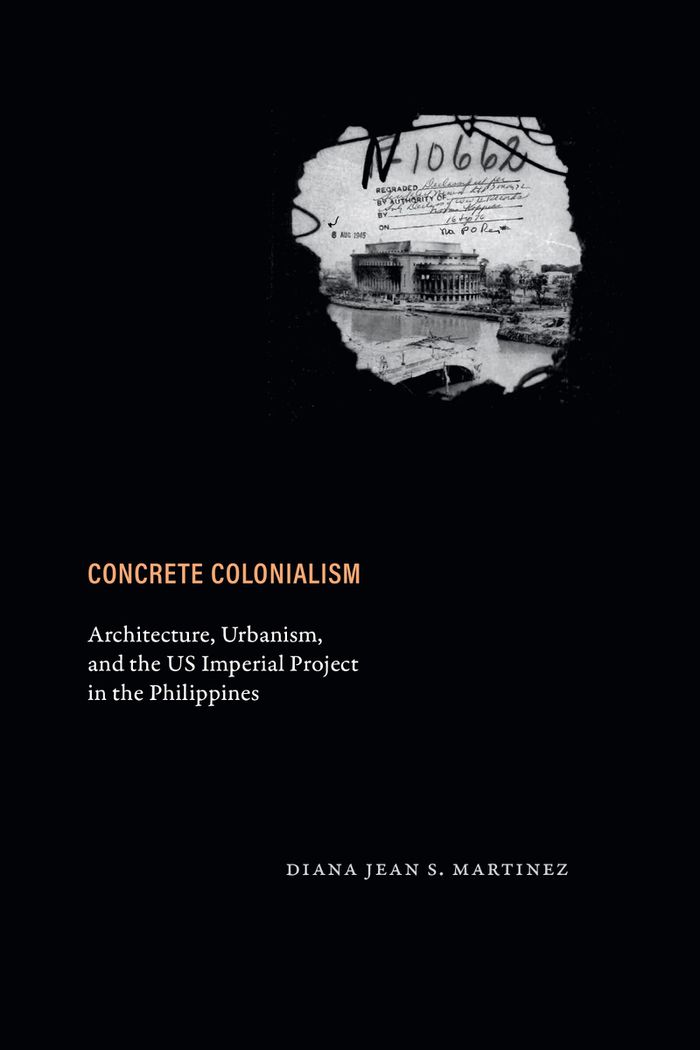
Concrete colonialism: Architecture, urbanism, and the US imperial project in the Philippines
Actions:
Price:
$38.95
(available to order)
Summary:
During US colonial rule in the Philippines, reinforced concrete was used to the near exclusion of all other building materials. In Concrete Colonialism , Diana Jean S. Martinez examines the motivations for and lasting effects of this forgotten colonial policy. Arguing that the pervasive use of reinforced concrete technologies revolutionized techniques of imperial conquest, Martinez shows how concrete reshaped colonialism as a project that sought durable change through the reformation of environments, colonial society, and racialized biologies. Martinez locates the origins of this material revolution in the development of Chicago, highlighting how building this urban center atop exceptionally challenging geology made it possible to transform diverse global ecologies. She details how the material's stability, plasticity, strength, and other qualities served the shifting imperatives of the US colonial regime, playing a central role in defending territory, controlling disease, and constructing monuments to nation and empire. By describing a world irreversibly remade, Martinez urges readers to consider how colonialism persists--in concrete forms--despite claims of its conclusion.
Concrete colonialism: Architecture, urbanism, and the US imperial project in the Philippines
Actions:
Price:
$38.95
(available to order)
Summary:
During US colonial rule in the Philippines, reinforced concrete was used to the near exclusion of all other building materials. In Concrete Colonialism , Diana Jean S. Martinez examines the motivations for and lasting effects of this forgotten colonial policy. Arguing that the pervasive use of reinforced concrete technologies revolutionized techniques of imperial conquest, Martinez shows how concrete reshaped colonialism as a project that sought durable change through the reformation of environments, colonial society, and racialized biologies. Martinez locates the origins of this material revolution in the development of Chicago, highlighting how building this urban center atop exceptionally challenging geology made it possible to transform diverse global ecologies. She details how the material's stability, plasticity, strength, and other qualities served the shifting imperatives of the US colonial regime, playing a central role in defending territory, controlling disease, and constructing monuments to nation and empire. By describing a world irreversibly remade, Martinez urges readers to consider how colonialism persists--in concrete forms--despite claims of its conclusion.
Form:
books
books
Publication:
October 2025
October 2025
Subject:
Architectural Theory
Architectural Theory
Form:
books
books
Actions:
Holdings:
Description:
xxvii, 248 pages : illustrations, maps ; 23 cm.
Description:
xxvii, 248 pages : illustrations, maps ; 23 cm.
Author:
Subject:
Publication:
Washington, D.C. : Catholic University of America Press, ©1996.
Washington, D.C. : Catholic University of America Press, ©1996.
Title:
The restoration of the Monastery of Saint Martin of Tournai / Herman of Tournai ; translated with an introduction and notes by Lynn H. Nelson.
Actions:
Holdings:
Description:
xxvii, 248 pages : illustrations, maps ; 23 cm.
The restoration of the Monastery of Saint Martin of Tournai / Herman of Tournai ; translated with an introduction and notes by Lynn H. Nelson.
Actions:
Holdings:
Description:
xxvii, 248 pages : illustrations, maps ; 23 cm.
Form:
books
books
Publication:
Washington, D.C. : Catholic University of America Press, ©1996.
Washington, D.C. : Catholic University of America Press, ©1996.
Author:
Subject:
Form:
books
books

Actions:
Price:
$33.95
(available to order)
Summary:
''Tree by tree'' is a warning and a toolkit for the future of forest recovery. Scott J. Meiners investigates the critical biological threats endangering tree species native to the forests of eastern North America, providing a needed focus on this plight. Meiners suggests that if we are to save our forests, the first step is to recognize the threats in front of(...)
$33.95
(available to order)
Summary:
''Tree by tree'' is a warning and a toolkit for the future of forest recovery. Scott J. Meiners investigates the critical biological threats endangering tree species native to the forests of eastern North America, providing a needed focus on this plight. Meiners suggests that if we are to save our forests, the first step is to recognize the threats in front of(...)
Title:
Tree by tree: Saving North America's eastern forests
Actions:
Price:
$33.95
(available to order)
Summary:
''Tree by tree'' is a warning and a toolkit for the future of forest recovery. Scott J. Meiners investigates the critical biological threats endangering tree species native to the forests of eastern North America, providing a needed focus on this plight. Meiners suggests that if we are to save our forests, the first step is to recognize the threats in front of us. Meiners focuses on five familiar trees—the American elm, the American chestnut, the eastern hemlock, the white ash, and the sugar maple—and shares why they matter economically, ecologically, and culturally. From outbreaks of Dutch elm disease to infestations of emerald ash borers, Meiners highlights the challenges that have led or will lead to the disappearance of these trees from forests. In doing so, he shows us how diversity loss often disrupts intricately balanced ecosystems and how vital it is that we pay more attention to massive changes in forest composition. With practical steps for the conservation of native tree species, ''Tree by tree'' offers the inspiration and insights we need to begin saving our forests.
Tree by tree: Saving North America's eastern forests
Actions:
Price:
$33.95
(available to order)
Summary:
''Tree by tree'' is a warning and a toolkit for the future of forest recovery. Scott J. Meiners investigates the critical biological threats endangering tree species native to the forests of eastern North America, providing a needed focus on this plight. Meiners suggests that if we are to save our forests, the first step is to recognize the threats in front of us. Meiners focuses on five familiar trees—the American elm, the American chestnut, the eastern hemlock, the white ash, and the sugar maple—and shares why they matter economically, ecologically, and culturally. From outbreaks of Dutch elm disease to infestations of emerald ash borers, Meiners highlights the challenges that have led or will lead to the disappearance of these trees from forests. In doing so, he shows us how diversity loss often disrupts intricately balanced ecosystems and how vital it is that we pay more attention to massive changes in forest composition. With practical steps for the conservation of native tree species, ''Tree by tree'' offers the inspiration and insights we need to begin saving our forests.
Form:
books
books
Publication:
September 2023
September 2023
Subject:
Landscape Theory
Landscape Theory
Form:
books
books
Title:
Terra Infecta
Terra Infecta
Actions:
Price:
$45.00
(available in store)
Summary:
In ''Terra Infecta'', Andrea Bagnato tells an unfamiliar story about a well-known place. Since the early days of tourism, the cities and landscapes of Italy have been bywords for beauty and grandeur. But, at home and abroad, the same places have also been haunted by associations with disease and uncleanliness, often more to do with politics than conditions on the(...)
$45.00
(available in store)
Summary:
In ''Terra Infecta'', Andrea Bagnato tells an unfamiliar story about a well-known place. Since the early days of tourism, the cities and landscapes of Italy have been bywords for beauty and grandeur. But, at home and abroad, the same places have also been haunted by associations with disease and uncleanliness, often more to do with politics than conditions on the(...)
Title:
Terra Infecta
Actions:
Price:
$45.00
(available in store)
Summary:
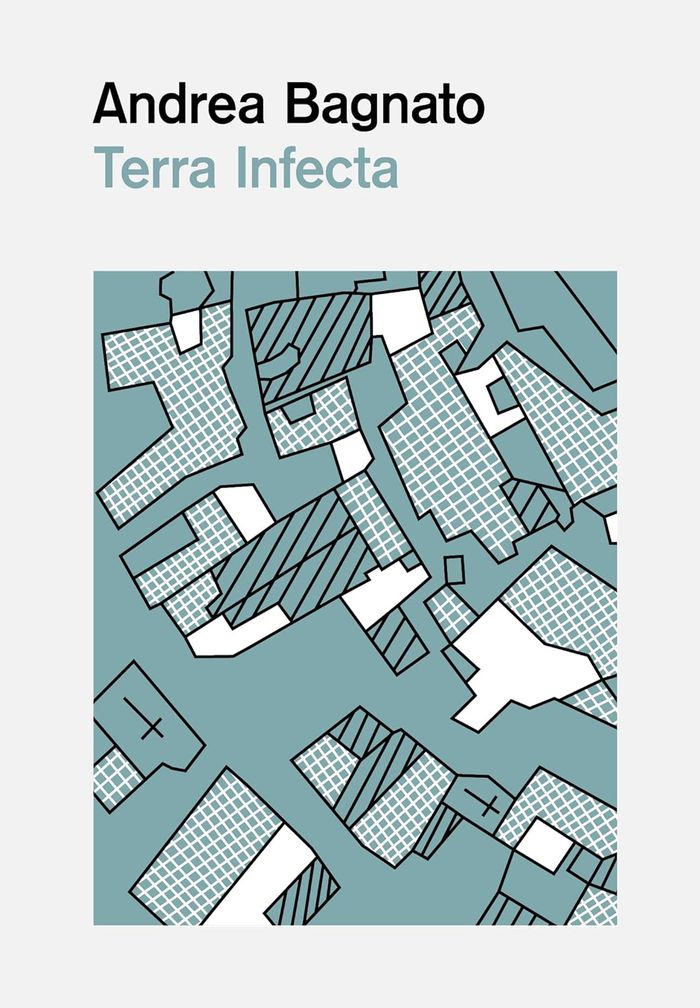
In ''Terra Infecta'', Andrea Bagnato tells an unfamiliar story about a well-known place. Since the early days of tourism, the cities and landscapes of Italy have been bywords for beauty and grandeur. But, at home and abroad, the same places have also been haunted by associations with disease and uncleanliness, often more to do with politics than conditions on the ground. In this gripping narrative study, Bagnato shows how the modern quest for sanitation shaped Italy’s urban and rural landscapes, propelling major transformations from the draining of the wetlands around Venice, to demolitions and replanning in Naples, to the expulsion of the inhabitants of ancient Matera. He argues that current north–south inequalities are founded on spurious medical narratives, and focuses on the real impact on the people caught in their ministrations. Ranging from Italian unification to the aftershocks of Covid-19, and drawing on architectural records, medical history, and the author’s own travels, ''Terra Infecta'' reveals the lived realities of grand schemes, traces of vanished communities, and forgotten histories of collective organisation and resistance.
Terra Infecta
Actions:
Price:
$45.00
(available in store)
Summary:
In ''Terra Infecta'', Andrea Bagnato tells an unfamiliar story about a well-known place. Since the early days of tourism, the cities and landscapes of Italy have been bywords for beauty and grandeur. But, at home and abroad, the same places have also been haunted by associations with disease and uncleanliness, often more to do with politics than conditions on the ground. In this gripping narrative study, Bagnato shows how the modern quest for sanitation shaped Italy’s urban and rural landscapes, propelling major transformations from the draining of the wetlands around Venice, to demolitions and replanning in Naples, to the expulsion of the inhabitants of ancient Matera. He argues that current north–south inequalities are founded on spurious medical narratives, and focuses on the real impact on the people caught in their ministrations. Ranging from Italian unification to the aftershocks of Covid-19, and drawing on architectural records, medical history, and the author’s own travels, ''Terra Infecta'' reveals the lived realities of grand schemes, traces of vanished communities, and forgotten histories of collective organisation and resistance.
Form:
books
books
Publication:
February 2026
February 2026
Subject:
Architectural Theory
Architectural Theory


