


2692 Results
Form:
books
books
Title:
The minimum dwelling
The minimum dwelling
Actions:
Price:
$96.00
(available in store)
Summary:
Karel Teige (1900–1951), one of the most important figures of avant-garde modernism of the 1920s and 1930s, influenced virtually every area of art, design, and urban thinking in his native Czechoslovakia. His "Minimum dwelling", originally published in Czech in 1932, and appearing now for the first time in English, is one of the landmark architectural books of the(...)
$96.00
(available in store)
Summary:
Karel Teige (1900–1951), one of the most important figures of avant-garde modernism of the 1920s and 1930s, influenced virtually every area of art, design, and urban thinking in his native Czechoslovakia. His "Minimum dwelling", originally published in Czech in 1932, and appearing now for the first time in English, is one of the landmark architectural books of the(...)
Title:
The minimum dwelling
Actions:
Price:
$96.00
(available in store)
Summary:
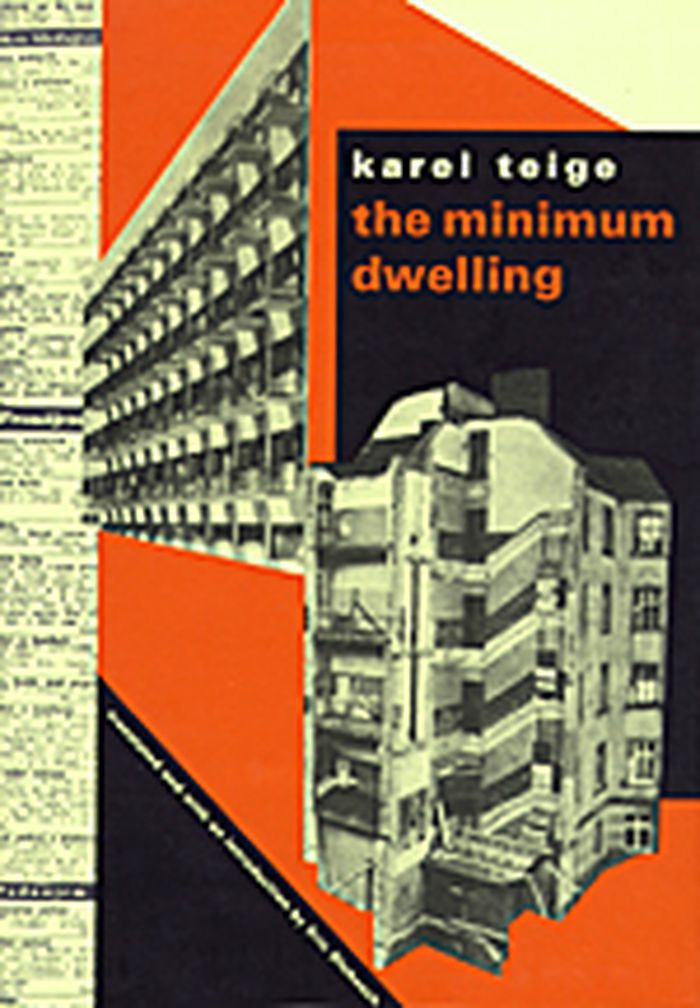
Karel Teige (1900–1951), one of the most important figures of avant-garde modernism of the 1920s and 1930s, influenced virtually every area of art, design, and urban thinking in his native Czechoslovakia. His "Minimum dwelling", originally published in Czech in 1932, and appearing now for the first time in English, is one of the landmark architectural books of the twentieth century. "The minimum dwelling" is not just a book on architecture, but also a blueprint for a new way of living. It calls for a radical rethinking of domestic space and of the role of modern architecture in the planning, design, and construction of new dwelling types for the proletariat. Teige shows how Gropius, Le Corbusier, Mies van der Rohe, and others designed little more than new versions of baroque palaces, mainly for the new financial aristocracy. Teige envisioned the minimum dwelling not as a reduced version of a bourgeois apartment or rural cottage, but as a wholly new dwelling type built on the cooperation of architects, sociologists, economists, health officials, physicians, social workers, politicians, and trade unionists. The book covers many subjects that are still of great relevance. Of particular interest are Teige’s rejection of traditional notions of the kitchen as the core of family-centered plans and of marriage as the foundation of modern cohabitation. He describes alternative lifestyles and new ways of cohabitation of sexes, generations, and classes. The detailed programmatic chapters on collective housing remain far ahead of current thinking, and his comments on collective dwelling presage communal living experiments of the 1960s and 1970s, as well as the communal facilities in contemporary condominium buildings and retirement communities. Translated and introduced by Eric Dluhosch.
The minimum dwelling
Actions:
Price:
$96.00
(available in store)
Summary:
Karel Teige (1900–1951), one of the most important figures of avant-garde modernism of the 1920s and 1930s, influenced virtually every area of art, design, and urban thinking in his native Czechoslovakia. His "Minimum dwelling", originally published in Czech in 1932, and appearing now for the first time in English, is one of the landmark architectural books of the twentieth century. "The minimum dwelling" is not just a book on architecture, but also a blueprint for a new way of living. It calls for a radical rethinking of domestic space and of the role of modern architecture in the planning, design, and construction of new dwelling types for the proletariat. Teige shows how Gropius, Le Corbusier, Mies van der Rohe, and others designed little more than new versions of baroque palaces, mainly for the new financial aristocracy. Teige envisioned the minimum dwelling not as a reduced version of a bourgeois apartment or rural cottage, but as a wholly new dwelling type built on the cooperation of architects, sociologists, economists, health officials, physicians, social workers, politicians, and trade unionists. The book covers many subjects that are still of great relevance. Of particular interest are Teige’s rejection of traditional notions of the kitchen as the core of family-centered plans and of marriage as the foundation of modern cohabitation. He describes alternative lifestyles and new ways of cohabitation of sexes, generations, and classes. The detailed programmatic chapters on collective housing remain far ahead of current thinking, and his comments on collective dwelling presage communal living experiments of the 1960s and 1970s, as well as the communal facilities in contemporary condominium buildings and retirement communities. Translated and introduced by Eric Dluhosch.
Form:
books
books
Publication:
May 2002, Cambridge, Mass.
May 2002, Cambridge, Mass.
Subject:
Architectural Theory
Architectural Theory
Form:
books
books
Actions:
Price:
$65.95
(available to order)
Summary:
Studies in Tectonic Culture is nothing less than a rethinking of the entire modern architectural tradition. The notion of tectonics as employed by Frampton -- the focus on architecture as a constructional craft -- constitutes a direct challenge to current mainstream thinking on the artistic limits of postmodernism, and suggests a convincing alternative. Indeed, Frampton(...)
$65.95
(available to order)
Summary:
Studies in Tectonic Culture is nothing less than a rethinking of the entire modern architectural tradition. The notion of tectonics as employed by Frampton -- the focus on architecture as a constructional craft -- constitutes a direct challenge to current mainstream thinking on the artistic limits of postmodernism, and suggests a convincing alternative. Indeed, Frampton(...)
Title:
Studies in tectonic culture: the poetics of construction in nineteenth and twentieth century architecture
Actions:
Price:
$65.95
(available to order)
Summary:
Studies in Tectonic Culture is nothing less than a rethinking of the entire modern architectural tradition. The notion of tectonics as employed by Frampton -- the focus on architecture as a constructional craft -- constitutes a direct challenge to current mainstream thinking on the artistic limits of postmodernism, and suggests a convincing alternative. Indeed, Frampton argues, modern architecture is invariably as much about structure and construction as it is about space and abstract form. Composed of ten essays and an epilogue that trace the history of contemporary form as an evolving poetic of structure and construction, the book's analytical framework rests on Frampton's close readings of key French and German, and English sources from the eighteenth century to the present. He clarifies the various turns that structural engineering and tectonic imagination have taken in the work of such architects as Perret, Wright, Kahn, Scarpa, and Mies, and shows how both constructional form and material character were integral to an evolving architectural expression of their work. Frampton also demonstrates that the way in which these elements are articulated from one work to the next provides a basis upon which to evaluate the works as a whole. This is especially evident in his consideration of the work of Perret, Mies, and Kahn and the continuities in their thought and attitudes that linked them to the past. Frampton considers the conscious cultivation of the tectonic tradition in architecture as an essential element in the future development of architectural form, casting a critical new light on the entire issue of modernity and on the place of much work that has passed as "avant-garde."
Studies in tectonic culture: the poetics of construction in nineteenth and twentieth century architecture
Actions:
Price:
$65.95
(available to order)
Summary:
Studies in Tectonic Culture is nothing less than a rethinking of the entire modern architectural tradition. The notion of tectonics as employed by Frampton -- the focus on architecture as a constructional craft -- constitutes a direct challenge to current mainstream thinking on the artistic limits of postmodernism, and suggests a convincing alternative. Indeed, Frampton argues, modern architecture is invariably as much about structure and construction as it is about space and abstract form. Composed of ten essays and an epilogue that trace the history of contemporary form as an evolving poetic of structure and construction, the book's analytical framework rests on Frampton's close readings of key French and German, and English sources from the eighteenth century to the present. He clarifies the various turns that structural engineering and tectonic imagination have taken in the work of such architects as Perret, Wright, Kahn, Scarpa, and Mies, and shows how both constructional form and material character were integral to an evolving architectural expression of their work. Frampton also demonstrates that the way in which these elements are articulated from one work to the next provides a basis upon which to evaluate the works as a whole. This is especially evident in his consideration of the work of Perret, Mies, and Kahn and the continuities in their thought and attitudes that linked them to the past. Frampton considers the conscious cultivation of the tectonic tradition in architecture as an essential element in the future development of architectural form, casting a critical new light on the entire issue of modernity and on the place of much work that has passed as "avant-garde."
Form:
books
books
Publication:
October 2001, Cambridge, Mass.
October 2001, Cambridge, Mass.
Subject:
Architectural Theory
Architectural Theory
Form:
books
books

Actions:
Price:
$39.95
(available to order)
Summary:
As we spend more and more of our time staring at the screens of movies, televisions, computers, and handheld devices--"windows" full of moving images, texts, and icons--how the world is framed has become as important as what is in the frame. In The Virtual Window, Anne Friedberg examines the window as metaphor, as architectural component, and as an opening to the(...)
$39.95
(available to order)
Summary:
As we spend more and more of our time staring at the screens of movies, televisions, computers, and handheld devices--"windows" full of moving images, texts, and icons--how the world is framed has become as important as what is in the frame. In The Virtual Window, Anne Friedberg examines the window as metaphor, as architectural component, and as an opening to the(...)
Title:
The virtual window : from Alberti to Microsoft
Actions:
Price:
$39.95
(available to order)
Summary:
As we spend more and more of our time staring at the screens of movies, televisions, computers, and handheld devices--"windows" full of moving images, texts, and icons--how the world is framed has become as important as what is in the frame. In The Virtual Window, Anne Friedberg examines the window as metaphor, as architectural component, and as an opening to the dematerialized reality we see on the screen. In De pictura (1435), Leon Battista Alberti famously instructed painters to consider the frame of the painting as an open window. Taking Alberti's metaphor as her starting point, Friedberg tracks shifts in the perspectival paradigm as she gives us histories of the architectural window, developments in glass and transparency, and the emerging apparatuses of photography, cinema, television, and digital imaging. Single-point perspective--Alberti's metaphorical window--has long been challenged by modern painting, modern architecture, and moving-image technologies. And yet, notes Friedberg, for most of the twentieth century the dominant form of the moving image was a single image in a single frame. The fractured modernism exemplified by cubist painting, for example, remained largely confined to experimental, avant-garde work. On the computer screen, however, where multiple "windows" coexist and overlap, perspective may have met its end. In this wide-ranging book, Friedberg considers such topics as the framed view of the camera obscura, Le Corbusier's mandates for the architectural window, Eisenstein's opinions on the shape of the movie screen, and the multiple images and nested windows commonly displayed on screens today. The Virtual Window proposes a new logic of visuality, framed and virtual: an architecture not only of space but of time.
The virtual window : from Alberti to Microsoft
Actions:
Price:
$39.95
(available to order)
Summary:
As we spend more and more of our time staring at the screens of movies, televisions, computers, and handheld devices--"windows" full of moving images, texts, and icons--how the world is framed has become as important as what is in the frame. In The Virtual Window, Anne Friedberg examines the window as metaphor, as architectural component, and as an opening to the dematerialized reality we see on the screen. In De pictura (1435), Leon Battista Alberti famously instructed painters to consider the frame of the painting as an open window. Taking Alberti's metaphor as her starting point, Friedberg tracks shifts in the perspectival paradigm as she gives us histories of the architectural window, developments in glass and transparency, and the emerging apparatuses of photography, cinema, television, and digital imaging. Single-point perspective--Alberti's metaphorical window--has long been challenged by modern painting, modern architecture, and moving-image technologies. And yet, notes Friedberg, for most of the twentieth century the dominant form of the moving image was a single image in a single frame. The fractured modernism exemplified by cubist painting, for example, remained largely confined to experimental, avant-garde work. On the computer screen, however, where multiple "windows" coexist and overlap, perspective may have met its end. In this wide-ranging book, Friedberg considers such topics as the framed view of the camera obscura, Le Corbusier's mandates for the architectural window, Eisenstein's opinions on the shape of the movie screen, and the multiple images and nested windows commonly displayed on screens today. The Virtual Window proposes a new logic of visuality, framed and virtual: an architecture not only of space but of time.
Form:
books
books
Publication:
January 2006, Cambridge
January 2006, Cambridge
Subject:
Architectural Theory
Architectural Theory
Form:
books
books
Title:
Grave Matters
Grave Matters
Actions:
Price:
$39.95
(available to order)
Summary:
'Cemeteries', writes Mark C. Taylor, 'are where I go to commune with "my" ghosts. The journey to the cemetery is always solitary even when I am with people who are closest to me. In the graveyard, the we is dispersed and the I stripped bare.' In "Grave Matters", Taylor's ghosts become our own. His thoughtful, poignant essay interweaves personal narrative, historical(...)
$39.95
(available to order)
Summary:
'Cemeteries', writes Mark C. Taylor, 'are where I go to commune with "my" ghosts. The journey to the cemetery is always solitary even when I am with people who are closest to me. In the graveyard, the we is dispersed and the I stripped bare.' In "Grave Matters", Taylor's ghosts become our own. His thoughtful, poignant essay interweaves personal narrative, historical(...)
Title:
Grave Matters
Actions:
Price:
$39.95
(available to order)
Summary:
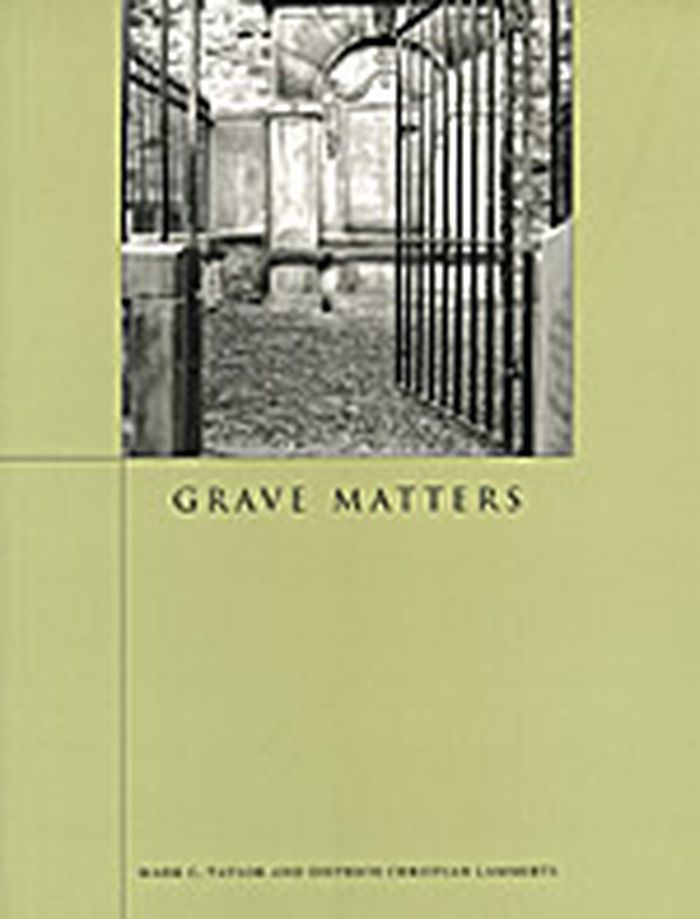
'Cemeteries', writes Mark C. Taylor, 'are where I go to commune with "my" ghosts. The journey to the cemetery is always solitary even when I am with people who are closest to me. In the graveyard, the we is dispersed and the I stripped bare.' In "Grave Matters", Taylor's ghosts become our own. His thoughtful, poignant essay interweaves personal narrative, historical analysis, cultural commentary and philosophical reflection. Dietrich Christian Lammerts's photographs show us the graves of the artists, architects, writers, philosophers and musicians who shaped Western culture; at once beautiful and disturbing, they suggest an alternative history of modernism and its precursors. Grave Matters raises difficult questions: What place do the modern greats have in the postmodern age? Who decided where and how they would be buried? Who wrote their epitaphs? What do their deaths, and their graves, tell us about their lives and suggest about our own? The words and images of Grave Matters inscribe the future that we all face, and to ponder this memento mori is to meet life anew.
Grave Matters
Actions:
Price:
$39.95
(available to order)
Summary:
'Cemeteries', writes Mark C. Taylor, 'are where I go to commune with "my" ghosts. The journey to the cemetery is always solitary even when I am with people who are closest to me. In the graveyard, the we is dispersed and the I stripped bare.' In "Grave Matters", Taylor's ghosts become our own. His thoughtful, poignant essay interweaves personal narrative, historical analysis, cultural commentary and philosophical reflection. Dietrich Christian Lammerts's photographs show us the graves of the artists, architects, writers, philosophers and musicians who shaped Western culture; at once beautiful and disturbing, they suggest an alternative history of modernism and its precursors. Grave Matters raises difficult questions: What place do the modern greats have in the postmodern age? Who decided where and how they would be buried? Who wrote their epitaphs? What do their deaths, and their graves, tell us about their lives and suggest about our own? The words and images of Grave Matters inscribe the future that we all face, and to ponder this memento mori is to meet life anew.
Form:
books
books
Publication:
June 2002, London
June 2002, London
Subject:
Food
Food
Form:
books
books
Actions:
Price:
$64.95
(available to order)
Summary:
This incisive look at the historical, social, and economic forces that have shaped China's modern architecture analyzes the country's struggle to define its own architectural aesthetics. Since the early 1980s, when China opened its doors to international trade and tourism, the country's economy has expanded at an incredible rate. Today, China is poised to be a testing(...)
$64.95
(available to order)
Summary:
This incisive look at the historical, social, and economic forces that have shaped China's modern architecture analyzes the country's struggle to define its own architectural aesthetics. Since the early 1980s, when China opened its doors to international trade and tourism, the country's economy has expanded at an incredible rate. Today, China is poised to be a testing(...)
Subject:
Contemporary Asian Architecture
Contemporary Asian Architecture
Publication:
January 1900, Munich / Berlin /London / New York
January 1900, Munich / Berlin /London / New York
Title:
China's new dawn : an architectural transformation
Actions:
Price:
$64.95
(available to order)
Summary:
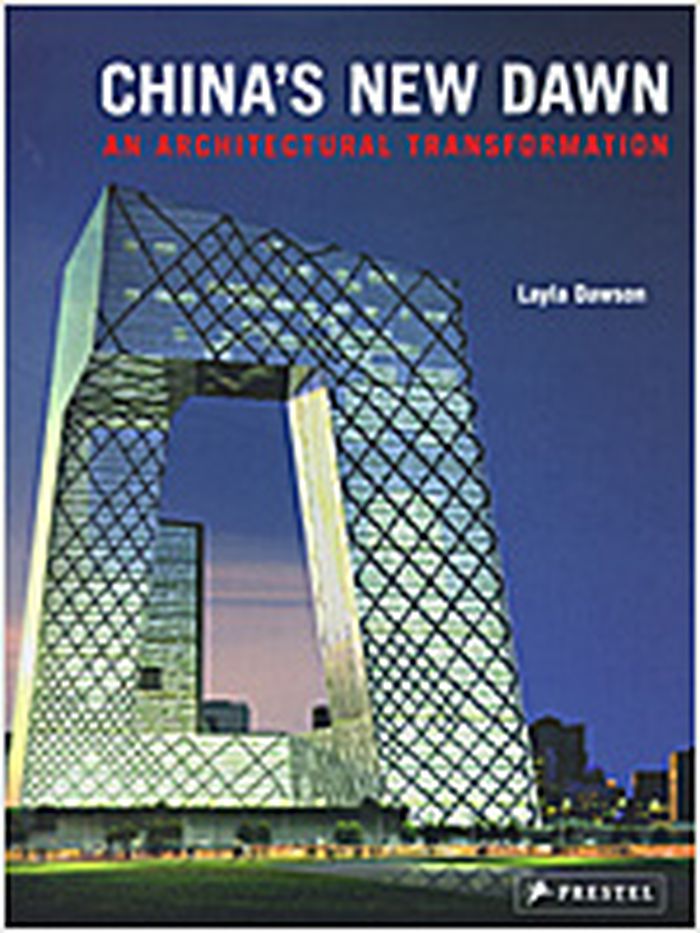
This incisive look at the historical, social, and economic forces that have shaped China's modern architecture analyzes the country's struggle to define its own architectural aesthetics. Since the early 1980s, when China opened its doors to international trade and tourism, the country's economy has expanded at an incredible rate. Today, China is poised to be a testing ground for the world's most innovative designers and engineers. Layla Dawson's groundbreaking survey of architectural currents in China lays out not only the historical events that have brought the country to this unique position, but explores the challenges inherent in opening up the country to outside forces and ideas. She examines projects by Chinese and non-Chinese architects, including Zaha Hadid's Soho City masterplan, Rem Koolhaas's CCTV Headquarters, Norman Foster's Shanghai Tower and plans for the Beijing 2008 Olympic Games. As Dawson demonstrates how conflicting architectural philosophies are visible in China's newly rising skyline, she takes an unblinking look at the liabilities China faces by opening itself up to foreign influence.
China's new dawn : an architectural transformation
Actions:
Price:
$64.95
(available to order)
Summary:
This incisive look at the historical, social, and economic forces that have shaped China's modern architecture analyzes the country's struggle to define its own architectural aesthetics. Since the early 1980s, when China opened its doors to international trade and tourism, the country's economy has expanded at an incredible rate. Today, China is poised to be a testing ground for the world's most innovative designers and engineers. Layla Dawson's groundbreaking survey of architectural currents in China lays out not only the historical events that have brought the country to this unique position, but explores the challenges inherent in opening up the country to outside forces and ideas. She examines projects by Chinese and non-Chinese architects, including Zaha Hadid's Soho City masterplan, Rem Koolhaas's CCTV Headquarters, Norman Foster's Shanghai Tower and plans for the Beijing 2008 Olympic Games. As Dawson demonstrates how conflicting architectural philosophies are visible in China's newly rising skyline, she takes an unblinking look at the liabilities China faces by opening itself up to foreign influence.
Form:
books
books
Publication:
January 1900, Munich / Berlin /London / New York
January 1900, Munich / Berlin /London / New York
Subject:
Contemporary Asian Architecture
Contemporary Asian Architecture
Form:
books
books
Actions:
Price:
$23.95
(available in store)
Summary:
Geomedia offers critical analysis of the new possibilities and power relations emerging in the public space of contemporary cities. As ubiquitous digital networks enable embedded and mobile devices to integrate place-specific data with real-time feedback circuits, everyday experience of public space has become subject to new demands. Looking beyond debates framed by the(...)
$23.95
(available in store)
Summary:
Geomedia offers critical analysis of the new possibilities and power relations emerging in the public space of contemporary cities. As ubiquitous digital networks enable embedded and mobile devices to integrate place-specific data with real-time feedback circuits, everyday experience of public space has become subject to new demands. Looking beyond debates framed by the(...)
Title:
Geomedia: networked cities and the future of public space
Actions:
Price:
$23.95
(available in store)
Summary:
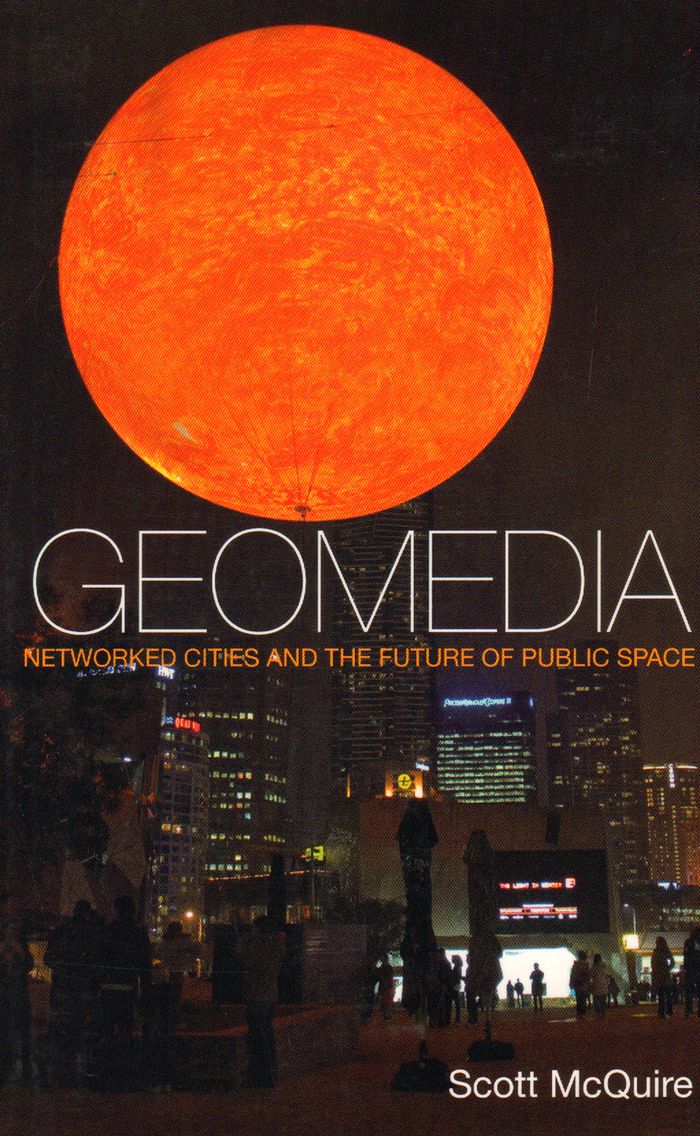
Geomedia offers critical analysis of the new possibilities and power relations emerging in the public space of contemporary cities. As ubiquitous digital networks enable embedded and mobile devices to integrate place-specific data with real-time feedback circuits, everyday experience of public space has become subject to new demands. Looking beyond debates framed by the dominance of surveillance and spectacle, McQuire asks: how might the kind of collaborative practices that have flourished in art and online cultures be translated into urban space? In the urban crisis of the 1960s, Henri Lefebvre argued that the capacity for a city’s inhabitants to actively appropriate the time and space of their surroundings was a critical dimension of modern democracy. What does it mean to speak of ‘the right to the city’ in the context of the networked city? Addressing this question through a series of case studies, this cutting-edge text highlights the tensions between citizen and consumer, communication and surveillance, participation and control, which define contemporary struggles over public space.
Geomedia: networked cities and the future of public space
Actions:
Price:
$23.95
(available in store)
Summary:
Geomedia offers critical analysis of the new possibilities and power relations emerging in the public space of contemporary cities. As ubiquitous digital networks enable embedded and mobile devices to integrate place-specific data with real-time feedback circuits, everyday experience of public space has become subject to new demands. Looking beyond debates framed by the dominance of surveillance and spectacle, McQuire asks: how might the kind of collaborative practices that have flourished in art and online cultures be translated into urban space? In the urban crisis of the 1960s, Henri Lefebvre argued that the capacity for a city’s inhabitants to actively appropriate the time and space of their surroundings was a critical dimension of modern democracy. What does it mean to speak of ‘the right to the city’ in the context of the networked city? Addressing this question through a series of case studies, this cutting-edge text highlights the tensions between citizen and consumer, communication and surveillance, participation and control, which define contemporary struggles over public space.
Form:
books
books
Publication:
December 2016
December 2016
Subject:
Urban Theory
Urban Theory
Form:
books
books
Actions:
Price:
$29.95
(available to order)
Summary:
What is the role of art in modern society? Is it made to entertain us, to teach us? Both? And what of philosophy? What relevance does it have to how we think and live? In Opening Gambits , cultural critic and philosopher Mark Kingwell puts forth an argument for the similarity between art and philosophy as forms of play, working at the margins of meaning and sense.(...)
$29.95
(available to order)
Summary:
What is the role of art in modern society? Is it made to entertain us, to teach us? Both? And what of philosophy? What relevance does it have to how we think and live? In Opening Gambits , cultural critic and philosopher Mark Kingwell puts forth an argument for the similarity between art and philosophy as forms of play, working at the margins of meaning and sense.(...)
Title:
Opening gambits: essays on art and philosophy
Actions:
Price:
$29.95
(available to order)
Summary:
What is the role of art in modern society? Is it made to entertain us, to teach us? Both? And what of philosophy? What relevance does it have to how we think and live? In Opening Gambits , cultural critic and philosopher Mark Kingwell puts forth an argument for the similarity between art and philosophy as forms of play, working at the margins of meaning and sense. Featuring essays previously published in Queen’s Quarterly, Descant, Harvard Design Magazine, Canadian Art , and Harper’s, the book begins with general assessments of the art world and the relationship between art and architecture. Including lively critical engagements with artists such as Edward Burtynsky, David Bierk, James Lahey, and Blue Republic, these pieces draw out the philosophical issues embedded in the aesthetic experience of art. In the second half of the collection, Kingwell reverses the polarity, investigating philosophy as a kind of art form that is constantly questioning its own possibility. The two parts of the book are simultaneously separated and joined by a collection of images that feature the works discussed in Part One.
Opening gambits: essays on art and philosophy
Actions:
Price:
$29.95
(available to order)
Summary:
What is the role of art in modern society? Is it made to entertain us, to teach us? Both? And what of philosophy? What relevance does it have to how we think and live? In Opening Gambits , cultural critic and philosopher Mark Kingwell puts forth an argument for the similarity between art and philosophy as forms of play, working at the margins of meaning and sense. Featuring essays previously published in Queen’s Quarterly, Descant, Harvard Design Magazine, Canadian Art , and Harper’s, the book begins with general assessments of the art world and the relationship between art and architecture. Including lively critical engagements with artists such as Edward Burtynsky, David Bierk, James Lahey, and Blue Republic, these pieces draw out the philosophical issues embedded in the aesthetic experience of art. In the second half of the collection, Kingwell reverses the polarity, investigating philosophy as a kind of art form that is constantly questioning its own possibility. The two parts of the book are simultaneously separated and joined by a collection of images that feature the works discussed in Part One.
Form:
books
books
Publication:
October 2008, Toronto
October 2008, Toronto
Subject:
Art Theory
Art Theory
Form:
books
books
Price:
$115.00
(available to order)
Summary:
The discovery of and excavations at Pompeii in the second half of the eighteenth century not only provided historians with a trove of information about ancient Roman civilization but also fired artists' imaginations and inaugurated the vogue for the "Pompeian style" that so influenced the West in the nineteenth century. This book reproduces, along with commentary, "Le(...)
$115.00
(available to order)
Summary:
The discovery of and excavations at Pompeii in the second half of the eighteenth century not only provided historians with a trove of information about ancient Roman civilization but also fired artists' imaginations and inaugurated the vogue for the "Pompeian style" that so influenced the West in the nineteenth century. This book reproduces, along with commentary, "Le(...)
Subject:
Architectural Drawing
Architectural Drawing
Publication:
September 2002, Los Angeles
September 2002, Los Angeles
Title:
Houses and monuments of Pompeii : the works fo Fausto and Felice Niccolini
Actions:
Price:
$115.00
(available to order)
Summary:
The discovery of and excavations at Pompeii in the second half of the eighteenth century not only provided historians with a trove of information about ancient Roman civilization but also fired artists' imaginations and inaugurated the vogue for the "Pompeian style" that so influenced the West in the nineteenth century. This book reproduces, along with commentary, "Le case i monumenti di Pompeii" (1854) of Fausto and Felice Niccolini, the first work to present completely and systematically all the public and private buildings so far excavated in Pompeii. It features the wondrous watercolors the Niccolinis created to document Pompeii and is thus a beautiful and essential tool in understanding the excavated remains themselves and how the modern archaeologists perceived and recorded the ancient world. These reproduced drawings of the excavations are accompanied by texts that explain the documents by the Niccolinis, as well as the evolution of the Pompeian style in Europe, the pictorial representation of Pompeii in the nineteenth century from engravings to photographs, and the evolving styles of archaeological documentation.
Houses and monuments of Pompeii : the works fo Fausto and Felice Niccolini
Actions:
Price:
$115.00
(available to order)
Summary:
The discovery of and excavations at Pompeii in the second half of the eighteenth century not only provided historians with a trove of information about ancient Roman civilization but also fired artists' imaginations and inaugurated the vogue for the "Pompeian style" that so influenced the West in the nineteenth century. This book reproduces, along with commentary, "Le case i monumenti di Pompeii" (1854) of Fausto and Felice Niccolini, the first work to present completely and systematically all the public and private buildings so far excavated in Pompeii. It features the wondrous watercolors the Niccolinis created to document Pompeii and is thus a beautiful and essential tool in understanding the excavated remains themselves and how the modern archaeologists perceived and recorded the ancient world. These reproduced drawings of the excavations are accompanied by texts that explain the documents by the Niccolinis, as well as the evolution of the Pompeian style in Europe, the pictorial representation of Pompeii in the nineteenth century from engravings to photographs, and the evolving styles of archaeological documentation.
Form:
books
books
Publication:
September 2002, Los Angeles
September 2002, Los Angeles
Subject:
Architectural Drawing
Architectural Drawing
Form:
books
books
Actions:
Price:
$41.95
(available to order)
Summary:
Jacopo de' Barbari's "View of Venice," a woodcut first printed in the year 1500, presents a bird's-eye portrait of Venice at its peak as an international hub of trade, art, and culture. An artistic and cartographic masterpiece of the Renaissance, the View depicts Venice as a vibrant, waterborne city interconnected by canals and bridges and filled with ornate buildings,(...)
$41.95
(available to order)
Summary:
Jacopo de' Barbari's "View of Venice," a woodcut first printed in the year 1500, presents a bird's-eye portrait of Venice at its peak as an international hub of trade, art, and culture. An artistic and cartographic masterpiece of the Renaissance, the View depicts Venice as a vibrant, waterborne city interconnected by canals and bridges and filled with ornate buildings,(...)
Title:
A view of Venice: Portrait of a Renaissance city
Actions:
Price:
$41.95
(available to order)
Summary:
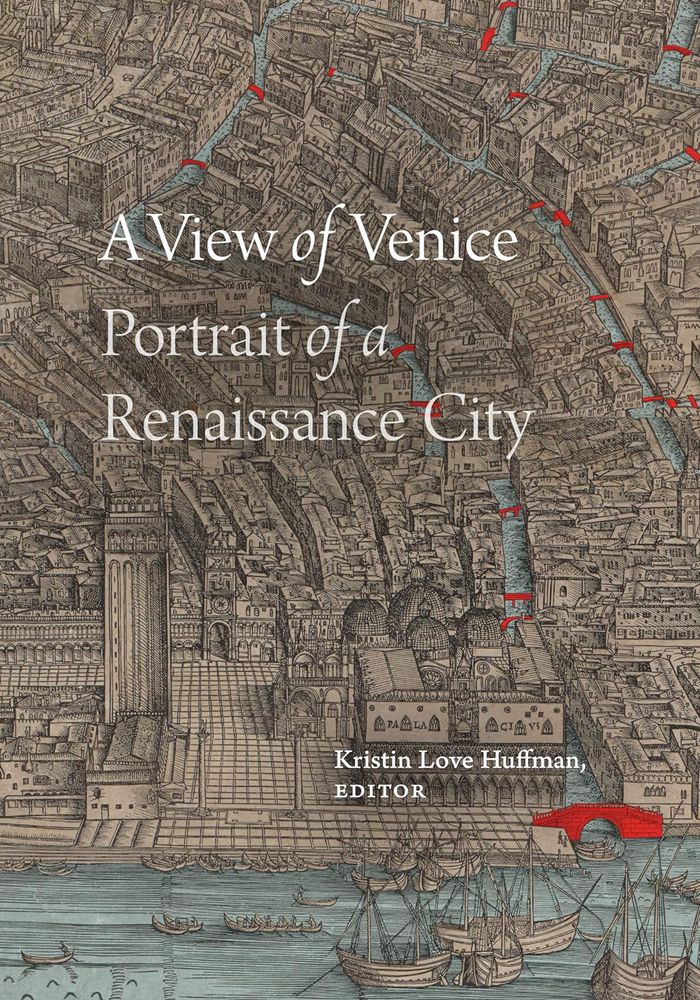
Jacopo de' Barbari's "View of Venice," a woodcut first printed in the year 1500, presents a bird's-eye portrait of Venice at its peak as an international hub of trade, art, and culture. An artistic and cartographic masterpiece of the Renaissance, the View depicts Venice as a vibrant, waterborne city interconnected by canals and bridges and filled with ornate buildings, elaborate gardens, and seafaring vessels. The contributors to "A view of Venice: Portrait of a Renaissance city" draw on a high-resolution digital scan of the over nine-foot-wide composite print to examine the complexities of this extraordinary woodcut and portrayal of early modern Venetian life. The essays show how the View constitutes an advanced material artifact of artistic, humanist, and scientific culture. They also outline the ways the print reveals information about the city's economic and military power, religious and social infrastructures, and cosmopolitan residents. Featuring methodological advancements in the digital humanities, "A view of Venice" highlights the reality and myths of a topographically unique, mystical city and its place in the world.
A view of Venice: Portrait of a Renaissance city
Actions:
Price:
$41.95
(available to order)
Summary:
Jacopo de' Barbari's "View of Venice," a woodcut first printed in the year 1500, presents a bird's-eye portrait of Venice at its peak as an international hub of trade, art, and culture. An artistic and cartographic masterpiece of the Renaissance, the View depicts Venice as a vibrant, waterborne city interconnected by canals and bridges and filled with ornate buildings, elaborate gardens, and seafaring vessels. The contributors to "A view of Venice: Portrait of a Renaissance city" draw on a high-resolution digital scan of the over nine-foot-wide composite print to examine the complexities of this extraordinary woodcut and portrayal of early modern Venetian life. The essays show how the View constitutes an advanced material artifact of artistic, humanist, and scientific culture. They also outline the ways the print reveals information about the city's economic and military power, religious and social infrastructures, and cosmopolitan residents. Featuring methodological advancements in the digital humanities, "A view of Venice" highlights the reality and myths of a topographically unique, mystical city and its place in the world.
Form:
books
books
Publication:
January 2024
January 2024
Subject:
Art Theory
Art Theory
Form:
books
books
Title:
Terra Infecta
Terra Infecta
Actions:
Price:
$45.00
(available in store)
Summary:
In ''Terra Infecta'', Andrea Bagnato tells an unfamiliar story about a well-known place. Since the early days of tourism, the cities and landscapes of Italy have been bywords for beauty and grandeur. But, at home and abroad, the same places have also been haunted by associations with disease and uncleanliness, often more to do with politics than conditions on the(...)
$45.00
(available in store)
Summary:
In ''Terra Infecta'', Andrea Bagnato tells an unfamiliar story about a well-known place. Since the early days of tourism, the cities and landscapes of Italy have been bywords for beauty and grandeur. But, at home and abroad, the same places have also been haunted by associations with disease and uncleanliness, often more to do with politics than conditions on the(...)
Title:
Terra Infecta
Actions:
Price:
$45.00
(available in store)
Summary:
In ''Terra Infecta'', Andrea Bagnato tells an unfamiliar story about a well-known place. Since the early days of tourism, the cities and landscapes of Italy have been bywords for beauty and grandeur. But, at home and abroad, the same places have also been haunted by associations with disease and uncleanliness, often more to do with politics than conditions on the ground. In this gripping narrative study, Bagnato shows how the modern quest for sanitation shaped Italy’s urban and rural landscapes, propelling major transformations from the draining of the wetlands around Venice, to demolitions and replanning in Naples, to the expulsion of the inhabitants of ancient Matera. He argues that current north–south inequalities are founded on spurious medical narratives, and focuses on the real impact on the people caught in their ministrations. Ranging from Italian unification to the aftershocks of Covid-19, and drawing on architectural records, medical history, and the author’s own travels, ''Terra Infecta'' reveals the lived realities of grand schemes, traces of vanished communities, and forgotten histories of collective organisation and resistance.
Terra Infecta
Actions:
Price:
$45.00
(available in store)
Summary:
In ''Terra Infecta'', Andrea Bagnato tells an unfamiliar story about a well-known place. Since the early days of tourism, the cities and landscapes of Italy have been bywords for beauty and grandeur. But, at home and abroad, the same places have also been haunted by associations with disease and uncleanliness, often more to do with politics than conditions on the ground. In this gripping narrative study, Bagnato shows how the modern quest for sanitation shaped Italy’s urban and rural landscapes, propelling major transformations from the draining of the wetlands around Venice, to demolitions and replanning in Naples, to the expulsion of the inhabitants of ancient Matera. He argues that current north–south inequalities are founded on spurious medical narratives, and focuses on the real impact on the people caught in their ministrations. Ranging from Italian unification to the aftershocks of Covid-19, and drawing on architectural records, medical history, and the author’s own travels, ''Terra Infecta'' reveals the lived realities of grand schemes, traces of vanished communities, and forgotten histories of collective organisation and resistance.
Form:
books
books
Publication:
February 2026
February 2026
Subject:
Architectural Theory
Architectural Theory


