


2794 Results
Form:
books
books
Actions:
Holdings:
Description:
144 pages : illustrations ; 24 cm
Description:
144 pages : illustrations ; 24 cm
Author:
Subject:
Publication:
New York : Rizzoli, 1988.
New York : Rizzoli, 1988.
Title:
Women in design : a contemporary view / Liz McQuiston.
Actions:
Holdings:
Description:
144 pages : illustrations ; 24 cm
Women in design : a contemporary view / Liz McQuiston.
Actions:
Holdings:
Description:
144 pages : illustrations ; 24 cm
Form:
books
books
Publication:
New York : Rizzoli, 1988.
New York : Rizzoli, 1988.
Author:
Subject:
Form:
books
books
Title:
Shigeru Ban
Shigeru Ban
Actions:
Price:
$30.95
(available to order)
Summary:
Shigeru Ban (Tokyo, 1957) is a Japanese architect, who studied in the United States. This monograph study is centred on a series of projects which explore the possibilities of unconventional materials such as PTS (Paper Tube Structure).
$30.95
(available to order)
Summary:
Shigeru Ban (Tokyo, 1957) is a Japanese architect, who studied in the United States. This monograph study is centred on a series of projects which explore the possibilities of unconventional materials such as PTS (Paper Tube Structure).
Subject:
Architecture Monographs
Architecture Monographs
Publication:
September 1997, Barcelona
September 1997, Barcelona
Title:
Shigeru Ban
Actions:
Price:
$30.95
(available to order)
Summary:
Shigeru Ban (Tokyo, 1957) is a Japanese architect, who studied in the United States. This monograph study is centred on a series of projects which explore the possibilities of unconventional materials such as PTS (Paper Tube Structure).
Shigeru Ban
Actions:
Price:
$30.95
(available to order)
Summary:
Shigeru Ban (Tokyo, 1957) is a Japanese architect, who studied in the United States. This monograph study is centred on a series of projects which explore the possibilities of unconventional materials such as PTS (Paper Tube Structure).
Form:
books
books
Publication:
September 1997, Barcelona
September 1997, Barcelona
Subject:
Architecture Monographs
Architecture Monographs
Form:
books
books
Actions:
Price:
$104.95
(available to order)
Summary:
"SANAA. Sejima & Nishizawa. 1990-2017" gathers the complete oeuvre of Kazuyo Sejima and Ryue Nishizawa over almost three decades of work of the three studios they lead in Tokyo, and that has produced prominent buildings like the Zollverein School of Design in Essen, the Rolex Center in Lausanne, the Louvre-Lens Museum, or their recent center for the Grace Farms Foundation(...)
$104.95
(available to order)
Summary:
"SANAA. Sejima & Nishizawa. 1990-2017" gathers the complete oeuvre of Kazuyo Sejima and Ryue Nishizawa over almost three decades of work of the three studios they lead in Tokyo, and that has produced prominent buildings like the Zollverein School of Design in Essen, the Rolex Center in Lausanne, the Louvre-Lens Museum, or their recent center for the Grace Farms Foundation(...)
Title:
SANAA. Sejima & Nishizawa 1990-2017
Actions:
Price:
$104.95
(available to order)
Summary:
"SANAA. Sejima & Nishizawa. 1990-2017" gathers the complete oeuvre of Kazuyo Sejima and Ryue Nishizawa over almost three decades of work of the three studios they lead in Tokyo, and that has produced prominent buildings like the Zollverein School of Design in Essen, the Rolex Center in Lausanne, the Louvre-Lens Museum, or their recent center for the Grace Farms Foundation in Connecticut. With articles by Luis Fernández-Galiano and the architects themselves, this monograph examines the principles and methods behind the seeming simplicity of the work of the two Japanese architects, and unveils the keys to the radicalness of their architecture, extremely light and immaterial.
SANAA. Sejima & Nishizawa 1990-2017
Actions:
Price:
$104.95
(available to order)
Summary:
"SANAA. Sejima & Nishizawa. 1990-2017" gathers the complete oeuvre of Kazuyo Sejima and Ryue Nishizawa over almost three decades of work of the three studios they lead in Tokyo, and that has produced prominent buildings like the Zollverein School of Design in Essen, the Rolex Center in Lausanne, the Louvre-Lens Museum, or their recent center for the Grace Farms Foundation in Connecticut. With articles by Luis Fernández-Galiano and the architects themselves, this monograph examines the principles and methods behind the seeming simplicity of the work of the two Japanese architects, and unveils the keys to the radicalness of their architecture, extremely light and immaterial.
Form:
books
books
Publication:
January 2017
January 2017
Subject:
Architecture Monographs
Architecture Monographs
Form:
books
books
Title:
Charles Rennie Mackintosh
Charles Rennie Mackintosh
Actions:
Price:
$81.00
(available in store)
Summary:
Charles Rennie Mackintosh was one of Scotland’s greatest architect. He had far fewer commissions than his contemporary Frank Lloyd Wright, but with a few bold and innovative structures — the Glasgow School of Art and Hill House among them —he had a profound influence on art and architecture at the turn of the twentieth century. Like Wright, Mackintosh designed in(...)
$81.00
(available in store)
Summary:
Charles Rennie Mackintosh was one of Scotland’s greatest architect. He had far fewer commissions than his contemporary Frank Lloyd Wright, but with a few bold and innovative structures — the Glasgow School of Art and Hill House among them —he had a profound influence on art and architecture at the turn of the twentieth century. Like Wright, Mackintosh designed in(...)
Title:
Charles Rennie Mackintosh
Actions:
Price:
$81.00
(available in store)
Summary:
Charles Rennie Mackintosh was one of Scotland’s greatest architect. He had far fewer commissions than his contemporary Frank Lloyd Wright, but with a few bold and innovative structures — the Glasgow School of Art and Hill House among them —he had a profound influence on art and architecture at the turn of the twentieth century. Like Wright, Mackintosh designed in totality, down to the furniture and fabrics used in his structures, and he was influenced by the Japanese, particularly in the simplicity of his designs and themes from nature. This publication contains both historic photographs and modern images of Mackintosh’s major works taken by architectural photographer Mark Fiennes.
Charles Rennie Mackintosh
Actions:
Price:
$81.00
(available in store)
Summary:
Charles Rennie Mackintosh was one of Scotland’s greatest architect. He had far fewer commissions than his contemporary Frank Lloyd Wright, but with a few bold and innovative structures — the Glasgow School of Art and Hill House among them —he had a profound influence on art and architecture at the turn of the twentieth century. Like Wright, Mackintosh designed in totality, down to the furniture and fabrics used in his structures, and he was influenced by the Japanese, particularly in the simplicity of his designs and themes from nature. This publication contains both historic photographs and modern images of Mackintosh’s major works taken by architectural photographer Mark Fiennes.
Form:
books
books
Publication:
June 2010
June 2010
Subject:
Architecture Monographs
Architecture Monographs
Form:
books
books
Actions:
Price:
$70.50
(available to order)
Summary:
Architects have long operated based on the assumption that a building is 'complete' once construction has finished. Striving to create a perfect building, they wish for it to stay in its original state indefinitely, viewing any subsequent alterations as unintended effects or the results of degeneration. The ideal is for a piece of architecture to remain permanently(...)
$70.50
(available to order)
Summary:
Architects have long operated based on the assumption that a building is 'complete' once construction has finished. Striving to create a perfect building, they wish for it to stay in its original state indefinitely, viewing any subsequent alterations as unintended effects or the results of degeneration. The ideal is for a piece of architecture to remain permanently(...)
Title:
Allure of the incomplete, imperfect, and impermanent: designing and appreciating architecture as nature
Actions:
Price:
$70.50
(available to order)
Summary:
Architects have long operated based on the assumption that a building is 'complete' once construction has finished. Striving to create a perfect building, they wish for it to stay in its original state indefinitely, viewing any subsequent alterations as unintended effects or the results of degeneration. The ideal is for a piece of architecture to remain permanently perfect and complete. This contrasts sharply with reality where changes take place as people move in, requirements change, events happen, and building materials are subject to wear and tear. Rumiko Handa argues it is time to correct this imbalance. Using examples ranging from the Roman Coliseum to Japanese tea rooms, she draws attention to an area that is usually ignored: the allure of incomplete, imperfect and impermanent architecture. By focusing on what happens to buildings after they are ‘complete’, she shows that the ‘afterlife’ is in fact the very ‘life’ of a building. However, the book goes beyond theoretical debate. Addressing professionals as well as architecture students and educators, it persuades architects of the necessity to anticipate possible future changes and to incorporate these into their original designs.
Allure of the incomplete, imperfect, and impermanent: designing and appreciating architecture as nature
Actions:
Price:
$70.50
(available to order)
Summary:
Architects have long operated based on the assumption that a building is 'complete' once construction has finished. Striving to create a perfect building, they wish for it to stay in its original state indefinitely, viewing any subsequent alterations as unintended effects or the results of degeneration. The ideal is for a piece of architecture to remain permanently perfect and complete. This contrasts sharply with reality where changes take place as people move in, requirements change, events happen, and building materials are subject to wear and tear. Rumiko Handa argues it is time to correct this imbalance. Using examples ranging from the Roman Coliseum to Japanese tea rooms, she draws attention to an area that is usually ignored: the allure of incomplete, imperfect and impermanent architecture. By focusing on what happens to buildings after they are ‘complete’, she shows that the ‘afterlife’ is in fact the very ‘life’ of a building. However, the book goes beyond theoretical debate. Addressing professionals as well as architecture students and educators, it persuades architects of the necessity to anticipate possible future changes and to incorporate these into their original designs.
Form:
books
books
Publication:
January 2015
January 2015
Subject:
Landscape Theory
Landscape Theory
Form:
books
books
Actions:
Holdings:
Description:
311 pages : illustrations (chiefly color), portraits, facsimiles ; 32 cm
Description:
311 pages : illustrations (chiefly color), portraits, facsimiles ; 32 cm
Author:
Subject:
Publication:
New York, New York : Thames & Hudson, 2019., ©2019
New York, New York : Thames & Hudson, 2019., ©2019
Title:
Bauhaus imaginista : a school in the world / edited by Marion von Osten and Grant Watson.
Actions:
Holdings:
Description:
311 pages : illustrations (chiefly color), portraits, facsimiles ; 32 cm
Bauhaus imaginista : a school in the world / edited by Marion von Osten and Grant Watson.
Actions:
Holdings:
Description:
311 pages : illustrations (chiefly color), portraits, facsimiles ; 32 cm
Form:
books
books
Publication:
New York, New York : Thames & Hudson, 2019., ©2019
New York, New York : Thames & Hudson, 2019., ©2019
Author:
Subject:
Form:
books
books
Title:
Kengo Kuma: Topography
Kengo Kuma: Topography
Actions:
Price:
$100.00
(available in store)
Summary:
Kengo Kuma is a globally acclaimed Japanese architect whose prodigious output possesses an inherent respect and value of materials and environment, often creating a harmonious balance between building and landscape. He masterfully engages both architectural experimentation and traditional Japanese design with twenty-first-century technology, resulting in highly advanced(...)
$100.00
(available in store)
Summary:
Kengo Kuma is a globally acclaimed Japanese architect whose prodigious output possesses an inherent respect and value of materials and environment, often creating a harmonious balance between building and landscape. He masterfully engages both architectural experimentation and traditional Japanese design with twenty-first-century technology, resulting in highly advanced(...)
Title:
Kengo Kuma: Topography
Actions:
Price:
$100.00
(available in store)
Summary:
Kengo Kuma is a globally acclaimed Japanese architect whose prodigious output possesses an inherent respect and value of materials and environment, often creating a harmonious balance between building and landscape. He masterfully engages both architectural experimentation and traditional Japanese design with twenty-first-century technology, resulting in highly advanced yet beautifully simple, gentle, human-scaled buildings. Often ranked among other esteemed architects, such as Shigeru Ban, Tadao Ando, Kazuyo Sejima, or Kenzo Tange, Kuma is always in search of new materials to replace concrete and steel, and seeks a new approach for architecture in a post-industrial society, fusing interior and exterior realms to make spaces that create a calming and tranquil atmosphere. Known for his prolific writing, Kuma is constantly re-engaging with different aspects of the architectural discipline, whether it be construction or representation in order to give further progress to his ideas. This volume showcases close to forty high-profile works by Kengo Kuma & Associates (based in Tokyo and Paris), focusing on some of his most recognised works, including the Asakusa Culture and Tourism Center in Tokyo, the Mont Blanc Base Camp project, the Great Bamboo Wall, as well as progress for the design for Tokyo's main stadium for the 2020 Olympic Games.
Kengo Kuma: Topography
Actions:
Price:
$100.00
(available in store)
Summary:
Kengo Kuma is a globally acclaimed Japanese architect whose prodigious output possesses an inherent respect and value of materials and environment, often creating a harmonious balance between building and landscape. He masterfully engages both architectural experimentation and traditional Japanese design with twenty-first-century technology, resulting in highly advanced yet beautifully simple, gentle, human-scaled buildings. Often ranked among other esteemed architects, such as Shigeru Ban, Tadao Ando, Kazuyo Sejima, or Kenzo Tange, Kuma is always in search of new materials to replace concrete and steel, and seeks a new approach for architecture in a post-industrial society, fusing interior and exterior realms to make spaces that create a calming and tranquil atmosphere. Known for his prolific writing, Kuma is constantly re-engaging with different aspects of the architectural discipline, whether it be construction or representation in order to give further progress to his ideas. This volume showcases close to forty high-profile works by Kengo Kuma & Associates (based in Tokyo and Paris), focusing on some of his most recognised works, including the Asakusa Culture and Tourism Center in Tokyo, the Mont Blanc Base Camp project, the Great Bamboo Wall, as well as progress for the design for Tokyo's main stadium for the 2020 Olympic Games.
Form:
books
books
Publication:
March 2021
March 2021
Subject:
Architecture Monographs
Architecture Monographs
Form:
books
books
Actions:
Price:
$64.95
(available to order)
Summary:
This publication presents projects in recent years in Japan, which respond to the need for new forms of housing. The architects are developing solutions that allow residents to live together but still maintain enough distance and privacy. The presented apartment types and their layout allow for a variety of life models. Particularly interesting here is the use of spaces(...)
$64.95
(available to order)
Summary:
This publication presents projects in recent years in Japan, which respond to the need for new forms of housing. The architects are developing solutions that allow residents to live together but still maintain enough distance and privacy. The presented apartment types and their layout allow for a variety of life models. Particularly interesting here is the use of spaces(...)
Publication:
November 2013
November 2013
Title:
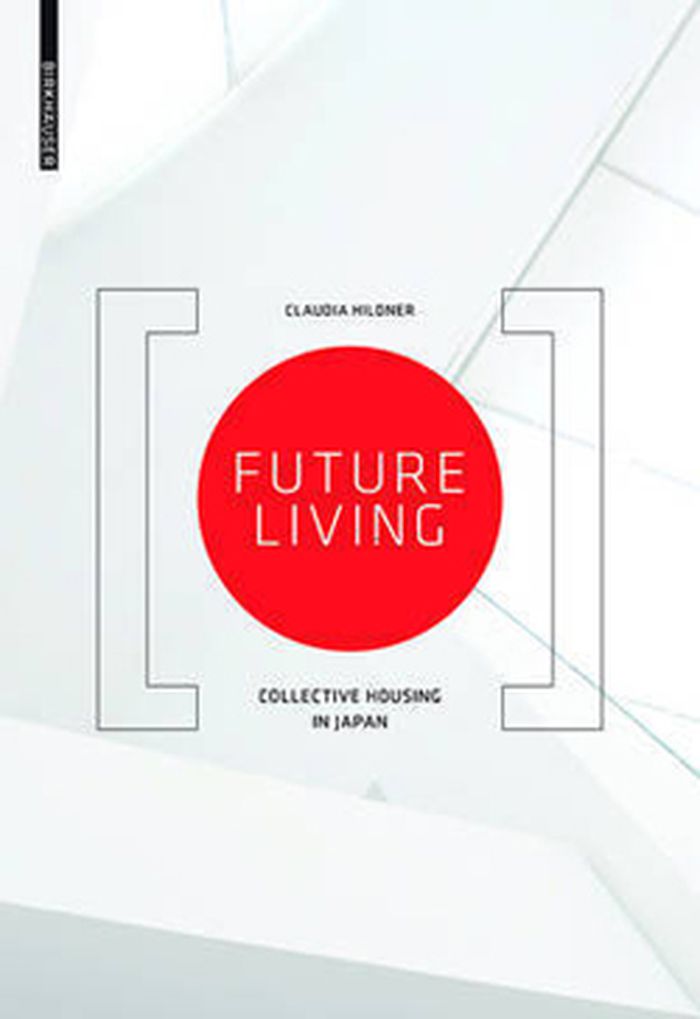
Future living: collective housing in Japan
Actions:
Price:
$64.95
(available to order)
Summary:
This publication presents projects in recent years in Japan, which respond to the need for new forms of housing. The architects are developing solutions that allow residents to live together but still maintain enough distance and privacy. The presented apartment types and their layout allow for a variety of life models. Particularly interesting here is the use of spaces that provide a gradual transition from public to private space - an approach to building that, according to experts, could revolutionize western residential architecture. The publication portrays these new forms of building and living based on prominent Japanese examples that include Shigerun Ban, Sou Foujimoto, and SANAA.
Future living: collective housing in Japan
Actions:
Price:
$64.95
(available to order)
Summary:
This publication presents projects in recent years in Japan, which respond to the need for new forms of housing. The architects are developing solutions that allow residents to live together but still maintain enough distance and privacy. The presented apartment types and their layout allow for a variety of life models. Particularly interesting here is the use of spaces that provide a gradual transition from public to private space - an approach to building that, according to experts, could revolutionize western residential architecture. The publication portrays these new forms of building and living based on prominent Japanese examples that include Shigerun Ban, Sou Foujimoto, and SANAA.
Form:
books
books
Publication:
November 2013
November 2013
Form:
books
books
Title:
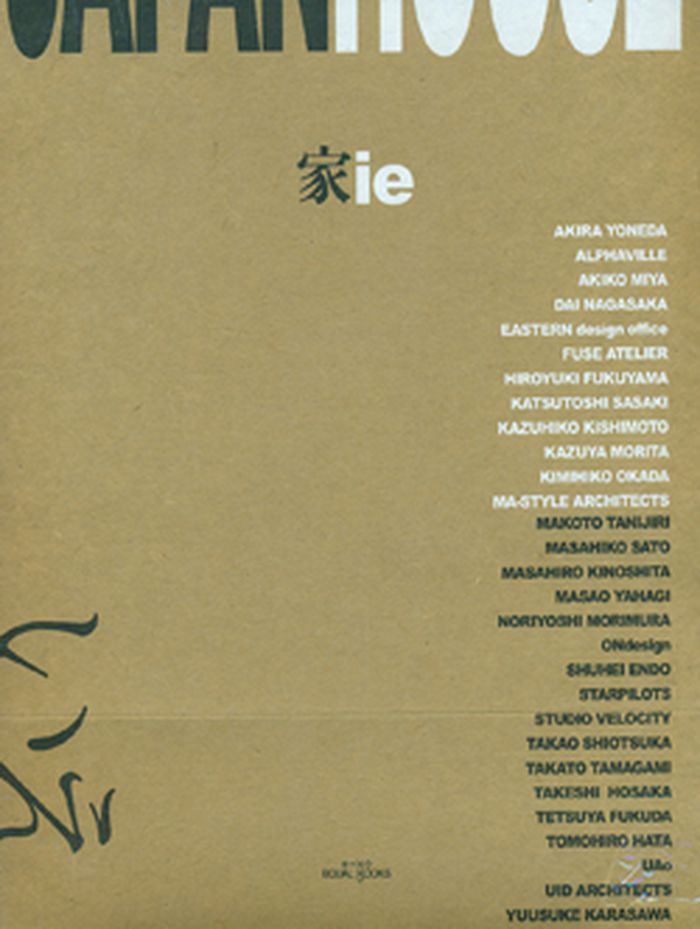
Japan House
Japan House
Actions:
Price:
$204.95
(available to order)
Summary:
A double-volume compendium of homes by Japanese architects, this publication profiles more than 50 diverse residential projects by 29 architects and offices. Each example is presented through diverse, full-colour photographs and architectural drawings, plus technical data and an explanatory text. Brief biographies of the architects also accompany the projects, which(...)
$204.95
(available to order)
Summary:
A double-volume compendium of homes by Japanese architects, this publication profiles more than 50 diverse residential projects by 29 architects and offices. Each example is presented through diverse, full-colour photographs and architectural drawings, plus technical data and an explanatory text. Brief biographies of the architects also accompany the projects, which(...)
Title:
Japan House
Actions:
Price:
$204.95
(available to order)
Summary:
A double-volume compendium of homes by Japanese architects, this publication profiles more than 50 diverse residential projects by 29 architects and offices. Each example is presented through diverse, full-colour photographs and architectural drawings, plus technical data and an explanatory text. Brief biographies of the architects also accompany the projects, which represent a wide spectrum of approaches, contexts and solutions involving both the contemporary Japanese urban environment and its important socio-cultural aspects.
Japan House
Actions:
Price:
$204.95
(available to order)
Summary:
A double-volume compendium of homes by Japanese architects, this publication profiles more than 50 diverse residential projects by 29 architects and offices. Each example is presented through diverse, full-colour photographs and architectural drawings, plus technical data and an explanatory text. Brief biographies of the architects also accompany the projects, which represent a wide spectrum of approaches, contexts and solutions involving both the contemporary Japanese urban environment and its important socio-cultural aspects.
Form:
books
books
Publication:
January 2013
January 2013
Subject:
Contemporary Asian Architecture
Contemporary Asian Architecture
Form:
books
books
Actions:
Holdings:
Description:
pages cm
Description:
pages cm
Author:
Subject:
Publication:
New York : Princeton Architectural Press, 2006.
New York : Princeton Architectural Press, 2006.
Title:
Prefab prototypes : site-specific design for offsite construction / Mark Anderson and Peter Anderson.
Actions:
Holdings:
Description:
pages cm
Prefab prototypes : site-specific design for offsite construction / Mark Anderson and Peter Anderson.
Actions:
Holdings:
Description:
pages cm
Form:
books
books
Publication:
New York : Princeton Architectural Press, 2006.
New York : Princeton Architectural Press, 2006.
Author:
Subject:


