


2689 Results
Form:
books
books
Price:
$63.95
(available to order)
Summary:
First built in Europe and grandly imported to the United States in the mid-nineteenth century, the classic multiway boulevard has been in decline for many years, victim of a narrowly focused approach to street design that views unencumbered vehicular traffic flow as the highest priority. The American preoccupation with destination and speed has made multiway boulevards(...)
$63.95
(available to order)
Summary:
First built in Europe and grandly imported to the United States in the mid-nineteenth century, the classic multiway boulevard has been in decline for many years, victim of a narrowly focused approach to street design that views unencumbered vehicular traffic flow as the highest priority. The American preoccupation with destination and speed has made multiway boulevards(...)
Subject:
Urban Theory
Urban Theory
Publication:
October 2001, Cambridge, Mass.
October 2001, Cambridge, Mass.
Title:
The boulevard book : history, evolution, design of multiway boulevards
Actions:
Price:
$63.95
(available to order)
Summary:
First built in Europe and grandly imported to the United States in the mid-nineteenth century, the classic multiway boulevard has been in decline for many years, victim of a narrowly focused approach to street design that views unencumbered vehicular traffic flow as the highest priority. The American preoccupation with destination and speed has made multiway boulevards increasingly rare as artifacts of the urban landscape. This book reintroduces the boulevard, tree-lined and with separate realms for through traffic and for slow-paced vehicular-pedestrian movement, as an important and often crucial feature of both historic and contemporary cities. It presents more than fifty boulevards—-as varied as Avenue Montaigne, in Paris; C. G. Road, in Ahmedabad, India; and The Esplanade, in Chico, California--celebrating their usefulness and beauty. It discusses their history and evolution, the misconceptions that led to their near-demise in the United States, and their potential as a modern street type. Based on wide research, "The Boulevard Book" examines the safety of these streets and offers design guidelines for professionals, scholars, and community decision makers. Extensive plans, cross sections, and perspective drawings permit visual comparisons. The book shows how multiway boulevards respond to many issues that are central to urban life, including livability, mobility, safety, interest, economic opportunity, mass transit, and open space.
The boulevard book : history, evolution, design of multiway boulevards
Actions:
Price:
$63.95
(available to order)
Summary:
First built in Europe and grandly imported to the United States in the mid-nineteenth century, the classic multiway boulevard has been in decline for many years, victim of a narrowly focused approach to street design that views unencumbered vehicular traffic flow as the highest priority. The American preoccupation with destination and speed has made multiway boulevards increasingly rare as artifacts of the urban landscape. This book reintroduces the boulevard, tree-lined and with separate realms for through traffic and for slow-paced vehicular-pedestrian movement, as an important and often crucial feature of both historic and contemporary cities. It presents more than fifty boulevards—-as varied as Avenue Montaigne, in Paris; C. G. Road, in Ahmedabad, India; and The Esplanade, in Chico, California--celebrating their usefulness and beauty. It discusses their history and evolution, the misconceptions that led to their near-demise in the United States, and their potential as a modern street type. Based on wide research, "The Boulevard Book" examines the safety of these streets and offers design guidelines for professionals, scholars, and community decision makers. Extensive plans, cross sections, and perspective drawings permit visual comparisons. The book shows how multiway boulevards respond to many issues that are central to urban life, including livability, mobility, safety, interest, economic opportunity, mass transit, and open space.
Form:
books
books
Publication:
October 2001, Cambridge, Mass.
October 2001, Cambridge, Mass.
Subject:
Urban Theory
Urban Theory
Form:
books
books
Title:
The dominion of the dead
The dominion of the dead
Actions:
Price:
$17.50
(available to order)
Summary:
How do the living maintain relations to the dead? Why do we bury people when they die? And what is at stake when we do? In "The dominion of the dead", Robert Pogue Harrison considers the supreme importance of these questions to Western civilization, exploring the many places where the dead cohabit the world of the living-the graves, images, literature, architecture, and(...)
$17.50
(available to order)
Summary:
How do the living maintain relations to the dead? Why do we bury people when they die? And what is at stake when we do? In "The dominion of the dead", Robert Pogue Harrison considers the supreme importance of these questions to Western civilization, exploring the many places where the dead cohabit the world of the living-the graves, images, literature, architecture, and(...)
Title:
The dominion of the dead
Actions:
Price:
$17.50
(available to order)
Summary:
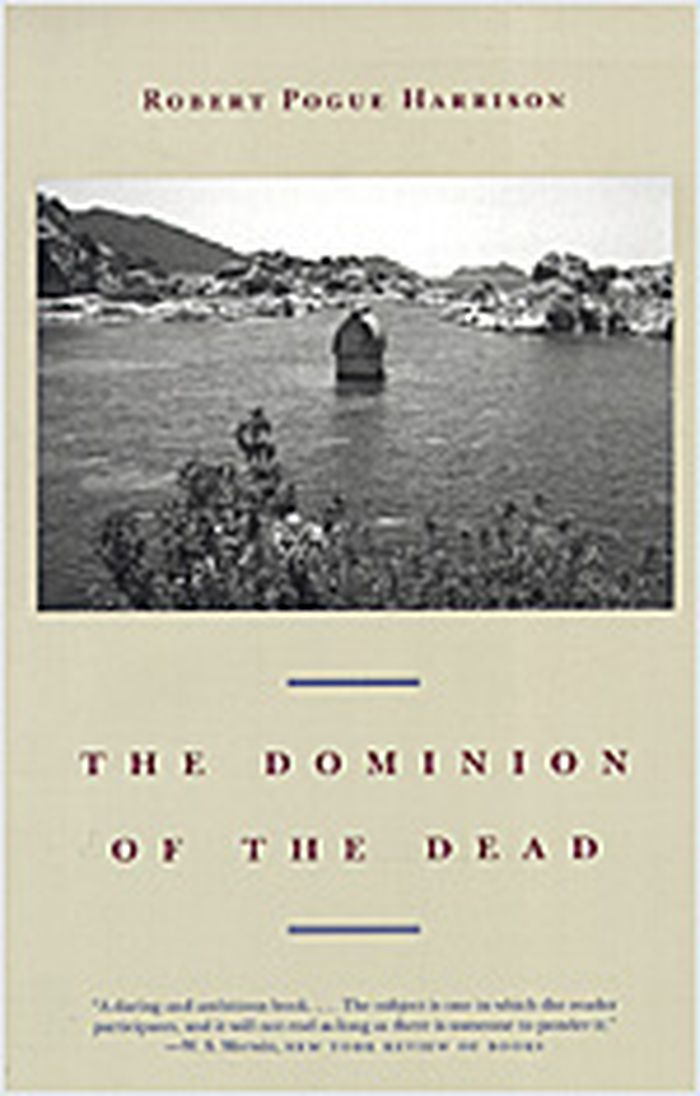
How do the living maintain relations to the dead? Why do we bury people when they die? And what is at stake when we do? In "The dominion of the dead", Robert Pogue Harrison considers the supreme importance of these questions to Western civilization, exploring the many places where the dead cohabit the world of the living-the graves, images, literature, architecture, and monuments that house the dead in their afterlife among us. This work devotes particular attention to the practice of burial. Harrison contends that we bury our dead to humanize the lands where we build our present and imagine our future. As long as the dead are interred in graves and tombs, they never truly depart from this world, but remain, if only symbolically, among the living. Spanning a broad range of examples, from the graves of our first human ancestors to the empty tomb of the Gospels to the Vietnam Veterans Memorial, Harrison also considers the authority of predecessors in both modern and premodern societies. Through inspired readings of major writers and thinkers such as Vico, Virgil, Dante, Pater, Nietzsche, Heidegger, and Rilke, he argues that the buried dead form an essential foundation where future generations can retrieve their past, while burial grounds provide an important bedrock where past generations can preserve their legacy for the unborn.
The dominion of the dead
Actions:
Price:
$17.50
(available to order)
Summary:
How do the living maintain relations to the dead? Why do we bury people when they die? And what is at stake when we do? In "The dominion of the dead", Robert Pogue Harrison considers the supreme importance of these questions to Western civilization, exploring the many places where the dead cohabit the world of the living-the graves, images, literature, architecture, and monuments that house the dead in their afterlife among us. This work devotes particular attention to the practice of burial. Harrison contends that we bury our dead to humanize the lands where we build our present and imagine our future. As long as the dead are interred in graves and tombs, they never truly depart from this world, but remain, if only symbolically, among the living. Spanning a broad range of examples, from the graves of our first human ancestors to the empty tomb of the Gospels to the Vietnam Veterans Memorial, Harrison also considers the authority of predecessors in both modern and premodern societies. Through inspired readings of major writers and thinkers such as Vico, Virgil, Dante, Pater, Nietzsche, Heidegger, and Rilke, he argues that the buried dead form an essential foundation where future generations can retrieve their past, while burial grounds provide an important bedrock where past generations can preserve their legacy for the unborn.
Form:
books
books
Publication:
May 2005, Chicago, London
May 2005, Chicago, London
Subject:
Landscape Theory
Landscape Theory
Form:
books
books
Actions:
Price:
$82.50
(available to order)
Summary:
In this provocative revisionist work, Evonne Levy brings fresh theoretical perspectives to the study of the "propagandistic" art and architecture of the Jesuit order as exemplified by its late Baroque Roman church interiors. The first extensive analysis of the aims, mechanisms, and effects of Jesuit art and architecture, this original and sophisticated study also(...)
$82.50
(available to order)
Summary:
In this provocative revisionist work, Evonne Levy brings fresh theoretical perspectives to the study of the "propagandistic" art and architecture of the Jesuit order as exemplified by its late Baroque Roman church interiors. The first extensive analysis of the aims, mechanisms, and effects of Jesuit art and architecture, this original and sophisticated study also(...)
Title:
Propaganda and the Jesuit Baroque
Actions:
Price:
$82.50
(available to order)
Summary:
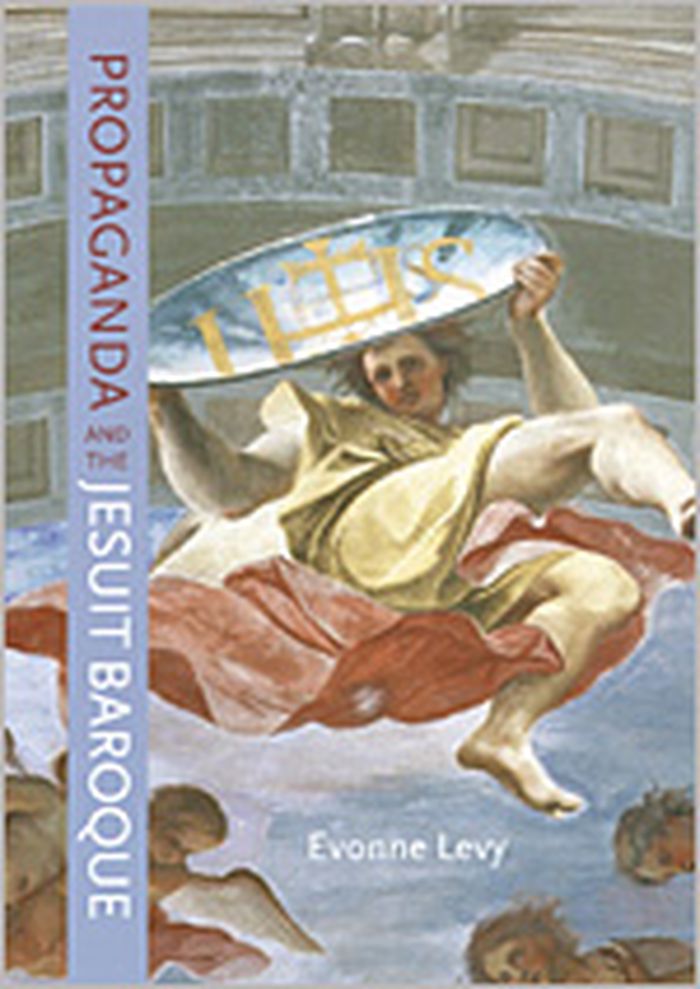
In this provocative revisionist work, Evonne Levy brings fresh theoretical perspectives to the study of the "propagandistic" art and architecture of the Jesuit order as exemplified by its late Baroque Roman church interiors. The first extensive analysis of the aims, mechanisms, and effects of Jesuit art and architecture, this original and sophisticated study also evaluates how the term "propaganda" functions in art history, distinguishes it from rhetoric, and proposes a precise use of the term for the visual arts for the first time. Levy begins by looking at Nazi architecture as a gateway to the emotional and ethical issues raised by the term "propaganda." Jesuit art once stirred similar passions, as she shows in a discussion of the controversial nineteenth-century rubric the "Jesuit Style." She then considers three central aspects of Jesuit art as essential components of propaganda: authorship, message, and diffusion. Levy tests her theoretical formulations against a broad range of documents and works of art, including the Chapel of St. Ignatius and other major works in Rome by Andrea Pozzo as well as chapels in Central Europe and Poland. Innovative in bringing a broad range of social and critical theory to bear on Baroque art and architecture in Europe and beyond, Levy's work highlights the subject-forming capacity of early modern Catholic art and architecture while establishing "propaganda" as a productive term for art history.
Propaganda and the Jesuit Baroque
Actions:
Price:
$82.50
(available to order)
Summary:
In this provocative revisionist work, Evonne Levy brings fresh theoretical perspectives to the study of the "propagandistic" art and architecture of the Jesuit order as exemplified by its late Baroque Roman church interiors. The first extensive analysis of the aims, mechanisms, and effects of Jesuit art and architecture, this original and sophisticated study also evaluates how the term "propaganda" functions in art history, distinguishes it from rhetoric, and proposes a precise use of the term for the visual arts for the first time. Levy begins by looking at Nazi architecture as a gateway to the emotional and ethical issues raised by the term "propaganda." Jesuit art once stirred similar passions, as she shows in a discussion of the controversial nineteenth-century rubric the "Jesuit Style." She then considers three central aspects of Jesuit art as essential components of propaganda: authorship, message, and diffusion. Levy tests her theoretical formulations against a broad range of documents and works of art, including the Chapel of St. Ignatius and other major works in Rome by Andrea Pozzo as well as chapels in Central Europe and Poland. Innovative in bringing a broad range of social and critical theory to bear on Baroque art and architecture in Europe and beyond, Levy's work highlights the subject-forming capacity of early modern Catholic art and architecture while establishing "propaganda" as a productive term for art history.
Form:
books
books
Publication:
April 2004, Berkeley
April 2004, Berkeley
Subject:
History until 1900
History until 1900
Form:
books
books
Actions:
Price:
$90.00
(available in store)
Summary:
How and where we work and spend our leisure time has changed dramatically in recent years. The increased mobility and global networking that pervade all aspects of our lives have had a considerable impact on the spaces in which we live, meet, and work. SpaceCraft presents projects that meet the changing spatial needs of our modern lifestyles and that are simultaneously(...)
$90.00
(available in store)
Summary:
How and where we work and spend our leisure time has changed dramatically in recent years. The increased mobility and global networking that pervade all aspects of our lives have had a considerable impact on the spaces in which we live, meet, and work. SpaceCraft presents projects that meet the changing spatial needs of our modern lifestyles and that are simultaneously(...)
Subject:
Miniature Architecture
Miniature Architecture
Publication:
October 2007, Berlin
October 2007, Berlin
Title:
Space craft: Fleeting architecture and hideouts
Actions:
Price:
$90.00
(available in store)
Summary:
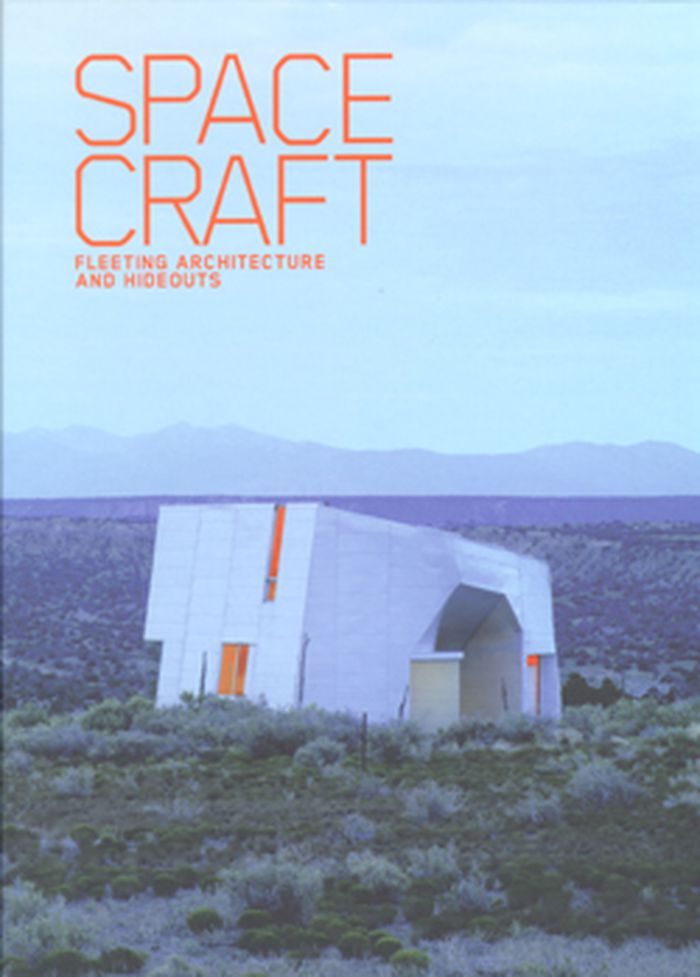
How and where we work and spend our leisure time has changed dramatically in recent years. The increased mobility and global networking that pervade all aspects of our lives have had a considerable impact on the spaces in which we live, meet, and work. SpaceCraft presents projects that meet the changing spatial needs of our modern lifestyles and that are simultaneously expanding our current understanding of architecture. On the one hand, the book features flexible, fleeting structures that only exist for a limited time; these include pavilions, art projects or exhibition spaces. On the other hand, SpaceCraft focuses on spaces that are used temporarily such as studios, offices or vacation homes. These structures, which are often used as hideouts from our hectic lives, can either blend in harmoniously with their surroundings or seem as exotic as a spaceship that has just landed. The book documents original work by architects, artists and others that is distinguished by a playful, unconventional use of space. Many of the projects are experimental interventions within urban environments that are strongly influenced by a street art context. As SpaceCraft proves, it is this contemporary influence in particular that is currently redefining the boundaries of architecture. SpaceCraft presents work that expresses our current modes of work and play. The book is thus inspiring both for architects and interior designers, and also for all creatives who work with space.
Space craft: Fleeting architecture and hideouts
Actions:
Price:
$90.00
(available in store)
Summary:
How and where we work and spend our leisure time has changed dramatically in recent years. The increased mobility and global networking that pervade all aspects of our lives have had a considerable impact on the spaces in which we live, meet, and work. SpaceCraft presents projects that meet the changing spatial needs of our modern lifestyles and that are simultaneously expanding our current understanding of architecture. On the one hand, the book features flexible, fleeting structures that only exist for a limited time; these include pavilions, art projects or exhibition spaces. On the other hand, SpaceCraft focuses on spaces that are used temporarily such as studios, offices or vacation homes. These structures, which are often used as hideouts from our hectic lives, can either blend in harmoniously with their surroundings or seem as exotic as a spaceship that has just landed. The book documents original work by architects, artists and others that is distinguished by a playful, unconventional use of space. Many of the projects are experimental interventions within urban environments that are strongly influenced by a street art context. As SpaceCraft proves, it is this contemporary influence in particular that is currently redefining the boundaries of architecture. SpaceCraft presents work that expresses our current modes of work and play. The book is thus inspiring both for architects and interior designers, and also for all creatives who work with space.
Form:
books
books
Publication:
October 2007, Berlin
October 2007, Berlin
Subject:
Miniature Architecture
Miniature Architecture
Form:
books
books
Title:
Chaos and culture: Renzo Piano Building Workshop and the Stavros Niarchos Foundation Cultural center
Chaos and culture: Renzo Piano Building Workshop and the Stavros Niarchos Foundation Cultural center
Actions:
Price:
$66.00
(available to order)
Summary:
In 2006 the Stavros Niarchos Foundation announced its gift of a new cultural center in Athens to house both Greek National Library and the Greek National Opera House within a forty-acre landscaped public park. Two years later, with designers and engineers in place and the project underway, the Greek economy collapsed. In "Chaos and culture", Victoria Newhouse weaves a(...)
$66.00
(available to order)
Summary:
In 2006 the Stavros Niarchos Foundation announced its gift of a new cultural center in Athens to house both Greek National Library and the Greek National Opera House within a forty-acre landscaped public park. Two years later, with designers and engineers in place and the project underway, the Greek economy collapsed. In "Chaos and culture", Victoria Newhouse weaves a(...)
Title:
Chaos and culture: Renzo Piano Building Workshop and the Stavros Niarchos Foundation Cultural center
Actions:
Price:
$66.00
(available to order)
Summary:
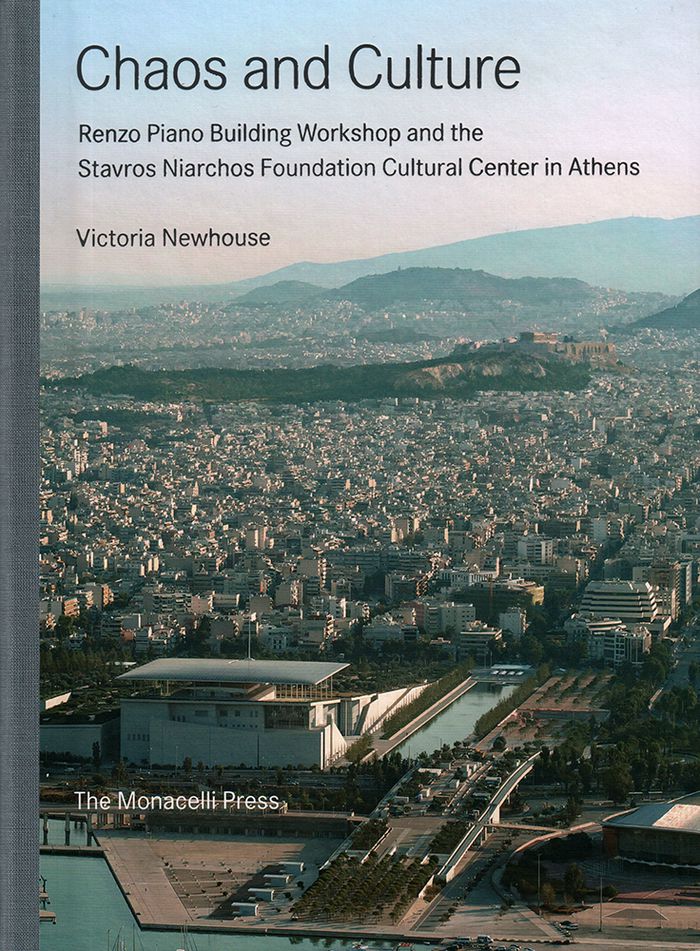
In 2006 the Stavros Niarchos Foundation announced its gift of a new cultural center in Athens to house both Greek National Library and the Greek National Opera House within a forty-acre landscaped public park. Two years later, with designers and engineers in place and the project underway, the Greek economy collapsed. In "Chaos and culture", Victoria Newhouse weaves a fascinating narrative of how a philanthropist and an extraordinary design team became convinced that architecture could serve as a beacon of hope amid Greece’s economic crisis and political upheaval. With meticulous methodology of primary research, interviews with designers, and historic context, Newhouse describes the decade-long process leading to the creation of the Stavros Niarchos Foundation Cultural Center (SNFCC), an $800 million dollar project that became the symbol of recovery and survival. The Stavros Niarchos Foundation Cultural Center (SNFCC) cannot but assume unusual cultural significance, standing as it does on a hill in view of the Parthenon (to the north) and Faliro Bay (to the south). Newhouse further situates the project within the modern history of Athens, beginning with Greece’s independence in 1832, and reaches back much earlier to describe two-thousand-year old cemeteries unearthed on the site. Aerial views by the photographer Iwan Baan are among the 200 photographs and drawings documenting the process and context of the SNFCC.
Chaos and culture: Renzo Piano Building Workshop and the Stavros Niarchos Foundation Cultural center
Actions:
Price:
$66.00
(available to order)
Summary:
In 2006 the Stavros Niarchos Foundation announced its gift of a new cultural center in Athens to house both Greek National Library and the Greek National Opera House within a forty-acre landscaped public park. Two years later, with designers and engineers in place and the project underway, the Greek economy collapsed. In "Chaos and culture", Victoria Newhouse weaves a fascinating narrative of how a philanthropist and an extraordinary design team became convinced that architecture could serve as a beacon of hope amid Greece’s economic crisis and political upheaval. With meticulous methodology of primary research, interviews with designers, and historic context, Newhouse describes the decade-long process leading to the creation of the Stavros Niarchos Foundation Cultural Center (SNFCC), an $800 million dollar project that became the symbol of recovery and survival. The Stavros Niarchos Foundation Cultural Center (SNFCC) cannot but assume unusual cultural significance, standing as it does on a hill in view of the Parthenon (to the north) and Faliro Bay (to the south). Newhouse further situates the project within the modern history of Athens, beginning with Greece’s independence in 1832, and reaches back much earlier to describe two-thousand-year old cemeteries unearthed on the site. Aerial views by the photographer Iwan Baan are among the 200 photographs and drawings documenting the process and context of the SNFCC.
Form:
books
books
Publication:
May 2017
May 2017
Subject:
Architecture Monographs
Architecture Monographs
Form:
books
books
Actions:
Price:
$75.00
(available to order)
Summary:
The grand exhibitions of the Victorian and Edwardian eras are the lens through which Peter Hoffenberg examines the economic, cultural, and social forces that helped define Britain and the British Empire. He focuses on major exhibitions in England, Australia, and India between the Great Exhibition of 1851 and the Festival of Empire sixty years later, taking special(...)
$75.00
(available to order)
Summary:
The grand exhibitions of the Victorian and Edwardian eras are the lens through which Peter Hoffenberg examines the economic, cultural, and social forces that helped define Britain and the British Empire. He focuses on major exhibitions in England, Australia, and India between the Great Exhibition of 1851 and the Festival of Empire sixty years later, taking special(...)
Subject:
Museums and Universal Exhibitions
Museums and Universal Exhibitions
Publication:
January 1900, Berkeley
January 1900, Berkeley
Title:
An empire on display : English, Indian, and Australian exhibitions from the Crystal Palace to the Great War
Actions:
Price:
$75.00
(available to order)
Summary:
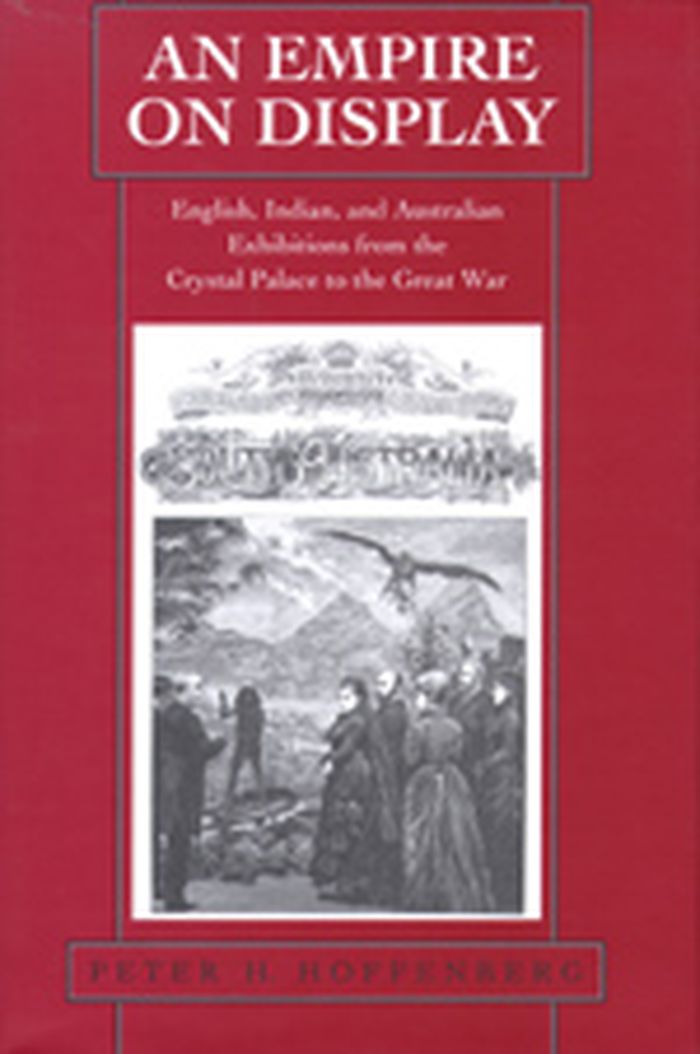
The grand exhibitions of the Victorian and Edwardian eras are the lens through which Peter Hoffenberg examines the economic, cultural, and social forces that helped define Britain and the British Empire. He focuses on major exhibitions in England, Australia, and India between the Great Exhibition of 1851 and the Festival of Empire sixty years later, taking special interest in the interactive nature of the exhibition experience, the long-term consequences for the participants and host societies, and the ways in which such popular gatherings revealed dissent as well as celebration. Hoffenberg shows how exhibitions shaped culture and society within and across borders in the transnational working of the British Empire. The exhibitions were central to establishing and developing a participatory imperial world, and each polity in that world provided distinctive information, visitors, and exhibits. Among the displays were commercial goods, working machines, and ethnographic scenes. Exhibits were intended to promote external commonwealth and internal nationalism. The imperial overlay did not erase significant differences but explained and used them in economic and cultural terms. The exhibitions in cities such as London, Sydney, and Calcutta were living and active public inventories of the Empire and its national political communities. The process of building and consuming such inventories persists today in the cultural bureaucracies, museums, and festivals of modern nation-states, the appeal to tradition and social order, and the actions of transnational bodies.
An empire on display : English, Indian, and Australian exhibitions from the Crystal Palace to the Great War
Actions:
Price:
$75.00
(available to order)
Summary:
The grand exhibitions of the Victorian and Edwardian eras are the lens through which Peter Hoffenberg examines the economic, cultural, and social forces that helped define Britain and the British Empire. He focuses on major exhibitions in England, Australia, and India between the Great Exhibition of 1851 and the Festival of Empire sixty years later, taking special interest in the interactive nature of the exhibition experience, the long-term consequences for the participants and host societies, and the ways in which such popular gatherings revealed dissent as well as celebration. Hoffenberg shows how exhibitions shaped culture and society within and across borders in the transnational working of the British Empire. The exhibitions were central to establishing and developing a participatory imperial world, and each polity in that world provided distinctive information, visitors, and exhibits. Among the displays were commercial goods, working machines, and ethnographic scenes. Exhibits were intended to promote external commonwealth and internal nationalism. The imperial overlay did not erase significant differences but explained and used them in economic and cultural terms. The exhibitions in cities such as London, Sydney, and Calcutta were living and active public inventories of the Empire and its national political communities. The process of building and consuming such inventories persists today in the cultural bureaucracies, museums, and festivals of modern nation-states, the appeal to tradition and social order, and the actions of transnational bodies.
Form:
books
books
Publication:
January 1900, Berkeley
January 1900, Berkeley
Subject:
Museums and Universal Exhibitions
Museums and Universal Exhibitions
Form:
journals and magazines
journals and magazines
Actions:
Price:
$33.00
(available to order)
Summary:
In July, Melbourne experienced a second wave of the virus and the introduction of further restrictions forced the city to a standstill. Workplaces, student accommodation and universities remained empty as local businesses were also required to close their premises. During this period, we witnessed public housing residents forcibly contained to several inner-city housing(...)
$33.00
(available to order)
Summary:
In July, Melbourne experienced a second wave of the virus and the introduction of further restrictions forced the city to a standstill. Workplaces, student accommodation and universities remained empty as local businesses were also required to close their premises. During this period, we witnessed public housing residents forcibly contained to several inner-city housing(...)
Title:
Politics of public space, Volume 3
Actions:
Price:
$33.00
(available to order)
Summary:
In July, Melbourne experienced a second wave of the virus and the introduction of further restrictions forced the city to a standstill. Workplaces, student accommodation and universities remained empty as local businesses were also required to close their premises. During this period, we witnessed public housing residents forcibly contained to several inner-city housing towers, and a small minority of anti-lockdown protestors used the Shrine of Remembrance as the backdrop for a supposed symbol of individual freedom. The structures of the state, city and its residents were again laid bare. This volume addresses many of these issues by gathering talks held prior to the pandemic alongside recent interviews. Kate Shaw shows how the recent lockdown of the housing towers in Flemington and North Melbourne reveals the government's underlying attitude towards public housing tenants. Tony Birch used the Shrine of Remembrance as the site for his talk on the Indigenous protest movement Camp Sovereignty and the significance of monuments in shaping collective values. Nicole Kalms outlines the experiences of women in Melbourne's public spaces through data gathered by XYX Lab. Sarah Lynn Rees discusses the complexities of engaging and working respectfully with Traditional Owners when intervening in the built environment. Andy Fergus & Brighid Sammon expose the failings of planning in the modern development of Melbourne, and Philip Brophy declares the general failings of the built environment profession at large.
Politics of public space, Volume 3
Actions:
Price:
$33.00
(available to order)
Summary:
In July, Melbourne experienced a second wave of the virus and the introduction of further restrictions forced the city to a standstill. Workplaces, student accommodation and universities remained empty as local businesses were also required to close their premises. During this period, we witnessed public housing residents forcibly contained to several inner-city housing towers, and a small minority of anti-lockdown protestors used the Shrine of Remembrance as the backdrop for a supposed symbol of individual freedom. The structures of the state, city and its residents were again laid bare. This volume addresses many of these issues by gathering talks held prior to the pandemic alongside recent interviews. Kate Shaw shows how the recent lockdown of the housing towers in Flemington and North Melbourne reveals the government's underlying attitude towards public housing tenants. Tony Birch used the Shrine of Remembrance as the site for his talk on the Indigenous protest movement Camp Sovereignty and the significance of monuments in shaping collective values. Nicole Kalms outlines the experiences of women in Melbourne's public spaces through data gathered by XYX Lab. Sarah Lynn Rees discusses the complexities of engaging and working respectfully with Traditional Owners when intervening in the built environment. Andy Fergus & Brighid Sammon expose the failings of planning in the modern development of Melbourne, and Philip Brophy declares the general failings of the built environment profession at large.
Form:
journals and magazines
journals and magazines
Publication:
June 2021
June 2021
Subject:
Magazines
Magazines
Form:
books
books
Price:
$34.95
(available to order)
Summary:
This anthology by members of the Mohawk Warrior Society uncovers a hidden history and paints a bold portrait of the spectacular experience of Kanien'kehá:ka survival and self-defense. Providing extensive documentation, context, and analysis, the book features foundational writings by prolific visual artist and polemicist Louis Karoniaktajeh Hall (1918–1993)—such as his(...)
$34.95
(available to order)
Summary:
This anthology by members of the Mohawk Warrior Society uncovers a hidden history and paints a bold portrait of the spectacular experience of Kanien'kehá:ka survival and self-defense. Providing extensive documentation, context, and analysis, the book features foundational writings by prolific visual artist and polemicist Louis Karoniaktajeh Hall (1918–1993)—such as his(...)
Title:
The Mohawk Warrior Society: auto-history of the Rotisken'rhakéhte
Actions:
Price:
$34.95
(available to order)
Summary:
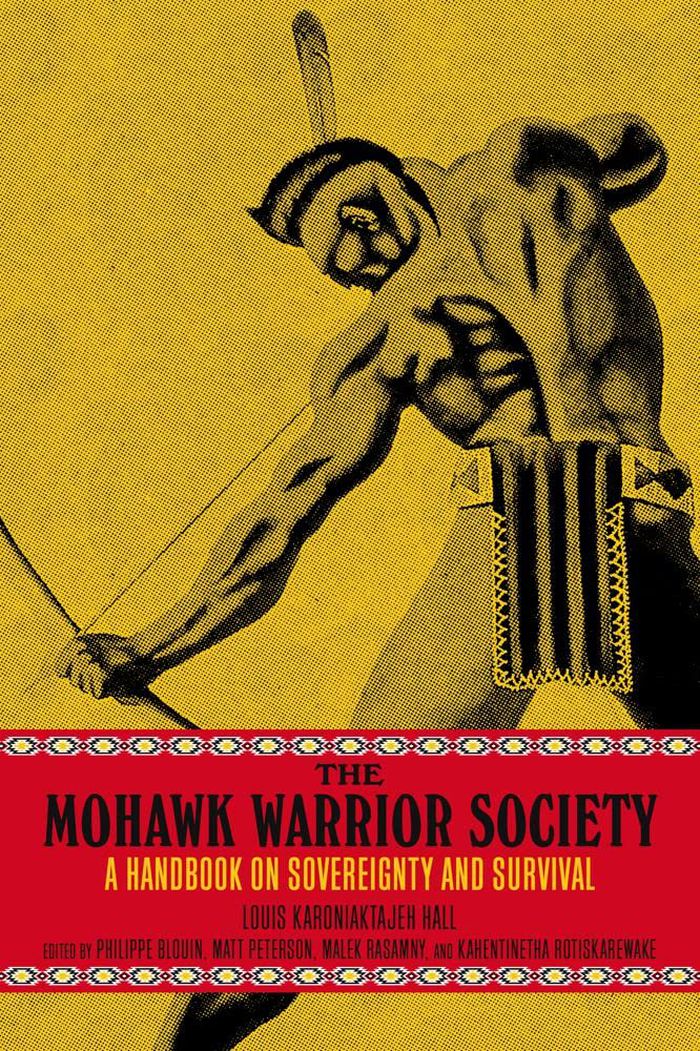
This anthology by members of the Mohawk Warrior Society uncovers a hidden history and paints a bold portrait of the spectacular experience of Kanien'kehá:ka survival and self-defense. Providing extensive documentation, context, and analysis, the book features foundational writings by prolific visual artist and polemicist Louis Karoniaktajeh Hall (1918–1993)—such as his landmark 1979 pamphlet, The Warrior’s Handbook, as well as selections of his pioneering artwork. This book contains new oral history by key figures of the Rotisken'rhakéhte's revival in the 1970s, and tells the story of the Warriors’ famous flag, their armed occupation of Ganienkeh in 1974, and the role of their constitution, the Great Peace, in guiding their commitment to freedom and independence. We hear directly the story of how the Kanien'kehá:ka Longhouse became one the most militant resistance groups in North America, gaining international attention with the Oka Crisis of 1990. This auto-history of the Rotisken'rhakéhte is complemented by a Mohawk history timeline from colonization to the present, a glossary of Mohawk political philosophy, and a new map of Iroquoia in Mohawk language. At last, the Mohawk Warriors can tell their own story with their own voices, and to serve as an example and inspiration for future generations struggling against the environmental, cultural, and social devastation cast upon the modern world.
The Mohawk Warrior Society: auto-history of the Rotisken'rhakéhte
Actions:
Price:
$34.95
(available to order)
Summary:
This anthology by members of the Mohawk Warrior Society uncovers a hidden history and paints a bold portrait of the spectacular experience of Kanien'kehá:ka survival and self-defense. Providing extensive documentation, context, and analysis, the book features foundational writings by prolific visual artist and polemicist Louis Karoniaktajeh Hall (1918–1993)—such as his landmark 1979 pamphlet, The Warrior’s Handbook, as well as selections of his pioneering artwork. This book contains new oral history by key figures of the Rotisken'rhakéhte's revival in the 1970s, and tells the story of the Warriors’ famous flag, their armed occupation of Ganienkeh in 1974, and the role of their constitution, the Great Peace, in guiding their commitment to freedom and independence. We hear directly the story of how the Kanien'kehá:ka Longhouse became one the most militant resistance groups in North America, gaining international attention with the Oka Crisis of 1990. This auto-history of the Rotisken'rhakéhte is complemented by a Mohawk history timeline from colonization to the present, a glossary of Mohawk political philosophy, and a new map of Iroquoia in Mohawk language. At last, the Mohawk Warriors can tell their own story with their own voices, and to serve as an example and inspiration for future generations struggling against the environmental, cultural, and social devastation cast upon the modern world.
Form:
books
books
Publication:
January 2023
January 2023
Form:
books
books
Actions:
Price:
$66.50
(available to order)
Summary:
From the moment it opened on the first of May in the Crystal Palace in Hyde Park, London, the Great Exhibition of 1851 was one of the defining events of the Victorian period. It stood not only as a visible symbol of British industrial and technological progress but as a figure for modernity—a figure that has often been thought to convey one coherent message and vision of(...)
$66.50
(available to order)
Summary:
From the moment it opened on the first of May in the Crystal Palace in Hyde Park, London, the Great Exhibition of 1851 was one of the defining events of the Victorian period. It stood not only as a visible symbol of British industrial and technological progress but as a figure for modernity—a figure that has often been thought to convey one coherent message and vision of(...)
Subject:
History until 1900, Great Britain
History until 1900, Great Britain
Publication:
July 2007, Charlottesville - London
July 2007, Charlottesville - London
Title:
Victorian prism : refractions of the crystal palace
Actions:
Price:
$66.50
(available to order)
Summary:
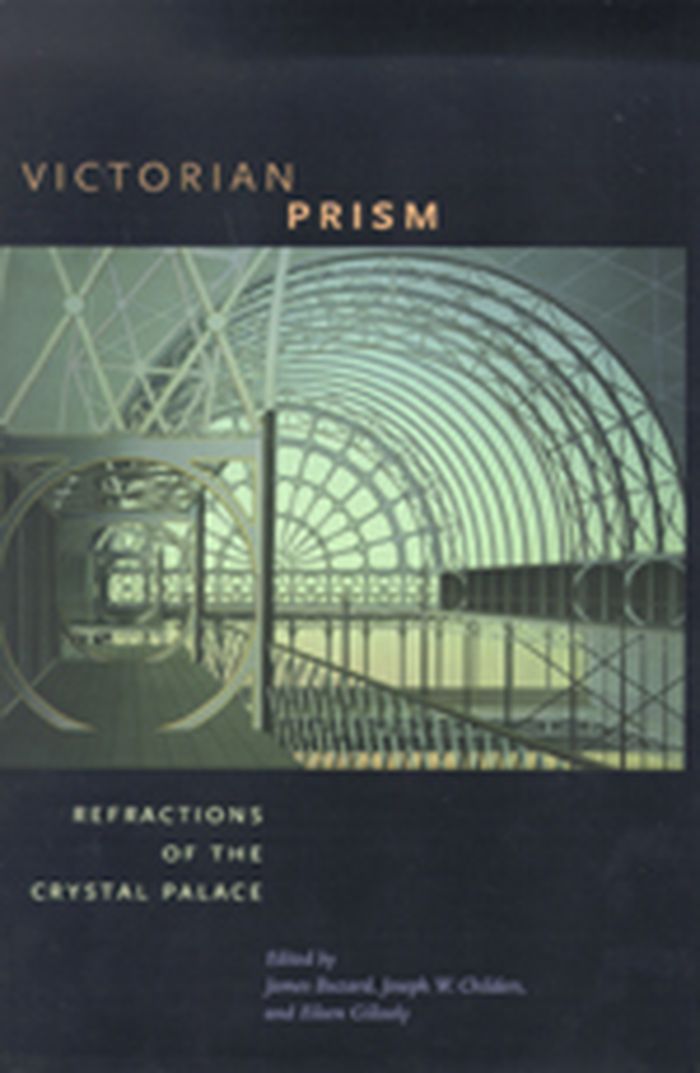
From the moment it opened on the first of May in the Crystal Palace in Hyde Park, London, the Great Exhibition of 1851 was one of the defining events of the Victorian period. It stood not only as a visible symbol of British industrial and technological progress but as a figure for modernity—a figure that has often been thought to convey one coherent message and vision of culture and society. This volume examines the place occupied both materially and discursively by the Crystal Palace and other nineteenth- and twentieth-century exhibitions in the struggle to understand what it means to be modern. Initiated in part by a number of conferences held in 2001 to commemorate the 150th anniversary of the Crystal Palace, Victorian Prism provides new perspectives to historians, literary critics, art historians, and others interested in how a large glass building in a London park could refract meaning from Caracas to Calcutta. In its investigations of the ways of knowing and shaping the world that emerged during the planning and execution of this first "world's fair," Victorian Prism not only restores the multiplicity of experiences and other determining factors to our picture of the Great Exhibition; it makes reevaluation of the exhibition and its legacies the occasion for reevaluating modernity itself in its broadest sense—as the cultures, potentialities, and liabilities of the Enlightenment. With essays by a number of leading scholars in their fields, the collection as a whole focuses on how these exhibitions, in attempting to define the cultures of their day, incorporated a range of conflicting ideologies and agendas. In doing so, it offers a richer, more complex understanding of the experience of modernity than we have previously acknowledged. The volume also addresses the ways in which the cultural processes and tendencies brought together in these exhibitions have been refracted down to the present, thus informing and complicating our own relationship to both modernity and postmodernity.
Victorian prism : refractions of the crystal palace
Actions:
Price:
$66.50
(available to order)
Summary:
From the moment it opened on the first of May in the Crystal Palace in Hyde Park, London, the Great Exhibition of 1851 was one of the defining events of the Victorian period. It stood not only as a visible symbol of British industrial and technological progress but as a figure for modernity—a figure that has often been thought to convey one coherent message and vision of culture and society. This volume examines the place occupied both materially and discursively by the Crystal Palace and other nineteenth- and twentieth-century exhibitions in the struggle to understand what it means to be modern. Initiated in part by a number of conferences held in 2001 to commemorate the 150th anniversary of the Crystal Palace, Victorian Prism provides new perspectives to historians, literary critics, art historians, and others interested in how a large glass building in a London park could refract meaning from Caracas to Calcutta. In its investigations of the ways of knowing and shaping the world that emerged during the planning and execution of this first "world's fair," Victorian Prism not only restores the multiplicity of experiences and other determining factors to our picture of the Great Exhibition; it makes reevaluation of the exhibition and its legacies the occasion for reevaluating modernity itself in its broadest sense—as the cultures, potentialities, and liabilities of the Enlightenment. With essays by a number of leading scholars in their fields, the collection as a whole focuses on how these exhibitions, in attempting to define the cultures of their day, incorporated a range of conflicting ideologies and agendas. In doing so, it offers a richer, more complex understanding of the experience of modernity than we have previously acknowledged. The volume also addresses the ways in which the cultural processes and tendencies brought together in these exhibitions have been refracted down to the present, thus informing and complicating our own relationship to both modernity and postmodernity.
Form:
books
books
Publication:
July 2007, Charlottesville - London
July 2007, Charlottesville - London
Subject:
History until 1900, Great Britain
History until 1900, Great Britain
Form:
books
books
Actions:
Price:
$45.00
(available to order)
Summary:
"The Canadians" playfully and affectionately reimagines one of the most revered photography books of the 20th century, Robert Frank’s The Americans. The source for the imagery is the print archive of The Globe and Mail, which contains more than 500,000 prints—24,000 of which have been donated to the newly formed Canadian Institute of Photography, housed within the(...)
$45.00
(available to order)
Summary:
"The Canadians" playfully and affectionately reimagines one of the most revered photography books of the 20th century, Robert Frank’s The Americans. The source for the imagery is the print archive of The Globe and Mail, which contains more than 500,000 prints—24,000 of which have been donated to the newly formed Canadian Institute of Photography, housed within the(...)
Subject:
Photography Collections
Photography Collections
Publication:
September 2017
September 2017
Title:
The Canadians: photographs from the Globe and Mail archives
Actions:
Price:
$45.00
(available to order)
Summary:
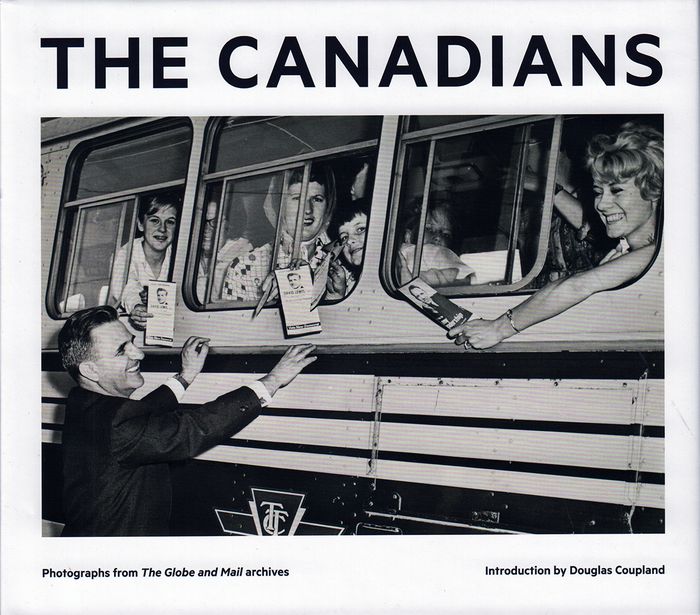
"The Canadians" playfully and affectionately reimagines one of the most revered photography books of the 20th century, Robert Frank’s The Americans. The source for the imagery is the print archive of The Globe and Mail, which contains more than 500,000 prints—24,000 of which have been donated to the newly formed Canadian Institute of Photography, housed within the National Gallery of Canada. Nearly 80 of these photographs have been selected for this book, and also form the basis for a national touring exhibition. These functionary press photographs, made to illustrate news stories—the state of the roads after a severe winter; a politician on the campaign trail; the opening of a new laundromat—hold no pretentions to be works of photographic art. However, taken together, they describe Canadian culture during an era of great transformation. Published in association with the Archive of Modern Conflict, the book begins with an insightful and irreverent introduction by Douglas Coupland, bringing together themes illuminated in these photographs, and taking us on a guided tour of a Canada gone, but not forgotten. "How strange it is to look at these photos of a Canada that was almost dead when I was a child," he writes, "the Canada of my parents and my grandparents, the Canada of the late 1950s and early ‘60s, a country in which, it would seem, people were born, became teenagers, and then, magically, at the age of 21, turned into chain-smoking 50-year olds with undiagnosed cancers."
The Canadians: photographs from the Globe and Mail archives
Actions:
Price:
$45.00
(available to order)
Summary:
"The Canadians" playfully and affectionately reimagines one of the most revered photography books of the 20th century, Robert Frank’s The Americans. The source for the imagery is the print archive of The Globe and Mail, which contains more than 500,000 prints—24,000 of which have been donated to the newly formed Canadian Institute of Photography, housed within the National Gallery of Canada. Nearly 80 of these photographs have been selected for this book, and also form the basis for a national touring exhibition. These functionary press photographs, made to illustrate news stories—the state of the roads after a severe winter; a politician on the campaign trail; the opening of a new laundromat—hold no pretentions to be works of photographic art. However, taken together, they describe Canadian culture during an era of great transformation. Published in association with the Archive of Modern Conflict, the book begins with an insightful and irreverent introduction by Douglas Coupland, bringing together themes illuminated in these photographs, and taking us on a guided tour of a Canada gone, but not forgotten. "How strange it is to look at these photos of a Canada that was almost dead when I was a child," he writes, "the Canada of my parents and my grandparents, the Canada of the late 1950s and early ‘60s, a country in which, it would seem, people were born, became teenagers, and then, magically, at the age of 21, turned into chain-smoking 50-year olds with undiagnosed cancers."
Form:
books
books
Publication:
September 2017
September 2017
Subject:
Photography Collections
Photography Collections


