


2879 Results
Form:
books
books
Actions:
Price:
$79.95
(available to order)
Summary:
Although both are central to architecture, siting and construction are often treated as separate domains. In "Uncommon Ground", David Leatherbarrow illuminates their relationship, focusing on the years between 1930 and 1960, when utopian ideas about the role of technology in (...)
$79.95
(available to order)
Summary:
Although both are central to architecture, siting and construction are often treated as separate domains. In "Uncommon Ground", David Leatherbarrow illuminates their relationship, focusing on the years between 1930 and 1960, when utopian ideas about the role of technology in (...)
Title:
Uncommon ground : architecture, technology. and topography
Actions:
Price:
$79.95
(available to order)
Summary:
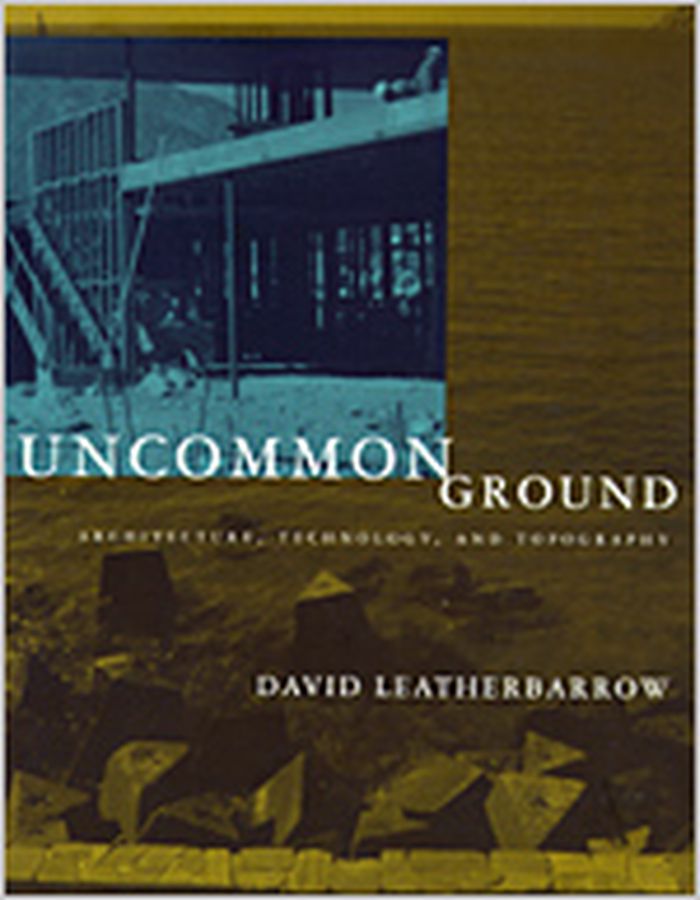
Although both are central to architecture, siting and construction are often treated as separate domains. In "Uncommon Ground", David Leatherbarrow illuminates their relationship, focusing on the years between 1930 and 1960, when utopian ideas about the role of technology in building gave way to an awareness of its disruptive impact on cities and culture. He examines the work of three architects, Richard Neutra, Antonin Raymond, and Aris Konstantinidis, who practiced in the United States, Japan, and Greece respectively. Leatherbarrow rejects the assumption that buildings of the modern period, particularly those that used the latest technology, were designed without regard to their surroundings. Although the prefabricated elements used in the buildings were designed independent of siting considerations, architects used these elements to modulate the environment. Leatherbarrow shows how the role of walls, the traditional element of architectural definition and platform partition, became less significant than that of the platforms themselves, the floors, ceilings, and intermediate levels. He shows how frontality was replaced by the building's four-sided extension into its surroundings, resulting in frontal configurations previously characteristic of the back. Arguing that the boundary between inside and outside was radically redefined, Leatherbarrow challenges cherished notions about the autonomy of the architectural object and about regional coherence. Modern architectural topography, he suggests, is an interplay of buildings, landscapes, and cities, as well as the humans who use them. The conflict between technological progress and cultural continuity, Leatherbarrow claims, exists only in theory, not in the real world of architecture. He argues that the act of building is not a matter of restoring regional identity by re-creating familiar signs, but of incorporating construction into the process of topography's perpetual becoming.
Uncommon ground : architecture, technology. and topography
Actions:
Price:
$79.95
(available to order)
Summary:
Although both are central to architecture, siting and construction are often treated as separate domains. In "Uncommon Ground", David Leatherbarrow illuminates their relationship, focusing on the years between 1930 and 1960, when utopian ideas about the role of technology in building gave way to an awareness of its disruptive impact on cities and culture. He examines the work of three architects, Richard Neutra, Antonin Raymond, and Aris Konstantinidis, who practiced in the United States, Japan, and Greece respectively. Leatherbarrow rejects the assumption that buildings of the modern period, particularly those that used the latest technology, were designed without regard to their surroundings. Although the prefabricated elements used in the buildings were designed independent of siting considerations, architects used these elements to modulate the environment. Leatherbarrow shows how the role of walls, the traditional element of architectural definition and platform partition, became less significant than that of the platforms themselves, the floors, ceilings, and intermediate levels. He shows how frontality was replaced by the building's four-sided extension into its surroundings, resulting in frontal configurations previously characteristic of the back. Arguing that the boundary between inside and outside was radically redefined, Leatherbarrow challenges cherished notions about the autonomy of the architectural object and about regional coherence. Modern architectural topography, he suggests, is an interplay of buildings, landscapes, and cities, as well as the humans who use them. The conflict between technological progress and cultural continuity, Leatherbarrow claims, exists only in theory, not in the real world of architecture. He argues that the act of building is not a matter of restoring regional identity by re-creating familiar signs, but of incorporating construction into the process of topography's perpetual becoming.
Form:
books
books
Publication:
May 2002, Cambridge, Mass.
May 2002, Cambridge, Mass.
Subject:
Architectural Theory
Architectural Theory
Form:
books
books
Actions:
Price:
$56.95
(available to order)
Summary:
Although both are central to architecture, siting and construction are often treated as separate domains. In "Uncommon Ground", David Leatherbarrow illuminates their relationship, focusing on the years between 1930 and 1960, when utopian ideas about the role of technology in (...)
$56.95
(available to order)
Summary:
Although both are central to architecture, siting and construction are often treated as separate domains. In "Uncommon Ground", David Leatherbarrow illuminates their relationship, focusing on the years between 1930 and 1960, when utopian ideas about the role of technology in (...)
Subject:
Architectural Theory
Architectural Theory
Publication:
October 2000, Cambridge, Mass.
October 2000, Cambridge, Mass.
Title:
Uncommon ground : architecture, technology, and topography
Actions:
Price:
$56.95
(available to order)
Summary:
Although both are central to architecture, siting and construction are often treated as separate domains. In "Uncommon Ground", David Leatherbarrow illuminates their relationship, focusing on the years between 1930 and 1960, when utopian ideas about the role of technology in building gave way to an awareness of its disruptive impact on cities and culture. He examines the work of three architects, Richard Neutra, Antonin Raymond, and Aris Konstantinidis, who practiced in the United States, Japan, and Greece respectively. Leatherbarrow rejects the assumption that buildings of the modern period, particularly those that used the latest technology, were designed without regard to their surroundings. Although the prefabricated elements used in the buildings were designed independent of siting considerations, architects used these elements to modulate the environment. Leatherbarrow shows how the role of walls, the traditional element of architectural definition and platform partition, became less significant than that of the platforms themselves, the floors, ceilings, and intermediate levels. He shows how frontality was replaced by the building's four-sided extension into its surroundings, resulting in frontal configurations previously characteristic of the back. Arguing that the boundary between inside and outside was radically redefined, Leatherbarrow challenges cherished notions about the autonomy of the architectural object and about regional coherence. Modern architectural topography, he suggests, is an interplay of buildings, landscapes, and cities, as well as the humans who use them. The conflict between technological progress and cultural continuity, Leatherbarrow claims, exists only in theory, not in the real world of architecture. He argues that the act of building is not a matter of restoring regional identity by re-creating familiar signs, but of incorporating construction into the process of topography's perpetual becoming.
Uncommon ground : architecture, technology, and topography
Actions:
Price:
$56.95
(available to order)
Summary:
Although both are central to architecture, siting and construction are often treated as separate domains. In "Uncommon Ground", David Leatherbarrow illuminates their relationship, focusing on the years between 1930 and 1960, when utopian ideas about the role of technology in building gave way to an awareness of its disruptive impact on cities and culture. He examines the work of three architects, Richard Neutra, Antonin Raymond, and Aris Konstantinidis, who practiced in the United States, Japan, and Greece respectively. Leatherbarrow rejects the assumption that buildings of the modern period, particularly those that used the latest technology, were designed without regard to their surroundings. Although the prefabricated elements used in the buildings were designed independent of siting considerations, architects used these elements to modulate the environment. Leatherbarrow shows how the role of walls, the traditional element of architectural definition and platform partition, became less significant than that of the platforms themselves, the floors, ceilings, and intermediate levels. He shows how frontality was replaced by the building's four-sided extension into its surroundings, resulting in frontal configurations previously characteristic of the back. Arguing that the boundary between inside and outside was radically redefined, Leatherbarrow challenges cherished notions about the autonomy of the architectural object and about regional coherence. Modern architectural topography, he suggests, is an interplay of buildings, landscapes, and cities, as well as the humans who use them. The conflict between technological progress and cultural continuity, Leatherbarrow claims, exists only in theory, not in the real world of architecture. He argues that the act of building is not a matter of restoring regional identity by re-creating familiar signs, but of incorporating construction into the process of topography's perpetual becoming.
Form:
books
books
Publication:
October 2000, Cambridge, Mass.
October 2000, Cambridge, Mass.
Subject:
Architectural Theory
Architectural Theory
Form:
books
books
Title:
After the city
After the city
Actions:
Price:
$20.00
(available to order)
Summary:
The city's reign over our senses, our moods, our very ways of being is outmoded. The suburban metropolis has superseded the city. The new building materials are non-material: electricity, telephony, weather, time, and so forth. Consequently, according to Lars Lerup, architecture and architects must be rethought. Until now, architects have been trained to serve the(...)
$20.00
(available to order)
Summary:
The city's reign over our senses, our moods, our very ways of being is outmoded. The suburban metropolis has superseded the city. The new building materials are non-material: electricity, telephony, weather, time, and so forth. Consequently, according to Lars Lerup, architecture and architects must be rethought. Until now, architects have been trained to serve the(...)
Title:
After the city
Actions:
Price:
$20.00
(available to order)
Summary:
The city's reign over our senses, our moods, our very ways of being is outmoded. The suburban metropolis has superseded the city. The new building materials are non-material: electricity, telephony, weather, time, and so forth. Consequently, according to Lars Lerup, architecture and architects must be rethought. Until now, architects have been trained to serve the elite few, as reflected in a belief in customization and the uniqueness of each project. Instead, Lerup holds, architectural educators should promote teamwork and the design of authorless objects, combined with an integration of design and practice. Before we can rethink the architectural curriculum, however, we must rethink the metropolis. And rethink the metropolis is just what Lerup does. In an intellectually far-ranging yet intensely personal manner, he moves from contemplation of the form and philosophical implications of the Pantheon to a discussion of how Levittown residents seek and create community. The result is an exhilarating work with profound practical implications. Unlike the many who view suburbia with paranoid dismay, Lerup takes an optimistic view of the new, open metropolis--for him not the site of unavoidable uniformity and mediocrity, but an exciting new frontier.
After the city
Actions:
Price:
$20.00
(available to order)
Summary:
The city's reign over our senses, our moods, our very ways of being is outmoded. The suburban metropolis has superseded the city. The new building materials are non-material: electricity, telephony, weather, time, and so forth. Consequently, according to Lars Lerup, architecture and architects must be rethought. Until now, architects have been trained to serve the elite few, as reflected in a belief in customization and the uniqueness of each project. Instead, Lerup holds, architectural educators should promote teamwork and the design of authorless objects, combined with an integration of design and practice. Before we can rethink the architectural curriculum, however, we must rethink the metropolis. And rethink the metropolis is just what Lerup does. In an intellectually far-ranging yet intensely personal manner, he moves from contemplation of the form and philosophical implications of the Pantheon to a discussion of how Levittown residents seek and create community. The result is an exhilarating work with profound practical implications. Unlike the many who view suburbia with paranoid dismay, Lerup takes an optimistic view of the new, open metropolis--for him not the site of unavoidable uniformity and mediocrity, but an exciting new frontier.
Form:
books
books
Publication:
October 2001, Cambridge, Mass.
October 2001, Cambridge, Mass.
Subject:
Urban Theory
Urban Theory
Form:
books
books
Title:
New wood architecture
New wood architecture
Actions:
Price:
$56.50
(available to order)
Summary:
A detailed and timely look at the resourceful ways wood is being used in some of the world’s most innovative new buildings. Despite its legacy as a traditional building material, timber is experiencing a renaissance as contemporary architects and designers increasingly come to appreciate its sustainability, versatility, and beauty. Lavishly illustrated with over 300(...)
$56.50
(available to order)
Summary:
A detailed and timely look at the resourceful ways wood is being used in some of the world’s most innovative new buildings. Despite its legacy as a traditional building material, timber is experiencing a renaissance as contemporary architects and designers increasingly come to appreciate its sustainability, versatility, and beauty. Lavishly illustrated with over 300(...)
Subject:
Green Architecture
Green Architecture
Publication:
April 2005, New
April 2005, New
Title:
New wood architecture
Actions:
Price:
$56.50
(available to order)
Summary:
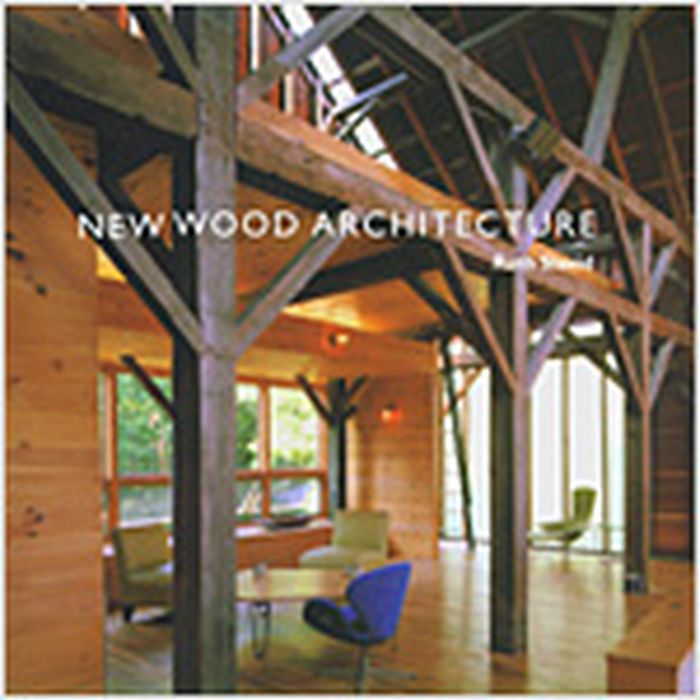
A detailed and timely look at the resourceful ways wood is being used in some of the world’s most innovative new buildings. Despite its legacy as a traditional building material, timber is experiencing a renaissance as contemporary architects and designers increasingly come to appreciate its sustainability, versatility, and beauty. Lavishly illustrated with over 300 photographs and drawings, "New Wood Architecture" features over 40 contemporary projects from around the world by leading architects including Shigeru Ban, Roberto Briccola, Santiago Calatrava, Steven Holl, Herzog + Partner, Herzog and de Meuron, Peter Hübner, Renzo Piano Building Workshop, and Peter Zumthor. Ruth Slavid examines the innovative ways timber is currently being handled and how its use has been expanded by new technologies and experiments with traditional building methods. Featured topics include wood’s natural properties in rural landscapes; its heritage as a vernacular building material; its pragmatic and cost-efficient properties; its versatility; current technological innovations such as the uses of engineered products, laminates, plywoods, and chipboards; the ways wood can be combined with other materials to enhance its structural properties; and its use as a recycled or “green” material in some of the most beautiful and experimental plans being constructed today.
New wood architecture
Actions:
Price:
$56.50
(available to order)
Summary:
A detailed and timely look at the resourceful ways wood is being used in some of the world’s most innovative new buildings. Despite its legacy as a traditional building material, timber is experiencing a renaissance as contemporary architects and designers increasingly come to appreciate its sustainability, versatility, and beauty. Lavishly illustrated with over 300 photographs and drawings, "New Wood Architecture" features over 40 contemporary projects from around the world by leading architects including Shigeru Ban, Roberto Briccola, Santiago Calatrava, Steven Holl, Herzog + Partner, Herzog and de Meuron, Peter Hübner, Renzo Piano Building Workshop, and Peter Zumthor. Ruth Slavid examines the innovative ways timber is currently being handled and how its use has been expanded by new technologies and experiments with traditional building methods. Featured topics include wood’s natural properties in rural landscapes; its heritage as a vernacular building material; its pragmatic and cost-efficient properties; its versatility; current technological innovations such as the uses of engineered products, laminates, plywoods, and chipboards; the ways wood can be combined with other materials to enhance its structural properties; and its use as a recycled or “green” material in some of the most beautiful and experimental plans being constructed today.
Form:
books
books
Publication:
April 2005, New
April 2005, New
Subject:
Green Architecture
Green Architecture
Form:
books
books
Title:
After the city
After the city
Actions:
Price:
$63.50
(available to order)
Summary:
The city's reign over our senses, our moods, our very ways of being is outmoded. The suburban metropolis has superseded the city. The new building materials are non-material: electricity, telephony, weather, time, and so forth. Consequently, according to Lars Lerup, architecture and architects must be rethought. Until now, architects have been trained to serve the(...)
$63.50
(available to order)
Summary:
The city's reign over our senses, our moods, our very ways of being is outmoded. The suburban metropolis has superseded the city. The new building materials are non-material: electricity, telephony, weather, time, and so forth. Consequently, according to Lars Lerup, architecture and architects must be rethought. Until now, architects have been trained to serve the(...)
Title:
After the city
Actions:
Price:
$63.50
(available to order)
Summary:
The city's reign over our senses, our moods, our very ways of being is outmoded. The suburban metropolis has superseded the city. The new building materials are non-material: electricity, telephony, weather, time, and so forth. Consequently, according to Lars Lerup, architecture and architects must be rethought. Until now, architects have been trained to serve the elite few, as reflected in a belief in customization and the uniqueness of each project. Instead, Lerup holds, architectural educators should promote teamwork and the design of authorless objects, combined with an integration of design and practice. Before we can rethink the architectural curriculum, however, we must rethink the metropolis. And rethink the metropolis is just what Lerup does. In an intellectually far-ranging yet intensely personal manner, he moves from contemplation of the form and philosophical implications of the Pantheon to a discussion of how Levittown residents seek and create community. The result is an exhilarating work with profound practical implications. Unlike the many who view suburbia with paranoid dismay, Lerup takes an optimistic view of the new, open metropolis--for him not the site of unavoidable uniformity and mediocrity, but an exciting new frontier.
After the city
Actions:
Price:
$63.50
(available to order)
Summary:
The city's reign over our senses, our moods, our very ways of being is outmoded. The suburban metropolis has superseded the city. The new building materials are non-material: electricity, telephony, weather, time, and so forth. Consequently, according to Lars Lerup, architecture and architects must be rethought. Until now, architects have been trained to serve the elite few, as reflected in a belief in customization and the uniqueness of each project. Instead, Lerup holds, architectural educators should promote teamwork and the design of authorless objects, combined with an integration of design and practice. Before we can rethink the architectural curriculum, however, we must rethink the metropolis. And rethink the metropolis is just what Lerup does. In an intellectually far-ranging yet intensely personal manner, he moves from contemplation of the form and philosophical implications of the Pantheon to a discussion of how Levittown residents seek and create community. The result is an exhilarating work with profound practical implications. Unlike the many who view suburbia with paranoid dismay, Lerup takes an optimistic view of the new, open metropolis--for him not the site of unavoidable uniformity and mediocrity, but an exciting new frontier.
Form:
books
books
Publication:
May 2000, Cambridge, Mass.
May 2000, Cambridge, Mass.
Subject:
Urban Theory
Urban Theory
Form:
books
books
Actions:
Price:
$69.95
(available to order)
Summary:
The world's growing vulnerability to planet-sized risks invites action on a global scale. The World as an Architectural Project shows how for more than a century architects have imagined the future of the planet through world-scale projects. With fifty speculative projects by Patrick Geddes, Alison and Peter Smithson, Kiyonori Kikutake, Saverio Muratori, Takis Zenetos,(...)
$69.95
(available to order)
Summary:
The world's growing vulnerability to planet-sized risks invites action on a global scale. The World as an Architectural Project shows how for more than a century architects have imagined the future of the planet through world-scale projects. With fifty speculative projects by Patrick Geddes, Alison and Peter Smithson, Kiyonori Kikutake, Saverio Muratori, Takis Zenetos,(...)
Title:
The world as an architectural project
Actions:
Price:
$69.95
(available to order)
Summary:
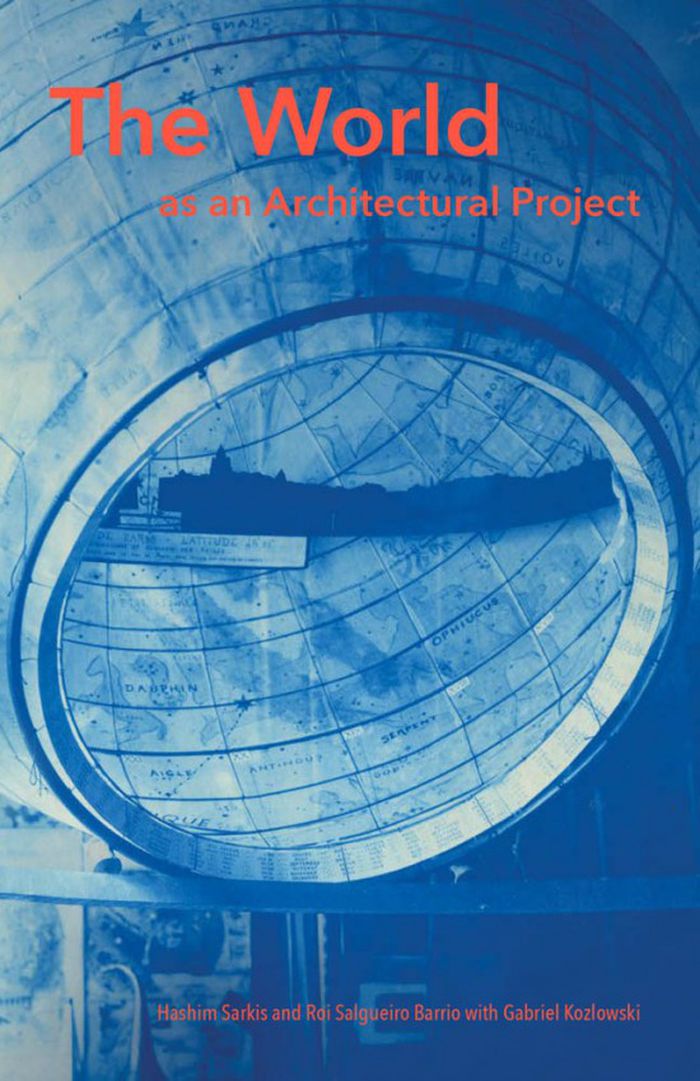
The world's growing vulnerability to planet-sized risks invites action on a global scale. The World as an Architectural Project shows how for more than a century architects have imagined the future of the planet through world-scale projects. With fifty speculative projects by Patrick Geddes, Alison and Peter Smithson, Kiyonori Kikutake, Saverio Muratori, Takis Zenetos, Sergio Bernardes, Juan Navarro Baldeweg, Luc Deleu, and many others, documented in text and images, this ambitious and wide-ranging book is the first compilation of its kind. Interestingly, architects begin to address the world as a project long before the advent of contemporary globalism and its assorted anxieties. The Spanish urban theorist and entrepreneur Arturo Soria y Mata, for example, in 1882 envisions a system that connects the entire planet in a linear urban network. In 1927, Buckminster Fuller's “World Town Plan—4D Tower” proposes to solve global housing problems with mobile structures delivered and installed by a Zeppelin. And Joyce Hsiang and Bimal Mendis visualize the conditions of a worldwide “City of Seven Billion” in a 2015–2019 project. Rather than indulging the cliché of the megalomaniac architect, this volume presents a discipline reflecting on its own responsibilities.
The world as an architectural project
Actions:
Price:
$69.95
(available to order)
Summary:
The world's growing vulnerability to planet-sized risks invites action on a global scale. The World as an Architectural Project shows how for more than a century architects have imagined the future of the planet through world-scale projects. With fifty speculative projects by Patrick Geddes, Alison and Peter Smithson, Kiyonori Kikutake, Saverio Muratori, Takis Zenetos, Sergio Bernardes, Juan Navarro Baldeweg, Luc Deleu, and many others, documented in text and images, this ambitious and wide-ranging book is the first compilation of its kind. Interestingly, architects begin to address the world as a project long before the advent of contemporary globalism and its assorted anxieties. The Spanish urban theorist and entrepreneur Arturo Soria y Mata, for example, in 1882 envisions a system that connects the entire planet in a linear urban network. In 1927, Buckminster Fuller's “World Town Plan—4D Tower” proposes to solve global housing problems with mobile structures delivered and installed by a Zeppelin. And Joyce Hsiang and Bimal Mendis visualize the conditions of a worldwide “City of Seven Billion” in a 2015–2019 project. Rather than indulging the cliché of the megalomaniac architect, this volume presents a discipline reflecting on its own responsibilities.
Form:
books
books
Publication:
April 2020
April 2020
Subject:
Architectural Theory
Architectural Theory
Form:
books
books
Title:
Sauerbruch Hutton : archive
Sauerbruch Hutton : archive
Actions:
Price:
$80.90
(available to order)
Summary:
Sauerbruch hutton present for the first time a monograph covering their work over the 17 years that their practice has been in existence. This comprehensive book includes detailed descriptions of 60 works as well as 8 essays by the architects, and there is a complete register of all projects. This compendium will provide a new opportunity for insight into the work of(...)
$80.90
(available to order)
Summary:
Sauerbruch hutton present for the first time a monograph covering their work over the 17 years that their practice has been in existence. This comprehensive book includes detailed descriptions of 60 works as well as 8 essays by the architects, and there is a complete register of all projects. This compendium will provide a new opportunity for insight into the work of(...)
Title:
Sauerbruch Hutton : archive
Actions:
Price:
$80.90
(available to order)
Summary:
Sauerbruch hutton present for the first time a monograph covering their work over the 17 years that their practice has been in existence. This comprehensive book includes detailed descriptions of 60 works as well as 8 essays by the architects, and there is a complete register of all projects. This compendium will provide a new opportunity for insight into the work of sauerbruch hutton: it allows one to trace the development of their architectural thinking through the vehicle of realised projects, their texts, and a considerable number of unrealised works. While providing a panoramic overview the book also shows how each project was individually developed out of its physical and social context, with its form being a result of func- tional, technical, spatial and sculptural considerations.
Sauerbruch Hutton : archive
Actions:
Price:
$80.90
(available to order)
Summary:
Sauerbruch hutton present for the first time a monograph covering their work over the 17 years that their practice has been in existence. This comprehensive book includes detailed descriptions of 60 works as well as 8 essays by the architects, and there is a complete register of all projects. This compendium will provide a new opportunity for insight into the work of sauerbruch hutton: it allows one to trace the development of their architectural thinking through the vehicle of realised projects, their texts, and a considerable number of unrealised works. While providing a panoramic overview the book also shows how each project was individually developed out of its physical and social context, with its form being a result of func- tional, technical, spatial and sculptural considerations.
Form:
books
books
Publication:
September 2006, Baden
September 2006, Baden
Subject:
Architecture Monographs
Architecture Monographs
Form:
books
books
Title:
A+ 310 : Material Flows ENG
A+ 310 : Material Flows ENG
Actions:
Price:
$47.00
(available in store)
Summary:
To reduce the building sector’s impact on the climate and the environment, the Brussels-based designers’ collective Rotor has worked these past twenty years on developing ideas about salvaging building materials and retaining preservation of existing buildings. Rotor’s impact is undeniably wide-ranging. Besides generating ecological awareness in the construction sector,(...)
$47.00
(available in store)
Summary:
To reduce the building sector’s impact on the climate and the environment, the Brussels-based designers’ collective Rotor has worked these past twenty years on developing ideas about salvaging building materials and retaining preservation of existing buildings. Rotor’s impact is undeniably wide-ranging. Besides generating ecological awareness in the construction sector,(...)
Title:
A+ 310 : Material Flows ENG
Actions:
Price:
$47.00
(available in store)
Summary:
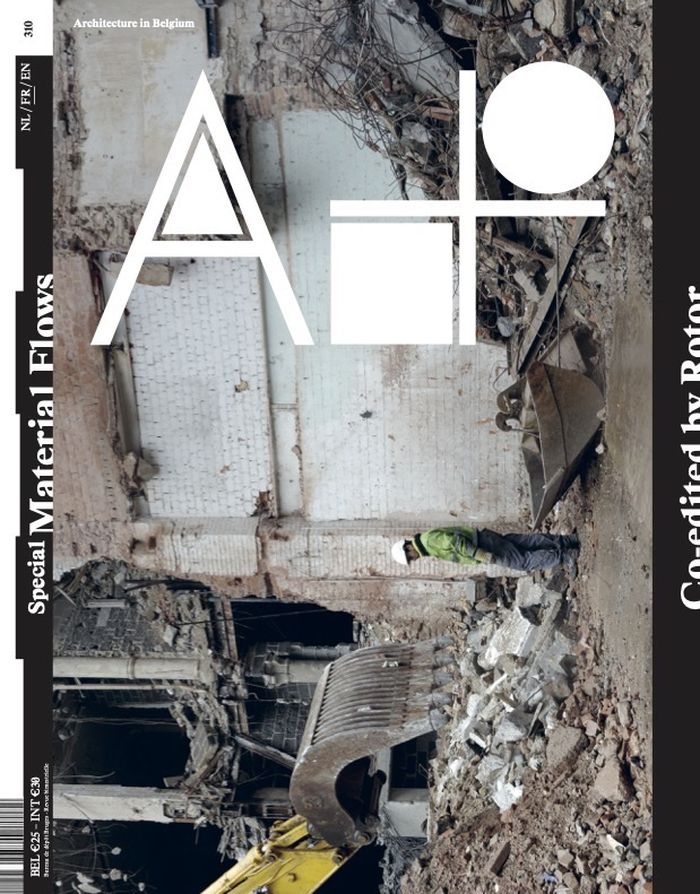
To reduce the building sector’s impact on the climate and the environment, the Brussels-based designers’ collective Rotor has worked these past twenty years on developing ideas about salvaging building materials and retaining preservation of existing buildings. Rotor’s impact is undeniably wide-ranging. Besides generating ecological awareness in the construction sector, they have also pushed boundaries on an operational and logistical level and are helping to build skills by sharing their know-how. Thanks to them, we have also seen a change in mentality in terms of aesthetics. This special issue of A+, with Rotor as guest editors, is a collection of essays that looks critically at material flows and at the challenges of a circular economy for architects today.
A+ 310 : Material Flows ENG
Actions:
Price:
$47.00
(available in store)
Summary:
To reduce the building sector’s impact on the climate and the environment, the Brussels-based designers’ collective Rotor has worked these past twenty years on developing ideas about salvaging building materials and retaining preservation of existing buildings. Rotor’s impact is undeniably wide-ranging. Besides generating ecological awareness in the construction sector, they have also pushed boundaries on an operational and logistical level and are helping to build skills by sharing their know-how. Thanks to them, we have also seen a change in mentality in terms of aesthetics. This special issue of A+, with Rotor as guest editors, is a collection of essays that looks critically at material flows and at the challenges of a circular economy for architects today.
Form:
books
books
Publication:
December 2024
December 2024
Subject:
Magazines
Magazines
Form:
books
books
Price:
$55.00
(available to order)
Summary:
Architecture and construction are at a turning point. They account for more than 40% of global CO2 emissions. Rising temperatures can only be reduced if there is a radical change in the field of construction throughout the world. However, how should we design our cities, buildings and living spaces so that we can get closer to the goal of decarbonisation? The book gives(...)
$55.00
(available to order)
Summary:
Architecture and construction are at a turning point. They account for more than 40% of global CO2 emissions. Rising temperatures can only be reduced if there is a radical change in the field of construction throughout the world. However, how should we design our cities, buildings and living spaces so that we can get closer to the goal of decarbonisation? The book gives(...)
Title:
Architecture and climate change: 20 interviews on the future of building
Actions:
Price:
$55.00
(available to order)
Summary:
Architecture and construction are at a turning point. They account for more than 40% of global CO2 emissions. Rising temperatures can only be reduced if there is a radical change in the field of construction throughout the world. However, how should we design our cities, buildings and living spaces so that we can get closer to the goal of decarbonisation? The book gives 20 architects and urban planners their say on the future of construction. Voices are heard from Mexico to Kenya – from Bangladesh to Switzerland. In the interviews experts give an account of their own experiences with climate-friendly construction as well as regional problems posed by rising CO2emissions. They explain pioneering projects and combine them with their personal desire and political ideals.
Architecture and climate change: 20 interviews on the future of building
Actions:
Price:
$55.00
(available to order)
Summary:
Architecture and construction are at a turning point. They account for more than 40% of global CO2 emissions. Rising temperatures can only be reduced if there is a radical change in the field of construction throughout the world. However, how should we design our cities, buildings and living spaces so that we can get closer to the goal of decarbonisation? The book gives 20 architects and urban planners their say on the future of construction. Voices are heard from Mexico to Kenya – from Bangladesh to Switzerland. In the interviews experts give an account of their own experiences with climate-friendly construction as well as regional problems posed by rising CO2emissions. They explain pioneering projects and combine them with their personal desire and political ideals.
Form:
books
books
Publication:
June 2024
June 2024
Form:
books
books
Actions:
Price:
$79.00
(available in store)
Summary:
How a protean mathematical object, the graph, ushered in new images, tools, and infrastructures for design and catalyzed a digital future for architecture. In "Graph vision", Theodora Vardouli offers a fresh history of architecture's early entanglements with modern mathematics and digital computing by focusing on a hidden protagonist: the graph. Fueled by iconoclastic(...)
$79.00
(available in store)
Summary:
How a protean mathematical object, the graph, ushered in new images, tools, and infrastructures for design and catalyzed a digital future for architecture. In "Graph vision", Theodora Vardouli offers a fresh history of architecture's early entanglements with modern mathematics and digital computing by focusing on a hidden protagonist: the graph. Fueled by iconoclastic(...)
Title:
Graph vision: Digital architecture's skeletons
Actions:
Price:
$79.00
(available in store)
Summary:
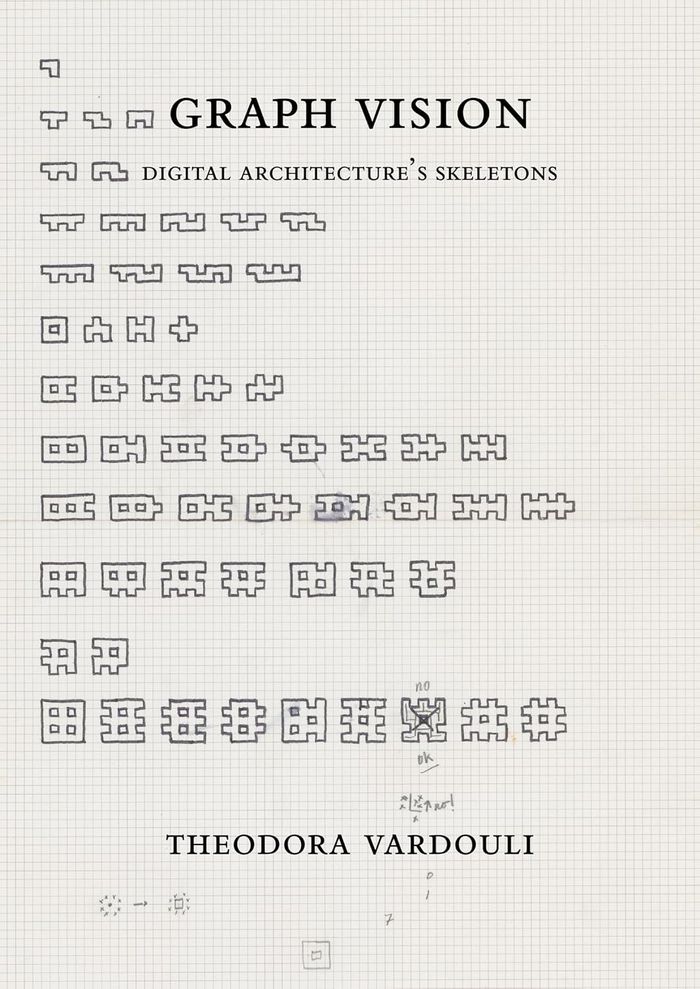
How a protean mathematical object, the graph, ushered in new images, tools, and infrastructures for design and catalyzed a digital future for architecture. In "Graph vision", Theodora Vardouli offers a fresh history of architecture's early entanglements with modern mathematics and digital computing by focusing on a hidden protagonist: the graph. Fueled by iconoclastic sentiments and skepticism of geometric depiction, architects, she explains, turned to the skeletal underpinnings of their work, and with it the graph, as a site of representation, operation, and political possibility. Taking the reader on an enthralling journey through a polyvalent mathematical entity, Vardouli combines close readings of graphs' architectural manifestations as images, tools, and infrastructures for design with original archival work on research centers that spearheaded mathematical and computational approaches to architecture.
Graph vision: Digital architecture's skeletons
Actions:
Price:
$79.00
(available in store)
Summary:
How a protean mathematical object, the graph, ushered in new images, tools, and infrastructures for design and catalyzed a digital future for architecture. In "Graph vision", Theodora Vardouli offers a fresh history of architecture's early entanglements with modern mathematics and digital computing by focusing on a hidden protagonist: the graph. Fueled by iconoclastic sentiments and skepticism of geometric depiction, architects, she explains, turned to the skeletal underpinnings of their work, and with it the graph, as a site of representation, operation, and political possibility. Taking the reader on an enthralling journey through a polyvalent mathematical entity, Vardouli combines close readings of graphs' architectural manifestations as images, tools, and infrastructures for design with original archival work on research centers that spearheaded mathematical and computational approaches to architecture.
Form:
books
books
Publication:
November 2024
November 2024
Subject:
Digital Architecture
Digital Architecture


