


3123 Results
Form:
books
books
Title:
Euroscapes - forum 2003
Euroscapes - forum 2003
Actions:
Price:
$49.95
(available to order)
Summary:
"Euroscapes" is an exploration of the landscape of 21st-century Europe.
$49.95
(available to order)
Summary:
"Euroscapes" is an exploration of the landscape of 21st-century Europe.
Subject:
Urban Theory
Urban Theory
Publication:
September 2003, Amsterdam
September 2003, Amsterdam
Title:
Euroscapes - forum 2003
Actions:
Price:
$49.95
(available to order)
Summary:
"Euroscapes" is an exploration of the landscape of 21st-century Europe.
Euroscapes - forum 2003
Actions:
Price:
$49.95
(available to order)
Summary:
"Euroscapes" is an exploration of the landscape of 21st-century Europe.
Form:
books
books
Publication:
September 2003, Amsterdam
September 2003, Amsterdam
Subject:
Urban Theory
Urban Theory
Form:
books
books
Actions:
Price:
$48.95
(available to order)
Summary:
When the automobile was first introduced, few Americans predicted its fundamental impact, not only on how people would travel, but on the American landscape itself. Instead of reducing the amount of wheeled transport on public roads, the advent of mass-produced cars caused congestion, at the curb and in the right-of-way, from small midwestern farm towns to New York,(...)
$48.95
(available to order)
Summary:
When the automobile was first introduced, few Americans predicted its fundamental impact, not only on how people would travel, but on the American landscape itself. Instead of reducing the amount of wheeled transport on public roads, the advent of mass-produced cars caused congestion, at the curb and in the right-of-way, from small midwestern farm towns to New York,(...)
Title:
Lots of parking : land use in a car culture
Actions:
Price:
$48.95
(available to order)
Summary:
When the automobile was first introduced, few Americans predicted its fundamental impact, not only on how people would travel, but on the American landscape itself. Instead of reducing the amount of wheeled transport on public roads, the advent of mass-produced cars caused congestion, at the curb and in the right-of-way, from small midwestern farm towns to New York, Chicago, Detroit, and Los Angeles. "Lots of Parking" examines a neglected aspect of this rise of the automobile: the impact on America not of cars in motion but of cars at rest. While most studies have tended to focus on highway construction and engineering improvements to accommodate increasing flow and the desire for speed, John A. Jakle and Keith A. Sculle examine a fundamental feature of the urban, and suburban, scene — the parking lot. Their lively and exhaustive exploration traces the history of parking from the curbside to the rise of public and commercial parking lots and garages and the concomitant demolition of the old pedestrian-oriented urban infrastructure. In an accessible style enhanced by a range of interesting and unusual illustrations, Jakle and Sculle discuss the role of parking in downtown revitalization efforts and, by contrast, its role in the promotion of outlying suburban shopping districts and its incorporation into our neighbourhoods and residences.
Lots of parking : land use in a car culture
Actions:
Price:
$48.95
(available to order)
Summary:
When the automobile was first introduced, few Americans predicted its fundamental impact, not only on how people would travel, but on the American landscape itself. Instead of reducing the amount of wheeled transport on public roads, the advent of mass-produced cars caused congestion, at the curb and in the right-of-way, from small midwestern farm towns to New York, Chicago, Detroit, and Los Angeles. "Lots of Parking" examines a neglected aspect of this rise of the automobile: the impact on America not of cars in motion but of cars at rest. While most studies have tended to focus on highway construction and engineering improvements to accommodate increasing flow and the desire for speed, John A. Jakle and Keith A. Sculle examine a fundamental feature of the urban, and suburban, scene — the parking lot. Their lively and exhaustive exploration traces the history of parking from the curbside to the rise of public and commercial parking lots and garages and the concomitant demolition of the old pedestrian-oriented urban infrastructure. In an accessible style enhanced by a range of interesting and unusual illustrations, Jakle and Sculle discuss the role of parking in downtown revitalization efforts and, by contrast, its role in the promotion of outlying suburban shopping districts and its incorporation into our neighbourhoods and residences.
Form:
books
books
Publication:
June 2004, Charlottesville
June 2004, Charlottesville
Subject:
Urban Theory
Urban Theory
Form:
books
books
Actions:
Price:
$55.95
(available to order)
Summary:
This book documents recent international trends in the design of public space.
$55.95
(available to order)
Summary:
This book documents recent international trends in the design of public space.
Title:
New landscapes, new territories
Actions:
Price:
$55.95
(available to order)
Summary:
This book documents recent international trends in the design of public space.
New landscapes, new territories
Actions:
Price:
$55.95
(available to order)
Summary:
This book documents recent international trends in the design of public space.
Form:
books
books
Publication:
November 1997, Barcelona
November 1997, Barcelona
Subject:
Urban Theory
Urban Theory
Form:
books
books
Actions:
Price:
$39.95
(available to order)
Summary:
This publication shows how the public and private sectors have joined together in new and innovative ways, not only to develop new parks and to more efficiently fund and manage parks, but also to restore historically significant but run-down existing parks. Featuring examples of different types of partnerships throughout the United States -from highly structured(...)
$39.95
(available to order)
Summary:
This publication shows how the public and private sectors have joined together in new and innovative ways, not only to develop new parks and to more efficiently fund and manage parks, but also to restore historically significant but run-down existing parks. Featuring examples of different types of partnerships throughout the United States -from highly structured(...)
Title:
Public parks, private partners
Actions:
Price:
$39.95
(available to order)
Summary:
This publication shows how the public and private sectors have joined together in new and innovative ways, not only to develop new parks and to more efficiently fund and manage parks, but also to restore historically significant but run-down existing parks. Featuring examples of different types of partnerships throughout the United States -from highly structured relationships around large parks in major cities to more informal partnerships around inner-city neighborhood parks - it's a valuable tool for anyone involved in creating, preserving or managing urban parks.
Public parks, private partners
Actions:
Price:
$39.95
(available to order)
Summary:
This publication shows how the public and private sectors have joined together in new and innovative ways, not only to develop new parks and to more efficiently fund and manage parks, but also to restore historically significant but run-down existing parks. Featuring examples of different types of partnerships throughout the United States -from highly structured relationships around large parks in major cities to more informal partnerships around inner-city neighborhood parks - it's a valuable tool for anyone involved in creating, preserving or managing urban parks.
Form:
books
books
Publication:
May 2001
May 2001
Subject:
Urban Landscapes
Urban Landscapes
Form:
books
books
Title:
The petropolis of tomorrow
The petropolis of tomorrow
Actions:
Price:
$39.95
(available to order)
Summary:
In recent years, Brazil has discovered vast quantities of petroleum deep within its territorial waters, inciting the construction of a series of cities along its coast and in the ocean. We could term these developments as Petropolises, or cities formed from resource extraction. The Petropolis of Tomorrow is a design and research project, originally undertaken at Rice(...)
$39.95
(available to order)
Summary:
In recent years, Brazil has discovered vast quantities of petroleum deep within its territorial waters, inciting the construction of a series of cities along its coast and in the ocean. We could term these developments as Petropolises, or cities formed from resource extraction. The Petropolis of Tomorrow is a design and research project, originally undertaken at Rice(...)
Title:
The petropolis of tomorrow
Actions:
Price:
$39.95
(available to order)
Summary:
In recent years, Brazil has discovered vast quantities of petroleum deep within its territorial waters, inciting the construction of a series of cities along its coast and in the ocean. We could term these developments as Petropolises, or cities formed from resource extraction. The Petropolis of Tomorrow is a design and research project, originally undertaken at Rice University that examines the relationship between resource extraction and urban development in order to extract new templates for sustainable urbanism. Organized into three sections: Archipelago Urbanism, Harvesting Urbanism, and Logistical Urbanism, which consist of theoretical, technical, and photo articles as well as design proposals, The Petropolis of Tomorrow elucidates not only a vision for water-based urbanism of the floating frontier city, it also speculates on new methodologies for integrating infrastructure, landscape, urbanism and architecture within the larger spheres of economics, politics, and culture that implicate these disciplines.
The petropolis of tomorrow
Actions:
Price:
$39.95
(available to order)
Summary:
In recent years, Brazil has discovered vast quantities of petroleum deep within its territorial waters, inciting the construction of a series of cities along its coast and in the ocean. We could term these developments as Petropolises, or cities formed from resource extraction. The Petropolis of Tomorrow is a design and research project, originally undertaken at Rice University that examines the relationship between resource extraction and urban development in order to extract new templates for sustainable urbanism. Organized into three sections: Archipelago Urbanism, Harvesting Urbanism, and Logistical Urbanism, which consist of theoretical, technical, and photo articles as well as design proposals, The Petropolis of Tomorrow elucidates not only a vision for water-based urbanism of the floating frontier city, it also speculates on new methodologies for integrating infrastructure, landscape, urbanism and architecture within the larger spheres of economics, politics, and culture that implicate these disciplines.
Form:
books
books
Publication:
August 2013
August 2013
Subject:
Urban Theory
Urban Theory
Form:
books
books
Price:
$63.95
(available to order)
Summary:
First built in Europe and grandly imported to the United States in the mid-nineteenth century, the classic multiway boulevard has been in decline for many years, victim of a narrowly focused approach to street design that views unencumbered vehicular traffic flow as the highest priority. The American preoccupation with destination and speed has made multiway boulevards(...)
$63.95
(available to order)
Summary:
First built in Europe and grandly imported to the United States in the mid-nineteenth century, the classic multiway boulevard has been in decline for many years, victim of a narrowly focused approach to street design that views unencumbered vehicular traffic flow as the highest priority. The American preoccupation with destination and speed has made multiway boulevards(...)
Subject:
Urban Theory
Urban Theory
Publication:
October 2001, Cambridge, Mass.
October 2001, Cambridge, Mass.
Title:
The boulevard book : history, evolution, design of multiway boulevards
Actions:
Price:
$63.95
(available to order)
Summary:
First built in Europe and grandly imported to the United States in the mid-nineteenth century, the classic multiway boulevard has been in decline for many years, victim of a narrowly focused approach to street design that views unencumbered vehicular traffic flow as the highest priority. The American preoccupation with destination and speed has made multiway boulevards increasingly rare as artifacts of the urban landscape. This book reintroduces the boulevard, tree-lined and with separate realms for through traffic and for slow-paced vehicular-pedestrian movement, as an important and often crucial feature of both historic and contemporary cities. It presents more than fifty boulevards—-as varied as Avenue Montaigne, in Paris; C. G. Road, in Ahmedabad, India; and The Esplanade, in Chico, California--celebrating their usefulness and beauty. It discusses their history and evolution, the misconceptions that led to their near-demise in the United States, and their potential as a modern street type. Based on wide research, "The Boulevard Book" examines the safety of these streets and offers design guidelines for professionals, scholars, and community decision makers. Extensive plans, cross sections, and perspective drawings permit visual comparisons. The book shows how multiway boulevards respond to many issues that are central to urban life, including livability, mobility, safety, interest, economic opportunity, mass transit, and open space.
The boulevard book : history, evolution, design of multiway boulevards
Actions:
Price:
$63.95
(available to order)
Summary:
First built in Europe and grandly imported to the United States in the mid-nineteenth century, the classic multiway boulevard has been in decline for many years, victim of a narrowly focused approach to street design that views unencumbered vehicular traffic flow as the highest priority. The American preoccupation with destination and speed has made multiway boulevards increasingly rare as artifacts of the urban landscape. This book reintroduces the boulevard, tree-lined and with separate realms for through traffic and for slow-paced vehicular-pedestrian movement, as an important and often crucial feature of both historic and contemporary cities. It presents more than fifty boulevards—-as varied as Avenue Montaigne, in Paris; C. G. Road, in Ahmedabad, India; and The Esplanade, in Chico, California--celebrating their usefulness and beauty. It discusses their history and evolution, the misconceptions that led to their near-demise in the United States, and their potential as a modern street type. Based on wide research, "The Boulevard Book" examines the safety of these streets and offers design guidelines for professionals, scholars, and community decision makers. Extensive plans, cross sections, and perspective drawings permit visual comparisons. The book shows how multiway boulevards respond to many issues that are central to urban life, including livability, mobility, safety, interest, economic opportunity, mass transit, and open space.
Form:
books
books
Publication:
October 2001, Cambridge, Mass.
October 2001, Cambridge, Mass.
Subject:
Urban Theory
Urban Theory
Form:
books
books
Price:
$36.95
(available to order)
Summary:
By United Nations estimates, 60 percent of the world's population will be urban by 2030. With the increasing speed of urbanization, especially in the developing world, scholars are now rethinking standard concepts and histories of modern cities. "The Spaces of the Modern City" historicizes the contemporary discussion of urbanism, highlighting the local and global breadth(...)
$36.95
(available to order)
Summary:
By United Nations estimates, 60 percent of the world's population will be urban by 2030. With the increasing speed of urbanization, especially in the developing world, scholars are now rethinking standard concepts and histories of modern cities. "The Spaces of the Modern City" historicizes the contemporary discussion of urbanism, highlighting the local and global breadth(...)
Subject:
Urban Theory
Urban Theory
Publication:
February 2008, Princeton, Oxford
February 2008, Princeton, Oxford
Title:
The Spaces of the Modern city : imaginaries, politics, and everyday life
Actions:
Price:
$36.95
(available to order)
Summary:
By United Nations estimates, 60 percent of the world's population will be urban by 2030. With the increasing speed of urbanization, especially in the developing world, scholars are now rethinking standard concepts and histories of modern cities. "The Spaces of the Modern City" historicizes the contemporary discussion of urbanism, highlighting the local and global breadth of the city landscape. This interdisciplinary collection examines how the city develops in the interactions of space and imagination. The essays focus on issues such as street design in Vienna, the motion picture industry in Los Angeles, architecture in Marseilles and Algiers, and the kaleidoscopic paradox of post-apartheid Johannesburg. They explore the nature of spatial politics, examining the disparate worlds of eighteenth-century Baghdad, nineteenth-century Morelia, Cold War-era West Berlin, and postwar Los Angeles. They also show the meaning of everyday spaces to urban life, illuminating issues such as crime in metropolitan London, youth culture in Dakar, "memory projects" in Tokyo, and Bombay cinema. Informed by a range of theoretical writings, this collection offers a fresh and truly global perspective on the nature of the modern city. The contributors are Sheila Crane, Belinda Davis, Mamadou Diouf, Philip J. Ethington, David Frisby, Christina M. Jiménez, Dina Rizk Khoury, Ranjani Mazumdar, Frank Mort, Martin Murray, Jordan Sand, and Sarah Schrank.
The Spaces of the Modern city : imaginaries, politics, and everyday life
Actions:
Price:
$36.95
(available to order)
Summary:
By United Nations estimates, 60 percent of the world's population will be urban by 2030. With the increasing speed of urbanization, especially in the developing world, scholars are now rethinking standard concepts and histories of modern cities. "The Spaces of the Modern City" historicizes the contemporary discussion of urbanism, highlighting the local and global breadth of the city landscape. This interdisciplinary collection examines how the city develops in the interactions of space and imagination. The essays focus on issues such as street design in Vienna, the motion picture industry in Los Angeles, architecture in Marseilles and Algiers, and the kaleidoscopic paradox of post-apartheid Johannesburg. They explore the nature of spatial politics, examining the disparate worlds of eighteenth-century Baghdad, nineteenth-century Morelia, Cold War-era West Berlin, and postwar Los Angeles. They also show the meaning of everyday spaces to urban life, illuminating issues such as crime in metropolitan London, youth culture in Dakar, "memory projects" in Tokyo, and Bombay cinema. Informed by a range of theoretical writings, this collection offers a fresh and truly global perspective on the nature of the modern city. The contributors are Sheila Crane, Belinda Davis, Mamadou Diouf, Philip J. Ethington, David Frisby, Christina M. Jiménez, Dina Rizk Khoury, Ranjani Mazumdar, Frank Mort, Martin Murray, Jordan Sand, and Sarah Schrank.
Form:
books
books
Publication:
February 2008, Princeton, Oxford
February 2008, Princeton, Oxford
Subject:
Urban Theory
Urban Theory
Form:
books
books
Actions:
Price:
$22.95
(available to order)
Summary:
For generalists and specialists alike, this book engages a wide range of subjects, including reconstructions of the Egyptian labyrinth, architectural museums, European visions of New World cities, the great spaces and national parks of the America West, and landscape gardening in the United States. These subjects work together to develop a unique way of looking at the(...)
$22.95
(available to order)
Summary:
For generalists and specialists alike, this book engages a wide range of subjects, including reconstructions of the Egyptian labyrinth, architectural museums, European visions of New World cities, the great spaces and national parks of the America West, and landscape gardening in the United States. These subjects work together to develop a unique way of looking at the(...)
Title:
Skyline : the narcissistic city
Actions:
Price:
$22.95
(available to order)
Summary:
For generalists and specialists alike, this book engages a wide range of subjects, including reconstructions of the Egyptian labyrinth, architectural museums, European visions of New World cities, the great spaces and national parks of the America West, and landscape gardening in the United States. These subjects work together to develop a unique way of looking at the city and its architecture, the landscape and its spaces.
Skyline : the narcissistic city
Actions:
Price:
$22.95
(available to order)
Summary:
For generalists and specialists alike, this book engages a wide range of subjects, including reconstructions of the Egyptian labyrinth, architectural museums, European visions of New World cities, the great spaces and national parks of the America West, and landscape gardening in the United States. These subjects work together to develop a unique way of looking at the city and its architecture, the landscape and its spaces.
Form:
books
books
Publication:
February 2001, Stanford
February 2001, Stanford
Subject:
Urban Theory
Urban Theory
Form:
books
books
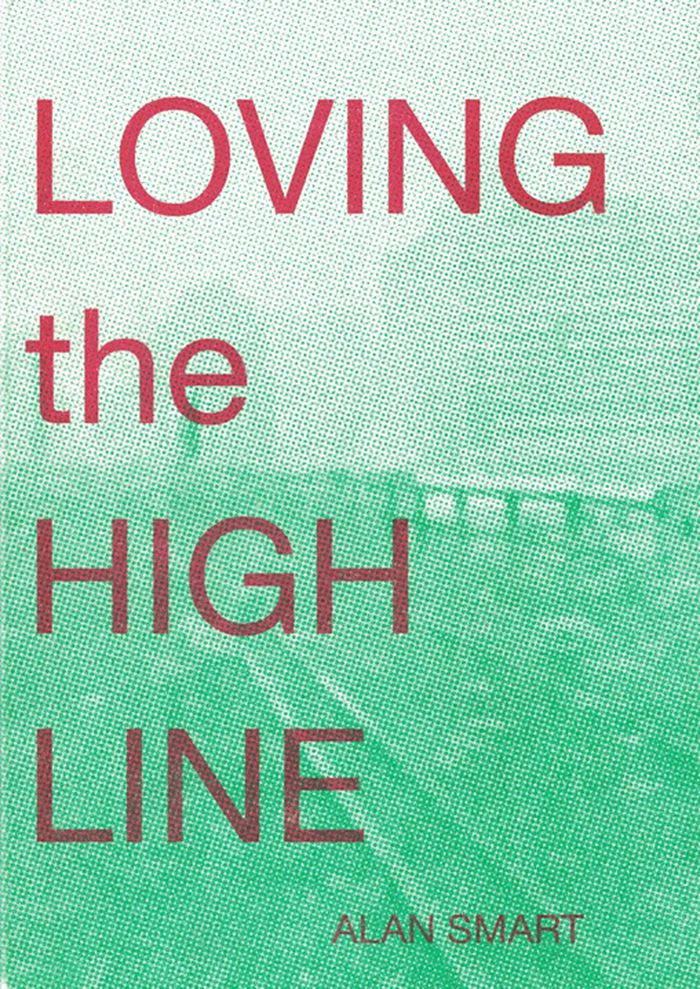
Title:
Loving the High Line
Loving the High Line
Actions:
Price:
$20.00
(available to order)
Summary:
As an elevated rail line, designed to lift freight trains serving the Hudson River docks above street level circulation, The High Line was originally constructed as material infrastructure for an industrial city. It was closed in 1960s and stood abandoned for the next forty years. In this time organic debris accumulated and decayed, and seeds landed on the newly forming(...)
$20.00
(available to order)
Summary:
As an elevated rail line, designed to lift freight trains serving the Hudson River docks above street level circulation, The High Line was originally constructed as material infrastructure for an industrial city. It was closed in 1960s and stood abandoned for the next forty years. In this time organic debris accumulated and decayed, and seeds landed on the newly forming(...)
Title:
Loving the High Line
Actions:
Price:
$20.00
(available to order)
Summary:
As an elevated rail line, designed to lift freight trains serving the Hudson River docks above street level circulation, The High Line was originally constructed as material infrastructure for an industrial city. It was closed in 1960s and stood abandoned for the next forty years. In this time organic debris accumulated and decayed, and seeds landed on the newly forming soil creating a meadow on the derelict railbed. This microcosmic biome then also became a heterotopic, other space, in the social ecology of the city as an efflorescence of new art forms and underground subcultures flourished in the evacuated post-industrial spaces of Chelsea. These processes would unfold as New York City was being transformed into a global center in an emerging political-economy defined by the integration of finance capital with media and information industries. In this, marginal spaces of the kind that developed in Chelsea, and the cultures that create them, became important sources of new aesthetic and cultural innovation, that offer an exploitable social ground from which to extract semiotic value. As the Bloomberg administration gave shape to this new regime, a project was initiated to convert the High Line into a publicly accessible, linear park. This would be realized through a convoluted process in which the manifold tensions and contradictions of the postmodern city would be dramatically played out and the disjunctions between ideal image regimes and the reality of the material substrates that support them would be brought to light, if only to be newly obscured. The High Line urban park has been both heralded as a definitive model for new urban development, and denounced as a driver, or at least a morbid symptom, of devastating gentrification, and the destructive financialization of urban space. This text, originally published in 2015 as part of the Deconstructing the High Line anthology, edited by Mark Linder and Brian Rosa, tracks a collection of interconnected historical treads that converge in the reconstruction of the High Line, and situates the project within architectural discourse and practice, and social and material conditions with which it struggles to engage.
Loving the High Line
Actions:
Price:
$20.00
(available to order)
Summary:
As an elevated rail line, designed to lift freight trains serving the Hudson River docks above street level circulation, The High Line was originally constructed as material infrastructure for an industrial city. It was closed in 1960s and stood abandoned for the next forty years. In this time organic debris accumulated and decayed, and seeds landed on the newly forming soil creating a meadow on the derelict railbed. This microcosmic biome then also became a heterotopic, other space, in the social ecology of the city as an efflorescence of new art forms and underground subcultures flourished in the evacuated post-industrial spaces of Chelsea. These processes would unfold as New York City was being transformed into a global center in an emerging political-economy defined by the integration of finance capital with media and information industries. In this, marginal spaces of the kind that developed in Chelsea, and the cultures that create them, became important sources of new aesthetic and cultural innovation, that offer an exploitable social ground from which to extract semiotic value. As the Bloomberg administration gave shape to this new regime, a project was initiated to convert the High Line into a publicly accessible, linear park. This would be realized through a convoluted process in which the manifold tensions and contradictions of the postmodern city would be dramatically played out and the disjunctions between ideal image regimes and the reality of the material substrates that support them would be brought to light, if only to be newly obscured. The High Line urban park has been both heralded as a definitive model for new urban development, and denounced as a driver, or at least a morbid symptom, of devastating gentrification, and the destructive financialization of urban space. This text, originally published in 2015 as part of the Deconstructing the High Line anthology, edited by Mark Linder and Brian Rosa, tracks a collection of interconnected historical treads that converge in the reconstruction of the High Line, and situates the project within architectural discourse and practice, and social and material conditions with which it struggles to engage.
Form:
books
books
Publication:
November 2022
November 2022
Subject:
Urban Landscapes
Urban Landscapes
Form:
books
books
Actions:
Price:
$99.95
(available to order)
Summary:
For decades Frederick Law Olmsted (1822–1903) designed parks and park systems across the United States, leaving an enduring legacy of designed public space that is enjoyed, studied, and protected today. His plans and professional correspondence offer a rich source for understanding his remarkable contribution to the quality of urban life in this country and the(...)
$99.95
(available to order)
Summary:
For decades Frederick Law Olmsted (1822–1903) designed parks and park systems across the United States, leaving an enduring legacy of designed public space that is enjoyed, studied, and protected today. His plans and professional correspondence offer a rich source for understanding his remarkable contribution to the quality of urban life in this country and the(...)
Subject:
Landscape Architecture, Monographs
Landscape Architecture, Monographs
Publication:
October 2006, Baltimore
October 2006, Baltimore
Title:
The papers of Frederick Law Olmsted : volume VII, parks, politics, and patronage 1874-1882
Actions:
Price:
$99.95
(available to order)
Summary:
For decades Frederick Law Olmsted (1822–1903) designed parks and park systems across the United States, leaving an enduring legacy of designed public space that is enjoyed, studied, and protected today. His plans and professional correspondence offer a rich source for understanding his remarkable contribution to the quality of urban life in this country and the development of the profession of landscape architecture. Olmsted's writings also provide a unique record of society and politics in post–Civil War America. Historians, landscape architects, conservationists, city planners, and citizens’ groups continue to turn to Olmsted for inspiration in their planning and protection of public open space in our cities. This latest and seventh volume of the Papers of Frederick Law Olmsted presents the record of his last years of residence in New York City. It includes reports on the design of Riverside and Morningside parks and Tompkins Square in Manhattan, as well as his comprehensive plan for the street system and rapid transit routes of the Bronx. It records his continuing work on Central Park and presents his final retrospective statement, “The Spoils of the Park.” In addition, volume seven contains an annotated version of the journal in which Olmsted recorded instances of political maneuvering and patronage politics in the years before his dismissal from the New York parks department in 1878. Later documents chronicle the early stages of his planning of the Boston park system—the Back Bay Fens, Arnold Arboretum, and Riverway. Other major commissions, each with its own political complications, were the grounds of the U.S. Capitol, the completion of the new state capitol in Albany, the designing of a park on Mount Royal in Montreal, and construction of the park system of Buffalo, New York. The volume also presents Olmsted’s commentary on issues of the times including federal Reconstruction policy and civil-service reform. The Olmsted Papers project is supported by the National Endowment for the Humanities, the National Historical Publications and Records Commission, the National Trust for the Humanities, the National Association for Olmsted Parks, as well as private foundations and individuals.
The papers of Frederick Law Olmsted : volume VII, parks, politics, and patronage 1874-1882
Actions:
Price:
$99.95
(available to order)
Summary:
For decades Frederick Law Olmsted (1822–1903) designed parks and park systems across the United States, leaving an enduring legacy of designed public space that is enjoyed, studied, and protected today. His plans and professional correspondence offer a rich source for understanding his remarkable contribution to the quality of urban life in this country and the development of the profession of landscape architecture. Olmsted's writings also provide a unique record of society and politics in post–Civil War America. Historians, landscape architects, conservationists, city planners, and citizens’ groups continue to turn to Olmsted for inspiration in their planning and protection of public open space in our cities. This latest and seventh volume of the Papers of Frederick Law Olmsted presents the record of his last years of residence in New York City. It includes reports on the design of Riverside and Morningside parks and Tompkins Square in Manhattan, as well as his comprehensive plan for the street system and rapid transit routes of the Bronx. It records his continuing work on Central Park and presents his final retrospective statement, “The Spoils of the Park.” In addition, volume seven contains an annotated version of the journal in which Olmsted recorded instances of political maneuvering and patronage politics in the years before his dismissal from the New York parks department in 1878. Later documents chronicle the early stages of his planning of the Boston park system—the Back Bay Fens, Arnold Arboretum, and Riverway. Other major commissions, each with its own political complications, were the grounds of the U.S. Capitol, the completion of the new state capitol in Albany, the designing of a park on Mount Royal in Montreal, and construction of the park system of Buffalo, New York. The volume also presents Olmsted’s commentary on issues of the times including federal Reconstruction policy and civil-service reform. The Olmsted Papers project is supported by the National Endowment for the Humanities, the National Historical Publications and Records Commission, the National Trust for the Humanities, the National Association for Olmsted Parks, as well as private foundations and individuals.
Form:
books
books
Publication:
October 2006, Baltimore
October 2006, Baltimore
Subject:
Landscape Architecture, Monographs
Landscape Architecture, Monographs


