


277 Results
Form:
books
books
Actions:
Price:
$48.00
(available to order)
Summary:
Transmaterial 3 provides a broad synopsis of the state of technological advances in materials today with a special emphasis on new developments in the field of biopolymers and various agriculturally derived products; biomimetic products, systems, and processes that seek to emulate natural examples including low-embodied-energy and biochemically manufactured products;(...)
$48.00
(available to order)
Summary:
Transmaterial 3 provides a broad synopsis of the state of technological advances in materials today with a special emphasis on new developments in the field of biopolymers and various agriculturally derived products; biomimetic products, systems, and processes that seek to emulate natural examples including low-embodied-energy and biochemically manufactured products;(...)
Title:
Transmaterial 3, a catalog of materials that redefine our physical environment
Actions:
Price:
$48.00
(available to order)
Summary:
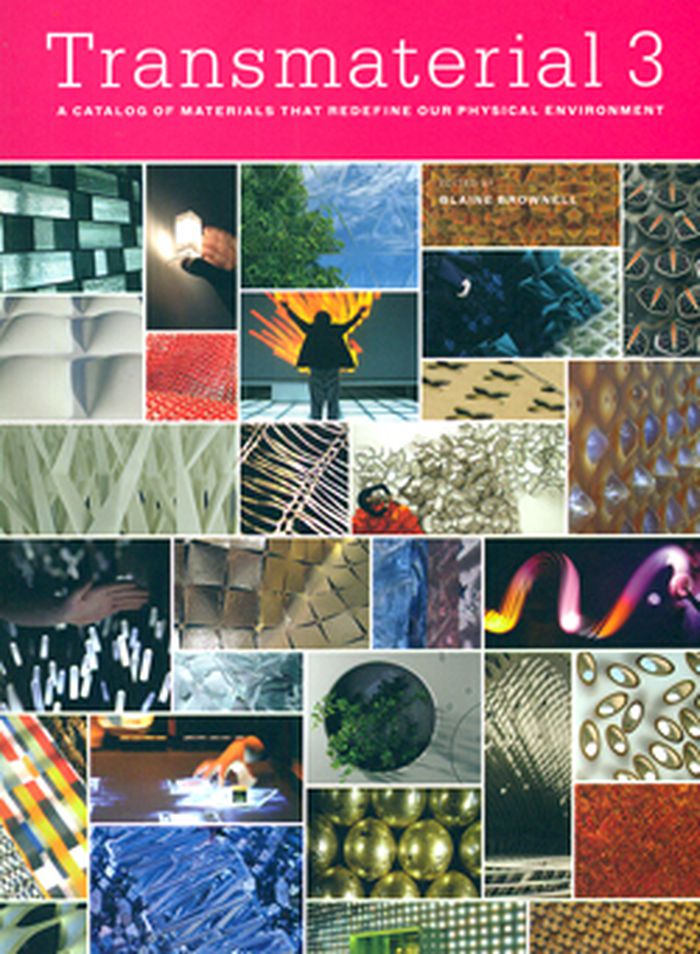
Transmaterial 3 provides a broad synopsis of the state of technological advances in materials today with a special emphasis on new developments in the field of biopolymers and various agriculturally derived products; biomimetic products, systems, and processes that seek to emulate natural examples including low-embodied-energy and biochemically manufactured products; 'grown' materials; nanoscale marvels; renewable energy technologies; 'second-life' materials derived from repurposed waste; and responsive, interactive, and transformational digital interfaces that harness pervasive communication networks and are powered by low-energy illumination sources. An excellent ideas generator, Transmaterial 3 is an indispensable tool for any architect or designer looking to keep up with the current trends in the field of materials.
Transmaterial 3, a catalog of materials that redefine our physical environment
Actions:
Price:
$48.00
(available to order)
Summary:
Transmaterial 3 provides a broad synopsis of the state of technological advances in materials today with a special emphasis on new developments in the field of biopolymers and various agriculturally derived products; biomimetic products, systems, and processes that seek to emulate natural examples including low-embodied-energy and biochemically manufactured products; 'grown' materials; nanoscale marvels; renewable energy technologies; 'second-life' materials derived from repurposed waste; and responsive, interactive, and transformational digital interfaces that harness pervasive communication networks and are powered by low-energy illumination sources. An excellent ideas generator, Transmaterial 3 is an indispensable tool for any architect or designer looking to keep up with the current trends in the field of materials.
Form:
books
books
Publication:
March 2010
March 2010
Subject:
Materials and Lighting
Materials and Lighting
Form:
books
books
Actions:
Price:
$64.95
(available to order)
Summary:
There may be no more conspicuous sign of luxury (some might say decadence) than an over-the-top design of that most utilitarian of spaces, the lavatory. Restaurants, hotels, clubs, and similar clients have increasingly seen the restroom as a manifestation of corporate culture and an expression of their attitude toward customers or employers, as well as an easy buzz(...)
$64.95
(available to order)
Summary:
There may be no more conspicuous sign of luxury (some might say decadence) than an over-the-top design of that most utilitarian of spaces, the lavatory. Restaurants, hotels, clubs, and similar clients have increasingly seen the restroom as a manifestation of corporate culture and an expression of their attitude toward customers or employers, as well as an easy buzz(...)
Subject:
Commercial interiors, Building types
Commercial interiors, Building types
Publication:
March 2005, Basel
March 2005, Basel
Title:
Flush! : modern toilet design
Actions:
Price:
$64.95
(available to order)
Summary:
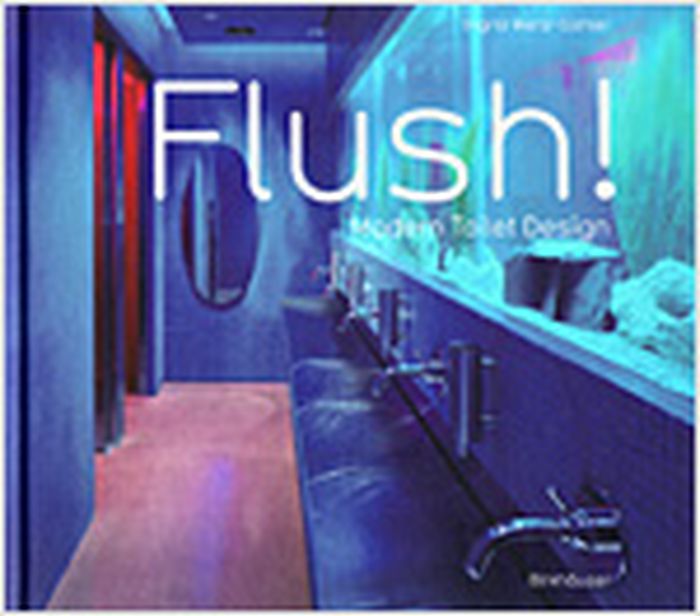
There may be no more conspicuous sign of luxury (some might say decadence) than an over-the-top design of that most utilitarian of spaces, the lavatory. Restaurants, hotels, clubs, and similar clients have increasingly seen the restroom as a manifestation of corporate culture and an expression of their attitude toward customers or employers, as well as an easy buzz generator. "Flush!" is a book for anyone with more than a mere passing interest in concepts for comfort when nature calls, and includes over 40 examples of innovative design for washrooms and a survey of the latest trends in restroom design. An introduction with examples from history - including film, art, and literature - provides an entertaining introduction to the culture of the lavatory.
Flush! : modern toilet design
Actions:
Price:
$64.95
(available to order)
Summary:
There may be no more conspicuous sign of luxury (some might say decadence) than an over-the-top design of that most utilitarian of spaces, the lavatory. Restaurants, hotels, clubs, and similar clients have increasingly seen the restroom as a manifestation of corporate culture and an expression of their attitude toward customers or employers, as well as an easy buzz generator. "Flush!" is a book for anyone with more than a mere passing interest in concepts for comfort when nature calls, and includes over 40 examples of innovative design for washrooms and a survey of the latest trends in restroom design. An introduction with examples from history - including film, art, and literature - provides an entertaining introduction to the culture of the lavatory.
Form:
books
books
Publication:
March 2005, Basel
March 2005, Basel
Subject:
Commercial interiors, Building types
Commercial interiors, Building types
Form:
books
books
Title:
Concrete architecture
Concrete architecture
Actions:
Price:
$16.99
(available to order)
Summary:
Concrete is now chic, becoming ubiquitous in shops, restaurants, and even homes. The reasons are many, as concrete is a remarkable material that can be used in a huge range of techniques and situations. Its colour and texture vary, it can be very affordable and mass produced, or meticulously crafted and manipulated. New developments and increased understanding of the(...)
$16.99
(available to order)
Summary:
Concrete is now chic, becoming ubiquitous in shops, restaurants, and even homes. The reasons are many, as concrete is a remarkable material that can be used in a huge range of techniques and situations. Its colour and texture vary, it can be very affordable and mass produced, or meticulously crafted and manipulated. New developments and increased understanding of the(...)
Title:
Concrete architecture
Actions:
Price:
$16.99
(available to order)
Summary:
Concrete is now chic, becoming ubiquitous in shops, restaurants, and even homes. The reasons are many, as concrete is a remarkable material that can be used in a huge range of techniques and situations. Its colour and texture vary, it can be very affordable and mass produced, or meticulously crafted and manipulated. New developments and increased understanding of the possibilities of concrete architecture are inspiring contemporary architects and designers across the globe. Concrete Architecture looks at recent architectural projects that use concrete for a huge range of projects, and celebrates the intrinsic qualities of concrete in the places where we live, work, and play. This book is an invitation to re-evaluate concrete as a modern material and generator of construction techniques. Includes examples from the United States, Spain, United Kingdom, Italy, Ireland, Germany, Switzerland, Norway, France, New Zealand, Japan, Argentina, Luxembourg, the Netherlands and more.
Concrete architecture
Actions:
Price:
$16.99
(available to order)
Summary:
Concrete is now chic, becoming ubiquitous in shops, restaurants, and even homes. The reasons are many, as concrete is a remarkable material that can be used in a huge range of techniques and situations. Its colour and texture vary, it can be very affordable and mass produced, or meticulously crafted and manipulated. New developments and increased understanding of the possibilities of concrete architecture are inspiring contemporary architects and designers across the globe. Concrete Architecture looks at recent architectural projects that use concrete for a huge range of projects, and celebrates the intrinsic qualities of concrete in the places where we live, work, and play. This book is an invitation to re-evaluate concrete as a modern material and generator of construction techniques. Includes examples from the United States, Spain, United Kingdom, Italy, Ireland, Germany, Switzerland, Norway, France, New Zealand, Japan, Argentina, Luxembourg, the Netherlands and more.
Form:
books
books
Publication:
September 2004, Salt Lake City
September 2004, Salt Lake City
Subject:
sale books
sale books
Form:
books
books
Actions:
Price:
$78.00
(available to order)
Summary:
Gerhard Richter and Hans Ulrich Obrist first met in 1985. Their professional collaborations began seven years later, when the 24-year-old Obrist curated his first Richter exhibition; the following year he published a collection of his writings. Now Gerhard Richter has dedicated an artist's book to this longstanding relationship. The texts in Obrist-O'Brist have been(...)
$78.00
(available to order)
Summary:
Gerhard Richter and Hans Ulrich Obrist first met in 1985. Their professional collaborations began seven years later, when the 24-year-old Obrist curated his first Richter exhibition; the following year he published a collection of his writings. Now Gerhard Richter has dedicated an artist's book to this longstanding relationship. The texts in Obrist-O'Brist have been(...)
Subject:
Contemporary Art Monographs
Contemporary Art Monographs
Publication:
March 2010
March 2010
Title:
Gerhard Richter: Obrist-O'Brist
Actions:
Price:
$78.00
(available to order)
Summary:
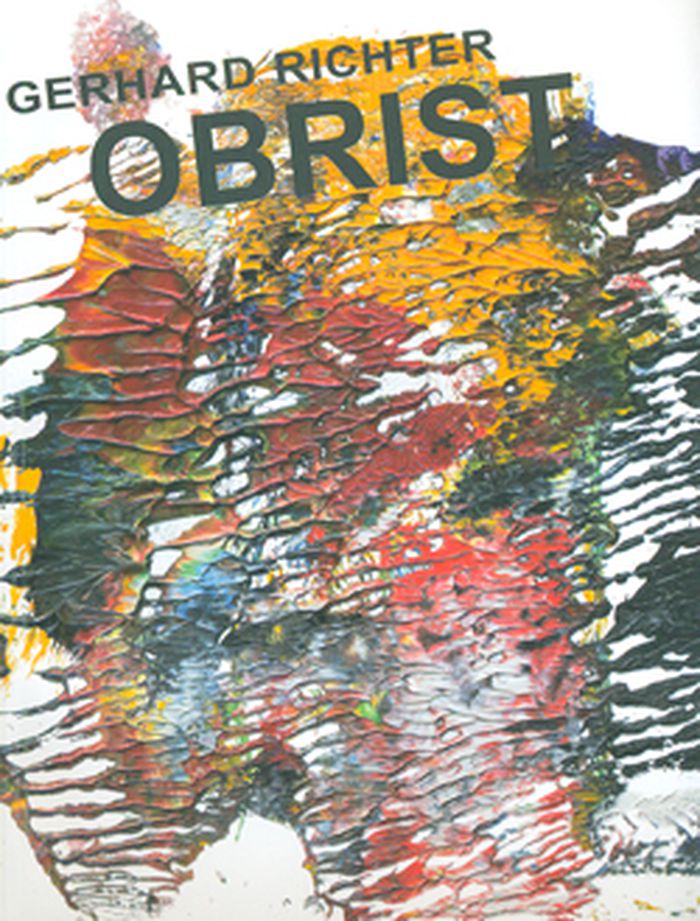
Gerhard Richter and Hans Ulrich Obrist first met in 1985. Their professional collaborations began seven years later, when the 24-year-old Obrist curated his first Richter exhibition; the following year he published a collection of his writings. Now Gerhard Richter has dedicated an artist's book to this longstanding relationship. The texts in Obrist-O'Brist have been produced by rearranging Obrist's interviews using a random generator, setting the results in blocks without discrete passages or paragraphs. The color plates are made up of photographs—both portraits and mementos—of Hans Ulrich Obrist, from the past 15 years, and photos of Richter's own paintings, which Richter has then painted over using brushes and scrapers. Chiming with many currents in contemporary writing and bookmaking, Obrist-O'Brist is an adventure from cover to cover; it even has two different sleeves, and can be approached from either end (as frequent upside-down pages indicate).
Gerhard Richter: Obrist-O'Brist
Actions:
Price:
$78.00
(available to order)
Summary:
Gerhard Richter and Hans Ulrich Obrist first met in 1985. Their professional collaborations began seven years later, when the 24-year-old Obrist curated his first Richter exhibition; the following year he published a collection of his writings. Now Gerhard Richter has dedicated an artist's book to this longstanding relationship. The texts in Obrist-O'Brist have been produced by rearranging Obrist's interviews using a random generator, setting the results in blocks without discrete passages or paragraphs. The color plates are made up of photographs—both portraits and mementos—of Hans Ulrich Obrist, from the past 15 years, and photos of Richter's own paintings, which Richter has then painted over using brushes and scrapers. Chiming with many currents in contemporary writing and bookmaking, Obrist-O'Brist is an adventure from cover to cover; it even has two different sleeves, and can be approached from either end (as frequent upside-down pages indicate).
Form:
books
books
Publication:
March 2010
March 2010
Subject:
Contemporary Art Monographs
Contemporary Art Monographs
Form:
books
books
Actions:
Price:
$50.00
(available to order)
Summary:
The exhilarating and at times unsettling work featured in this book suggests an alternative view of natural processes and ecosystems and their relationships to human society and architecture. R's Mosquito Bottleneck house in Trinidad uses a skin that actually attracts mosquitoes and moves them through the building, while keeping them separate from the occupants. In his(...)
$50.00
(available to order)
Summary:
The exhilarating and at times unsettling work featured in this book suggests an alternative view of natural processes and ecosystems and their relationships to human society and architecture. R's Mosquito Bottleneck house in Trinidad uses a skin that actually attracts mosquitoes and moves them through the building, while keeping them separate from the occupants. In his(...)
Title:
Subnature, architecture's other environments
Actions:
Price:
$50.00
(available to order)
Summary:
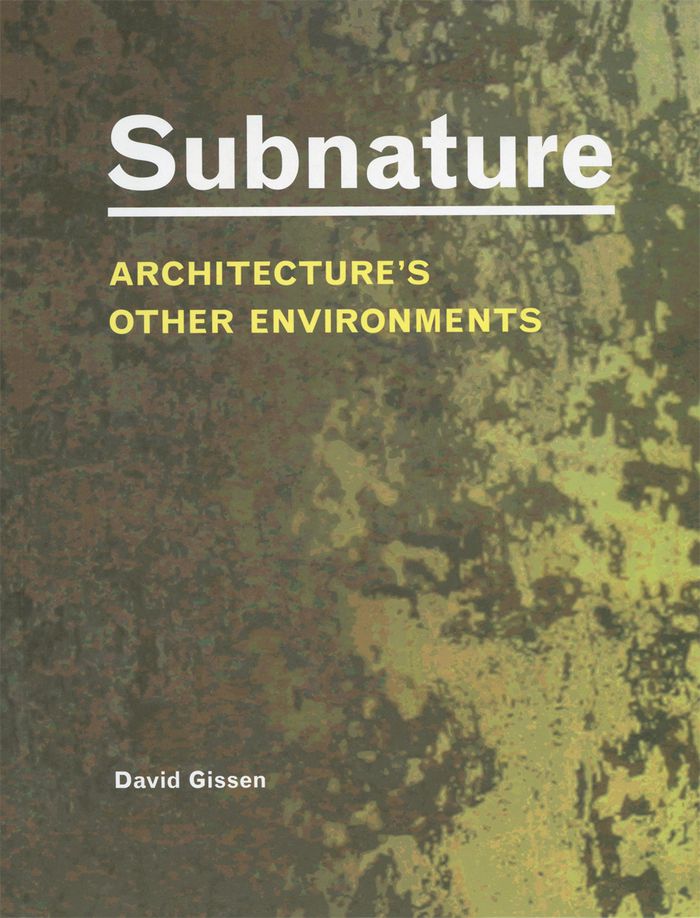
The exhilarating and at times unsettling work featured in this book suggests an alternative view of natural processes and ecosystems and their relationships to human society and architecture. R's Mosquito Bottleneck house in Trinidad uses a skin that actually attracts mosquitoes and moves them through the building, while keeping them separate from the occupants. In his building designs the architect Philippe Rahm draws the dank air from the earth and the gasses and moisture from our breath to define new forms of spatial experience. In his Underground House, Mollier House, and Omnisport Hall, Rahm forces us to consider the odor of soil and the emissions from our body as the natural context of a future architecture. [Cero 9]'s design for the Magic Mountain captures excess heat emitted from a power generator in Ames, Iowa, to fuel a rose garden that embellishes the industrial site and creates a natural mountain rising above the city's skyline. Subnature looks beyond leed ratings, green roofs, and solar panels toward a progressive architecture based on a radical new conception of nature.
Subnature, architecture's other environments
Actions:
Price:
$50.00
(available to order)
Summary:
The exhilarating and at times unsettling work featured in this book suggests an alternative view of natural processes and ecosystems and their relationships to human society and architecture. R's Mosquito Bottleneck house in Trinidad uses a skin that actually attracts mosquitoes and moves them through the building, while keeping them separate from the occupants. In his building designs the architect Philippe Rahm draws the dank air from the earth and the gasses and moisture from our breath to define new forms of spatial experience. In his Underground House, Mollier House, and Omnisport Hall, Rahm forces us to consider the odor of soil and the emissions from our body as the natural context of a future architecture. [Cero 9]'s design for the Magic Mountain captures excess heat emitted from a power generator in Ames, Iowa, to fuel a rose garden that embellishes the industrial site and creates a natural mountain rising above the city's skyline. Subnature looks beyond leed ratings, green roofs, and solar panels toward a progressive architecture based on a radical new conception of nature.
Form:
books
books
Publication:
November 2009
November 2009
Subject:
Green Architecture
Green Architecture
Form:
books
books
Title:
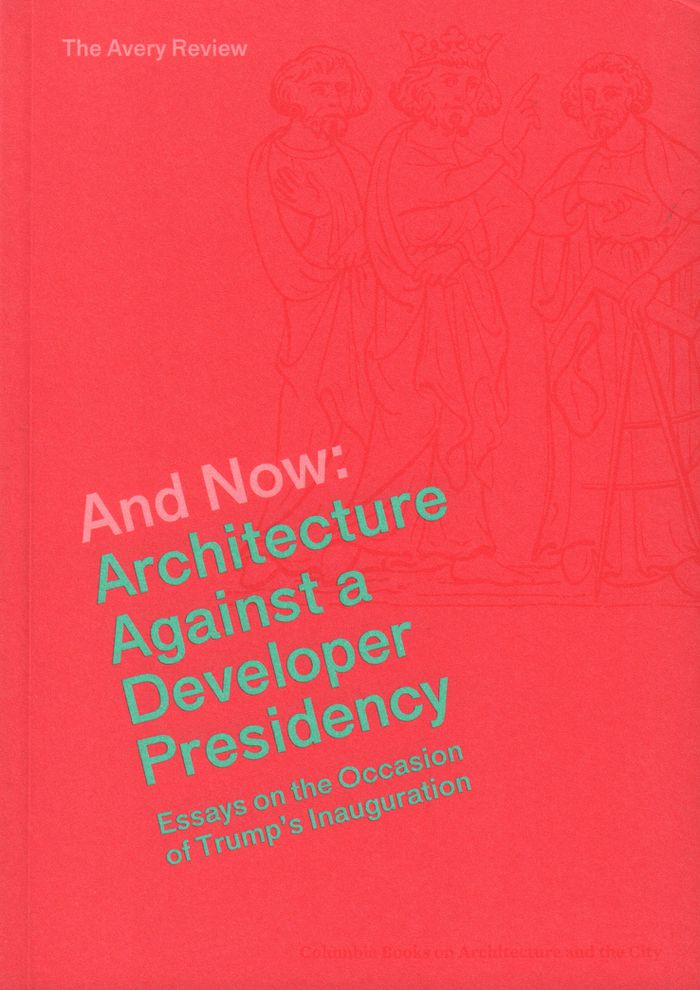
And now: Architecture against a developer presidency. Essays on the occasion of Trump's inauguration
And now: Architecture against a developer presidency. Essays on the occasion of Trump's inauguration
Actions:
Price:
$26.95
(available to order)
Summary:
The election and inauguration of Donald J. Trump as the president of the United States of America have provoked an unprecedented intensity of reflection in virtually all academic disciplines. The professions of architecture and planning, faced with the phenomenon of a self-proclaimed "builder-in-chief," have found themselves facing a series of fundamental questions, both(...)
$26.95
(available to order)
Summary:
The election and inauguration of Donald J. Trump as the president of the United States of America have provoked an unprecedented intensity of reflection in virtually all academic disciplines. The professions of architecture and planning, faced with the phenomenon of a self-proclaimed "builder-in-chief," have found themselves facing a series of fundamental questions, both(...)
Title:
And now: Architecture against a developer presidency. Essays on the occasion of Trump's inauguration
Actions:
Price:
$26.95
(available to order)
Summary:
The election and inauguration of Donald J. Trump as the president of the United States of America have provoked an unprecedented intensity of reflection in virtually all academic disciplines. The professions of architecture and planning, faced with the phenomenon of a self-proclaimed "builder-in-chief," have found themselves facing a series of fundamental questions, both old and new. How should we think, teach, and practice under a developer presidency? What sort of walls will we and won't we choose to build? What are our commitments of critical thought, and what obligations should we turn our energies toward? The essays gathered in And Now explore the nature of architecture's many long-standing complicities. Architecture coordinates colossal expenditures (of material, of energy); it scripts forms of labor (in its construction, in its operation, and in the programs it houses); and it is both a repository and generator of capital. Architecture participates, centrally, in defining modes of life, whether for the privileged or the dispossessed-designing and building the boundaries between the "haves" and the "have-nots." This fundamental reality of architectural practice need not inspire either nihilism or defensiveness but should rather be understood, quite simply, as the terrain we navigate. Naming these complicities and the injustices they perpetuate is a first step toward addressing them.
And now: Architecture against a developer presidency. Essays on the occasion of Trump's inauguration
Actions:
Price:
$26.95
(available to order)
Summary:
The election and inauguration of Donald J. Trump as the president of the United States of America have provoked an unprecedented intensity of reflection in virtually all academic disciplines. The professions of architecture and planning, faced with the phenomenon of a self-proclaimed "builder-in-chief," have found themselves facing a series of fundamental questions, both old and new. How should we think, teach, and practice under a developer presidency? What sort of walls will we and won't we choose to build? What are our commitments of critical thought, and what obligations should we turn our energies toward? The essays gathered in And Now explore the nature of architecture's many long-standing complicities. Architecture coordinates colossal expenditures (of material, of energy); it scripts forms of labor (in its construction, in its operation, and in the programs it houses); and it is both a repository and generator of capital. Architecture participates, centrally, in defining modes of life, whether for the privileged or the dispossessed-designing and building the boundaries between the "haves" and the "have-nots." This fundamental reality of architectural practice need not inspire either nihilism or defensiveness but should rather be understood, quite simply, as the terrain we navigate. Naming these complicities and the injustices they perpetuate is a first step toward addressing them.
Form:
books
books
Publication:
September 2017
September 2017
Subject:
Contemporary Architecture
Contemporary Architecture
Form:
books
books
Actions:
Price:
$68.00
(available to order)
Summary:
British architect Cedric Price (1934–2003) had a lifelong fascination with the mechanization of society and its effect on people’s lives. In the 1960s and ’70s, Price began to look for answers to some of the pressing problems he saw in society in the tenets of architecture and design. His intense intellectual curiosity soon led him to other disciplines, including the(...)
$68.00
(available to order)
Summary:
British architect Cedric Price (1934–2003) had a lifelong fascination with the mechanization of society and its effect on people’s lives. In the 1960s and ’70s, Price began to look for answers to some of the pressing problems he saw in society in the tenets of architecture and design. His intense intellectual curiosity soon led him to other disciplines, including the(...)
Title:
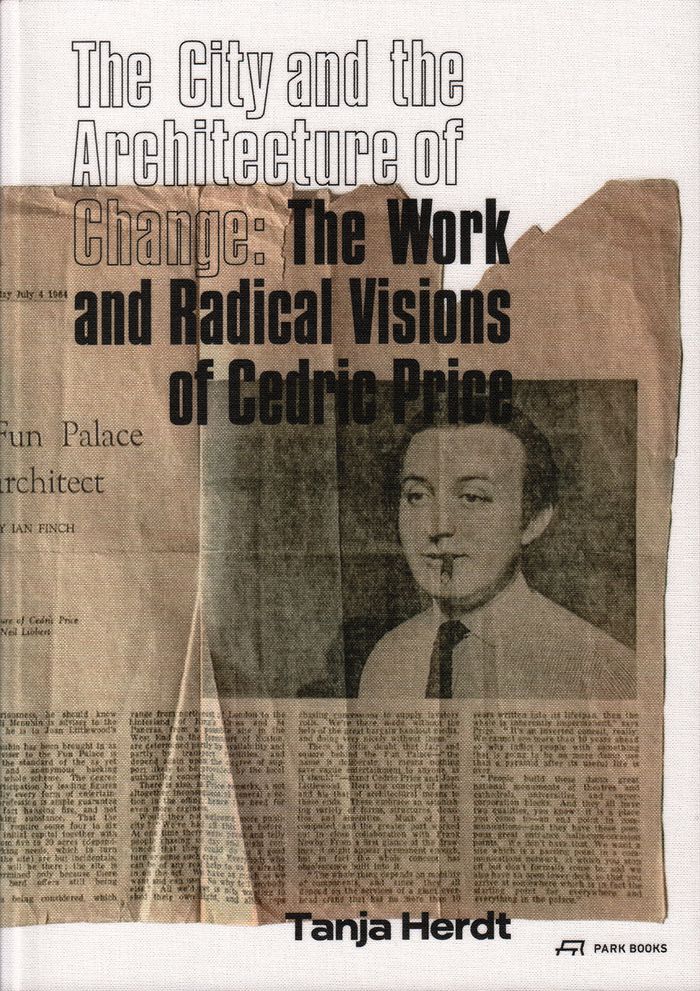
The city and the architecture of change: the work and radical visions of Cedric Price
Actions:
Price:
$68.00
(available to order)
Summary:
British architect Cedric Price (1934–2003) had a lifelong fascination with the mechanization of society and its effect on people’s lives. In the 1960s and ’70s, Price began to look for answers to some of the pressing problems he saw in society in the tenets of architecture and design. His intense intellectual curiosity soon led him to other disciplines, including the social and natural sciences, while his sense of humor and self-irony—which also extended to his profession—allowed him to keep his ideas in perspective. With "The city and the architecture of change", Tanja Herdt offers a comprehensive look back at the life and work of Price. Based on extensive research, including previously unpublished materials, Herdt provides a thorough account of Price’s key architectural concepts and visions, and then analyzes his perspectives on the city as a system, the influence of products and contemporary culture on architecture, and the role of science and technology in architecture and design. Apart from providing new insights into Price’s well-known and studied projects, such as Fun Palace and Potteries Thinkbelt, Herdt also brings to light many lesser-known works from the 1970s like McAppy and The Generator. She concludes by refuting the common perception of Cedric Price as an “anti-architect.” Richly illustrated with plans and photographs, many of which have never been published before, "The city and the architecture of change" affords a glimpse into the mind of this highly creative and forward-thinking architect.
The city and the architecture of change: the work and radical visions of Cedric Price
Actions:
Price:
$68.00
(available to order)
Summary:
British architect Cedric Price (1934–2003) had a lifelong fascination with the mechanization of society and its effect on people’s lives. In the 1960s and ’70s, Price began to look for answers to some of the pressing problems he saw in society in the tenets of architecture and design. His intense intellectual curiosity soon led him to other disciplines, including the social and natural sciences, while his sense of humor and self-irony—which also extended to his profession—allowed him to keep his ideas in perspective. With "The city and the architecture of change", Tanja Herdt offers a comprehensive look back at the life and work of Price. Based on extensive research, including previously unpublished materials, Herdt provides a thorough account of Price’s key architectural concepts and visions, and then analyzes his perspectives on the city as a system, the influence of products and contemporary culture on architecture, and the role of science and technology in architecture and design. Apart from providing new insights into Price’s well-known and studied projects, such as Fun Palace and Potteries Thinkbelt, Herdt also brings to light many lesser-known works from the 1970s like McAppy and The Generator. She concludes by refuting the common perception of Cedric Price as an “anti-architect.” Richly illustrated with plans and photographs, many of which have never been published before, "The city and the architecture of change" affords a glimpse into the mind of this highly creative and forward-thinking architect.
Form:
books
books
Publication:
October 2017
October 2017
Subject:
Architecture Monographs
Architecture Monographs


