


276 Results
Form:
journals and magazines
journals and magazines
Price:
$29.95
(available to order)
Summary:
ANCB The Aedes Metropolitan Laboratory was launched in 2009 as a physical and intellectual space focused on the inseparable interplay between urban form and social life. Now in its eighth year, ANCB decided to broaden its experimental journey as an independent public platform with an annual magazine entitled The Metropolitan Laboratory that further explores our deliberate(...)
$29.95
(available to order)
Summary:
ANCB The Aedes Metropolitan Laboratory was launched in 2009 as a physical and intellectual space focused on the inseparable interplay between urban form and social life. Now in its eighth year, ANCB decided to broaden its experimental journey as an independent public platform with an annual magazine entitled The Metropolitan Laboratory that further explores our deliberate(...)
Title:
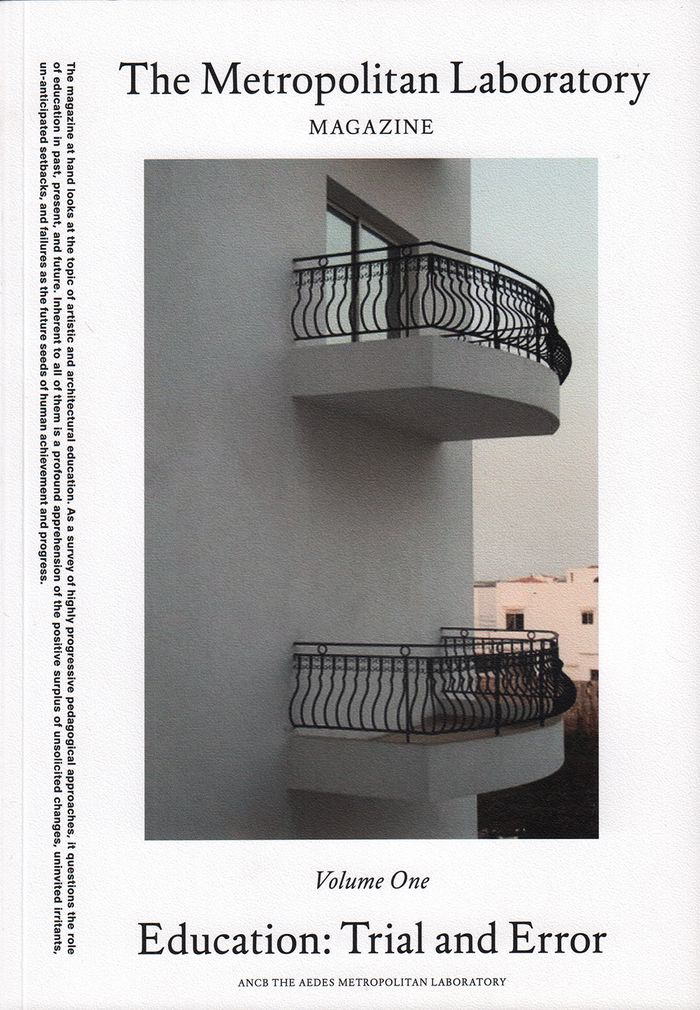
The Metropolitan Laboratory Magazine, Vol. 1. Education: trial and error
Actions:
Price:
$29.95
(available to order)
Summary:
ANCB The Aedes Metropolitan Laboratory was launched in 2009 as a physical and intellectual space focused on the inseparable interplay between urban form and social life. Now in its eighth year, ANCB decided to broaden its experimental journey as an independent public platform with an annual magazine entitled The Metropolitan Laboratory that further explores our deliberate goal of providing an alternative urban discourse. Entitled “Education: Trial and Error”, this first issue looks at the topic of artistic and architectural education. As a survey of highly progressive pedagogical approaches, it questions the role of education in past, present, and future. The broad spectrum of articles and essays ranges from Black Mountain College, Joseph Beuys, Paul Thek, Cedric Price, and Oswald Ungers all the way to Beatriz Colomina, Olafur Eliasson, Ai Wei Wei, Thom Mayne, Odile Decq, Peter Cook, and Joan Ockmann, to mention but a few. Inherent to all of these contributions is a profound apprehension of the positive surplus of unsolicited changes, uninvited irritants, unanticipated setbacks, and failures as the future seeds of human achievement and progress.
The Metropolitan Laboratory Magazine, Vol. 1. Education: trial and error
Actions:
Price:
$29.95
(available to order)
Summary:
ANCB The Aedes Metropolitan Laboratory was launched in 2009 as a physical and intellectual space focused on the inseparable interplay between urban form and social life. Now in its eighth year, ANCB decided to broaden its experimental journey as an independent public platform with an annual magazine entitled The Metropolitan Laboratory that further explores our deliberate goal of providing an alternative urban discourse. Entitled “Education: Trial and Error”, this first issue looks at the topic of artistic and architectural education. As a survey of highly progressive pedagogical approaches, it questions the role of education in past, present, and future. The broad spectrum of articles and essays ranges from Black Mountain College, Joseph Beuys, Paul Thek, Cedric Price, and Oswald Ungers all the way to Beatriz Colomina, Olafur Eliasson, Ai Wei Wei, Thom Mayne, Odile Decq, Peter Cook, and Joan Ockmann, to mention but a few. Inherent to all of these contributions is a profound apprehension of the positive surplus of unsolicited changes, uninvited irritants, unanticipated setbacks, and failures as the future seeds of human achievement and progress.
Form:
journals and magazines
journals and magazines
Publication:
July 2016
July 2016
Subject:
Magazines
Magazines
Form:
books
books
Title:
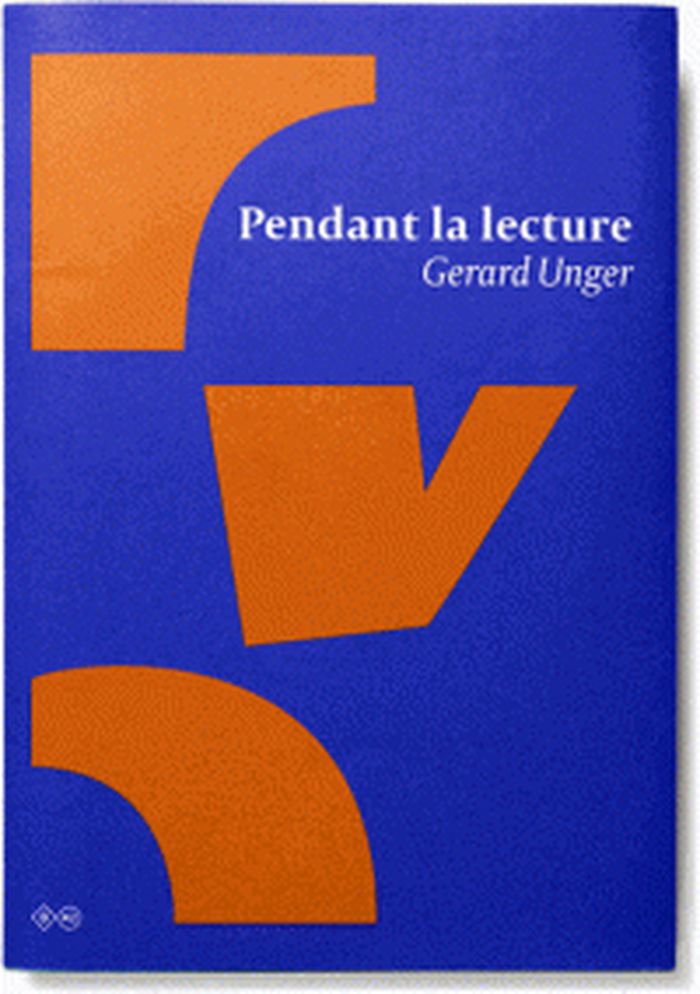
Pendant la lecture
Pendant la lecture
Actions:
Price:
$51.95
(available to order)
Summary:
Le designer s'intéresse au fonctionnement de la lecture lié à la typographie, précisément à la manière dont l'homme lit sans voir la lettre. Cette étude porte sur les procédés conçus par les designers graphiques pour rendre la lecture possible et explore différents thèmes : la typographie invisible, la reconnaissance du motif, l'ergonomie du dessin de la lettre...
$51.95
(available to order)
Summary:
Le designer s'intéresse au fonctionnement de la lecture lié à la typographie, précisément à la manière dont l'homme lit sans voir la lettre. Cette étude porte sur les procédés conçus par les designers graphiques pour rendre la lecture possible et explore différents thèmes : la typographie invisible, la reconnaissance du motif, l'ergonomie du dessin de la lettre...
Title:
Pendant la lecture
Actions:
Price:
$51.95
(available to order)
Summary:
Le designer s'intéresse au fonctionnement de la lecture lié à la typographie, précisément à la manière dont l'homme lit sans voir la lettre. Cette étude porte sur les procédés conçus par les designers graphiques pour rendre la lecture possible et explore différents thèmes : la typographie invisible, la reconnaissance du motif, l'ergonomie du dessin de la lettre...
Pendant la lecture
Actions:
Price:
$51.95
(available to order)
Summary:
Le designer s'intéresse au fonctionnement de la lecture lié à la typographie, précisément à la manière dont l'homme lit sans voir la lettre. Cette étude porte sur les procédés conçus par les designers graphiques pour rendre la lecture possible et explore différents thèmes : la typographie invisible, la reconnaissance du motif, l'ergonomie du dessin de la lettre...
Form:
books
books
Publication:
May 2015
May 2015
Subject:
Graphic Design and Typography
Graphic Design and Typography
Form:
books
books
Actions:
Price:
$75.00
(available to order)
Summary:
Ann Helen Unger's text explains the religious diversity of Vietnam and shows how the great number of beautiful, serene religious buildings reflect the multiple strands of the country's religious fabric. Walter Unger's arresting photographs document the architectural splendour of these buildings.
$75.00
(available to order)
Summary:
Ann Helen Unger's text explains the religious diversity of Vietnam and shows how the great number of beautiful, serene religious buildings reflect the multiple strands of the country's religious fabric. Walter Unger's arresting photographs document the architectural splendour of these buildings.
Title:
Pagodas, Gods and Spirits of Vietnam
Actions:
Price:
$75.00
(available to order)
Summary:
Ann Helen Unger's text explains the religious diversity of Vietnam and shows how the great number of beautiful, serene religious buildings reflect the multiple strands of the country's religious fabric. Walter Unger's arresting photographs document the architectural splendour of these buildings.
Pagodas, Gods and Spirits of Vietnam
Actions:
Price:
$75.00
(available to order)
Summary:
Ann Helen Unger's text explains the religious diversity of Vietnam and shows how the great number of beautiful, serene religious buildings reflect the multiple strands of the country's religious fabric. Walter Unger's arresting photographs document the architectural splendour of these buildings.
Form:
books
books
Publication:
October 1997, New York
October 1997, New York
Subject:
Arch Middle East
Arch Middle East
Form:
books
books
Title:
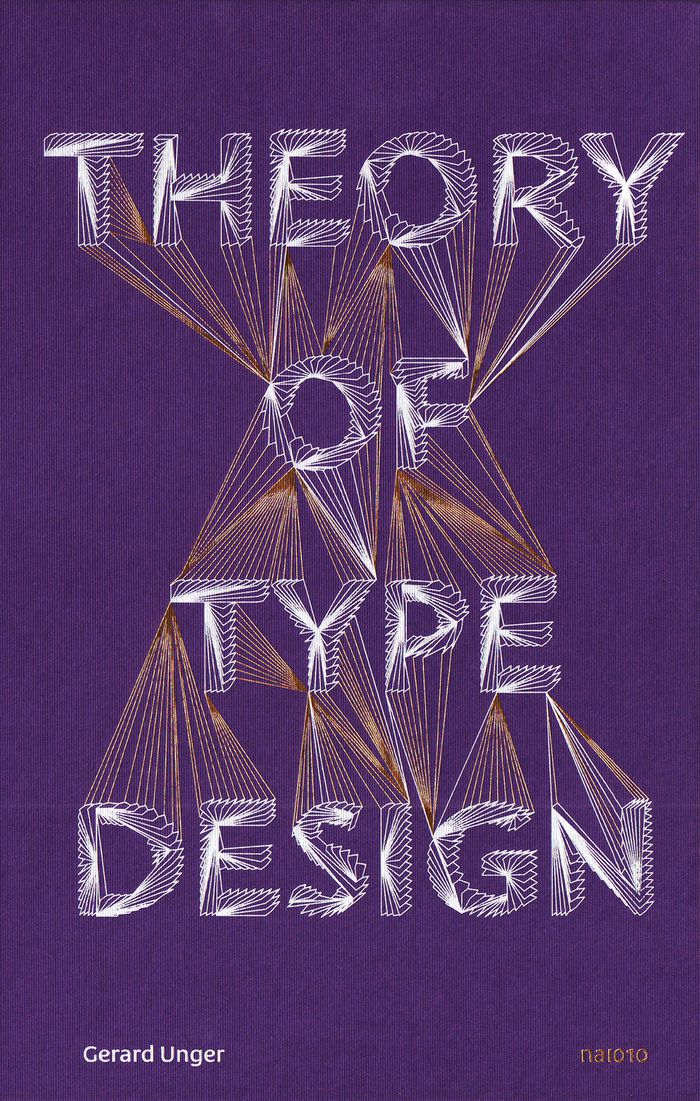
Theory of type design
Theory of type design
Actions:
Price:
$67.50
(available to order)
Summary:
''Theory of Type Design'', by internationally renowned Dutch graphic designer and typographer Gerard Unger (born 1942), is a complete and accessible theory of the field of typography.
$67.50
(available to order)
Summary:
''Theory of Type Design'', by internationally renowned Dutch graphic designer and typographer Gerard Unger (born 1942), is a complete and accessible theory of the field of typography.
Title:
Theory of type design
Actions:
Price:
$67.50
(available to order)
Summary:
''Theory of Type Design'', by internationally renowned Dutch graphic designer and typographer Gerard Unger (born 1942), is a complete and accessible theory of the field of typography.
Theory of type design
Actions:
Price:
$67.50
(available to order)
Summary:
''Theory of Type Design'', by internationally renowned Dutch graphic designer and typographer Gerard Unger (born 1942), is a complete and accessible theory of the field of typography.
Form:
books
books
Publication:
September 2018
September 2018
Subject:
Graphic Design and Typography
Graphic Design and Typography
Form:
journals and magazines
journals and magazines
Title:
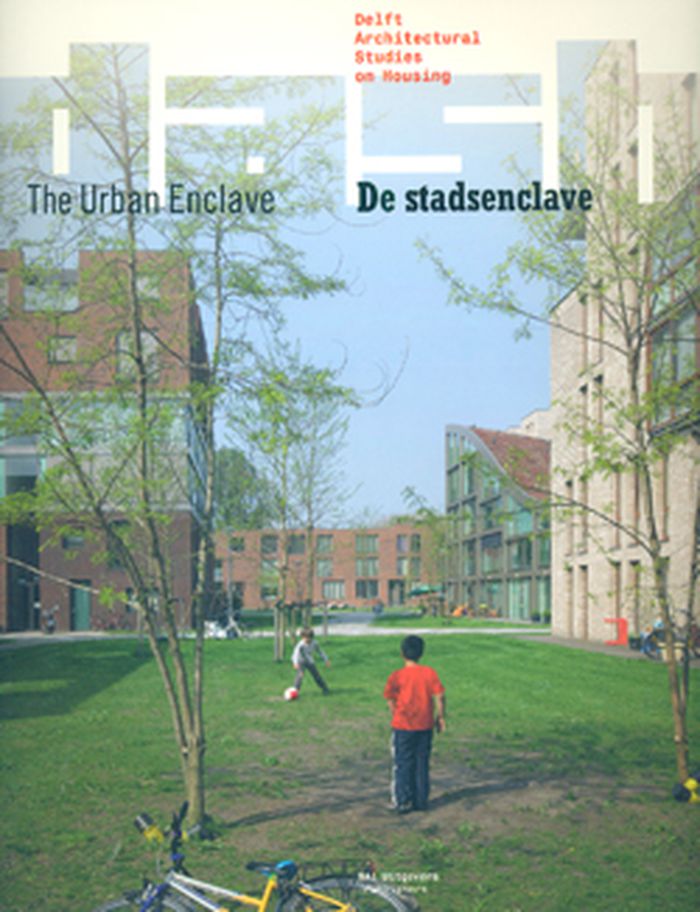
DASH 05 : the urban enclave
DASH 05 : the urban enclave
Actions:
Price:
$50.00
(available to order)
Summary:
The idea of the pluriform city seems more current than ever. Society was still homogeneous 50 years ago; today highly divergent modes of life and culture are all seeking a place within our cities. DASH 5. The Urban Enclave is the product of an investigation into large-scale housing projects in the inner city, both historical and contemporary. This calls for a city with(...)
$50.00
(available to order)
Summary:
The idea of the pluriform city seems more current than ever. Society was still homogeneous 50 years ago; today highly divergent modes of life and culture are all seeking a place within our cities. DASH 5. The Urban Enclave is the product of an investigation into large-scale housing projects in the inner city, both historical and contemporary. This calls for a city with(...)
Title:
DASH 05 : the urban enclave
Actions:
Price:
$50.00
(available to order)
Summary:
The idea of the pluriform city seems more current than ever. Society was still homogeneous 50 years ago; today highly divergent modes of life and culture are all seeking a place within our cities. DASH 5. The Urban Enclave is the product of an investigation into large-scale housing projects in the inner city, both historical and contemporary. This calls for a city with differences of its own, distinctive parts in which like-minded people can find one another, connected to the greater whole, but without imposing anything on others. The recent focus on regeneration within the existing city – especially on a mass scale – offers perspectives in this regard. In many cities in the Netherlands (and elsewhere) abandoned industrial and commercial premises or outmoded residential areas are being redeveloped. The usually sizable scale of these areas creates a (housing) construction challenge that can contribute to the needed differentiation within the city In DASH 5 The Urban Enclave Dirk van den Heuvel and Lara Schrijver examine divergent ideas related to large scales and the city in their essays, based on the work of Piet Blom and Oswald Matthias Ungers, respectively. Dick van Gameren and Pierijn van der Putt look into the underlying typologies of the urban enclave. Elain Harwood analyses the evolution of the notorious Barbican in London, and Christopher Woodward charts the creation, in the same city 200 years previously, of the Adelphi, often cited as the inspiration for the Barbican. In an interview, architect and urban designer Rob Krier expounds on the historical models he uses for his urban renewal projects. DASH stands for Delft Architectural Studies on Housing Design. The series aims to make an international contribution to residential design from a Dutch perspective. DASH is published twice a year in association with the Chair of Architecture and Dwelling at Delft University of Technology (TU Delft).
DASH 05 : the urban enclave
Actions:
Price:
$50.00
(available to order)
Summary:
The idea of the pluriform city seems more current than ever. Society was still homogeneous 50 years ago; today highly divergent modes of life and culture are all seeking a place within our cities. DASH 5. The Urban Enclave is the product of an investigation into large-scale housing projects in the inner city, both historical and contemporary. This calls for a city with differences of its own, distinctive parts in which like-minded people can find one another, connected to the greater whole, but without imposing anything on others. The recent focus on regeneration within the existing city – especially on a mass scale – offers perspectives in this regard. In many cities in the Netherlands (and elsewhere) abandoned industrial and commercial premises or outmoded residential areas are being redeveloped. The usually sizable scale of these areas creates a (housing) construction challenge that can contribute to the needed differentiation within the city In DASH 5 The Urban Enclave Dirk van den Heuvel and Lara Schrijver examine divergent ideas related to large scales and the city in their essays, based on the work of Piet Blom and Oswald Matthias Ungers, respectively. Dick van Gameren and Pierijn van der Putt look into the underlying typologies of the urban enclave. Elain Harwood analyses the evolution of the notorious Barbican in London, and Christopher Woodward charts the creation, in the same city 200 years previously, of the Adelphi, often cited as the inspiration for the Barbican. In an interview, architect and urban designer Rob Krier expounds on the historical models he uses for his urban renewal projects. DASH stands for Delft Architectural Studies on Housing Design. The series aims to make an international contribution to residential design from a Dutch perspective. DASH is published twice a year in association with the Chair of Architecture and Dwelling at Delft University of Technology (TU Delft).
Form:
journals and magazines
journals and magazines
Publication:
August 2011
August 2011
Subject:
Magazines
Magazines
Form:
books
books
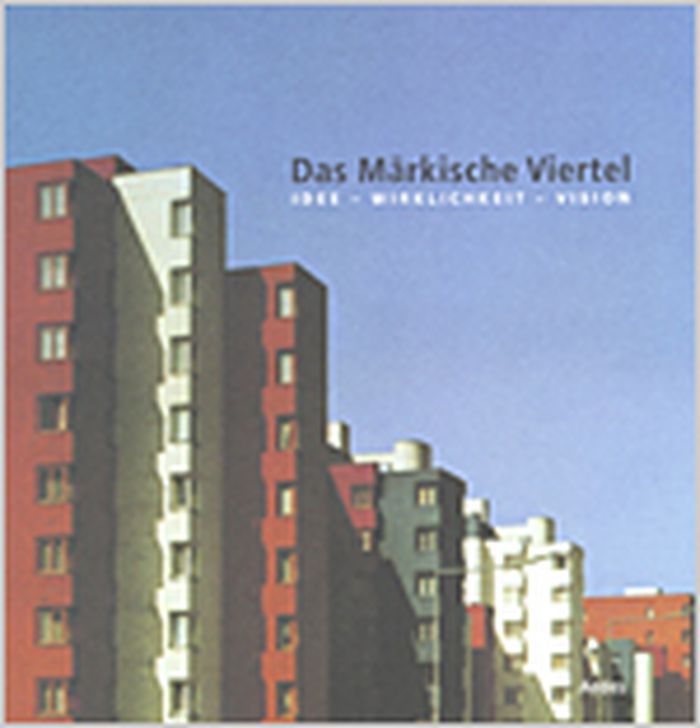
Actions:
Price:
$22.95
(available in store)
Summary:
Construction on the Märkische Viertel in northern Berlin began in 1963 under the supervision of a team of nationally and internationally recognized architects. In the ensuing decades, under the management of the housing association GESOBAU AG, the Viertel evolved from a district that generated controversy throughout the Federal Republic into an exemplary large-scale(...)
$22.95
(available in store)
Summary:
Construction on the Märkische Viertel in northern Berlin began in 1963 under the supervision of a team of nationally and internationally recognized architects. In the ensuing decades, under the management of the housing association GESOBAU AG, the Viertel evolved from a district that generated controversy throughout the Federal Republic into an exemplary large-scale(...)
Title:
Das Märkische Viertel : idee - wirklichkeit - vision
Actions:
Price:
$22.95
(available in store)
Summary:
Construction on the Märkische Viertel in northern Berlin began in 1963 under the supervision of a team of nationally and internationally recognized architects. In the ensuing decades, under the management of the housing association GESOBAU AG, the Viertel evolved from a district that generated controversy throughout the Federal Republic into an exemplary large-scale residential settlement. Architects Werner Düttmann, Hans Müller and Georg Heinrichs wanted to design a better world, with humane dwellings for both inner city residents displaced by redevelopment and evacuees from the east. The concept underlying their masterplan was to shape the landscape via architectural structures. They thought in large forms and proportions, designing a prototypical satellite town for northern Berlin that would contain 16,000 apartments for 40,000 residents, while doing justice to the varied requirements of occupants. Architects such as Oswald M. Ungers, Chen Kuen Lee, Ernst Gisel and René Gagès took part in the construction of this large-scale estate, which caused a furor simply by virtue of its immense scale, unusual for Western Europe. Already in 1964, just after the first residents moved in, the Märkische Viertel, nicknamed the "MV,” was deemed controversial. Some condemned it as a "concrete citadel launched from the drafting table,” a "stony nightmare,” or "the Parrot Estate,” while others celebrated it as a glowing example of a model large-scale settlement. Only recent years have seen an unprejudiced and discriminating appraisal of the project. The residents themselves have always seen their homes in a more positive light than outside observers. In 2003, a survey commissioned by the GESOBAU AG suggested they were perfectly comfortable in their neighborhood. And their children — and even children’s children — often remain in the district. What is the secret of the Maerkische Viertel? How was this once inhospitable bedroom community transformed into a coveted residential district, and how is the transition between generations to be accomplished? Can the Maerkische Viertel sustain itself under the altered economic situation affecting residential housing, or have drastic interventions into the existing architecture become a necessity?
Das Märkische Viertel : idee - wirklichkeit - vision
Actions:
Price:
$22.95
(available in store)
Summary:
Construction on the Märkische Viertel in northern Berlin began in 1963 under the supervision of a team of nationally and internationally recognized architects. In the ensuing decades, under the management of the housing association GESOBAU AG, the Viertel evolved from a district that generated controversy throughout the Federal Republic into an exemplary large-scale residential settlement. Architects Werner Düttmann, Hans Müller and Georg Heinrichs wanted to design a better world, with humane dwellings for both inner city residents displaced by redevelopment and evacuees from the east. The concept underlying their masterplan was to shape the landscape via architectural structures. They thought in large forms and proportions, designing a prototypical satellite town for northern Berlin that would contain 16,000 apartments for 40,000 residents, while doing justice to the varied requirements of occupants. Architects such as Oswald M. Ungers, Chen Kuen Lee, Ernst Gisel and René Gagès took part in the construction of this large-scale estate, which caused a furor simply by virtue of its immense scale, unusual for Western Europe. Already in 1964, just after the first residents moved in, the Märkische Viertel, nicknamed the "MV,” was deemed controversial. Some condemned it as a "concrete citadel launched from the drafting table,” a "stony nightmare,” or "the Parrot Estate,” while others celebrated it as a glowing example of a model large-scale settlement. Only recent years have seen an unprejudiced and discriminating appraisal of the project. The residents themselves have always seen their homes in a more positive light than outside observers. In 2003, a survey commissioned by the GESOBAU AG suggested they were perfectly comfortable in their neighborhood. And their children — and even children’s children — often remain in the district. What is the secret of the Maerkische Viertel? How was this once inhospitable bedroom community transformed into a coveted residential district, and how is the transition between generations to be accomplished? Can the Maerkische Viertel sustain itself under the altered economic situation affecting residential housing, or have drastic interventions into the existing architecture become a necessity?
Form:
books
books
Publication:
July 2004, Berlin
July 2004, Berlin
Subject:
small format
small format


