


364 Results
Form:
archives
archives
Actions:
Holdings:
Description:
approximately 2.1 linear meters of textual records, approximately 5,229 photographic materials (slides, photographs, negatives), approximately 403 drawings (including...
Description:
approximately 2.1 linear meters of textual records, approximately 5,229 photographic materials (slides, photographs, negatives), approximately 403 drawings (including...
Subject:
- March, Lionel, 1934-,
- University of Cambridge. Centre for Land Use and Built Form Studies.,
- How House (Los Angeles, Calif.),
- Architecture Study and teaching.,
- Architecture Étude et enseignement.,
- Whitehall (London, England),
- Whitehall (Londres, Angleterre),
- England London Whitehall,
- fonds (collections),
- photographic materials.,
- photographs.,
- slides (photographs),
- negatives (photographs),
- drawings (visual works),
- architectural drawings (visual works),
- reprographic copies.,
- project files.,
- documents (object genre),
- artifacts (object genre),
- video recordings (physical artifacts),
- VHS.,
- film reels.,
- architectural models.,
- books.,
- serials (publications),
- sketchbooks.,
- notebooks.,
- printed ephemera.,
- compact discs.,
- DVDs.,
- Architectural drawings,
- Drawings,
- Ephemera,
- Notebooks,
- Photographs,
- Serial publications,
- Sketchbooks,
- Video recordings,
- Photographies.,
- Dessins.,
- Dessins d'architecture.,
- Vidéos.,
- Publications en série.,
- Albums de croquis.,
- Cahiers.,
- Documents éphémères.
(See more)
Title:
Lionel March fonds, 1957-2017.
Actions:
Holdings:
Description:
approximately 2.1 linear meters of textual records, approximately 5,229 photographic materials (slides, photographs, negatives), approximately 403 drawings (including...
Lionel March fonds, 1957-2017.
Actions:
Holdings:
Description:
approximately 2.1 linear meters of textual records, approximately 5,229 photographic materials (slides, photographs, negatives), approximately 403 drawings (including...
Form:
archives
archives
Subject:
- March, Lionel, 1934-,
- University of Cambridge. Centre for Land Use and Built Form Studies.,
- How House (Los Angeles, Calif.),
- Architecture Study and teaching.,
- Architecture Étude et enseignement.,
- Whitehall (London, England),
- Whitehall (Londres, Angleterre),
- England London Whitehall,
- fonds (collections),
- photographic materials.,
- photographs.,
- slides (photographs),
- negatives (photographs),
- drawings (visual works),
- architectural drawings (visual works),
- reprographic copies.,
- project files.,
- documents (object genre),
- artifacts (object genre),
- video recordings (physical artifacts),
- VHS.,
- film reels.,
- architectural models.,
- books.,
- serials (publications),
- sketchbooks.,
- notebooks.,
- printed ephemera.,
- compact discs.,
- DVDs.,
- Architectural drawings,
- Drawings,
- Ephemera,
- Notebooks,
- Photographs,
- Serial publications,
- Sketchbooks,
- Video recordings,
- Photographies.,
- Dessins.,
- Dessins d'architecture.,
- Vidéos.,
- Publications en série.,
- Albums de croquis.,
- Cahiers.,
- Documents éphémères.
(See more)
Form:
audio
audio
Title:
Questions and Answers.
Questions and Answers.
Actions:
Description:
1 online resource.
Author:
Subject:
Publication:
[Place of publication not identified] : JPEG2000, 2022.
[Place of publication not identified] : JPEG2000, 2022.
Form:
audio
audio
Publication:
[Place of publication not identified] : JPEG2000, 2022.
[Place of publication not identified] : JPEG2000, 2022.
Form:
books
books
Actions:
Holdings:
Description:
207 pages : chiefly illustrations ; 25 cm
Description:
207 pages : chiefly illustrations ; 25 cm
Subject:
- Evans, Walker, 1903-1975 Porträtphotographie.,
- Evans, Walker 1903-1975,
- Evans, Walker.,
- Portrait photography New York (State) New York.,
- Subways New York (State) New York Pictorial works.,
- Portraits (Photography) New York (États) New York.,
- Métros new York (États) New York Ouvrages illustrés.,
- Portraits (Photographie) New York (État) New York.,
- Métros New York (État) New York Ouvrages illustrés.,
- Portrait photography,
- Subways,
- Porträtfotografie,
- Untergrundbahn,
- New York (State) New York,
- New York, NY,
- Bildband.,
- illustrated books.,
- Illustrated works,
- Ouvrages illustrés.
(See more)
Publication:
New Haven : Yale University Press ; New York : Metropolitan Museum of Art, 2004.
New Haven : Yale University Press ; New York : Metropolitan Museum of Art, 2004.
Title:
Many are called / Walker Evans ; introduction by James Agee ; foreword by Luc Sante ; afterword by Jeff L. Rosenheim.
Actions:
Holdings:
Description:
207 pages : chiefly illustrations ; 25 cm
Many are called / Walker Evans ; introduction by James Agee ; foreword by Luc Sante ; afterword by Jeff L. Rosenheim.
Actions:
Holdings:
Description:
207 pages : chiefly illustrations ; 25 cm
Form:
books
books
Publication:
New Haven : Yale University Press ; New York : Metropolitan Museum of Art, 2004.
New Haven : Yale University Press ; New York : Metropolitan Museum of Art, 2004.
Subject:
- Evans, Walker, 1903-1975 Porträtphotographie.,
- Evans, Walker 1903-1975,
- Evans, Walker.,
- Portrait photography New York (State) New York.,
- Subways New York (State) New York Pictorial works.,
- Portraits (Photography) New York (États) New York.,
- Métros new York (États) New York Ouvrages illustrés.,
- Portraits (Photographie) New York (État) New York.,
- Métros New York (État) New York Ouvrages illustrés.,
- Portrait photography,
- Subways,
- Porträtfotografie,
- Untergrundbahn,
- New York (State) New York,
- New York, NY,
- Bildband.,
- illustrated books.,
- Illustrated works,
- Ouvrages illustrés.
(See more)
Form:
journals and magazines
journals and magazines
Actions:
Price:
$44.95
(available in store)
Summary:
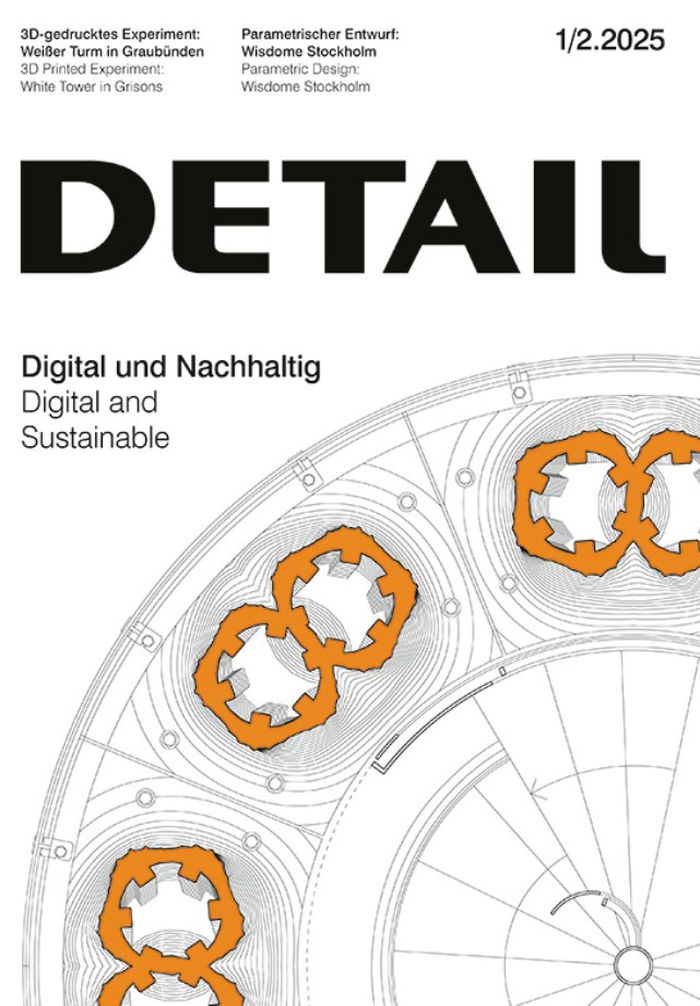
Walter Pichler foresaw the future nearly 60 years ago. His “TV-Helmet (Portable Living Room)” anticipated technologies akin to today’s cyber glasses. At the time, this vision was nothing short of revolutionary. Today, such concepts are not only a reality but have advanced significantly. Virtual and digital realities are now integral to designing, planning, and(...)
$44.95
(available in store)
Summary:
Walter Pichler foresaw the future nearly 60 years ago. His “TV-Helmet (Portable Living Room)” anticipated technologies akin to today’s cyber glasses. At the time, this vision was nothing short of revolutionary. Today, such concepts are not only a reality but have advanced significantly. Virtual and digital realities are now integral to designing, planning, and(...)
Title:
Detail 1/2 2025 : Digital and sustainable
Actions:
Price:
$44.95
(available in store)
Summary:
Walter Pichler foresaw the future nearly 60 years ago. His “TV-Helmet (Portable Living Room)” anticipated technologies akin to today’s cyber glasses. At the time, this vision was nothing short of revolutionary. Today, such concepts are not only a reality but have advanced significantly. Virtual and digital realities are now integral to designing, planning, and constructing spaces – far more than mere devices for experiencing them. Lengthy construction workflows, optimised designs, and the complex coordination of planning, cost control, and project management are increasingly digitalised. We can now program buildings to meet parametric specifications, construct homes using 3D printing, and create detailed 3D models of existing buildings to analyse them before renovation even begins. While landscape has transformed dramatically, digitalisation in architecture is clearly still in its early stages. To begin the year, this issue shines a spotlight on the digital present and future of architecture, exploring how digital tools can enhance sustainability. Our project documentations showcase an array of approaches, from digital material passports to parametric models and BIM applications for existing structures. Experts offer insight on the complexities of planning and construction processes.
Detail 1/2 2025 : Digital and sustainable
Actions:
Price:
$44.95
(available in store)
Summary:
Walter Pichler foresaw the future nearly 60 years ago. His “TV-Helmet (Portable Living Room)” anticipated technologies akin to today’s cyber glasses. At the time, this vision was nothing short of revolutionary. Today, such concepts are not only a reality but have advanced significantly. Virtual and digital realities are now integral to designing, planning, and constructing spaces – far more than mere devices for experiencing them. Lengthy construction workflows, optimised designs, and the complex coordination of planning, cost control, and project management are increasingly digitalised. We can now program buildings to meet parametric specifications, construct homes using 3D printing, and create detailed 3D models of existing buildings to analyse them before renovation even begins. While landscape has transformed dramatically, digitalisation in architecture is clearly still in its early stages. To begin the year, this issue shines a spotlight on the digital present and future of architecture, exploring how digital tools can enhance sustainability. Our project documentations showcase an array of approaches, from digital material passports to parametric models and BIM applications for existing structures. Experts offer insight on the complexities of planning and construction processes.
Form:
journals and magazines
journals and magazines
Publication:
January 2025
January 2025
Subject:
Magazines
Magazines
Form:
books
books
Actions:
Price:
$45.00
(available to order)
Summary:
As digital technology advances at breakneck speed, images are circulating quicker than ever before. But what is the status of the image in the digital era? In this publication, art historian Hubert Burda (born 1940) examines the "iconic turn" in ten themed chapters and conversations with leading cultural theorists. In the first chapter, "The View Through the Window,"(...)
$45.00
(available to order)
Summary:
As digital technology advances at breakneck speed, images are circulating quicker than ever before. But what is the status of the image in the digital era? In this publication, art historian Hubert Burda (born 1940) examines the "iconic turn" in ten themed chapters and conversations with leading cultural theorists. In the first chapter, "The View Through the Window,"(...)
Title:
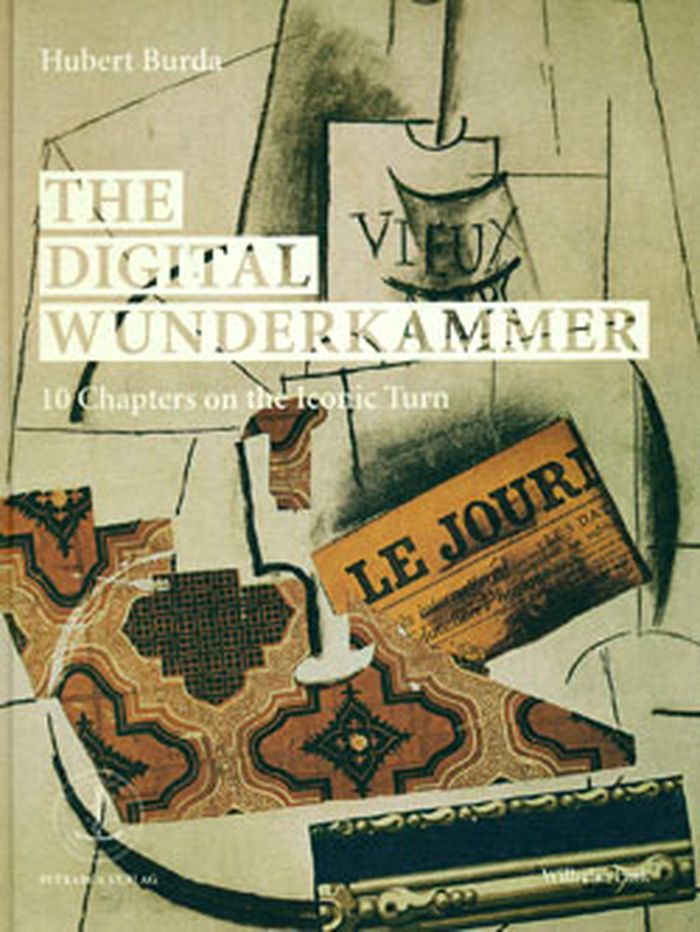
The digital wunderkammer : 10 chapters on the iconic turn
Actions:
Price:
$45.00
(available to order)
Summary:
As digital technology advances at breakneck speed, images are circulating quicker than ever before. But what is the status of the image in the digital era? In this publication, art historian Hubert Burda (born 1940) examines the "iconic turn" in ten themed chapters and conversations with leading cultural theorists. In the first chapter, "The View Through the Window," Burda traces the connection between perspectival painting and the television, demonstrating in the second chapter how the image requires a frame, which in turn requires a material vehicle - the topic of the third chapter - that in our era has become a non-material vehicle with its own formal parameters. In the fourth chapter, "The Mobile Image," Burda shows how images have always been linked to portability, but now migrate to an unprecedented degree, so that anyone with a personal device can globally disseminate, say, footage from a concert via Youtube. A discussion of the capacity of individual images to placate or ennervate leads to a seventh chapter on the appetite for the Sublime and the rhetoric and representation of power throughout art history. Following a discussion of the democratization of celebrity culture, Burda proposes that the Google search box is perhaps the most interesting "interface" of our times, analogous to the seventeenth-century cabinet of curiosities (or wunderkammer). Conversations with Friedrich Kittler, Peter Sloterdijk, Bazon Brock, Horst Bredekamp and Hans Belting further extend this imaginative debate on the "iconic turn."
The digital wunderkammer : 10 chapters on the iconic turn
Actions:
Price:
$45.00
(available to order)
Summary:
As digital technology advances at breakneck speed, images are circulating quicker than ever before. But what is the status of the image in the digital era? In this publication, art historian Hubert Burda (born 1940) examines the "iconic turn" in ten themed chapters and conversations with leading cultural theorists. In the first chapter, "The View Through the Window," Burda traces the connection between perspectival painting and the television, demonstrating in the second chapter how the image requires a frame, which in turn requires a material vehicle - the topic of the third chapter - that in our era has become a non-material vehicle with its own formal parameters. In the fourth chapter, "The Mobile Image," Burda shows how images have always been linked to portability, but now migrate to an unprecedented degree, so that anyone with a personal device can globally disseminate, say, footage from a concert via Youtube. A discussion of the capacity of individual images to placate or ennervate leads to a seventh chapter on the appetite for the Sublime and the rhetoric and representation of power throughout art history. Following a discussion of the democratization of celebrity culture, Burda proposes that the Google search box is perhaps the most interesting "interface" of our times, analogous to the seventeenth-century cabinet of curiosities (or wunderkammer). Conversations with Friedrich Kittler, Peter Sloterdijk, Bazon Brock, Horst Bredekamp and Hans Belting further extend this imaginative debate on the "iconic turn."
Form:
books
books
Publication:
August 2011
August 2011
Subject:
Epistemology
Epistemology
Form:
books
books
Actions:
Price:
$44.00
(available to order)
Summary:
Featuring work produced since 2000, "Graphic Design: Now in Production" explores the worlds of design-driven magazines, newspapers, books and posters; the entrepreneurial spirit of designer-produced goods; the renaissance in digital typeface design; the storytelling potential of film and television titling sequences; and the transformation of raw data into compelling(...)
$44.00
(available to order)
Summary:
Featuring work produced since 2000, "Graphic Design: Now in Production" explores the worlds of design-driven magazines, newspapers, books and posters; the entrepreneurial spirit of designer-produced goods; the renaissance in digital typeface design; the storytelling potential of film and television titling sequences; and the transformation of raw data into compelling(...)
Subject:
Graphic Design and Typography
Graphic Design and Typography
Publication:
November 2011
November 2011
Title:
Graphic design: now in production
Actions:
Price:
$44.00
(available to order)
Summary:
Featuring work produced since 2000, "Graphic Design: Now in Production" explores the worlds of design-driven magazines, newspapers, books and posters; the entrepreneurial spirit of designer-produced goods; the renaissance in digital typeface design; the storytelling potential of film and television titling sequences; and the transformation of raw data into compelling information narratives. The catalogue features important original essays by leading designers that tackle themes such as the changing roles of reading and writing within the context of new technologies and self-publishing; the nature of design labor and production, from blue-collar handcraft and making to white-collar design thinking and strategy; and the impact and influence design programs and schools have had on shaping the direction of contemporary graphic design.
Graphic design: now in production
Actions:
Price:
$44.00
(available to order)
Summary:
Featuring work produced since 2000, "Graphic Design: Now in Production" explores the worlds of design-driven magazines, newspapers, books and posters; the entrepreneurial spirit of designer-produced goods; the renaissance in digital typeface design; the storytelling potential of film and television titling sequences; and the transformation of raw data into compelling information narratives. The catalogue features important original essays by leading designers that tackle themes such as the changing roles of reading and writing within the context of new technologies and self-publishing; the nature of design labor and production, from blue-collar handcraft and making to white-collar design thinking and strategy; and the impact and influence design programs and schools have had on shaping the direction of contemporary graphic design.
Form:
books
books
Publication:
November 2011
November 2011
Subject:
Graphic Design and Typography
Graphic Design and Typography
Form:
books
books
Actions:
Price:
$104.00
(available to order)
Summary:
At last architects have discovered the free form shape – multiple curved surfaces, which do not exist in Cartesian geometry. What has long been usual in product design is now being adopted in architecture, these shapes are being generated by special software, and then they are subsequently built. Some young and innovative architectural firms have seized the(...)
$104.00
(available to order)
Summary:
At last architects have discovered the free form shape – multiple curved surfaces, which do not exist in Cartesian geometry. What has long been usual in product design is now being adopted in architecture, these shapes are being generated by special software, and then they are subsequently built. Some young and innovative architectural firms have seized the(...)
Subject:
Architecture since 1900, Europe
Architecture since 1900, Europe
Publication:
August 2001, Basel
August 2001, Basel
Title:
digital / real – blobmeister, first built projects
Actions:
Price:
$104.00
(available to order)
Summary:
At last architects have discovered the free form shape – multiple curved surfaces, which do not exist in Cartesian geometry. What has long been usual in product design is now being adopted in architecture, these shapes are being generated by special software, and then they are subsequently built. Some young and innovative architectural firms have seized the opportunity to expand the boundaries of architectural space, showing a willingness to experiment with the new technology, and these young architects, or "blobmeister" as Wes Jones rather negatively called them, are now moving on to built examples. In this book, 11 examples from Europe, the USA and Japan are presented, showing that far from being out of touch with reality, cyber-architects do transform their dreams into actual buildings, thus concluding the endless alternatives and possibilities implicit in every design. For it is only built architecture which shows true mastery. This volume extensively documents the complex design process, from the digital conception of the designs, the creation of models, to the final photographs of the building sites and the finished structures. Thematic essays give the reader an insight into the history of the digital scene, assessing its influence on architectural culture to date and evaluating its future potential. The accompanying CD-ROM shows dynamic animations.
digital / real – blobmeister, first built projects
Actions:
Price:
$104.00
(available to order)
Summary:
At last architects have discovered the free form shape – multiple curved surfaces, which do not exist in Cartesian geometry. What has long been usual in product design is now being adopted in architecture, these shapes are being generated by special software, and then they are subsequently built. Some young and innovative architectural firms have seized the opportunity to expand the boundaries of architectural space, showing a willingness to experiment with the new technology, and these young architects, or "blobmeister" as Wes Jones rather negatively called them, are now moving on to built examples. In this book, 11 examples from Europe, the USA and Japan are presented, showing that far from being out of touch with reality, cyber-architects do transform their dreams into actual buildings, thus concluding the endless alternatives and possibilities implicit in every design. For it is only built architecture which shows true mastery. This volume extensively documents the complex design process, from the digital conception of the designs, the creation of models, to the final photographs of the building sites and the finished structures. Thematic essays give the reader an insight into the history of the digital scene, assessing its influence on architectural culture to date and evaluating its future potential. The accompanying CD-ROM shows dynamic animations.
Form:
books
books
Publication:
August 2001, Basel
August 2001, Basel
Subject:
Architecture since 1900, Europe
Architecture since 1900, Europe
Form:
books
books
Actions:
Price:
$49.50
(available to order)
Summary:
"Digital Ground" is an architect's response to the design challenge posed by pervasive computing. One century into the electronic age, people have become accustomed to interacting indirectly, mediated through networks. But now as digital technology becomes invisibly embedded in everyday things, even more activities become mediated, and networks extend rather than replace(...)
$49.50
(available to order)
Summary:
"Digital Ground" is an architect's response to the design challenge posed by pervasive computing. One century into the electronic age, people have become accustomed to interacting indirectly, mediated through networks. But now as digital technology becomes invisibly embedded in everyday things, even more activities become mediated, and networks extend rather than replace(...)
Title:
Digital ground : architecture, pervasive computing, and environmental knowing
Actions:
Price:
$49.50
(available to order)
Summary:
"Digital Ground" is an architect's response to the design challenge posed by pervasive computing. One century into the electronic age, people have become accustomed to interacting indirectly, mediated through networks. But now as digital technology becomes invisibly embedded in everyday things, even more activities become mediated, and networks extend rather than replace architecture. The young field of interaction design reflects not only how people deal with machine interfaces but also how people deal with each other in situations where interactivity has become ambient. It shifts previously utilitarian digital design concerns to a cultural level, adding notions of premise, appropriateness, and appreciation. Malcolm McCullough offers an account of the intersections of architecture and interaction design, arguing that the ubiquitous technology does not obviate the human need for place. His concept of "digital ground" expresses an alternative to anytime-anyplace sameness in computing; he shows that context not only shapes usability but ideally becomes the subject matter of interaction design and that "environmental knowing" is a process that technology may serve and not erode.
Digital ground : architecture, pervasive computing, and environmental knowing
Actions:
Price:
$49.50
(available to order)
Summary:
"Digital Ground" is an architect's response to the design challenge posed by pervasive computing. One century into the electronic age, people have become accustomed to interacting indirectly, mediated through networks. But now as digital technology becomes invisibly embedded in everyday things, even more activities become mediated, and networks extend rather than replace architecture. The young field of interaction design reflects not only how people deal with machine interfaces but also how people deal with each other in situations where interactivity has become ambient. It shifts previously utilitarian digital design concerns to a cultural level, adding notions of premise, appropriateness, and appreciation. Malcolm McCullough offers an account of the intersections of architecture and interaction design, arguing that the ubiquitous technology does not obviate the human need for place. His concept of "digital ground" expresses an alternative to anytime-anyplace sameness in computing; he shows that context not only shapes usability but ideally becomes the subject matter of interaction design and that "environmental knowing" is a process that technology may serve and not erode.
Form:
books
books
Publication:
April 2004, Cambridge, Mass.
April 2004, Cambridge, Mass.
Subject:
Architectural Theory
Architectural Theory
Form:
books
books
Actions:
Form:
books
books
Publication:
Information as Material Leeds Beckett University 2020
Information as Material Leeds Beckett University 2020
Form:
journals and magazines
journals and magazines
Actions:
Price:
$34.95
(available in store)
Summary:
The latest issue is now available at the bookstore.
$34.95
(available in store)
Summary:
The latest issue is now available at the bookstore.
Title:
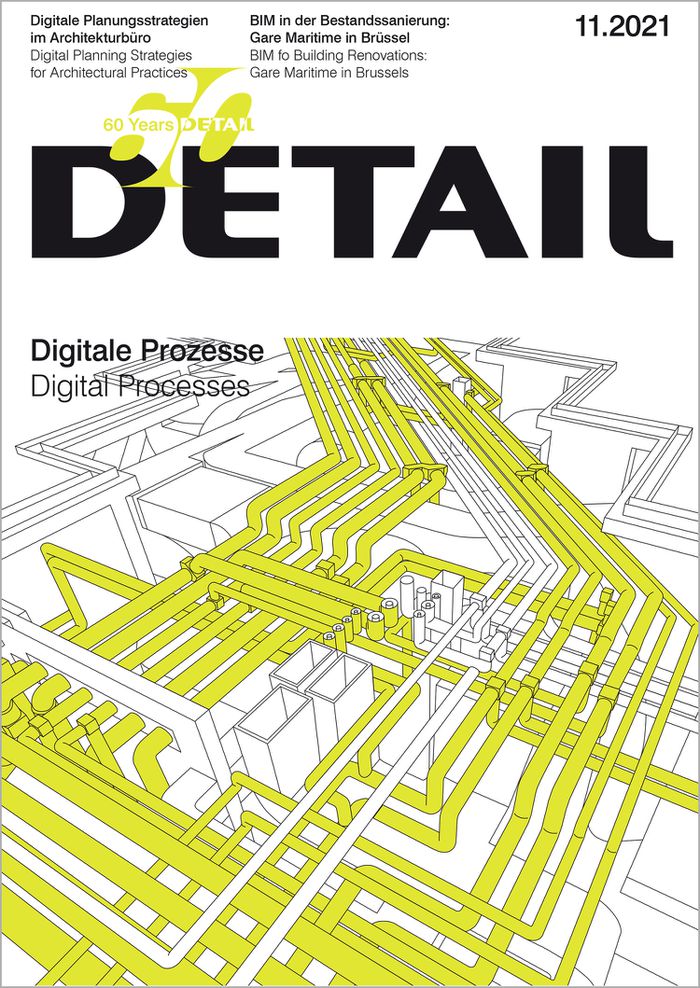
Detail 11 2021 : digital processes
Actions:
Price:
$34.95
(available in store)
Summary:
The latest issue is now available at the bookstore.
Detail 11 2021 : digital processes
Actions:
Price:
$34.95
(available in store)
Summary:
The latest issue is now available at the bookstore.
Form:
journals and magazines
journals and magazines
Publication:
November 2021
November 2021
Subject:
Magazines
Magazines


