


2891 Results
Form:
books
books
Price:
$6.95
(available to order)
Summary:
This small but comprehensive book documents the rich cultural past of vernacular building styles, from Irish sod houses to sub-Saharan wattle-and-daub huts and redwoods treehouses. It offers inspiration for home woodworking enthusiasts as well as architects, conservationists, and anyone interested in energy-efficient building and sustainability. The variety and ingenuity(...)
$6.95
(available to order)
Summary:
This small but comprehensive book documents the rich cultural past of vernacular building styles, from Irish sod houses to sub-Saharan wattle-and-daub huts and redwoods treehouses. It offers inspiration for home woodworking enthusiasts as well as architects, conservationists, and anyone interested in energy-efficient building and sustainability. The variety and ingenuity(...)
Title:
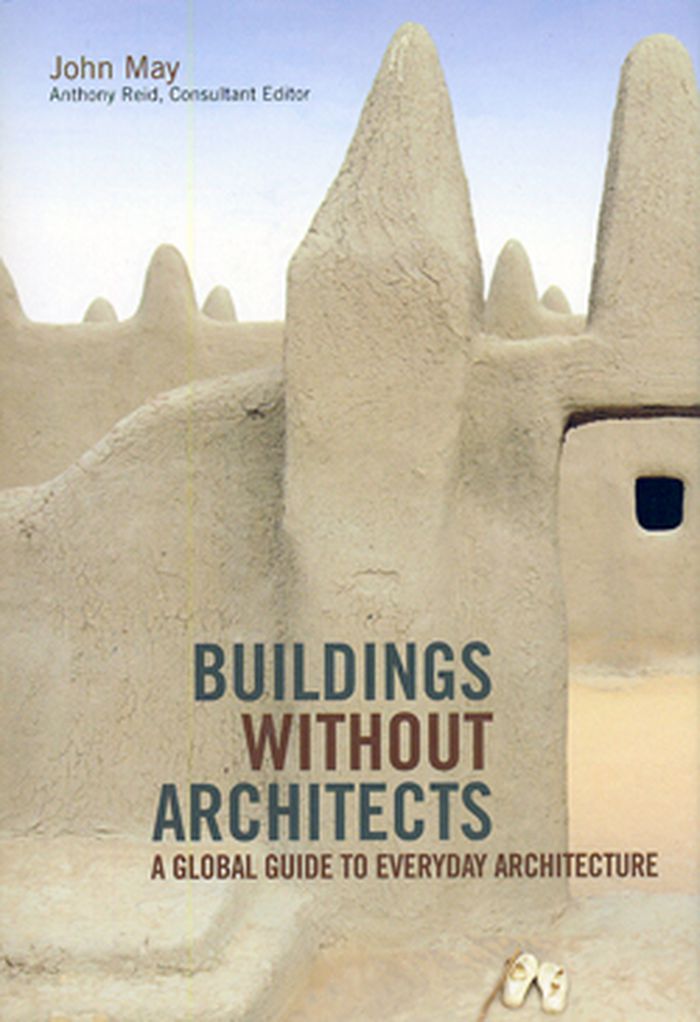
Buildings without architects: a global guide to everyday architecture
Actions:
Price:
$6.95
(available to order)
Summary:
This small but comprehensive book documents the rich cultural past of vernacular building styles, from Irish sod houses to sub-Saharan wattle-and-daub huts and redwoods treehouses. It offers inspiration for home woodworking enthusiasts as well as architects, conservationists, and anyone interested in energy-efficient building and sustainability. The variety and ingenuity of the world’s vernacular building traditions are illustrated, and the materials and techniques are explored. With examples from every continent, the book documents the diverse methods people have used to create shelter from locally available natural materials, and shows the impressively handmade finished products through diagrams, cross-sections, and photographs. Unlike modern buildings that rely on industrially produced materials and specialized tools and techniques, the everyday architecture featured here represents a rapidly disappearing genre of handcrafted and beautifully composed structures that are irretrievably "of their place." These structures are the work of unsung and often anonymous builders that combine artistic beauty, practical form, and necessity.
Buildings without architects: a global guide to everyday architecture
Actions:
Price:
$6.95
(available to order)
Summary:
This small but comprehensive book documents the rich cultural past of vernacular building styles, from Irish sod houses to sub-Saharan wattle-and-daub huts and redwoods treehouses. It offers inspiration for home woodworking enthusiasts as well as architects, conservationists, and anyone interested in energy-efficient building and sustainability. The variety and ingenuity of the world’s vernacular building traditions are illustrated, and the materials and techniques are explored. With examples from every continent, the book documents the diverse methods people have used to create shelter from locally available natural materials, and shows the impressively handmade finished products through diagrams, cross-sections, and photographs. Unlike modern buildings that rely on industrially produced materials and specialized tools and techniques, the everyday architecture featured here represents a rapidly disappearing genre of handcrafted and beautifully composed structures that are irretrievably "of their place." These structures are the work of unsung and often anonymous builders that combine artistic beauty, practical form, and necessity.
Form:
books
books
Publication:
May 2010
May 2010
Form:
books
books
Actions:
Price:
$42.95
(available to order)
Summary:
One of the essential effects of sustainability, not only in architecture, is the consideration to the objects' life span. From the moment when a building is required to be highly efficient, it used to be an unknown dimension for architecture; the service life. However, for various reasons currently this new dimension became a part of the project variables: the buildings(...)
$42.95
(available to order)
Summary:
One of the essential effects of sustainability, not only in architecture, is the consideration to the objects' life span. From the moment when a building is required to be highly efficient, it used to be an unknown dimension for architecture; the service life. However, for various reasons currently this new dimension became a part of the project variables: the buildings(...)
Title:
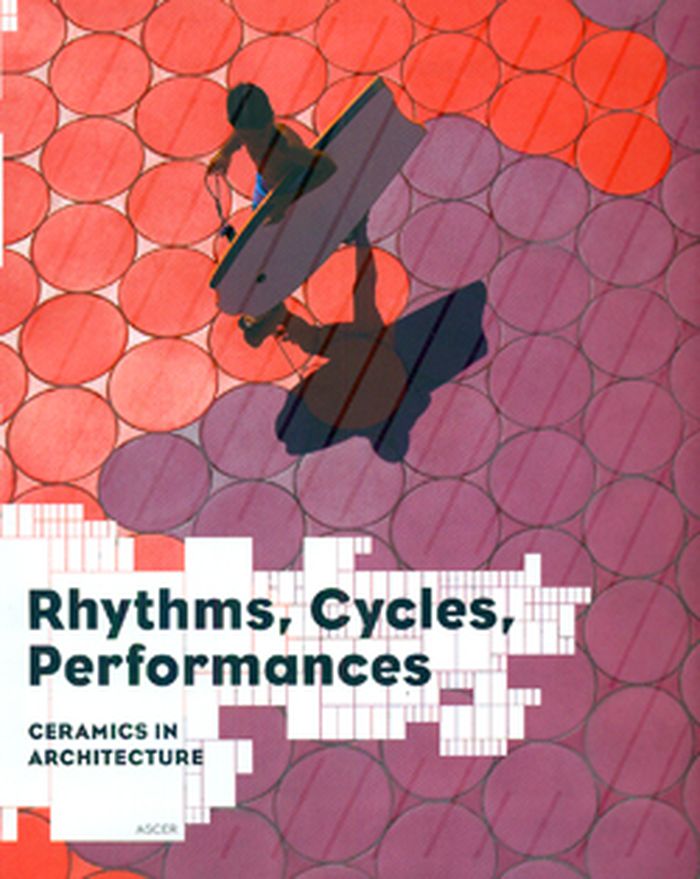
Rhythms, cycles, performances: ceramics in architecture
Actions:
Price:
$42.95
(available to order)
Summary:
One of the essential effects of sustainability, not only in architecture, is the consideration to the objects' life span. From the moment when a building is required to be highly efficient, it used to be an unknown dimension for architecture; the service life. However, for various reasons currently this new dimension became a part of the project variables: the buildings and their components actually live, with their own biorhythm. The progress has not only seen one direction but it's a cocktail of solutions, in which from the most progressive sorts to the most traditional ones are blended. Ceramics symbolize this historical blend embracing unlimited possible futures in one material. Ceramics represent the millennial past of the inert material. On the other hand their soft nature, hardened by subsequent processes, allows any possibility to the form and technology. That makes ceramics as competitive as any other constructive material by their durability and low maintenance.
Rhythms, cycles, performances: ceramics in architecture
Actions:
Price:
$42.95
(available to order)
Summary:
One of the essential effects of sustainability, not only in architecture, is the consideration to the objects' life span. From the moment when a building is required to be highly efficient, it used to be an unknown dimension for architecture; the service life. However, for various reasons currently this new dimension became a part of the project variables: the buildings and their components actually live, with their own biorhythm. The progress has not only seen one direction but it's a cocktail of solutions, in which from the most progressive sorts to the most traditional ones are blended. Ceramics symbolize this historical blend embracing unlimited possible futures in one material. Ceramics represent the millennial past of the inert material. On the other hand their soft nature, hardened by subsequent processes, allows any possibility to the form and technology. That makes ceramics as competitive as any other constructive material by their durability and low maintenance.
Form:
books
books
Publication:
July 2010
July 2010
Subject:
Materials and Lighting
Materials and Lighting
Form:
books
books
Actions:
Price:
$39.95
(available to order)
Summary:
Architectural Papers series is edited by the Josep Lluís Mateo Chair at the ETH Zurich since 2005. Covering the wide range of topics related to teaching and architectural culture in general, it is aimed at expanding the narrow boundaries of the discipline. Its fifth issue concentrates around the new conditions for architectural practice and around the new epistemologies(...)
$39.95
(available to order)
Summary:
Architectural Papers series is edited by the Josep Lluís Mateo Chair at the ETH Zurich since 2005. Covering the wide range of topics related to teaching and architectural culture in general, it is aimed at expanding the narrow boundaries of the discipline. Its fifth issue concentrates around the new conditions for architectural practice and around the new epistemologies(...)
Title:
After crisis : contemporary architectural conditions, Architectural papers V, ETH Zürich
Actions:
Price:
$39.95
(available to order)
Summary:
Architectural Papers series is edited by the Josep Lluís Mateo Chair at the ETH Zurich since 2005. Covering the wide range of topics related to teaching and architectural culture in general, it is aimed at expanding the narrow boundaries of the discipline. Its fifth issue concentrates around the new conditions for architectural practice and around the new epistemologies that may inform it in the next future. That is, in the period after the financial bubble has collapsed and living and working conditions have significantly changed. Essays, studies and interviews, along with a selection of indicative projects, tackle the actual issues of growth and shrinking, economy and ideology, craftsmanship and social space in the city, materiality and sustainability in architecture. In a logical sequence, they depict the current reality of architecture. With contributions by Iñaki Ábalos, Solano Benitez, Alexander Brodsky, Isabel Concheiro, Frederick Cooper Llosa, Hans Ibelings, Krunoslav Ivanisin, Julio Martinez Calzon, Josep Lluís Mateo, Richard Sennett, Wang Shu and Ramias Steinemann.
After crisis : contemporary architectural conditions, Architectural papers V, ETH Zürich
Actions:
Price:
$39.95
(available to order)
Summary:
Architectural Papers series is edited by the Josep Lluís Mateo Chair at the ETH Zurich since 2005. Covering the wide range of topics related to teaching and architectural culture in general, it is aimed at expanding the narrow boundaries of the discipline. Its fifth issue concentrates around the new conditions for architectural practice and around the new epistemologies that may inform it in the next future. That is, in the period after the financial bubble has collapsed and living and working conditions have significantly changed. Essays, studies and interviews, along with a selection of indicative projects, tackle the actual issues of growth and shrinking, economy and ideology, craftsmanship and social space in the city, materiality and sustainability in architecture. In a logical sequence, they depict the current reality of architecture. With contributions by Iñaki Ábalos, Solano Benitez, Alexander Brodsky, Isabel Concheiro, Frederick Cooper Llosa, Hans Ibelings, Krunoslav Ivanisin, Julio Martinez Calzon, Josep Lluís Mateo, Richard Sennett, Wang Shu and Ramias Steinemann.
Form:
books
books
Publication:
October 2010
October 2010
Subject:
Contemporary Architecture
Contemporary Architecture
Form:
books
books
Actions:
Price:
$29.95
(available to order)
Summary:
From a youth spent in different cities of the world, to his beginnings as an architect in Toronto, the author has long recognized that cities at their best provide much of what we seek in a place to call home. Community, places of culture and business that we can walk to, mass transit and a wealth of amenities that couldn't be supported without a city's density: the(...)
$29.95
(available to order)
Summary:
From a youth spent in different cities of the world, to his beginnings as an architect in Toronto, the author has long recognized that cities at their best provide much of what we seek in a place to call home. Community, places of culture and business that we can walk to, mass transit and a wealth of amenities that couldn't be supported without a city's density: the(...)
Title:
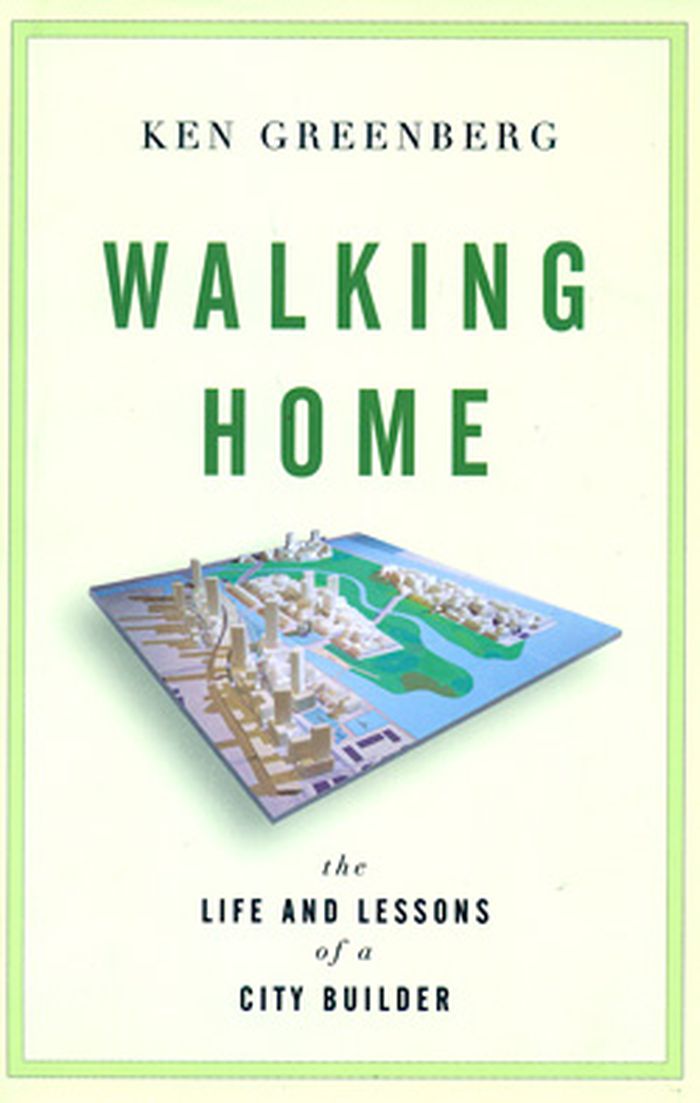
Walking home: the life and lessons of a city builder
Actions:
Price:
$29.95
(available to order)
Summary:
From a youth spent in different cities of the world, to his beginnings as an architect in Toronto, the author has long recognized that cities at their best provide much of what we seek in a place to call home. Community, places of culture and business that we can walk to, mass transit and a wealth of amenities that couldn't be supported without a city's density: the mid-century drive to suburbanization deprived us of these inherent advantages of urban living. The realization of this loss, in tandem with pressing recent concerns about energy scarcity and global warming, has made us see cities with fresh eyes and a growing understanding that they can provide us with an unparalleled measure of sustainability. This publication explains how turning the world's urban spaces back into places that can give us not only a platform to face the challenges of the future, but also a place we can call, with pride and satisfaction, home.
Walking home: the life and lessons of a city builder
Actions:
Price:
$29.95
(available to order)
Summary:
From a youth spent in different cities of the world, to his beginnings as an architect in Toronto, the author has long recognized that cities at their best provide much of what we seek in a place to call home. Community, places of culture and business that we can walk to, mass transit and a wealth of amenities that couldn't be supported without a city's density: the mid-century drive to suburbanization deprived us of these inherent advantages of urban living. The realization of this loss, in tandem with pressing recent concerns about energy scarcity and global warming, has made us see cities with fresh eyes and a growing understanding that they can provide us with an unparalleled measure of sustainability. This publication explains how turning the world's urban spaces back into places that can give us not only a platform to face the challenges of the future, but also a place we can call, with pride and satisfaction, home.
Form:
books
books
Publication:
May 2011
May 2011
Subject:
Urban Theory
Urban Theory
Form:
books
books
Title:
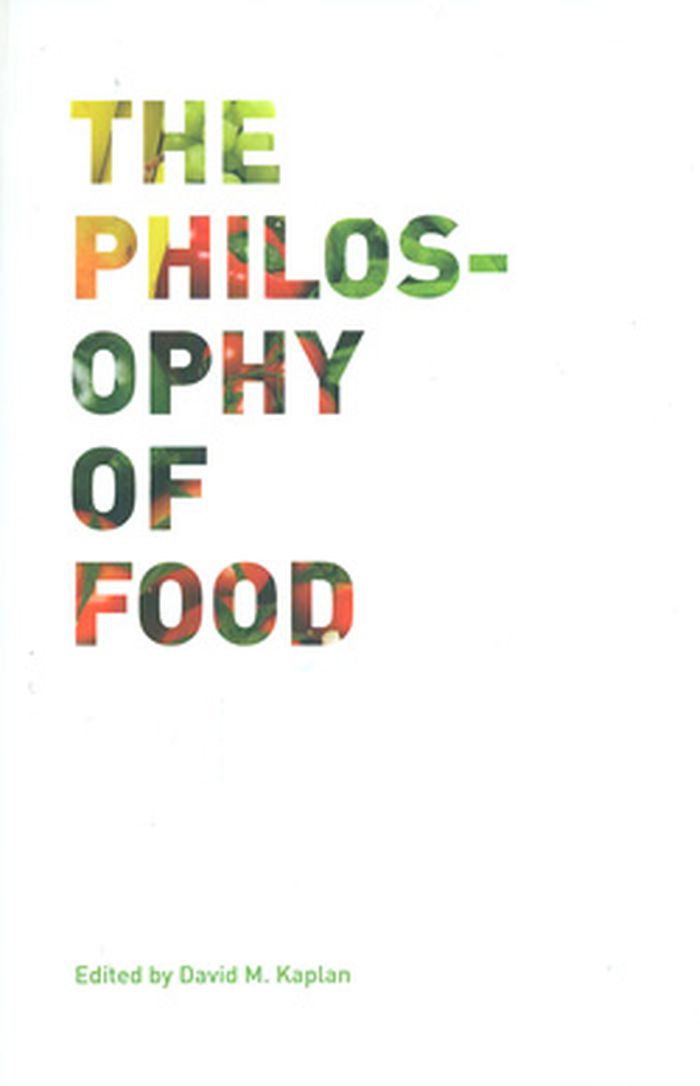
The philosophy of food
The philosophy of food
Actions:
Price:
$37.95
(available to order)
Summary:
This book explores food from a philosophical perspective, bringing together sixteen leading philosophers to consider the most basic questions about food: What is it exactly? What should we eat? How do we know it is safe? How should food be distributed? What is good food? David M. Kaplan's erudite and informative introduction grounds the discussion, showing how(...)
$37.95
(available to order)
Summary:
This book explores food from a philosophical perspective, bringing together sixteen leading philosophers to consider the most basic questions about food: What is it exactly? What should we eat? How do we know it is safe? How should food be distributed? What is good food? David M. Kaplan's erudite and informative introduction grounds the discussion, showing how(...)
Title:
The philosophy of food
Actions:
Price:
$37.95
(available to order)
Summary:
This book explores food from a philosophical perspective, bringing together sixteen leading philosophers to consider the most basic questions about food: What is it exactly? What should we eat? How do we know it is safe? How should food be distributed? What is good food? David M. Kaplan's erudite and informative introduction grounds the discussion, showing how philosophers since Plato have taken up questions about food, diet, agriculture, and animals. However, until recently, few have considered food a standard subject for serious philosophical debate. Each of the essays in this book brings in-depth analysis to many contemporary debates in food studies--Slow Food, sustainability, food safety, and politics--and addresses such issues as "happy meat," aquaculture, veganism, and table manners. The result is a resource that guides readers to think more clearly and responsibly about what we consume and how we provide for ourselves, and illuminates the reasons why we act as we do.
The philosophy of food
Actions:
Price:
$37.95
(available to order)
Summary:
This book explores food from a philosophical perspective, bringing together sixteen leading philosophers to consider the most basic questions about food: What is it exactly? What should we eat? How do we know it is safe? How should food be distributed? What is good food? David M. Kaplan's erudite and informative introduction grounds the discussion, showing how philosophers since Plato have taken up questions about food, diet, agriculture, and animals. However, until recently, few have considered food a standard subject for serious philosophical debate. Each of the essays in this book brings in-depth analysis to many contemporary debates in food studies--Slow Food, sustainability, food safety, and politics--and addresses such issues as "happy meat," aquaculture, veganism, and table manners. The result is a resource that guides readers to think more clearly and responsibly about what we consume and how we provide for ourselves, and illuminates the reasons why we act as we do.
Form:
books
books
Publication:
March 2012
March 2012
Subject:
Food
Food
Form:
books
books
Actions:
Price:
$178.50
(available to order)
Summary:
Today, contemporary landscape design is increasingly drawing from ideas of sustainability and ecological stability. Not in fact new, the foundations of this approach stem from early twentieth century Germany, where architects and planners were already beginning to use the design concepts which are now referred to as "green." This ecological school of thought was(...)
$178.50
(available to order)
Summary:
Today, contemporary landscape design is increasingly drawing from ideas of sustainability and ecological stability. Not in fact new, the foundations of this approach stem from early twentieth century Germany, where architects and planners were already beginning to use the design concepts which are now referred to as "green." This ecological school of thought was(...)
Title:
When modern was green : life and work of landscape architect Leberecht Migge
Actions:
Price:
$178.50
(available to order)
Summary:
Today, contemporary landscape design is increasingly drawing from ideas of sustainability and ecological stability. Not in fact new, the foundations of this approach stem from early twentieth century Germany, where architects and planners were already beginning to use the design concepts which are now referred to as "green." This ecological school of thought was driven by modernist landscape architect Leberecht Migge (1881-1935). Working with significant modernist architects of the age including Martin Elsaesser, Ernst May, Bruno Taut, and Martin Wagner Migge was responsible for some of the most important housing and planning projects of the age; the mass housing settlements, or Gro siedlungen, of Frankfurt Main and Berlin. Using "biotechnic" principles to integrally link dwelling and garden, Migge was able to recycle household waste to grow foodstuffs through the use of innovative infrastructure and open space planning. Also a skilled park and garden designer, he drew together green and architectural elements in his "garden-architectonic" approach.
When modern was green : life and work of landscape architect Leberecht Migge
Actions:
Price:
$178.50
(available to order)
Summary:
Today, contemporary landscape design is increasingly drawing from ideas of sustainability and ecological stability. Not in fact new, the foundations of this approach stem from early twentieth century Germany, where architects and planners were already beginning to use the design concepts which are now referred to as "green." This ecological school of thought was driven by modernist landscape architect Leberecht Migge (1881-1935). Working with significant modernist architects of the age including Martin Elsaesser, Ernst May, Bruno Taut, and Martin Wagner Migge was responsible for some of the most important housing and planning projects of the age; the mass housing settlements, or Gro siedlungen, of Frankfurt Main and Berlin. Using "biotechnic" principles to integrally link dwelling and garden, Migge was able to recycle household waste to grow foodstuffs through the use of innovative infrastructure and open space planning. Also a skilled park and garden designer, he drew together green and architectural elements in his "garden-architectonic" approach.
Form:
books
books
Publication:
April 2012
April 2012
Subject:
Architecture Monographs
Architecture Monographs
Form:
books
books
Title:
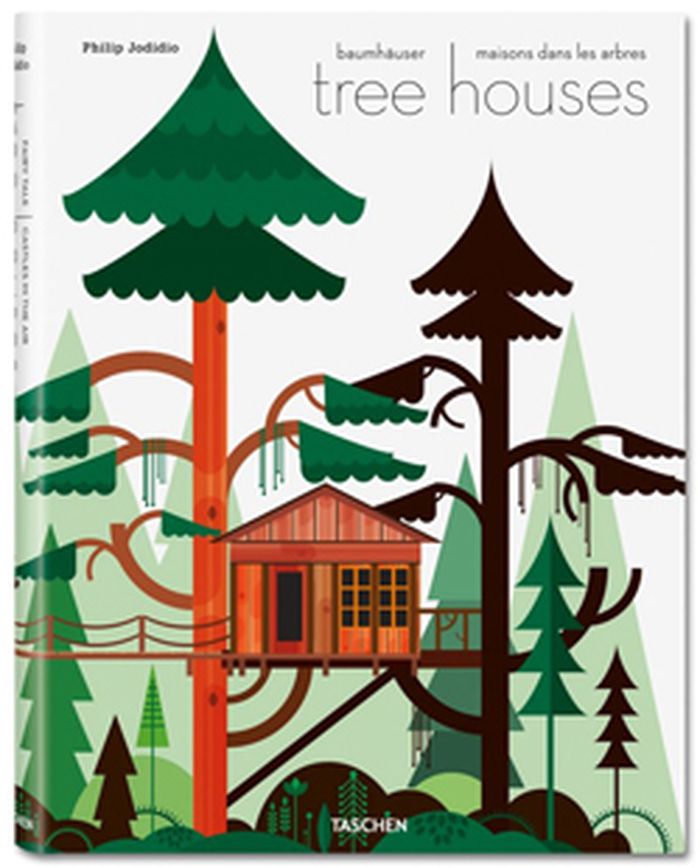
Tree houses
Tree houses
Actions:
Price:
$74.95
(available to order)
Summary:
Childhood fantasy meets grown-up savoir faire The idea of climbing a tree for shelter, or just to see the earth from another perspective, is surely as old as humanity. Tree houses are chronicled in ancient civilizations and their lore crosses through the history of every part of the world where trees grow. This illustrated study offers a tour of the best tree houses in(...)
$74.95
(available to order)
Summary:
Childhood fantasy meets grown-up savoir faire The idea of climbing a tree for shelter, or just to see the earth from another perspective, is surely as old as humanity. Tree houses are chronicled in ancient civilizations and their lore crosses through the history of every part of the world where trees grow. This illustrated study offers a tour of the best tree houses in(...)
Title:
Tree houses
Actions:
Price:
$74.95
(available to order)
Summary:
Childhood fantasy meets grown-up savoir faire The idea of climbing a tree for shelter, or just to see the earth from another perspective, is surely as old as humanity. Tree houses are chronicled in ancient civilizations and their lore crosses through the history of every part of the world where trees grow. This illustrated study offers a tour of the best tree houses in the world, some designed by architects, others the work of unknown craftsmen. A teahouse, a restaurant, a hotel, a playhouse for children, or a perch from which to contemplate life—the tree house can take as many forms as the imagination can offer. In times of concern for sustainability and ecological responsibility, the tree house may also be the ultimate symbol of life in symbiosis with nature. Whether rustic or contemporary in style, tree houses make the most of space. Climb into this trove of tree houses and enjoy a new perspective on the world.
Tree houses
Actions:
Price:
$74.95
(available to order)
Summary:
Childhood fantasy meets grown-up savoir faire The idea of climbing a tree for shelter, or just to see the earth from another perspective, is surely as old as humanity. Tree houses are chronicled in ancient civilizations and their lore crosses through the history of every part of the world where trees grow. This illustrated study offers a tour of the best tree houses in the world, some designed by architects, others the work of unknown craftsmen. A teahouse, a restaurant, a hotel, a playhouse for children, or a perch from which to contemplate life—the tree house can take as many forms as the imagination can offer. In times of concern for sustainability and ecological responsibility, the tree house may also be the ultimate symbol of life in symbiosis with nature. Whether rustic or contemporary in style, tree houses make the most of space. Climb into this trove of tree houses and enjoy a new perspective on the world.
Form:
books
books
Publication:
October 2012
October 2012
Subject:
Timber Construction
Timber Construction
Form:
books
books

Actions:
Price:
$60.00
(available to order)
Summary:
Does going green change the face of design or only its content? The Shape of Green argues that beauty is inherent to sustainability, for how things look and feel is as important as how they’re made. In addition to examining what makes something attractive or emotionally pleasing, Hosey connects these questions with practical design challenges. Can the shape of a car(...)
$60.00
(available to order)
Summary:
Does going green change the face of design or only its content? The Shape of Green argues that beauty is inherent to sustainability, for how things look and feel is as important as how they’re made. In addition to examining what makes something attractive or emotionally pleasing, Hosey connects these questions with practical design challenges. Can the shape of a car(...)
Title:
The shape of green : aesthetics, ecology, and design
Actions:
Price:
$60.00
(available to order)
Summary:
Does going green change the face of design or only its content? The Shape of Green argues that beauty is inherent to sustainability, for how things look and feel is as important as how they’re made. In addition to examining what makes something attractive or emotionally pleasing, Hosey connects these questions with practical design challenges. Can the shape of a car make it more aerodynamic and more attractive at the same time? Could buildings be constructed of porous materials that simultaneously clean the air and soothe the skin? Can cities become verdant, productive landscapes instead of wastelands of concrete? Drawing from a wealth of scientific research, Hosey demonstrates that form and image can enhance conservation, comfort, and community at every scale of design, from products to buildings to cities. Fully embracing the principles of ecology could revolutionize every aspect of design, in substance and in style. Aesthetic attraction isn’t a superficial concern — it’s an environmental imperative. Beauty could save the planet.
The shape of green : aesthetics, ecology, and design
Actions:
Price:
$60.00
(available to order)
Summary:
Does going green change the face of design or only its content? The Shape of Green argues that beauty is inherent to sustainability, for how things look and feel is as important as how they’re made. In addition to examining what makes something attractive or emotionally pleasing, Hosey connects these questions with practical design challenges. Can the shape of a car make it more aerodynamic and more attractive at the same time? Could buildings be constructed of porous materials that simultaneously clean the air and soothe the skin? Can cities become verdant, productive landscapes instead of wastelands of concrete? Drawing from a wealth of scientific research, Hosey demonstrates that form and image can enhance conservation, comfort, and community at every scale of design, from products to buildings to cities. Fully embracing the principles of ecology could revolutionize every aspect of design, in substance and in style. Aesthetic attraction isn’t a superficial concern — it’s an environmental imperative. Beauty could save the planet.
Form:
books
books
Publication:
July 2012
July 2012
Subject:
Green Architecture
Green Architecture
Form:
books
books
Actions:
Holdings:
Description:
xi, 303 pages : illustrations ; 25 cm
Description:
xi, 303 pages : illustrations ; 25 cm
Author:
Subject:
Publication:
London ; New York : Routledge, 2007.
London ; New York : Routledge, 2007.
Title:
Loose space : possibility and diversity in urban life / edited by Karen A. Franck and Quentin Stevens.
Actions:
Holdings:
Description:
xi, 303 pages : illustrations ; 25 cm
Loose space : possibility and diversity in urban life / edited by Karen A. Franck and Quentin Stevens.
Actions:
Holdings:
Description:
xi, 303 pages : illustrations ; 25 cm
Form:
books
books
Publication:
London ; New York : Routledge, 2007.
London ; New York : Routledge, 2007.
Author:
Subject:
Form:
books
books
Actions:
Holdings:
Description:
x, 283 pages : illustrations ; 24 cm
Description:
x, 283 pages : illustrations ; 24 cm
Author:
Subject:
Publication:
New York : Oxford University Press, 1991.
New York : Oxford University Press, 1991.
Title:
Wheel estate : the rise and decline of mobile homes / Allan D. Wallis.
Actions:
Holdings:
Description:
x, 283 pages : illustrations ; 24 cm
Wheel estate : the rise and decline of mobile homes / Allan D. Wallis.
Actions:
Holdings:
Description:
x, 283 pages : illustrations ; 24 cm
Form:
books
books
Publication:
New York : Oxford University Press, 1991.
New York : Oxford University Press, 1991.
Author:
Subject:


