


6048 Results
Form:
artefacts
artefacts
Title:
Hamburger Rathaus.
Hamburger Rathaus.
Actions:
Holdings:
Description:
1 model : metal ; 12 x 11 x 4 cm
Description:
1 model : metal ; 12 x 11 x 4 cm
Subject:
Publication:
[19--]
[19--]
Form:
artefacts
artefacts
Publication:
[19--]
[19--]
Subject:
Form:
artefacts
artefacts
Title:
Jerusalem
Jerusalem
Actions:
Holdings:
Description:
1 model : metal, wood ; 12 x 10 x 10 cm
Description:
1 model : metal, wood ; 12 x 10 x 10 cm
Author:
Subject:
Publication:
[19--] ([Place of publication not identified] : Aladin Ltd.)
[19--] ([Place of publication not identified] : Aladin Ltd.)
Form:
artefacts
artefacts
Publication:
[19--] ([Place of publication not identified] : Aladin Ltd.)
[19--] ([Place of publication not identified] : Aladin Ltd.)
Author:
Subject:
Form:
artefacts
artefacts
Actions:
Holdings:
Description:
1 model : plastic ; 14 x 13 x 5 cm
Description:
1 model : plastic ; 14 x 13 x 5 cm
Author:
Subject:
Publication:
[between 1939 and 1990] : ([Russia : publisher not identified])
[between 1939 and 1990] : ([Russia : publisher not identified])
Title:
Слава Советской армии. Slava Sovetskoĭ armii
Actions:
Holdings:
Description:
1 model : plastic ; 14 x 13 x 5 cm
Слава Советской армии. Slava Sovetskoĭ armii
Actions:
Holdings:
Description:
1 model : plastic ; 14 x 13 x 5 cm
Form:
artefacts
artefacts
Publication:
[between 1939 and 1990] : ([Russia : publisher not identified])
[between 1939 and 1990] : ([Russia : publisher not identified])
Author:
Subject:
Form:
artefacts
artefacts
Title:
Frankfurt/M.
Frankfurt/M.
Actions:
Holdings:
Description:
1 model : plastic ; 12 x 6 x 6 cm
Description:
1 model : plastic ; 12 x 6 x 6 cm
Author:
Subject:
Publication:
[between 1961 and 1999]
[between 1961 and 1999]
Form:
artefacts
artefacts
Publication:
[between 1961 and 1999]
[between 1961 and 1999]
Author:
Subject:
Form:
artefacts
artefacts
Title:
The Capitol Washington D.C.
The Capitol Washington D.C.
Actions:
Holdings:
Description:
1 model : lead ; 10 x 12 x 8 cm
Description:
1 model : lead ; 10 x 12 x 8 cm
Author:
Subject:
Publication:
[192-]
[192-]
Form:
artefacts
artefacts
Publication:
[192-]
[192-]
Author:
Subject:
Form:
artefacts
artefacts
Holdings:
Description:
1 model : metal ; 4 x 9 x 6 cm
Description:
1 model : metal ; 4 x 9 x 6 cm
Author:
Subject:
Publication:
[1989?]
[1989?]
Title:
Albera & Monti architetti associati, casa a Livorno F. ris 1989.
Actions:
Holdings:
Description:
1 model : metal ; 4 x 9 x 6 cm
Albera & Monti architetti associati, casa a Livorno F. ris 1989.
Actions:
Holdings:
Description:
1 model : metal ; 4 x 9 x 6 cm
Form:
artefacts
artefacts
Publication:
[1989?]
[1989?]
Author:
Subject:
Form:
books
books
Holdings:
Description:
12 pages, [18] leaves of plates : illustrations (some color) ; 31 cm
Description:
12 pages, [18] leaves of plates : illustrations (some color) ; 31 cm
Author:
Subject:
Publication:
Toronto : General Pub., 1983.
Toronto : General Pub., 1983.
Title:
Build your own CN Tower / Anthony Leaning, Robert Froom.
Actions:
Holdings:
Description:
12 pages, [18] leaves of plates : illustrations (some color) ; 31 cm
Build your own CN Tower / Anthony Leaning, Robert Froom.
Actions:
Holdings:
Description:
12 pages, [18] leaves of plates : illustrations (some color) ; 31 cm
Form:
books
books
Publication:
Toronto : General Pub., 1983.
Toronto : General Pub., 1983.
Author:
Subject:
Form:
artefacts
artefacts
Title:
[Wereldmuseum]
[Wereldmuseum]
Actions:
Holdings:
Description:
1 model : metal ; 6 x 5 x 6 cm
Description:
1 model : metal ; 6 x 5 x 6 cm
Author:
Subject:
Publication:
[19--]
[19--]
Form:
artefacts
artefacts
Publication:
[19--]
[19--]
Author:
Subject:
Form:
books
books
Actions:
Price:
$68.00
(available in store)
Summary:
Drawing is a form of research, a means to investigate, explore and gain a better understanding of an idea, a condition or a phenomenon. Drawing is a practice of representation, one that inquires, explores materiality, and establishes its own time and dialogue. This book brings together 23 authors who represent 18 critical and reflexive practices of drawing in design. The(...)
$68.00
(available in store)
Summary:
Drawing is a form of research, a means to investigate, explore and gain a better understanding of an idea, a condition or a phenomenon. Drawing is a practice of representation, one that inquires, explores materiality, and establishes its own time and dialogue. This book brings together 23 authors who represent 18 critical and reflexive practices of drawing in design. The(...)
Title:
—in drawing: Inquiry, time, dialogue, materiality
Actions:
Price:
$68.00
(available in store)
Summary:
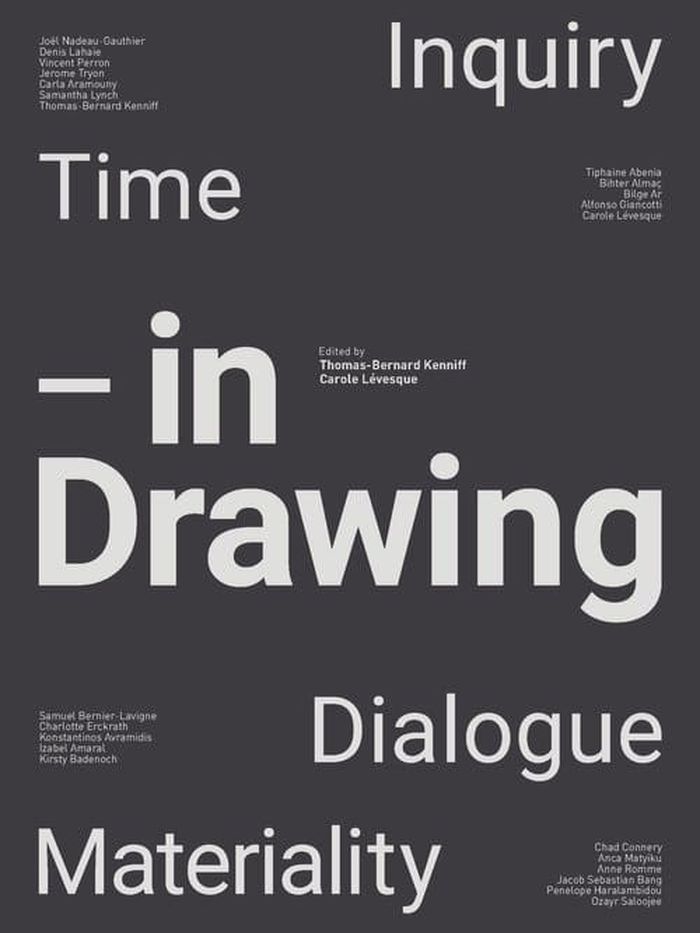
Drawing is a form of research, a means to investigate, explore and gain a better understanding of an idea, a condition or a phenomenon. Drawing is a practice of representation, one that inquires, explores materiality, and establishes its own time and dialogue. This book brings together 23 authors who represent 18 critical and reflexive practices of drawing in design. The assembled texts engage drawing aesthetics (spatial, temporal, and material) and drawing ethics (investigating and making sense together) as well as four overarching themes: inquiry, time, dialogue and materiality —in drawing. Taken as a collective conversation on drawing practice, this book offers a shared reflection on the agency of drawing, on its potential to explore issues raised by our built and cultural environment, and on the ability of drawing to support and contribute to design research. It farmes drawing as a research practice, one that is both deeply rooted in its disciplinary context and openly challenging its limits and conventions. "—in drawing" adds to a continuing conversation on design research methods and the ethics and aesthetics of representation. It seeks to further establish the significance of drawing as a legitimate mode of inquiry across design disciplines and beyond.
—in drawing: Inquiry, time, dialogue, materiality
Actions:
Price:
$68.00
(available in store)
Summary:
Drawing is a form of research, a means to investigate, explore and gain a better understanding of an idea, a condition or a phenomenon. Drawing is a practice of representation, one that inquires, explores materiality, and establishes its own time and dialogue. This book brings together 23 authors who represent 18 critical and reflexive practices of drawing in design. The assembled texts engage drawing aesthetics (spatial, temporal, and material) and drawing ethics (investigating and making sense together) as well as four overarching themes: inquiry, time, dialogue and materiality —in drawing. Taken as a collective conversation on drawing practice, this book offers a shared reflection on the agency of drawing, on its potential to explore issues raised by our built and cultural environment, and on the ability of drawing to support and contribute to design research. It farmes drawing as a research practice, one that is both deeply rooted in its disciplinary context and openly challenging its limits and conventions. "—in drawing" adds to a continuing conversation on design research methods and the ethics and aesthetics of representation. It seeks to further establish the significance of drawing as a legitimate mode of inquiry across design disciplines and beyond.
Form:
books
books
Publication:
January 2025
January 2025
Subject:
Design Theory
Design Theory
Form:
books
books
Actions:
Price:
$41.99
(available in store)
Summary:
Digital and social media have transformed how much and how fast we communicate, but they have also altered the palette of expressive strategies: the cultural forms that shape how citizens, activists, and artists speak and interact. Most familiar among these strategies are storytelling and representation. In A Theory of Assembly, Kyle Parry argues that one of the most(...)
$41.99
(available in store)
Summary:
Digital and social media have transformed how much and how fast we communicate, but they have also altered the palette of expressive strategies: the cultural forms that shape how citizens, activists, and artists speak and interact. Most familiar among these strategies are storytelling and representation. In A Theory of Assembly, Kyle Parry argues that one of the most(...)
Publication:
January 2023
January 2023
Title:
A theory of assembly: From museums to memes
Actions:
Price:
$41.99
(available in store)
Summary:
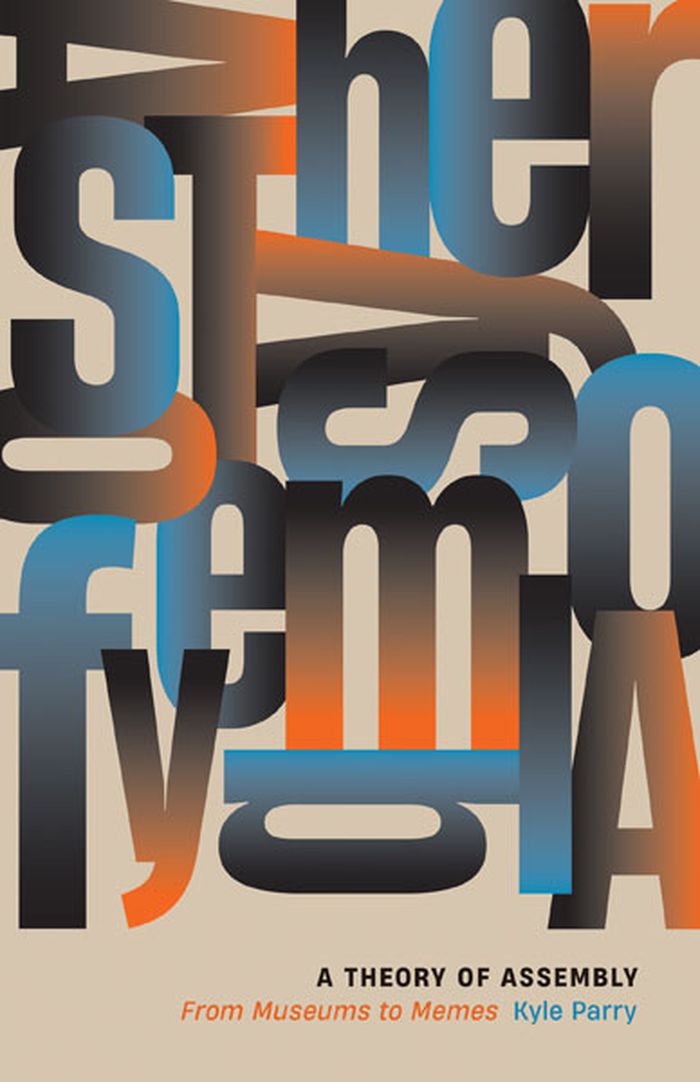
Digital and social media have transformed how much and how fast we communicate, but they have also altered the palette of expressive strategies: the cultural forms that shape how citizens, activists, and artists speak and interact. Most familiar among these strategies are storytelling and representation. In A Theory of Assembly, Kyle Parry argues that one of the most powerful and pervasive cultural forms in the digital era is assembly. Whether as subtle photographic sequences, satirical Venn diagrams, or networked archives, projects based in assembly do not so much narrate or represent the world as rearrange it. This work of rearranging can take place at any scale, from a simple pairing of images, undertaken by one person, to the entire history of internet memes, undertaken by millions. With examples ranging from GIFs and paintings to museum exhibitions and social movement hashtags, Parry shows how, in the internet age, assembly has come to equal narrative and representation in its reach and influence, particularly as a response to ecological and social violence. He also emphasizes the ambivalence of assembly—the way it can be both emancipatory and antidemocratic.
A theory of assembly: From museums to memes
Actions:
Price:
$41.99
(available in store)
Summary:
Digital and social media have transformed how much and how fast we communicate, but they have also altered the palette of expressive strategies: the cultural forms that shape how citizens, activists, and artists speak and interact. Most familiar among these strategies are storytelling and representation. In A Theory of Assembly, Kyle Parry argues that one of the most powerful and pervasive cultural forms in the digital era is assembly. Whether as subtle photographic sequences, satirical Venn diagrams, or networked archives, projects based in assembly do not so much narrate or represent the world as rearrange it. This work of rearranging can take place at any scale, from a simple pairing of images, undertaken by one person, to the entire history of internet memes, undertaken by millions. With examples ranging from GIFs and paintings to museum exhibitions and social movement hashtags, Parry shows how, in the internet age, assembly has come to equal narrative and representation in its reach and influence, particularly as a response to ecological and social violence. He also emphasizes the ambivalence of assembly—the way it can be both emancipatory and antidemocratic.
Form:
books
books
Publication:
January 2023
January 2023


