


3044 Results
Form:
books
books
Actions:
Price:
$60.00
(available to order)
Summary:
Shrinking cities have pushed urban design and classical city planning to their limits. This new challenge requires new approaches in which the "hard" tools of construction are joined by the "soft" tools of political, social, cultural, and communicative interventions. This book provides an international overview of experimental concepts for taking action in shrinking(...)
$60.00
(available to order)
Summary:
Shrinking cities have pushed urban design and classical city planning to their limits. This new challenge requires new approaches in which the "hard" tools of construction are joined by the "soft" tools of political, social, cultural, and communicative interventions. This book provides an international overview of experimental concepts for taking action in shrinking(...)
Title:
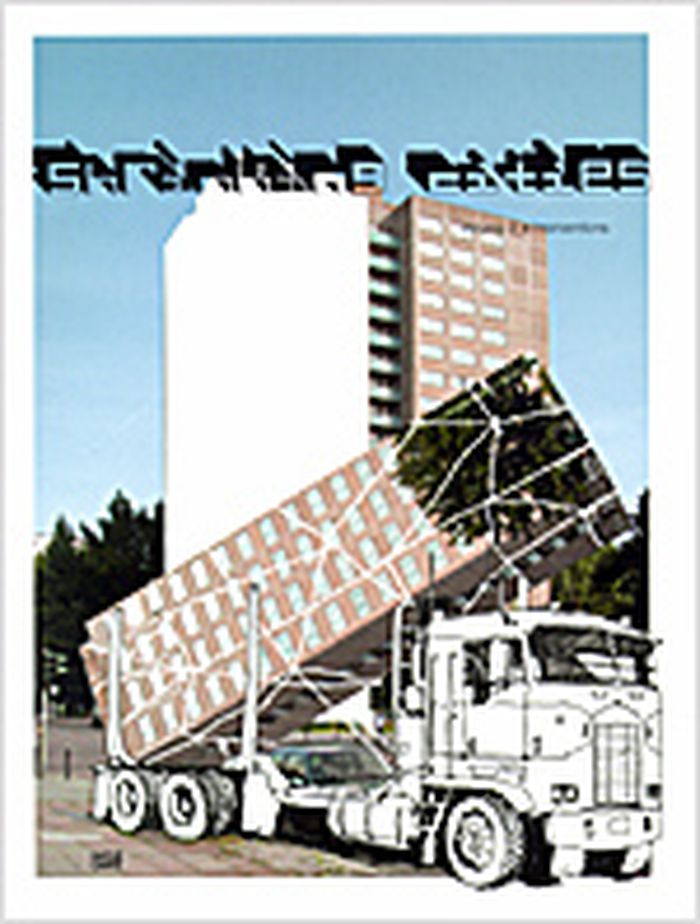
Shrinking cities, volume 2: interventions
Actions:
Price:
$60.00
(available to order)
Summary:
Shrinking cities have pushed urban design and classical city planning to their limits. This new challenge requires new approaches in which the "hard" tools of construction are joined by the "soft" tools of political, social, cultural, and communicative interventions. This book provides an international overview of experimental concepts for taking action in shrinking cities from the fields of architecture, landscape architecture, urban construction, the media, performance, and art. The approaches range from artistic intercessions and self-empowerment projects to architectural and landscape interventions, and from strategies of media communication and city marketing to new legal regulations and utopian designs. A series of essays provides a critical discussion of both successful and failed projects of recent decades from such countries as the United States, Great Britain, the Netherlands, Austria, Russia, and Japan. Projects featured (selection): William Alsop, Crimson, Jeremy Deller, Gordon Matta-Clark, OMA, Cedric Price, Andreas Siekmann, Robert Smithson, Superflex, O. M. Ungers
Shrinking cities, volume 2: interventions
Actions:
Price:
$60.00
(available to order)
Summary:
Shrinking cities have pushed urban design and classical city planning to their limits. This new challenge requires new approaches in which the "hard" tools of construction are joined by the "soft" tools of political, social, cultural, and communicative interventions. This book provides an international overview of experimental concepts for taking action in shrinking cities from the fields of architecture, landscape architecture, urban construction, the media, performance, and art. The approaches range from artistic intercessions and self-empowerment projects to architectural and landscape interventions, and from strategies of media communication and city marketing to new legal regulations and utopian designs. A series of essays provides a critical discussion of both successful and failed projects of recent decades from such countries as the United States, Great Britain, the Netherlands, Austria, Russia, and Japan. Projects featured (selection): William Alsop, Crimson, Jeremy Deller, Gordon Matta-Clark, OMA, Cedric Price, Andreas Siekmann, Robert Smithson, Superflex, O. M. Ungers
Form:
books
books
Publication:
June 2006, Ostfildern
June 2006, Ostfildern
Subject:
Urban Theory
Urban Theory
Form:
journals and magazines
journals and magazines
Actions:
Price:
$47.95
(available in store)
Summary:
The rural is not what it used to be. No longer simply a site for agricultural production for the city, the relationship between the rural and urban has become much more complex. Established categories such as rural /urban and village/city no longer hold true. Rural and urban conditions have become increasingly blurred, so how can we identify and distinguish their specific(...)
$47.95
(available in store)
Summary:
The rural is not what it used to be. No longer simply a site for agricultural production for the city, the relationship between the rural and urban has become much more complex. Established categories such as rural /urban and village/city no longer hold true. Rural and urban conditions have become increasingly blurred, so how can we identify and distinguish their specific(...)
Title:
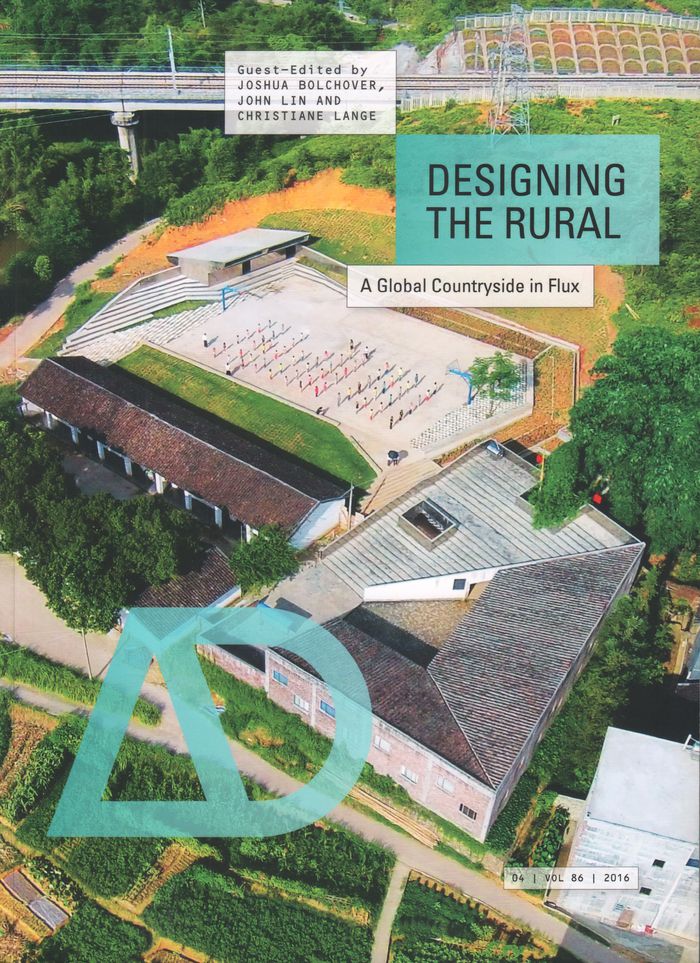
AD 86:4 Designing the rural: a global countryside in Flux
Actions:
Price:
$47.95
(available in store)
Summary:
The rural is not what it used to be. No longer simply a site for agricultural production for the city, the relationship between the rural and urban has become much more complex. Established categories such as rural /urban and village/city no longer hold true. Rural and urban conditions have become increasingly blurred, so how can we identify and distinguish their specific characteristics? Where is the rural, and what role does it play in an urbanised world? In developing countries the countryside is a volatile and contradictory landscape: legally designated rural areas look like dense slums; factories intersect fields and farmers no longer farm. In contrast, in developed regions, the rural has become a highly controlled landscape of production and consumption: industrialised agriculture coexists with leisure landscapes for tourism, retirement and recreation. This issue of AD investigates how architects and researchers are critically engaging with the rural as an experimental field of exploration.
AD 86:4 Designing the rural: a global countryside in Flux
Actions:
Price:
$47.95
(available in store)
Summary:
The rural is not what it used to be. No longer simply a site for agricultural production for the city, the relationship between the rural and urban has become much more complex. Established categories such as rural /urban and village/city no longer hold true. Rural and urban conditions have become increasingly blurred, so how can we identify and distinguish their specific characteristics? Where is the rural, and what role does it play in an urbanised world? In developing countries the countryside is a volatile and contradictory landscape: legally designated rural areas look like dense slums; factories intersect fields and farmers no longer farm. In contrast, in developed regions, the rural has become a highly controlled landscape of production and consumption: industrialised agriculture coexists with leisure landscapes for tourism, retirement and recreation. This issue of AD investigates how architects and researchers are critically engaging with the rural as an experimental field of exploration.
Form:
journals and magazines
journals and magazines
Publication:
August 2016
August 2016
Subject:
Magazines
Magazines
Form:
books
books
Title:
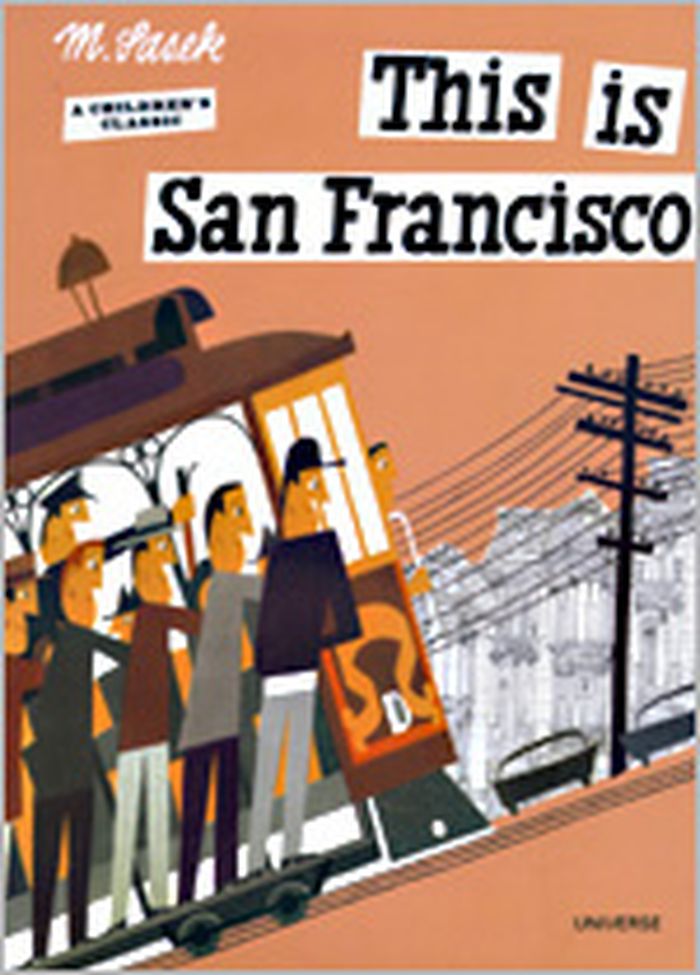
This is San Francisco
This is San Francisco
Actions:
Price:
$25.95
(available in store)
Summary:
Facsimile edition of a beloved, long out-of-print children's classic. From the crookedest street in the world to the Peking ducks in Chinatown, San Francisco is easily one of the world's most enchanting cities. Illustrator Miroslav Sasek captures both the breathtaking landscape and the cosmopolitan flavor of the "City by the Bay" in "This is San Francisco". First published in 1962.
$25.95
(available in store)
Summary:
Facsimile edition of a beloved, long out-of-print children's classic. From the crookedest street in the world to the Peking ducks in Chinatown, San Francisco is easily one of the world's most enchanting cities. Illustrator Miroslav Sasek captures both the breathtaking landscape and the cosmopolitan flavor of the "City by the Bay" in "This is San Francisco". First published in 1962.
Title:
This is San Francisco
Actions:
Price:
$25.95
(available in store)
Summary:
Facsimile edition of a beloved, long out-of-print children's classic. From the crookedest street in the world to the Peking ducks in Chinatown, San Francisco is easily one of the world's most enchanting cities. Illustrator Miroslav Sasek captures both the breathtaking landscape and the cosmopolitan flavor of the "City by the Bay" in "This is San Francisco". First published in 1962.
This is San Francisco
Actions:
Price:
$25.95
(available in store)
Summary:
Facsimile edition of a beloved, long out-of-print children's classic. From the crookedest street in the world to the Peking ducks in Chinatown, San Francisco is easily one of the world's most enchanting cities. Illustrator Miroslav Sasek captures both the breathtaking landscape and the cosmopolitan flavor of the "City by the Bay" in "This is San Francisco". First published in 1962.
Form:
books
books
Publication:
May 2003, New York
May 2003, New York
Subject:
Children's Books
Children's Books
Form:
books
books
Actions:
Price:
$45.50
(available to order)
Summary:
The years shortly after the end of World War II saw the beginnings of a new kind of community that blended the characteristics of suburbia with those of the central city. Over the decades these "edge cities" have become permanent features of the regional landscape. In his book, the author charts the emergence of these areas and explains why and how they developed.
$45.50
(available to order)
Summary:
The years shortly after the end of World War II saw the beginnings of a new kind of community that blended the characteristics of suburbia with those of the central city. Over the decades these "edge cities" have become permanent features of the regional landscape. In his book, the author charts the emergence of these areas and explains why and how they developed.
Title:
Post-suburbia : government and politics in the edge cities
Actions:
Price:
$45.50
(available to order)
Summary:
The years shortly after the end of World War II saw the beginnings of a new kind of community that blended the characteristics of suburbia with those of the central city. Over the decades these "edge cities" have become permanent features of the regional landscape. In his book, the author charts the emergence of these areas and explains why and how they developed.
Post-suburbia : government and politics in the edge cities
Actions:
Price:
$45.50
(available to order)
Summary:
The years shortly after the end of World War II saw the beginnings of a new kind of community that blended the characteristics of suburbia with those of the central city. Over the decades these "edge cities" have become permanent features of the regional landscape. In his book, the author charts the emergence of these areas and explains why and how they developed.
Form:
books
books
Publication:
December 1996, Baltimore
December 1996, Baltimore
Subject:
Urban Theory
Urban Theory
Form:
books
books
Title:
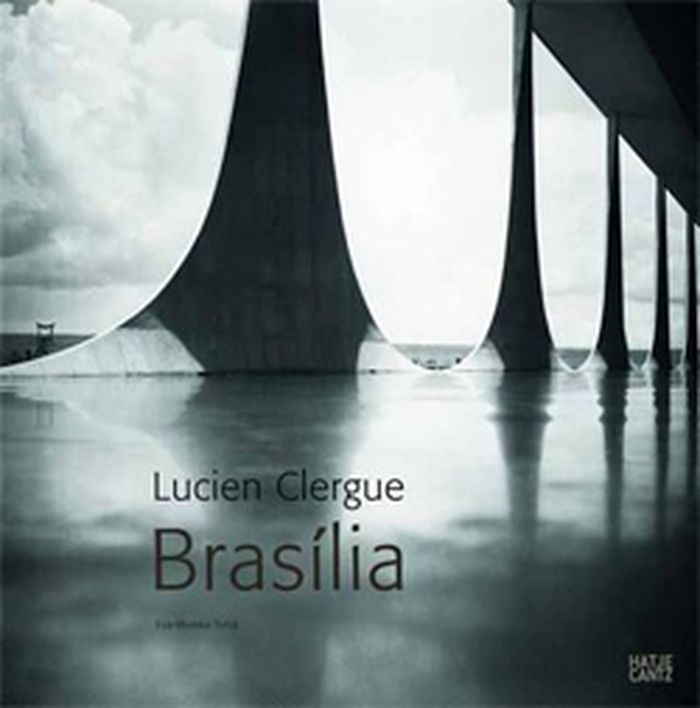
Lucien Clergue : Brasilia
Lucien Clergue : Brasilia
Actions:
Price:
$70.00
(available to order)
Summary:
Brasília is the first presentation of Clergue's marvelous photographs of Brazil's capital, taken in 1962-63, just a few years after the city was built - a body of work until recently believed to be lost. Brasilia was developed in 1956, with Lúcio Costa as the principal urban planner, Oscar Niemeyer as the principal architect and Roberto Burle Marx as the landscape designer.
$70.00
(available to order)
Summary:
Brasília is the first presentation of Clergue's marvelous photographs of Brazil's capital, taken in 1962-63, just a few years after the city was built - a body of work until recently believed to be lost. Brasilia was developed in 1956, with Lúcio Costa as the principal urban planner, Oscar Niemeyer as the principal architect and Roberto Burle Marx as the landscape designer.
Title:
Lucien Clergue : Brasilia
Actions:
Price:
$70.00
(available to order)
Summary:
Brasília is the first presentation of Clergue's marvelous photographs of Brazil's capital, taken in 1962-63, just a few years after the city was built - a body of work until recently believed to be lost. Brasilia was developed in 1956, with Lúcio Costa as the principal urban planner, Oscar Niemeyer as the principal architect and Roberto Burle Marx as the landscape designer.
Lucien Clergue : Brasilia
Actions:
Price:
$70.00
(available to order)
Summary:
Brasília is the first presentation of Clergue's marvelous photographs of Brazil's capital, taken in 1962-63, just a few years after the city was built - a body of work until recently believed to be lost. Brasilia was developed in 1956, with Lúcio Costa as the principal urban planner, Oscar Niemeyer as the principal architect and Roberto Burle Marx as the landscape designer.
Form:
books
books
Publication:
April 2013
April 2013
Subject:
Photography monographs
Photography monographs
Form:
books
books
Actions:
Price:
$97.50
(available to order)
Summary:
While the history of São Paulo dates back more than 450 years, most of its growth took place after World War II as the city's major economic engine shifted from agriculture to industry. Today, as São Paulo evolves into a service economy hub, Felipe Correa argues, the city must carefully examine how to better integrate its extensive inner city post-industrial land into(...)
$97.50
(available to order)
Summary:
While the history of São Paulo dates back more than 450 years, most of its growth took place after World War II as the city's major economic engine shifted from agriculture to industry. Today, as São Paulo evolves into a service economy hub, Felipe Correa argues, the city must carefully examine how to better integrate its extensive inner city post-industrial land into(...)
Title:
São Paulo: a graphic biography
Actions:
Price:
$97.50
(available to order)
Summary:
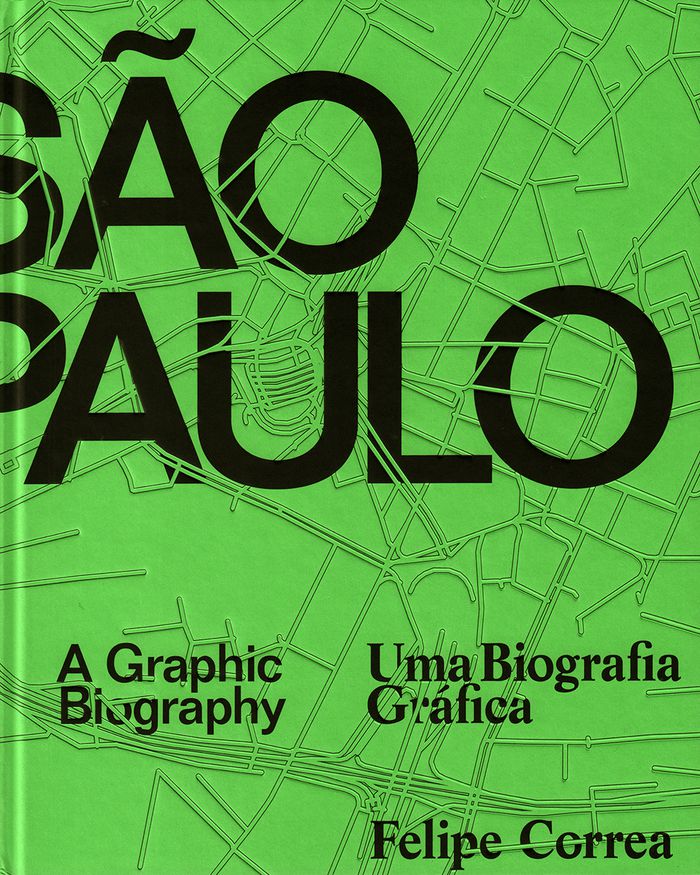
While the history of São Paulo dates back more than 450 years, most of its growth took place after World War II as the city's major economic engine shifted from agriculture to industry. Today, as São Paulo evolves into a service economy hub, Felipe Correa argues, the city must carefully examine how to better integrate its extensive inner city post-industrial land into contemporary urban uses. In ''São Paulo: A Graphic Biography,'' Correa presents a comprehensive portrait of Brazil's largest city, narrating its fast-paced growth through archival material, photography, original drawings, and text. Additional essays from scholars in fields such as landscape architecture, ecology, governance, and public health offer a series of interdisciplinary perspectives on the city's history and development.
São Paulo: a graphic biography
Actions:
Price:
$97.50
(available to order)
Summary:
While the history of São Paulo dates back more than 450 years, most of its growth took place after World War II as the city's major economic engine shifted from agriculture to industry. Today, as São Paulo evolves into a service economy hub, Felipe Correa argues, the city must carefully examine how to better integrate its extensive inner city post-industrial land into contemporary urban uses. In ''São Paulo: A Graphic Biography,'' Correa presents a comprehensive portrait of Brazil's largest city, narrating its fast-paced growth through archival material, photography, original drawings, and text. Additional essays from scholars in fields such as landscape architecture, ecology, governance, and public health offer a series of interdisciplinary perspectives on the city's history and development.
Form:
books
books
Publication:
October 2018
October 2018
Subject:
Urban Theory
Urban Theory
Form:
books
books
Actions:
Price:
$65.00
(available in store)
Summary:
How has Berlin’s urban landscape changed in its remarkable transformation from divided city to creative capital? Despite the monumental heritage and grand development projects, Berlin still conjures up images of urban fragmentation and vacant inner-city land. The book reveals the changing nature and complex politics of this open space. A rephotographing of sites between(...)
$65.00
(available in store)
Summary:
How has Berlin’s urban landscape changed in its remarkable transformation from divided city to creative capital? Despite the monumental heritage and grand development projects, Berlin still conjures up images of urban fragmentation and vacant inner-city land. The book reveals the changing nature and complex politics of this open space. A rephotographing of sites between(...)
Title:
Spaces of uncertainty: Berlin revisited
Actions:
Price:
$65.00
(available in store)
Summary:
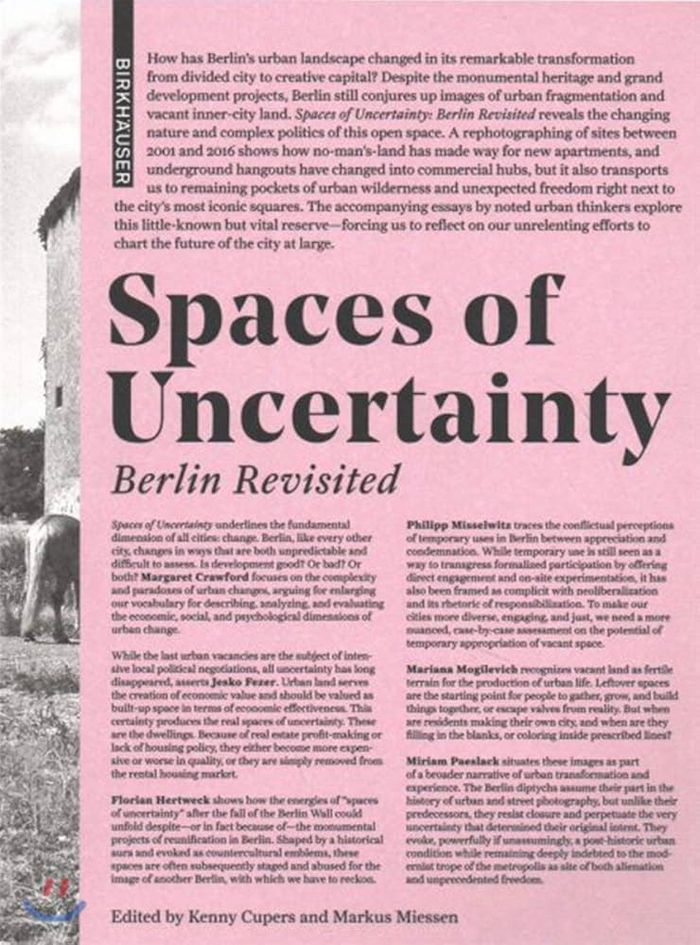
How has Berlin’s urban landscape changed in its remarkable transformation from divided city to creative capital? Despite the monumental heritage and grand development projects, Berlin still conjures up images of urban fragmentation and vacant inner-city land. The book reveals the changing nature and complex politics of this open space. A rephotographing of sites between 2001 and 2016 shows how no man’s land has made way for new apartments and underground hangouts have changed into commercial hubs, but it also transports us to remaining pockets of urban wilderness and unexpected freedom right next to the city’s most iconic squares. The accompanying essays by noted urban thinkers explore this little-known but vital reserve—forcing us to reflect on our unrelenting efforts to chart the future of the city at large.
Spaces of uncertainty: Berlin revisited
Actions:
Price:
$65.00
(available in store)
Summary:
How has Berlin’s urban landscape changed in its remarkable transformation from divided city to creative capital? Despite the monumental heritage and grand development projects, Berlin still conjures up images of urban fragmentation and vacant inner-city land. The book reveals the changing nature and complex politics of this open space. A rephotographing of sites between 2001 and 2016 shows how no man’s land has made way for new apartments and underground hangouts have changed into commercial hubs, but it also transports us to remaining pockets of urban wilderness and unexpected freedom right next to the city’s most iconic squares. The accompanying essays by noted urban thinkers explore this little-known but vital reserve—forcing us to reflect on our unrelenting efforts to chart the future of the city at large.
Form:
books
books
Publication:
March 2018
March 2018
Subject:
Urban Theory
Urban Theory
Form:
books
books
Actions:
Price:
$34.95
(available to order)
Summary:
In the first decades of the twentieth century, Marseille was a booming Mediterranean port. Positioned at the very edge of France, the city functioned as a critical fulcrum between the metropolitan center and its overseas empire. A notoriously dangerous and cosmopolitan city, Marseille became the focus of the extraordinary energies of some of the most remarkable architects(...)
$34.95
(available to order)
Summary:
In the first decades of the twentieth century, Marseille was a booming Mediterranean port. Positioned at the very edge of France, the city functioned as a critical fulcrum between the metropolitan center and its overseas empire. A notoriously dangerous and cosmopolitan city, Marseille became the focus of the extraordinary energies of some of the most remarkable architects(...)
Title:
Mediterranean crossroads: Marseille and Modern architecture
Actions:
Price:
$34.95
(available to order)
Summary:
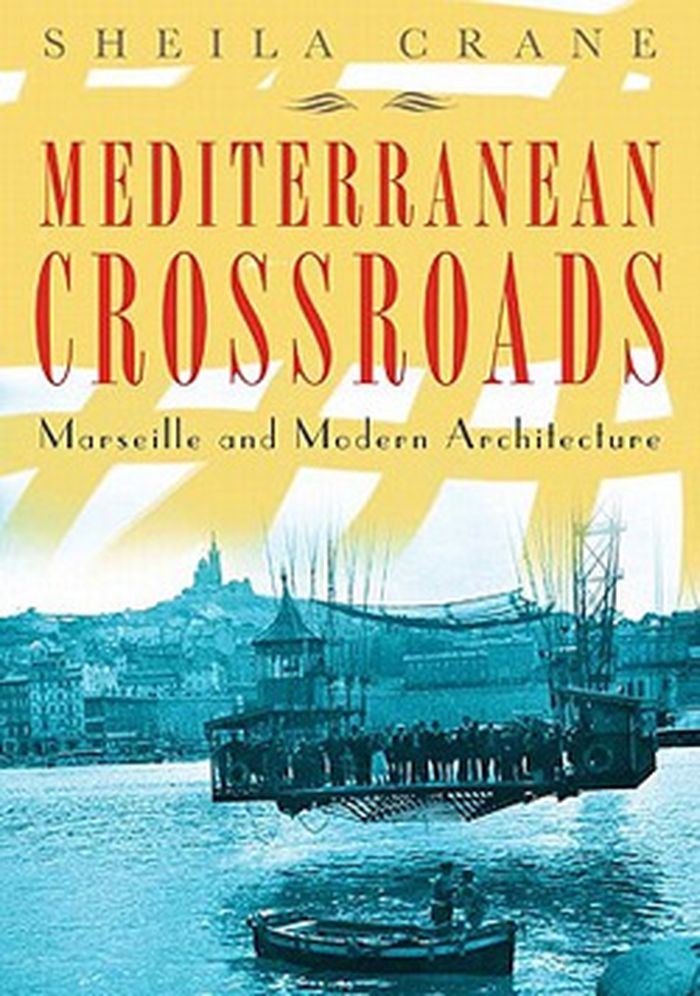
In the first decades of the twentieth century, Marseille was a booming Mediterranean port. Positioned at the very edge of France, the city functioned as a critical fulcrum between the metropolitan center and its overseas empire. A notoriously dangerous and cosmopolitan city, Marseille became the focus of the extraordinary energies of some of the most remarkable architects and theorists of urban modernity. Drawing together architects, photographers, and cultural theorists, including Le Corbusier, Sigfried Giedion, Walter Benjamin, and László Moholy-Nagy, Mediterranean Crossroads examines how mythic ideas about Marseille helped to shape its urban landscape. Tracing successive planning proposals in tandem with shifting representations of the city in photographs, film, guidebooks, and postcards, Sheila Crane reconstructs the history and politics of architecture in Marseille from the 1920s through the years of rebuilding after World War II.
Mediterranean crossroads: Marseille and Modern architecture
Actions:
Price:
$34.95
(available to order)
Summary:
In the first decades of the twentieth century, Marseille was a booming Mediterranean port. Positioned at the very edge of France, the city functioned as a critical fulcrum between the metropolitan center and its overseas empire. A notoriously dangerous and cosmopolitan city, Marseille became the focus of the extraordinary energies of some of the most remarkable architects and theorists of urban modernity. Drawing together architects, photographers, and cultural theorists, including Le Corbusier, Sigfried Giedion, Walter Benjamin, and László Moholy-Nagy, Mediterranean Crossroads examines how mythic ideas about Marseille helped to shape its urban landscape. Tracing successive planning proposals in tandem with shifting representations of the city in photographs, film, guidebooks, and postcards, Sheila Crane reconstructs the history and politics of architecture in Marseille from the 1920s through the years of rebuilding after World War II.
Form:
books
books
Publication:
April 2011
April 2011
Subject:
Urban Theory
Urban Theory
Form:
books
books
Actions:
Price:
$31.00
(available to order)
Summary:
"Robinson believed that, if he looked at it hard enough, he could cause the surface of the city to reveal to him the molecular basis of historical events, and in this way he hoped to see into the future." In his sequence of films, Patrick Keiller retraces the hidden story of the places where we live, the cities and landscapes of our everyday lives. Now, in this(...)
$31.00
(available to order)
Summary:
"Robinson believed that, if he looked at it hard enough, he could cause the surface of the city to reveal to him the molecular basis of historical events, and in this way he hoped to see into the future." In his sequence of films, Patrick Keiller retraces the hidden story of the places where we live, the cities and landscapes of our everyday lives. Now, in this(...)
Title:
The view from the train : cities and other landscapes
Actions:
Price:
$31.00
(available to order)
Summary:
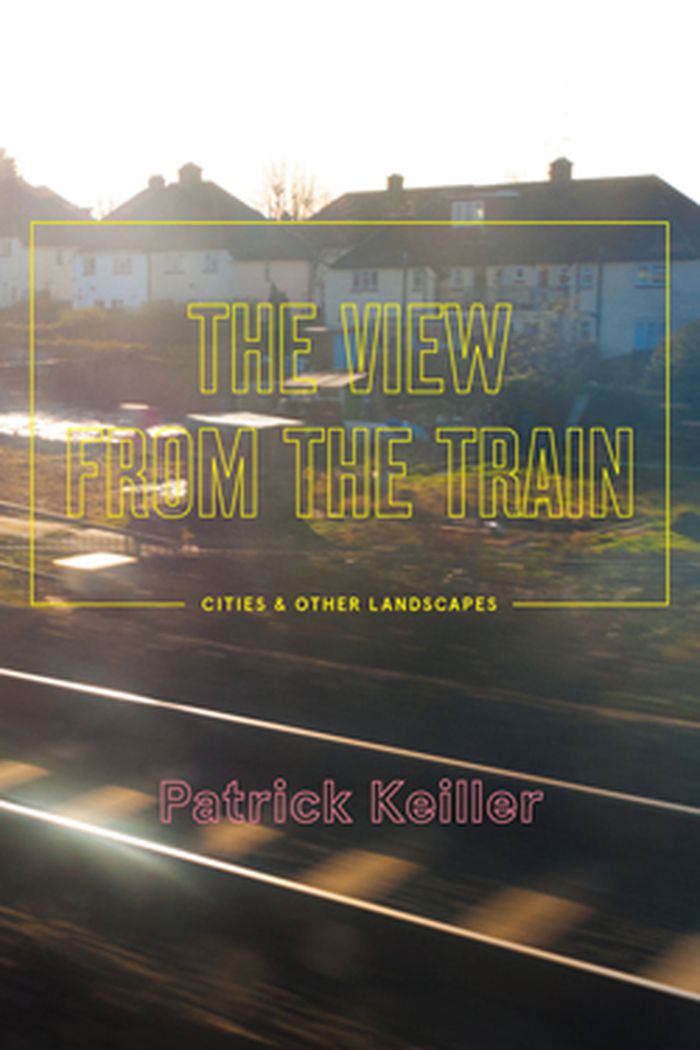
"Robinson believed that, if he looked at it hard enough, he could cause the surface of the city to reveal to him the molecular basis of historical events, and in this way he hoped to see into the future." In his sequence of films, Patrick Keiller retraces the hidden story of the places where we live, the cities and landscapes of our everyday lives. Now, in this brilliant collection of essays, he offers a new perspective on how Britain works and sees itself. He discusses the background to his work and its development – from surrealism to post-2008 economic catastrophe – and expands on what the films reveal. Referencing writers including Benjamin and Lefebvre, the essays follow his career since the late 1970s, exploring themes including the surrealist perception of the city; the relationship of architecture and film; how cities change over time, and how films represent this; as well as accounts of cross-country journeys involving historical figures, unexpected ideas and an urgent portrait of post-crash Britain.
The view from the train : cities and other landscapes
Actions:
Price:
$31.00
(available to order)
Summary:
"Robinson believed that, if he looked at it hard enough, he could cause the surface of the city to reveal to him the molecular basis of historical events, and in this way he hoped to see into the future." In his sequence of films, Patrick Keiller retraces the hidden story of the places where we live, the cities and landscapes of our everyday lives. Now, in this brilliant collection of essays, he offers a new perspective on how Britain works and sees itself. He discusses the background to his work and its development – from surrealism to post-2008 economic catastrophe – and expands on what the films reveal. Referencing writers including Benjamin and Lefebvre, the essays follow his career since the late 1970s, exploring themes including the surrealist perception of the city; the relationship of architecture and film; how cities change over time, and how films represent this; as well as accounts of cross-country journeys involving historical figures, unexpected ideas and an urgent portrait of post-crash Britain.
Form:
books
books
Publication:
November 2013
November 2013
Subject:
Urban Theory
Urban Theory
Form:
books
books
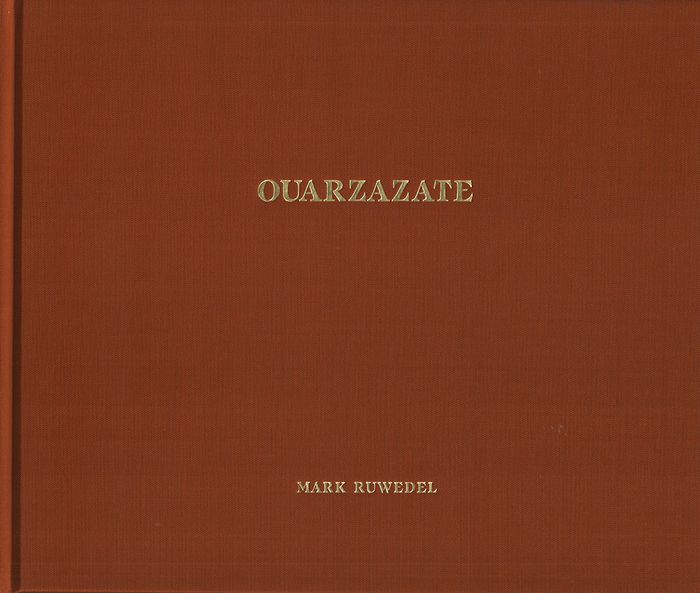
Title:
Mark Ruwedel: Ouarzazate
Mark Ruwedel: Ouarzazate
Actions:
Price:
$92.00
(available to order)
Summary:
Ouarzazate is a small city in the Moroccan desert famous for its movie studios and filming locations, an industry which began with David Lean and Lawrence of Arabia. Invited by the American Friends of the Marrakech Museum for Photography and the Visual Arts to propose a project for his artist residency there, Ruwedel photographed the movie sets in 2014 and 2016. Far from(...)
$92.00
(available to order)
Summary:
Ouarzazate is a small city in the Moroccan desert famous for its movie studios and filming locations, an industry which began with David Lean and Lawrence of Arabia. Invited by the American Friends of the Marrakech Museum for Photography and the Visual Arts to propose a project for his artist residency there, Ruwedel photographed the movie sets in 2014 and 2016. Far from(...)
Title:
Mark Ruwedel: Ouarzazate
Actions:
Price:
$92.00
(available to order)
Summary:
Ouarzazate is a small city in the Moroccan desert famous for its movie studios and filming locations, an industry which began with David Lean and Lawrence of Arabia. Invited by the American Friends of the Marrakech Museum for Photography and the Visual Arts to propose a project for his artist residency there, Ruwedel photographed the movie sets in 2014 and 2016. Far from the American deserts where he has produced much of his work of the past thirty years, in Morocco Ruwedel continues his long term interest in contemporary ruins and the histories of both landscape and landscape photography. The photographs are eerily reminiscent of 19th century European photography of ancient Egypt and the Middle East.
Mark Ruwedel: Ouarzazate
Actions:
Price:
$92.00
(available to order)
Summary:
Ouarzazate is a small city in the Moroccan desert famous for its movie studios and filming locations, an industry which began with David Lean and Lawrence of Arabia. Invited by the American Friends of the Marrakech Museum for Photography and the Visual Arts to propose a project for his artist residency there, Ruwedel photographed the movie sets in 2014 and 2016. Far from the American deserts where he has produced much of his work of the past thirty years, in Morocco Ruwedel continues his long term interest in contemporary ruins and the histories of both landscape and landscape photography. The photographs are eerily reminiscent of 19th century European photography of ancient Egypt and the Middle East.
Form:
books
books
Publication:
October 2018
October 2018
Subject:
Photography monographs
Photography monographs


