


2833 Results
Form:
books
books
Actions:
Price:
$54.00
(available to order)
Summary:
German culture in the twentieth century moved quickly and intensely, bound up with the politics of the country. Paul Renner (1878—1956) lived and worked through constituent episodes of this history, both embodying the patterns of his times and providing a critical commentary on them. In this book(...)
$54.00
(available to order)
Summary:
German culture in the twentieth century moved quickly and intensely, bound up with the politics of the country. Paul Renner (1878—1956) lived and worked through constituent episodes of this history, both embodying the patterns of his times and providing a critical commentary on them. In this book(...)
Subject:
Graphic Designers, Monographs
Graphic Designers, Monographs
Publication:
January 1999, New York
January 1999, New York
Title:
Paul Renner : the art of typography
Actions:
Price:
$54.00
(available to order)
Summary:
German culture in the twentieth century moved quickly and intensely, bound up with the politics of the country. Paul Renner (1878—1956) lived and worked through constituent episodes of this history, both embodying the patterns of his times and providing a critical commentary on them. In this book Christopher Burke provides the first extended account of an essential and still underrated figure. Beginning his career in the thick of the Munich cultural renaissance, Paul Renner worked as a ‘book artist’, applying values he had learnt as a painter to this everyday item of multiple production. An early and prominent member of the Deutscher Werkbund, he was committed to the values of quality in design, always tempered by a certain sobriety of attitude and style. In the 1920s Renner engaged with the radical modernism of that time, briefly in Frankfurt, and then in a more extended phase at the printing school at Munich. Under Renner’s leadership, and with teachers such as Georg Trump and Jan Tschichold, the school produced work of quiet significance. In those years Renner undertook the design of the now ubiquitous typeface Futura. Christopher Burke’s analysis of the design process reveals the characteristic Renner approach: he took up with current tendencies, but through an extended process of finely judged development, helped to deliver a product that has long-lasting quality. In the Nazi seizure of power of 1933, Renner was dismissed from his teaching post — in days recounted here in dramatic detail — and entered a state of ‘inner emigration’. Burke’s account of the Nazi years shows Renner negotiating events with dignity. After 1945, Renner lived in retirement, but entered public discussion of design issues as a voice of experience and sanity. "Paul Renner" is a work of discovery. As part of its fresh narrative and analysis, it includes much new illustrative material and the first full bibliography of Renner’s writings.
Paul Renner : the art of typography
Actions:
Price:
$54.00
(available to order)
Summary:
German culture in the twentieth century moved quickly and intensely, bound up with the politics of the country. Paul Renner (1878—1956) lived and worked through constituent episodes of this history, both embodying the patterns of his times and providing a critical commentary on them. In this book Christopher Burke provides the first extended account of an essential and still underrated figure. Beginning his career in the thick of the Munich cultural renaissance, Paul Renner worked as a ‘book artist’, applying values he had learnt as a painter to this everyday item of multiple production. An early and prominent member of the Deutscher Werkbund, he was committed to the values of quality in design, always tempered by a certain sobriety of attitude and style. In the 1920s Renner engaged with the radical modernism of that time, briefly in Frankfurt, and then in a more extended phase at the printing school at Munich. Under Renner’s leadership, and with teachers such as Georg Trump and Jan Tschichold, the school produced work of quiet significance. In those years Renner undertook the design of the now ubiquitous typeface Futura. Christopher Burke’s analysis of the design process reveals the characteristic Renner approach: he took up with current tendencies, but through an extended process of finely judged development, helped to deliver a product that has long-lasting quality. In the Nazi seizure of power of 1933, Renner was dismissed from his teaching post — in days recounted here in dramatic detail — and entered a state of ‘inner emigration’. Burke’s account of the Nazi years shows Renner negotiating events with dignity. After 1945, Renner lived in retirement, but entered public discussion of design issues as a voice of experience and sanity. "Paul Renner" is a work of discovery. As part of its fresh narrative and analysis, it includes much new illustrative material and the first full bibliography of Renner’s writings.
Form:
books
books
Publication:
January 1999, New York
January 1999, New York
Subject:
Graphic Designers, Monographs
Graphic Designers, Monographs
Form:
books
books
Actions:
Price:
$43.50
(available to order)
Summary:
The manner in which global trends affect cities and increase the instability in local environments with their own dynamics, is like letting a rising river loose on a house. Global trends create urban flotsam. Urban flotsam and its complex dynamics form a second skin of the earth. How is this second skin visible and how can it be put to use in the quest for new urban(...)
$43.50
(available to order)
Summary:
The manner in which global trends affect cities and increase the instability in local environments with their own dynamics, is like letting a rising river loose on a house. Global trends create urban flotsam. Urban flotsam and its complex dynamics form a second skin of the earth. How is this second skin visible and how can it be put to use in the quest for new urban(...)
Subject:
Urban Theory
Urban Theory
Publication:
October 1999, Rotterdam
October 1999, Rotterdam
Title:
Urban flotsam : stirring the city
Actions:
Price:
$43.50
(available to order)
Summary:
The manner in which global trends affect cities and increase the instability in local environments with their own dynamics, is like letting a rising river loose on a house. Global trends create urban flotsam. Urban flotsam and its complex dynamics form a second skin of the earth. How is this second skin visible and how can it be put to use in the quest for new urban planning tools and policies? Who gives it form and sustains its organization? 'Urban Flotsam' is a book that attempts to answer these questions through examples, but in doing so it postulates the need for a more consistent way of answering them. The book addresses this need through the formation of an outline for a methodology. This methodology consists of four major parts: 1. How to see manifestations of global influences on local environments? 2. How to model them? 3. How to develop and communicate scenarios on the basis of this knowledge? 4. How to implement scenarios? The book contains a manifesto for a general debate of these issues, a more poetic setting of the theme of the second skin of the earth as urban phenomenon, short theoretical introductions to individual issues, case studies undertaken in urban situations and didactic exercises to demonstrate the need for research in a pedagogical context. The book is the first major publication by Chora architecture and urbanism, an independent research laboratory. Chora has built up a body of knowledge and experience through workshops, commissions, teaching and self-initiated studies which has led to the formulation of the methodology and practice outlined in 'Urban Flotsam'. Chora postulates that drastic reforms or innovations are necessary within the practice and education of architecture, urban design and urban planning in order to meet the challenges of the second skin and the demands of its inhabitants. Together with the artist Jeanne van Heeswijk it calls for a new practice called 'urban curation'.
Urban flotsam : stirring the city
Actions:
Price:
$43.50
(available to order)
Summary:
The manner in which global trends affect cities and increase the instability in local environments with their own dynamics, is like letting a rising river loose on a house. Global trends create urban flotsam. Urban flotsam and its complex dynamics form a second skin of the earth. How is this second skin visible and how can it be put to use in the quest for new urban planning tools and policies? Who gives it form and sustains its organization? 'Urban Flotsam' is a book that attempts to answer these questions through examples, but in doing so it postulates the need for a more consistent way of answering them. The book addresses this need through the formation of an outline for a methodology. This methodology consists of four major parts: 1. How to see manifestations of global influences on local environments? 2. How to model them? 3. How to develop and communicate scenarios on the basis of this knowledge? 4. How to implement scenarios? The book contains a manifesto for a general debate of these issues, a more poetic setting of the theme of the second skin of the earth as urban phenomenon, short theoretical introductions to individual issues, case studies undertaken in urban situations and didactic exercises to demonstrate the need for research in a pedagogical context. The book is the first major publication by Chora architecture and urbanism, an independent research laboratory. Chora has built up a body of knowledge and experience through workshops, commissions, teaching and self-initiated studies which has led to the formulation of the methodology and practice outlined in 'Urban Flotsam'. Chora postulates that drastic reforms or innovations are necessary within the practice and education of architecture, urban design and urban planning in order to meet the challenges of the second skin and the demands of its inhabitants. Together with the artist Jeanne van Heeswijk it calls for a new practice called 'urban curation'.
Form:
books
books
Publication:
October 1999, Rotterdam
October 1999, Rotterdam
Subject:
Urban Theory
Urban Theory
Form:
books
books
Title:
Abelardo Morell
Abelardo Morell
Actions:
Price:
$29.95
(available to order)
Summary:
Born in Havana, Abelardo Morell emigrated to the United States in 1962, where he took his first photography course after winning a scholarship to Bowdoin College - a small liberal arts college in Maine. There, Morell experimented with a variety of photographic techniques to create surreal effects that reflected his feelings of alienation as a Cuban living abroad. He(...)
$29.95
(available to order)
Summary:
Born in Havana, Abelardo Morell emigrated to the United States in 1962, where he took his first photography course after winning a scholarship to Bowdoin College - a small liberal arts college in Maine. There, Morell experimented with a variety of photographic techniques to create surreal effects that reflected his feelings of alienation as a Cuban living abroad. He(...)
Subject:
Photography monographs
Photography monographs
Publication:
September 2005, London, New York
September 2005, London, New York
Title:
Abelardo Morell
Actions:
Price:
$29.95
(available to order)
Summary:
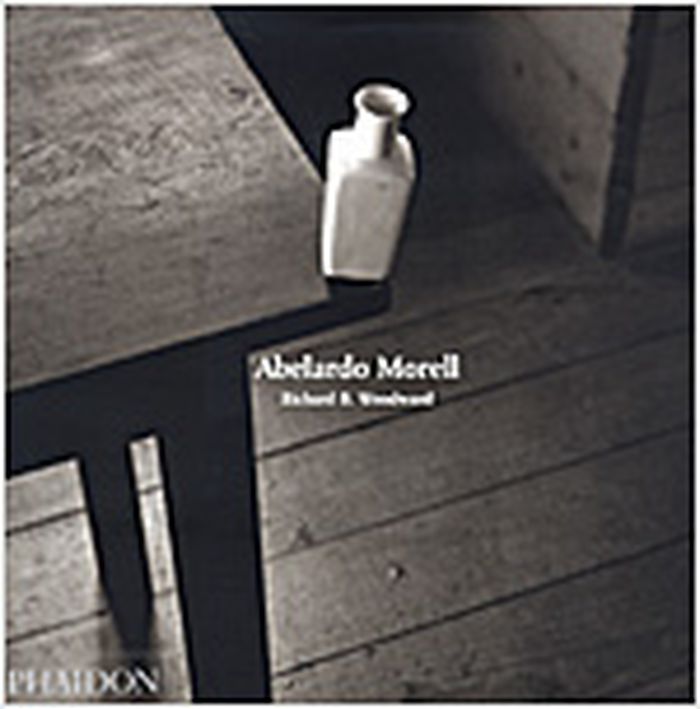
Born in Havana, Abelardo Morell emigrated to the United States in 1962, where he took his first photography course after winning a scholarship to Bowdoin College - a small liberal arts college in Maine. There, Morell experimented with a variety of photographic techniques to create surreal effects that reflected his feelings of alienation as a Cuban living abroad. He proceeded to complete the graduate programme at Yale University, where he worked within the framework of Robert Frank and Garry Winogrand’s tradition of black-and-white street photography. In 1983, he began teaching at the Massachusetts College of Art in Boston, where he remains a professor. In 1986, Morell began a family and his fascination with his son engaged a new interest in this domestic environment as a subject. Morell began exploring the world from a child’s perspective – approaching mundane household objects in a new way that challenges the viewer’s perception of reality and how we see it. Morell transforms everyday objects by distorting angles and using extreme close-ups, and by exploiting perspectives that confuse and jar with our expectations. For instance, viewed from below a stack of toys blocks tower over the viewer; and a close-up of liquid pouring from a jar seems ominous and dramatic rather than an everyday occurrence. Similarly, Morell continued to transform the familiar into the surprising in his series of photographs of books, maps, American money and, more recently, a series that illustrates a new edition of Lewis Carroll’s Alice’s Adventures in Wonderland. This preoccupation with reality and illusion is most clearly realised in Morell’s series of camera obscura images. He takes an ordinary room and tapes black plastic over the windows, leaving only a 3/8" hole for the light. After setting up a large-format camera in the room and pointing it at the opposite wall, Morell leaves - a single exposure takes 8 hours. In the resulting images a scene of Brooklyn floats upside-down along the walls of his son’s bedroom; global landmarks like the Uffizi and the Eiffel Tower are projected across hotel rooms. In this, Morell’s best known and most ambitious series, the distinction between the outside and the domestic world is merged and his preoccupation with the mechanics of human vision and the principles of photography is illuminated.
Abelardo Morell
Actions:
Price:
$29.95
(available to order)
Summary:
Born in Havana, Abelardo Morell emigrated to the United States in 1962, where he took his first photography course after winning a scholarship to Bowdoin College - a small liberal arts college in Maine. There, Morell experimented with a variety of photographic techniques to create surreal effects that reflected his feelings of alienation as a Cuban living abroad. He proceeded to complete the graduate programme at Yale University, where he worked within the framework of Robert Frank and Garry Winogrand’s tradition of black-and-white street photography. In 1983, he began teaching at the Massachusetts College of Art in Boston, where he remains a professor. In 1986, Morell began a family and his fascination with his son engaged a new interest in this domestic environment as a subject. Morell began exploring the world from a child’s perspective – approaching mundane household objects in a new way that challenges the viewer’s perception of reality and how we see it. Morell transforms everyday objects by distorting angles and using extreme close-ups, and by exploiting perspectives that confuse and jar with our expectations. For instance, viewed from below a stack of toys blocks tower over the viewer; and a close-up of liquid pouring from a jar seems ominous and dramatic rather than an everyday occurrence. Similarly, Morell continued to transform the familiar into the surprising in his series of photographs of books, maps, American money and, more recently, a series that illustrates a new edition of Lewis Carroll’s Alice’s Adventures in Wonderland. This preoccupation with reality and illusion is most clearly realised in Morell’s series of camera obscura images. He takes an ordinary room and tapes black plastic over the windows, leaving only a 3/8" hole for the light. After setting up a large-format camera in the room and pointing it at the opposite wall, Morell leaves - a single exposure takes 8 hours. In the resulting images a scene of Brooklyn floats upside-down along the walls of his son’s bedroom; global landmarks like the Uffizi and the Eiffel Tower are projected across hotel rooms. In this, Morell’s best known and most ambitious series, the distinction between the outside and the domestic world is merged and his preoccupation with the mechanics of human vision and the principles of photography is illuminated.
Form:
books
books
Publication:
September 2005, London, New York
September 2005, London, New York
Subject:
Photography monographs
Photography monographs


