


3106 Results
Form:
books
books
Price:
$68.00
(available to order)
Summary:
Twentieth-century Brazilian furniture design is perhaps the last great largely unknown tradition of modernism, characterized by rich and sensually textured hardwoods and an ingenuity, grace, and simplicity that exemplify the national character of brasiliadade. With well over 400 historic images and new photography, Brazil Modern: The Rediscovery of Twentieth-Century(...)
$68.00
(available to order)
Summary:
Twentieth-century Brazilian furniture design is perhaps the last great largely unknown tradition of modernism, characterized by rich and sensually textured hardwoods and an ingenuity, grace, and simplicity that exemplify the national character of brasiliadade. With well over 400 historic images and new photography, Brazil Modern: The Rediscovery of Twentieth-Century(...)
Title:
Brazil modern: the rediscovery of twentieth-century Brazilian furniture
Actions:
Price:
$68.00
(available to order)
Summary:
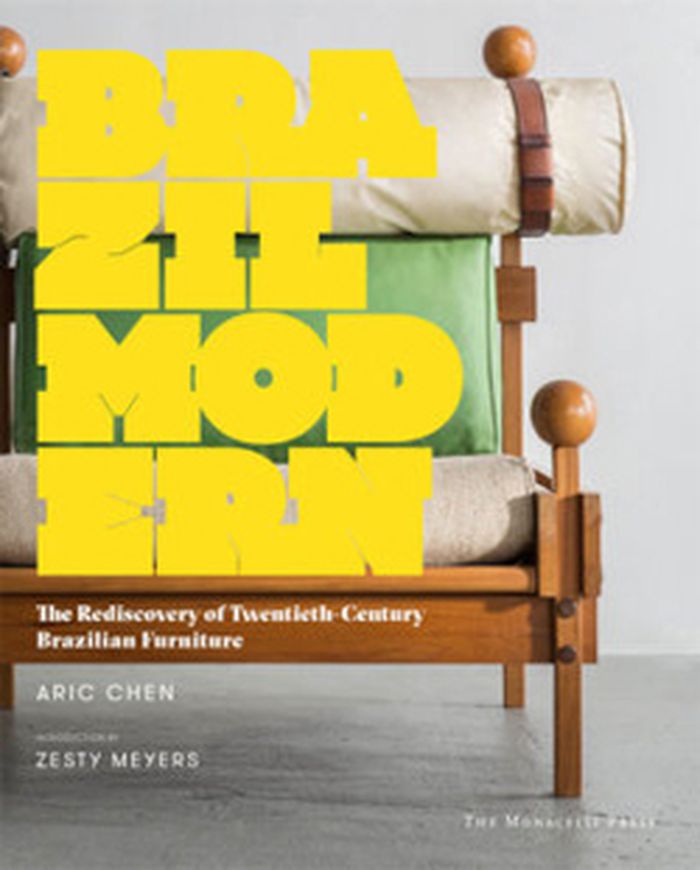
Twentieth-century Brazilian furniture design is perhaps the last great largely unknown tradition of modernism, characterized by rich and sensually textured hardwoods and an ingenuity, grace, and simplicity that exemplify the national character of brasiliadade. With well over 400 historic images and new photography, Brazil Modern: The Rediscovery of Twentieth-Century Brazilian Furniture surveys the history and legacy of this innovative design tradition. Featuring the work of the titans of Brazilian design—Lina Bo Bardi, Oscar Niemeyer, Joaquim Tenreiro, and Sergio Rodrigues—as well as numerous designers whose work and reputations only recently reached foreign shores, Brazil Modern is the first comprehensive guide to this untapped vein of modernist design. - See more at: http://www.monacellipress.com/book/?isbn=9781580934442#sthash.tuYQR08a.dpuf
Brazil modern: the rediscovery of twentieth-century Brazilian furniture
Actions:
Price:
$68.00
(available to order)
Summary:
Twentieth-century Brazilian furniture design is perhaps the last great largely unknown tradition of modernism, characterized by rich and sensually textured hardwoods and an ingenuity, grace, and simplicity that exemplify the national character of brasiliadade. With well over 400 historic images and new photography, Brazil Modern: The Rediscovery of Twentieth-Century Brazilian Furniture surveys the history and legacy of this innovative design tradition. Featuring the work of the titans of Brazilian design—Lina Bo Bardi, Oscar Niemeyer, Joaquim Tenreiro, and Sergio Rodrigues—as well as numerous designers whose work and reputations only recently reached foreign shores, Brazil Modern is the first comprehensive guide to this untapped vein of modernist design. - See more at: http://www.monacellipress.com/book/?isbn=9781580934442#sthash.tuYQR08a.dpuf
Form:
books
books
Publication:
November 2015
November 2015
Subject:
Industrial Design
Industrial Design
Form:
books
books
Actions:
Price:
$35.95
(available to order)
Summary:
The Eberswalde Library has been compared to a Warhol painting. Designed in collaboration with artist Thomas Ruff, it carries the idea of a pictorial façade further than any other Herzog & de Meuron project. The building is a simple cube(...)
$35.95
(available to order)
Summary:
The Eberswalde Library has been compared to a Warhol painting. Designed in collaboration with artist Thomas Ruff, it carries the idea of a pictorial façade further than any other Herzog & de Meuron project. The building is a simple cube(...)
Subject:
Architecture Monographs
Architecture Monographs
Publication:
January 1900, London
January 1900, London
Title:
Herzog & de Meuron : Eberswalde Library
Actions:
Price:
$35.95
(available to order)
Summary:
The Eberswalde Library has been compared to a Warhol painting. Designed in collaboration with artist Thomas Ruff, it carries the idea of a pictorial façade further than any other Herzog & de Meuron project. The building is a simple cube sheathed in glazing and cast-concrete panels, arranged in horizontal bands. Each band shows a single image, repeated sixty-six times, like a static film strip. The images are drawn from Ruff’s own archive of newspaper photographs, and encompass the decorative, the symbolic, and the politically charged. Combining elements which have long been deemed incompatible – minimalism and ornament, purity and baroque fullness, concrete box and pictorial façade, space and surface – Herzog & de Meuron’s new library challenges the conventions of modernism.
Herzog & de Meuron : Eberswalde Library
Actions:
Price:
$35.95
(available to order)
Summary:
The Eberswalde Library has been compared to a Warhol painting. Designed in collaboration with artist Thomas Ruff, it carries the idea of a pictorial façade further than any other Herzog & de Meuron project. The building is a simple cube sheathed in glazing and cast-concrete panels, arranged in horizontal bands. Each band shows a single image, repeated sixty-six times, like a static film strip. The images are drawn from Ruff’s own archive of newspaper photographs, and encompass the decorative, the symbolic, and the politically charged. Combining elements which have long been deemed incompatible – minimalism and ornament, purity and baroque fullness, concrete box and pictorial façade, space and surface – Herzog & de Meuron’s new library challenges the conventions of modernism.
Form:
books
books
Publication:
January 1900, London
January 1900, London
Subject:
Architecture Monographs
Architecture Monographs
Form:
books
books
Title:
La préfabrication en URSS : concepts techniques et dispositifs architecturaux / Natalya Solopova.
La préfabrication en URSS : concepts techniques et dispositifs architecturaux / Natalya Solopova.
Actions:
Holdings:
Description:
191 pages : illustrations, plans ; 23 cm
Description:
191 pages : illustrations, plans ; 23 cm
Author:
Subject:
Publication:
Berlin : DOM Publishers, [2021], ©2021
Berlin : DOM Publishers, [2021], ©2021
Title:
La préfabrication en URSS : concepts techniques et dispositifs architecturaux / Natalya Solopova.
Actions:
Holdings:
Description:
191 pages : illustrations, plans ; 23 cm
La préfabrication en URSS : concepts techniques et dispositifs architecturaux / Natalya Solopova.
Actions:
Holdings:
Description:
191 pages : illustrations, plans ; 23 cm
Form:
books
books
Publication:
Berlin : DOM Publishers, [2021], ©2021
Berlin : DOM Publishers, [2021], ©2021
Author:
Subject:
Form:
books
books
Title:
Atomic dwelling : anxiety, domesticity, and postwar architecture / edited by Robin Schuldenfrei.
Atomic dwelling : anxiety, domesticity, and postwar architecture / edited by Robin Schuldenfrei.
Actions:
Holdings:
Description:
xiv, 301 pages : illustrations ; 24 cm
Description:
xiv, 301 pages : illustrations ; 24 cm
Author:
Subject:
Publication:
Abingdon, Oxon ; New York : Routledge, 2012.
Abingdon, Oxon ; New York : Routledge, 2012.
Title:
Atomic dwelling : anxiety, domesticity, and postwar architecture / edited by Robin Schuldenfrei.
Actions:
Holdings:
Description:
xiv, 301 pages : illustrations ; 24 cm
Atomic dwelling : anxiety, domesticity, and postwar architecture / edited by Robin Schuldenfrei.
Actions:
Holdings:
Description:
xiv, 301 pages : illustrations ; 24 cm
Form:
books
books
Publication:
Abingdon, Oxon ; New York : Routledge, 2012.
Abingdon, Oxon ; New York : Routledge, 2012.
Author:
Subject:
Form:
books
books

Actions:
Price:
$54.99
(available in store)
Summary:
The 1970s was marked by a seismic change that occurred in the representation of ideas in architecture as they appeared monthly on the pages of AD. The magazine bears out the energetic, experimental, environmentally-conscious and ultimately pluralist culture that prevailed throughout the 1960s, carrying it through to the emergence of Post-Modernism in the late 1970s. This(...)
$54.99
(available in store)
Summary:
The 1970s was marked by a seismic change that occurred in the representation of ideas in architecture as they appeared monthly on the pages of AD. The magazine bears out the energetic, experimental, environmentally-conscious and ultimately pluralist culture that prevailed throughout the 1960s, carrying it through to the emergence of Post-Modernism in the late 1970s. This(...)
Title:
AD : the 1970s is here and now
Actions:
Price:
$54.99
(available in store)
Summary:
The 1970s was marked by a seismic change that occurred in the representation of ideas in architecture as they appeared monthly on the pages of AD. The magazine bears out the energetic, experimental, environmentally-conscious and ultimately pluralist culture that prevailed throughout the 1960s, carrying it through to the emergence of Post-Modernism in the late 1970s. This issue of AD presents a 'Cosmorama of Now', looking at such subjects as housing, schools, health, urban design and planning. Contributors include: Jon Goodbun, David Cunningham, Nick Lister, James Madge, Tim Jachna, Liza Fior, Katherine Clarke, Sophie Handler, Marie-Ange Brayer, Craig Kellogg, Valentina Croci, Jeremy Melvin, Bruce Stewart, André Chaszar, Howard Watson, Sheila Kirk, Nic Clear, Robert Webb, John Frazer, Will McLean, Chris Moller, and Samantha Hardingham.
AD : the 1970s is here and now
Actions:
Price:
$54.99
(available in store)
Summary:
The 1970s was marked by a seismic change that occurred in the representation of ideas in architecture as they appeared monthly on the pages of AD. The magazine bears out the energetic, experimental, environmentally-conscious and ultimately pluralist culture that prevailed throughout the 1960s, carrying it through to the emergence of Post-Modernism in the late 1970s. This issue of AD presents a 'Cosmorama of Now', looking at such subjects as housing, schools, health, urban design and planning. Contributors include: Jon Goodbun, David Cunningham, Nick Lister, James Madge, Tim Jachna, Liza Fior, Katherine Clarke, Sophie Handler, Marie-Ange Brayer, Craig Kellogg, Valentina Croci, Jeremy Melvin, Bruce Stewart, André Chaszar, Howard Watson, Sheila Kirk, Nic Clear, Robert Webb, John Frazer, Will McLean, Chris Moller, and Samantha Hardingham.
Form:
books
books
Publication:
March 2005, London
March 2005, London
Subject:
Magazines
Magazines
Form:
books
books
Actions:
Price:
$32.95
(available in store)
Summary:
In addition to his literary and fictional works, Fernando Pessoa wrote a multiplicity of theoretical texts concerning literature and aesthetics. In Writings on Art and Poetical Theory we see Pessoa exploring, under the guise of various heteronyms, general theories on poetics, the poetry produced by his other heteronyms, and the uses and abuses of criticism. Also included(...)
$32.95
(available in store)
Summary:
In addition to his literary and fictional works, Fernando Pessoa wrote a multiplicity of theoretical texts concerning literature and aesthetics. In Writings on Art and Poetical Theory we see Pessoa exploring, under the guise of various heteronyms, general theories on poetics, the poetry produced by his other heteronyms, and the uses and abuses of criticism. Also included(...)
Title:
Writings on art and poetical theory
Actions:
Price:
$32.95
(available in store)
Summary:
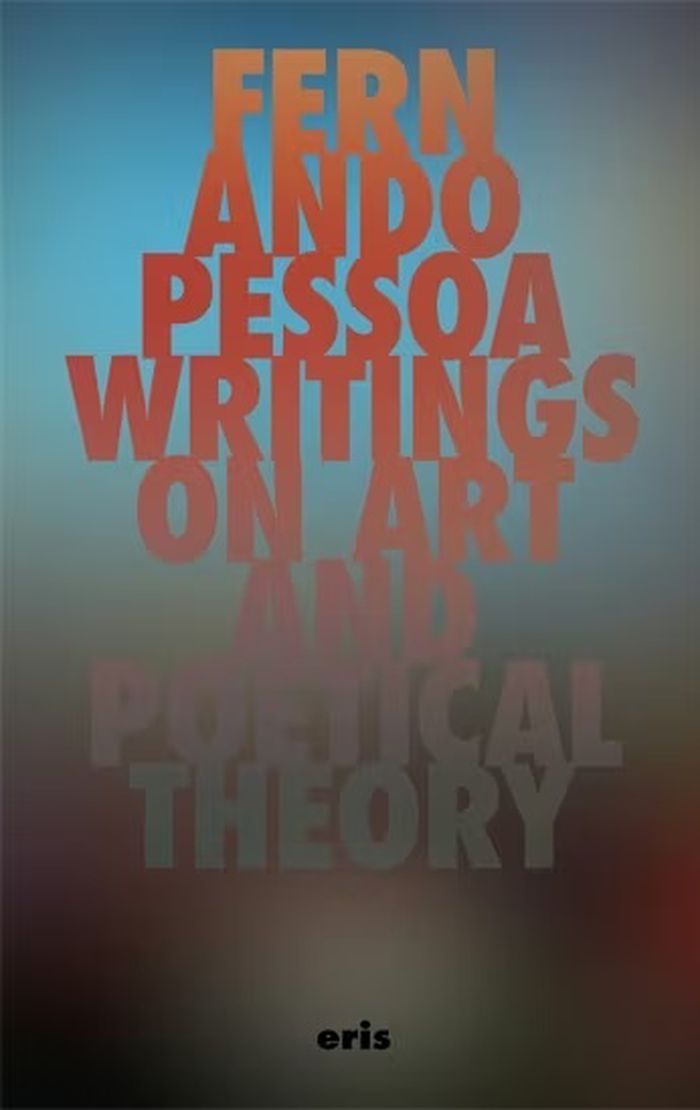
In addition to his literary and fictional works, Fernando Pessoa wrote a multiplicity of theoretical texts concerning literature and aesthetics. In Writings on Art and Poetical Theory we see Pessoa exploring, under the guise of various heteronyms, general theories on poetics, the poetry produced by his other heteronyms, and the uses and abuses of criticism. Also included are essays on translation, the sensationist movement, and the history of English literature. This edition, prepared by Nuno Ribeiro and Cláudia Souza, provides a fascinating overview of Pessoa’s writings on art and poetic theory—most of which are presented here for the first time to English readers—thereby opening the way for future studies on one of the most significant authors of Portuguese modernism.
Writings on art and poetical theory
Actions:
Price:
$32.95
(available in store)
Summary:
In addition to his literary and fictional works, Fernando Pessoa wrote a multiplicity of theoretical texts concerning literature and aesthetics. In Writings on Art and Poetical Theory we see Pessoa exploring, under the guise of various heteronyms, general theories on poetics, the poetry produced by his other heteronyms, and the uses and abuses of criticism. Also included are essays on translation, the sensationist movement, and the history of English literature. This edition, prepared by Nuno Ribeiro and Cláudia Souza, provides a fascinating overview of Pessoa’s writings on art and poetic theory—most of which are presented here for the first time to English readers—thereby opening the way for future studies on one of the most significant authors of Portuguese modernism.
Form:
books
books
Publication:
February 2025
February 2025
Subject:
Art Theory
Art Theory
Form:
books
books
Actions:
Price:
$44.95
(available to order)
Summary:
"Art Theory: An Historical Introduction" is a unique survey of Western thought about art from ancient times to the present. It provides a lucid and lively narrative geared to the needs of the general reader and beginning student, Covering the major periods of Western art history: Antiquity and the Middle Ages, the early modern period (Renaissance and Baroque), the(...)
$44.95
(available to order)
Summary:
"Art Theory: An Historical Introduction" is a unique survey of Western thought about art from ancient times to the present. It provides a lucid and lively narrative geared to the needs of the general reader and beginning student, Covering the major periods of Western art history: Antiquity and the Middle Ages, the early modern period (Renaissance and Baroque), the(...)
Title:
Art theory : an historical introduction
Actions:
Price:
$44.95
(available to order)
Summary:
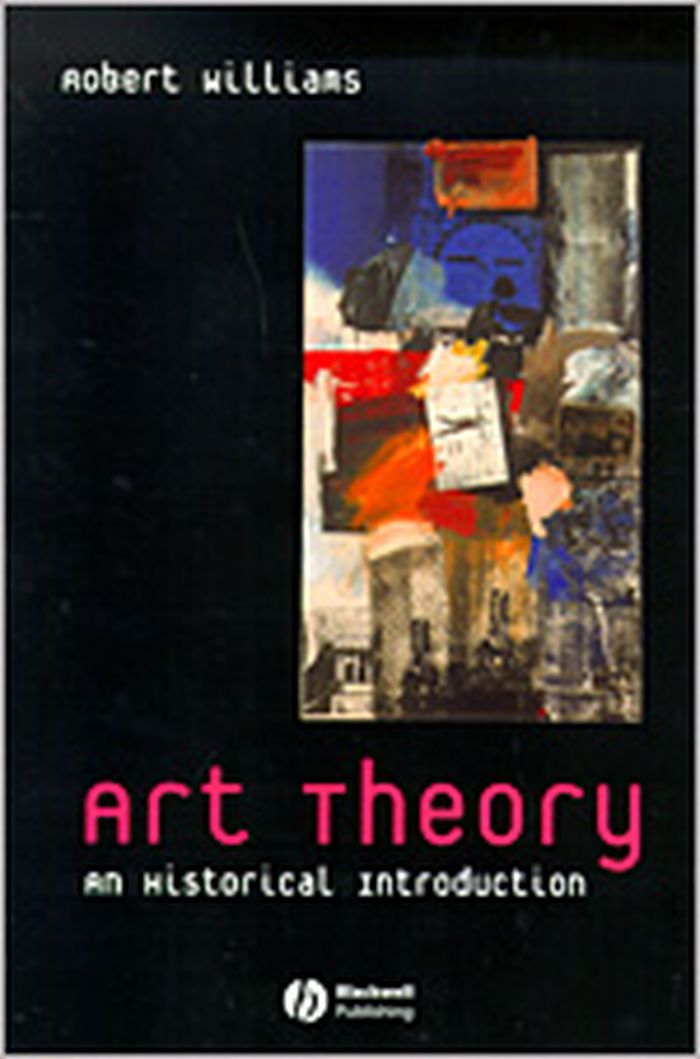
"Art Theory: An Historical Introduction" is a unique survey of Western thought about art from ancient times to the present. It provides a lucid and lively narrative geared to the needs of the general reader and beginning student, Covering the major periods of Western art history: Antiquity and the Middle Ages, the early modern period (Renaissance and Baroque), the Enlightenment, the nineteenth century, early twentieth-century modernism, and postmodernism. It relates theory to the practice as well as to the intellectual- and cultural-historical currents of each period, thus demonstrating the value of an historical approach to theoretical issues, and includes an extensive bibliography that provides a useful and up-to-date guide to the primary sources and secondary literature.
Art theory : an historical introduction
Actions:
Price:
$44.95
(available to order)
Summary:
"Art Theory: An Historical Introduction" is a unique survey of Western thought about art from ancient times to the present. It provides a lucid and lively narrative geared to the needs of the general reader and beginning student, Covering the major periods of Western art history: Antiquity and the Middle Ages, the early modern period (Renaissance and Baroque), the Enlightenment, the nineteenth century, early twentieth-century modernism, and postmodernism. It relates theory to the practice as well as to the intellectual- and cultural-historical currents of each period, thus demonstrating the value of an historical approach to theoretical issues, and includes an extensive bibliography that provides a useful and up-to-date guide to the primary sources and secondary literature.
Form:
books
books
Publication:
December 2003, Oxford
December 2003, Oxford
Subject:
Architectural Theory
Architectural Theory
Form:
books
books
Price:
$46.95
(available in store)
Summary:
Drawing on a range of previously unexplored archival resources, Michael Osman examines the increasing role of environmental technologies in building design from the late nineteenth century. He shows how architects appropriated and subsumed the work of engineers as thermostats, air handlers, and refrigeration proliferated. He argues that this change was closely connected(...)
$46.95
(available in store)
Summary:
Drawing on a range of previously unexplored archival resources, Michael Osman examines the increasing role of environmental technologies in building design from the late nineteenth century. He shows how architects appropriated and subsumed the work of engineers as thermostats, air handlers, and refrigeration proliferated. He argues that this change was closely connected(...)
Title:
Modernism's visible hand: architecture and regulation in America
Actions:
Price:
$46.95
(available in store)
Summary:
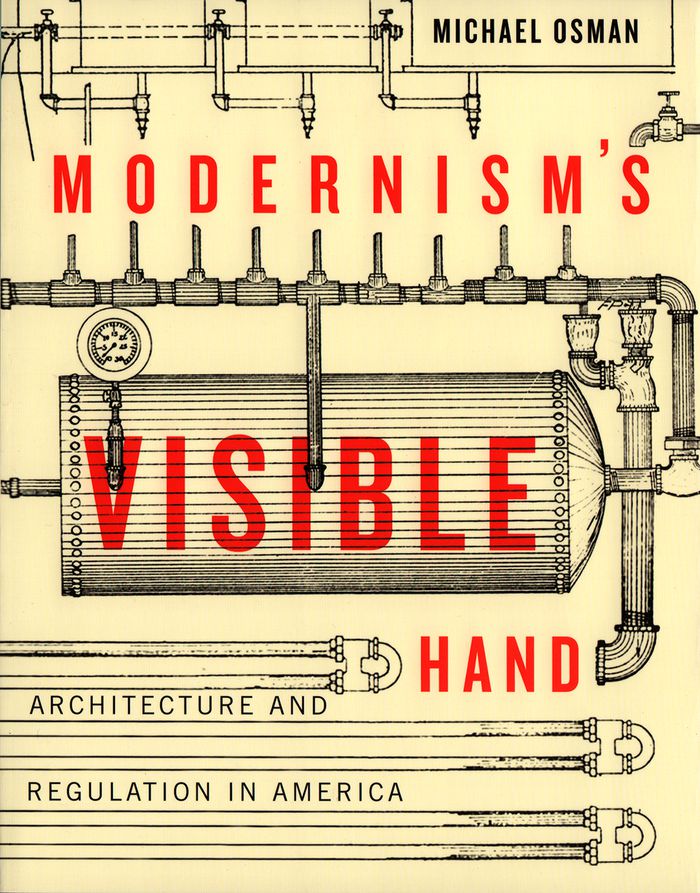
Drawing on a range of previously unexplored archival resources, Michael Osman examines the increasing role of environmental technologies in building design from the late nineteenth century. He shows how architects appropriated and subsumed the work of engineers as thermostats, air handlers, and refrigeration proliferated. He argues that this change was closely connected to broader cultural and economic trends in management and the regulation of risk. The transformation shaped the evolution of architectural modernism and the development of the building as a machine. Rather than assume the preexisting natural order of things, participants in regulation—including architects, scientists, entrepreneurs, engineers, managers, economists, government employees, and domestic reformers—became entangled in managing the errors, crises, and risks stemming from the nation’s unprecedented growth.
Modernism's visible hand: architecture and regulation in America
Actions:
Price:
$46.95
(available in store)
Summary:
Drawing on a range of previously unexplored archival resources, Michael Osman examines the increasing role of environmental technologies in building design from the late nineteenth century. He shows how architects appropriated and subsumed the work of engineers as thermostats, air handlers, and refrigeration proliferated. He argues that this change was closely connected to broader cultural and economic trends in management and the regulation of risk. The transformation shaped the evolution of architectural modernism and the development of the building as a machine. Rather than assume the preexisting natural order of things, participants in regulation—including architects, scientists, entrepreneurs, engineers, managers, economists, government employees, and domestic reformers—became entangled in managing the errors, crises, and risks stemming from the nation’s unprecedented growth.
Form:
books
books
Publication:
April 2018
April 2018
Subject:
Architectural Theory
Architectural Theory
Form:
books
books

Actions:
Price:
$36.95
(available to order)
Summary:
Spanning from 1945 through today, the book examines Brazilian architecture beyond the works of renowned architects such as Oscar Niemeyer and the “Carioca” architects of Rio de Janeiro. Williams investigates issues such as the use of historic architecture, the importance of leisure and luxury, the role of the favela as a backdrop and inspiration for development, and the(...)
$36.95
(available to order)
Summary:
Spanning from 1945 through today, the book examines Brazilian architecture beyond the works of renowned architects such as Oscar Niemeyer and the “Carioca” architects of Rio de Janeiro. Williams investigates issues such as the use of historic architecture, the importance of leisure and luxury, the role of the favela as a backdrop and inspiration for development, and the(...)
Subject:
Architecture since 1900, Europe
Architecture since 1900, Europe
Publication:
February 2009, London
February 2009, London
Title:
Brazil: modern architecture in history
Actions:
Price:
$36.95
(available to order)
Summary:
Spanning from 1945 through today, the book examines Brazilian architecture beyond the works of renowned architects such as Oscar Niemeyer and the “Carioca” architects of Rio de Janeiro. Williams investigates issues such as the use of historic architecture, the importance of leisure and luxury, the role of the favela as a backdrop and inspiration for development, and the rapid growth of cities. From the designated world heritage site of Brasilia—a capital city that was planned from the ground up—to the installation work of artists such as Hélio Oiticica, Brazil delves into the origins and far-reaching influence of Brazil’s architectural modernism. Richard J. Williams teaches in the School of Arts, Culture and Environment at the University of Edinburgh.
Brazil: modern architecture in history
Actions:
Price:
$36.95
(available to order)
Summary:
Spanning from 1945 through today, the book examines Brazilian architecture beyond the works of renowned architects such as Oscar Niemeyer and the “Carioca” architects of Rio de Janeiro. Williams investigates issues such as the use of historic architecture, the importance of leisure and luxury, the role of the favela as a backdrop and inspiration for development, and the rapid growth of cities. From the designated world heritage site of Brasilia—a capital city that was planned from the ground up—to the installation work of artists such as Hélio Oiticica, Brazil delves into the origins and far-reaching influence of Brazil’s architectural modernism. Richard J. Williams teaches in the School of Arts, Culture and Environment at the University of Edinburgh.
Form:
books
books
Publication:
February 2009, London
February 2009, London
Subject:
Architecture since 1900, Europe
Architecture since 1900, Europe
Form:
books
books
Actions:
Price:
$30.00
(available to order)
Summary:
Taking as its starting point Ramkinkar Baij's 1938 "Santhal Family" sculpture, this book combines critical and fictional texts with specially commissioned pages by artists from India, Europe and the U.K. Considered to be the first modernist public sculpture in India, Santhal Family combines an interest in the forms of modernism and temple sculpture with a concern for(...)
$30.00
(available to order)
Summary:
Taking as its starting point Ramkinkar Baij's 1938 "Santhal Family" sculpture, this book combines critical and fictional texts with specially commissioned pages by artists from India, Europe and the U.K. Considered to be the first modernist public sculpture in India, Santhal Family combines an interest in the forms of modernism and temple sculpture with a concern for(...)
Subject:
Contemporary Art Monographs
Contemporary Art Monographs
Publication:
August 2008, Antwerp
August 2008, Antwerp
Title:
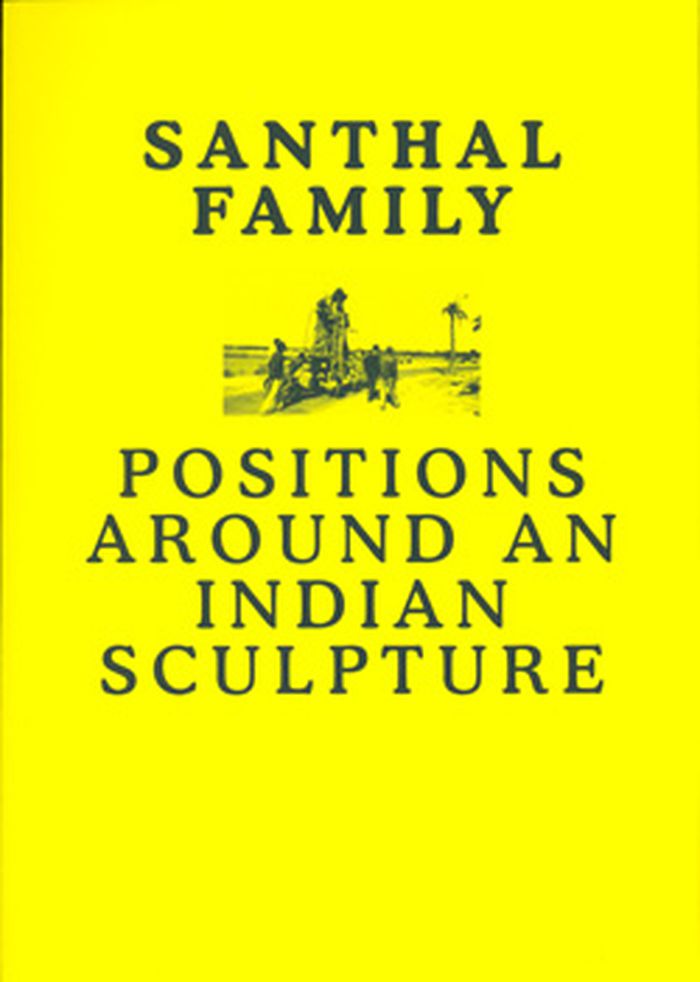
Santhal family: positions around an indian sculpture
Actions:
Price:
$30.00
(available to order)
Summary:
Taking as its starting point Ramkinkar Baij's 1938 "Santhal Family" sculpture, this book combines critical and fictional texts with specially commissioned pages by artists from India, Europe and the U.K. Considered to be the first modernist public sculpture in India, Santhal Family combines an interest in the forms of modernism and temple sculpture with a concern for ground level reality. Depicting a family group from the Santhal tribe carrying their possessions with them to a new place of work, it is a portrait of labour that presents the complexity of its subject without heroism or pathos. Published on the occasion of the exhibition of the same name that has been produced by the MuHKA, Antwerp, February to May 2008, and which is currently travelling through India.
Santhal family: positions around an indian sculpture
Actions:
Price:
$30.00
(available to order)
Summary:
Taking as its starting point Ramkinkar Baij's 1938 "Santhal Family" sculpture, this book combines critical and fictional texts with specially commissioned pages by artists from India, Europe and the U.K. Considered to be the first modernist public sculpture in India, Santhal Family combines an interest in the forms of modernism and temple sculpture with a concern for ground level reality. Depicting a family group from the Santhal tribe carrying their possessions with them to a new place of work, it is a portrait of labour that presents the complexity of its subject without heroism or pathos. Published on the occasion of the exhibition of the same name that has been produced by the MuHKA, Antwerp, February to May 2008, and which is currently travelling through India.
Form:
books
books
Publication:
August 2008, Antwerp
August 2008, Antwerp
Subject:
Contemporary Art Monographs
Contemporary Art Monographs


